Can a clever partition make a tiny flat feel calm, bright, and spacious without heavy construction?
I ask that because I’ve seen renters and homeowners transform a single room into a balanced home with smart moves. I use renter-friendly curtains, open shelving like IKEA Kallax, and occasional steel-and-glass screens to protect natural light while creating privacy near the bed.
In my client projects, each solution answers a clear need—more storage, a quiet sleep area, or a neat line between kitchen and living. I’ll walk you through options that fit budget and timeframe, from weekend curtain installs to custom glass partitions.
Expect practical tips, designer-approved tricks like mirrored folding screens, and notes on wellness—how choices affect sleep and mood. By the end, you’ll know which approach suits your space, style, and daily life.
Key Takeaways
- Purposeful dividers can split a room without killing light.
- Renter-friendly solutions include curtains, clothing racks, and open shelves.
- Brands like IKEA Kallax and Platsa are reliable, budget-friendly picks.
- Designer moves—mirrored screens, pocket doors—boost light and polish.
- Choose options that protect sleep zones and support wellbeing.
What Defines a Great Room Divider in a Studio Apartment Today
A great room divider earns its keep three ways: it protects privacy where you need it (usually the bed), keeps light moving, and improves daily flow through the room.
I favor solutions that feel airy so the space doesn’t shrink. Open bookcases, glass-and-steel walls, and sliding glass pocket doors keep sightlines while giving separate zones.
If you rent, choose no-drill fixes: floor-to-ceiling curtains, freestanding screens, or temporary walls give separation without altering walls or breaking a lease.
Solid partitions can work when they add function. A wardrobe or built-in acts like a wall and hides clutter, turning storage into privacy that benefits your home every day.
“Align the divider with natural circulation—door to kitchen to living—so you never create awkward detours.”
- Pick materials that match your design—rattan, wood, or powder-coated steel—to make the solution feel intentional.
- Mind thickness and drape stack depth; in a tight space, every inch changes furniture clearance and walking lanes.
How to Plan Zones in an Open Layout for Light, Flow, and Privacy
Start by sketching a simple map of the room—where living, sleeping, dining, and kitchen areas naturally want to sit. A quick plan makes obvious pinch points and shows where the walkway should run.
Map the zones first. Put the window and main entrance on the sketch. I work from the window backward so tall pieces don’t block the natural light path.
Mapping living, sleeping, dining, and kitchen areas
I place the kitchen so it stays visually open to the living side. A low or partial screen keeps cooking from feeling isolated and keeps conversation flowing.
For dining, claim a corner near the kitchen. One rug and a pendant lamp instantly mark the spot without heavy construction.
Window placement, ceiling height, and natural light strategy
If you’ve got generous ceiling height, think vertical—loft beds or tall shelving free floor area below. Orient the bedroom so the head feels protected by a low wall, bookcase, or curtain.
Use the sofa plus rug trick to anchor the living area. The sofa back doubles as a subtle screen that keeps the plan fluid while shielding the bed.
“Put main circulation on one side to quiet the sleeping zone and keep guests moving naturally.”
- Start with a map so the room breathes and walkways aren’t pinched.
- Protect the window side—avoid tall, opaque pieces there.
- Place high-traffic paths to one side to reduce noise in the bedroom.
Studio Divider Ideas
Small flats can feel zoned and calm with the right mix of soft and structural separators. I reach for solutions that balance privacy, light, and storage so each part of the room works.
Here’s the menu I rely on:
- Curtains and drapes from sheer to blackout for instant, renter-friendly privacy.
- Open bookcases or closed-back shelving to add storage and define a bedroom nook.
- Folding screens — mirrored or woven — for quick, movable separation and extra light.
- Glass-and-steel partitions and half walls when you want form with continuity of daylight.
I also use transforming furniture: lofts, Murphy beds, and platforms that free floor space.
“A low bookcase at the foot of the bed gives boundary without stealing daylight.”
| Type | Best for | Pros | Cons |
|---|---|---|---|
| Curtains | Flexible privacy | Cheap, renter-friendly, light control | Less sound insulation |
| Open bookcase | Storage + sightlines | Keeps light, adds storage | Needs styling to avoid clutter |
| Glass & steel | Defined zones, bright | Maintains visibility, modern look | Cost, needs professional fit |
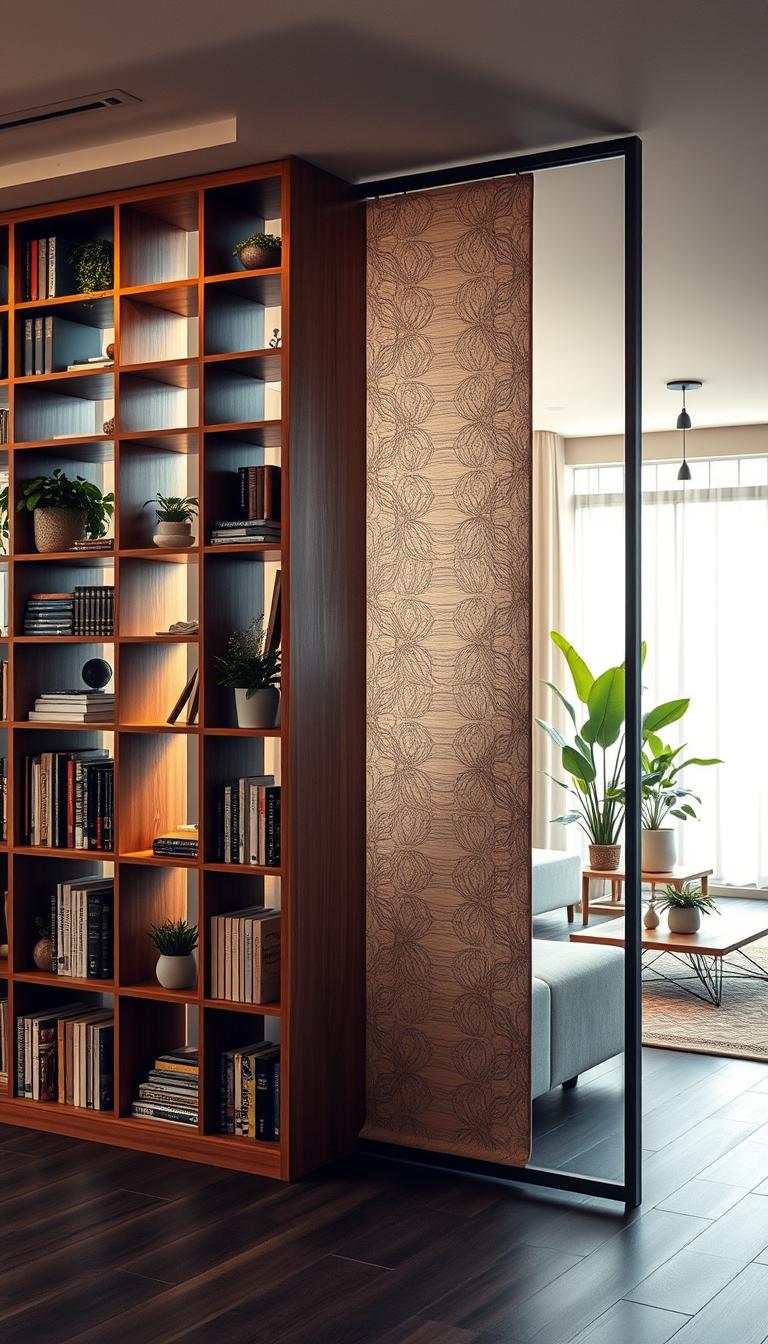
Soft Separation with Curtains and Drapes for Flexible Privacy
Soft drapery can be the quiet hero of an open plan, shaping a sleeping nook without heavy work.
I often run a wall-to-wall, floor-to-ceiling curtain between the sofa and the bed. It creates an instant zone change with zero drywall dust. Guests enter the living side; your sleep side stays calm.
Sheer versus blackout — balancing natural light and rest
Sheer panels keep light flowing while giving gentle separation. Blackout fabric blocks street glow and improves sleep quality in a small apartment.
Bedframe-tied and renter-friendly track options
If drilling isn’t allowed, tie a curtain to the bed frame, or use tension rods and ceiling tracks that leave finishes intact. A canopy feel is romantic and practical.
Layering with shelving and material choices
Layering a curtain with a low bookcase at the foot adds storage and softness. Linen diffuses light; velvet mutes sound and reads luxe in a small home.
“Double tracks — sheer plus blackout — let you dial the mood like a dimmer.”
- Keep panels away from heaters and cooking zones for safety.
- Choose washable fabrics for easy care in active living spaces.
| Type | Best use | Benefit |
|---|---|---|
| Sheer panels | Daytime flow | Light diffusion, airy feel |
| Blackout drapes | Sleep zone | Darkness, better rest |
| Tension rod curtains | Renters | No-drill install, reversible |
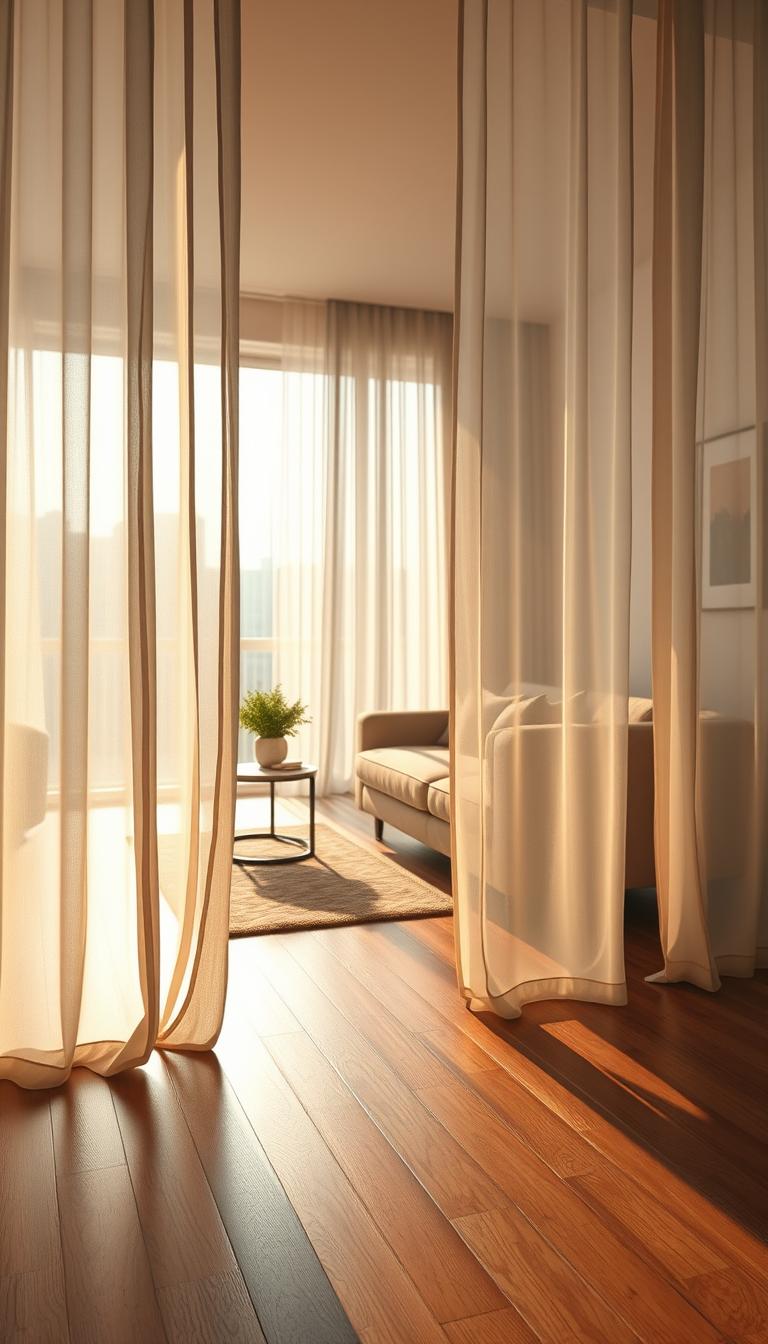
Bookcase Dividers That Double as Storage and Style
A smart bookcase can act like a friendly wall—holding your things while keeping the room airy. I use shelving that reads light and function, not a heavy barrier. Open units preserve light and sightlines. Closed backs give the bedroom real privacy and personality.
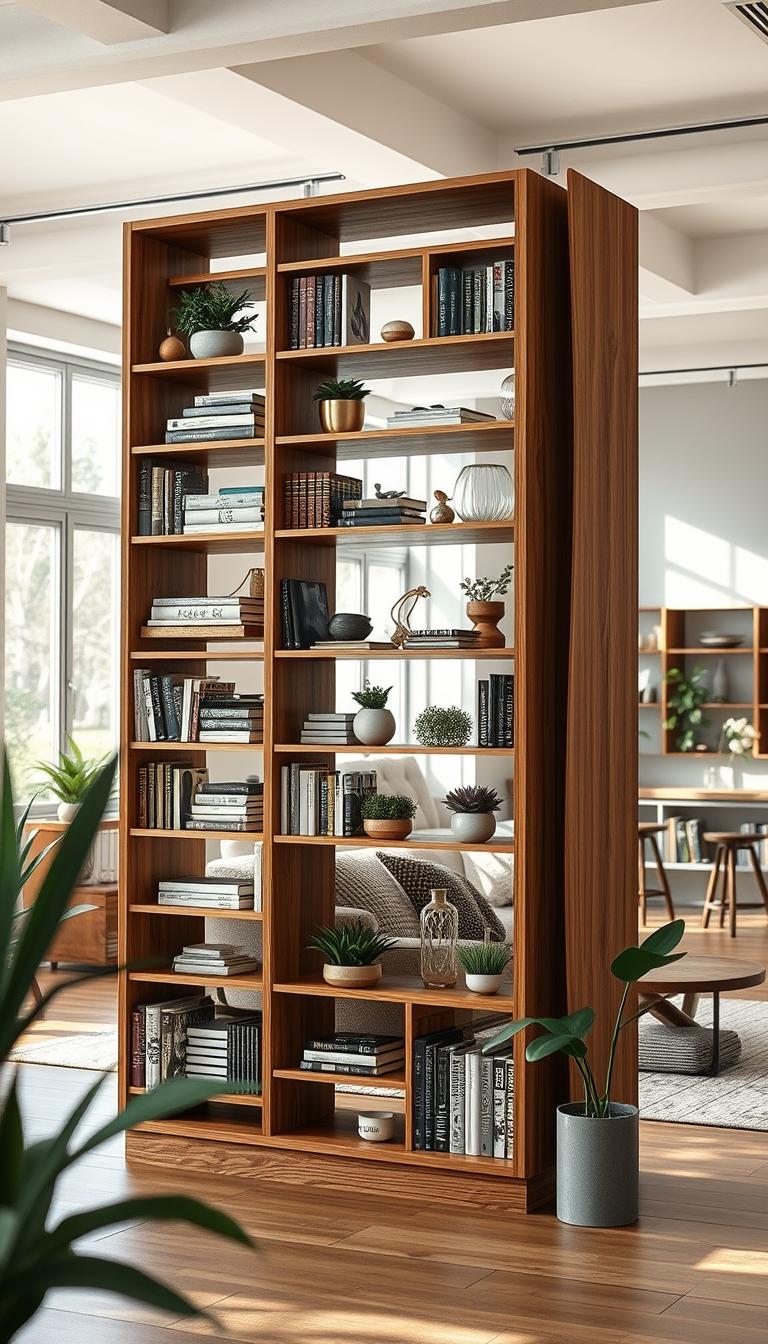
Open shelves to preserve light and sightlines
Open bookcases keep daylight flowing so the living room doesn’t feel robbed. Think IKEA Kallax as a budget-friendly pick that still reads modern.
They work well when you want storage without blocking view or conversation.
Closed backs for bold color and privacy
Flip one side closed and paint the back for a pop of color when landlords won’t let you paint a wall. I’ve used this trick to give a sleeping nook warmth and calm.
Floating and headboard-integrated bookcases
Floating shelves lift the sightline and make cleaning easy beneath. A headboard-integrated bookcase creates a proper wall for the bed while keeping bedside storage handy.
“Place the unit slightly off-center to create a subtle entry to the bedroom side and improve circulation.”
Practical notes: mix open and closed cubes for rhythm, keep depth to 11–13 inches in a tight apartment, and always secure tall units—anti-tip straps are simple lifesavers.
For more shelving design tips see shelving design tips, which show renter-friendly ways to style cubes and keep the plan feeling intentional.
Folding Screens and Pegboards for Movable, Multiuse Partitions
A portable screen or a wheeled pegboard turns separation into something playful and useful. I use them when I want fast privacy or a shifting backdrop for guests.
Folding screens come in rattan, upholstered, and mirrored panels. Rattan reads relaxed and natural. Upholstered panels feel tailored and warm. Mirrored screens bounce light and make a tight room feel larger.
Pegboards on wheels are my go-to for flexible storage and display. Add hooks for bags, shelves for plants, and a lamp—then roll it to change the flow.
Rattan, mirrored, and upholstered screens as design statements
Materials set the mood. A mirrored panel doubles as a practical mirror and a subtle room divider. Upholstery can echo your sofa fabric for cohesion.
Freestanding pegboards on wheels for display and storage
Wheeled pegboards save floor space and act like a moving gallery. They’re light, functional, and renter-friendly.
“Angle screens to filter, not smother, the main light source—small shifts make big differences.”
| Type | Best use | Pros | Cons |
|---|---|---|---|
| Rattan screen | Casual zones | Natural texture, airy | Less sound blocking |
| Mirrored screen | Small, dim corners | Reflects light, expands space visually | Requires careful placement |
| Upholstered screen | Quiet sleeping nook | Softness, color match | Takes more storage when folded |
| Wheeled pegboard | Flexible storage & display | Mobile, modular, multiuse | Limited privacy if thin |
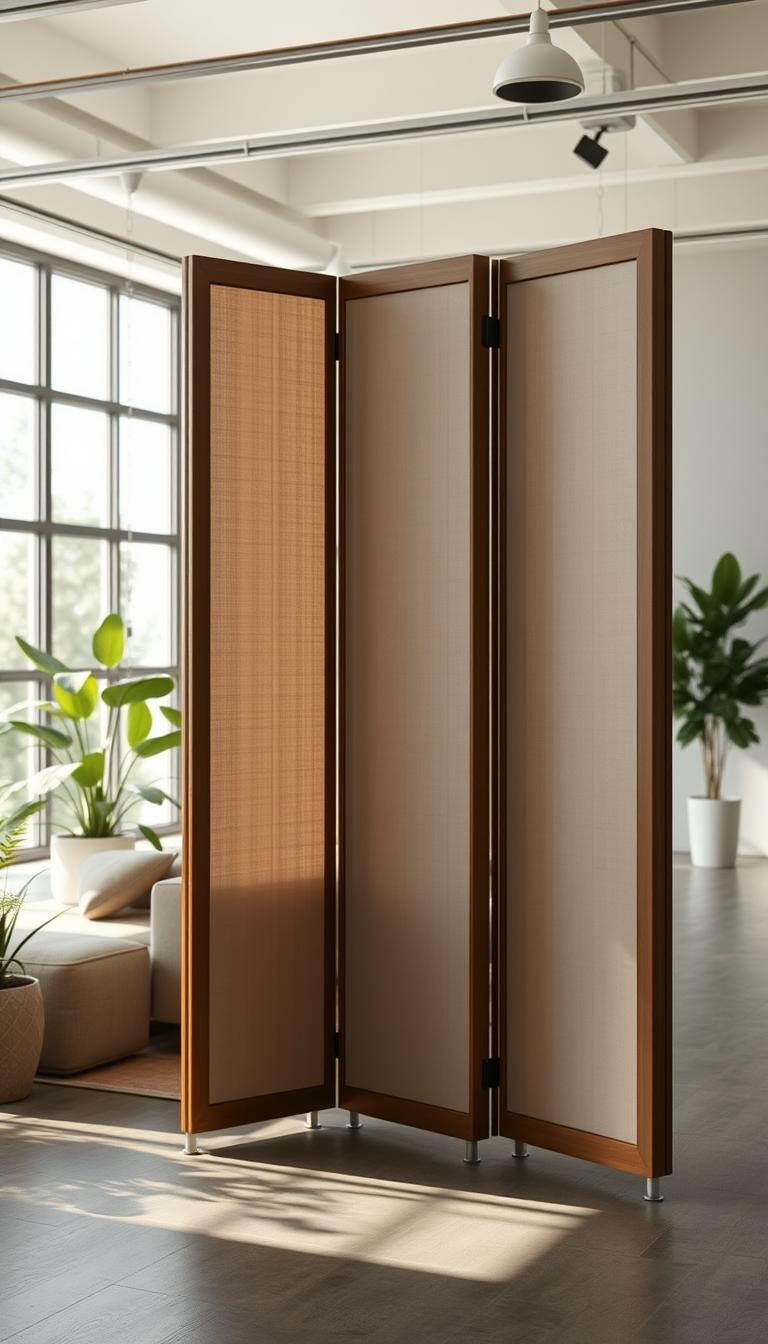
Glass, Steel, and Industrial Partitions that Keep Natural Light Flowing
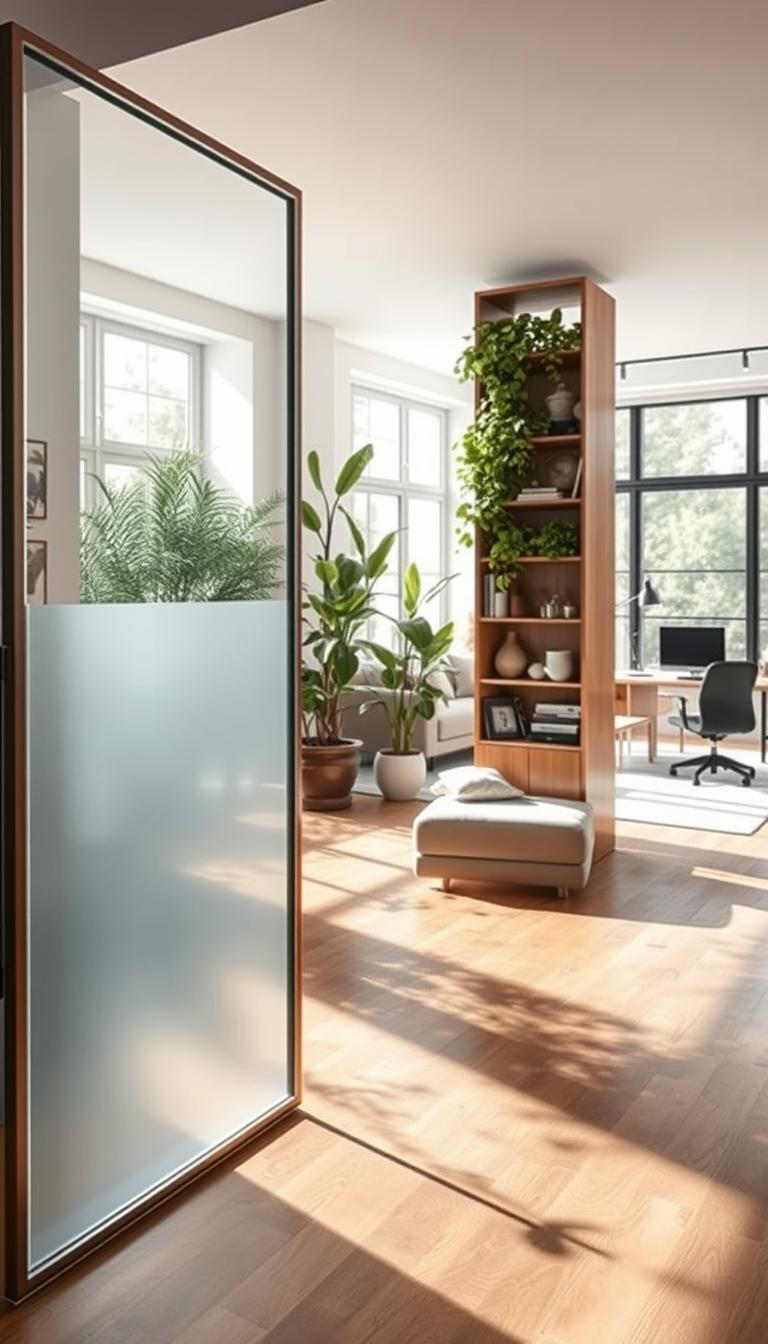
Few partitions hold brightness like a slim steel frame with clear glass. I use them when clients want defined zones without the heavy feel of brick or drywall. These systems keep the plan airy and let sunlight cross the whole room.
Framed glass walls and steel-and-glass partitions
Steel-and-glass partitions are my go-to when separation must avoid casting shadows. The thin mullions create an industrial edge while the panes let light pass.
Pro tip: Align mullions with existing architecture so the installation looks intentional, not tacked on.
Pocket and sliding glass doors for compact spaces
Pocket or sliding glass doors save swing clearance — a big win in narrow apartment corridors and tight living layouts.
They give real separation for a kitchen or a sleeping nook while keeping brightness. I often add a track-mounted curtain at the bed for night-time privacy.
Clear vs. partial glass walls for varying privacy
Clear glass maximizes brightness; reeded or frosted panels raise privacy without turning the space cave-like. For kitchens, consider a half-height base with glass above to contain splashes and keep conversation with the living area.
Keep hardware finishes consistent with other metals in the home and specify easy-clean coatings or patterned glass to hide fingerprints in high-touch zones.

“A glass wall should read like a piece of furniture — order, proportion, and finish make it feel calm.”
- Why choose this route: separation without shadows.
- When to layer: add curtains for sleep-time privacy behind a glass bed wall.
- Maintenance note: pick coatings or textured glass to reduce visible smudges.
Half Walls, Temporary Walls, and Net Walls as Light-Friendly Barriers
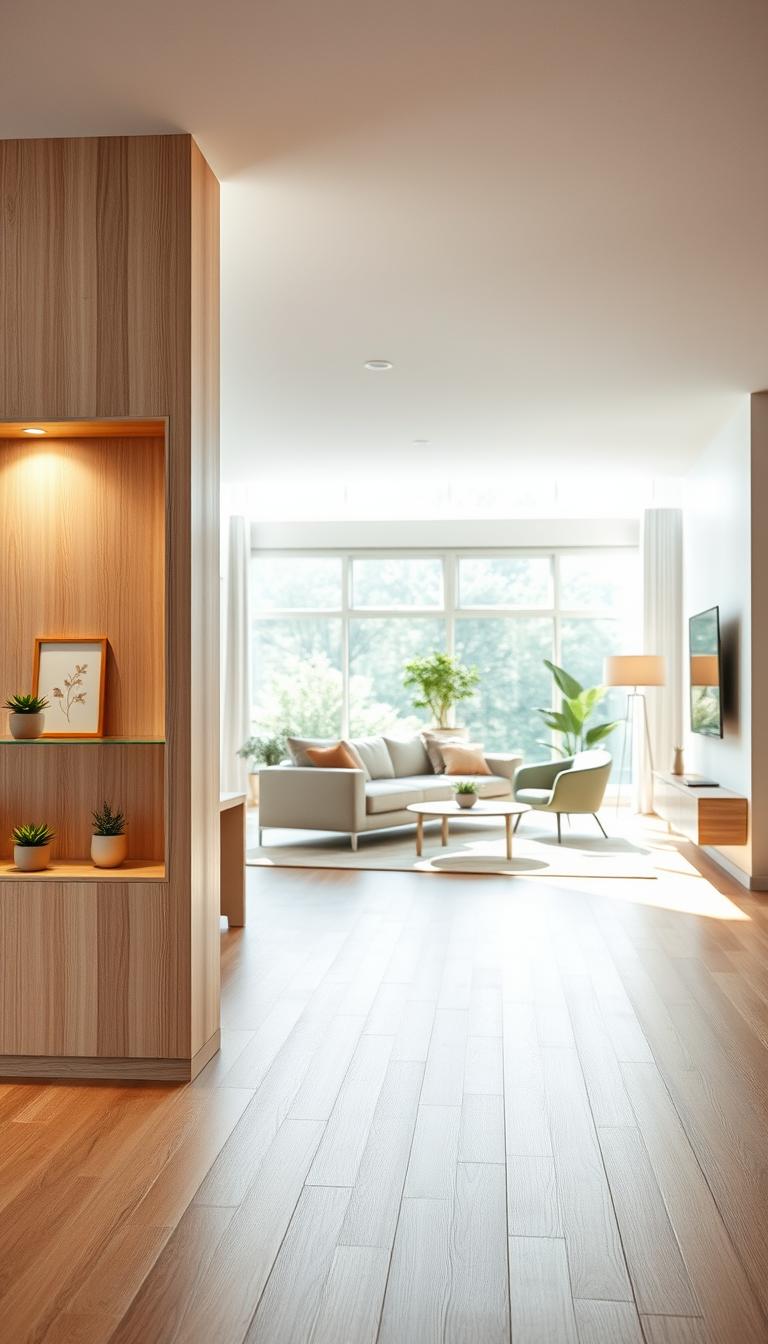
Half-height walls are a quiet way to split a room while keeping the top half airy and bright. I often specify them near the bed so the sofa view stays calm but the window still reads through the upper plane.
Build them with function in mind: carve a shallow niche for a phone charger, a small book cubby, or a plant. Those little cutouts feel like practical sculpture and save bedside clutter.
Half-height builds with niches and storage
A low wall hides the sleep area from social seating while letting daylight wash over the top. Pair it with a platform or loft to create a private floor-level bedroom and storage beneath.
Temporary modular walls for renters
Modular systems give the feel of a built change without permanent work. They’re renter gold—easy to install and remove, and often accepted by landlords when you check rules first.
For an ultra-light option, try a tensioned net wall. It reads almost invisible and keeps every inch of light intact. Paint the new baseboard and trim to match the existing finish so the addition feels native to the apartment.
“A half wall should act like furniture—use depth, finish, and niches to make it belong.”
- Half-height walls hide the bed while keeping the top bright.
- Niches add charging, storage, and charm.
- Temporary walls let renters build and revert later.
- Net walls preserve maximum light with minimal weight.
| Type | Best for | Pro |
|---|---|---|
| Half-height build | Privacy + storage | Stable, can include niches |
| Temporary modular | Renters | Removable, flexible |
| Tensioned net wall | Maximum light | Almost invisible, lightweight |
Transforming Furniture: Loft Beds, Platforms, Murphy Beds, and More
When floor area is scarce, clever furniture can act like a room architect—rearranging function and flow without a single wall.
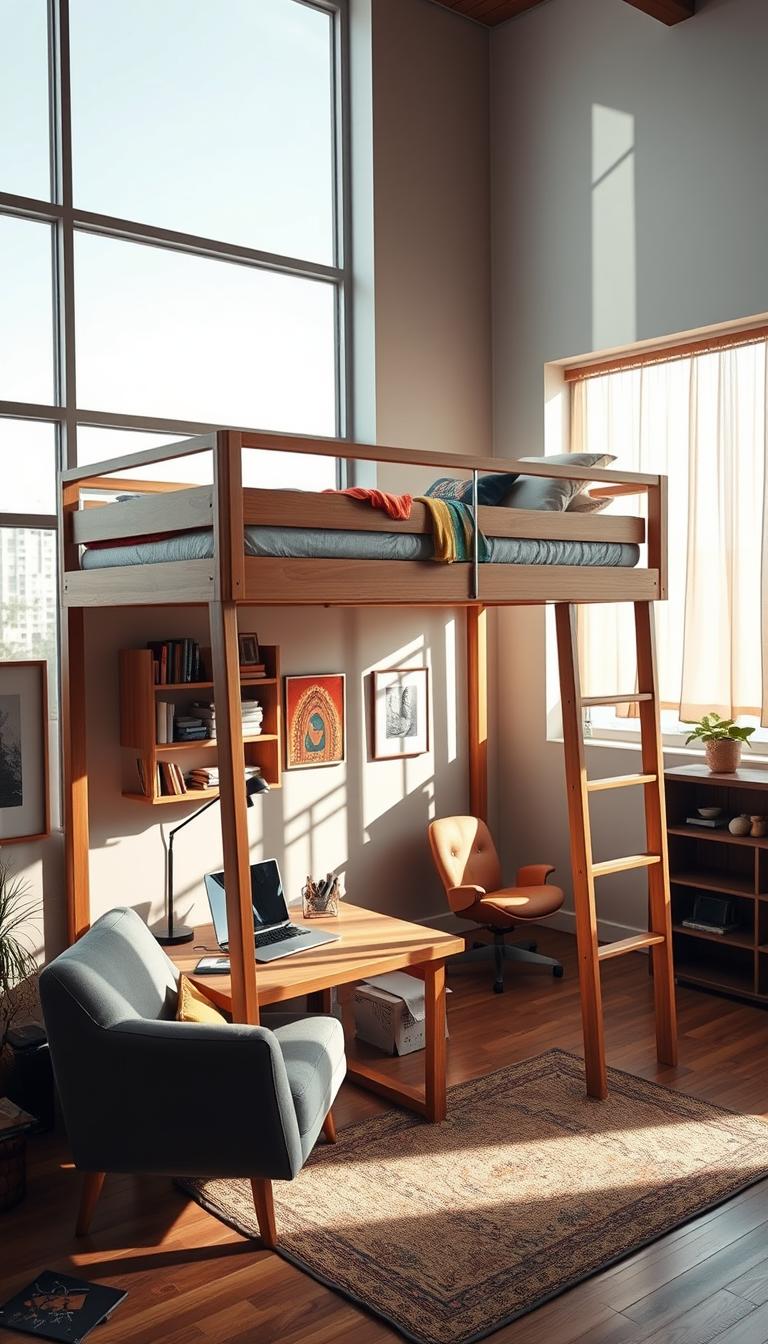
Loft beds are true space wizards. Lift the bed and you win a living or dining zone below. Before you commit, measure ceiling height so both levels feel comfortable.
Platform systems combine bed, wardrobe, and a desk into one tidy unit. That built-in storage keeps visual clutter down and makes the whole room feel calm.
Murphy beds fold into the wall and clear floor space by day. Pick models with a flip-down desk for a genuine two-for-one function in a tiny home.
- I specify compact stairs or ladders with hidden drawers—extra storage and safer night climbs.
- Platforms can define the sleeping zone with a low step and an LED toe-kick for soft safety lighting.
- Integrated headboards hide outlets and cord clutter for a cleaner setup.
- Use consistent finishes across pieces to make the space read larger and more cohesive.
“A single transforming unit can feel like new square footage—choose one that matches your daily routine.”
Furniture Placement Tricks: Sofa Backs, Rugs, and Headboards
Float the couch and suddenly the space behaves like two rooms instead of one.
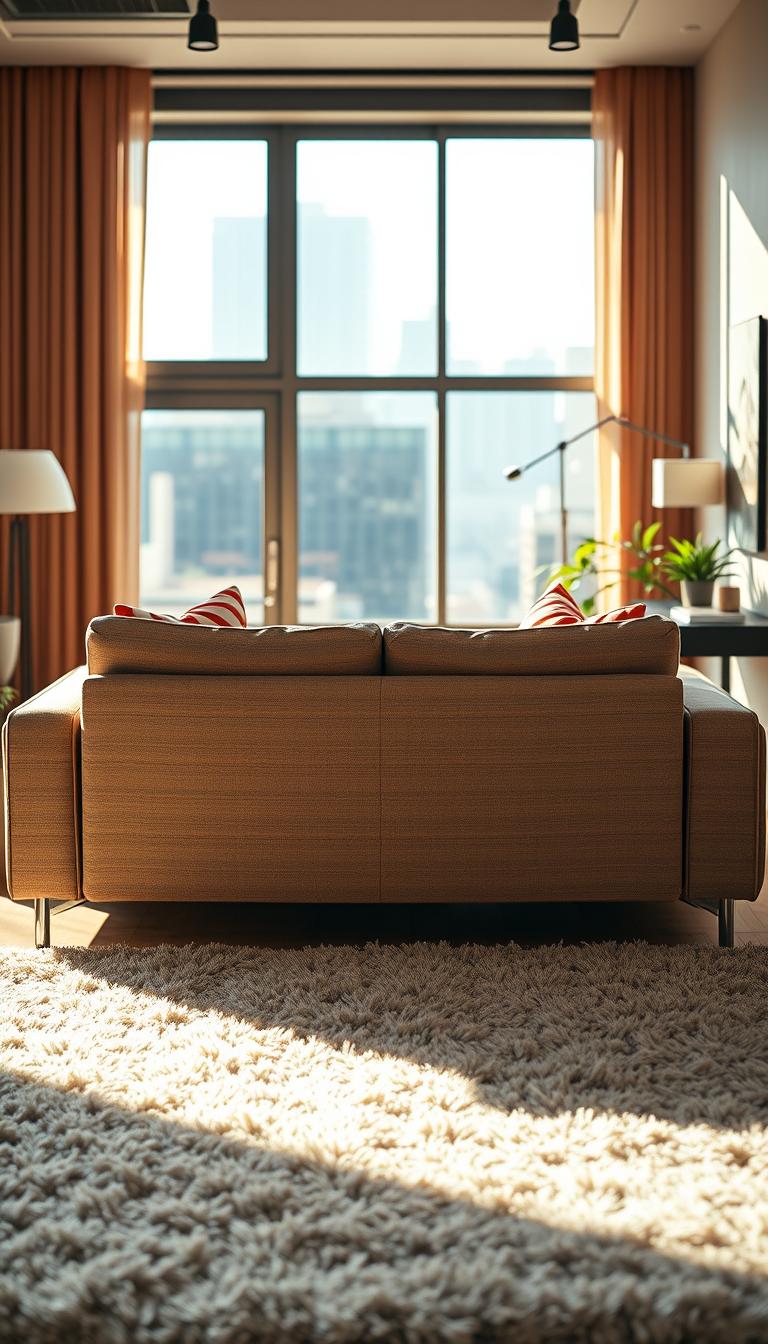
I often position the sofa so its back faces the sleeping side. This way the sofa shields the bedroom area and your eye lands on the seating scene, not the pillows.
Centering the sofa to shield the sleeping nook
Center the sofa along the main circulation line so it reads as a real living room anchor. Add a slim console behind the sofa for storage and lamps—a tidy divider that doubles as task lighting.
If you need more separation, place a low headboard or a short bookcase at the bed’s edge. It creates a subtle break without blocking light.
Strategic rug zoning without visual clutter
Layer a large rug under the living room setup to define the area. Keep the rug big enough so front legs of seating sit on it—this makes the plan feel intentional.
Finish the edge with a tall plant or floor lamp to “punctuate” the transition. A simple curtain behind the sofa can act like a soft wall you open and close by mood.
“Keep major paths clear—no chair legs where you need to walk daily.”
Finally, leave the floor clear around main routes and align the sofa with a window or column. That small alignment makes the room feel intentional and the whole interior calmer.
Natural Elements: Plants, Treillage, and Wood Slats as Organic Dividers
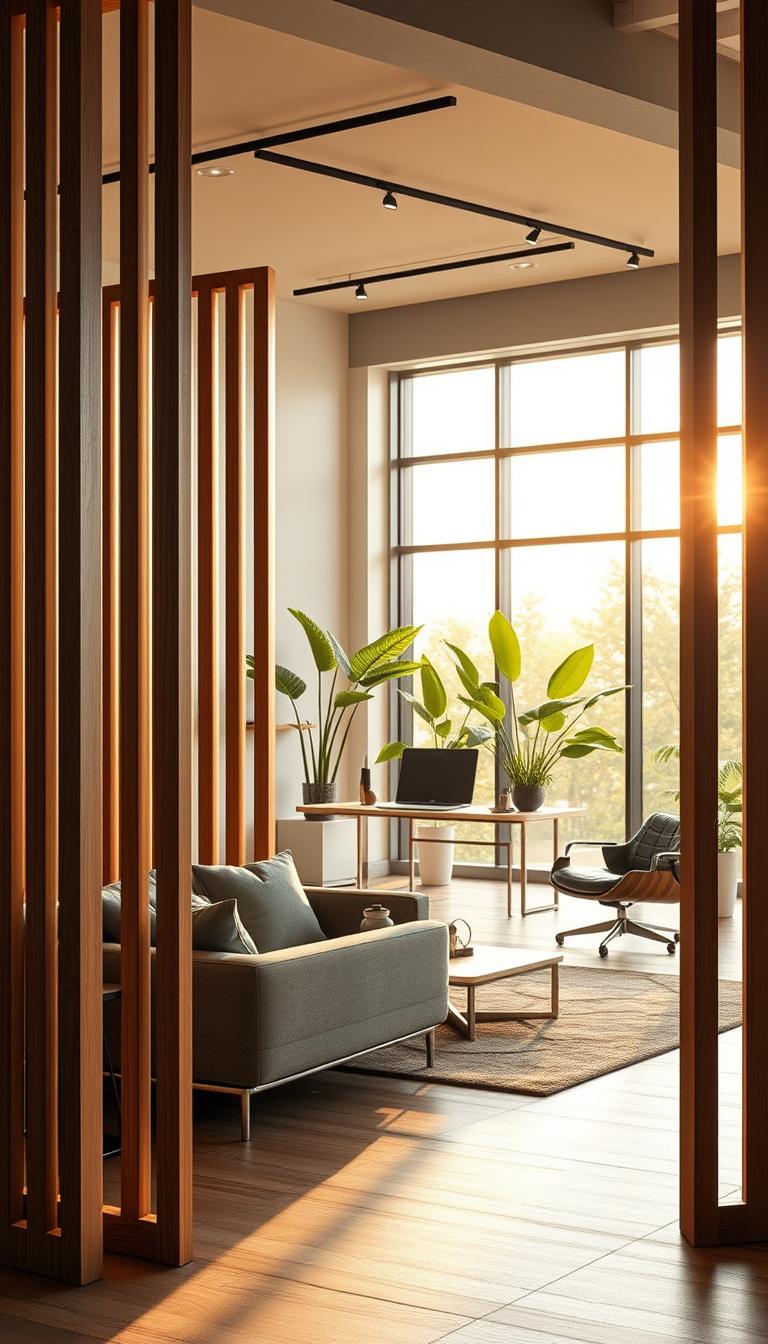
A leafy arrangement or a run of timber slats can signal a new room without a rigid wall. These organic dividers keep the plan breathable while adding texture and calm.
I place tall floor plants to soften sightlines and protect a sleeping nook. Hanging greenery from the ceiling creates an airy screen that still lets light through. In the living area this feels fresh and informal.
Tall floor plants and hanging greenery
Plants improve air movement and calm the mind. Keep heights staggered so the composition reads layered, not barricaded. Water on saucers to protect floors in a small space.
Wooden slats with shelves for warm texture
Wood slats bring rhythm and warmth. I often add slim shelves between slats for books and plants so the feature works harder. A treillage or indoor trellis adds garden architecture and charm between sitting areas.
“Natural materials make transitions feel intentional — like a gentle invitation to sit down.”
Echo wood tones across the home so the element feels native to the interior design. The result is a flexible, calm space that you can rearrange as needs change.
Clever Storage as Divider: Wardrobes, Dry Bars, and L-Shaped Desks
When space is tight, storage that doubles as separation becomes a design superpower. I’ve used freestanding pieces to carve private nooks without building walls.
Bedroom wardrobes as freestanding walls
Freestanding wardrobes do triple duty—privacy for the bed, serious storage, and the feel of a real wall.
Choose cabinets finished on both faces so each side of the room reads intentional. Add a curtain if you want a softer edge for movie nights. Watch depth—24 inches is standard; mix shallower units in tight paths.
Dry bars and L-shaped desks to separate dining and work
I often place a short dry bar between the kitchen and the dining room. It gives storage below and a serving surface on top—perfect for hosting.
An L-shaped desk carves a focused work zone and subtly shields the sleeping side. Pick modular furniture for rentals so you can reconfigure without dust.
“Integrate under-cabinet lighting or a soft base glow to mark the edge and help night navigation.”
| Solution | Main benefit | Tip |
|---|---|---|
| Freestanding wardrobe | Privacy + storage | Finish both faces; consider a curtain |
| Short dry bar | Hosts & separates | Storage below, serving top |
| L-shaped desk | Work zone + shield | Use shallow depth near walkways |
Light and Color Strategies to Subtly Separate Spaces
You can suggest a new room with two brushstrokes and a reflective panel—no construction required. Small color moves and a smart screen change how the eye reads a plan. They create zones while keeping the whole room airy and bright.
Contrasting paint in the sleeping nook
I often paint the sleeping nook a deeper color so it feels cocooned at night and distinct by day. A mid-tone in the main area keeps the living side lively when windows are limited.
Keep trim and ceilings consistent so the palette reads like one home, not patchwork. Matte finishes calm the sleep space; satin or eggshell works well in high-traffic areas.
Mirrored screens to bounce light
Use a mirrored screen to reflect natural light back into the room. It’s a small-space superpower—mirrors expand view and lift dark corners without blocking flow.
Layer lamp temperatures—warm lights near the bed, neutral in the living area—to cue mood shifts that match your color choices.
“A tonal rug can act as a soft boundary—color becomes a gentle, non-structural divider.”
- I paint deeper hues in the nook and keep main walls lighter when windows are few.
- Mirrored or reeded screens boost brightness and privacy at once.
- Limit the palette to two or three harmonious colors for a composed look.
| Strategy | Effect | Quick tip |
|---|---|---|
| Deep nook color | Creates cozy, private sleep area | Use matte finish to reduce glare |
| Mid-tone main walls | Prevents main room from feeling dark | Choose neutral warm hues near windows |
| Mirrored screen | Reflects natural light and expands space | Angle to bounce light toward seating |
Room-by-Room Applications: Living Room, Dining Room, Kitchen, Bedroom
Small moves in each space—lighting, a low shelf, a rug—can read as distinct rooms. I map function first, then choose simple elements that mark the change.
Defining a dining room from the kitchen with partial partitions
Use a partial wall or a slim glass panel to separate the dining room from the kitchen while keeping conversation and sightlines open.
A dry bar or a low counter works too—storage below, social surface above.
Creating a bedroom nook within a living area
Float the sofa to anchor the living room and place a rug to define the seating area. A low bookcase at the foot of a bed shields the sleep zone without killing light.
For privacy, add a curtain or a color shift and a small headboard to ground the bedroom nook.
- Repeat materials—wood tones, metals, fabrics—so the rooms feel related.
- Give each area a single primary job in a small apartment.
- Echo lighting types—pendant over dining, a floor lamp by the sofa—to help the brain read spaces fast.
- If you add a bookcase, keep the top open so light bounces deeper into the plan.
“Design small zones so they do one thing well—sleep, cook, dine, or lounge.”
For curtain options that work between zones, see a quick comparison of fabrics and track setups in this short guide: roman shades vs curtains.
Renter-Friendly vs. Built-In Solutions: What to Choose and Why
Choosing between plug-in solutions and built-in work often comes down to your lease and timetable.
I favor quick, reversible moves when I know a client will change addresses. In a small studio apartment, the right choice protects deposits and keeps options open.
No-drill curtains, screens, and open shelving
For renters, start with no-drill curtains, freestanding screens, and open shelves. They make a big visual change and are easy to remove when you move.
- Tension rods and ceiling tracks with adhesive pads guard paint and trim.
- Wedge-secured shelving and weight-balanced furniture prevent tipping without screws.
- Freestanding screen panels and lightweight furniture let you tune privacy for work calls or guests.
When to invest in custom or semi-permanent walls
Built-ins make sense when you plan to stay. A custom or semi-permanent wall can add real function—better storage, sound control, and resale value.
- Weigh total cost of ownership: quality pieces travel; a bespoke wall usually does not.
- If cooking odors are an issue, a glazed partition or half wall near the kitchen is often worth the spend.
- Keep specifications, invoices, and landlord approvals on file to avoid surprises.
“Choose neutral finishes on fixed pieces; layer color with textiles so the room can evolve.”
For renter-friendly temporary builds and practical track options, see a hands-on guide to creating removable partitions in an easy how-to.
Budget, DIY, and Upcycling Ideas Inspired by Designers
You can get a high-design look for very little money if you lean into thrifted parts and smart IKEA hacks. I use salvage and modular pieces to add function and personality without a major build.
Refurbished doors and architectural salvage
Old doors make soulful room divider pieces. Hinge two or three together, add new hardware, and seal with a matte clear coat to keep the patina but tame splinters.
Suspend a reclaimed door from a track or float it on casters for a movable statement that stores hooks, art, or a narrow shelf.
IKEA hacks: Platsa, Ivar, and Kallax
Platsa modules can become a platform bed with built-in storage and a closet-style headboard that truly frees floor area.
Ivar cabinets topped with a glass panel read like a half wall—they hide clutter while letting light pass. Kallax is a budget classic as a bookcase; paint it or weave cane panels to make it feel custom.
- A bookshelf with a flip-down desk brings work and display into one compact footprint—think Resource Furniture solutions.
- Suspend shelves to mark a threshold and keep the sightline open—just double-check ceiling anchors.
“Match DIY finishes to your palette so the piece reads bespoke, not cobbled together.”
I’ve used these moves on renter projects and long-term homes alike. They add storage, charm, and real practical design—without wasting money or time.
Common Mistakes to Avoid When Dividing a Studio
Small changes can make a big difference — and so can small mistakes. I’ve watched well-intended partitions dim a room or turn a compact plan into a cramped maze. Keep a clear purpose for each move and prioritize brightness and flow.
Blocking the only window or main light source
Don’t fence off the primary window. In a tight apartment, that single opening often supplies most of your natural light and your mood. Choose open shelving, glass, or low walls so light crosses the whole space.
Use translucent materials or mirrored surfaces to bounce light back. Even a thin-framed glass panel keeps separation without stealing daylight.
Overcrowding with storage that kills flow
Storage is essential, but stacking tall units along main paths chokes space. Oversized, opaque walls can make the room feel smaller and block sightlines. I tell clients: less but smarter.
Measure circulation first. Leave 30–36 inches for clear walkways and mock up swing paths with painter’s tape before you buy. That simple test prevents collided doors, crowded corridors, and daily headaches.
- Don’t block the only window — use open or glass solutions to protect precious light and your mood.
- Avoid stacking storage to the ceiling along main paths; it chokes space and makes the room feel smaller.
- Oversized, opaque walls can turn an apartment into a maze — choose partial or see-through where possible.
- Measure twice: leave at least 30–36 inches for clear walkways; your daily flow depends on it.
- Beware heavy colors on the wrong face; a dark wall opposite a dim corner can sap light.
- Keep doors and drawers from colliding — mock up swing paths first with tape.
- Skip too many small partitions; a couple of strong moves beat cluttered fragmentation.
- Choose multiuse pieces — each item should earn its footprint with storage, display, or lighting.
“A clear path and a preserved window make even the smallest plan feel generous.”
Conclusion
, Simple edits—test layouts, a mirrored screen, or a low cabinet—often solve the biggest layout headaches.
I’ve found the right partition can reshape a studio into layered, livable spaces without dimming the light or your joy. Start with light and flow; then add privacy where you need it most for better rest.
Whether you pick a mirrored screen, a rug-and-sofa shift, or a compact shelf at the foot of the bed, choose materials that fit your style and support daily life. Test ideas with tape and a temporary piece before you commit.
Small rooms thrive on intention: fewer, smarter moves beat more stuff. Edit gently, trust your eye, and let your studio apartment evolve into the calm, beautiful home you deserve.