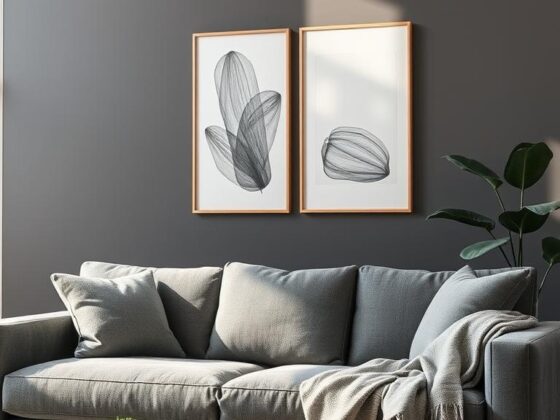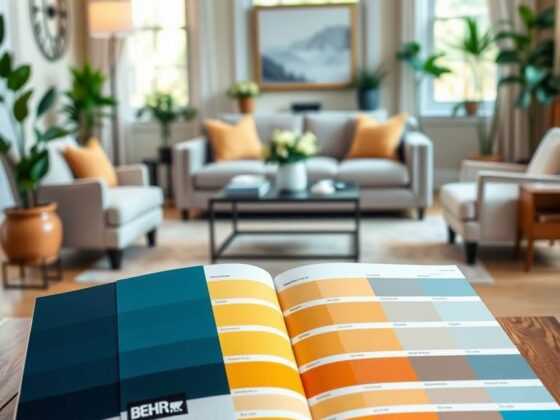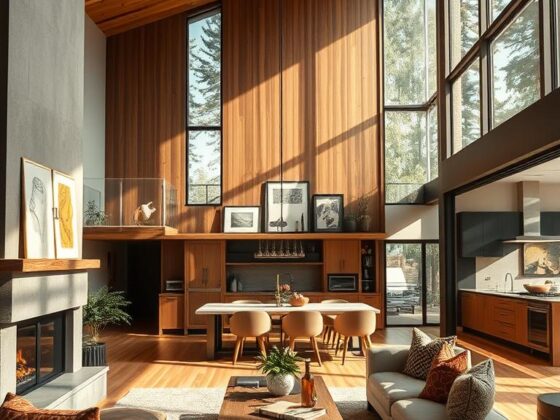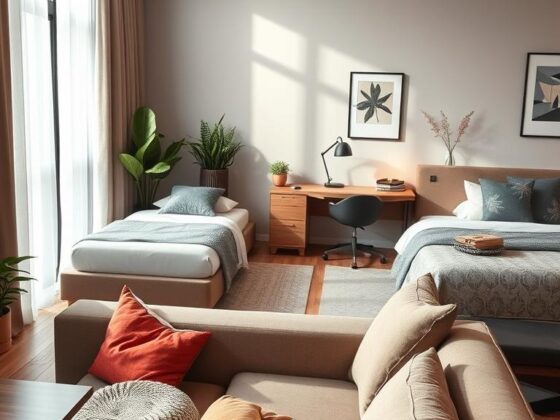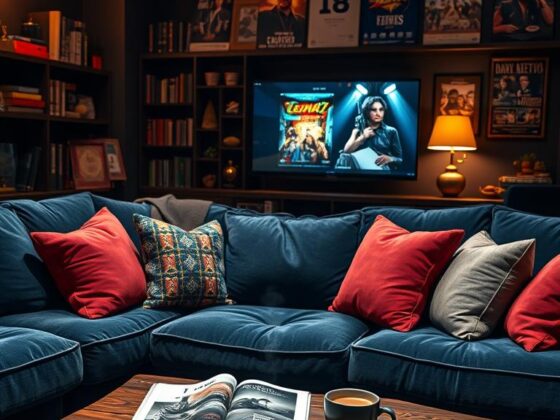
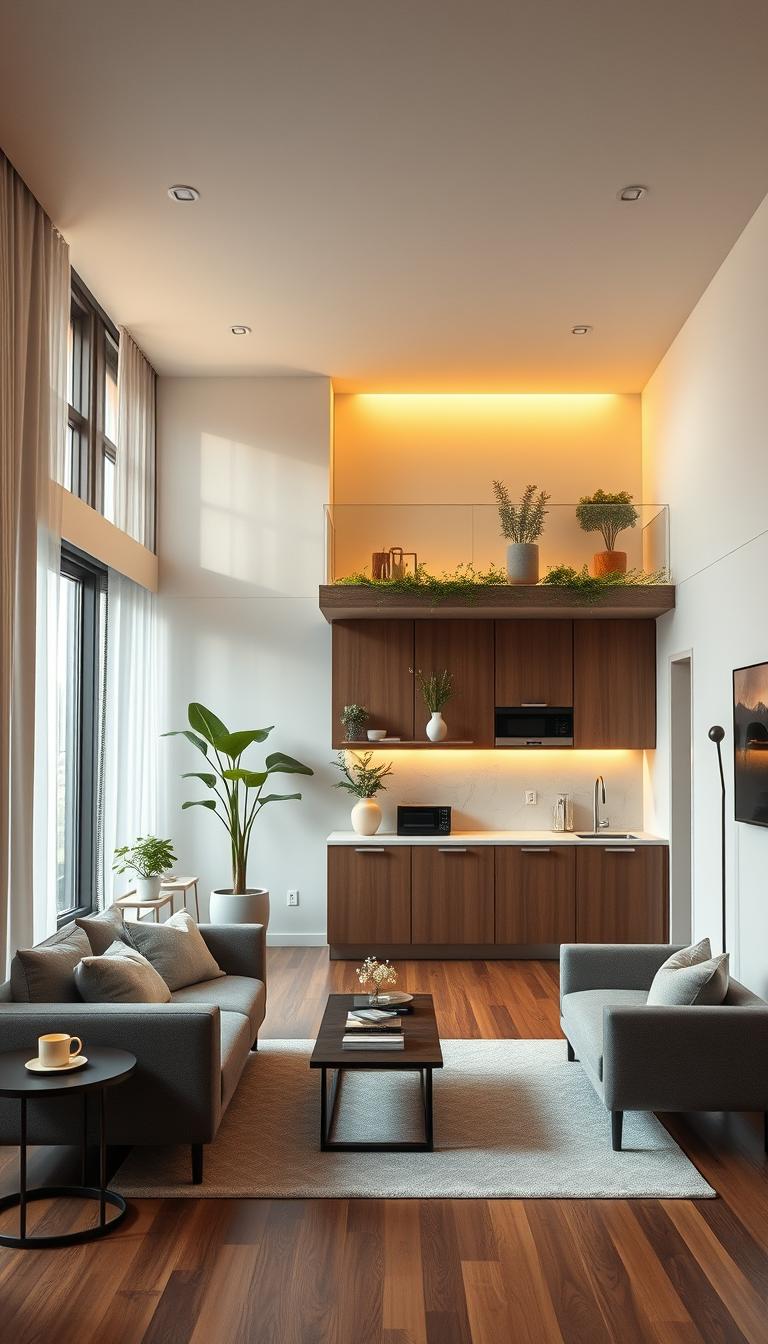
Can a tiny home truly feel generous, or are we tricking ourselves with clever tricks? I ask this because I’ve seen a 15’x20’ studio transform into a calm, roomy retreat when we plan with intent.
I start every project by saying a studio isn’t a compromise — it’s concentrated home. With room dividers, multifunctional furniture, and smart storage, you can maximize space and make the place work for your day.
When you give each area a clear job — sleeping, lounging, working — small spaces feel calmer. I’ll show renter-friendly moves like ceiling curtains and peel-and-stick materials that add personality without risk.
My goal: practical design ideas that help you keep only the items you use, boost light, and make the apartment feel larger and kinder to live in.
Key Takeaways
- Think of your studio as an intentional, compact home rather than a drawback.
- Use dividers and multifunctional furniture to create distinct zones.
- Light colors, mirrors, and light-legged pieces make space feel larger.
- Renter-friendly updates can add personality without permanent changes.
- Keep only useful items to free up breathing room and function.
Start Here: How to Plan a Studio Apartment Layout That Fits Your Life
Start with priorities: which moments do you want your small home to serve best? I ask clients to name the one daily habit they can’t compromise—sleep, work, or social time. That single choice shapes every decision that follows.
I sketch the 15’x20’ (300 sq ft) perimeter, then mark doors, windows, heaters, and outlets to understand square footage and natural traffic flow. This quick map shows where a bed, desk, or sofa will block light or paths.
Trace your rituals: coffee spot, laptop landing pad, yoga mat. Place furniture to support those moments—not fight them. When sleep is the priority, anchor the bed first and protect sightlines for calm. If you work at home, put the desk away from the bed to help focus.
Use tape on the floor to preview real scale. Keep pathways 30–36 inches wide. For shared living, plan private zones and a commons with modular partitions or curtains. Measure every piece before buying—proportion is everything in a good studio apartment layout.
Studio Apartment Layouts
With a few choice pieces, a single room can read like multiple rooms—without a single new wall. I rely on furniture to act as gentle architecture so each zone feels purposeful.
Create functional zones without adding permanent walls
I often start by floating a slim sofa and using its back as a soft boundary for the living room, then tuck a compact table behind it for dining or work. A low bookcase or an IKEA Kallax at the foot of the bed doubles as storage and signals a separate room in as little as 150 sq ft.
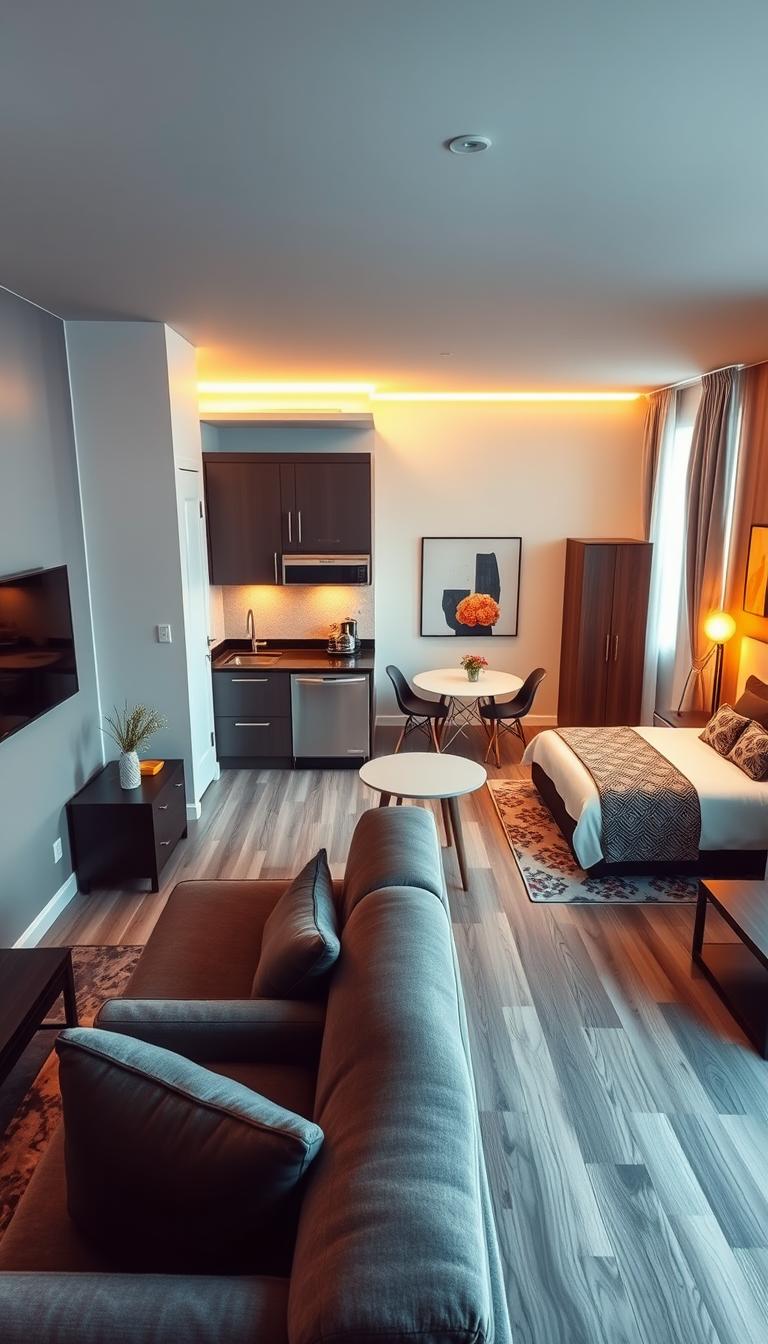
Ceiling-mounted curtains give renters quick privacy while keeping light flowing. Align zones with window walls so daylight moves through the entire space and keeps sightlines open.
- Use leggy chairs and a slim sofa to avoid visual bulk.
- Ground each area with a properly sized rug to unite furniture groupings.
- Let storage do double-duty—a low dresser can become a half-height divider.
Tip: Treat the whole design like a single vocabulary—consistent color and texture makes separate zones feel calm and larger than the square footage suggests.
Zoning a Small Space: Define Areas for Living, Sleeping, and Working
Think of your small home like a tiny city—clear streets and cozy parks make it easy to move and linger. I map traffic first, then place big pieces so people naturally flow where they should.
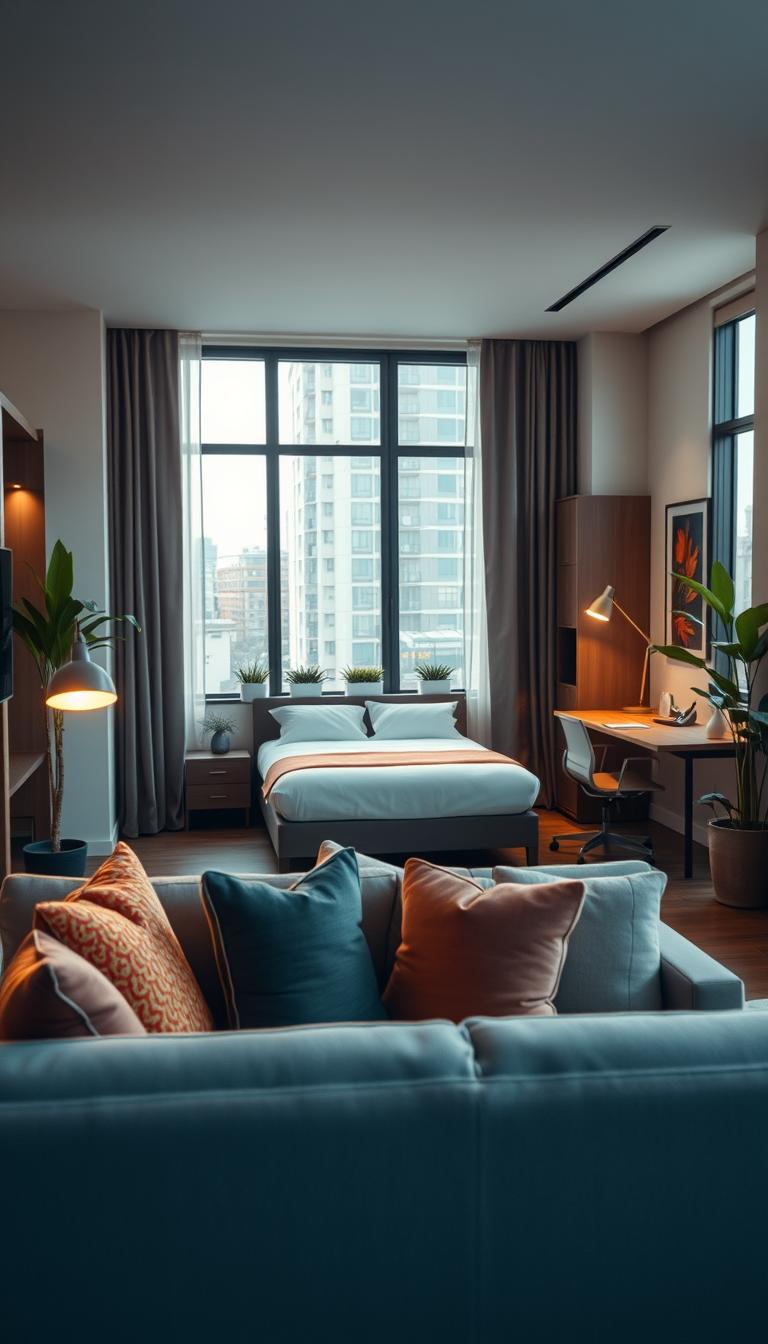
I anchor the bed, sofa, and desk before anything else. That tells the room where to breathe. Use the back of a sofa or a low shelf as a gentle divider. Pair a shelf with a ceiling-mounted curtain and you get a true sleeping nook without building walls.
Use furniture placement to guide movement
- Plan routes: leave 30–36 inches for main paths so movement feels easy.
- Start big to small: place sofa, bed, desk; then add lamps, side tables, storage.
- Float seating to create a clear living area and better conversation lines.
- Angle a chair or plant where traffic cuts too close to the bed to redirect flow.
- Face your desk toward light—your focus and posture will thank you.
“Design the walk first; the rooms will fall into place.”
Do a test walk. If anything feels tight, swap to smaller pieces. With a few smart moves, a studio can behave like a one-bedroom apartment—open, ordered, and calm.
Room Dividers That Work: From Shelving to Temporary Walls
Good dividers do more than mark zones—they shape how you live in a small home. I use a mix of see-through shelving, curtains, and modular panels to keep light and privacy in balance.
Open shelving (think IKEA Kallax) becomes a permeable wall that stores books, baskets, and art while letting air and sightlines pass. It’s an easy way to split a sleeping nook from a living area in 150 sq ft without feeling boxed in.
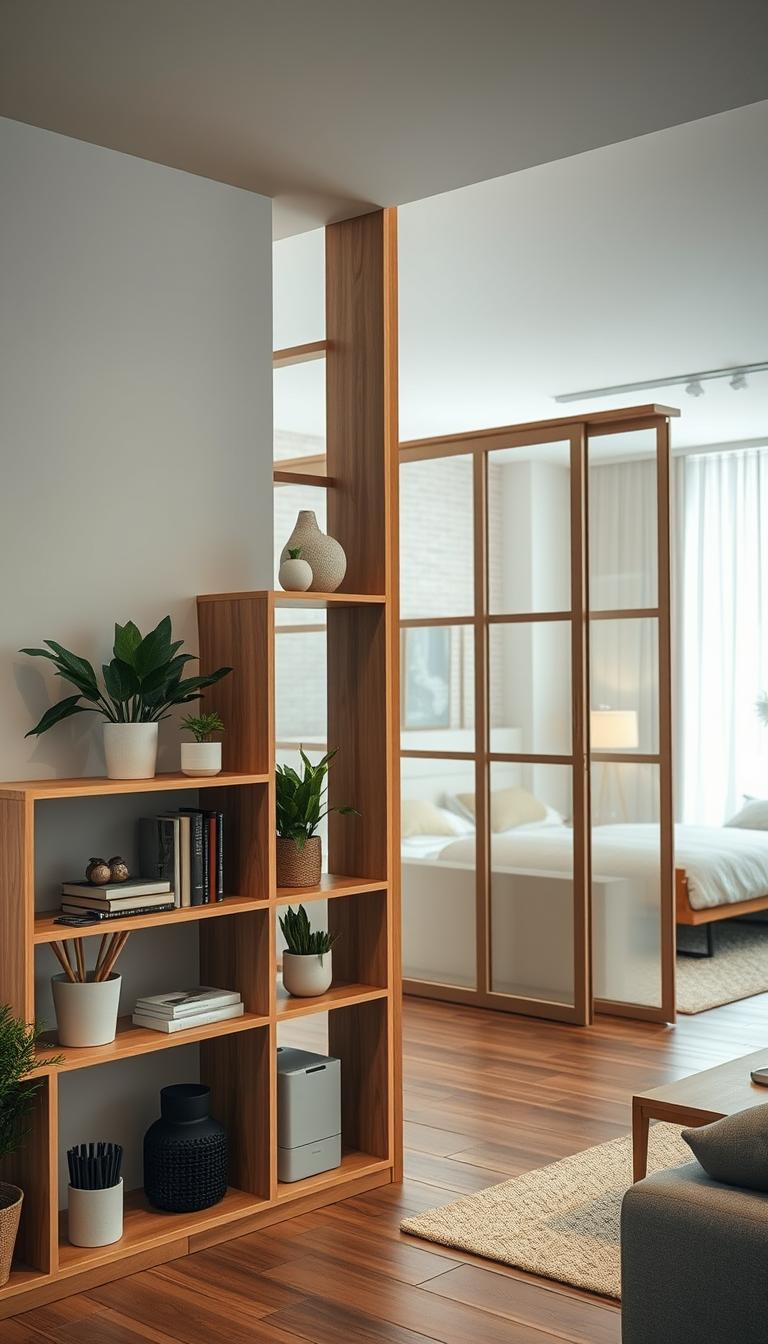
Flexible options I recommend
- Ceiling-mounted curtains: renter-friendly, instant privacy at night, full openness by day—pure gold.
- Modular panels: Abstract Room Divider or a Pony Wall sets up fast for a more finished look.
- L-shaped Partition with Door: gives near-room privacy for a bed or home office without permanent walls.
- Soft dividers: rugs and clusters of plants anchor zones and add texture without closing the space.
Tip: Layer a see-through shelf with a curtain track. That way you can toggle between openness and privacy depending on the moment.
Multifunctional Furniture to Maximize Space
I favor pieces that work overtime—so the space shifts with your day. Picking dual-purpose items keeps a small home uncluttered and calm.
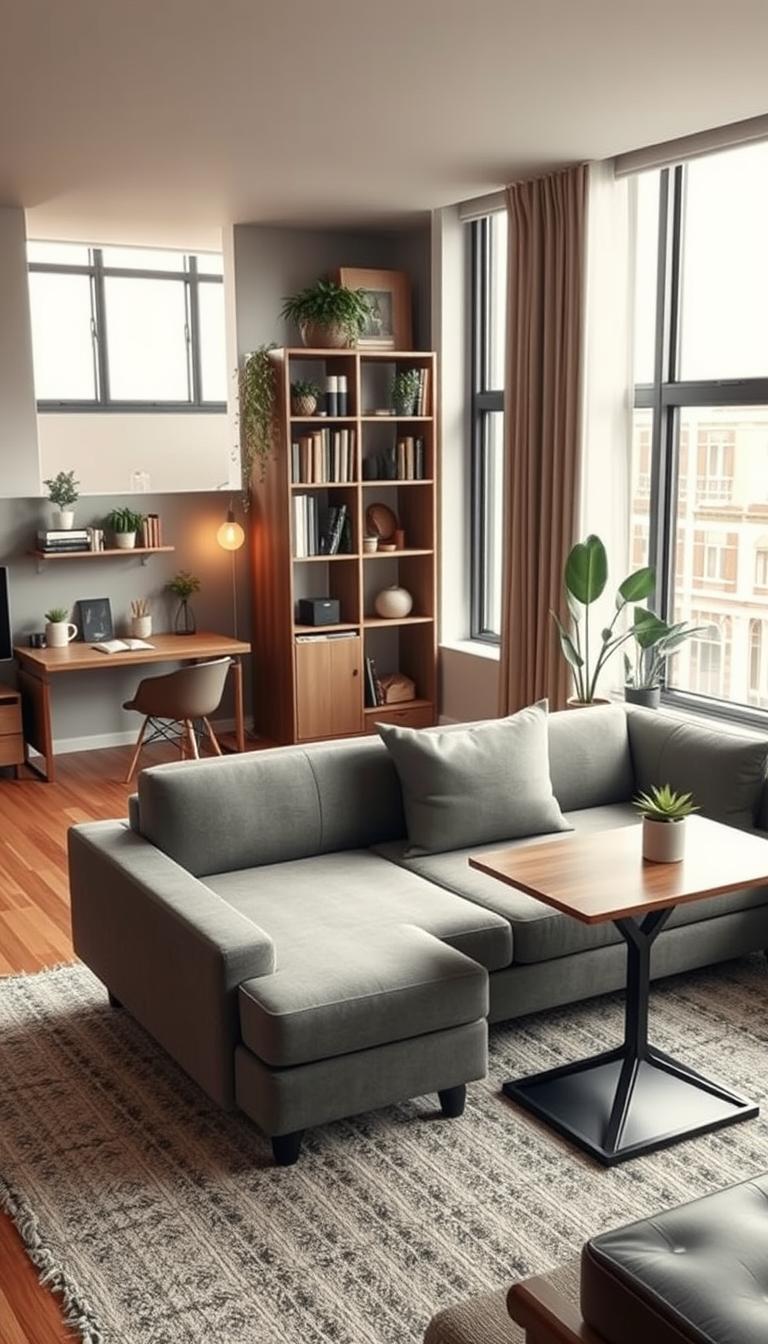
Daybeds that double as sofas for living rooms
In tight studios, I lean on daybeds—they read as a sleek sofa in the living room and transform into a comfy bed at night. They give seating depth by day and a proper sleep surface by night.
Murphy beds to open floor space by day
Murphy beds fold up to free the floor and make the room feel larger. Modern wall beds add clean lines and panel detail so the unit reads like furniture, not a closet door.
Fold-down tables, nesting pieces, and storage ottomans
A fold-down table works as a desk or dining perch, then tucks away. Nesting pieces expand for guests and disappear when you want negative space. Storage ottomans hide blankets and act as extra seating or a coffee surface.
- Choose items with slender legs to keep sightlines open.
- Pick durable, light-to-mid upholstery to reflect natural light.
- Prioritize ergonomics—seat and table heights matter for daily use.
- Hide a power strip near your daybed/sofa to avoid cable clutter.
Tip: Mix these pieces and you’ll maximize space without sacrificing comfort—your studio or apartment can flex from quiet sanctuary to social hub in minutes.
Storage Solutions for Small Apartments
Storage isn’t about hiding—it’s about giving every item a fast, logical home. I like to start with vertical moves and the places people usually miss. That way you free floor area and gain real cubic footage.
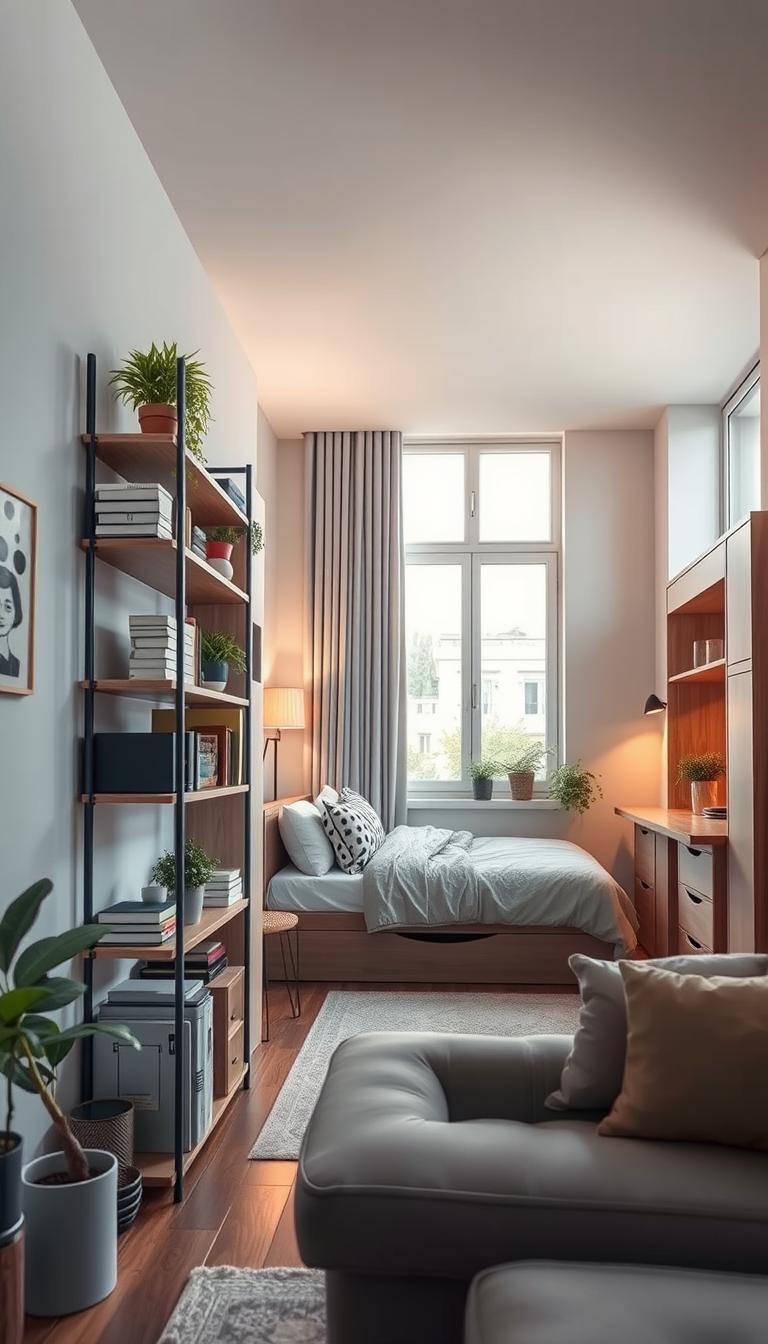
Under-bed, over-door, and wall-mounted systems
Under-bed bins are prime real estate. I prefer low, soft-close boxes so you actually use them.
- Under-bed: shallow bins for seasonal clothes and gear.
- Over-door: racks for shoes and cleaning tools—no bulky wardrobe needed.
- Wall-mounted: rails and clear pockets keep essentials visible and off the floor.
Built-ins and dressers tucked into nooks
If you have a niche, fit a wall-to-wall dresser to turn dead space into serious storage. Built-ins around a bed or desk make the room feel finished and uncluttered.
Decluttering rules to keep your apartment feel open
Start with a ruthless edit—every item must earn its place with daily joy or frequent use. Assign homes for categories: linens, workout gear, hobby kits.
- Use clear bins and labels to end the “where did I put that?” spiral.
- Rotate seasonally and rent a small off-site unit if you truly need overflow—many renters find this the easiest fix.
Light and Color: Make Your Studio Feel Larger
Light does more than reveal — it expands, lifts, and rewrites tight corners into breathing places. With a few color choices and reflective finishes, you can make space feel calmer and more generous.
Use pale colors and layered paint to add depth. Creamy whites and soft pastels bounce light across the floor and walls so the room reads taller. If your floors are dark, a light flat-weave rug will mimic pale wood and make the whole area look larger.
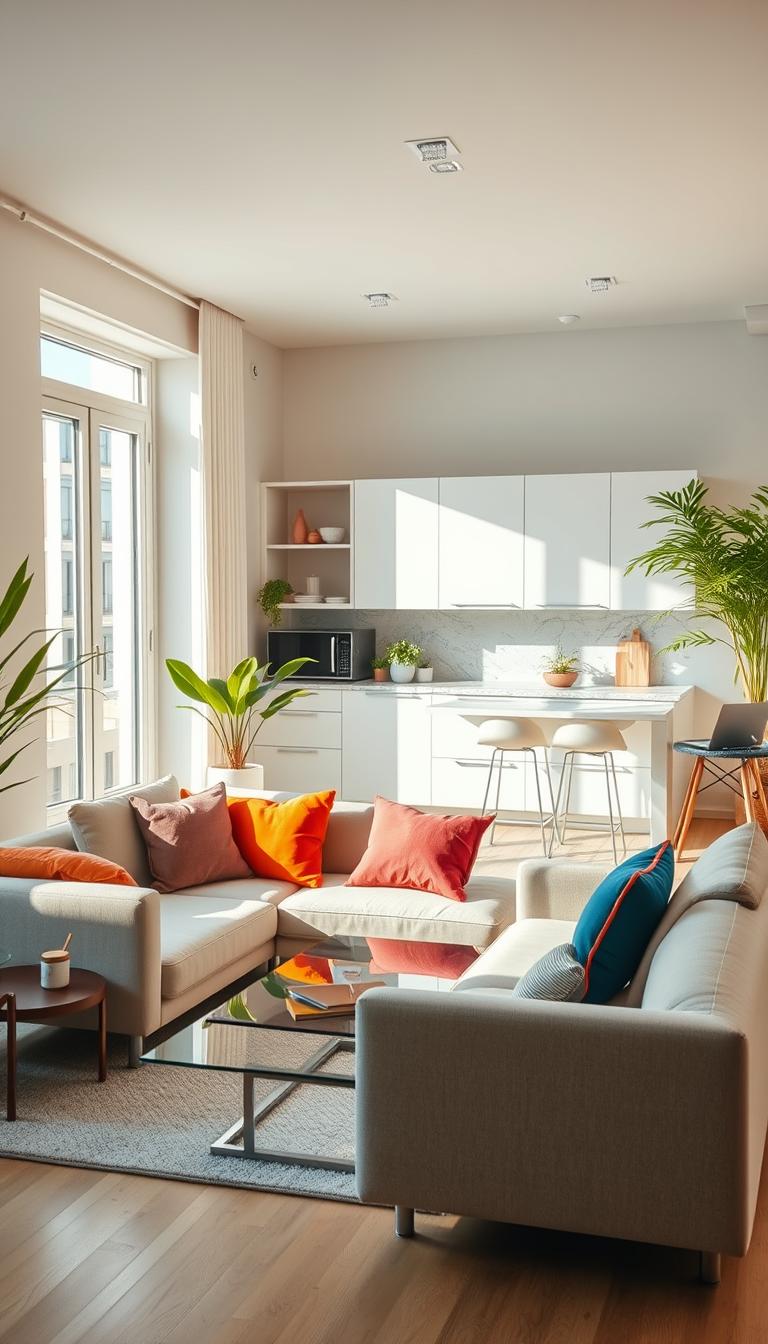
I often paint a subtle rectangle or band behind the bed or sofa. It acts like a borrowed window and adds perceived height. For renters, peel-and-stick wallpaper gives texture without commitment.
Amplify natural light with mirrors and finishes
- Place a large mirror opposite a window to double natural light and erase visual boundaries.
- Choose chrome, glass, or satin finishes to reflect brightness without feeling cold.
- Keep window treatments airy—ripple-fold curtains in a light fabric filter glare while feeding the room light.
- Repeat a tight color palette across zones so the apartment feel stays cohesive and the eye moves effortlessly.
“A gentle glow helps you unwind and wake gently in the same beautiful room.”
Vertical Design: Build Up When You Can’t Build Out
When floor plans are tight, I look up first—height is often the hidden square footage. Using walls lets you keep the floor clear and the room feeling calm.
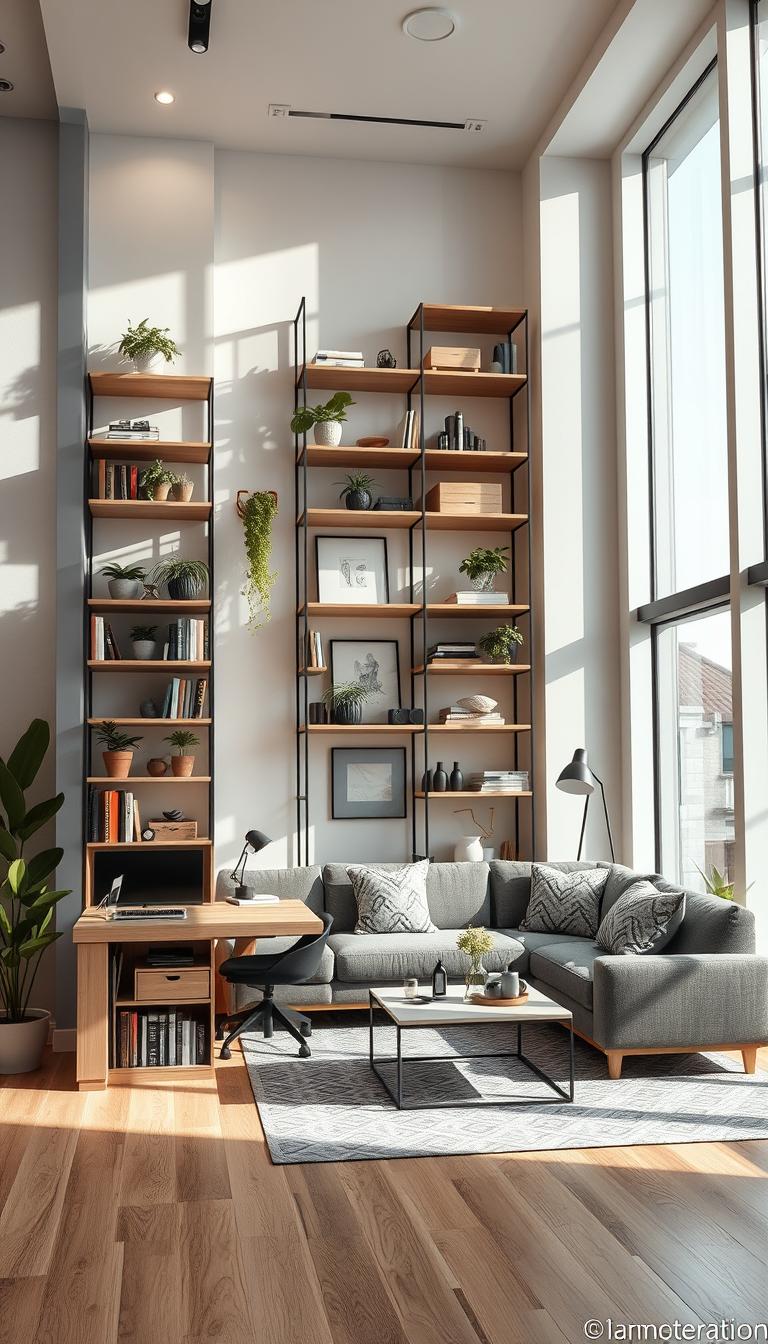
I use tall bookcases, stacking cabinets, and over-door shelves to turn a thin wall into serious storage space. A desk with upper shelving stores papers, books, and chargers in the same footprint as a small table.
Quick wins:
- Install a high “luggage shelf” around the perimeter for seasonal items—out of sight, not out of reach.
- Mix closed cupboards up high with open shelves at eye level for daily access and tidy looks.
- Anchor tall pieces with a low bench or credenza so the visual weight feels balanced.
- Add a slim ladder or tuck-away step stool for safety and ease.
Lighting tip: an LED strip on the top shelf adds soft mood light and helps you find things without turning the whole room into harsh glare.
“Vertical planning unlocks nooks you didn’t know you had.”
Bedroom-Focused Studio: Create a Restful Retreat
When sleep is the non-negotiable, I design the whole plan around a single inviting bed. A calm bedroom corner changes how the rest of the studio functions. Start with mood—soft light, quiet textiles, and a limited palette.
Prioritize a cozy bed and soft textiles
Layered bedding matters. A linen duvet, a light wool throw, and two pillow types cue rest. Add a plush rug so the first step out of bed feels like a small luxury.
Use a pony wall or curtain to form a sleeping nook
A low wall or ceiling-mounted curtain defines the nook without heavy construction. It gives privacy but keeps the apartment open and airy.
- Keep bedside surfaces compact—use wall-mounted shelves instead of bulky tables.
- If you want daytime floor back, a Murphy bed tucks away and frees the space.
- Layer blackout panels under sheers to control light and protect sleep.
- Place a slim dresser behind the headboard for storage that also anchors the layout.
“Design the sleep zone first—everything else adapts.”
Limit tech near the bed. Choose warm lighting and natural textures—linen, wood, and wool—to make this small room feel like a true home.
Living Room-Focused Studio: Lounge, Entertain, Repeat
If you love to host, design the lounge first—everything else should bend to that social center.
I float a sofa and a pair of chairs in a conversational arc so the living room reads like a true gathering area. Then I add a slim media wall that holds a screen and hidden storage without crowding the floor.
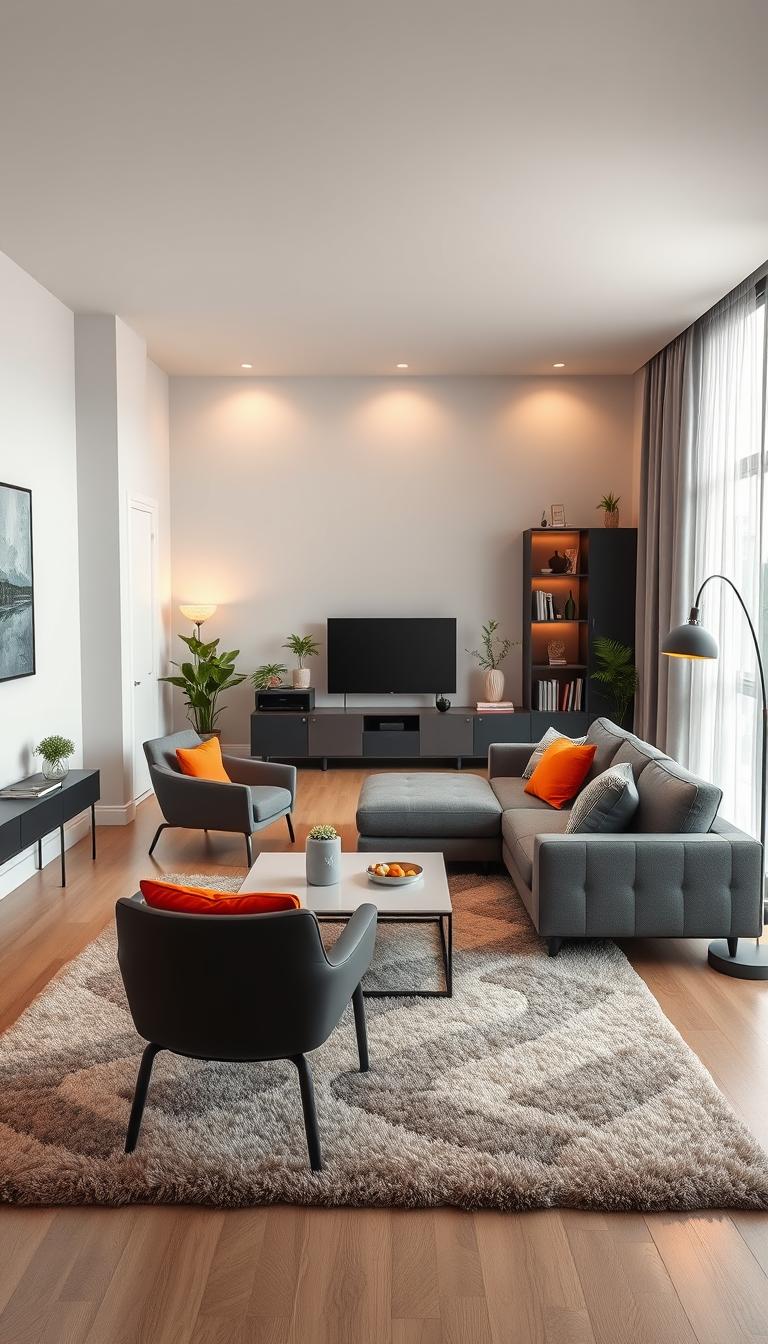
Float seating and add media without crowding
Keep pathways clear. Use narrow-armed furniture and a low console to keep sightlines open. A compact table pulls double duty as a serving station and a laptop spot.
Define the living area with a divider or temporary wall
Separate the bed with a low divider or curtain so guests never feel like they’re in your sleeping nook. Tuck stools under the kitchen counter and let the kitchen act as a casual bar.
- Use portable seats—poufs and stools—for flexible hosting.
- Choose performance fabrics and washable rugs for easy cleanup.
- Add big plants to soften edges and improve sound.
“A living-first plan hosts beautifully and resets to calm with little fuss.”
Want more decor tips for a small space? See fresh ideas in this small-space refresh guide.
Home Office in a Studio: A Quiet, Productive Nook
A tiny desk can anchor your day and protect your evenings from work creep. I place work areas deliberately so the rest of the room reads as home again when you clock out.
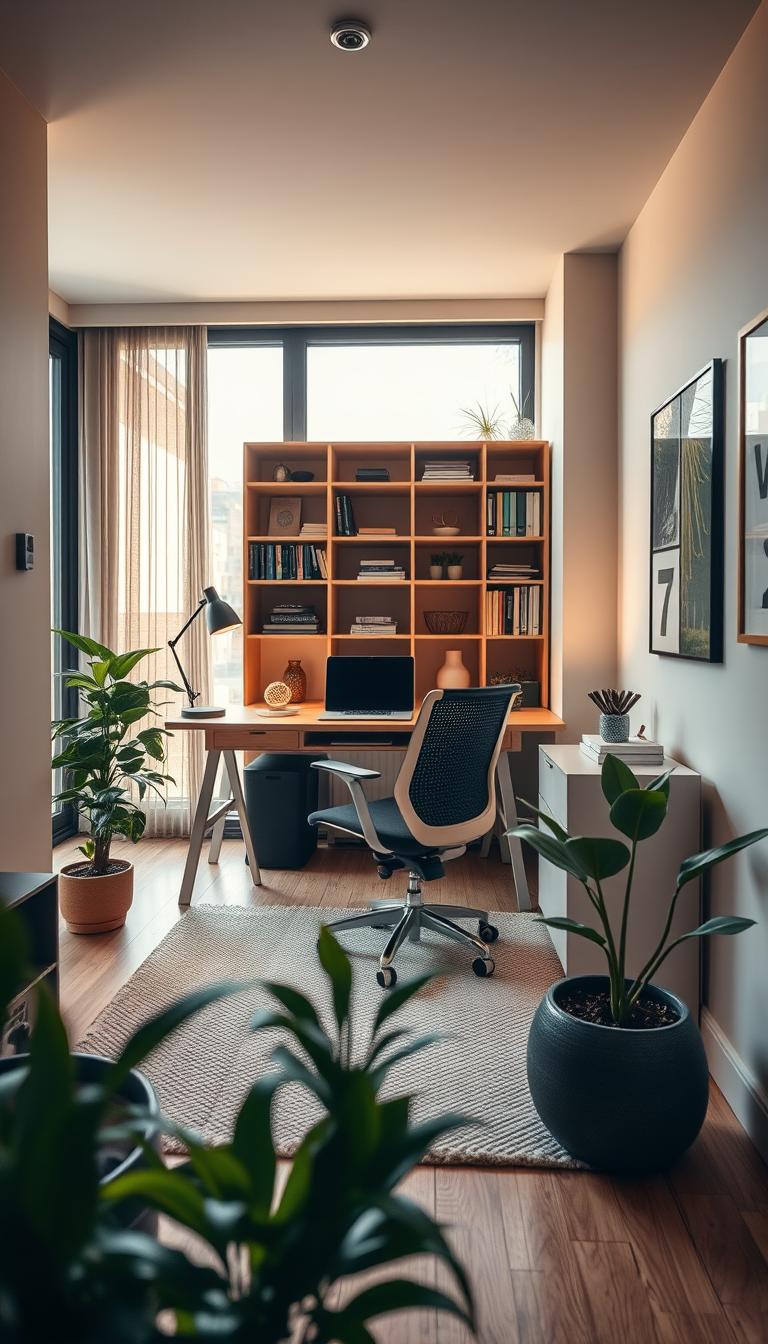
Place the desk away from the bed for focus
Separate work from sleep—put your desk out of the bed’s line of sight. That visual boundary boosts focus and helps set emotional limits between tasks and rest.
Wall-mounted desks and lighting to save floor space
I favor wall-mounted furniture like slim fold-down desks and a narrow table that disappear when you need the floor back. Pair them with plug-in wall sconces to keep the floor clear and the desktop open.
- Use a lightweight partition or curtain to define a dedicated nook without building walls.
- Add vertical shelves and pinboards above the desk so papers don’t spread across the studio.
- Route cables with a single under-desk raceway for a tidy finish.
“Close the laptop, clear the table—let the room remember it’s home time.”
Calibrate your chair if the desk doubles for meals, tuck a plant near the monitor, and you get a micro office that supports work and rest in a smart studio apartment layout.
Rent-Sharing Studio Layouts: Privacy Without Permanent Walls
Two people can live well in 300 square feet if we carve private corners and respect common ground. I’ve helped clients share tight footprints by agreeing roles, routes, and quiet hours before moving furniture.
Start with a pact: assign private sleep and desk zones and a shared commons for cooking and lounging. Then pick modular pieces that create separation without drilling into walls.
Divide common and private zones with modular partitions
- Pony Wall: half-height dividers keep daylight while signaling ownership of a slice of the space.
- L-Shaped Partition with Door: gives near-bedroom privacy and can be removed when life changes.
- Layer a shelf or dresser with curtains to soften sound and add storage along the boundary.
Practical rules: keep main paths wide, mirror storage on both sides, and set weekly resets to avoid clutter conflict. Always confirm landlord permissions before installing taller pieces or semi-permanent walls—get approvals in writing.
| Solution | Privacy Level | Light | Storage |
|---|---|---|---|
| Pony Wall | Moderate | High | Low–Medium |
| L-Shaped Partition with Door | High | Medium | Medium |
| Curtain + Shelf | Medium | High (when open) | High |
“Smart separation turns tight square footage into livable dignity for two.”
Kitchen and Dining: Smart Solutions for Tight Quarters
Smart kitchens win by clearing the path and giving you only what you need at hand. I always start by protecting circulation—cooking in a tight area only feels pleasant when you can move without bumping a stool or door.
Counter seating that tucks away
Pick counter stools that slide fully under the counter. They free up circulation and keep the dining spot from crowding the main walkways.
For two, a narrow drop-leaf table is a quiet winner. It hugs the wall most days and opens when you want to dine. A console with a tray becomes an instant bar—no large furniture needed.
Compact islands and bar setups with storage
A slim, mobile island adds prep surface and extra storage without overwhelming the kitchen. Choose one with shelves or drawers so it doubles as a casual dining spot and a tidy staging place for items.
- Corral small items in lidded bins so cabinets stay calm.
- Install a rail for utensils and mugs to reclaim cabinet space.
- Style the windowsill with herbs or a single stack of bowls when surfaces are scarce.
“Task light and a clear path make cooking in a small room feel effortless.”
Use nesting cookware and stackable glass containers to multiply capacity. Keep finishes aligned with the living zone so the whole studio or apartment reads as one thoughtful place.
Design Tricks That Make a Small Space Feel Bigger
A few visual moves can change how the eye measures a room. I use color, scale, and reflections to bend perception without demolition. These are practical ideas you can try this weekend.
Cohesion with one hue or thin paneling bands
Swathing a studio in a single hue helps your eye travel. Curtains, upholstery, and walls in related tones feel continuous and calm.
A slim strip of paneling running around the apartment acts like a horizon. It bridges zones and makes the floor-to-ceiling sweep feel intentional.
Light-legged furniture and mirrored or chrome accents
Pick furniture with slim legs so light slips under pieces and the floor reads longer. Mirrored trays, chrome-legged nightstands, and a single metal finish across the kitchen and living areas add sparkle without clutter.
Wall-mounted sconces free the floor and keep sightlines clear—an easy way to make space feel open.
Vary seating scales to keep the area airy
Mix one generous sofa or bed with slender side chairs. That combo breathes—big presence and delicate companions balance the area.
Repeat textures—linen, oak, wool—to layer warmth while keeping the shell soft. Small moves add up until your small spaces truly feel spacious and yours.
Unconventional Layout Ideas That Actually Work
Sometimes the smartest moves bend convention—float major pieces and let them define zones. I love layouts that feel inventive but behave sensibly. These two ideas slip in function without adding walls or fuss.
Float the bed with a dresser behind for a sleeping nook
Floating a bed away from the wall can feel indulgent. Park a waist-high dresser behind it to create a mini dressing zone and a private nook.
Angle a rug under the bed to signal separation without blocking light. Use a low bookcase as a headboard to hide cables and keep nighttime reads within reach.
Extra-large banquette to combine dining, work, and lounge
Swap a sofa for an oversized banquette and pair it with a sturdy table. Suddenly one footprint handles meals, laptop hours, and lounging for guests.
Add a swing-arm sconce on the banquette to shift from bright task light to soft ambient glow with one flick.
- Treat a long wall like a gallery—hooks and shelves move as your needs change.
- Try two small round tables instead of one big rectangle for flexible dining and play.
- Repeat one accent color between the nook and main zone to keep the design cohesive.
“These inventive layouts turn constraints into delight—unexpected, practical, and deeply personal.”
Conclusion
Start with one clear priority. Name the single thing you need your room to do most, then let that guide each choice.
I’ve seen small changes shift how a space behaves. Use dividers, multifunctional pieces, and vertical storage to increase flow and calm.
Light, color, and smart organization reshape perception. Try one renter-friendly tweak—peel-and-stick wallpaper, a mirror, or a curtain track—and watch the apartment layout feel larger.
Keep editing and measuring. Give yourself time; good designs grow with you. When you need a bigger move, modular partitions and durable finishes make change easy.
I’m cheering you on—pick one idea, try it this week, and enjoy how your room responds. Your studio can be purposeful, inviting, and entirely yours.