
Want to make your dining area feel lighter and more inviting without buying a lot of new stuff? I do this by shopping my own home first—rotating linens, serveware, and a lighter centerpiece to shift the energy of the room.
A simple swap—like a narrow chair to fit more guests or a fresh palette of pink and orange with copper accents—can change how people feel at dinner. I lean into a garden-to-table approach: seasonal blooms, a few herbs for scent, and small centerpieces that don’t block conversation.
Layering is key. Start with a clean tablecloth or runner, add plates and napkins that echo your color story, then finish with a low arrangement of greenery or tulips. Cutting stems at a 45-degree angle helps flowers drink better and stay fresher longer.
My goal is to help you create a curated look that feels personal and polished—using one or two new items and many reimagined favorites so your home feels renewed for the season.
Key Takeaways
- Start by rotating items you already own to refresh your table quickly and affordably.
- Choose airy textures and a low centerpiece to keep conversation and sightlines open.
- Plan around the season, time of day, and your guests for a thoughtful vibe.
- Use garden-forward choices—fresh flowers, herbs, and greenery—for scent and life.
- One or two well-chosen pieces can transform your palette and centerpiece without clutter.
Set the mood: light, airy, and seasonally fresh
Open the setting by choosing linens and vessels that feel soft, light, and unfussy.
I rotate serveware, napkins, and centerpieces with the season to keep things fresh. I favor breathable textures—linen, cotton slub, and open weaves—so the surface reads airy, not heavy.
Lean into materials and breathable textures
Choose natural fabrics and repeat a material two or three times—for example, linen runner and matching napkins—so the look feels intentional.
Balance negative space with low-profile centerpieces
Negative space is your secret. Let surfaces breathe and pick narrow vases or bud bottles that scatter light. I edit ruthlessly: remove one item for every two added.
- Use pale cloths to lift a dark surface or a slim runner to add texture to a light one.
- Keep tactile touches small—soft napkins, a woven charger, a slim tray.
- Swap heavy winter vessels for narrow glass and rattan for a lighter season look.
| Material | Look | Use Case | Styling Tip |
|---|---|---|---|
| Unbleached linen | Soft, natural | Runners, napkins | Repeat across two elements |
| Woven rattan | Warm, textural | Chargers, trays | Limit to accents |
| Clear glass | Light, reflective | Narrow vases, bud bottles | Use low-profile pieces only |
| Cotton slub | Casual, breathable | Placemats, napkins | Mix with linen for depth |
Spring Table Decor
Start with a clear palette so every plate, napkin, and bloom feels like part of the same story.
I follow four simple pillars: a calm color direction, fresh flowers or greenery, tactile linens, and one focal centerpiece that anchors the view.
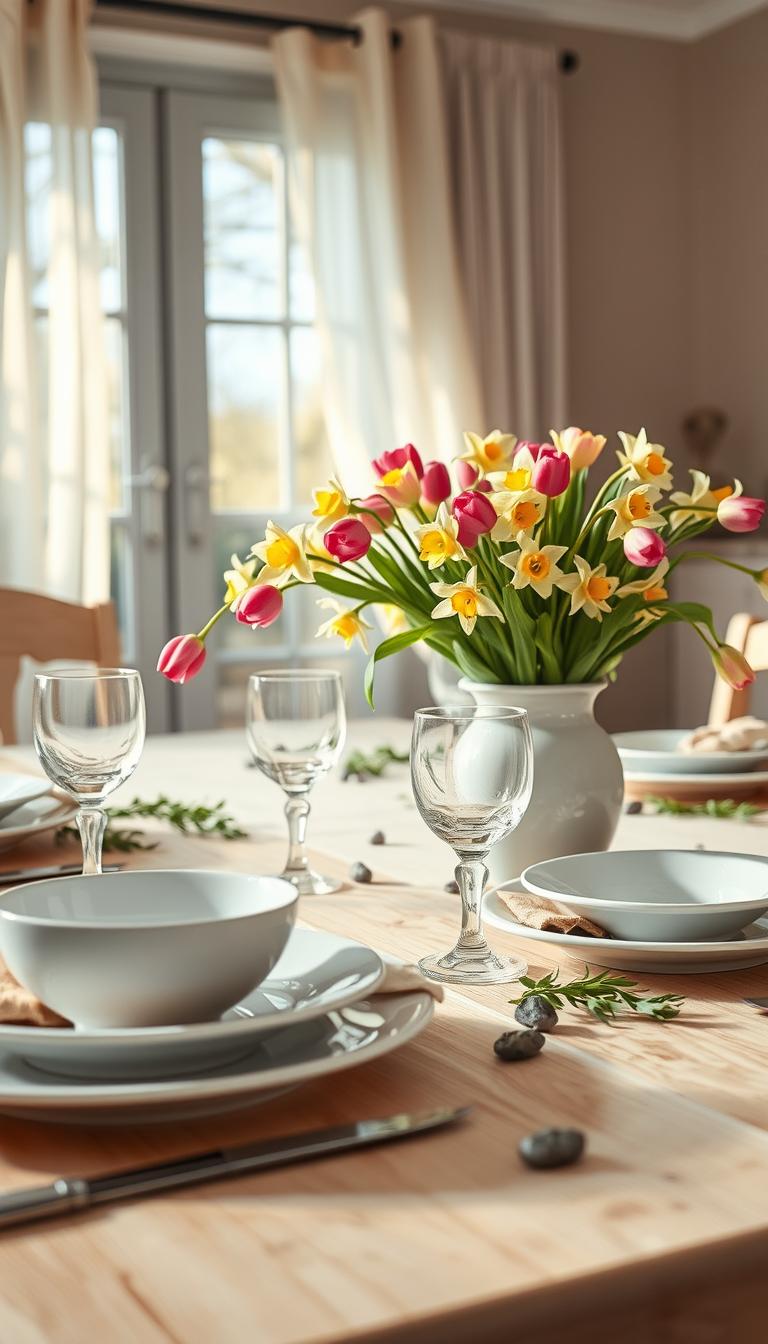
Choose two main colors and one accent so plates, linens, and vases harmonize without feeling matchy. I layer plates for depth and add a single bloom at each place to echo the arrangement.
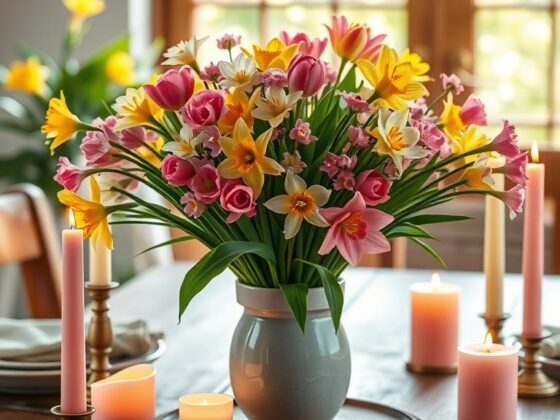
Seasonal flowers are your shortcut to a quick refresh. Tulips and daffodils last longer if you cut stems at a 45-degree angle in the morning and change water often. Keep centerpieces light—a single strong centerpiece or a trio of small vases keeps sightlines open and conversation flowing.
In small homes I edit: fewer items, cleaner lines, and a neutral tablecloth or runner that invites touch. Choose a few quality pieces you reuse—versatile plates and neutral linens—to save time and let the natural beauty take center stage.
- Pick a simple palette first.
- Use seasonal blooms and cut stems properly.
- Keep the centerpiece proportional and low.
Centerpiece inspiration: from fresh blooms to effortless greens
A modest arrangement often makes the room feel fresher than anything large or fussy.
I reach for tulips, daffodils, hyacinths, or flowering branches in clear or terracotta vases for a garden-forward centerpiece that feels simple and true to the season.
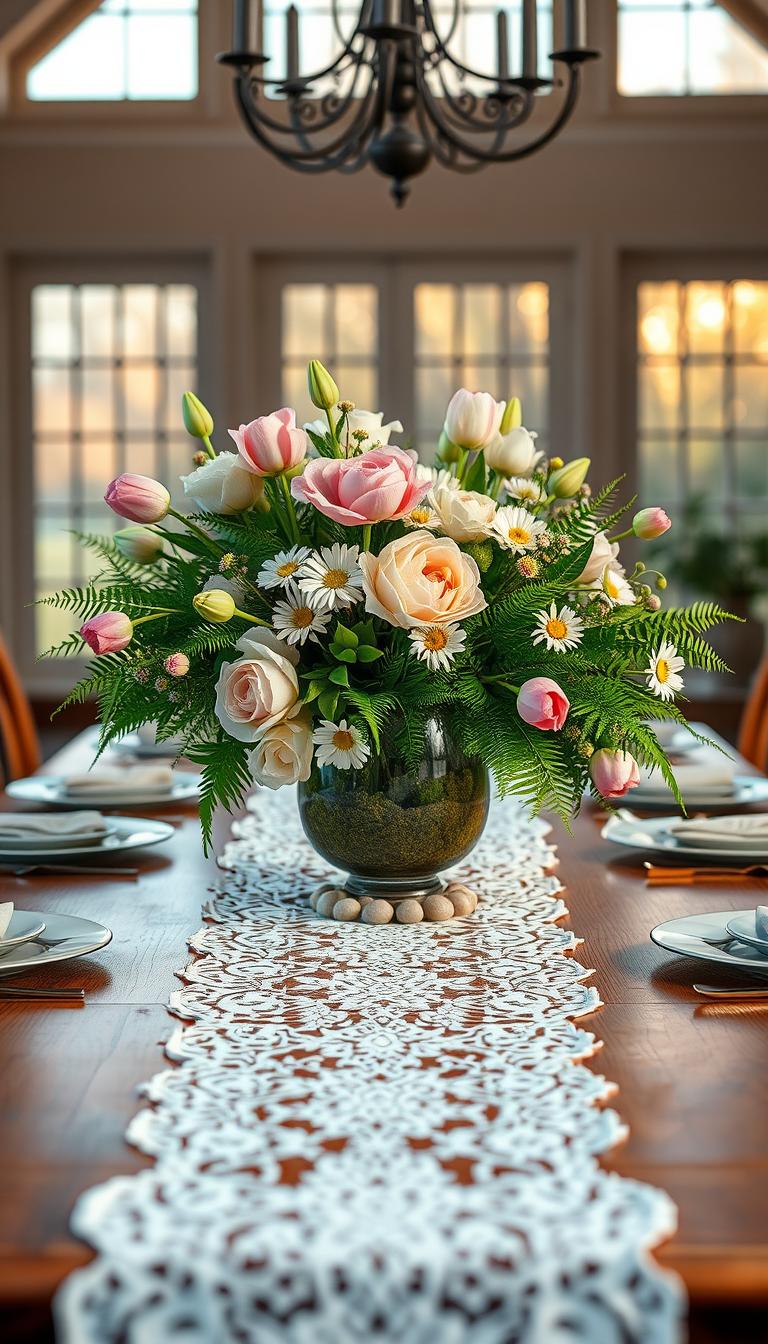
Tulips, daffodils, and flowering branches
Harvest spring flowers in the morning, cut stems at a 45-degree angle, and change water often to extend vase life.
Tulip tip: a pre-1982 copper penny in the water or a tiny pinhole just below the bud can reduce flopping.
Short vase arrangements that keep conversation flowing
Keep arrangements low and narrow so sightlines stay open. I like a trio of small vases down the center for rhythm without fuss.
Nursery plants in footed bowls
For a lush, fast fix, tuck nursery plants—ferns, herbs, or potted bulbs—into a footed bowl and add a candle for glow.
I often echo the main arrangement at each place with a single flower or sprig of leaves to tie the setting together.
| Style | Vessel | Plant/Flower | Benefit |
|---|---|---|---|
| Single low cluster | Clear vase | Tulips, daffodils | Light, focused |
| Trio repeat | Mini vases | Mixed blooms | Rhythm, easy serving |
| Footed bowl | Terracotta or ceramic | Nursery plants | Lush, garden feel |
| Narrow cylinder | Glass tube | Flowering branches | Airy drama |
Build a spring color palette that pops
Color can shift the energy of a setting faster than any new purchase. I start by picking two anchor hues and one accent. That keeps choices focused and makes styling easier.

Pink and orange with copper accents for warmth and elegance
I love a pink-and-orange palette with copper accents because the warm colors energize the room while copper adds a grounded glow.
- Repeat colors: echo pink and orange in napkins, flowers, and the centerpiece for cohesion.
- Use a copper charger or candle holder to lift the palette and add subtle elegance.
- Vary shades—blush to fuchsia, coral to tangerine—to add depth without clutter.
Soft pastels, fresh greens, or blue-and-white classics
For calmer settings, pick soft pastels or fresh greens that mirror the outdoors. Blue-and-white remains crisp and timeless.
When in doubt, set a neutral base so your chosen palette can really pop. Small swaps—napkins or a single vase—are fast ways to update your spring table decor between gatherings.
Linens and layers: tablecloths, runners, and napkins
Fresh linens set the mood—soft, lived-in cloths make the whole setting feel welcoming.
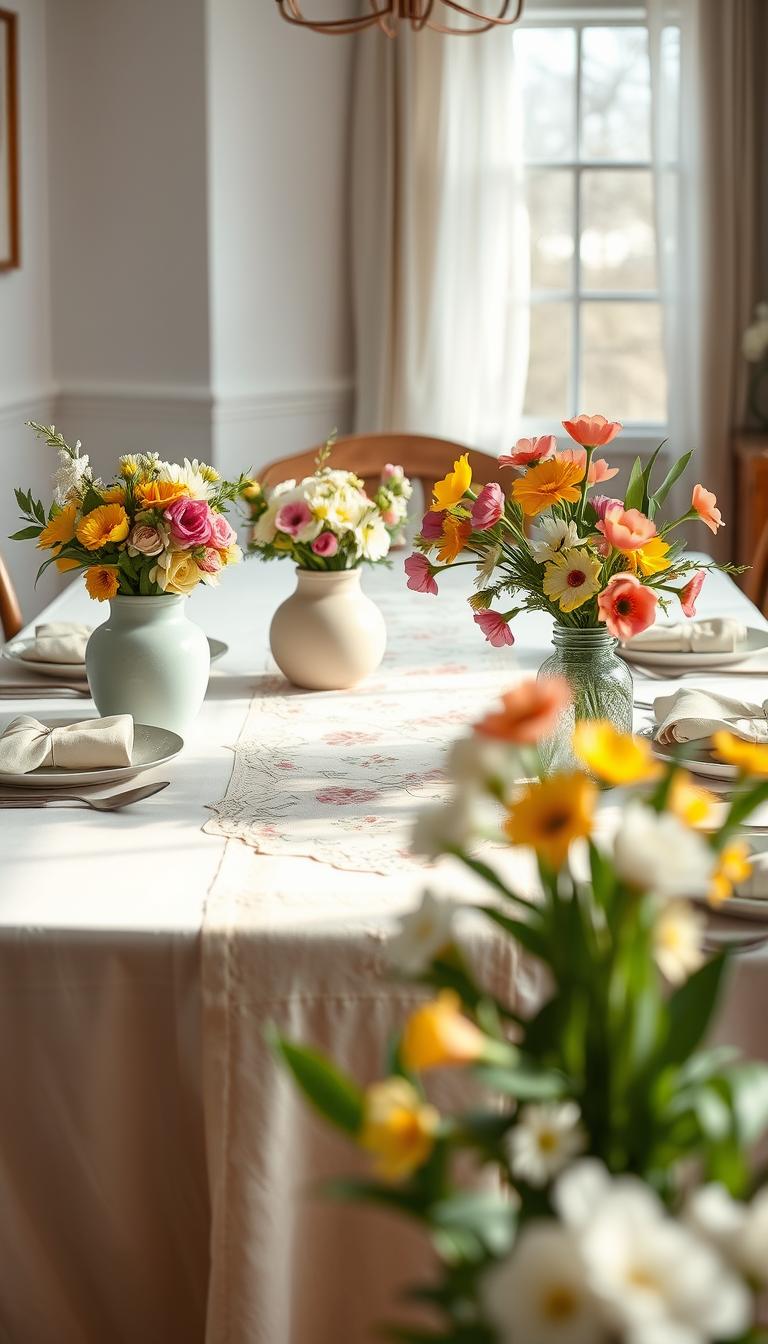
I start with a linen tablecloth for a gentle, natural base. A clean cloth hides scratches and unifies mixed furniture into one thoughtful setting.
Next, add a natural-textured runner. I pick a runner slightly narrower than half the width so plates and glassware have room. A nubby runner over a refined cloth creates contrast in handfeel that reads intentional.
Napkins are the small detail that lift a meal. Folding linen napkins between plates is fast and polished. For a crafted look, I slide napkins into twine or floral rings—those tiny touches photograph beautifully and feel personal.
| Element | Material | Why it works |
|---|---|---|
| Tablecloth | Unbleached linen | Soft base; hides wear; breathes |
| Runner | Linen or burlap | Adds dimension; earthy elegance |
| Napkins | Linen, tied with twine or twig ring | Quick polish or crafted charm |
Place settings that mix beauty and function
Every place setting should feel like a small, intentional scene—balanced, useful, and a little bit lovely.
Chargers, plates, and glassware that add depth
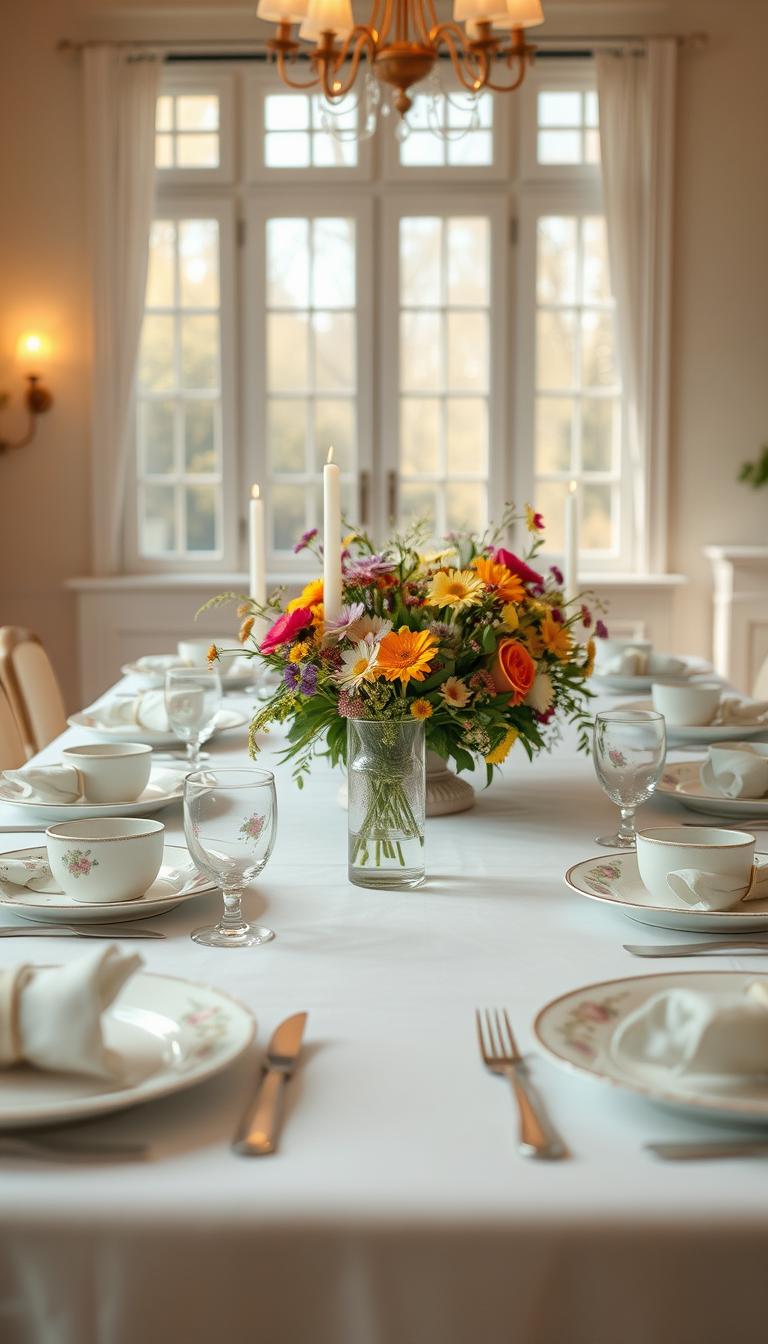
I build each setting like a mini composition: a charger, dinner plate, salad plate, and a folded linen napkin tucked between dishes.
Chargers add depth and create a visual boundary so guests feel considered. Pair large chargers with slimmer glassware to avoid crowding.
Mix glass—wine and water goblets—so heights vary. Clear glass keeps the look light; colored stems echo your palette.
Cutlery pouches and placemats for texture and order
Group utensils in cutlery pouches for neatness and a layer of texture. I like cedar branch placemats—they frame each place and work year-round.
Tuck a tiny sprig or bud at every place to tie back to the centerpiece without cluttering the surface.
When serving family-style, leave extra breathing room between settings. Align silverware with plate edges for calm order—function first, beauty right behind it.
| Element | Benefit | Quick tip |
|---|---|---|
| Charger | Depth & focus | Use slim glasses |
| Cutlery pouch | Texture & order | Match fabric to napkins |
| Cedar placemat | Natural frame | Reusable season after season |
Greenery and herbs for garden-to-table charm
A string of small jars filled with rosemary, mint, and thyme makes the meal smell as good as it looks.
I scatter jars of greenery down the center to add scent and a casual, organic touch. Herbs like rosemary, mint, and thyme give off natural oils that wake the senses without a single bloom.
Keep stems short so the surface stays tidy. Low clippings won’t block sightlines or fight with plates. I group vessels in odd numbers for rhythm and leave breathing room for serving dishes.
Small potted plants at each place double as favors. Guests take a seedling home and the garden connection lasts past dessert. If you’re short on real pieces, mix a few faux stems in—the eye fills in the rest.
- Vary textures—fine rosemary with broad mint for contrast.
- Use garden clippings to style a napkin in seconds.
- Place jars in odd-number groupings for a natural rhythm.
The outcome is an approachable spring table decor that feels alive, aromatic, and truly garden-forward.
Citrus accents for color, scent, and seasonal flair
Bright fruit is my go-to quick upgrade: vivid hues and fragrant lift in one move.
I tuck lemons, limes, and oranges into a clear bowl or narrow vase to add instant color and smell. Add water and float thin slices for a pretty, translucent effect that catches candlelight.
Citrus pairs well with herbs—the scent complements rosemary or mint without stealing the show. For a modern arrangement, slice a lemon into a small glass and nestle blooms around it.
- A bowl of lemons and limes down the table is the easiest pop of color—affordable and unmistakably seasonal.
- For family-style meals, split fruit into two or three small dishes so the setting stays flexible.
- Tie a single citrus at each place with a tag to make a cheerful name marker.

| Citrus | Effect | Best placement | Styling tip |
|---|---|---|---|
| Lemon | Bright yellow pop, fresh scent | Long bowl or clustered mini dishes | Slice thinly to float with votives |
| Lime | Cool green accent, subtle aroma | Small glass vases between blooms | Pair with soft greens for harmony |
| Orange | Warm glow, juicy color | Single fruit at each place or focal bowl | Keep palette tight—orange with blush |
Warm glow: candles and lanterns that elevate the ambiance
Candles do the heavy lifting when I want a setting that feels intimate and polished.
Beeswax tapers are my go-to—faint honey notes and a clean burn that won’t fight with dinner aromas.
I cluster low lanterns and votives so the centerpiece stays visible. That keeps conversation flowing and light soft.
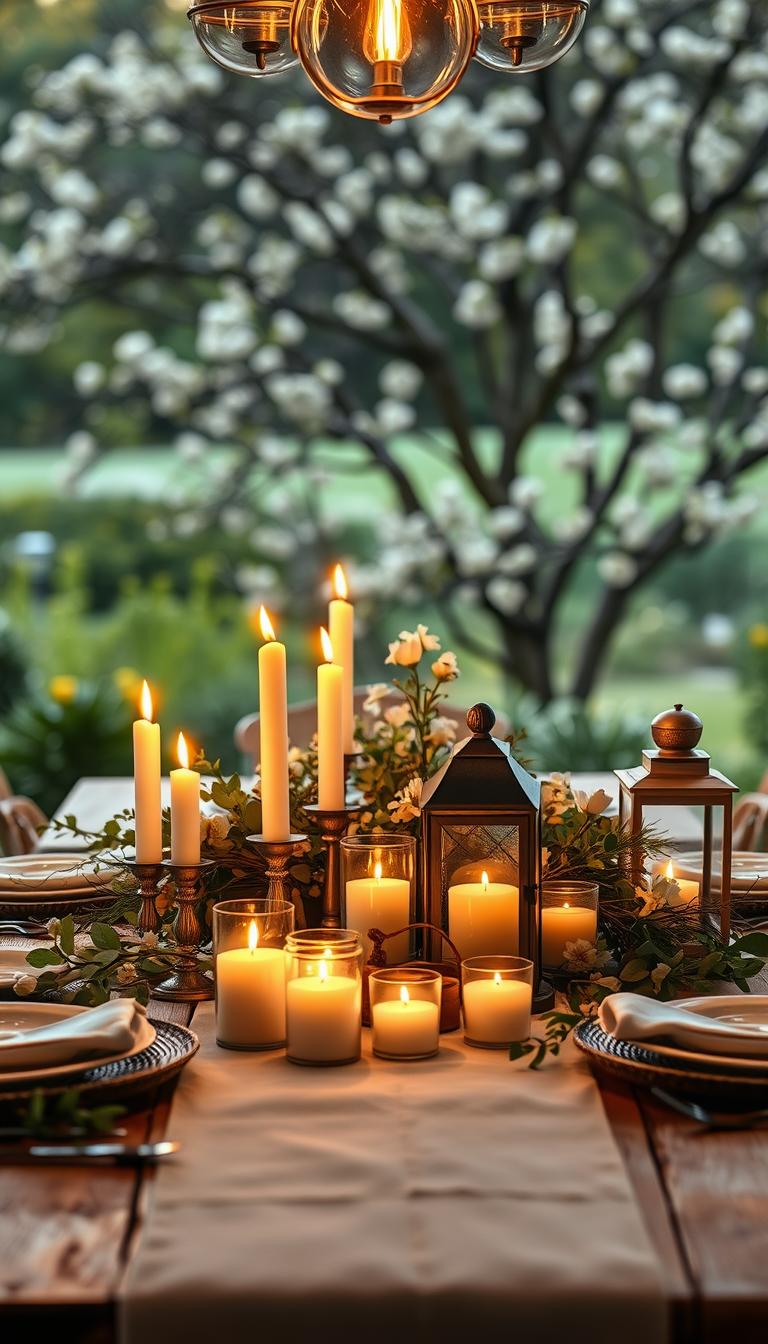
“Light candles just before guests arrive—fresh wicks and a calm room make the evening land the right way.”
- Terracotta holders add an earthy counterpoint to glass and metal.
- Mix heights—short votives with slim tapers—to create movement without crowding the surface.
- If your palette includes copper, a rose gold lantern brings quiet elegance.
Practical notes: keep fragrances subtle and position flames away from drafts. A few well-placed candles can act as a soft-focus centerpiece for small gatherings.
| Item | Effect | Best use | Quick tip |
|---|---|---|---|
| Beeswax taper | Gentle scent, steady flame | Pairs with herbs and light florals | Light just before guests arrive |
| Terracotta holder | Earthy, grounded glow | Clusters at center or along runner | Use unscented candles to avoid clash |
| Rose gold lantern | Warm metallic shine | Accent for an elegant setting | Place low to keep sightlines open |
| Votives (mixed heights) | Layered ambient light | Fill gaps around the main centerpiece | Group in odd numbers for rhythm |
Copper details that add springtime elegance
Copper brings a soft, sunlit warmth that instantly elevates a meal. I reach for a handful of copper pieces to lift the look without making it formal.
Small doses work best. A copper charger under a pale plate reads elegant and grounds a color story. Utensils, candle holders, and a narrow copper vessel add sparkle while keeping the surface easy for dining.
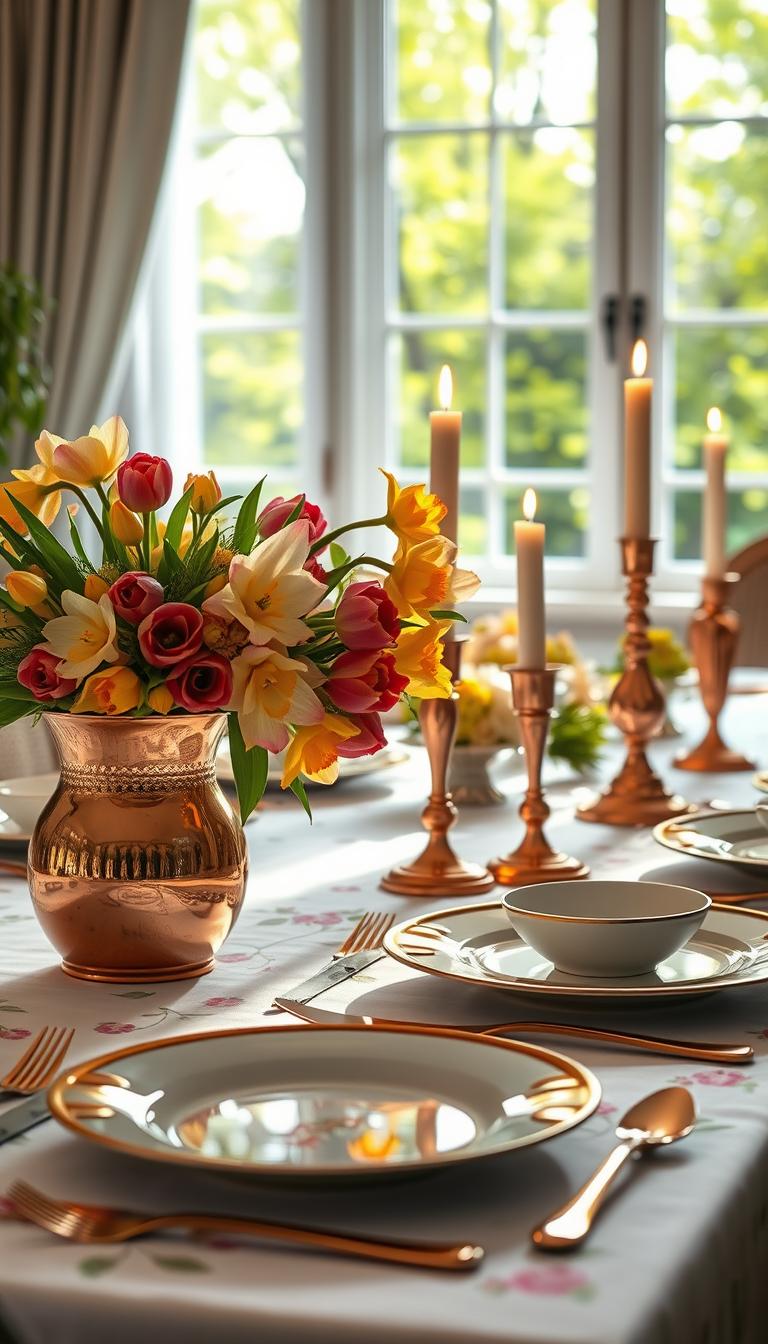
- I prefer copper to polished brass because it feels warm but relaxed.
- Repeat copper in two or three spots if you have many guests to create flow along the table.
- Buff pieces beforehand to avoid fingerprints—quick maintenance, big payoff.
- Pair copper with linen or rattan to soften shine and keep the vibe approachable.
| Item | Effect | Best use | Quick tip |
|---|---|---|---|
| Charger | Warm anchor | Under pale plates | Use slim glassware to avoid crowding |
| Narrow vessel | Modern floral moment | Single stems or sprigs | Keep profile slim for dining comfort |
| Candle holder / lantern | Golden glow | Cluster along runner | Great at golden hour outdoors |
| Utensils & trays | Repeats finish | Place at intervals for continuity | Limit to a few pieces to stay luxe, not loud |
DIY spring place cards that guide and delight
A tiny card can calm seating chaos and set a warm tone before the first course.
I like making simple, seasonal markers that feel thoughtful without taking hours. Use butterfly or floral cutouts, pressed leaves, or a small seed packet tucked behind each name.

- Cut silhouettes by hand or use a Cricut with copper cardstock and cursive lettering for a polished look.
- Style cards on napkins, clip them to a sprig, or nestle them in a tiny bud vase so they double as a little decoration.
- Tuck a seed packet behind the card for a favor—gardeners will adore it, and everyone else gets a cheerful surprise.
Keep names legible—dark ink on pale stock or vice versa. Alternate card placement left and right on a long run so guests can scan names easily.
“Place cards are tiny but mighty—they guide guests, minimize confusion, and set a friendly tone.”
Final tip: Choose one small embellishment—clothespin, twine, or a leaf—and repeat it across the table for a cohesive, charming touch.
Vases and vessels: glass, terracotta, and narrow silhouettes
The right vessel can make simple stems look intentional and refined.
I keep a mix of clear glass cylinders and terracotta pots on hand — they suit seasonal flowers and foliage and pair well with a runner.
Narrow silhouettes save space and keep sightlines open. Use two or three small vases spaced down the table rather than one large arrangement when you need flexibility for serving.
Terracotta warms cool palettes and works beautifully with branches or clipped greenery. Glass vases bounce light and showcase stems for a clean, modern look.
- I often nest a small pot inside a shallow bowl for texture without bulk.
- A few stones or a clipped branch stabilize lighter stems and read earthy, not fussy.
- Keep vessel heights below eye level when everyone is seated.
| Vessel | Effect | Best use |
|---|---|---|
| Clear glass cylinder | Light, modern look | Single stems; short runners |
| Terracotta pot | Warm, grounded | Mixed greenery; branches |
| Narrow bud vase | Space-saving | Multiple small vases down a table |
Place one petite vessel at each place for a charming take-home moment. Thoughtful vessel choices make the whole look intentional—even when the flowers are simple.
Patterns and textures that say “spring”
Tactile details and small prints make a setting feel cared-for and fresh.
I favor braided placemats, woven runners, and a little floral in the napkin for a layered look that still feels calm.
Floral motifs, braided edges, and natural weaves
Keep patterns in conversation: repeat a hue or motif at least twice so the design reads intentional, not cluttered.
- Pair a small-scale floral napkin with a solid runner and a braided placemat for balanced depth.
- Use natural weaves—seagrass or rattan—for warmth and subtle movement that invite touch.
- Vary scale: one bold print, one medium pattern, one quiet texture for sophisticated rhythm.
| Element | Texture | Pattern use | Quick tip |
|---|---|---|---|
| Napkin | Linen | Small floral | Repeat napkin color in a bloom |
| Runner | Woven cotton | Muted stripe or subtle print | Let runner be the hero |
| Placemat | Braided seagrass | Natural weave | Add warmth and grounding |
| Plate | Ceramic | Solid with rim detail | Use to calm prints |
Final note: start small—one patterned napkin or a single patterned runner turns decorations into a cohesive part of the room and adds a garden-like touch with effortless beauty and elegance.
Host more guests with smart seating strategies
You don’t need a bigger surface to host more people—just rework how seats fit around it. I learned this the hard way when I squeezed ten friends into my own dining room and kept the night easy and warm.
Benches, mixed seating, and extension leaves
Swap in narrower chairs to reclaim inches without sacrificing comfort. When I needed to seat ten, slim profiles gave everyone elbow room.
Benches along the long sides are a real space-saver and invite a communal vibe. They tuck closer to the edge than bulky chairs and fit more people in a pinch.
If your table has extension leaves, deploy them—it’s the fastest way to add seating and elbow room in seconds.
Create a cozy corner for relaxed overflow seating
Not enough chairs? Mix stools, a bench, and a cozy corner with floor cushions or poufs. Guests can move to a low coffee table for dessert and still feel part of the evening.
Keep aisles clear so people can slide in and out without bumping plates or glassware. Measure first—aim for about 24 inches per person for comfortable dinner service.
- Mix seating types for a collected look and better capacity.
- Assign places to balance tall and short guests for easier conversation.
- When serving family-style, leave a center lane for platters so passing is smooth.
| Seating | Best for | How many extra seats | Quick tip |
|---|---|---|---|
| Narrow chairs | Standard dining rooms | +1–2 along each side | Choose slim backs to keep sightlines open |
| Bench | Casual, communal meals | +2–3 versus chairs | Use cushions for back comfort |
| Floor cushions / poufs | Overflow and dessert | +2–4 in a corner | Keep a low tray or small table nearby |
“Smart seating transforms the experience—more guests, same room, zero compromise on comfort.”
Set a beautiful spring table in 10 minutes
You can craft a warm, polished setting in minutes when you keep a small bin of ready items.
I keep a few staples on hand—neutral tablecloth, a go-to table runner, versatile chargers, cedar branch placemats, and simple glass vases. When time is short, those items let me pull a cohesive setting together fast.
Stock staple items and stage your layers fast
My quick sequence: lay the cloth or runner, place a low centerpiece, then set chargers and plates. Slide a folded linen napkin between layers for instant polish.
Next, add wine and water goblets and tuck flatware into pouches. Finish each place with a small touch—a sprig, a tiny nest, or a single bloom—and you’re done in under ten minutes.
- Keep a bin of ready-to-go items for less hunting and more hosting.
- Use the same order for brunch or dinner; swap only the centerpiece and palette.
- Practice this routine and you’ll set a cohesive table faster than the oven preheats.
| Staple | Why it helps | Quick tip |
|---|---|---|
| Neutral tablecloth | Unifies mixed furniture | Keep folded and ironed in a drawer |
| Table runner | Adds texture without bulk | Choose one reversible runner |
| Chargers & plates | Create depth and structure | Stack plates with napkin between |
| Glass vases | Light, reflective center | Use short stems to keep sightlines open |
“Ten minutes, zero stress, fully ready for guests.”
Need a fast centerpiece idea? Try this 10-minute centerpiece for an easy finish that reads intentional and fresh.
Conclusion
You can set a memorable scene with just a handful of staples and a clear plan. Small swaps—fresh stems, citrus, warm metals, and a comfy seat—shift the mood quickly and kindly.
Let the season guide you. Keep things light, fragrant, and useful. Invest in a few go-to pieces so hosting feels easy and joyful, not frantic.
Prioritize guests’ comfort and clear sightlines. Rotate what you own, edit what you don’t need, and repeat what works. A sprig from the garden often carries more meaning than anything bought at a shop.
Whether a quick brunch or an intimate dinner, your spring table decor can be set in minutes and remembered for years. Lead with warmth and intention—the rest will follow.