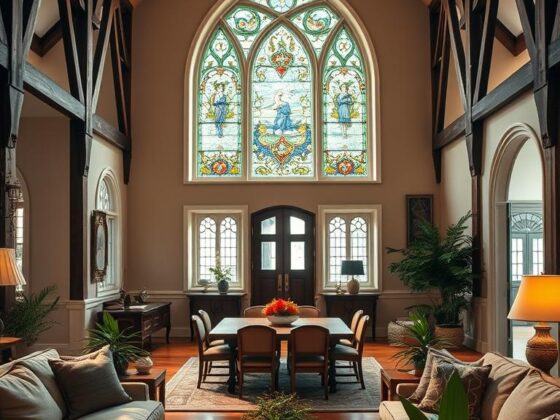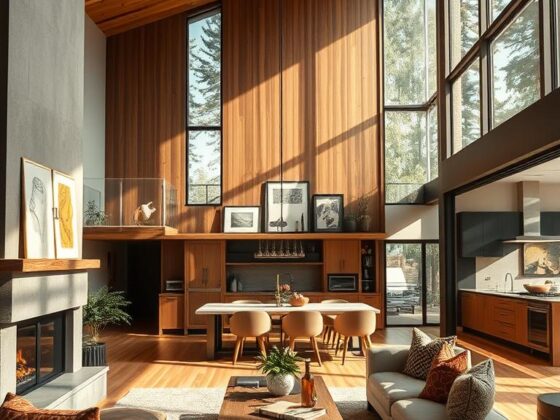
Can a single table arrangement change how your whole room feels? I ask that because I’ve seen a simple display lift moods, slow the chatter, and make guests linger longer.
I’ll show you airy designs that keep pathways clear for plates and glasses, and that pair with what you already own—vases, candles, paper accents and a few smart florals. This is about practical beauty: small swaps that make your tablescape feel lighter and more balanced.
You’ll learn a repeatable process that works on a dining table, a coffee table, or even a backyard buffet. I focus on color and texture so each arrangement reads as part of your home, not an added complication.
Expect step-by-step recipes and pro tricks I use with clients, plus safety tips when candles meet blooms. By the end, you’ll have ideas to scale and tweak for any space or guest list.
Key Takeaways
- Light, breathable arrangements set a calm, energetic mood.
- Design for real tables: leave room for plates, glasses, and conversation.
- Use soft shades and texture to reduce visual noise and boost wellbeing.
- Simple tools—vases, candles, paper accents—can transform a tablescape.
- Scale ideas up or down for dining rooms, entryways, or backyard buffets.
Why a Spring Centerpiece Sets the Tone for Your Space
An intentional arrangement on your table signals the season and invites people to stay. I’ve seen a single display change the whole mood of a room—guests slow down, conversations deepen, and the home feels lighter.
Rotate small elements—serveware, linens, and centerpieces—to keep that fresh feeling without a full redesign. I often have clients build a wishlist: a runner here, a napkin set there. Those tiny swaps echo your palette and lock the look together.
Think of the centerpiece as a micro-statement. It cues color, texture, and the vibe for the rest of the space. Prioritize negative space and breathable silhouettes so the eye can rest under daylight.
“Let the table lead; when it reads lighter, the room follows.”
- Right-sized pieces keep sightlines clear and conversation easy.
- Choose materials that are easy to move and simple to clean.
- A short wishlist makes seasonal updates deliberate and doable.
Plan Your Look: Color Palette, Seasonality, and Statement
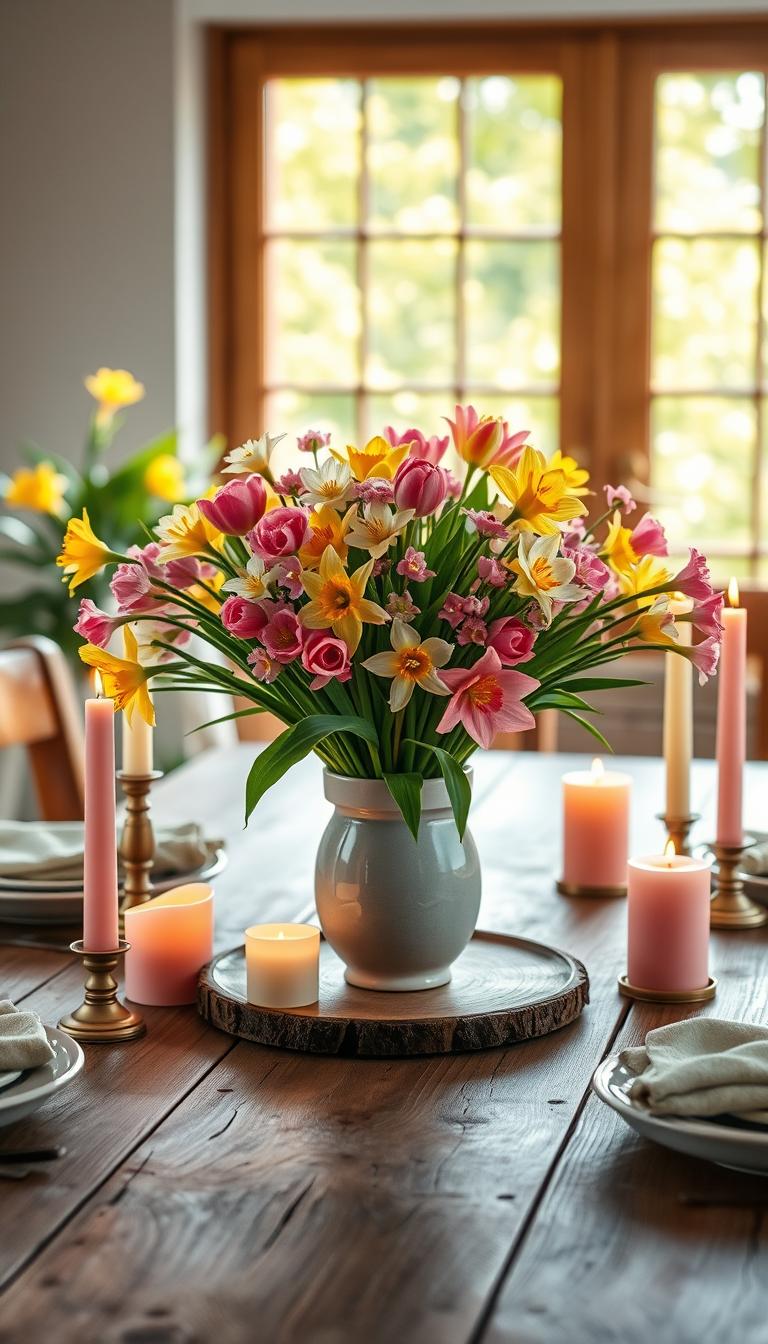
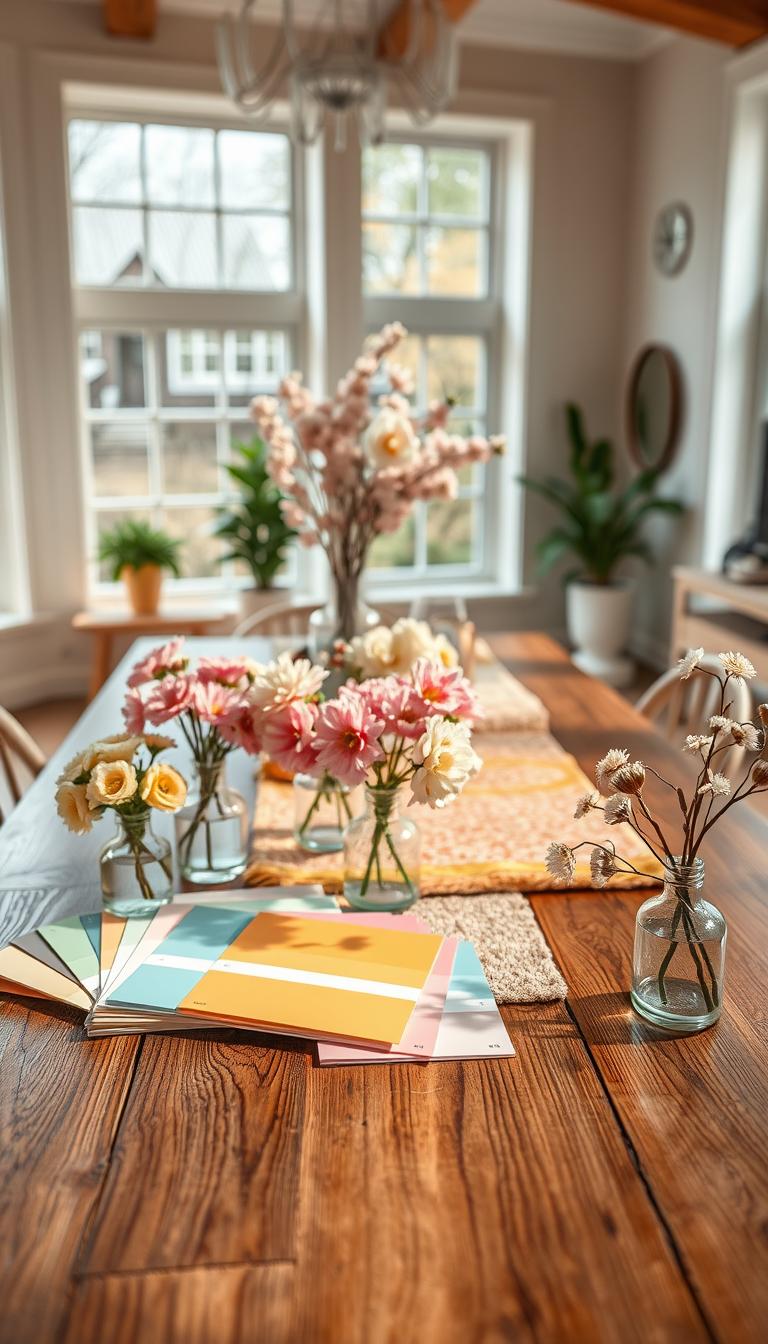
Choose a restrained palette first, then add texture and one bold note to lift the table. I favor a base made of misty greens, pale blush, and buttercream. Those soft shades let small details shine.
Try the 60/30/10 rule: 60% soft neutrals, 30% pastels, 10% a brighter accent for contrast. This keeps the look clean and uplifting while leaving room for personality.
Let the season guide your choices. In springtime, pick what’s abundant locally for fresher flowers, better color, and lower cost. Your palette will also tell you which vases to use—clear glass for airiness, ceramic neutrals to ground vivid blooms.
Decide your statement
Pick either a single sculptural piece or a quiet cluster. Both work if the palette reads as one story across linens and serveware. Keep color temperatures consistent—warm blush with cream and brass, cool lilac with gray and glass.
| Palette Focus | Suggested Vessels | Best Use | Resulting Look |
|---|---|---|---|
| Misty greens + cream | Clear cylinders, low bowls | Dining table with greenery and tulips | Airy, calm, conversational |
| Pale blush + buttercream | Matte ceramic vases | Formal meal with peonies or ranunculus | Warm, elegant, intimate |
| Soft pastels + bright accent | Mixed bud vases and a sculptural vase | Long table or buffet with mixed flowers | Playful, cohesive, balanced |
- Tonal approach: If you’re color-shy, use variations of one hue for a sophisticated, soothing result.
- Tie it together: Match linens and serveware so the table reads as a unified look.
Spring Centerpiece Materials and Tools You’ll Need
Start simple: collect the anchors first so arranging feels like assembly, not a scramble. I keep a medium vase, a low bowl, and at least one candle within reach.
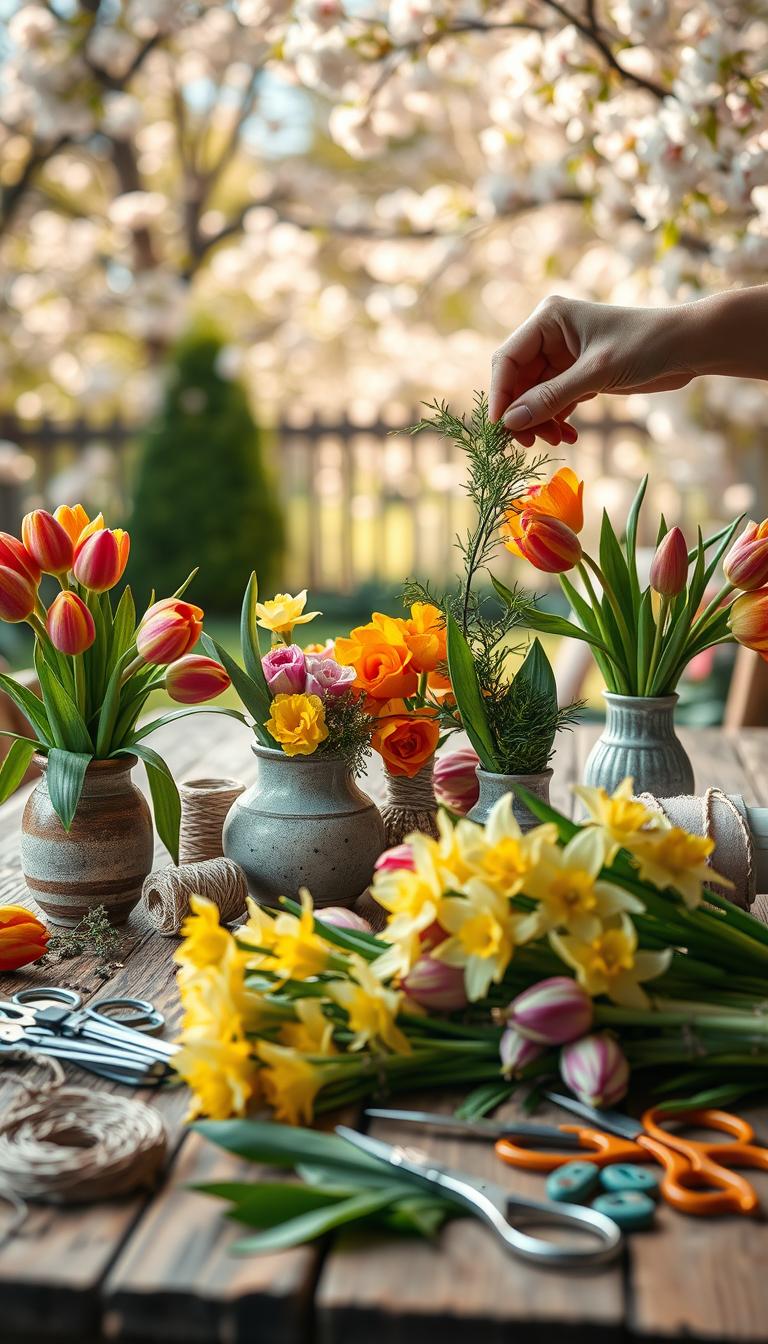
Core pieces
Vessels matter: a clear glass cylinder or a ceramic vase sets the mood. Add a stable dough bowl or a few bud vases for variety.
Florals and greenery
Pick focal florals, leafy greenery, and a handful of airy “fluff” pieces. Mix real and faux for volume and longevity.
Foundations and tools
Stock wreaths, floral tape, frogs, and a bit of chicken wire. These keep stems where you want them and cut build time.
Optional accents
- Small fruit, paper accents, or a vintage tea tin add story without weight.
- For a fast recipe: place a candle inside a glass container, set it in a bowl, and ring with a small wreath—instant structure.
Tip: make sure anything near flames is nonflammable and that vessels fit your table so the arrangement complements, not crowds, the setting.
Build a Solid Foundation Before You Add Blooms
Before you clip a single flower, build a solid center that holds shape and light. I start here because a steady base keeps the whole display calm on a busy table.
Centering a candle inside a glass container creates an immediate anchor. Place the glass in a pedestal bowl and seat a small wreath or garland around it. The wreath locks stems, fills volume fast, and acts like a built‑in frog.
Battery-operated candles are my go-to for dinner setups. They give the same warm glow without the fire risk, and they leave you free to move things mid-meal.
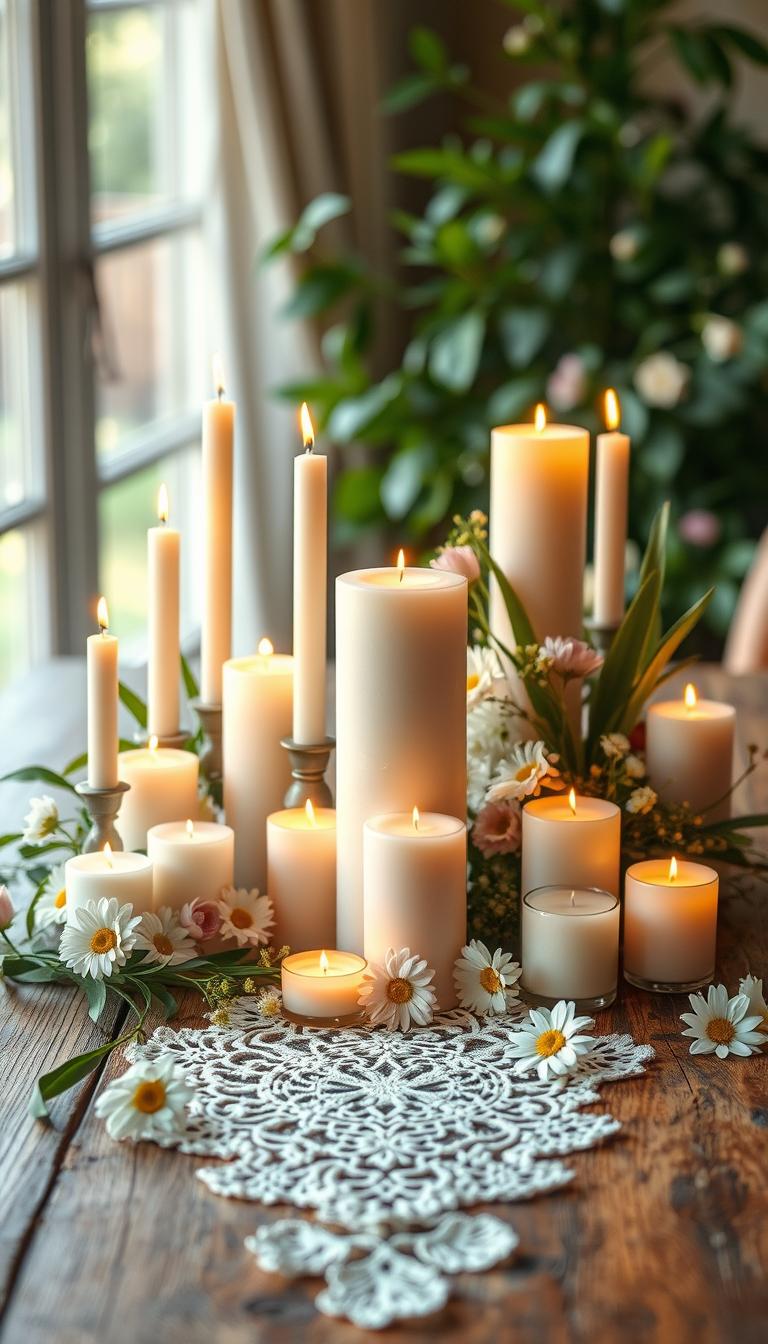
How I put the base together
- I set a candle in a glass container first—visual and physical center.
- Nest the glass into a pedestal bowl, then tuck the wreath around it.
- Measure the bowl’s footprint so plates and passing dishes have clearance.
- Choose a neutral bowl—white or wood—so seasonal color can pop later.
This structure saves time and cuts down on the little things to adjust. Make sure the base feels balanced before adding blooms; if it’s wobbly now, it will only get worse once stems go in.
Choose Your Spring Florals and Greenery Like a Pro
Good arrangements begin with a palette, not a pile of stems on the counter. I always pick 1–2 focal flowers, then add companions for rhythm and texture.
Seasonal favorites:
- Peonies and ranunculus as showstoppers; tulips and foxglove for movement.
- Hydrangea or heuchera when you need volume without fuss.
Airy additions:
- Spirea, dogwood, and forsythia branches create line and height.
- These branches make the arrangement feel alive and give the eye somewhere to travel.
Balance is everything. Use large focal blooms, medium companions, and fine “fluff” for soft edges. If you love roses, pick garden or spray varieties that open gently.
“Start with your palette; let color guide every stem.”
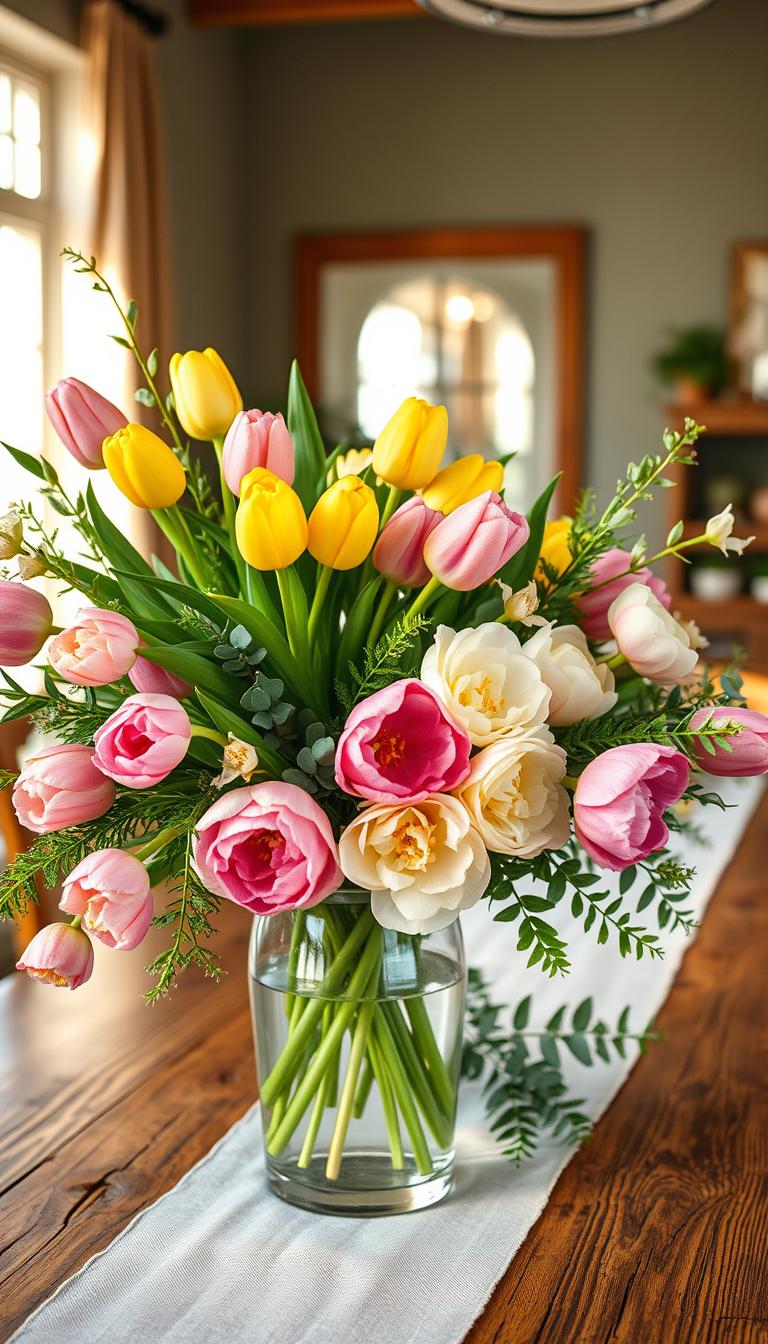
| Role | Examples | Why it works |
|---|---|---|
| Focal flowers | Peonies, ranunculus | Anchor the look and set scale |
| Medium companions | Tulips, foxglove, roses | Create rhythm and fill gaps |
| Airy branches & greenery | Spirea, dogwood, forsythia, light foliage | Add height, movement, and negative space |
Vessels That Change the Whole Look
The vessel you pick decides whether an arrangement reads airy, rustic, or refined. I choose containers with intention because they set scale and texture before a single stem goes in.
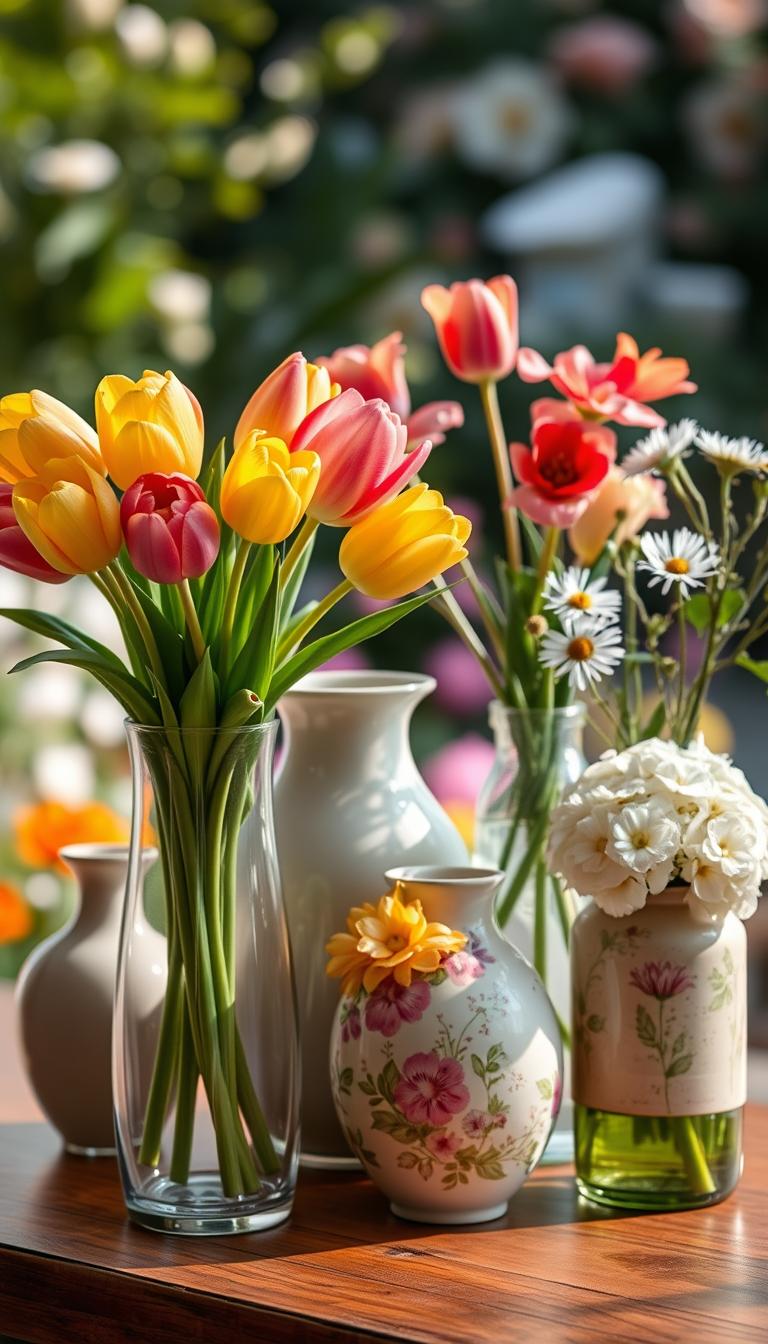
Glass hurricanes, cylinders, and bowls for an airy feel
Glass disappears visually. That lets stems and water do the work. On a wood table, glass reflects warmth. On a white runner, it reads lighter still.
Dough bowl and pedestal bowl options for rustic charm
A dough bowl or pedestal bowl gives a broad canvas for low, lush looks. They feel grounded and kid‑friendly. I like this when I want a homey, tactile story.
Bud vases and mini arrangements for long tabletops
Break a long surface into repeats. A string of bud vases keeps sightlines open and makes rhythm across the table.
“Cluster three petite arrangements instead of one large piece to echo the room’s length without crowding place settings.”
- Paper‑thin petals pop against matte ceramics; glass suits saturated blooms.
- Bowls are stable for active homes and still look elegant.
- Choose vessels that support the color story so the container never competes.
| Vessel | Best Use | Effect |
|---|---|---|
| Glass hurricane / cylinder | Single tall stems or floating candles | Airy, transparent, modern |
| Dough bowl / pedestal bowl | Low, dense clusters or mixed bouquets | Rustic, warm, stable |
| Bud vases / mini vessels | Long tables or staggered groupings | Rhythmic, sightline‑friendly, intentional |
Step-by-Step: How to Put Together a Spring Centerpiece
Start by anchoring the design with a simple, stable base. That early choice keeps the whole arrangement calm and makes the rest easy to place. I like a candle in a glass container set into a bowl and surrounded by a small wreath—instant structure that holds stems where you want them.
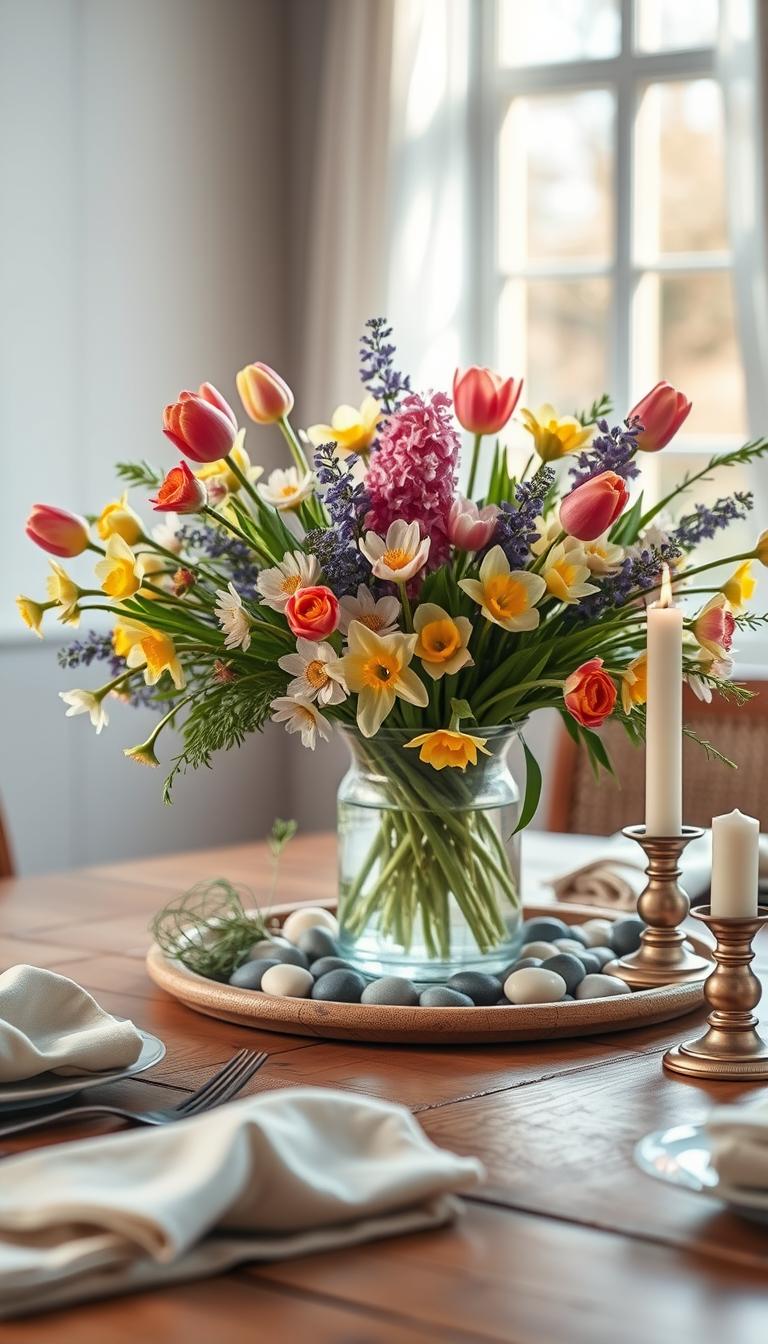
Create a sturdy base
Place a candle inside a glass holder, nest it in a bowl, and seat a compact wreath around the glass. Battery candles work well for dinner service and reduce stress about flames.
Tip: the wreath acts like a hidden frog—your stems stay put and the base reads clean from every angle.
Add blooms in three layers
- Focal blooms first: insert the largest flowers slightly off-center to avoid stiffness.
- Medium pieces: fill gaps with mid-size stems to bridge scale and create rhythm.
- Finish with “fluff”: sprigs and wispy branches add motion; let a few spill over the rim for softness.
Adjust, edit, and secure
Step back to eye level at the table and tweak heights for clear sightlines. Turn the piece 360 degrees—every side should look intentional. Edit ruthlessly; remove any stem that feels heavy or repeats awkwardly.
Final check: ensure stability and water levels for real stems, or secure faux stems with a tape grid or the wreath weave.
Spring Centerpiece
Think of this as a flexible tablescape formula you can scale from a dining meal to a coffee table vignette. I use one clear idea: pick a bowl or a line of bud vases, then echo your home’s palette with one or two flower varieties and a small accent.
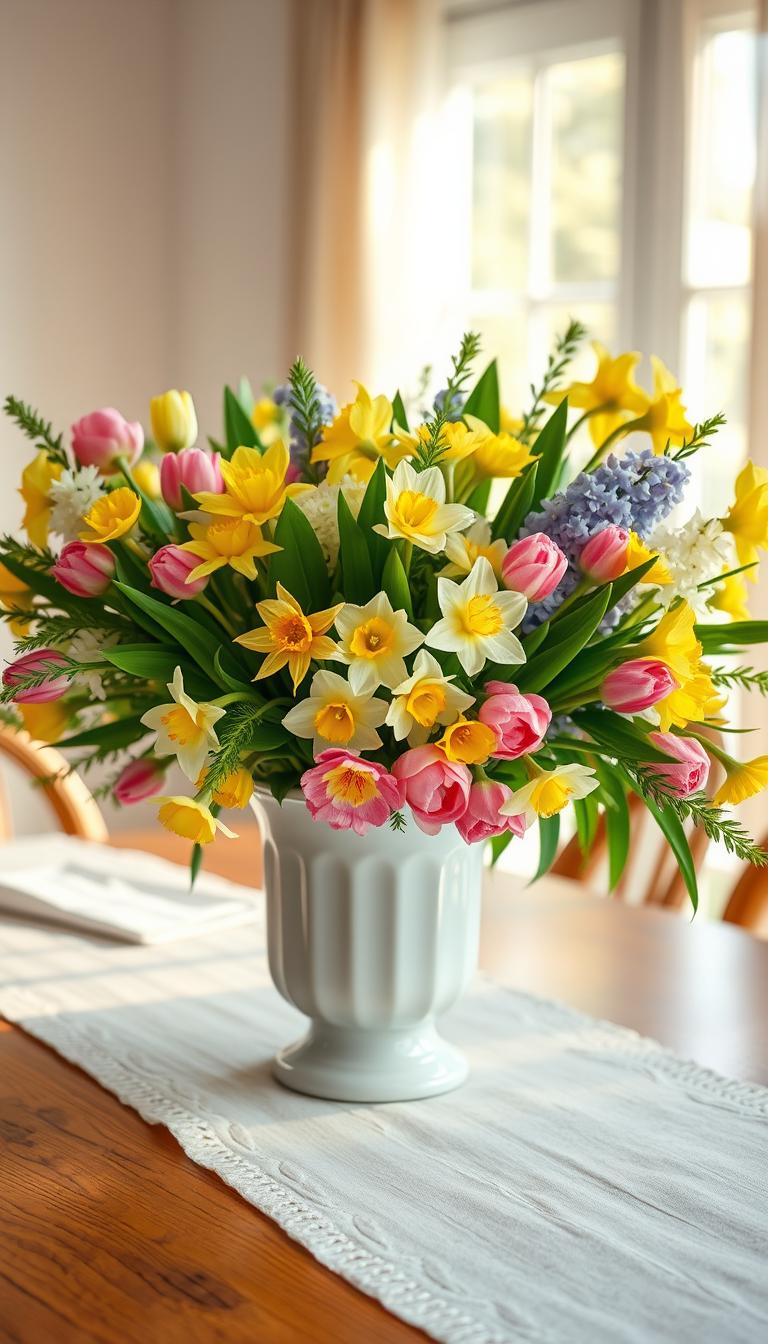
Keep stems airy and let texture carry the look—open-faced blooms and soft greens do most of the work. Add a paper detail, like a folded note or menu, to make the arrangement feel personal and intentional.
If you love roses, choose softer garden forms and pair them with seasonally open flowers so the vibe reads fresh, not wintry. Position the piece where it balances serveware and place settings—centered but practical.
- Scalable: swap a bowl for bud vases to change scale quickly.
- Low-effort refresh: new vessel silhouettes shift mood without new stems.
- Repeatable: this framework works across rooms in your home as a seasonal ritual.
| Element | Use | Tip |
|---|---|---|
| Bowl | Low, lush clusters | Wide silhouette keeps sightlines clear |
| Bud vases | Line or trio repeats | Create rhythm on long tables |
| Paper detail | Place cards or a menu | Add warmth and a personal touch |
My rule: start simple, edit ruthlessly, and let one good bloom lead the story.
Quick and Pretty: A 20-Minute Spring Centerpiece “Recipe”
A small set of things and a clear order turn scramble into a satisfying, easy result. I use this when clients call last-minute and want the table to look intentional without stress.
Grab-and-go list:
Essentials
- candle
- glass container
- bowl
- wreath
- faux or real flowers
Swap ideas
Quick swaps
- cake plate instead of a pedestal bowl
- grapevine wreath in place of a compact wreath
- mason jar if you don’t have a cylinder
- dough bowl for a low, rustic look
Use real stems for scent. Use faux for speed and re-use. The wreath helps anchor and fill the base fast.
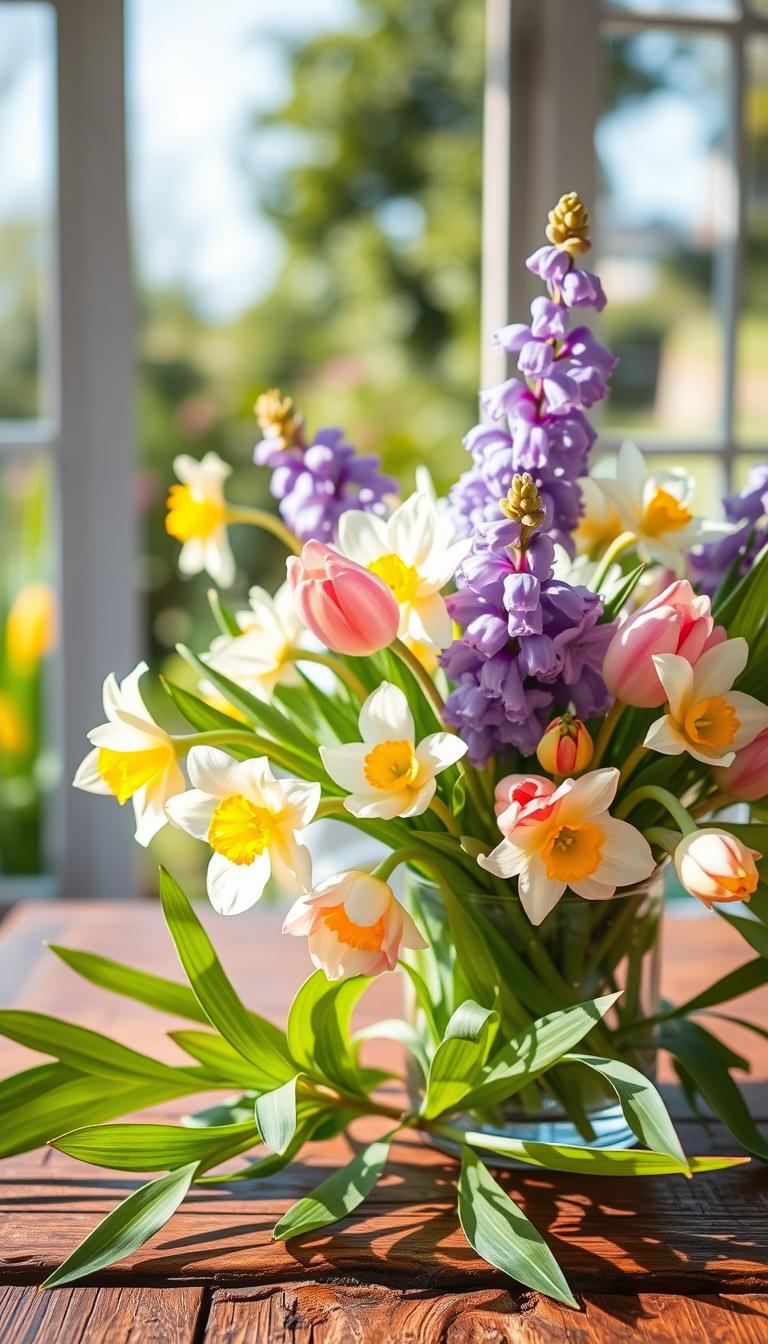
- Timer on: place a candle in a glass container, set it in your bowl, and ring with a small wreath—foundation done.
- Tuck in 3–5 focal flowers, then 5–7 medium stems; keep spacing loose so the arrangement reads fresh, not fussy.
- Finish with a handful of airy pieces—your “fluff”—to add movement around the rim.
- If needed, use the cake plate, grapevine coil, or mason jar in place of the listed vessel.
- Before you put together place settings, test the piece on the table to confirm height and footprint.
Fast edits: aim for 20–25 stems total. Snap a quick photo; it becomes your template next time.
“A simple base saves time—and makes everything else effortless.”
| Thing | Use | Effect |
|---|---|---|
| Glass container | Holds candle | Clean, reflective center |
| Dough bowl / cake plate | Base for low clusters | Stable, homey feel |
| Mason jar / grapevine | Quick swap | Casual, charming |
Light, Airy Tablescapes: Coordinating Linens, Serveware, and Centerpieces
Start your tablescape by thinking fabric first—linens set the mood and guide every other choice. I pick light textures and a soft palette so the centerpiece and florals feel like part of the room, not an add‑on.
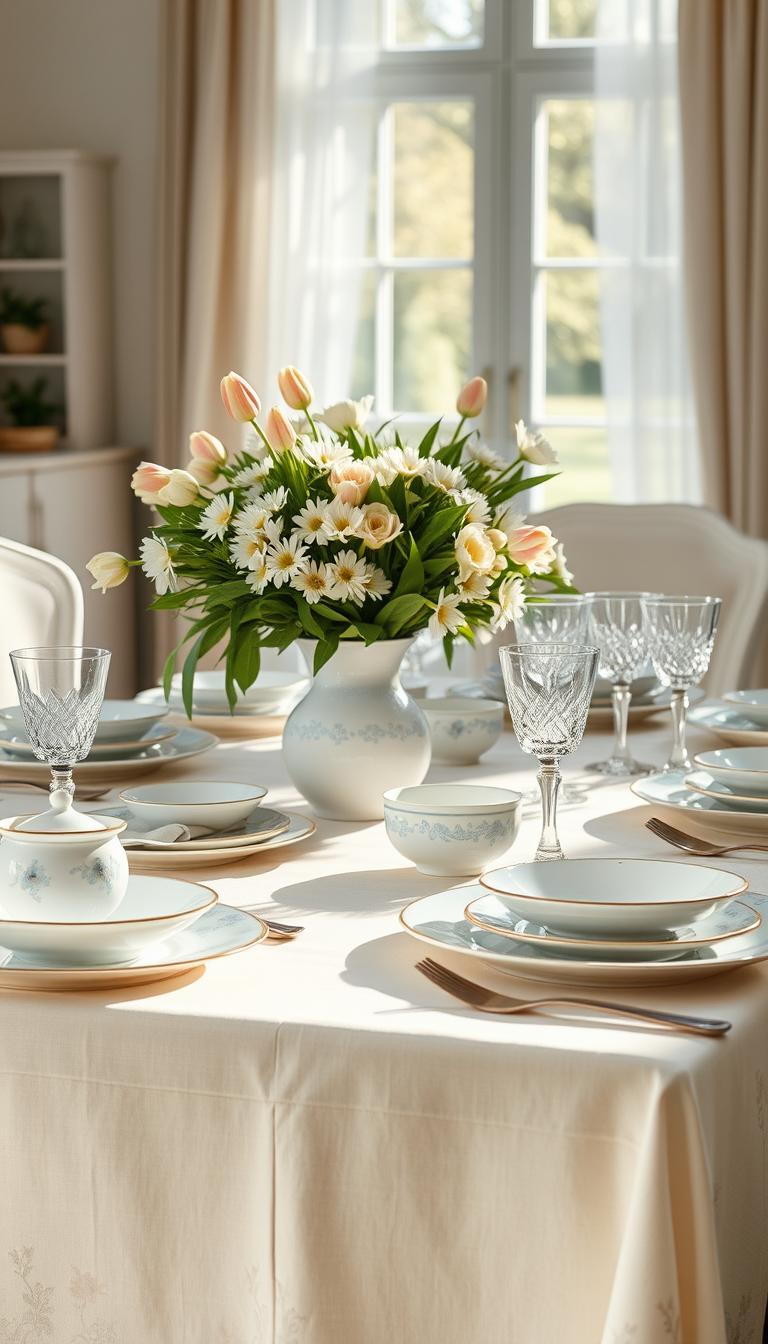
Rotating seasonal decor to keep things fresh
Rotate serveware and napkins each season. A spring runner and new napkins change the look fast. This keeps your table lively without a full redo.
Planning a wishlist to complete your spring tablescape
Build a small wishlist: a neutral runner, a couple of bud vases, and a pair of taper holders. These few items go a long way in a home and make styling easier next time.
- Coordinate color and palette across linens, serveware, and florals so nothing competes.
- Add a small paper detail—place cards or a folded menu—to elevate the meal.
- Place fruit like citrus or berries in small bowls to echo the centerpiece’s tones.
- Repeat one or two vases for rhythm; rhythm reads calm and intentional.
“A simple linen swap often makes the whole table feel new.”
| Item | Why it helps | Quick tip |
|---|---|---|
| Neutral runner | Ties elements together | Choose washable linen for easy refreshes |
| Bud vases | Create rhythm on a long table | Repeat two identical vases for balance |
| Taper holders | Add vertical grace without crowding | Use battery candles for safety during meals |
For more ideas on arranging a dining table, see dining table centerpiece ideas.
Wedding-Worthy Spring Centerpieces and Tables
When tables share a color story, the room breathes and guests relax.
I’ve styled reception tables for intimate dinners and grand halls, and the same rule applies: start with a defined palette so every table—from the head table to rounds—reads as part of one whole.
Designing with a palette for cohesive reception tables
Pick two base tones and one bright accent. Repeat that color across linens, vases, and blooms. This keeps photos unified and makes the room feel intentional.
Large statement pieces vs. low arrangements for guest comfort
Decide early: do you want a tall statement or low, guest-friendly pieces? Low designs help guests see each other and keep conversation flowing. Tall pieces suit grand venues, but always check sightlines so servers can move easily.
Floral runners, pastel blooms, and nature-inspired branches
Flowers like peonies, tulips, ranunculus, and foxglove give romance without weight. Add branches—spirea, dogwood, or forsythia—to add natural architecture and gentle height.
For long tables, a hydrangea floral runner with pastel blooms creates a soft, continuous look. Sprinkle small fruit accents for color echoes and a seasonal nod.
- Begin with palette: tie head table to guest tables for cohesion.
- Scale to space: grand rooms can hold height; intimate rooms need low, lush pieces.
- Think of the couple: balance beauty and flow so servers and guests move freely.
| Approach | Best for | Effect |
|---|---|---|
| Large statement | Grand venues, tall ceilings | Dramatic photos, architectural drama |
| Low arrangements | Intimate rooms, conversation tables | Guest-friendly, warm, connected |
| Floral runner | Long banquet tables | Soft, expansive, cohesive |
“Balance the look for the couple—beauty should never get in the way of the party.”
Beyond Flowers: Branches, Fruit, and Candlelight
Lean on structure: woody branches like spirea, dogwood, or forsythia give height without heaviness. I use them to create graceful lines that move the eye upward and keep the arrangement airy.
A cluster of fruit near the base adds natural gloss and a subtle color pop. A few citrus or small pears ground the design and make the display feel collected, not staged.
Candlelight softens everything. Nestle a candle or lantern safely away from petals and leaves. The glow unifies textures—matte ceramics, glassy fruit, and soft white blooms—so the whole table reads warm and approachable.
I also tuck in small nonfloral accents: a vintage tea tin, a folded paper tag, or a labeled jar. Those bits tell a story and invite conversation.
“Contrast is the quiet trick: woody branches against soft petals, glossy fruit against matte vessels.”
- Keep greenery light so branches and accents feel integrated.
- Place candles with at least a few inches of clearance from foliage.
- Use one single stem of white blooms as a highlight—less is often more.
Styling by Space: Dining Table, Coffee Table, Entryway, and Backyard
Think about how guests will circulate; that guides height, footprint, and scent choices across each area.
Dining and kitchen tables: conversation-friendly heights
Keep arrangements at or below eye line so faces stay visible. If you want height, go tall and slender, leaving clear sight windows between stems.
My rule: leave elbow room—plates and passing dishes need space. Use a runner or tray to define the footprint so you can move the piece easily.
Coffee and console tables: compact arrangements and bud clusters
Scale down. A compact grouping or a trio of bud vases reads intentional without cluttering a small table.
These low pieces are easy to shift and keep lounging areas casual and welcoming.
Backyard gatherings: breezy, durable pieces and lanterns
Choose weighted vessels and enclosed candles or lanterns for safety in wind. Secure containers against tipping and use outdoor-friendly materials.
Branches add scale and movement—just anchor stems and keep scents subtle so the meal stays the star.
| Space | Best approach | Quick tip |
|---|---|---|
| Dining table | Low or tall-slim | Keep sightlines clear |
| Coffee / console | Compact clusters | Use bud vases for rhythm |
| Backyard | Durable, weighted | Use lanterns and secure branches |
“Echo your indoor tablescape outdoors with simple materials to keep the look cohesive.”
Budget-Friendly and Sustainable Ideas
A little real and a little faux goes a long way—especially when you want volume without waste. I stretch resources by pairing a few fresh focal flowers with lifelike stems. It keeps the look lush and the costs low.
Small, reusable choices make styling easier next season. Keep vessels, neutral linens, and a simple palette so swaps feel intentional and affordable.
Mixing faux and real florals for volume
Mix real focal blooms with high-quality faux florals to get scale without spoiling stems. Use real flowers for scent and presence, and add faux greenery to fill gaps and hold shape.
Building a reusable “fluff” stash of bits and branches
Cut long branches into small bits and store them in a box. These faux “fluff” stems are great for future designs and save time.
- I reuse vessels and neutral linens as the base so I rotate only a few seasonal things.
- Paper accents—menus, place cards, or simple wraps—elevate the table without big spend.
- Choose a restrained color story so fewer stems read cohesive and complete.
- Shop your home first: bowls, jars, and trays make fine vessels with a liner or frog.
- Buy flowers in season for better price and longer life; compost trimmings and store faux carefully.
| Strategy | Why it helps | Practical tip | Result |
|---|---|---|---|
| Mix real + faux | Adds volume, cuts cost | Use 2–3 real focal stems; fill with faux greenery | Lush look, longer-lasting |
| Fluff box | Speeds styling | Snip branches into 4–6″ pieces, label by tone | Fast edits, consistent texture |
| Reuse household items | Reduces buying | Line jars or bowls with a frog or tape grid | Budget-friendly, creative |
Care, Safety, and Longevity Tips
A little care goes a long way—small habits keep blooms fresh and tables safe. I rely on a few routines that protect surfaces and stretch the life of what you put in the room.
Start with water and placement. For real flowers, refresh water daily and recut stems at an angle to help uptake. Keep the arrangement away from heat vents and direct sun; cooler corners in the home slow wilting.
Think about flame and movement. Keep candles a safe distance from petals and greenery. I use battery-operated candle options when a busy table needs light without the worry.
Quick checklist before guests arrive
- Use a liner or tray to protect wood and catch drips.
- Wipe condensation from glass and check water levels.
- Avoid strongly scented flowers at the dining table so food flavors stay true.
- If you move the display often, build it on a tray for easy transport.
- Confirm stability—an even base prevents wobble and spills.
“A steady base and small daily habits keep blooms looking like you just styled them.”
| Issue | Quick fix | Why it helps |
|---|---|---|
| Wilted stems | Recut stems; fresh water | Improves water uptake and longevity |
| Heat exposure | Move to cooler spot | Slows wilting and preserves color |
| Flame risk | Use battery-operated candles or increase clearance | Reduces fire hazard near blooms |
| Surface damage | Place on liner or tray | Protects finish from moisture and scratches |
Store faux components dust-free and out of sunlight to keep color and texture. A bit of foresight saves time and keeps your centerpiece feeling fresh the next time you style the room.
Common Mistakes and Easy Fixes
Small edits often fix the biggest styling mistakes—let’s audit the look with a practical eye.
Overstuffing and flat results
Overstuffing flattens a display. Edit stems and reintroduce negative space for a fresher look.
If it feels crowded, remove every third stem and step back. The table will read lighter immediately.
Poor balance and leaning pieces
If the arrangement leans, rebalance by shortening heavy stems and redistributing weight across the base.
Add a single low filler on the opposite side to steady the silhouette without adding bulk.
- Clashing color? Remove the odd hue and harmonize with tonal shades from your primary palette.
- When it looks stiff, add movement—one or two wispy stems outside the main silhouette changes everything.
- Too tall? Lower central stems and keep height toward the center so edges stay conversation-friendly.
- Competing textures? Limit to three: one glossy, one matte, one soft; cohesion returns instantly.
Quick test: photograph the piece—photos show balance issues our eyes miss. I do this with clients and it saves seconds but prevents big edits later.
| Problem | Fix | Result |
|---|---|---|
| Overstuffed | Remove stems; add negative space | Airier look, clearer focus |
| Leaning | Shorten heavy stems; redistribute | Stable, even silhouette |
| Dark or heavy | Introduce lighter shades or white accents | Lifted focal area |
| Clashing textures | Limit to three textures | Instant cohesion |
“Edit ruthlessly—less often reads as more.”
Conclusion
Wrap up your tablescape with a simple rule: foundation first, then flowers, then the airy finishing touches. This repeatable process helps you celebrate spring with less fuss and more heart.
I love the idea of using what you already own—bowls, jars, and linens—to make a fresh look in minutes. For busy days, the 20-minute recipe gives a polished result you’ll be proud to set on the table.
Couples planning events can scale these same steps for guest comfort and a cohesive palette. Pick one love idea—color, vessel, or a branch—and let the rest support that story.
On special days or quiet dinners, a thoughtful spring centerpiece with a few roses or soft florals becomes the part of the day guests remember.