Homiscape.com
  • Homepage
  • Ideas by Room
    • Bathroom
    • Bedroom
    • Home Office
    • Kitchen
    • Living Room
    • Outdoor
Categories
  • Bedroom
  • General
0
0
Homiscape.com
Subscribe
Homiscape.com
  • Homepage
  • Ideas by Room
    • Bathroom
    • Bedroom
    • Home Office
    • Kitchen
    • Living Room
    • Outdoor
Split Level Apartment
  • General

Creating Flow in a Split Level Apartment: Expert Advice

  • January 19, 2026
  • Jade Hunt

Total
0
Shares
0
0
0

What if your staggered floors could feel like one calm, intentional home?

I’ve helped clients tame tricky multi-floor layouts so living feels simple and joyful. In this short article I’ll show how circulation, sightlines, and light shape every floor and room.

I start by mapping where people walk and what they see next. Then I layer finishes, coordinated flooring, and ceiling details to create continuity without losing privacy for bedrooms and baths.

Expect practical, budget-smart ideas you can try over a weekend and pro tips I’ve used in client homes. By the end you’ll know how to treat entries, mid-level landings, kitchens, and living areas so the whole house reads as one easy-to-use space.

Key Takeaways

  • Map circulation first: focus on how you move between floors and rooms.
  • Use light strategically: borrow brightness across levels with transoms and open rails.
  • Continuity matters: matched flooring and trim knit spaces together.
  • Balance privacy and openness: keep bedrooms quiet while living areas stay airy.
  • Small changes, big impact: half walls, open treads, and simple finishes improve flow fast.

Understanding Split-Level Living Today: What a Split Level Apartment Is—and Isn’t

When short stair runs define a house, circulation and sightlines become design tools more than obstacles. I’ll walk you through the common types so you can tell a sidesplit from a bi-level and know what to expect at the front door.

What the terms mean: a true split-level home staggers floors with short stairs and a mid-entry that sends you up to main living or down to a semi-lower family area. A backsplit or sidesplit changes what you see from the street—garage on one side often shifts the house’s center of gravity.

A quick note from my projects: clients who understand the type ahead of time solve circulation problems faster—usually with visual cues and smart storage.

  • “Split apartment” usually means the living room becomes an extra bedroom. You gain a sleeping room but lose shared living space.
  • “Split-bedroom” plans place bedrooms on opposite sides, improving separation and privacy between sleeping areas.
  • Bi-level (split foyer), stacked splits, split entry, and raised ranch all use short stairs in different patterns—each affects daylight, ceiling height, and how people move through the house.

Rule of thumb: if a listing mentions a split foyer expect a middle landing; if it touts a split-bedroom expect better privacy. Knowing the type helps you predict bottlenecks, dark corners, and where to add light or storage before you pick finishes.

Designing Seamless Flow in a Split Level Apartment

Good flow begins where the door opens: I map likely paths from the entry landing and adjust tight turns with slim furniture or moved shoe storage so people step naturally up or down without hesitation.

Circulation first

I stand at the door and trace movement. Narrow corners get skimmed by narrower benches and by clearing the first tread so the stair run reads safe and intentional.

Layered sightlines

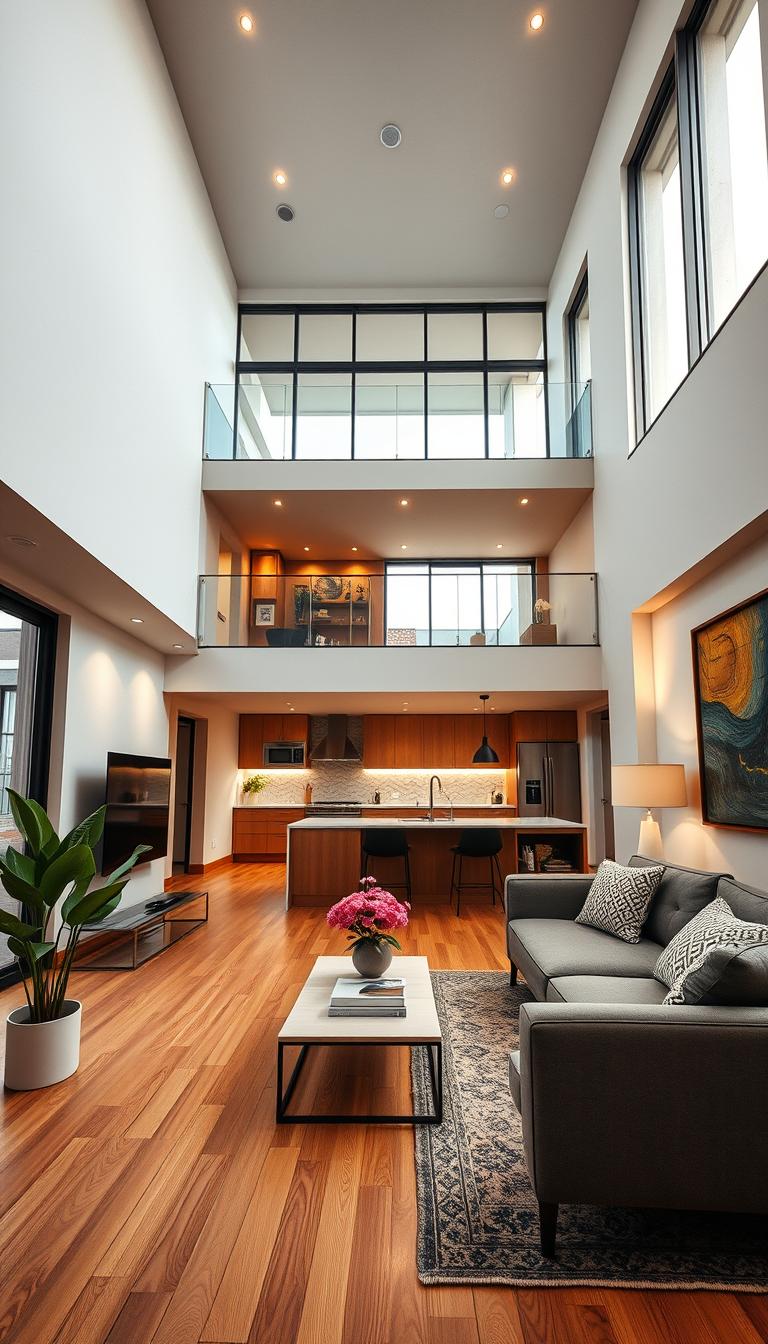
Swap solid railings for open balusters and add half walls or interior windows to the living area to keep visual connection between floors. This keeps rooms feeling linked while protecting acoustics and privacy.

A cozy, inviting living area in a split level apartment, showcasing a seamless flow between spaces. In the foreground, a stylish, modern sectional sofa adorned with plush cushions sits atop a soft area rug. In the middle, a sleek coffee table, complemented by artfully arranged decor elements, creates a focal point. A small, elegant dining setup can be seen to one side, with minimalist chairs surrounding a round table. The background features large windows allowing ample natural light to flood the room, highlighting the contemporary artwork on the walls and the harmonious color palette of soft blues and warm wood tones. The atmosphere is tranquil and balanced, designed for both relaxation and social interaction. The scene is captured with soft, diffused lighting, using a wide-angle lens to enhance the sense of space.

Light as a connector

Use transoms, a skylight over the stair run, and reflective paints to pull daylight from upper windows into lower interior spaces. Lamps and step lights fill gaps where windows are limited.

Unified finishes & smart separation

Run one flooring species and tone across floors and match stair nosings to avoid visual breaks. Keep ceilings and trim consistent so each level reads as part of the same home.

Zone day uses—kitchen, dining, and living—together, and tuck bedrooms and bathrooms into a quiet upstairs cluster. Where two levels split functions, soft rugs and layered lighting protect privacy while maintaining flow.

  • Tip: align handrails and door casings from bottom to top to give the eye a steady line.

Room-by-Room Flow Strategies for Living Areas, Kitchens, Bedrooms, and More

Think of each landing as a tiny foyer that sets the mood for the floors above and below. A slim console, mirror, and wall hooks keep the front entry tidy and friendly. Add motion lights at the door and the first tread so people arrive safely when hands are full.

A cozy split-level living room, bathed in warm, natural light streaming through large windows. The foreground features a plush, L-shaped sectional sofa adorned with colorful throw pillows, a sleek coffee table with decorative artifacts, and a soft area rug. In the middle ground, an inviting reading nook with a stylish floor lamp and bookshelves filled with books creates a sense of comfort. The background showcases an open layout leading to a modern kitchen, accented by pendant lights and sleek cabinetry. The overall mood is serene and inviting, emphasizing spaciousness and flow. The image should be captured with a wide-angle lens, ensuring depth and clarity, highlighting the harmonious blend of furniture and decor in this elegant living space.

Living and family rooms breathe when seating faces the circulation paths. Float a sofa perpendicular to the stairs so conversation includes both the upper living room and the lower family room. Use an airy railing to keep sightlines open and let light travel between spaces.

Kitchen and dining: align prep zones with the dining path. If the kitchen sits up a half flight, place a landing cart or narrow sideboard near the stair. A round dining table eases traffic in tight areas and keeps people moving.

For bedrooms and bathrooms, cluster doors at the quiet end of the hall. Soft-close hardware, blackout shades, and a runner in the corridor reduce noise and protect sleep in the bedrooms.

Home office nooks work best tucked into mezzanines or stair turns. A low bookcase makes a safe guard and an acoustic pinboard soaks up sound between stories.

Where the garage meets the house, create a practical mudroom: closed cubbies, a washable runner, and a boot tray by the door keep grit off the main floor and simplify daily comings and goings.

“Simple moves—consistent rugs, aligned rails, and a landing cart—make a house feel like one coherent home.”

Area Quick fix Benefit
Foyer / Door Slim console, mirror, motion light Safer arrivals, tidy drop zone
Living room / Family room Float sofa, open railing Connected sightlines, easier conversation
Kitchen / Dining Landing cart, round table Smoother prep-to-dining flow
Garage / Mudroom Closed cubbies, durable floor Less dirt tracked inside

Want more practical ideas? See these room-by-room tips for quick weekend updates that improve how your home feels and functions.

Conclusion

A house that feels cohesive often comes down to simple choices at the stairs and landings. Start at the entry, then solve the next decision point on each level—clear sightlines, consistent finishes, and smart lighting knit two levels into one calm space.

I’ve seen tiny fixes change how a home functions: a brighter stair, a matched floor, or a lighter railing invites movement and keeps each room working for daily living. Keep shared rooms open and private zones quiet to preserve comfort and rhythm.

If you want a quick read on typical layouts and trade-offs, see this guide to the pros and cons of split-level homes. Save this article as your checklist and revisit room by room when flow needs a refresh.

FAQ

What exactly is a split-level apartment and how does it differ from a bi-level or duplex?

A split-level apartment has short runs of stairs that stagger living areas across multiple half-floors—think a living room a few steps up from the entry and bedrooms another few steps higher. A bi-level typically has two full stories stacked with a single stair run, while a duplex is two separate units, often side-by-side or stacked, each with its own entrance. The half-floor layout creates unique sightlines and subtle separation between day and night zones.

How can I improve circulation and make movement feel intuitive between the levels?

Start by mapping the short stair runs, entry points, and door placements—then arrange major activity zones (kitchen, dining, living) to follow natural paths between them. Keep stairs free of clutter, add consistent handrails, and use visual cues like a runner or matched flooring to guide the eye. Small tweaks—a well-placed mirror, lighting on landings—can make transitions feel easier and safer.

What design tricks help maintain visual connection across levels without losing privacy?

Use open railings, half walls, interior windows, or glass balustrades to create layered sightlines. These elements let light and conversation flow while preserving acoustic separation. For privacy, combine those openings with strategic furniture placement, area rugs, and tall plants or screens where needed to buffer sound and sight.

How important is consistent flooring and finish work for tying multiple levels together?

Very important. Continued flooring across adjacent half-floors reduces visual breaks and makes the whole home feel larger and more cohesive. Coordinate ceiling treatments, trim, and paint tones too—subtle matching creates a sense of unity even when levels change. Choose durable materials where traffic is highest, like laminate or engineered wood near stairs and entries.

What are good strategies for bringing daylight into partially below-grade or lower-level spaces?

Maximize window openings where possible, add transom windows above doors, and consider skylights or light tubes in upper runs. Use lighter paint colors and reflective surfaces to bounce light, and place mirrors opposite windows to amplify daylight. Layered lighting—ambient, task, and accent—helps spaces feel bright and welcoming even when natural light is limited.

How can I zone day and night areas so a busy household can coexist peacefully?

Place high-activity rooms—kitchen, family room—on one cluster of half-floors and bedrooms and study nooks on the quieter upper or lower runs. Use doors or partial partitions at midlandings to reduce noise crossover. Soft finishes like rugs, curtains, and upholstered furniture also absorb sound. Think of the plan in vertical slices: assign functions to each slice and minimize conflicting activities between adjacent slices.

Any tips for arranging furniture so conversation flows between staggered living areas?

Anchor seating around sightlines toward the adjacent level—angle sofas and chairs so people can see across the half-floor. Use matching or complementary upholstery to visually link spaces. Low-back sofas and open shelving help keep views open. Also create small clusters for intimate chats near the stair landing so gatherings can spill naturally between levels.

What should I consider when planning kitchen and dining layouts in this type of home?

Align the main work triangle—cooktop, sink, fridge—with natural traffic paths to the dining area. If the dining surface sits half a level away, plan for a smooth path and consider a pass-through, breakfast bar, or landing shelf for serving. Durable flooring and clear sightlines reduce the friction of moving dishes and people between zones.

How can I make upper-level bedrooms feel restful despite being close to communal zones?

Emphasize sound-mitigating finishes—carpet or thick rugs, acoustic panels, and solid-core doors. Choose calming color palettes and layered lighting for winding-down routines. Position beds away from stair landings and use tall storage or bookcases to block noise. White-noise machines or soft fans can help too.

What are practical ways to manage entries from a garage or mid-level foyer?

Treat the entry as a mini-mudroom: add durable flooring, wall hooks, a bench with storage, and a tray or mat for shoes. Keep a clear pathway to the main living zone and provide dedicated storage for coats and gear to avoid clutter on stairs. Good lighting at landings helps with safety and welcoming arrivals.

Are there special window or ceiling approaches that make lower ceilings feel taller?

Yes. Paint ceilings a shade lighter than walls and run vertical elements—like tall curtains or narrow wall panels—to draw the eye upward. Install clerestory or transom windows to bring light high on the wall. Mirrors and glossy finishes reflect light and increase the sense of height without structural changes.

Do these strategies work for families with young children or older adults who need fewer stairs?

Absolutely. For households needing reduced stair use, concentrate daily living on one primary cluster of half-floors, add sturdy handrails, increase landing depth, and install non-slip treads. Consider a bedroom or a full bathroom on the main cluster for accessibility. These tweaks keep the plan family-friendly while retaining the character of the design.

How do I start a renovation focused on improving flow without a full gut remodel?

Begin with a walk-through to pinpoint pinch points—awkward door swings, blocked sightlines, or cluttered landings. Small moves often help: swap a swinging door for a pocket or barn door, remove a half-wall, replace bulky railings with open balusters, or unify flooring. I’ve guided many clients through incremental changes that feel transformative without massive cost.
Total
0
Shares
Share 0
Tweet 0
Pin it 0
Related Topics
  • Apartment Flow
  • Interior design tips
  • Open Concept Living
  • Split Level Design
Jade Hunt
Jade Hunt

Hi, I’m Jade Hunt — your friendly guide to creating a beautiful, comfortable, and functional home. At Homiscape.com, I share practical home organization tips, budget-friendly decor ideas, and minimalist lifestyle hacks to help you design a space you’ll truly love. With over 7 years of experience exploring home improvement trends and DIY projects, I believe every home has the potential to be warm, inviting, and uniquely yours. Whether you live in a small apartment or a spacious house, my goal is to inspire you to make the most of every corner. Let’s turn your living space into your dream home — one idea at a time!

Previous Article
Sage Green Walls
  • General

Sage Green Walls: Calming Color Schemes for Wellness

  • January 19, 2026
  • Jade Hunt
View Post
Next Article
Log Cabin Christmas
  • General

Log Cabin Christmas: Warm & Inviting Decor Inspiration

  • January 20, 2026
  • Jade Hunt
View Post
You May Also Like
Hayden Christensen House
View Post
  • General

Inside Hayden Christensen House: A Design Inspiration

  • Jade Hunt
  • January 26, 2026
Living Room Bedroom Combo
View Post
  • General

Creating a Harmonious Living Room Bedroom Combo

  • Jade Hunt
  • January 26, 2026
Color of the Year
View Post
  • General

Color of the Year 2026: What’s Trending in Home Design

  • Jade Hunt
  • January 25, 2026
Japanese Bedroom Decor
View Post
  • General

Japanese Bedroom Decor: Bringing Calm into Your Space

  • Jade Hunt
  • January 25, 2026
Western Style Bedroom
View Post
  • General

Western Style Bedroom Ideas for a Serene Retreat

  • Jade Hunt
  • January 24, 2026
Grey and Green Bedroom
View Post
  • General

Discover the Perfect Grey and Green Bedroom Color Scheme

  • Jade Hunt
  • January 24, 2026
Man Cave Couch
View Post
  • General

My Man Cave Couch: How to Pick the Coziest Spot

  • Jade Hunt
  • January 23, 2026
Palm Leaves Decor
View Post
  • General

Palm Leaves Decor: Bring the Tropics into Your Home Decor

  • Jade Hunt
  • January 23, 2026
Homiscape.com Homiscape.com

Input your search keywords and press Enter.