What if your entryway could do more than hold coats—what if it announced your home’s personality the moment the door opens? I ask that question on every project because first moments matter.
I start by asking: what do you want guests to feel, and what do you need to grab each day? That simple prompt keeps design both beautiful and practical.
Tiny doesn’t mean timid. A bold mural, a sculptural light, or a painted interior door can set the tone without crowding the space.
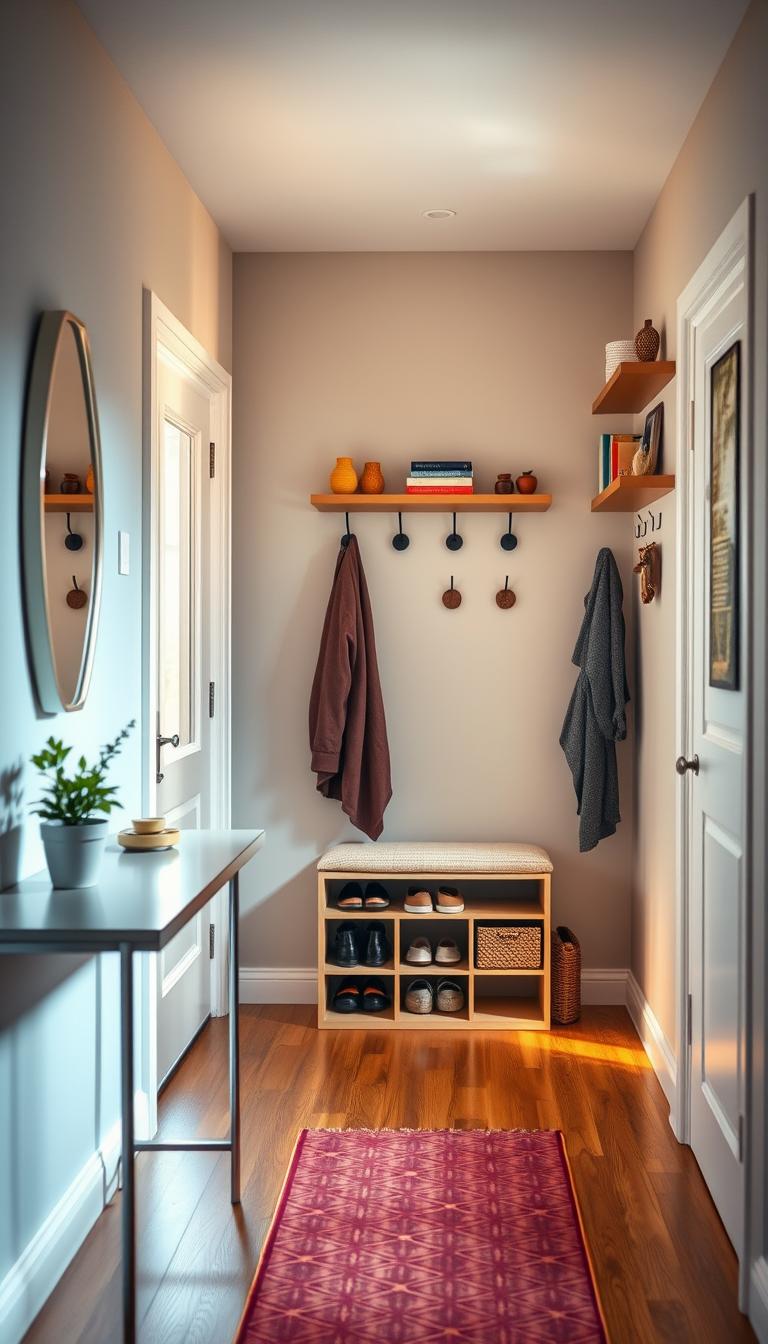
Function wins here. A floating console, a bench with hidden shoe storage, or three-in-one built-ins keep clutter off the floor and calm the mind.
Mirrors, layered rugs, and plants add depth and warmth. I rely on closed storage, smart hooks, and statement lighting to lift the ceiling and the overall impression.
Key Takeaways
- Define how you want your entryway to make a first impression before choosing pieces.
- Use mirrors and vertical storage to make the most of limited space.
- Pick one statement element to convey your home’s style without overcrowding.
- Prioritize closed storage and multitask furniture to keep clutter hidden.
- Layer light, texture, and a durable runner to create a welcoming threshold.
Make a Memorable First Impression in a Small Entryway
Make the arrival count: pick one practical piece that earns its keep every day. A bench with compartments, a petite console, or a slim cabinet delivers immediate order. Function first keeps the floor clear and traffic smooth — that alone lifts your whole first impression.
Hooks are an absolute must. They free seating, keep damp coats off surfaces, and make grabbing keys effortless. If you rent, use high-quality removable options; if you own, mount into studs for strength.
Once the bones are set, layer in personality. A favorite art print, a textured runner, or a sculptural light tells guests about your home. Repeat a wood tone or metal finish into the living room to use sightlines and visually extend the space.
Small gestures can define the zone. Paint an arch or anchor a mirror with a painted wall detail. A floating shelf-and-hook combo solves no-closet problems without bulk. And a single mural or statement fixture can turn a pass-through into a memorable arrival.
- One reliable storage piece keeps daily clutter contained.
- Use hooks and a floating shelf to free the floor and create grab-and-go spots.
- Think sightlines — repeat materials to make the entry feel intentional and connected to your home.
Small Entryway Ideas
Think of the entry as a tiny stage—what you place there sets the tone for the whole home. I lean on quick upgrades that deliver real function: sturdy hooks, a reflective mirror, a low-pile rug, and a compact light. These four moves boost light, hide clutter, and give everyone a reliable place to drop keys and bags.
Measure twice, buy once. Note total square footage and, more importantly, depth. Doors need clearance and a narrow hall punishes oversized pieces.
I add hooks first—mounted into studs when I can. If you rent, use removable hardware. Place hooks about 66–68 inches high so coats clear seating.
Hang a mirror to reflect daylight and widen the view; pick round for softness or a tall option to stretch depth. Roll out a patterned runner to define the zone and protect floors.
Keep it edited. Favor closed storage and a small floating shelf or side table as a landing spot for mail and keys. That simple ritual—keys in the dish, shoes in a basket—keeps the space calm and ready every day.
Define the Zone with Rugs and Runners
A well-chosen rug instantly tells the eye where the threshold ends and the home begins.
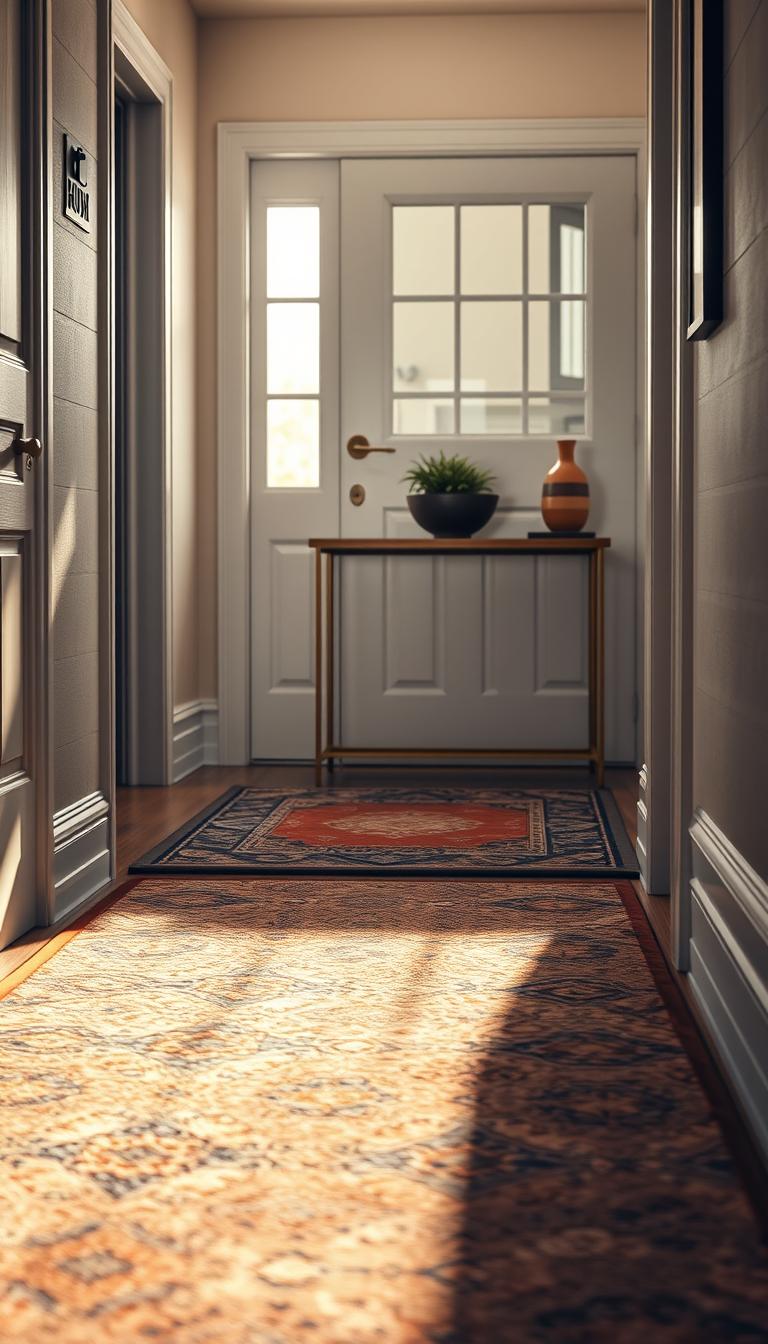
In a small entryway that opens to another room, a runner or area rug draws a clear boundary without building a wall. I recommend low-profile fibers near a swing door so the rug won’t bunch and the door clears freely.
For narrow hallways, standard runner widths of 2’–3′ work best. Tailor the length to the corridor to keep paths clear and to visually elongate the space.
Pattern and performance matter. Stripes or small geometrics guide the eye forward. Darker grounds hide grit. Choose indoor/outdoor or stain-resistant fibers if the entry opens directly to the outdoors.
- Avoid undersized rugs that float—aim for coverage under the landing zone.
- Use a thin, non-slip pad for safety and door clearance.
- Consider patterned tile as a permanent “rug” at the threshold to protect the floor.
| Area | Recommended Width | Why it works |
|---|---|---|
| Front threshold | 2’–4′ | Defines entry without blocking door swing |
| Narrow hallway | 2’–3′ | Preserves walking space; elongates view |
| Open-plan landing | 4’–6′ | Anchors furniture and unifies adjacent rooms |
Go Vertical: Wall Hooks, Peg Rails, and Floating Shelves
When floor space is tight, I always look up—walls solve so many problems. A tidy vertical setup gives you a real command center for coats, bags, and the things you grab every day.
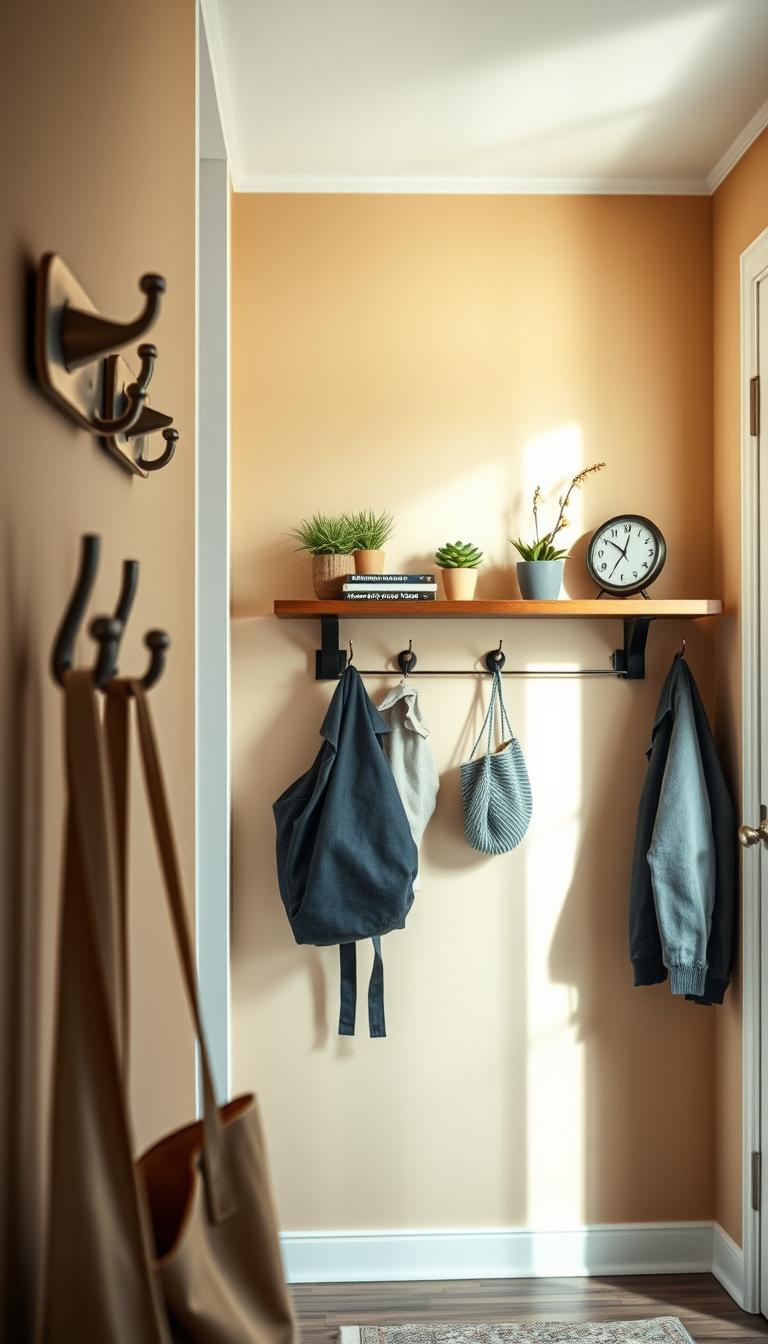
Mounting tips to maximize weight capacity
Hooks are an absolute must in compact zones. Find a stud before you fasten heavy hooks; wet wool coats and backpacks will test weak drywall anchors.
Not sure where studs sit? Use a stud finder or mount into a rail with heavy-duty anchors rated for the load. If you rent, choose removable adhesive hooks and a leaning mirror to mimic the look without holes.
Combining shelves with hooks for a grab-and-go wall
A shallow floating shelf above a line of hooks is my go-to. Keep the shelf under 8″ deep in narrow corridors so doors clear and passage stays open.
“Staggered pegs give kids lower reaches and adults higher hooks—practical and pretty.”
- Stagger peg rails for visual interest and flexible hanging heights.
- Add a high shelf with baskets to hide seasonal items while keeping them accessible.
- Mix wood pegs, a brass rail, and a painted shelf to tie the look into adjoining rooms.
- Leave at least 3′ of clear passage near door swings so traffic flows.
| Component | Best practice | Why it works |
|---|---|---|
| Stud-mounted hooks | Use 2.5″ screws into studs | Supports heavy coats and bags safely |
| Shallow floating shelf | Under 8″ depth | Holds sunglasses, mail, catchall without blocking doors |
| High shelf + baskets | Near ceiling; labeled baskets | Seasonal storage kept out of sight but handy |
Edit regularly. Hooks are for daily rotation, not long-term hoarding. I label undersides of shelves—gloves, masks, leashes—so essentials return to their spot without thinking.
Choose Multipurpose Furniture: Storage Benches, Consoles, and Chairs
A single multifunctional piece can solve clutter and seating at once. I usually pick one item that earns its keep every day.

Benches with hidden shoe storage are my go-to in narrow footprints. They give a place to sit, tuck away shoes, and hide baskets of dog gear.
When depth is tight, choose a petite chair. A slim chair offers the same sit-down comfort but keeps the path clear. It often feels roomier than a bulky bench.
A demilune or narrow console provides a landing spot for keys and mail without jutting into the flow. A slim chest adds drawers for gloves, hats, and pet supplies while giving you surface space for a mirror or lamp.
“Measure first: leave at least 36″ of clear width in primary paths so traffic stays comfortable.”
| Piece | Best for | Why it works |
|---|---|---|
| Storage bench | Seats + shoes | Hidden compartments keep floors tidy |
| Petite chair | Shallow depth zones | Smaller footprint, comfortable sit-down spot |
| Slim console/demilune | Landing surface | Offers tray space without blocking passage |
| Slim chest | Drawer storage | Organizes gloves, hats, and pet gear cleanly |
Choose durable finishes and performance fabric for cushions. Visible legs or a floating console keep the look airy. Add a two-tier shoe tray or a slim shoe cabinet under seating to prevent shoes from sprawling.
Balance the vignette with a mirror above and a low-profile lamp for warmth. That one well-chosen piece will make your entryway feel edited and ready every day.
Mirrors that Double the Space
A single reflective surface can change how you see both light and scale in a narrow hall. I use mirrors to add depth and function at once—no heavy furniture required.
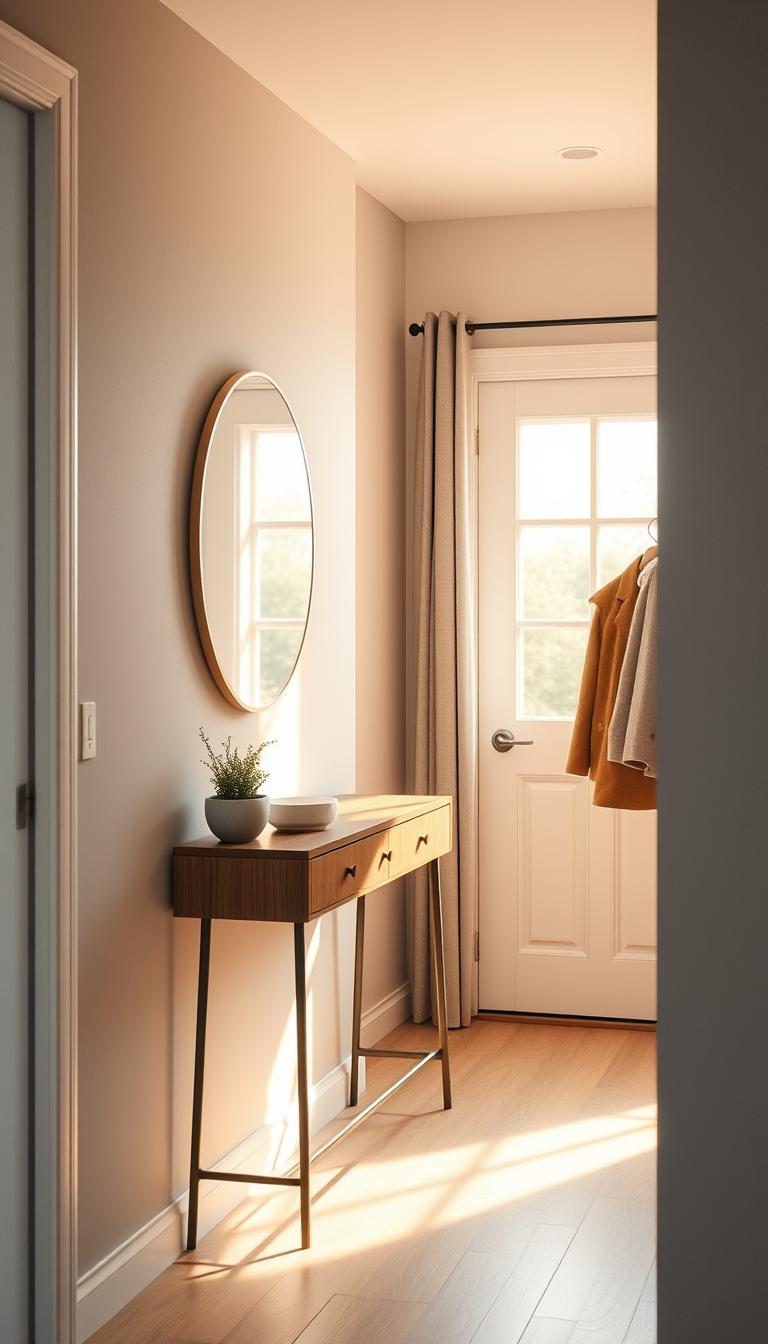
Full-length vs. round: A full-length mirror checks outfits and visually expands depth. Round mirrors soften corners and read friendly on a narrow wall. Pick one based on the size of the wall and the mood you want.
Practical tips I rely on:
- Hang opposite a window or light to bounce daylight and amplify brightness.
- Scale to the furniture below—about two-thirds the width of a console feels balanced.
- Secure heavy pieces into studs; foyer vibrations can loosen weak anchors.
What I do in very tight plans
Oversized glass panels or a single large mirror can visually double the usable space without extra decor. I often add a slim floating shelf under a round piece for keys—function without clutter.
“Backlit mirrors add a soft halo when natural light is scarce.”
Choose frames that tie into nearby finishes—antique brass or black metal feels intentional. With the right placement, a good mirror makes your small entryway feel brighter and more generous every morning.
Statement Lighting for Small Spaces
Good lighting lifts mood and makes a tight threshold feel deliberately tall. I use fixtures to create a strong first impression and to carry style into the home.

Flush mounts and petite chandeliers draw the eye upward. A sculptural flush mount or a petite chandelier makes the ceiling read higher and the space more buoyant.
Lift the ceiling with the right fixture
Choose an updated flush mount in a playful silhouette if height is limited. If you have a bit of drop, a small chandelier makes a bold, curated statement without crowding the path.
Layered lighting for function and mood
Pair a pendant or ceiling fixture for overall glow with a small table lamp on the console for keys and mail. That combo supports quick tasks and gives an immediate welcome-home exhale.
Bulb warmth, brightness, and finishes
Warm bulbs (2700–3000K) flatter skin tones, art, and paint. Cool light often washes out color, so stick warm when you want cozy and flattering.
“Dimmers are non-negotiable — they let the entry switch from bright task mode to soft evening ambiance.”
- Keep fixtures low-profile in narrow halls so they don’t intrude into the path.
- Align a pendant with a mirror or art to create a clear axial hello as you walk in.
- Match finishes to nearby hardware for a cohesive thread into the next room.
- Aim for roughly 300–500 lumens per square yard for general light; add task light at the table.
| Fixture Type | Best Use | Effect on Space |
|---|---|---|
| Sculptural flush mount | Low ceilings, narrow halls | Raises perceived ceiling height; memorable first impression |
| Petite chandelier | Small foyers with some drop | Adds personality and vertical interest without bulk |
| Pendant + table lamp | Console zones needing task light | Layered function; supports keys, mail, quick prep |
| Wall sconce or picture light | Very dark entries | Eliminates shadows and highlights art or address |
Color Moves: Paint the Door, Walls, or Ceiling
A thoughtful color choice can make the threshold feel like a warm invitation. I often start with the inside of the front door — a peppy hue there sets expectations for the rest of the home.
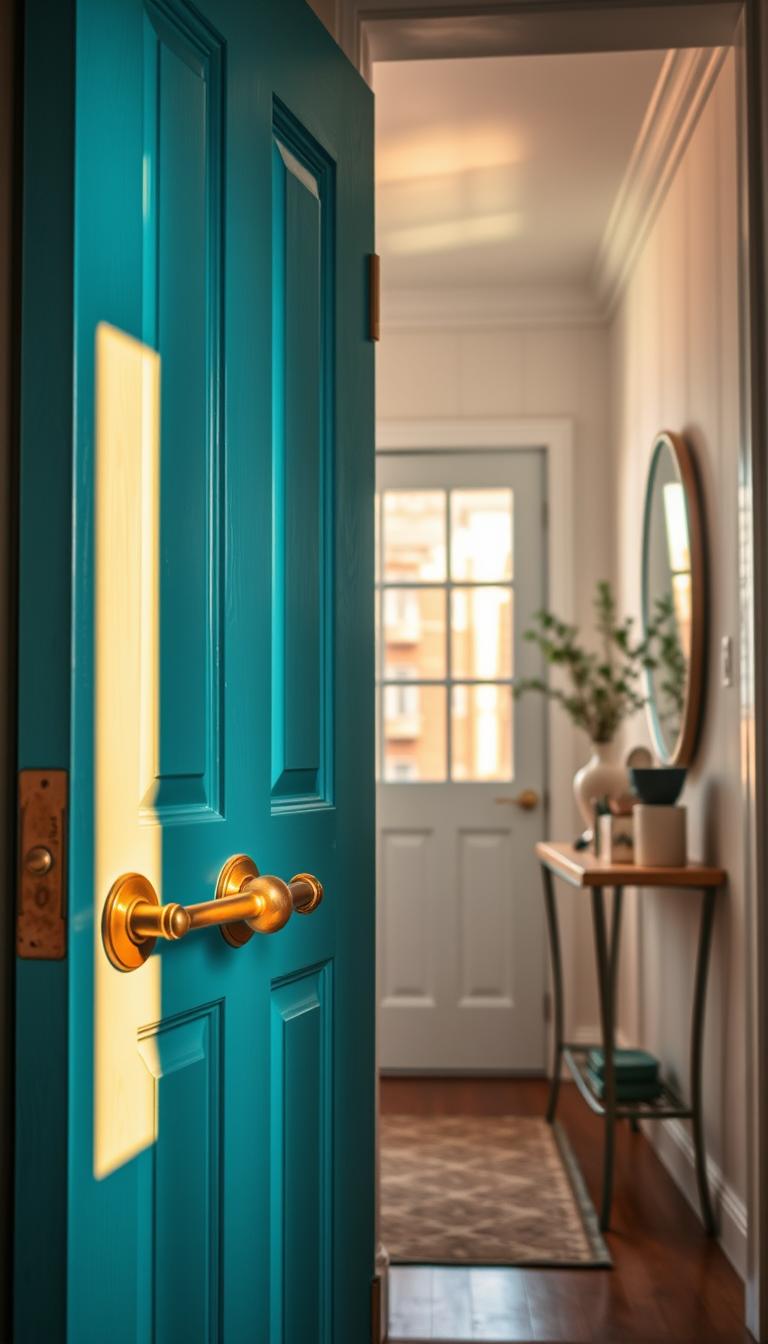
Paint the inside of your door in a saturated, warm tone to create an immediate hello. It’s a tiny canvas with big impact and it ties the side of the house to your personal style.
Try warm, mid-tone colors rather than stark white in dim entries. Whites can read gray under low light. A soft warm neutral or a joyful accent avoids that washed-out look.
Ceilings and cohesion
A painted ceiling is my secret for perceived height and glow. Pale blush or soft peach reflects flattering light. Deeper hues add drama and cozy depth.
- Use scuff-resistant paint on high-traffic walls and the door side.
- Repeat the door color in a runner or artwork to connect spaces.
- Paint trim a shade deeper than walls for subtle shadow and dimension.
“Sample big swatches and check them at morning and evening light.”
Wallpaper, Murals, and Textured Walls
A bold wallcovering can be the anchor that makes a narrow threshold feel curated and calm. I’ve used large-scale prints to quiet visual clutter and to set mood in tight plans. Big motifs—think cranes or sweeping botanicals—read more restful than tiny repeats.

Large-scale prints that energize narrow halls
In a narrow hall, a mural can carry the entire space. Wrap the ceiling for a jewel-box effect and the result feels immersive and intentional.
Keep furnishings minimal: a slim console, one lamp, and a mirror let the art breathe.
Subtle texture for a calm, farmhouse-inspired entry
Prefer quiet? Choose grasscloth, limewash, or beadboard to add warmth without shouting. Textured finishes bring tactile depth that works with natural light.
- Large prints reduce small pattern noise—great for narrow walls.
- Test samples under real light; bulbs shift color and contrast.
- Use a painted arch to frame a mirror and shelf trio—adds depth without bulk.
- Seal textured coverings near the door to resist scuffs.
“Done well, a statement mural becomes the design—freeing you from extra decor.”
When I design a small entryway, I tie the wallpaper palette to the door color. That simple echo makes the threshold feel confident and cohesive in seconds.
Gallery Walls and Art That Tell Your Story
Gallery walls turn bare corridors into personal timelines that guests read at a glance.

I pair a mix of oversized art with a low bench or slim console so the display feels anchored. A bench gives the composition a base and a place to sit—practical and pretty.
Keep frames cohesive in finish to reduce clutter. Vary scale to create rhythm down the hall. When space is tight, choose one oversized piece instead of many small frames.
For a relaxed, renter-friendly look, lean a few pieces on the console. It’s flexible, easy to swap, and it adds casual color without new holes in the wall.
- A Perspex shadow box adds depth without heaviness.
- Place art centers around 57″ for comfortable viewing.
- Add a slim sconce or picture light to make the work glow and guide the path.
“Personality beats perfection—mix travel sketches and kids’ drawings with prints for a curated, lived-in feel.”
Vintage and One-of-a-Kind Pieces for Character
A timeworn chest or table can anchor the space and tell a story at first glance. I often start with one vintage find and build the rest around it. That single piece sets mood and makes the threshold feel intentional.

Antique chests with a soft patina warm a traditional approach and pair beautifully with a modern lamp and fresh photography. Leaning art, stacked books, and a ceramic bowl give function without clutter.
A wall-mounted demilune is a smart move for tight plans. It floats elegance into the corridor and keeps legs and passage clear.
“Let the piece lead the palette—pull a hue from its wood or inlay to guide paint and textiles.”
- One vintage piece can carry a compact threshold—an antique chest, demilune, or weathered table works wonders.
- Pair timeworn wood with a modern lamp and crisp art to avoid a costume feel.
- Mind proportions: measure depth so circulation stays comfortable.
- Stabilize heirlooms with museum gel or discreet brackets in high-traffic zones.
| Vintage Option | Best use | Why it works |
|---|---|---|
| Antique chest | Shoe and catchall storage | Deep top for styling; hides clutter and reads grounded |
| Wall-mounted demilune | Floating surface in narrow halls | Elegance without floor intrusion; perfect for a lamp and photo |
| Weathered table | Landing surface near door | Tells a story and supports everyday items like mail and keys |
Smart Shoe Storage That Stays Out of the Way
Shoes can define how tidy your threshold feels—so plan storage that disappears, not shouts. I like solutions that keep daily pairs handy while hiding the rest.
Slim cabinets versus baskets under a bench
Slim shoe cabinets save depth and keep aisles clear. They hold shoes upright so walking paths stay open.
Baskets under a bench are cozy and quick. They hide slippers and kids’ pairs and make the spot feel lived-in.
- Choose a slim cabinet when depth is tight—ordered pairs, tidy floor.
- A bench with baskets below gives seating and concealed storage.
- Built-ins that mix drawers and hooks keep essentials in one glance.
- I favor closed storage; out of sight equals calmer brains and neater lines.
- Label baskets by person or purpose for fast mornings.
- Use vented cabinets or a boot tray on a washable mat for airflow and wet weather.
| Option | Depth | Best use |
|---|---|---|
| Slim cabinet | 6″–10″ | Hallways with limited space |
| Bench + baskets | 12″–16″ seat depth | Homes that kick off at the door |
| Built-in drawers | Custom | Combine shoes, hooks, and charging drawer |
“Set a household limit—two pairs per person at the door keeps mornings fast and the rest protected in bedroom closets.”
Keep a small brush or handheld vacuum nearby. Little maintenance makes the whole entryway feel welcome and ordered.
Plants and Natural Materials for a Lively Welcome
Greenery and woven elements act like punctuation—giving the area a soft, human touch that guests notice.
I bring a single sculptural tree by a mirror in many jobs. A rubber tree or olive becomes a living focal point. It lifts the home and bounces light off glass without crowding the floor.
Wall-mounted planters keep the floor clear in narrow zones. Wicker baskets, a woven umbrella stand, and a wood bench add a warm farmhouse vibe. Natural fibers underfoot—think a seagrass runner—tie the look together.
If your area is dim, opt for low-light species or a high-quality faux. I also recommend a discreet saucer or mat under pots to protect surfaces and simplify watering.
- Rotate plants seasonally to keep the space resilient and fresh.
- Echo a leaf tone in a small bowl or artwork for an easy color loop.
- Consider a simple stained beam or wood ceiling detail to create a focused design moment that defines the space.
“Even one tall plant by a mirror can change how the whole threshold feels.”
| Plant | Best spot | Benefit |
|---|---|---|
| Rubber tree | Near mirror | Sculptural leaves; reflects light |
| Olive tree | Corner by door | Airy form; Mediterranean style |
| Wall-mounted succulents | Vertical wall | Save floor space; add texture |
| Low-light dracaena | Dim hall | Hardy option when natural light is scarce |
Built-Ins and Floating Consoles to Save Floor Space
Built-ins can act like a tiny command center—organized, deliberate, and quietly powerful. I often design one compact unit that handles seating, a landing spot, and hidden storage so mornings feel easy.
Three-in-one solutions: drawers, hooks, and seating
A floating bench with drawers plus a small surface and hooks above becomes a true workhorse. That single piece stores gloves, houses a lamp, and gives a cushioned seat for shoes.
Plan for a boot cubby or pull-out tray in the lowest drawer. Add integrated outlets inside drawers or under shelves for charging phones out of sight.
Floating shelves that feel light but work hard
Keep shelf depths shallow—8″–12″—so circulation stays free and the floor reads open. Pair open shelves with leather or metal hooks below to hold heavier bags and leashes.
- Use durable, wipeable finishes for high-traffic use.
- Match the console finish to nearby cabinetry to tie rooms together.
- I often place a tall mirror beside the built-in to extend sightlines and reflect light.
“A floating console keeps the look airy while doing the heavy lifting of daily storage.”
Choose a well-scaled console and you get an edited hub for all your essentials—no clutter, just rhythm and calm.
Design for Flow: Open-Plan Entryways and Hallway Extensions
Open plans ask you to choreograph how people move; I use matching floors and a well-placed mirror to guide that flow.
Repeat color and floor materials across the threshold so the entryway reads as part of the living area. A single continuous floor feels larger and calmer than many small transitions.
Place a full-length mirror where it catches daylight and offers a quick outfit check without adding bulk. A mirror also bounces light down a long hallway and makes the whole space feel brighter.
Function matters: a petite pedestal or slim console near the door gives you a catchall for keys and mail without cluttering the seating zone.
Keep hooks just out of the main sightline so jackets have a home but don’t dominate the room. Extend the entry visually with a runner and a steady gallery line—a breadcrumb way that feels intentional.
Unifying details that calm circulation
Choose one accent color and weave it lightly through the adjacent rooms to knit the scheme together. Mirror finishes—brass in the living room and a brass hook or light in the entry—make the transition feel deliberate.
“In open plans, discipline around walkways is everything—clear paths keep guests moving and homes feeling welcoming.”
Conclusion
A clear, cared-for threshold makes coming home feel effortless. Keep one functional storage piece — a bench, slim chest, or floating console — and a strong mirror to double light and depth.
Define the area with a durable rug and a small table for mail and keys. Use the wall as a workhorse: hooks plus a shelf hold essentials without taking floor space.
Pick a single statement — a painted door, a bit of wallpaper, or a sculptural fixture — and let the rest stay edited. If you want more practical tips, see these small entryway ideas for quick wins.
Design for habit: closed storage, a tidy tray, and a bench or chair make mornings calmer. Do that, and your entry will feel like a true, welcoming prologue to your home.