Can a cramped entry or a studio layout actually spark smarter design — not stress? I ask that because I’ve turned awkward corners and missing foyers into calm, useful zones for dozens of clients. My approach treats every inch like a tool: zoning, vertical storage, and multipurpose furniture do the heavy lifting.
I share renter-friendly moves that deliver big impact with zero drama at move-out — peel-and-stick wallpaper, adhesive hooks, and plug-in sconces. Loft beds free floor area for desks and sofas. Mirrors opposite windows bounce light and make a room feel larger.
Expect quick wins like ottomans that double as tables and thrifted containers to tame counters. We’ll prioritize traffic flow, right-sized seating, and storage that supports daily life. My goal is simple: your apartment should feel bigger, work better, and look like a home you love.
Key Takeaways
- Work smarter, not harder: zone and use vertical storage.
- Renter-friendly fixes give big style with no move-out risk.
- Loft beds and multipurpose furniture free useful floor space.
- Mirrors and layered light make rooms feel open and alive.
- Thrifted finds and durable multitaskers boost sustainability.
Smart Entryway Setups When You Don’t Have a Foyer
I treat that narrow threshold as a chance to add calm and function to your living space. A tight landing area keeps daily chaos in check and makes coming home feel easier.
Narrow bench, baskets, and hooks
A slim bench gives you quick seating for tying shoes without stealing precious floor area. Slide baskets under it for neat storage of shoes, leashes, and seasonal gear.
Mount a row of hooks on the wall for coats and bags; renters can choose adhesive hooks that match the decor and won’t damage paint. Layer a mirror above to expand sightlines and speed your exit checks.
Rugs, plants, and small styling touches
Add a runner to define the area — low-pile and washable works best for high traffic. A hardy plant like pothos lifts mood and cleans the air at the same time.
- Tray or floating shelf: a tidy spot for keys and mail.
- Upholstered bench: doubles as extra seating when guests arrive.
- Adhesive hooks: renter-friendly and decorative.
| Element | Primary Benefit | Renter-Friendly? |
|---|---|---|
| Bench | Seating + under-bench storage | Yes |
| Hooks on wall | Quick-access hanging storage | Adhesive options |
| Runner rug | Defines area, hides dirt | Easy to replace |
| Plant | Welcoming decor and air quality | Yes |
Make this area feel deliberate — a few right choices turn an awkward threshold into a useful, pretty landing you’ll enjoy every day.
Zone Your Space Like a Pro in a Studio or Open-Plan Apartment
A clear plan for zones turns an open room into a series of useful, cozy places. I map the essentials first: sleep, work, dining, and living—each gets a boundary and a purpose.

Use a room divider, bookcase, or curtain to define areas
Open shelving or a bookcase works wonders as a room divider. It defines sightlines while adding storage and keeping light flowing. A ceiling-mounted curtain creates soft privacy without closing the room off—great if you want texture and calm.
Peel-and-stick wallpaper to visually separate a desk or dining nook
Peel-and-stick wallpaper is a renter-friendly trick. A narrow strip behind a desk or a bold pattern in a dining nook makes that part of the room feel deliberate. Use small-scale prints for tight square footage so the area reads as intentional, not busy.
Traffic flow tips for small floor plans
Keep a clear path from entry to kitchen to bath. Avoid furniture that becomes a “speed bump.” I use area rugs to signal zones and tall plants or a high bookcase edge as vertical cues to draw the eye up and make the space feel larger.
- Map zones first: don’t guess where things should go.
- Pick low-profile dividers to preserve light and sightlines.
- Prioritize paths—you should be able to move without detours.
Living Room Layouts That Maximize Every Inch
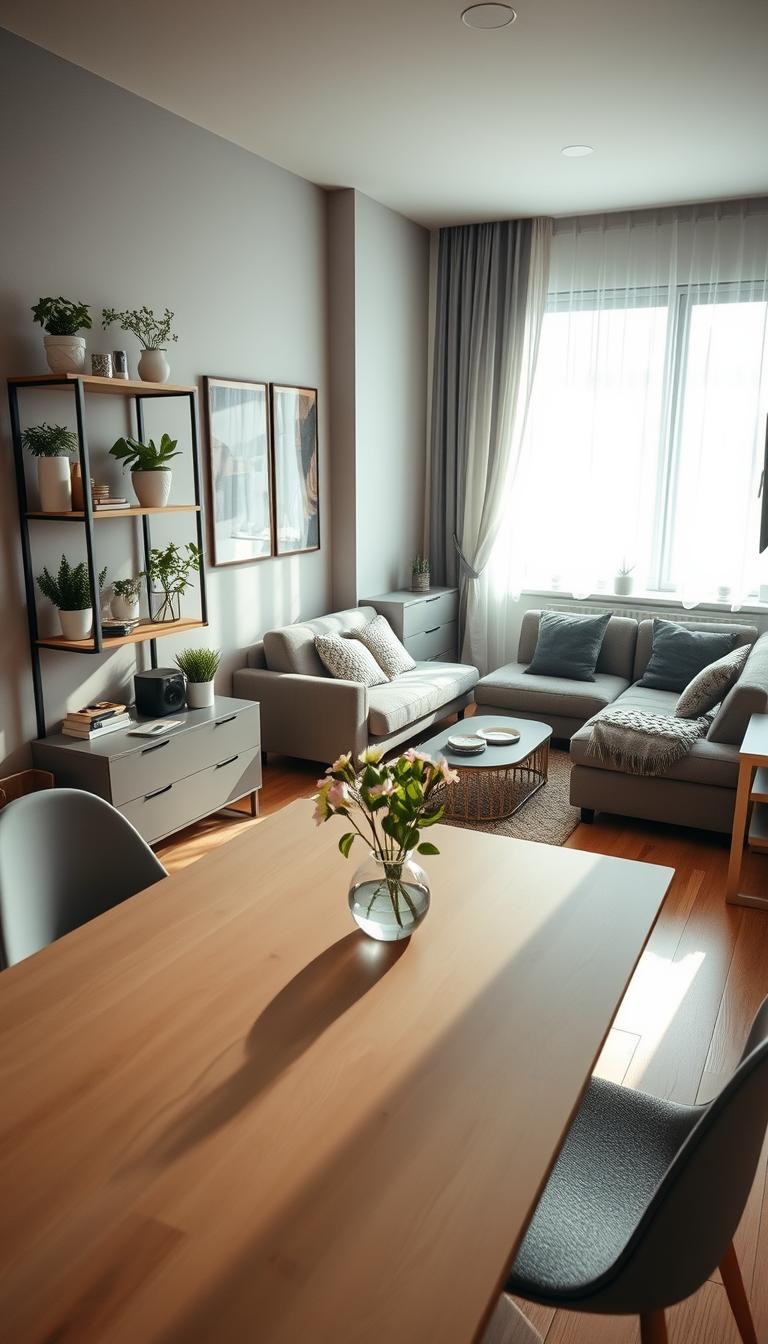
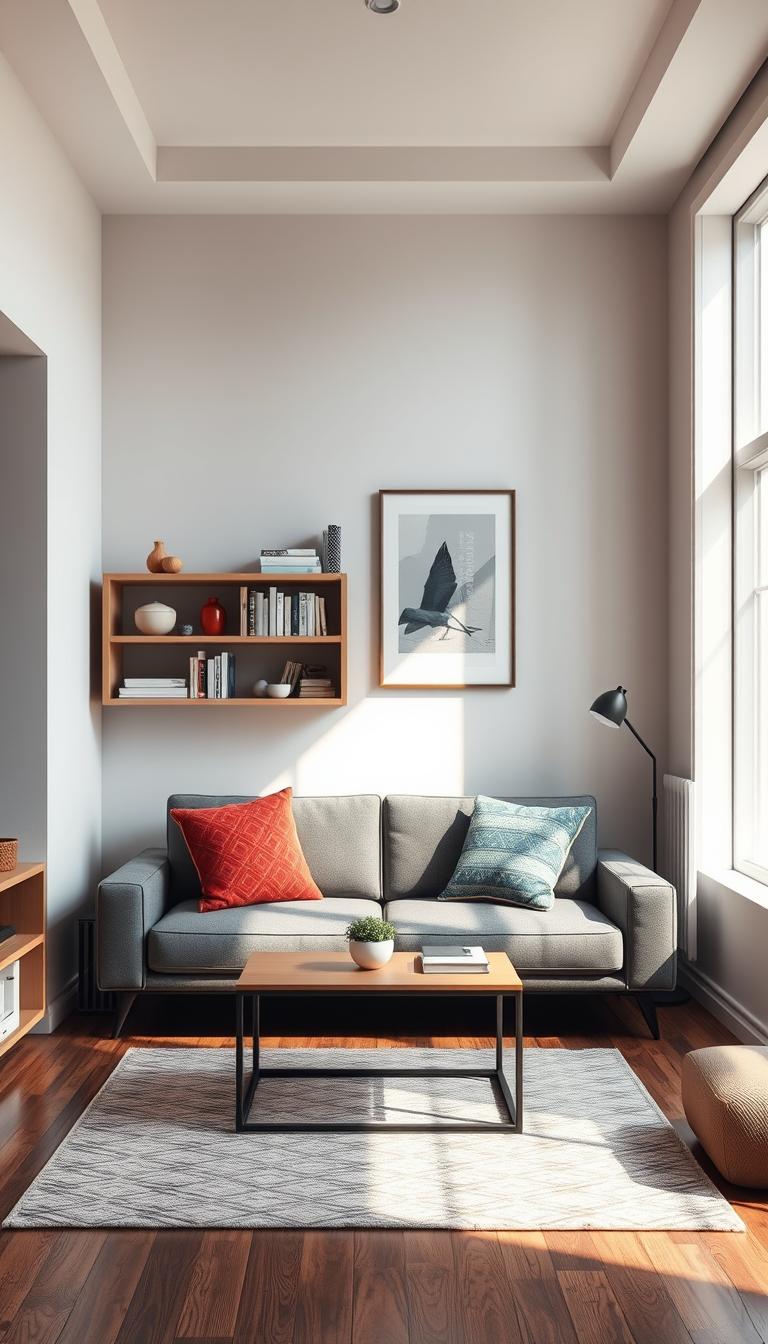
A tight living room calls for layouts that do more with less—clever placement beats bigger pieces every time. I start by measuring the area and marking traffic lanes. That step saves time and regret.
Right-sized seating and smart placement
Pick a sofa with a compact footprint and visible legs. An 80-inch sofa can overpower; a petite, firm-seat sofa often fits better and looks lighter.
Don’t always push furniture to the wall. Floating a sofa 6–12 inches creates a natural walkway and better conversation flow.
Floating furniture and pathways
Angle a chair toward the sofa to invite talk. Leave a clear path from the door to the kitchen—traffic flow is everything.
Wall-mounted storage and open floor
Use wall-mounted shelving and a media unit to free floor space and hide cords. A slim console behind the couch gives a spot for lamps and charging without cluttering the floor.
“Measure first, commit second — a precise fit changes how a room feels.”
- Choose a compact table or nesting tables for flexibility.
- Use tall wall shelves to lift the eye and reclaim floor space.
- Keep fabrics light and legs visible to enhance a sense of space.
| Element | Benefit | Why it works |
|---|---|---|
| Sofa (compact) | Comfort without crowding | Fits square footage; visible legs keep room airy |
| Floating layout | Better conversation + walkway | Creates intentional flow and depth |
| Wall-mounted shelving | Clears floor space | Storage without bulky furniture on the floor |
Multipurpose Furniture That Works Overtime
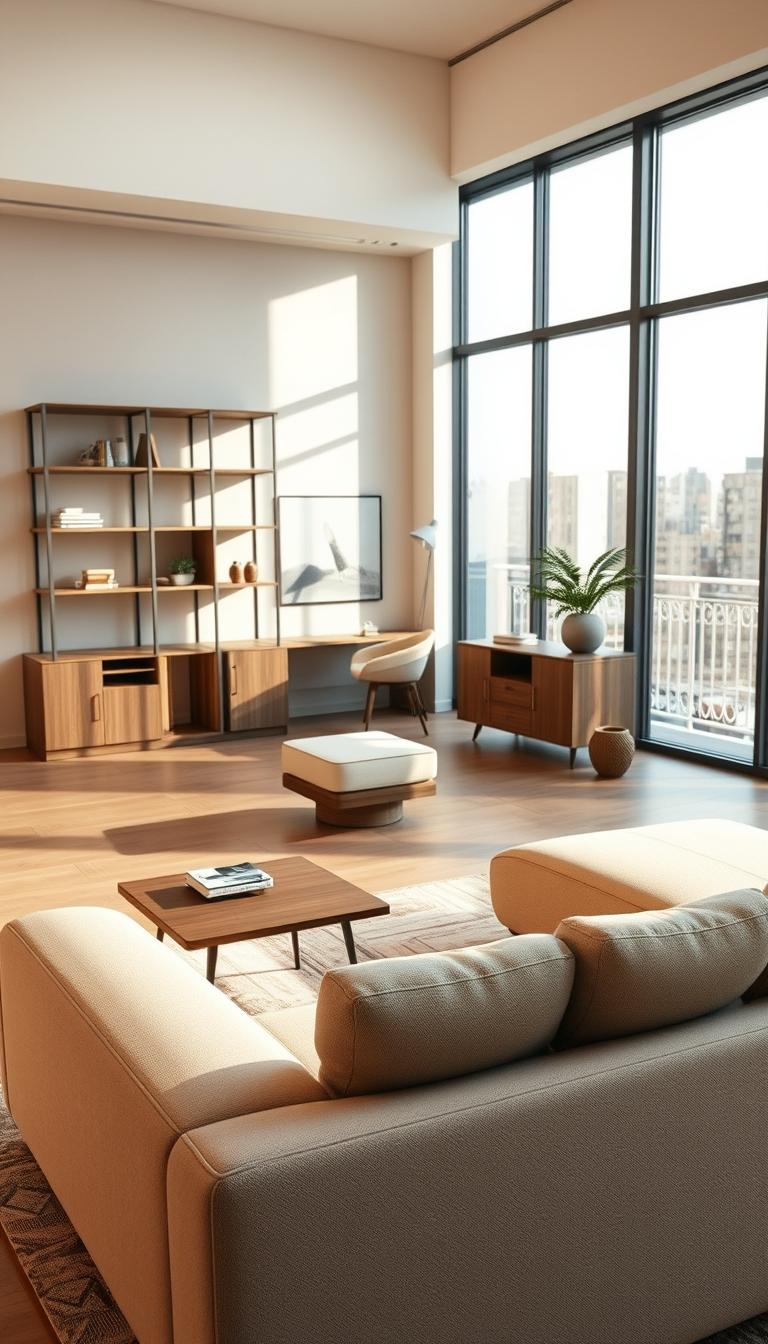
Pick multipurpose pieces that earn their keep every day—then watch your space work harder with less clutter. I favor pieces that combine comfort, function, and clever storage so a living area can shift roles without stress.
Sofa beds, daybeds, and storage ottomans
Sofa beds and sleeper sofas give you real mattresses in a chic package. A daybed reads like a sofa by day and becomes a bed at night—add dense back pillows for daytime support.
Storage ottomans hide throws, games, or weights. Use a tray on top and it becomes a coffee table and extra seating in one.
Drop-leaf, nesting tables, and flexible work surfaces
Drop-leaf tables expand on demand; nesting tables scatter for movie night and tuck away afterward. A lift-top coffee table doubles as a desk and saves your back.
- I love a streamlined sleeper sofa—guests get comfort, you get chic seating.
- Benches with hidden storage turn window nooks into useful seats and stowage.
- Pick pieces on casters for easy reconfiguration and quick cleaning.
| Piece | Main Use | Storage | Why it works |
|---|---|---|---|
| Sleeper sofa | Seating + guest bed | Usually none or small | Comfortable everyday sofa that converts at night |
| Daybed | Lounge + sleep | Under-bed drawers possible | Looks like furniture, functions like a bed |
| Storage ottoman | Table + seating | Large internal cavity | Conceals clutter and doubles as surface |
| Drop-leaf table | Dining or desk | Minimal | Expands only when you need it |
“Choose fewer, better pieces that do more.” — practical advice I give clients
Vertical Storage Solutions to Reclaim Floor Space
When floor area feels precious, the smartest move is to look up and use the vertical real estate you already own. I’ve helped clients turn bare walls into tidy, stylish shelves that free counters and expand usable space.
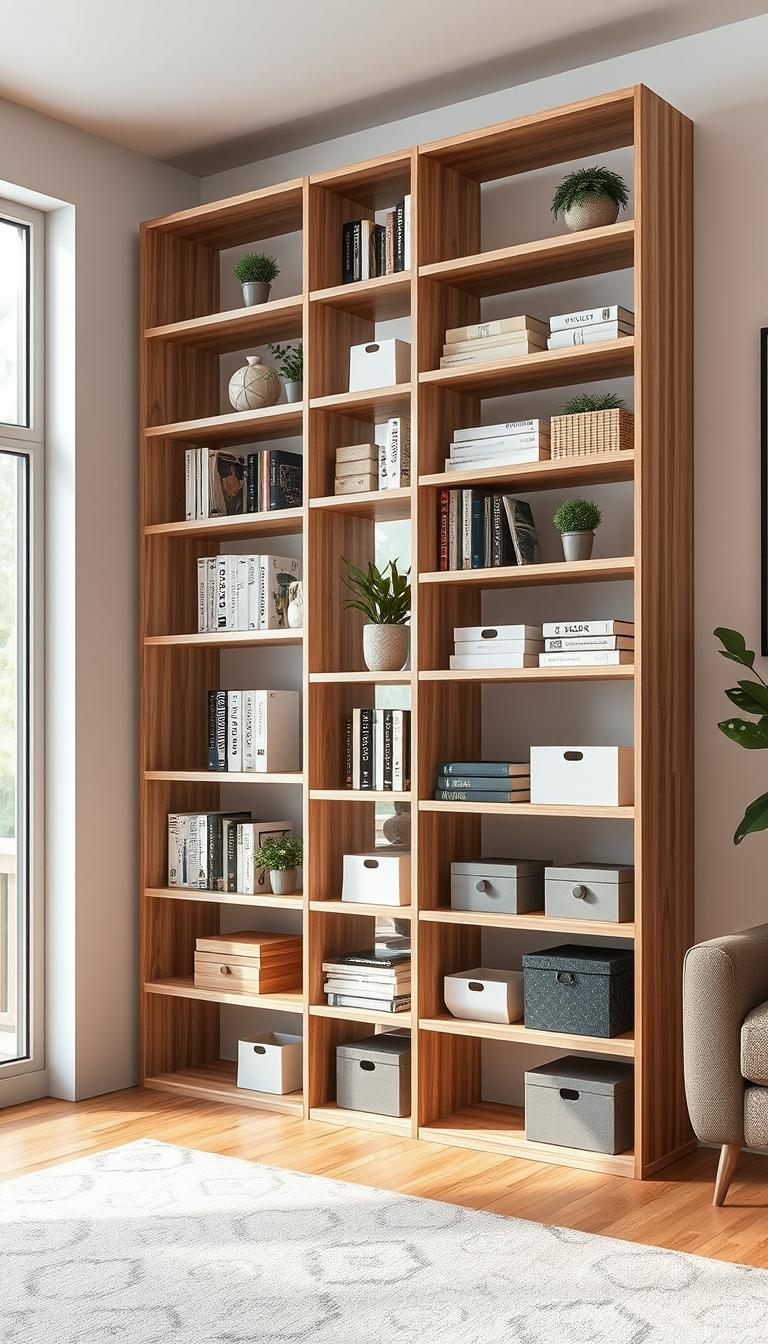
Floating shelves, tall bookcases, and over-door organizers
Wall-mounted shelving keeps items off counters and floors. Use floating shelves for cookbooks, dishware, and spices so the kitchen reads as intentional, not cluttered.
Tall bookcases add capacity without stealing floor area. Over-door organizers in bathrooms and closets store daily essentials where you use them most.
Rental-friendly adhesive hooks and modular systems
Adhesive hooks are lifesavers for renters—stick them in entryways, kitchens, and baths for towels, utensils, or bags. They give quick access and come down clean at move-out.
I like modular systems that can move with you. Reconfigure shelves, rails, and bins as needs change so your spaces stay flexible and useful.
- Go up, not out: tall bookcases and floating shelves multiply capacity without stealing floor space.
- Install a wall-mounted rail for pans and utensils to free counters and create an intentional look.
- Use bins on higher shelves to corral items; leave breathing room so each shelf feels calm.
| Solution | Best for | Renter-friendly? |
|---|---|---|
| Floating shelves | Cookbooks, decor | Yes |
| Tall bookcase | Books, baskets | Usually (anchor to wall) |
| Over-door organizer | Toiletries, accessories | Yes |
Anchor tall units when possible for safety—especially in a home with kids or pets. Little changes like these reclaim room and calm the visual clutter. Try one vertical swap this week—you’ll be surprised how much space it gives back.
Elevate Walls with Removable Wallpaper and Decals
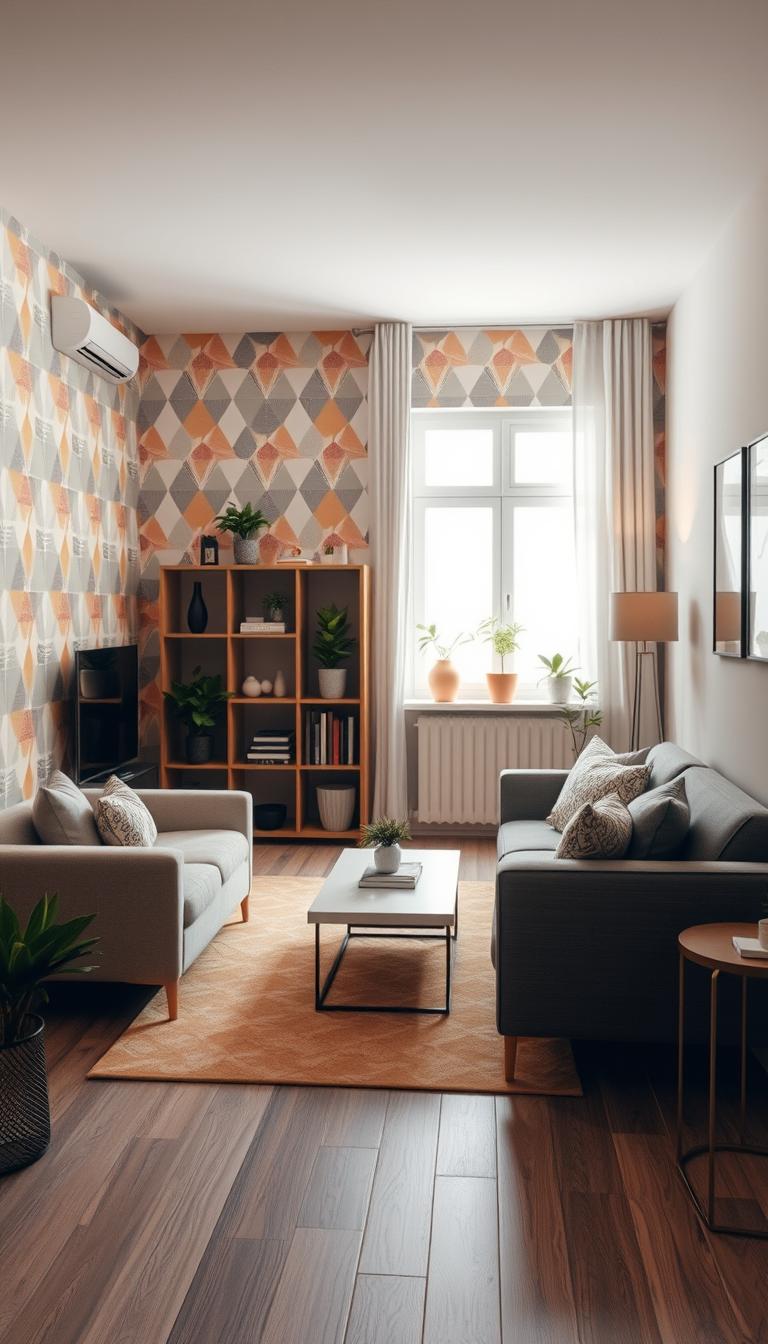
A fresh wall treatment can turn a pared-down space into a personal statement without permanent changes. I reach for peel-and-stick when a client wants big impact and easy removal.
How to prime for peel-and-stick in kitchens and baths
Before you apply, prime the walls. Primer smooths texture and helps adhesive grip—crucial in steamy kitchens and bathrooms.
Wipe grease, sand high spots, and let the primer dry fully. That prep prevents bubbling and makes removal cleaner later.
Accent walls, ceilings, and minimalist patterns for subtle style
Try a single accent wall behind a bed or sofa to anchor the room—perfect if paint is off-limits in your apartment.
Wallpapering the ceiling creates a chic statement; pick small-scale patterns so the space still breathes.
- Decals: commitment-light and easy to layer with art.
- Minimalist prints: add texture without clutter.
- Removal tip: warm the vinyl gently with a hairdryer to protect the surface.
| Use | Best for | Pro tip |
|---|---|---|
| Peel-and-stick wallpaper | Accent wall, ceiling | Prime first |
| Decals | Rental-friendly decor | Cut shapes for custom designs |
| Sample swatch | Color and scale check | View morning to night |
Little wall moves can refresh an apartment fast—sample, prime, and enjoy the change.
Make a Gallery Wall That Fits Small Spaces
A well-curated gallery wall can make a compact room feel intentional and polished. I use a few rules to keep the display calm and cohesive.
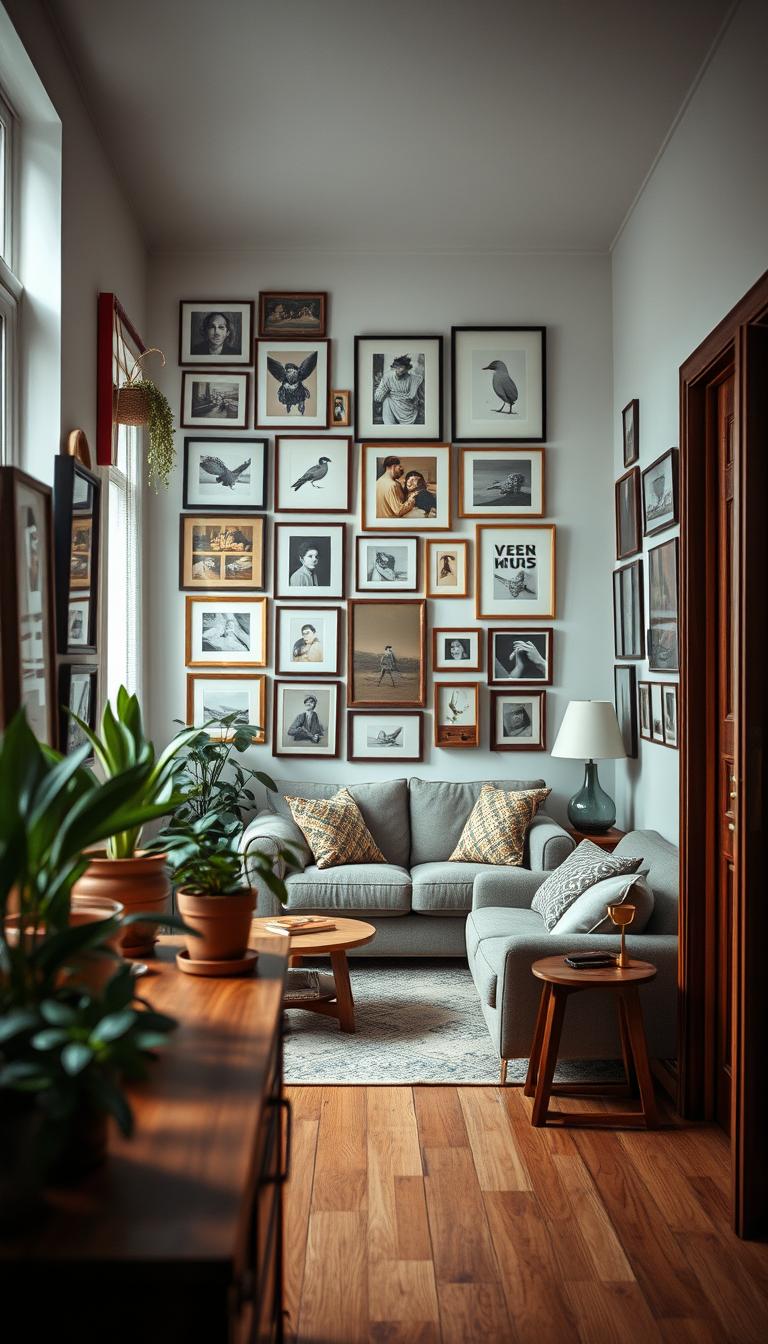
Consistent frames, layered ledges, and renter-friendly hanging
Start with a theme—travel photos, botanicals, or abstracts. Pick frames and mats with similar widths so the group reads as one composition.
Floating ledges are a favorite. They let you layer art, swap pieces seasonally, and cut down on holes. Adhesive strips work well in rentals—press firmly and respect weight limits.
- Mix scales: one larger piece surrounded by smaller prints creates rhythm and a curated feel.
- Lean oversized art on the floor for instant drama if wall space is tight.
- Keep a tight palette: two or three hues so the eye rests easily.
| Method | Best for | Renter-friendly? |
|---|---|---|
| Floating ledges | Layering & swapping | Yes |
| Adhesive strips | Light frames | Yes |
| Floor-leaning art | Tight rooms | Yes |
I always lay pieces on the floor first, then move them to the wall. Add a mirror inside the cluster to bounce light and keep the display feeling open—simple, deliberate, and stylish.
Mirrors, Light, and Brightness Tricks for a Bigger Look
Bounce natural light with mirrors and you’ll see how quickly a room gains depth and warmth. I use mirrors like a design flashlight—aiming them at windows or bright corners to spread daylight where it matters most.
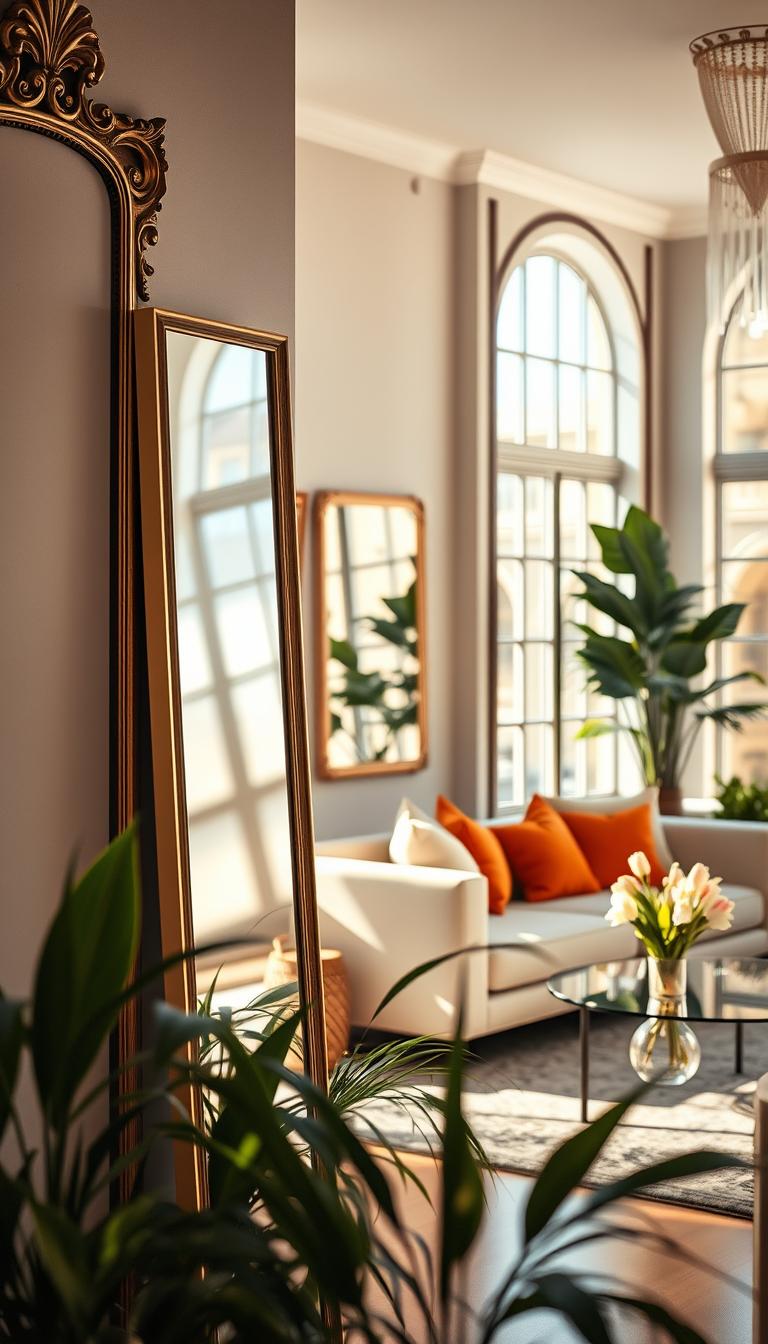
Place mirrors opposite windows to amplify daylight
Hang mirrors opposite or adjacent to windows to catch sun and reflect it back into the room. That simple move brightens the whole space and creates the illusion of a larger living area.
Choose scale and groupings for depth
When in doubt, go bigger. A large mirror on a main wall reads as one calm surface and pulls light deep into a room.
If you don’t have wall width, group smaller mirrors in a tight grid for a gallery effect. Oval or arch-top mirrors soften hard lines and draw the eye upward—adding perceived height.
- Hang opposite windows: the easiest optical trick to boost daylight.
- Go large or group small: big mirrors add calm; tight clusters add rhythm.
- Slim frames: avoid heavy frames that eat visual space.
- Over a console or mantel: centers brightness and anchors the room.
- Keep glass clean: smudges cut the light bounce—wipe weekly.
- Use warm bulbs: pair reflected light with warm lamps so the look stays cozy, not clinical.
“A mirror is more than decoration—it’s a tool that changes how you see your home.”
Layered Lighting for Mood, Task, and Function
Good lighting can make a tight room feel layered, cozy, and utterly intentional.
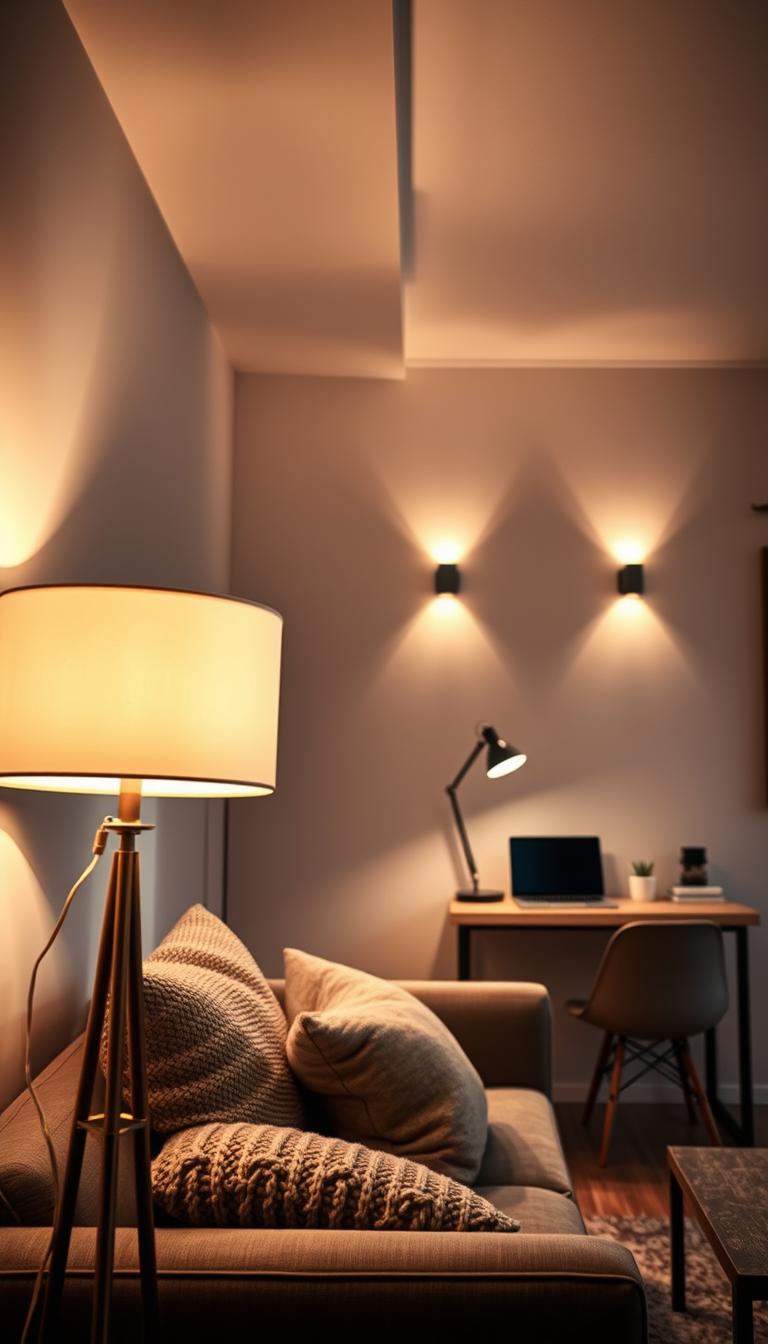
I mix overhead, floor, table, and task lights so each zone works on its own and with the rest of the space. Think seating, work, and dining — each needs tailored light.
Overhead, table, floor, and task lighting by zone
Ambient first: a soft overhead fixture sets the mood. Add a floor lamp behind the sofa to brighten corners and free table surfaces.
Task next: a focused desk lamp reduces eye strain when you work. Pair a compact table lamp with a dimmer for late-night reading.
Rental-friendly plug-in sconces for flexible lighting
Plug-in sconces give wall lighting with no hardwiring. Hide cords with paintable covers for a built-in look and use warm-white bulbs (2700–3000K) for a flattering glow.
- Use accent lights for art or shelves.
- Smart plugs create scenes — one tap shifts the whole room from “work” to “wind down.”
- Choose light-colored shades so lamps diffuse evenly in tight spaces.
“Layer first, then fine-tune — light is how a room feels more than how it looks.”
| Type | Best for | Renter-friendly |
|---|---|---|
| Overhead | Ambient light for whole room | Often hardwired; choose plug-in pendants where needed |
| Floor lamp | Brighten corners; frees table space | Yes — moves easily |
| Table lamp | Reading and close tasks | Yes — pairs with dimmer |
| Plug-in sconce | Wall lighting without electrician | Yes — hides cords for built-in look |
Kitchen Smarts: Storage, Surfaces, and Eat-In Ideas
Clever containers and a flexible table make every inch of a kitchen earn its keep. I often tell clients that clearing counters changes how you cook and live.
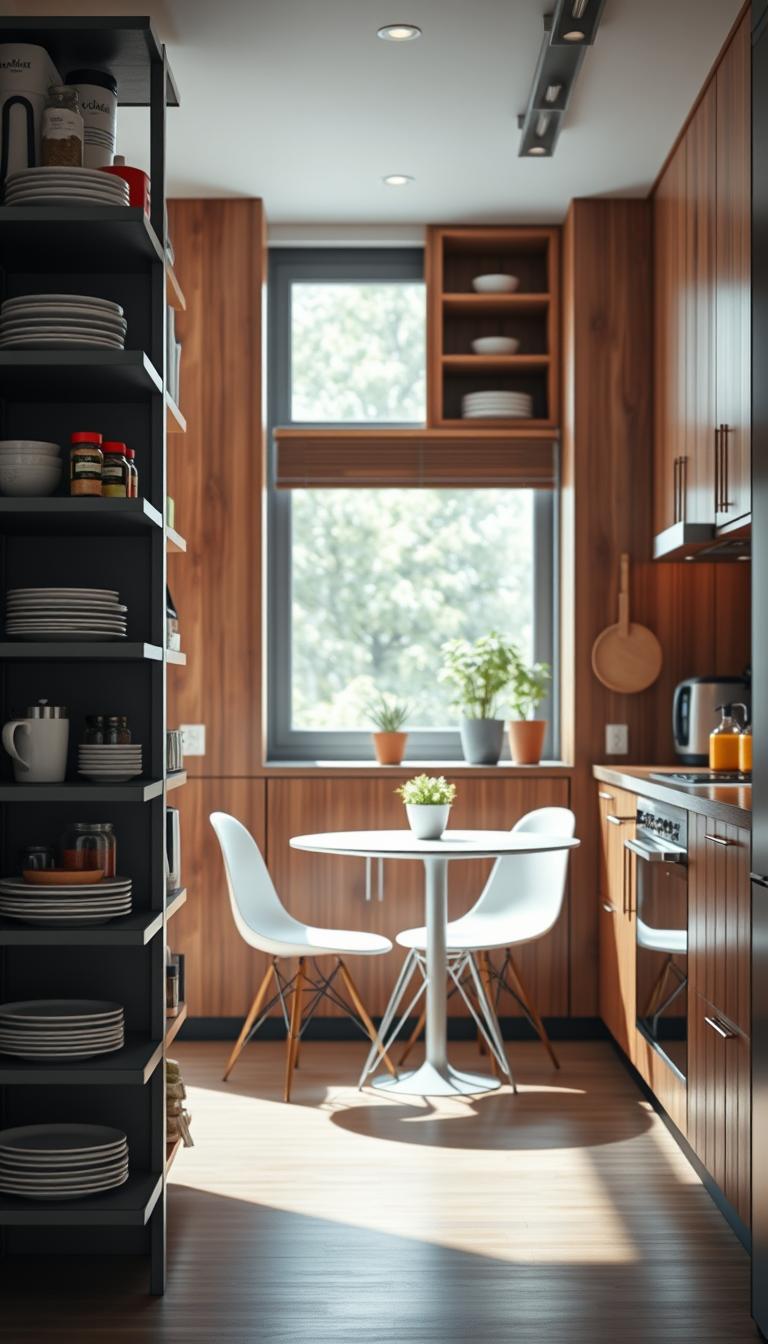
Clear counters with bins, canisters, and wall shelves
Use clear jars for dry goods and labeled canisters for coffee and tea. Bins corral snack packs and hiding the clutter makes prep calmer.
Wall-mounted shelves hold cookbooks, dishware, and spices. They free prep space and add personality at eye level.
Compact seating: bistro sets, banquettes, and island stools
A round or oval table improves traffic flow in tight kitchens. A corner bistro set gives a proper dining nook where none existed before.
If you have an island, tuck stools underneath so it doubles as dining and prep. A banquette can hide storage beneath the seat.
Tables that double as prep and dining
Drop-leaf and extendable tables expand for guests, then slim back down for weekday life. A rolling cart adds flexible storage and a mobile prep surface.
“Thrifted glass jars and baskets add charm and save money.”
| Solution | Main Use | Why it works |
|---|---|---|
| Clear jars & canisters | Pantry staples | Easy access; tidy counters |
| Wall shelf | Spices & mugs | Frees prep space |
| Round/oval table | Dining & traffic flow | No sharp corners |
| Drop-leaf table / island | Prep + dining | Flexible footprint |
- Clear counters change everything: use bins for everyday pantry items.
- Use thrift finds for jars and baskets—eco-friendly and charming.
Bedroom Space Savers: Loft Beds, Dressers, and Nightstands
Lofting your bed can feel like adding a whole extra room—without moving walls. I’ve used lofts to turn a sleeping area into a compact office, a cozy lounge with a couch, or a tidy storage zone beneath.
Raise the bed to create a functional zone below
Loft beds free real floor space. Under a raised mattress you can fit a desk, a compact couch, or a dresser with drawers.
If your ceiling is low, consider a platform bed with deep drawers instead of a full loft. That still adds storage without sacrificing comfort.
Use dressers as nightstands and maximize surface area
I often repurpose a low-profile dresser as a nightstand. It keeps essentials close and gives extra storage for clothes and linens.
Wall-mounted sconces clear the top of the dresser for books and water. Under-bed bins are great for off-season items—label and slide them out with ease.
- Loft the bed to unlock a desk, dresser, or compact couch underneath.
- Use a dresser as a nightstand for more drawers in the same footprint.
- Pick a headboard with shelves if side tables won’t fit.
- Light, breathable bedding keeps the bedroom feeling airy.
| Element | Best Use | Primary Benefit |
|---|---|---|
| Loft bed | Desk or couch below | Maximizes floor space |
| Dresser as nightstand | Drawer storage near bed | Keeps essentials handy |
| Platform bed with drawers | Low ceiling bedrooms | Deep hidden storage |
“A well-placed loft changes how you use the whole room.” — my go-to trick for tight studio and apartment layouts
Decorating with Statement Art and Color in Small Rooms
A single bold canvas can lift a whole room and make ceilings feel taller. It gives the wall a purpose and cuts visual clutter fast.
Oversized art to draw the eye up and add drama
One oversized piece beats many little frames in a tight room — it quiets the wall and creates instant drama. Hang the piece a touch higher than usual to pull the eye upward.
Pair high placement with curtain rods set near the ceiling for a taller feel. Keep nearby decor minimal so the artwork can breathe and the living area feels expansive.
- Pick a simple, harmonious color palette so the space reads cohesive, not busy.
- I often source large frames secondhand and swap in new prints — big impact, small price.
- Try DIY abstracts in your chosen palette for a custom, gallery-worthy finish.
- Use a slim sconce or picture light to spotlight the work without glare.
- Mix textures — canvas, wood, metal — to add depth without visual noise.
| Strategy | Why it works | Best use |
|---|---|---|
| Oversized art | Creates one calm focal point | Living wall or above sofa |
| Higher hanging | Pulls eye up; adds perceived height | Rooms with low ceilings |
| Secondhand frames/DIY | Budget-friendly, sustainable | Large-format statements |
| Targeted lighting | Highlights texture and color without glare | Feature walls and art-led styling |
“A single piece that sings will often do more for a room than a dozen that whisper.”
Plants and Natural Elements to Refresh Small Spaces
Greenery softens edges and livens a room faster than almost any decor choice. I pick plants to match the light you actually have, not the idealized version of the room.
Low-light choices, faux greens, and simple styling
Start with resilient, low-light plants—snake plant, ZZ, and pothos. They forgive missed waterings and build confidence fast.
- Don’t overcomplicate styling: one leafy plant on a stool can refresh the whole area.
- No sun? invest in high-quality faux stems in a textured vase to keep the space lively without upkeep.
- Cluster in odd numbers on a shelf for a small, intentional “green moment.”
- Use trailing vines placed high to pull the eye up and soften corners.
- Tuck herbs by the brightest kitchen window—functional, fragrant, and useful.
I favor sustainable pots—ceramic, terracotta, or lined baskets—and a simple watering routine tied to another habit. Little green moves make an apartment feel more like a home and add quiet, natural style to every area.
Window Treatments That Add Height and Style
Set the rod near the ceiling and watch the walls and room stretch upward. I tell clients this one move often changes the whole look of a living room or bedroom without new paint or pricey work. It’s simple and renter-friendly.
Hang curtains high to lift the ceiling line
Mount rods just below the ceiling and extend them wider than the window. That makes the room feel taller and broader. Choose curtain lengths that kiss the floor for a polished, intentional finish.
- Light-filtering panels brighten days; blackout liners help with deeper sleep and noise reduction.
- Match hardware finish to other metals in the room so everything reads cohesive.
- In rentals, use tension rods or no-drill brackets to protect paint and plaster.
- Where floor-length panels block heaters or outlets, pick Roman shades instead.
- Repeat a curtain fabric color in a pillow or rug to tie the apartment together.
- Steam wrinkles after hanging—crisp lines amplify the tailored feel.
Small curtain moves yield big visual returns; hang high, keep it neat, and let the ceiling do the lifting.
Small Apartment Ideas
You don’t need a renovation to get more usable footage; you need smarter pieces. I’ve watched clients reclaim floor space with low-cost swaps that feel intentional and calm.
Top quick wins: poufs as tables, corner bistro sets, sleek storage
Swap a bulky coffee table for a pouf plus a tray — it gives extra seating and frees floor space. Ottomans hide throws and double as a casual table when guests arrive.
Slide a petite bistro set into an unused corner and you’ve got instant dining or a morning coffee nook. Drop-leaf tables expand on demand for meals or work.
Mix style with function: design-forward pieces that save space
Choose one sculptural floor lamp or standout chair that pulls the living room together while serving a purpose. Use wall-mounted shelves and slim cabinets for sleek storage that won’t crowd the room.
- Place a mirror opposite a window to boost brightness.
- Corral cords with adhesive clips and pick plug-in sconces to save surfaces.
- Edit weekly — return stray items to bins so the apartment stays ready for anything.
For more top quick wins, see more quick wins.
Conclusion
A few targeted swaps can change how you use every square foot. Design by zone so each room earns its purpose and flows naturally.
I recommend renter-friendly upgrades — primed peel-and-stick wallpaper, loft beds to create zones, gallery walls with adhesive strips, mirrors opposite windows, and compact eat-in setups. These moves give outsized impact with low risk.
Choose multipurpose pieces and vertical storage so every inch pulls its weight. Let light do heavy lifting — natural or layered — and your space will read bigger and brighter.
Start small, iterate weekly, and watch your living and apartment transform. The right way is steady: clear traffic, flexible seating, statement art, high-hung curtains, and a few plants to warm the look.