Ever wondered if those angled walls are a problem—or your room’s best feature? I ask that because I’ve turned tight attic nooks into calm retreats and bold focal points.
I start by reframing the challenge. When you lean into the architecture, your space gains character and purpose.
Low-profile pieces—platform beds, 28–32 inch dressers, and 18-inch storage ottomans—fit neatly under slopes. Built-ins that hug the roofline transform dead zones into useful shelves and window seats.
I favor a hybrid approach: celebrate one dramatic slanted wall and keep the rest of the room soft and simple. That balance keeps the look calm, not busy.
Lighting matters. Layer ambient, task, and accent lights, and keep pendants at least 6 feet 8 inches above head height to prevent glare and bumps.
Key Takeaways
- Reframe the angle: treat slopes as features, not flaws.
- Use low-profile furniture and built-ins to maximize function.
- Pick one hero slant to highlight and let others recede.
- Layer lighting and respect clearance for safety and comfort.
- I’ll share practical ideas you can start using today.
Start Here: Embrace, Camouflage, or Hybrid for Slanted Walls and Ceilings
Your first move is simple: pick an attitude for the slope—celebrate it, soften it, or do a bit of both. That decision drives color, lighting, and furniture choices. It also keeps the plan focused and calm.
When to highlight the angles: if an incline draws your eye and adds motion, make it the star. A homeowner I worked with painted one slanted wall deep blue and kept adjacent planes neutral. The result? A strong focal point and a dynamic look that feels intentional.
When to soften severe slopes: if multiple competing planes make the space feel busy, use one tone across walls and ceilings, trim down contrasting moldings, and pick low-profile furniture that doesn’t exaggerate height differences. Camouflaging quiets chaos so the room reads as one calm envelope.
The hybrid method
I use this most. Feature a single angle—behind a bed or desk—with paint or targeted lighting. Then blend the rest. Built-ins that follow a slope add storage and visually “square” the plan.
| Strategy | When to Use | Key Benefit |
|---|---|---|
| Embrace | One clear, eye-catching slope | Creates drama and movement |
| Camouflage | Multiple competing slopes | Calms the room and simplifies scale |
| Hybrid | Mixed-angle rooms | Balance: character without clutter |
- I avoid heavy trim on acute angles and let texture do the talking.
- If an angle helps flow or frames a focal point, I feature it; if it interrupts movement, I soften it.
Room Mapping 101: Measure Heights and Create Functional Zones
Before moving a single chair, I grab a tape measure and a blank plan view. That short ritual keeps projects calm and efficient. Measure ceiling heights at several points and sketch a bird’s-eye plan. Label any area under about 5 feet as storage-only—those nooks are perfect for bins and low benches.
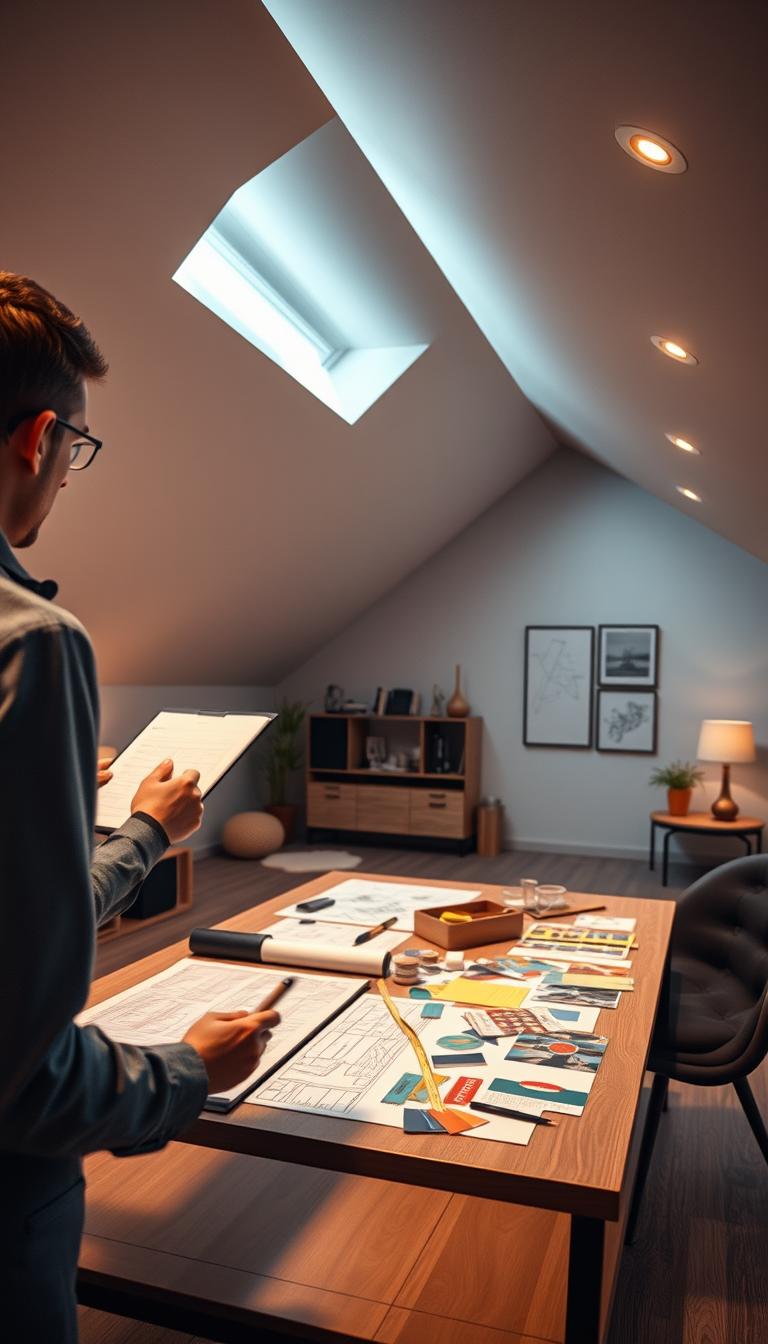
Mark stand, sit, and storage-only zones along the sloped ceiling
I mark three zones: stand zones with comfortable head clearance, sit zones for desks and lounges, and storage-only where you can’t stand upright. Place the tallest pieces at the peak, medium cabinets in mid-slope areas, and low-profile items under eaves.
Plan clear pathways so you never duck or squeeze
Trace circulation with painter’s tape. If you find yourself wanting to duck, move the plan. Make sure door swings, windows, and outlets line up with zones so lamps and plugs work where you live.
- I note “max heights” on the map to simplify shopping.
- Use 28–32 inch dressers under slopes and ~18 inch storage ottomans in low-clearance spots.
- Anchor one or two focal lines, then let negative space breathe.
“A simple map saves time, prevents returns, and lowers stress.”
Foolproof Furniture Placement Under Sloped Ceilings
Think of furniture placement as choreography for an angled room — every piece moves the eye. I start low and build up. Platform beds and 28–32 inch dressers tuck neatly under a slope. They free up usable floor space and stop accidental forehead encounters.
Headboards belong on the tallest wall. That instantly grounds the bed and creates a clear focal point. Reserve full-height corners for wardrobes or bookcases where ceiling height is greatest.
I layer heights like a miniature skyline: low storage, mid tables, taller plants and lamps. This keeps your eye gliding instead of stopping on awkward angles.
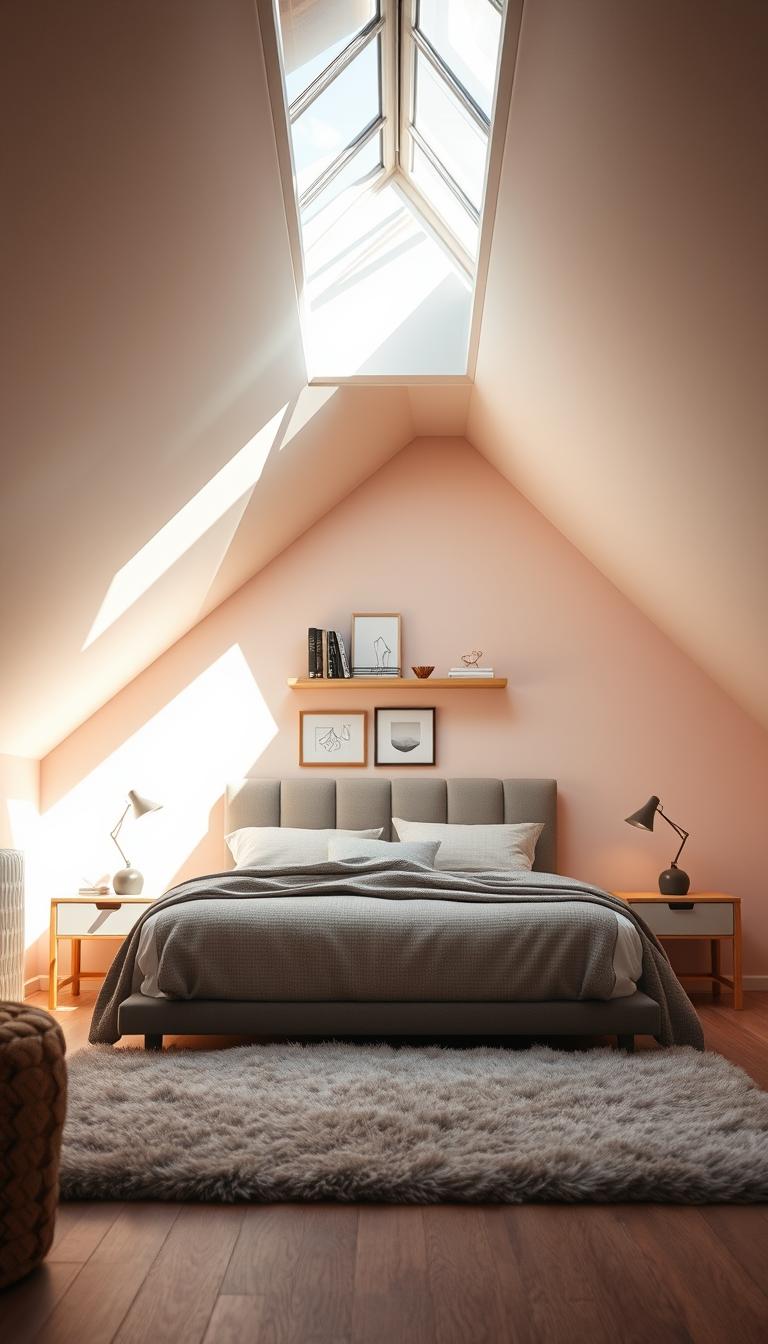
Storage ottomans at about 18 inches work as concealed storage and extra seating. For flexible rooms, choose a daybed or trundle — sofa by day, bed by night — and a wall-mounted fold-down desk that disappears when you don’t need it.
- I avoid squeezing tall pieces under a slope; they look cramped and unhappy.
- Angle a chair slightly to echo the roofline — small moves that make the whole look intentional.
- Modular systems adapt well: stack horizontally under eaves, then flip vertical where height allows.
“Start low, step up, and let the architecture inform the plan.”
Storage Solutions That Turn Dead Zones Into Hardworking Space
Dead corners can become the most useful parts of a room with a bit of clever storage. I recommend simple DIY built-ins—shelving under eaves, dormer window seats, and storage benches—to make awkward geometry useful without a big budget.
I turn that slanted wall into a workhorse with roofline-following shelves and low benches that read custom but are easy to build. Fitted wardrobes create a straight, calm facade while the void behind swallows bulky items.
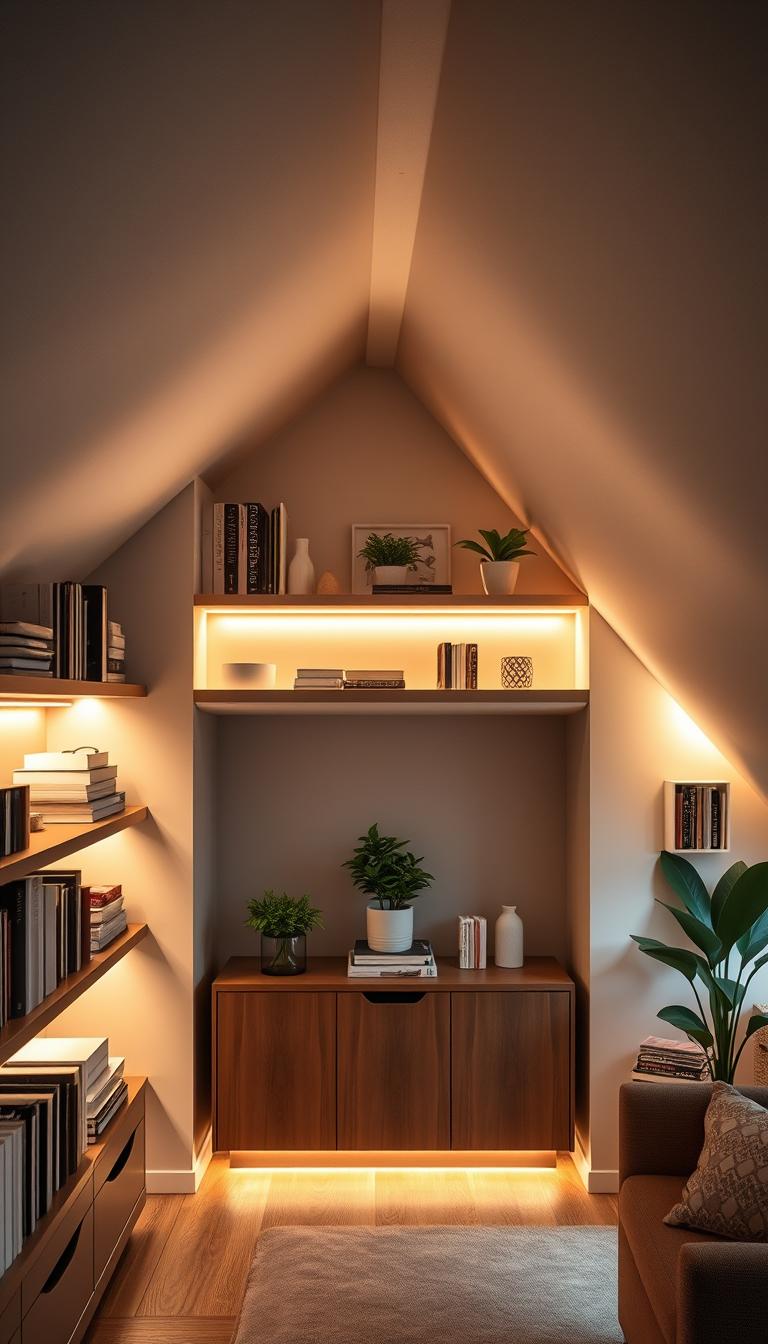
Under-eave drawers and pullouts keep seasonal items within reach. Modular cubes and tote bins make those spaces adaptable; stack horizontally where clearance is tight and flip vertical as the slope lifts.
- I group items by frequency: daily things up front, holiday and keepsakes deeper in the eaves.
- Window seats in dormers add a reading spot with deep storage below.
- Match door and drawer fronts to other furniture for a unified look.
| Solution | Best Use | Key Benefit |
|---|---|---|
| Roofline shelves | Display & everyday storage | Custom look, easy install |
| Integrated wardrobes | Clothing & large items | Squares the room; high capacity |
| Under-eave drawers | Seasonal items | Easy access; no crawling |
| Modular cubes | Flexible storage | Adaptable as needs change |
“The goal isn’t more storage; it’s the right storage, in the right spot, with zero wasted inches.”
Bottom line: pick solutions that follow the roofline, hide what you don’t need, and keep daily items reachable—then watch small spaces work like they were always meant to.
Lighting Layers for Slanted Rooms That Feel Bright, Cozy, and Intentional
Layered light turns awkward corners into cozy, useful spots. I plan lighting in three clear layers so the room reads calm and functional.
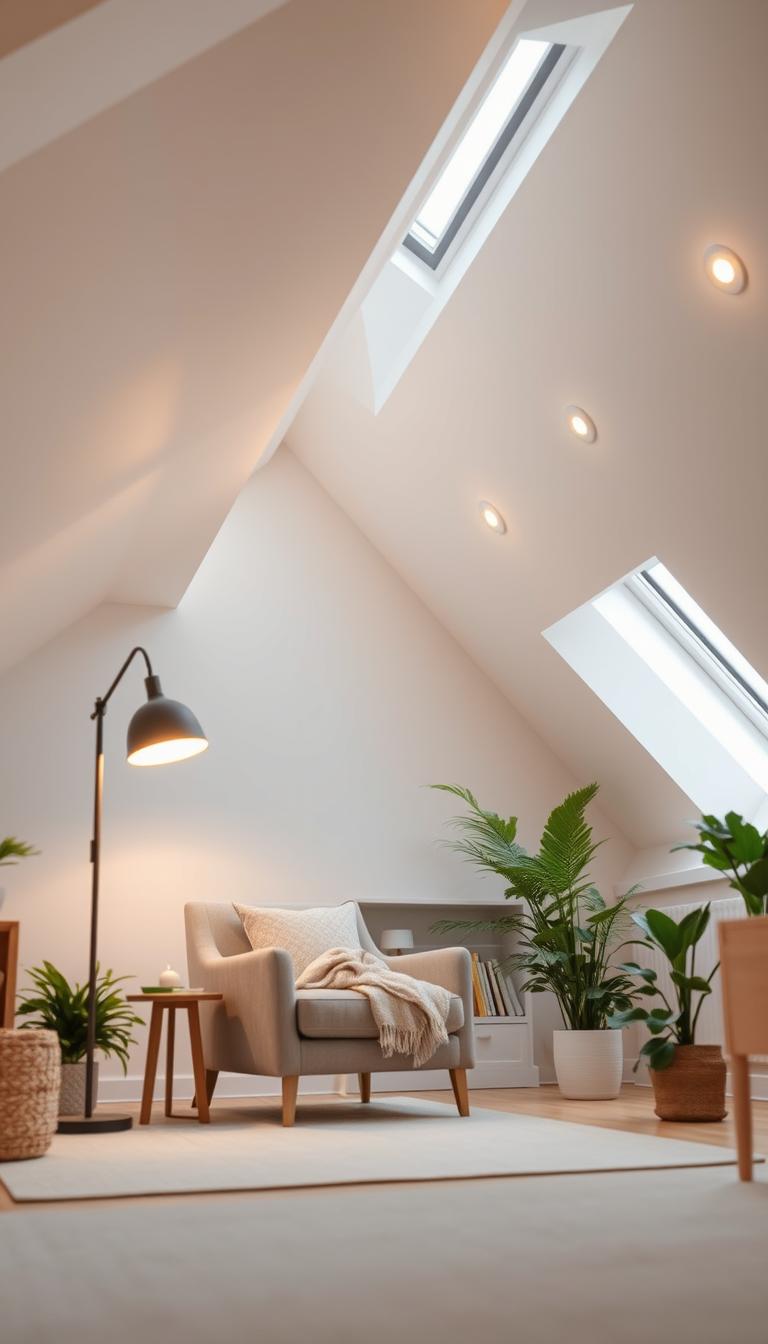
Ambient: even, forgiving wash
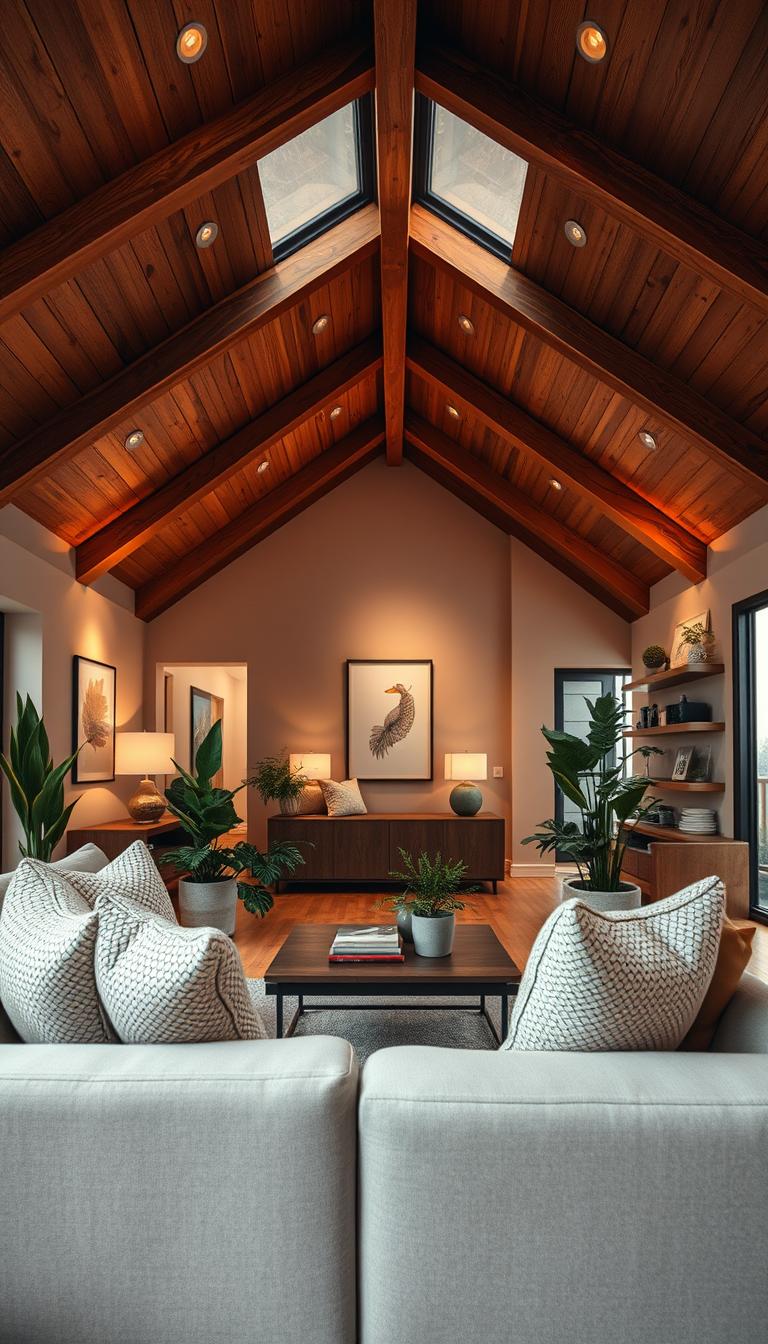
I map ambient first. Recessed cans that follow the roofline or a slim track light give even illumination without fighting angles. This creates a base that keeps the whole space usable day and night.
Task: where you actually read and work
Task lighting is personal. I mount bedside sconces at reading height and place desk lamps so the beam lands on the work surface, not the wall. Good task lights reduce eye strain and make pockets of the room instantly usable.
Accent: mood and architectural drama
For mood, LED strips or string lights graze beams and nooks. They’re low-energy and add depth. Use them to highlight an incline or a cozy window seat.
Clearance and control: make sure hanging fixtures clear at least 6’8″ in walk paths. Dimmers are non-negotiable — they let you swing from bright chores to evening calm with one slide.
“Layer lighting like jewelry: subtle, intentional, and perfectly placed.”
| Layer | Examples | Why it matters |
|---|---|---|
| Ambient | Recessed cans, slim track | Even base light; reduces shadows |
| Task | Bedside sconces, reading lamps | Focus for reading and work; lowers eye strain |
| Accent | LED strips, string lights | Highlights architecture; boosts mood |
Tip: complement natural light from dormers with shades or curtains so daylight is controllable. In small rooms, layered light stretches perceived space—corners glow, not vanish.
Color, Paint, and Pattern Tricks for Slanted Walls and Low Ceilings
Paint choices can quietly turn awkward angles into a calm, cohesive backdrop. Color-drenching—using the same tone on walls and ceilings—erases visual chop so the room reads as one envelope. It’s a simple trick that makes odd geometry feel intentional.
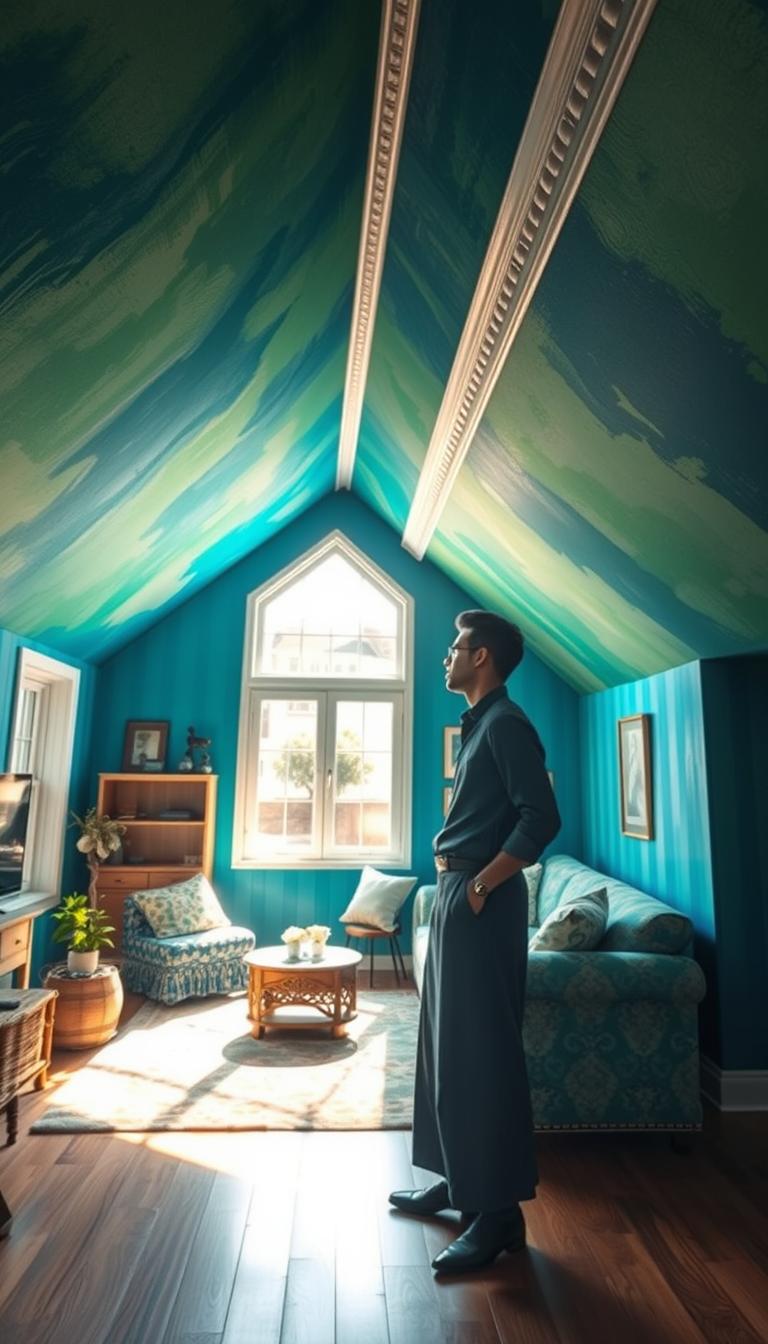
Anchor a sleep zone by deepening the hue above the bed. That darker band creates a cocoon without bulky furniture. For kids, murals across an incline turn the plane into playful art.
Wallpaper that continues over a slope keeps a story going—no hard stop, just flow. Subtle paneling adds texture and classic structure when you want more character than paint alone.
- I “erase” choppy lines with a single hue across walls and ceilings to smooth geometry.
- Deep tone above the bed anchors the bedroom and boosts restfulness.
- Continuous wallpaper wraps a small space into a snug, immersive look.
- Paneling tames busy lines and adds vintage charm without clutter.
“A monochrome wash can lengthen edges and make architecture feel chosen, not accidental.”
| Technique | Best For | Effect |
|---|---|---|
| Color-drenching | Small or busy rooms | Smooths geometry; unifies space |
| Darker headboard band | Bedrooms | Creates a restful focal zone |
| Continuous wallpaper | Playful or snug rooms | Wraps space; visual flow |
| Subtle paneling | Rooms needing texture | Tames lines; adds character |
Sloping Ceiling Decor: Attic Bedroom Ideas That Maximize Space and Style
A cozy attic bedroom starts with placing the bed where the roofline feels most inviting. I often push a twin or low platform bed against a low sloped wall for a cabin-like feel. That setup reads intentional and keeps the center of the bedroom open.
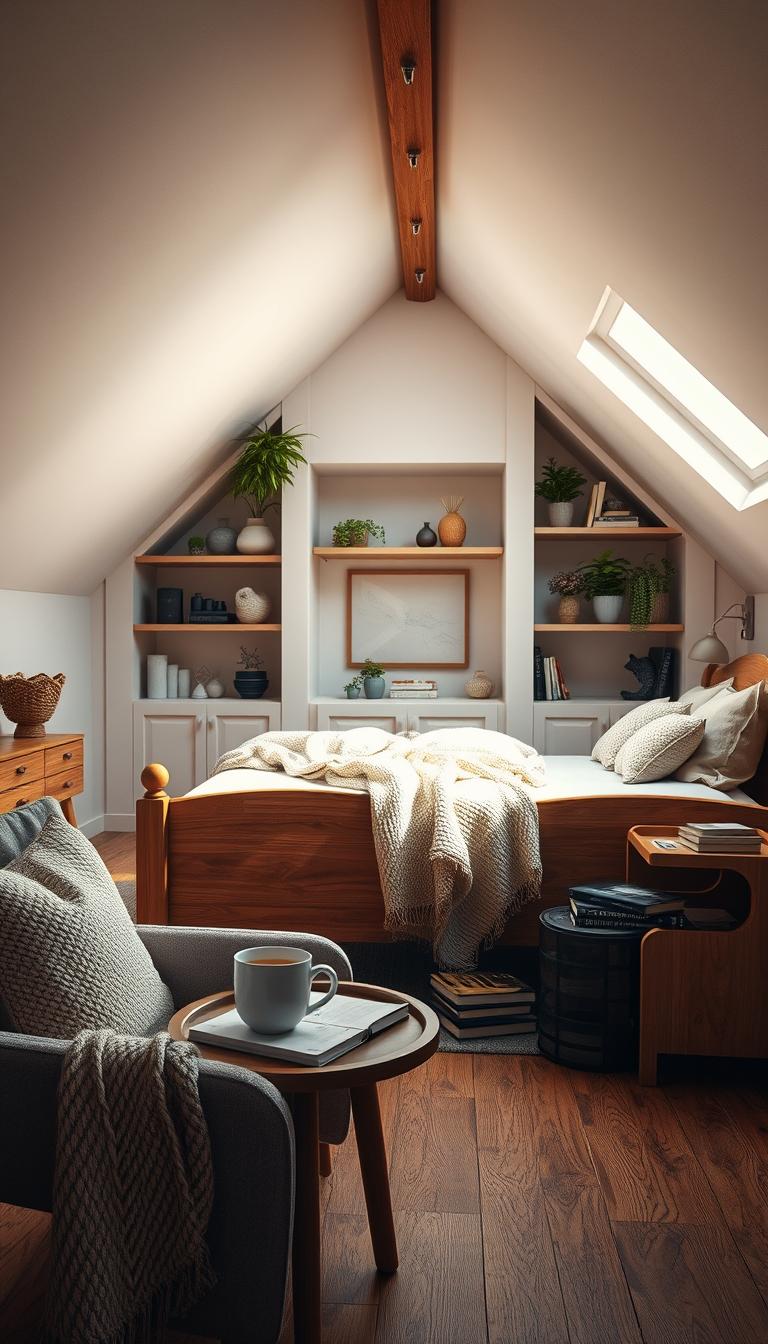
Best orientations: tuck a bed into a nook, float it under a window with a carved or low headboard, or place it snug against a slanted wall for instant retreat. If exposed beams or brick frame the sleep spot, skip the headboard and let the architecture do the work.
Headboard alternatives and bedside lighting
Use a low headboard to preserve light. Or mount sconces on the slope for reachable task light—many clients love that simple swap over crowded nightstands.
Kids’ attic rooms
Kids adore den-like corners. I layer cushions, add a small book ledge, and fit petite furniture for play and seating. Stair-step shelving follows sloped walls for clever storage and display.
- Mirror two beds along slopes to fit siblings—balanced and charming.
- Lean vintage, smaller-scale pieces into tight attic rooms for personality and better fit.
- Keep under-bed storage slim and accessible to maintain flow on the side of the room.
“Small changes—low beds, smart lighting, and stepped shelves—turn awkward attics into rooms everyone wants to use.”
Make the Most of Natural Light, Skylights, and Windows
Let daylight shape the room—place the spots you use most where the sun finds them. I nudge beds, cribs, and reading chairs toward skylights and dormer windows so mornings feel gentle and bright. This simple move makes the whole space more inviting.
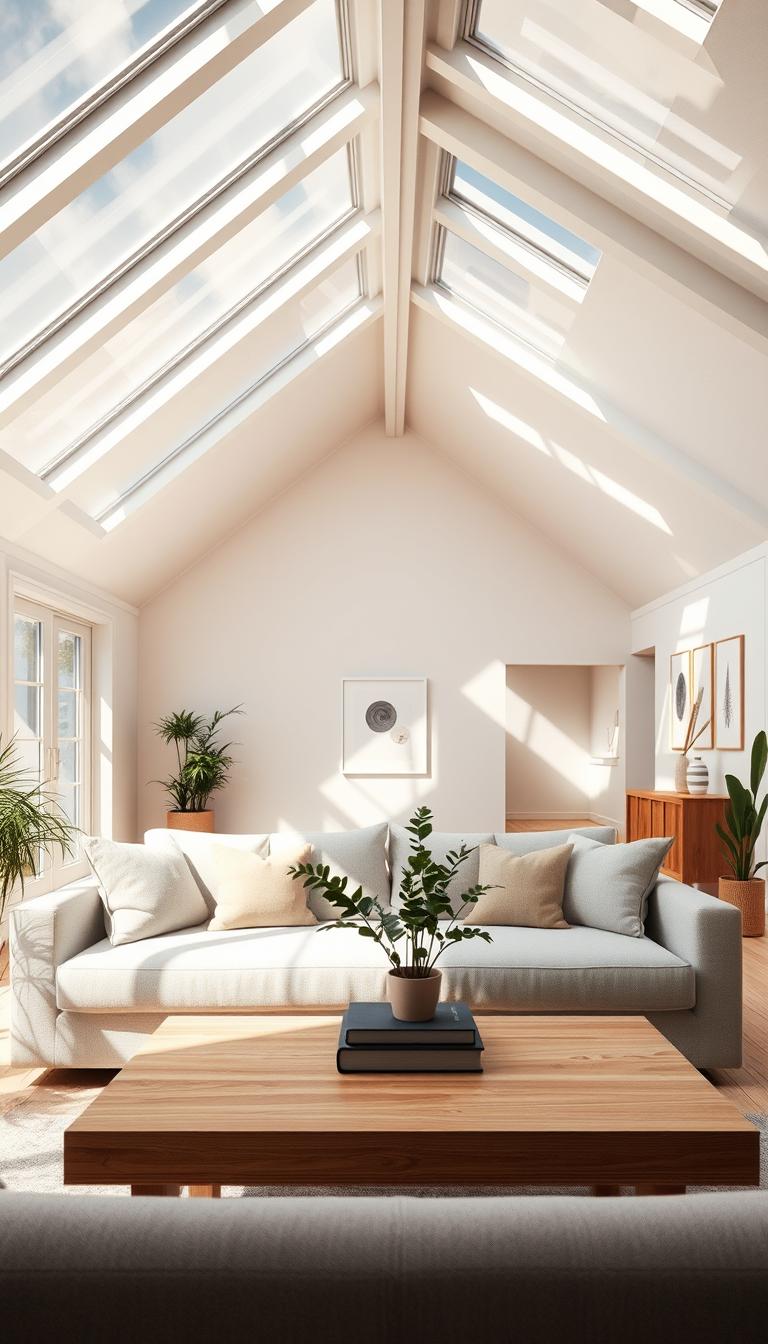
Control matters. Use shades and curtains to cut glare and protect sleep. I like a layered approach—sheer for a soft glow, blackout when you need rest.
Under a sloped ceiling, mirrors and pale finishes bounce light into deep corners. Hang a plant from a beam near a skylight—nature meets architecture and lifts the mood.
- I let natural light steer the plan—reading chairs and beds drift toward skylights.
- Shades and curtains give privacy and glare control—sheer plus blackout is my go-to.
- Window sills become mini displays for art or plants, freeing floor space in tight rooms.
“Thoughtful placement means the space works with the sun’s path across your home, not against it.”
Decor Accents That Shine in Slanted Spaces
A few well-chosen accents make these odd corners sing. I start small and edit heavily so the room reads calm and intentional. Bring life in by hanging a trailing plant from a beam — soft green against warm wood is an instant mood lift.
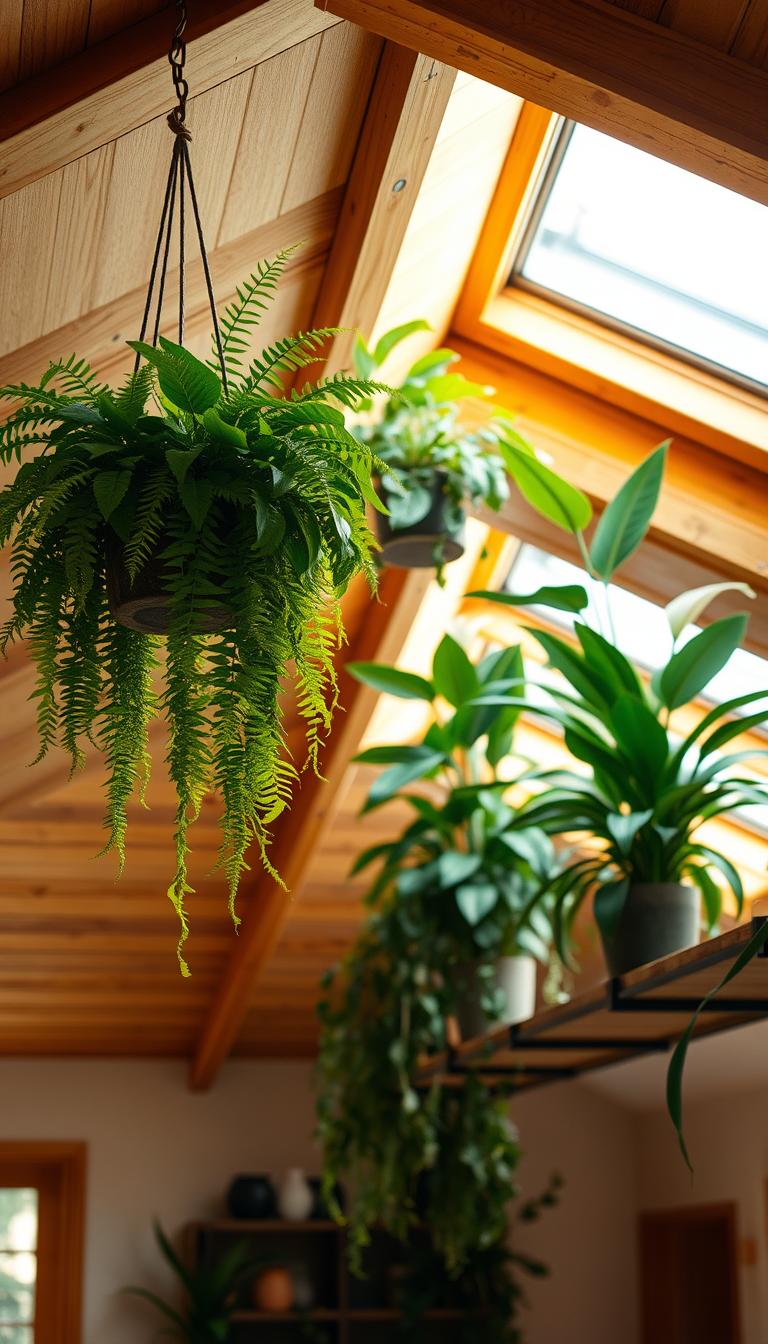
Stair-step shelves climb a sloped wall to create playful display and extra storage. Vintage pieces often fit better here; their smaller scale adds soul without crowding the area.
I love string lights along an angle for evening sparkle — attach with removable hooks so you can change the look. Flameless candles cluster on a low trunk for safe, soft glow.
Mirrors multiply light and depth. A well-placed mirror pushes brightness into deep corners and makes tight spaces feel larger.
- I edit accessories to a few loved items so the room reads curated, not cluttered.
- Texture—woven baskets, linen throws, nubby pillows—finishes every corner with warmth.
“Small accents, thoughtfully placed, transform awkward angles into character-filled spots.”
| Accent | Best Use | Benefit |
|---|---|---|
| Hanging plants | Beams & high points | Brings nature; softens wood |
| Stair-step shelves | Sloped walls | Display + storage |
| Vintage pieces | Low-clearance areas | Character; right scale |
| String lights & flameless candles | Evening ambiance | Safe, cozy glow |
Want more ideas on handling angled rooms? See this practical guide for a deeper plan: how to transform slanted ceiling rooms.
Common Mistakes to Avoid in Rooms with Slanted or Low Ceilings
A few common missteps quietly make angled rooms feel smaller and less useful. I see them often on site visits — and they’re easy to fix.
Scale matters. The fastest way to shrink a room is shoehorning in oversized furniture under a slope. Choose pieces around 28–32 inches high instead of 36+ inches. Your plan will breathe and feel intentional.
Watch hanging lights. Pendants over walk paths that sit below 6’8″ are a hazard. Keep lights high or switch to wall sconces and recessed options so people don’t have to duck.
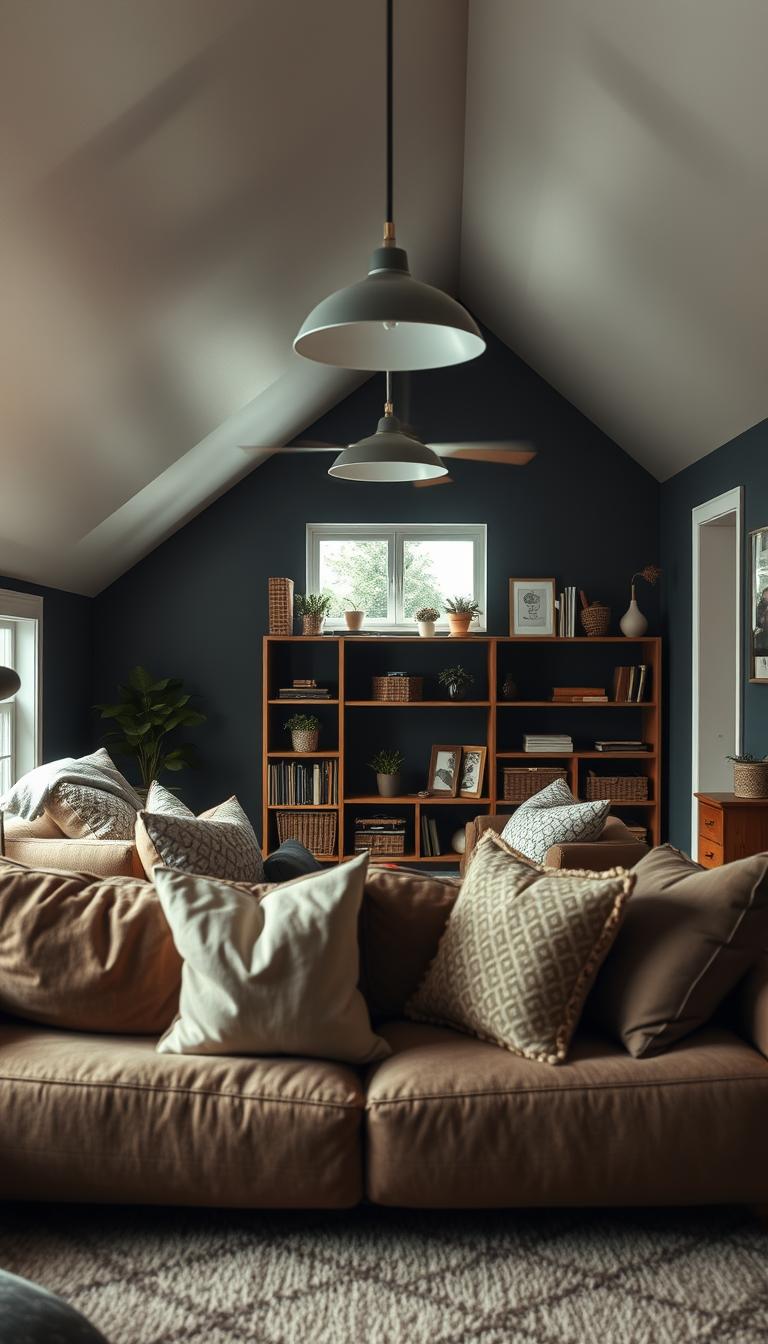
Don’t rely on a single fixture. Flat lighting can make a low ceiling feel oppressive. Layer lighting, add dimmers, and aim task lights where you use the space.
- Avoid busy trim or high-contrast paint at every angle — it visually pulls the ceiling low.
- Convert dead eave zones to drawers, benches, or shallow shelves for tidy storage and extra function.
- Place daily-use items near their point of use to protect flow and reduce zig-zagging around the room.
“Good design is a series of kind decisions — for your body, your routines, and your future self.”
Conclusion
Small, deliberate moves transform odd angles into everyday advantages., I say this after years of turning tight attic bedroom corners into calm, useful space.
I start with a map—measure heights, mark stand/sit/storage zones, and pick one slanted ceiling angle to celebrate while softening the rest. Low-profile furniture like platform beds, 28–32 inch dressers, and ~18 inch ottomans unlock floor area and keep headroom clear.
Build where the roof leans: fitted wardrobes, window seats, and roofline shelves turn eaves into real storage and seating. Layer lighting with dimmers so the room glows, reads, and rests on cue.
Respect the bones and iterate: one darker wall behind the bed, a lamp shift, or new shelves can change how the whole room feels. You’ve got this—let the angles become the story of your home.