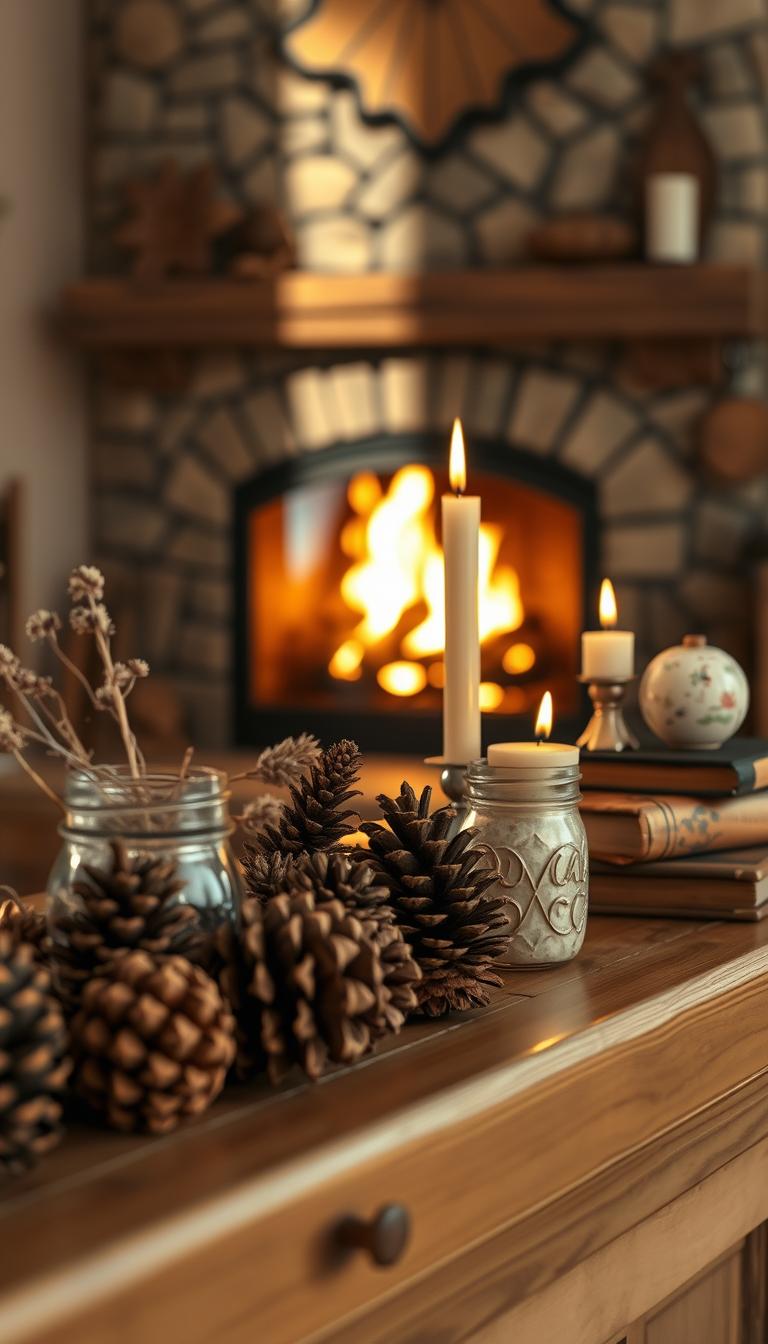
, Have you ever wondered why some fireplaces make a room feel instantly calm while others feel cluttered or confused?
I often start client projects by asking what the mantel should do for the living room. Do you want a calm, minimalist mood or a layered story that grows over time?
Read the room’s architecture and materials. A brick surround loves organic textures; a painted surround can take sleeker pieces. Pick one anchor—art or a mirror—and build a simple supporting cast.
Lean art against the wall to avoid drilling, and think in odd-number groupings with varied heights. Layer glass, wood, metal, and woven fibers so the fireplace feels tactile but not busy.
Keep negative space. Let light bounce and give the mantel room to breathe. Set a neutral base so seasonal swaps take minutes, and mix meaningful finds with store pieces to tell your home’s story.
Key Takeaways
- Decide the mantel’s role: calm backdrop or layered narrative.
- Match styling to room materials for visual cohesion.
- Use one anchor and build with odd-numbered groupings.
- Lean art to keep the fireplace wall flexible.
- Layer textures and keep negative space for balance.
- Start neutral to make seasonal edits simple.
Make the Fireplace the Center of the Room
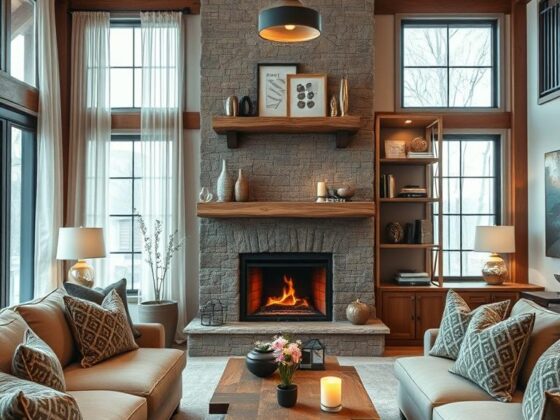
Make the fireplace the true focal point by letting the room’s bones guide your choices. I read the architecture first—brick wants earthy restraint, painted millwork can handle bolder silhouettes, and stone asks to be the star.
Match the mantel to the living room’s overall vibe. In a formal space, mirror pairs and symmetry feel calm. In casual family rooms, go off-center with layered vignettes.
Read the architecture: brick, stone, and wood cues
Keep displays simple on textured brick so the pattern breathes. For a stone surround, I often choose a gold-framed mirror, a vase with live branches, and two candlesticks—let the material shine.
Match mantel style to the living room’s vibe
Use contrast thoughtfully: a sleek bowl on a traditional mantel freshens the space without fighting it. Repeat wood, iron, or warm brass already in the room to tie the hearth to furniture and built-ins.
- Single striking object: place one anchor in the visual center, then add two supportive pieces.
- Check sightlines: step back from sofas and chairs and nudge items by an inch if needed.
- Consider scale: tall rooms take vertical gestures; low ceilings prefer wider, lower silhouettes.
Start with an Anchor: Statement Art, Mirror, or Vintage Window
Start by choosing one bold anchor that the whole mantel can revolve around. I pick one oversized piece—so the layout almost designs itself. This keeps the fireplace area calm and confident.
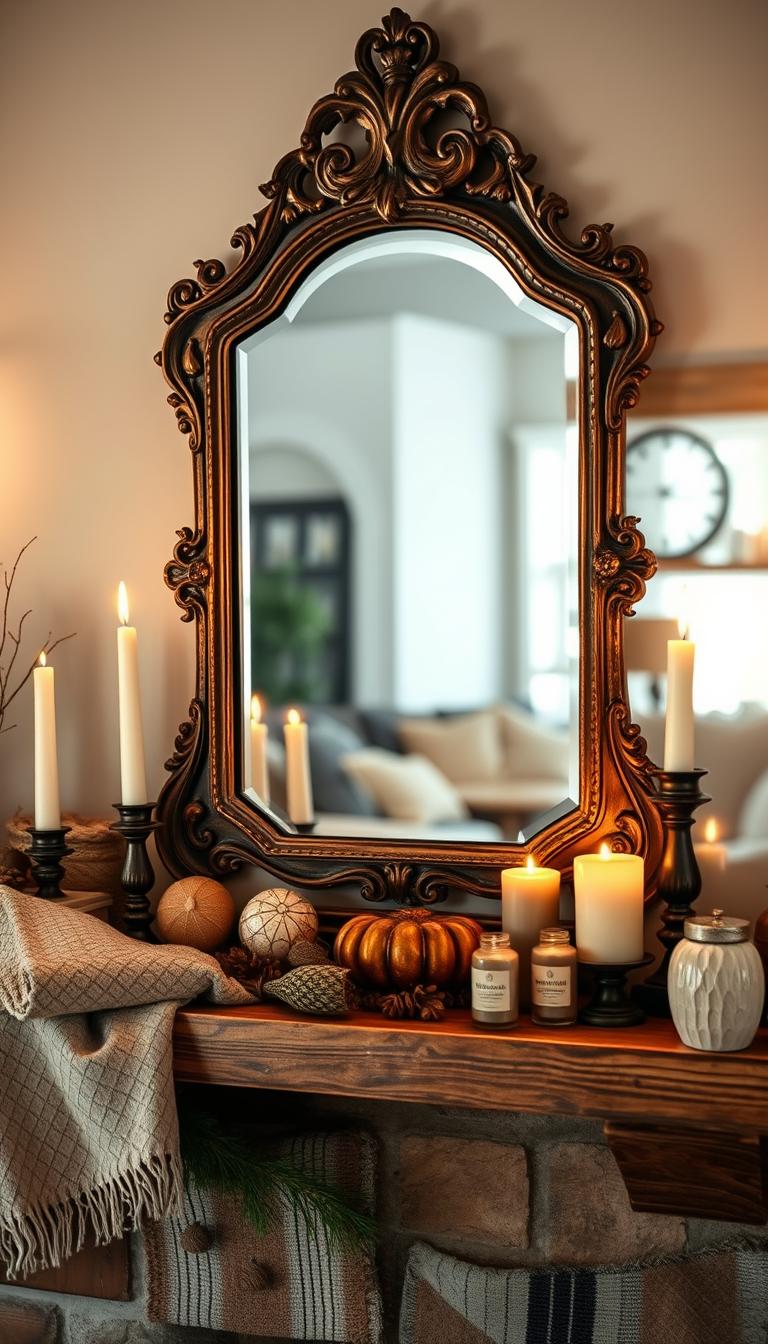
Arched and Ornate Mirrors
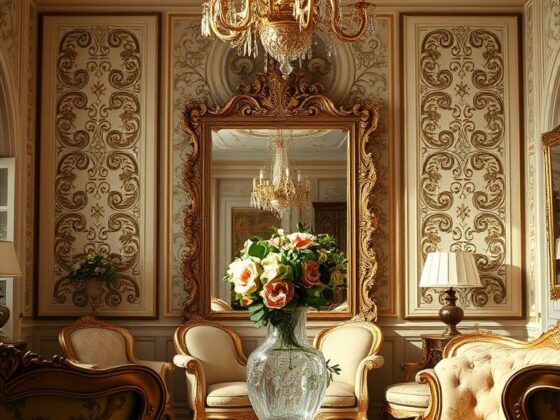
An ornate arched gold mirror brightens and visually enlarges a room. In darker spaces, the mirror bounces light and lifts the whole wall. I often lean an arched frame to avoid drilling and to make seasonal swaps easy.
Large Canvas and Wildlife Prints
One oversized art print—black-and-white or a moody wildlife scene—anchors the display. A single canvas modernizes a classic surround and simplifies what you need on the mantel. Keep supporting objects minimal so the statement piece can breathe.
Decorative Window Frames
Decorative cathedral window frames give farmhouse charm without high cost. They layer well behind smaller frames or wreaths. Leaning vintage panes lets you change the look fast and protects the chimney from holes.
- Rule of thumb: pick one anchor—mirror or large canvas—then add two supporting items.
- Check reflections in your mirror—aim it at a window or a pretty vignette for depth.
- For low ceilings choose wide anchors; for tall rooms choose taller arches.
Build Height and Shape a Visual Triangle
Start by picturing a soft triangle of objects that guides the eye up and in. I use varied height to make the mantel feel composed, not crowded.

Candlesticks, tall vases, and branch stems for vertical interest
After your anchor, I build a triangle with a tall taper, a vase with branches, and one medium piece. Tall branches and taper holders are pro moves—they draw the eye and add air between objects.
Use books to vary height and layer smaller pieces
Stack a couple of books to lift a small sculpture or bowl. Books step the eye along the display and create easy levels for mixing shapes and textures.
“Odd numbers read intentional—three complementary pieces keep balance without clutter.”
- Triangle rule: tall candlesticks, a vase with stems, and a medium object.
- Branch stems add organic verticals that pair well with brick or paneling.
- Use odd numbers—three pieces feel balanced and purposeful.
- Keep tall items toward the ends and medium items toward the center for a soft triangle.
- Quick safety note: if you burn real candles, clear branches and frames—flameless works well too.
These small moves make the fireplace read as thoughtful. A few edits—shift a book, nudge a taper—smooth the sightline from every seat and keep your mantel fresh and inviting.
Layer Like a Pro: Depth, Odd Numbers, and Overlapping
Layering gives a mantel its depth—think overlapping shapes and small clusters that read like a curated gallery. I lean larger reflective pieces and tuck smaller art in front to make instant dimension without drilling.
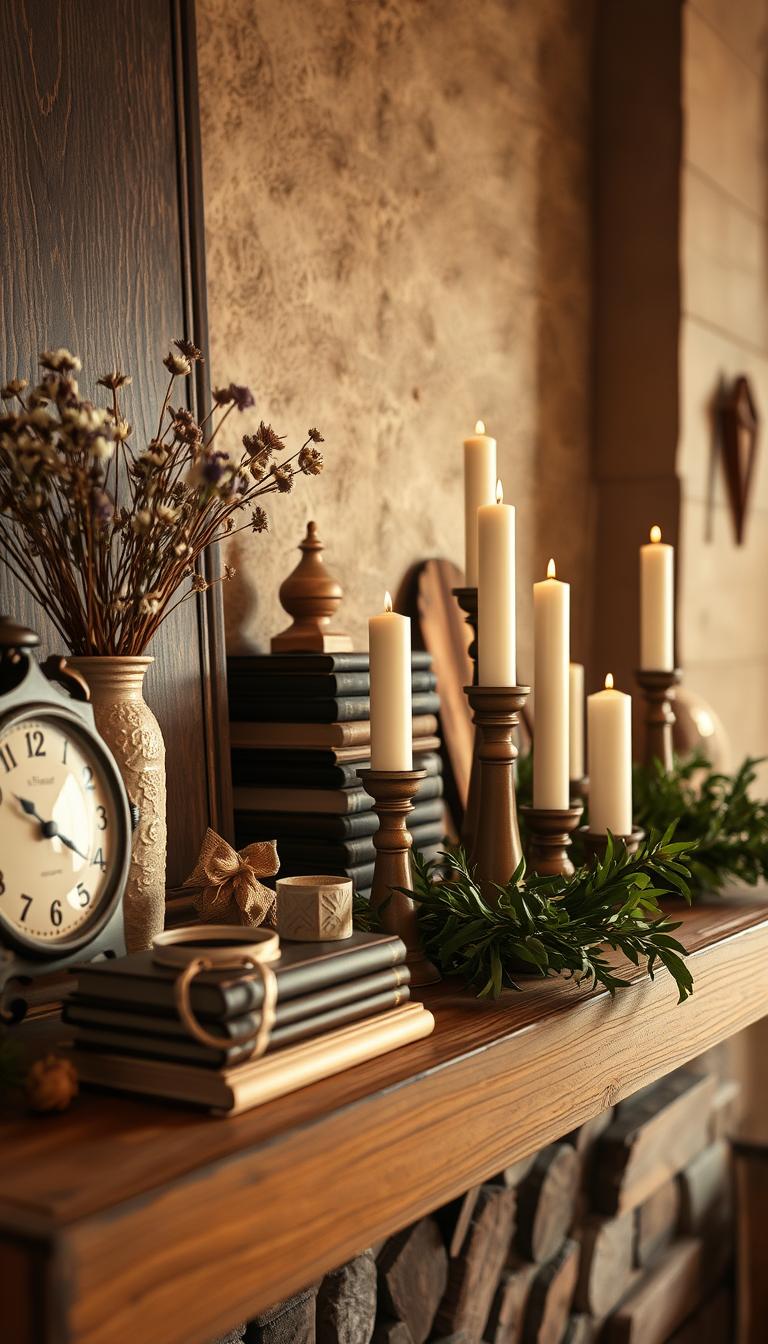
Lean, tuck, and repeat
I start by leaning a mirror, then slide a small art piece slightly off-center. That sliver of the anchor peeking out is a simple trick that breaks linear lines and adds interest.
Mix shapes, textures, and groups of three
Group in threes: a curved bowl, a square frame, and a slender candlestick. Vary sheen—matte ceramic, a metallic taper holder, and a glass cloche—to keep the eye moving.
- Repeat a color or material to corral the look—matching candle colors with creamy vases is an easy unifier.
- Layer greenery behind or between items to soften edges and add life.
- Edit aggressively; if the silhouette gets choppy, remove one piece and reassess.
| Layering Goal | Simple Setup | When to Use |
|---|---|---|
| Depth without drilling | Lean mirror + small art in front | Narrow mantel or rental walls |
| Curated look | Overlap frames at varied heights | Wide mantel with strong anchor |
| Cohesion | Repeat color or material | Open-plan rooms tying to furniture |
| Safe styling | Limit heavy layers on slim shelves | Homes with kids or pets |
“Leaning keeps mantel decorating flexible—slide in seasonal prints or fresh stems in seconds.”
Balance vs. Symmetry: Choose What Fits Your Style
Some rooms ask for perfect pairs; others want a relaxed, off-kilter rhythm. I listen to the room first—then pick a route that matches its bones and your daily life.
Formal rooms: matched pairs and mirrored arrangements
In formal spaces, symmetry reinforces order. I use matched vases, paired branches, or balanced sconces to echo architectural lines.
Tip: keep color and material consistent—aged brass or ceramic pairs feel intentional and calm.
Casual rooms: asymmetry and off-center vignettes
For relaxed rooms, I slide the anchor off-center and build a vignette on one side. A taller vase plus a few candle holders creates a lively, modern feel.
Balance is still essential—you distribute visual weight, not identical objects, so the fireplace reads grounded, not toppled.
- Use floor baskets or lanterns to steady an asymmetrical display.
- Simplify if the wall has bold wallpaper or paneling.
- Photograph before and after—cameras catch what the eye misses.
“There’s no single right answer—let the room and your rhythm decide.”
Natural Elements First: Greenery, Stems, and Seasonal Foliage
Greenery is the quickest way I revive a shelf—simple stems transform the mood in minutes. I place greens before other pieces to set scale and tone. That first choice guides everything else on the mantel.
I prefer eucalyptus wreaths above the shelf because they read fresh year-round. Keep them mostly green so they work across seasons; add a ribbon or a few blooms to seasonalize the look.
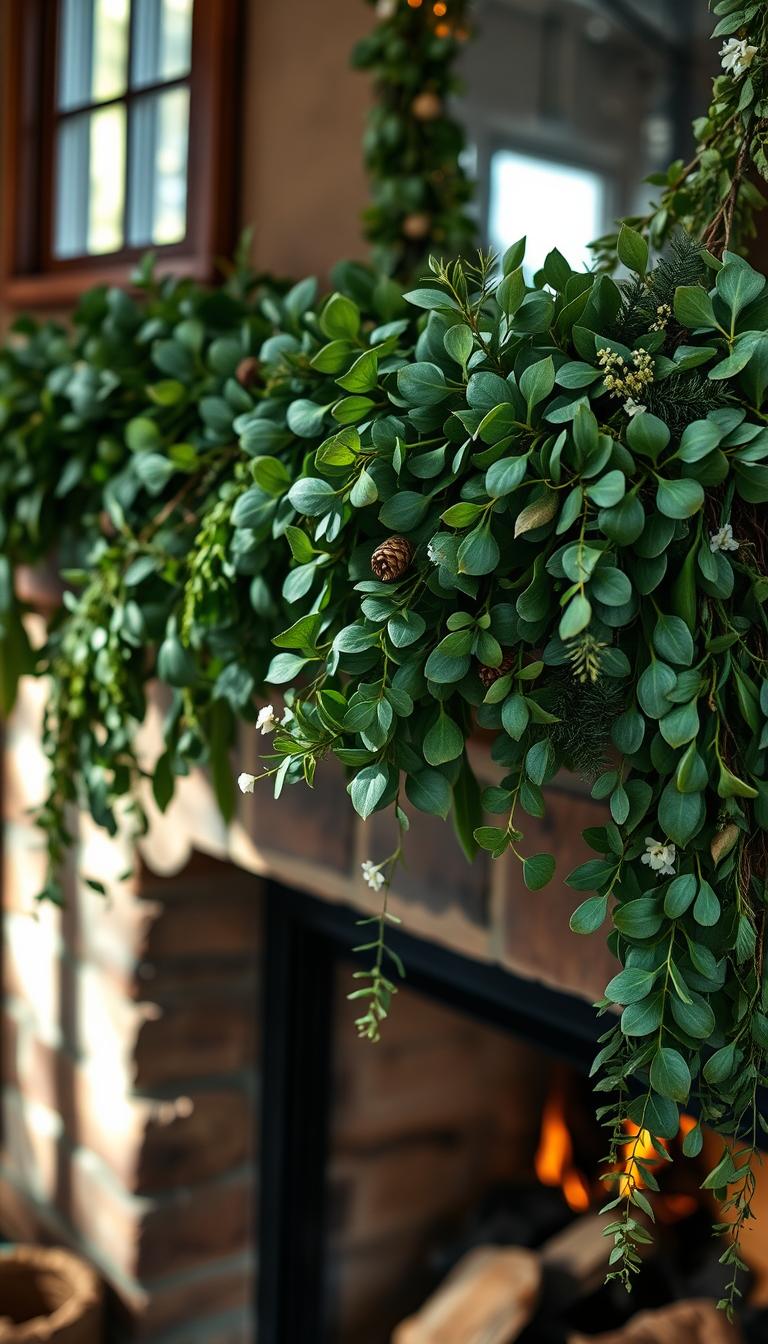
Green eucalyptus wreaths and decorative hanging foliage
Hanging foliage or trailing plants soften the shelf edge and add motion below the mantel line. Decorative hangers let stems drape naturally. Faux pieces can save time—choose realistic stems and vary lengths for a natural drape.
Sprawling branches and mixed greenery for year-round texture
One tall vase of branches often carries the whole composition. Big silhouettes give the room height and a bold line. Mix textures—soft eucalyptus, glossy magnolia, and airy baby’s breath—so the display never reads flat.
- I reach for greenery first—eucalyptus wreaths or mixed stems give instant life with minimal effort.
- Balance lush greens with simple companions—two candlesticks or one small stack of books.
- Water awareness: protect wood from fresh stems with trays or liners; faux solves it for busy weeks.
Tip: For winter add cypress garland; spring gets tucked-in flowers or light blossoms; fall welcomes wheat or maple leaves. Step back—if greens crowd the anchor, trim or reposition so the mantel stays clear and intentional.
Mirrors and Art That Maximize Light and Personality
Mirrors and art are two of my favorite quick fixes for a mantel. They change how light moves, add personality, and help a room feel edited without fuss.
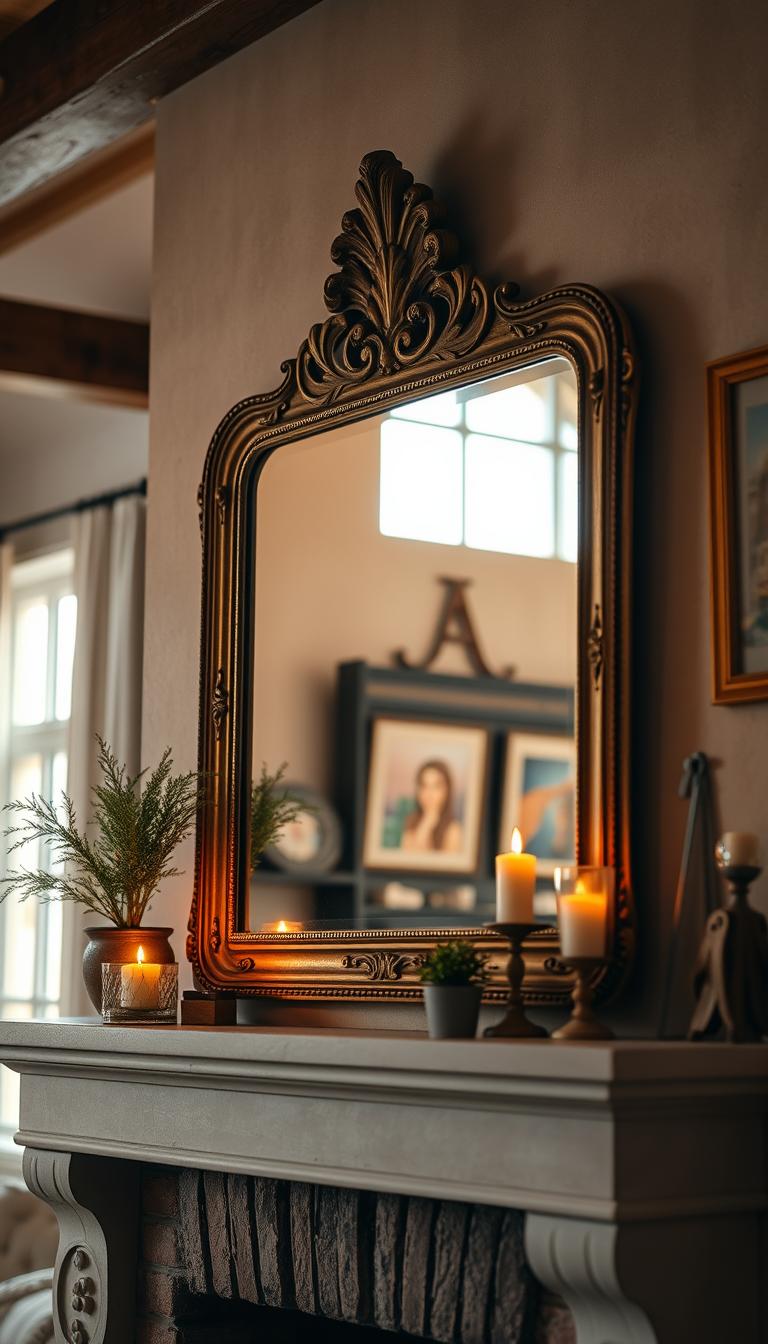
Layered mirrors to brighten and enlarge
I often layer two small mirrors in front of a larger one to catch and multiply daylight. This setup brightens the living room and creates a second, softer view—no extra color needed.
Tip: position mirrors to reflect a window, a shelf vignette, or a plant corner. That reflected “second scene” makes the space feel deeper and calmer.
One bold art piece to simplify and modernize
When the wall feels busy, I pivot to a single oversized art piece. One strong canvas or framed print cleans up the fireplace zone and gives the eye a calming anchor.
Hang or lean—leaning lets you tweak the angle to avoid glare and to catch light at different times of day. Keep companions minimal: one vase or two candles so the statement holds.
- Combine a small art piece in front of a mirror to soften hard geometry.
- Choose brighter metallic frames for darker shelves and wood or black frames for light surrounds.
- Protect active fireplaces with slight spacing or a glass front; for rentals use command hooks and leaning frames.
“A single reflective surface or a single large canvas can edit a mantel faster than rearranging a dozen objects.”
Color Strategy: Neutrals, Accent Colors, and Contrast
A simple color plan keeps a mantel from feeling scattershot and helps the whole room read as one.
I start with a neutral base—wood tones, white or cream ceramics, maybe a soft gray. That base gives you freedom to swap seasonal accents without redoing everything.

Neutral base with seasonal pops
Keep the anchor neutral. Let supporting pieces carry the fun. In summer I reach for pale glass and linen; in fall I add ochres and rusts.
Pull hues from materials
Pull one or two colors from wallpaper, stone, or brick to tie the mantel into the architecture. Repeating a hue—candles, a small book spine, a ribbon—makes the palette feel intentional.
- Start neutral: wood, white, cream, soft gray.
- Repeat a color in two or three spots to create order.
- Use contrast: light objects on dark surrounds, darker accents on white shelves.
| Goal | Simple Setup | When to Use |
|---|---|---|
| Seasonal swaps | Neutral anchor + accent vases | Homes that update often |
| Cohesion | Pick one color from brick or wallpaper | Open-plan rooms tying to furniture |
| Calm against pattern | Mute mantel colors | Busy wallpaper or maximalist walls |
“If one color shouts, reduce its footprint or move it off-center.”
Rustic Mantel Decor
A single timeworn object can make a mantel feel like it has a story to tell.
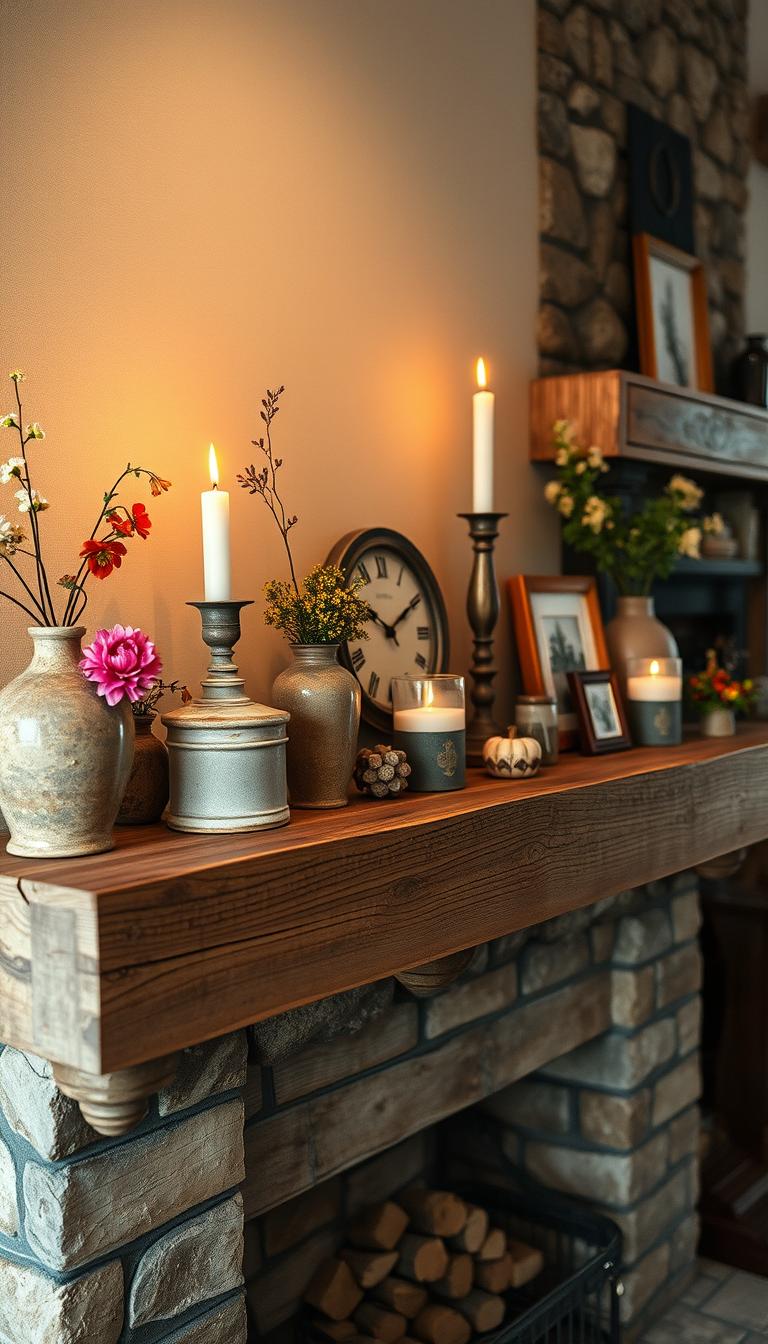
Embrace the quirks. In a farmhouse setting I lean into chippy frames, knotty wood, and small patina marks. Those flaws read as warmth, not damage.
Quirks, imperfections, and vintage pieces with soul
I hunt for vintage books and heirloom trinkets to ground the display in family history. One weathered basket or an old framed sketch can carry the whole mood.
Mix metals, wood, glass, and stone without going matchy-matchy
Mixing materials keeps the mantel collected, not contrived. Contrast smooth glass with rough wood or stone for tactile balance. Add a brass candlestick beside a ceramic vase to let finishes play.
- Lean into imperfections: chippy frames and patina add character.
- Mix materials: metals + wood + glass = depth.
- Curate, don’t clutter: every item should earn its place.
| Goal | Simple Setup | When to Use |
|---|---|---|
| Story-driven look | One vintage book + heirloom trinket | Family rooms and entryways |
| Textural contrast | Glass vase + rough wood bowl | Stone or brick surrounds |
| Collected vibe | Mixed metals and aged finishes | Farmhouse or eclectic rooms |
“Soul over perfection—layer a piece art or handwritten note behind objects.”
Quick safety note: protect delicate vintage items from heat by placing them higher or out of direct flame.
Go-To Decor Ideas: Vases, Books, Candles, and Garlands
Small, well-chosen items can transform a shelf into a scene that feels both lived-in and intentional. I keep a short list of reliable pieces so styling is fast and confidence-led.
White ceramics and wrapped glass
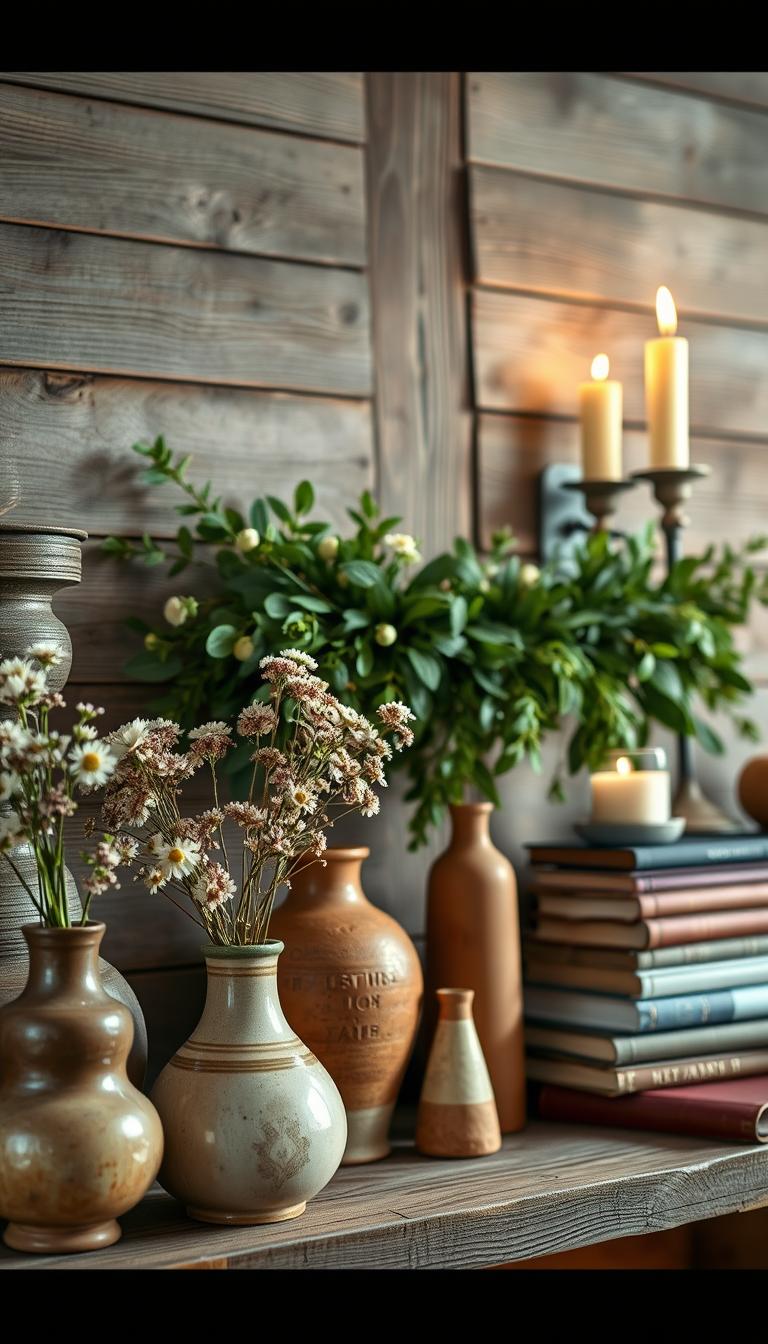
White ceramic vases brighten darker brick or wood tones and make accessories pop. Wrapped mason jars—twine around old glass—give texture without a big spend. Place one cloche or a single bottle for glass sparkle.
Books and height
Stack vintage books to lift a small bowl or a framed piece art. Books add character and step the eye up, which helps balance taller vases and a focal mirror.
Candles and garlands
Vary pillar and taper holders so the flame line feels organic—two pillars, three tapers often works. Wood bead garland reads neutral year-round; layer a slim greenery garland for depth.
- I keep a trio of white vases on hand for quick swaps.
- Wrapped mason jars = thrifted texture for pennies.
- Keep a small kit—tapers, a garland, two vases, and a book stack—for five-minute refreshes.
If your fireplace is active, choose flameless candles for safety and steady glow.
Anchor these decor ideas with your main mirror or art so the vignette feels intentional. For a fast how-to, check my go-to decor ideas kit and styling tips to refresh your home in minutes.
Farmhouse Accents with Impact: Baskets, Lanterns, and Doilies
Small woven accents can shift a room from staged to lived-in in a single afternoon. I reach for wall-hanging baskets first—they feel like a classic wreath but lighter and less precious.
Wall-hanging boho baskets and vintage bundle groups
Hang a single basket above the mantel for a quick focal swap. Change stems with the seasons—dried wheat, eucalyptus, or spring blooms all work.
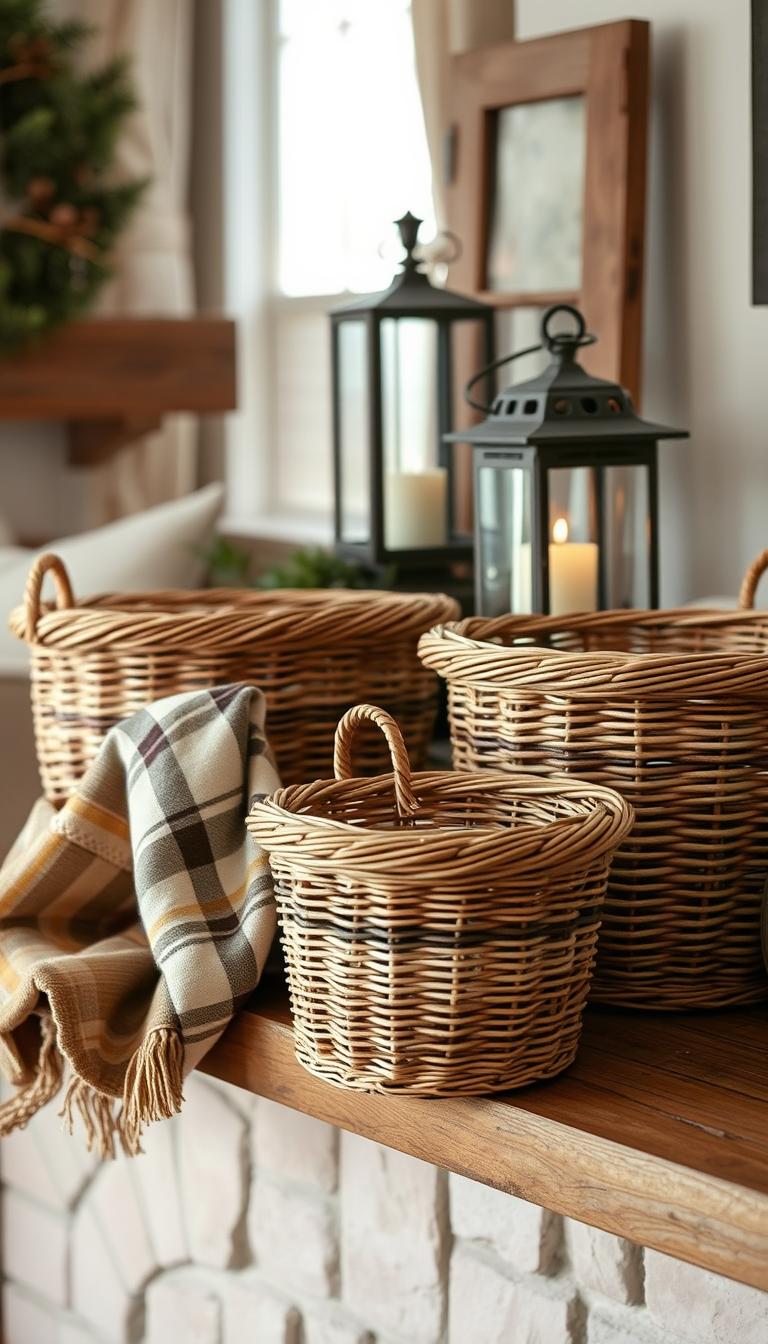
Cluster one or two vintage baskets on a side wall for texture and warmth. They read collected, not contrived.
Indoor candle lanterns for primitive charm
Lanterns add a moody glow and pair well with simple greenery. Place one on the mantel or flank the hearth when space is tight.
Safety first: keep lanterns clear of loose stems and never use them near an active flame.
Table runner doily for non-functional fireboxes
A neutral runner or lace doily across a cold firebox adds lovely texture. Use it only if the fireplace is not in use—heat and fiber don’t mix.
- I love hanging baskets as a budget-friendly wreath alternative—easy seasonal swaps.
- Pair baskets with one sleek element, like a metal mirror or glass vase, to balance the weave.
- For tight mantel decorating, a single lantern plus greens goes a long way.
- Hang lighter baskets with removable hooks to protect your wall finish.
“Let the weave be your pattern—keep silhouettes simple so texture can shine.”
For quick seasonal inspiration, see these spring mantel ideas to mix baskets, lanterns, and runners in ways that feel fresh and easy.
Seasonal Decor Ideas You Can Rotate All Year
I love quick swaps. Rotate a few targeted accents and your fireplace will reflect the seasons without a full redesign.
Spring
Fresh and breezy. I swap in flowers, a pinch of baby’s breath, and a slim light garland for an airy feel.
Summer
Keep it light—simple greens, a clear glass jug, and an airy mirror that bounces daylight around the room.
Fall
Warm it up with a maple leaf garland, wheat stems, and richer wood tones to bring cozy texture to the mantel.
Winter
Layer pine or cypress garland with bead strands and add a small cozy quote print to invite that hearth-side comfort.
Holiday
For holidays I layer garlands, add a marquee star, and swap in one bold piece art so the season feels festive but focused.
- Quick checklist: keep the anchor neutral and rotate smaller accents each season.
- Edit as you add—remove one item for each new piece so the mantel stays uncluttered.
- Store items by season in bins and use the hearth for baskets of blankets or woven planters.
Design Around Real Life: TVs, Family Photos, and Hidden Storage
Designing around everyday use—remotes, kids, and screens—keeps a mantel both pretty and practical. I ask how your family uses the room before styling the shelf. That guide helps me place photos, tech, and storage so the space stays calm.
If the TV lives above the fireplace mantel, hide it when guests arrive. Barn-door sliders are one of my favorite quick fixes—they conceal the screen and add country charm without a full remodel.
Practical styling tips I use with clients
- If a TV sits above the mantel, allow clearance for a soundbar and keep a small basket for remotes.
- Mix two or three family photos with one or two art pieces so the display reads curated, not cluttered.
- Lean coordinating frames in varied sizes for easy rotation—no drilling and no fuss.
- Tuck small keepsakes like a handwritten note into layers to make the space feel truly like home.
Run cables out of sight and match cord covers to the wall color. Keep paper and photos away from heat—place them higher or behind glass. For daily life, I add a lidded basket near the hearth for games and chargers. Reassess seasonally and swap a photo or two so the story stays current.
| Issue | Solution | When to Use |
|---|---|---|
| Visible TV | Barn-door sliders or framed panel | Above fireplace mantel with wall space |
| Cluttered remotes | Lidded basket or drawer insert | Family rooms with frequent use |
| Glare on screen | Avoid reflective glass in front of photos | Rooms with bright windows |
| Heat risk to keepsakes | Place paper items higher or use glass protection | Active fireplaces |
“Function first, style second—when you design for life, the mantel stays beautiful and usable.”
Small Mantels, Long Shelves, and Different Fireplace Styles
Small surfaces can still make a big statement. A long, slim shelf behaves like a mantel when you use the same rules: pick an anchor, add height, and layer thoughtfully.
No mantel? Style a long shelf with the same principles
If you don’t have a mantel, lean a mirror or a single strong piece art against the wall. Use narrow vases, tapers, and a low stack of books so the shelf reads intentional without feeling heavy.
Stone or brick fireplaces: keep decor simple to let materials shine
For stone or brick surrounds, I edit down. Let texture be the star—one vase and a pair of candlesticks often do the job. Less is more here; the material should speak first.
Modern farmhouse vs. rustic farmhouse: mixing old and new
Mix an antique mirror with a sleek vase to bridge styles. Modern farmhouse favors cleaner lines; a rustic mantel leans on patina and wood. Repeat a material from elsewhere in the home to tie the living area together.
- Smaller mantels love slim silhouettes and low-profile bases for safety.
- Use wall sconces to free surface space in tight living rooms.
- If the fireplace is active, choose heat-safe materials and keep clearances generous.
“A single strong anchor can solve scale on both small mantels and long shelves.”
Quick Wins and Common Mistakes
Want a quick win that lifts the whole fireplace in under five minutes? I use tiny edits to make big impact. Swap stems, change a wreath ribbon, or rotate one anchor print. Those small moves refresh the look without a full redesign.
Fast refreshes that actually work
Fast refresh: swap stems, change the wreath ribbon, or rotate an anchor print—five minutes, big lift. Use odd numbers and repeat one accent color to keep a calm palette. Trays and book stacks corral small items so the shelf reads edited, not cluttered.
Common mistakes and how to fix them
Avoid flat arrangements. Add branches or staggered candle holders to introduce height. Don’t overload with competing color—pick one or two accents and let neutrals carry the rest.
- Edit pieces—if everything screams, nothing stands out.
- Group in odd numbers and vary shape and texture for depth.
- Mind safety: keep flammables away from heat and check stability on narrow ledges.
- Photograph the display; photos expose crowding or color imbalance fast.
“When in doubt, remove one piece and step back—the simplest solution is often the best.”
Conclusion
Think of your fireplace mantel as a small stage—one strong piece, a touch of art, and a clear focal point do most of the work.
I recommend starting with an anchor that suits the room’s architecture, then balance symmetry or asymmetry to match the living room’s formality. Layer in odd numbers, vary height, and leave breathing room so your statement can sing.
Keep a neutral base so seasonal swaps and color accents feel easy. Two or three targeted decor ideas will refresh the whole look without a full reset.
Want a quick refresh? Snap a photo, make one tweak, and repeat. For more step-by-step help, see my fireplace mantel decorating tips to take look and refine your living space.