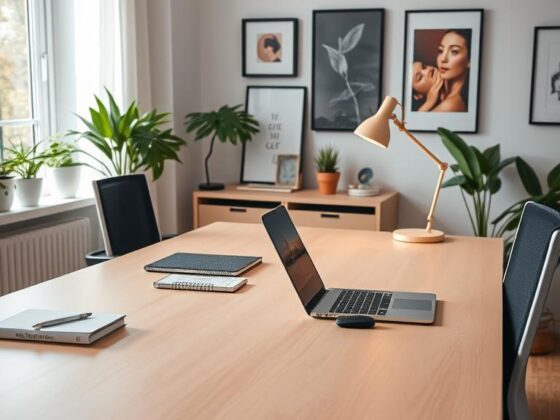
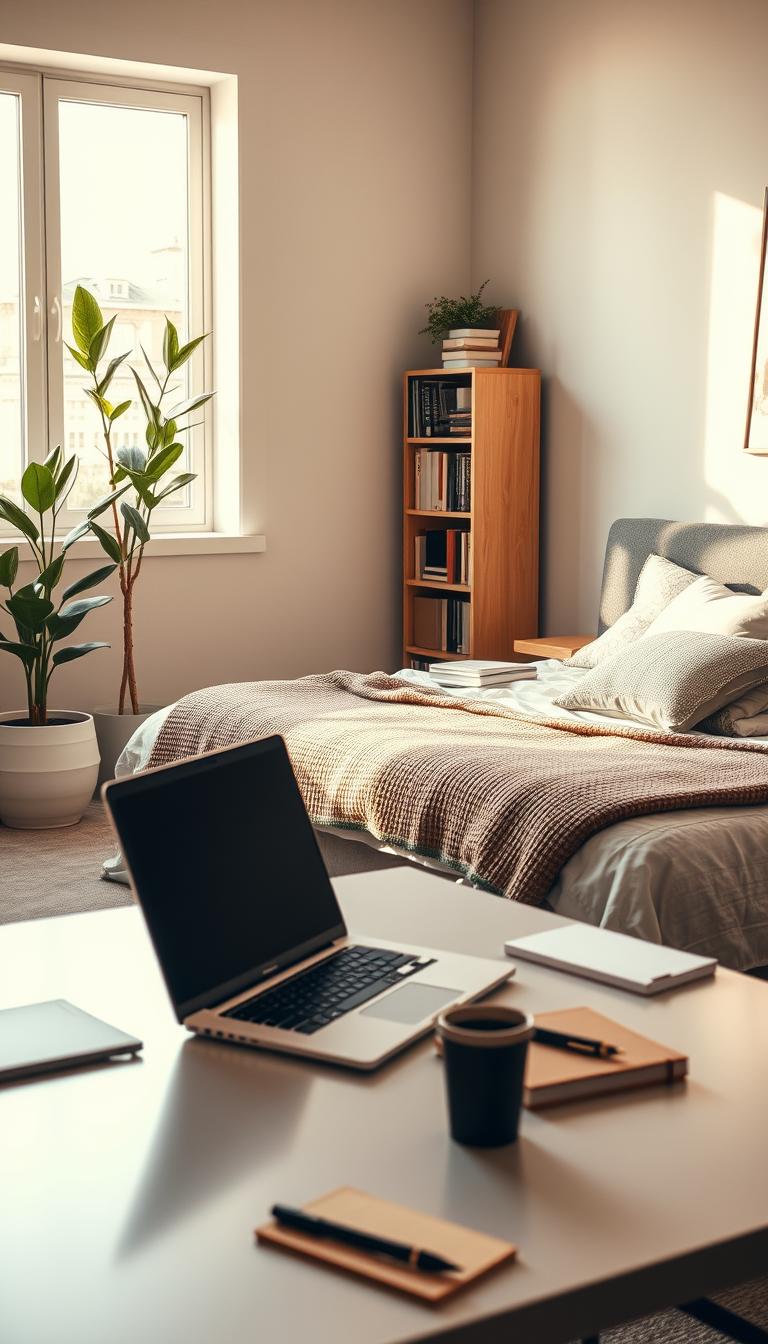
Can a single room be both a restful sanctuary and a high-functioning work hub? I ask that because I’ve seen small homes transformed into calm, productive retreats with a few thoughtful moves.
I’ll show how a tidy plan can protect sleep and boost focus. Start by carving clear zones: face your desk away from the bed, or use a folding secretary that tucks away when the day ends. These simple steps help your mind shift from work to rest.
Think of this as rhythm, not compromise. Positioning the desk so you can see the door gives a subtle sense of control during calls. Soft textures, muted color, and layered lighting keep the space soothing and practical.
Small wins matter: a quick-reset surface, hidden storage, and a desk that disappears are powerful. Read on for practical ideas and inspiration to make your bedroom office feel like a retreat—where productivity and sleep both win.
Key Takeaways
- Protect sleep by creating distinct work and rest zones.
- Use folding or wall desks to clear visual clutter after hours.
- Face the desk toward the door for comfort and control.
- Layer lighting and soft textures to support calm and focus.
- Adopt quick-reset storage so the room can transition fast.
Office Bedroom Design Essentials for a Calm, Productive Space
A calm, useful room begins with the right desk, chair, and clever storage. I start every home office plan by choosing fit-for-you furniture: a supportive chair, a desk sized to real tasks, and storage that hides visual noise. Small changes here protect focus and sleep.
Size the desk to your workflow. Think one monitor or three, a notepad, and cable routing so the workspace stays tidy. Measure for real gear before you buy.
Build storage zones. Keep daily items within arm’s reach and tuck deeper files and the printer behind cabinet doors. That reduces morning friction and evening clutter.
Lighting matters: layer an adjustable task lamp with soft ambient lamps so eyes don’t tire after sunset. Choose quiet textures and low-sheen finishes to cut glare and keep the room soothing.
https://www.youtube.com/watch?v=4UGzfdTxCA4
Quick comfort checklist
- Chair height and lumbar support
- Desk height and keyboard angle
- Lamp position for shadow-free work
- Modular pieces you can reconfigure
| Element | Purpose | Practical Tip |
|---|---|---|
| Desk | Primary work surface | Match depth to gear; add cable grommet |
| Chair | Support for long sessions | Adjustable height and lumbar support |
| Storage | Hide papers and printer | Zone by frequency of use; doors for tech |
| Lighting | Reduce eye strain | Task lamp + soft ambient layers |
Create Clear Separation Between Sleep and Work Zones
A tiny shift in layout—turning the desk—can change how your mind clocks out each day.
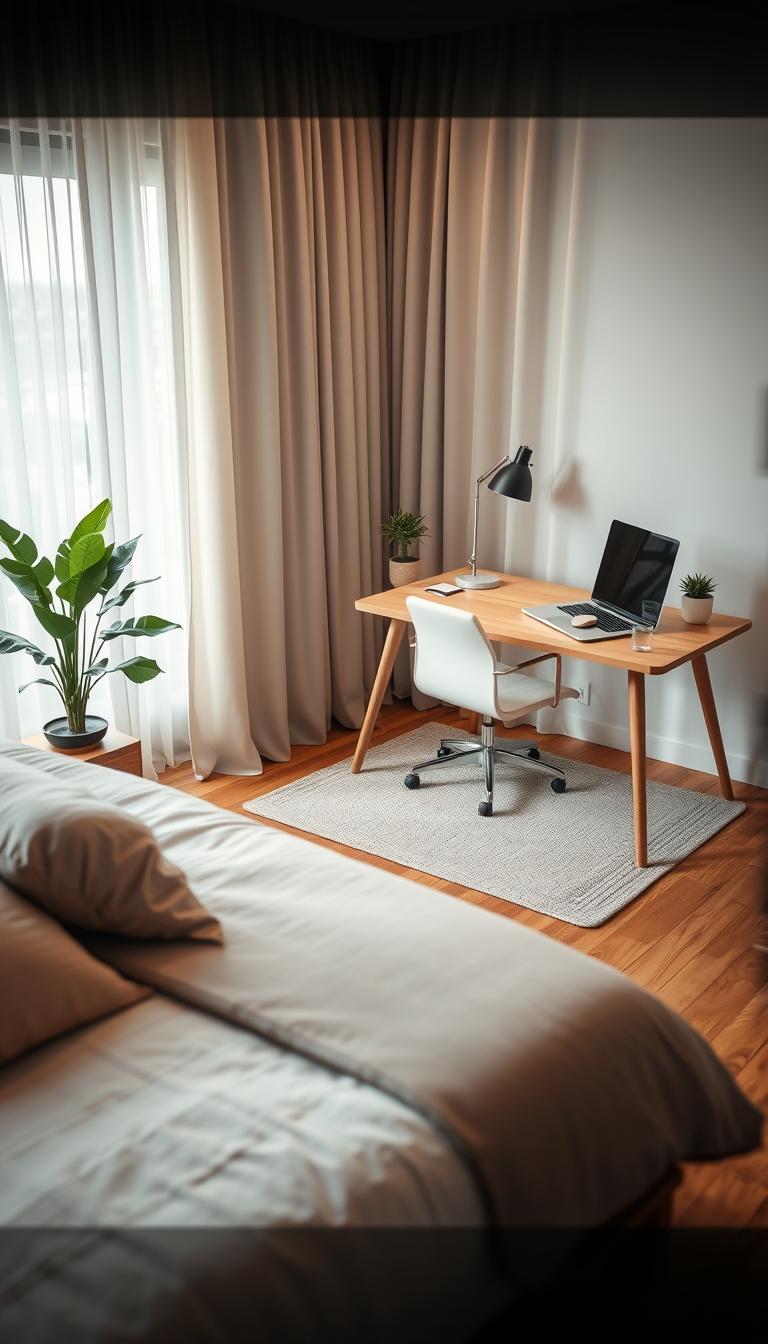
Face the desk away from the bed to create a mental boundary. I always angle mine so the bed isn’t in my sightline. That one move stops the brain from ping-ponging between tasks and rest.
Hide the workstation after hours. A slim wall-mounted secretary or fold-down unit closes with a satisfying click and signals downtime. If you can’t install one, a lightweight folding screen softens the view and helps your body downshift before sleep.
Small gaps matter. Leave about 8–12 inches between the bed and any work furniture so bedding doesn’t creep into your focus zone.
Zone with texture: a low rug under the desk and a different weave by the bed makes two islands with two purposes. Use a neat corner station to corral gear, and place the desk so you can see the door when possible—clients feel calmer on calls that way.
Close-out checklist: file papers, tuck tech away, dim lights. This simple ritual protects sleep and keeps your bedroom office feeling like a true retreat.
Smart Desk Placement: Window Views, Glare, and Backgrounds
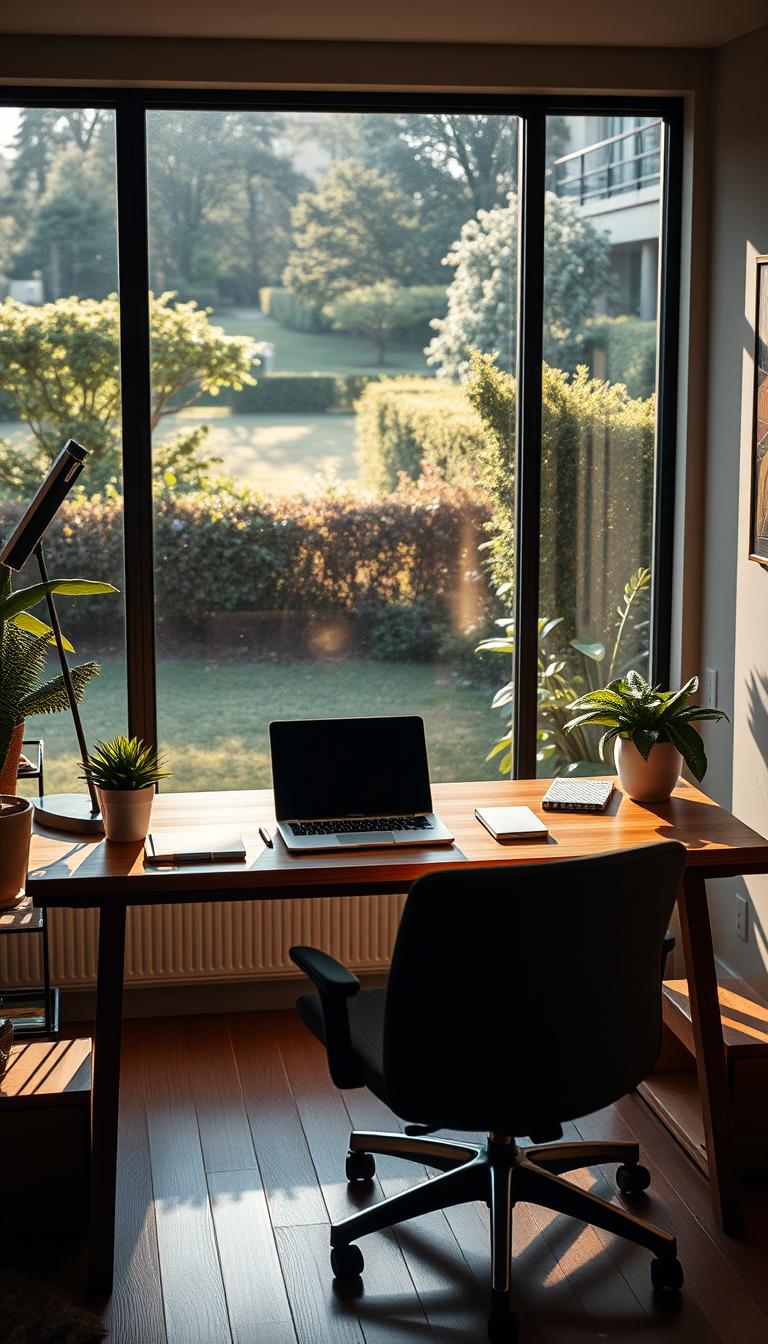
Where you set the desk changes light, mood, and how you show up on calls. I often test two positions before deciding: one facing the window for natural light and a second with the desk against a wall for deep focus.
Window-facing gives a lovely view and boosts mood. Offset your monitor slightly to cut glare. That lets your eyes take micro-rests without losing screen clarity.
Wall-facing works when distractions are a problem. I build a calm vignette—soft art, neat shelves, and muted walls—so your background looks polished and low-noise.
Design a flattering, clutter-free Zoom background
- Keep one tidy shelf, a plant, and a simple lamp—less is more for a clean look.
- Place the brightest light in front or at 45° for the most flattering camera lighting.
- Test the camera view: take a photo from your webcam angle and adjust styling.
Consider sightlines to the door to feel in command
I always check the path to the door. When you can see it, you relax faster and focus better. We map cable routes and clearances so the workspace feels intentional, not squeezed.
| Position | Strength | Tip |
|---|---|---|
| Window-facing | Mood, natural light | Offset monitor to reduce glare |
| Wall-facing | Focus, tidy background | Create a calm vignette and pin board |
| Door sightline | Comfort, control | Position desk to see door when possible |
Quick test: set the desk in both spots, take a call selfie, then pick the setup that helps you work and sleep better in this bedroom office.
Small Bedroom, Big Results: Layouts That Save Space
A small room can punch well above its weight with the right plan. I’ve sketched dozens of compact layouts that feel calm and roomy when you respect circulation and sightlines.
Why an 8×10 layout can be enough: an 8×10 area fits a built-in desk and slim storage if you tuck the work surface along a long wall. That approach frees floor space and keeps nightly resets fast.
When to float a desk: aim for roughly 10×13 if you want a floated desk with cabinetry. Floating creates a focal point and improves camera angles, but it needs clear aisles so movement and video calls breathe.
I favor vertical storage and shallow cabinets in tight quarters. They hold supplies without closing the room in. Mirrors and leggy furniture borrow depth so the space reads larger.
Before you buy, test two layouts with tape on the floor. Zone the room with a low rug at the desk and a soft runner by the bed to guide movement. Try a tucked-in setup and a floated option—then pick what helps you work and sleep best.
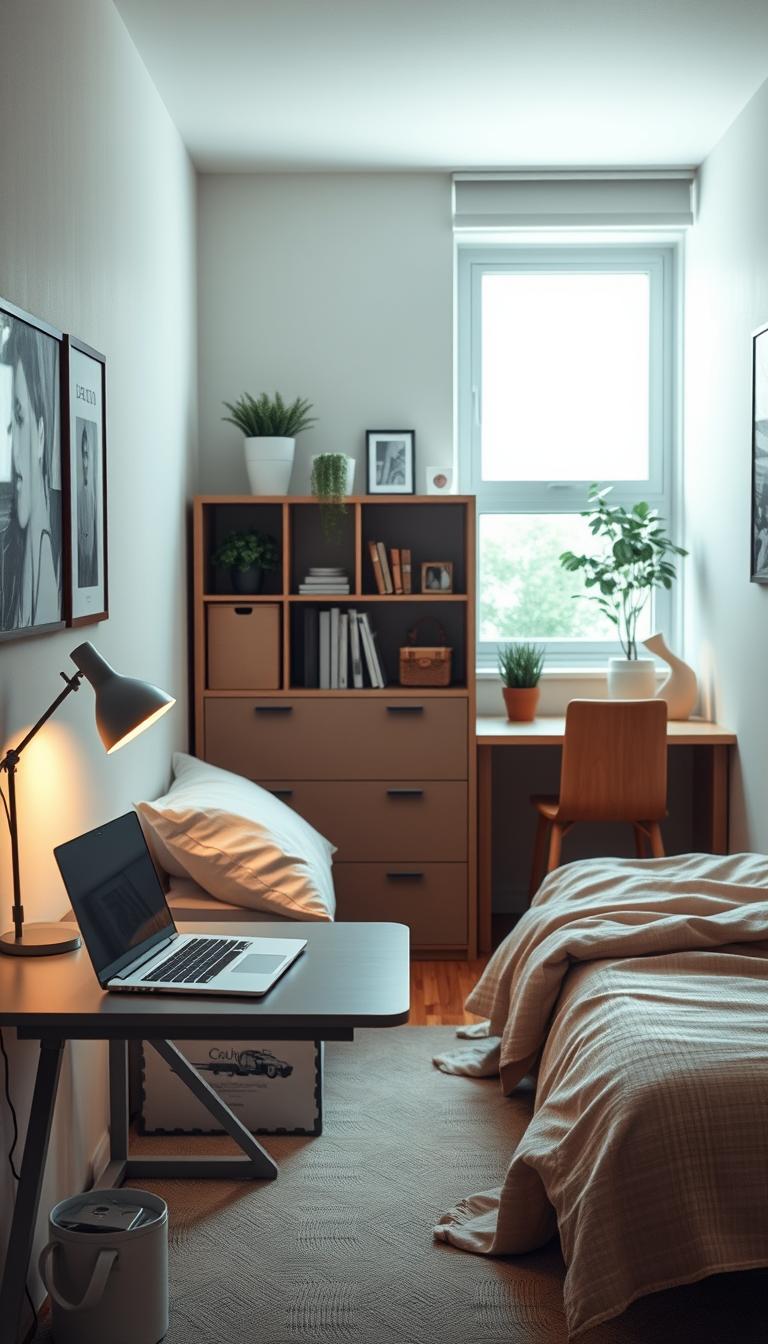
Quick layout comparison
| Layout | Best for | Tip |
|---|---|---|
| Tucked-in desk | 8×10, tight circulation | Use vertical storage and shallow shelves |
| Floated desk | 10×13, visual focal point | Keep 30–36″ aisles for camera and movement |
| Built-in wall unit | Small rooms needing storage | Combine closed drawers with open shelving |
| Leggy furniture + mirror | Any compact area | Creates borrowed depth and airy feel |
Nightstand Desk: Double Duty Without the Clutter
Turn your bedside into a tidy mini-hub that supports work by day and quiet by night. A nightstand desk keeps essentials close while letting the room feel restful once you stow things away.
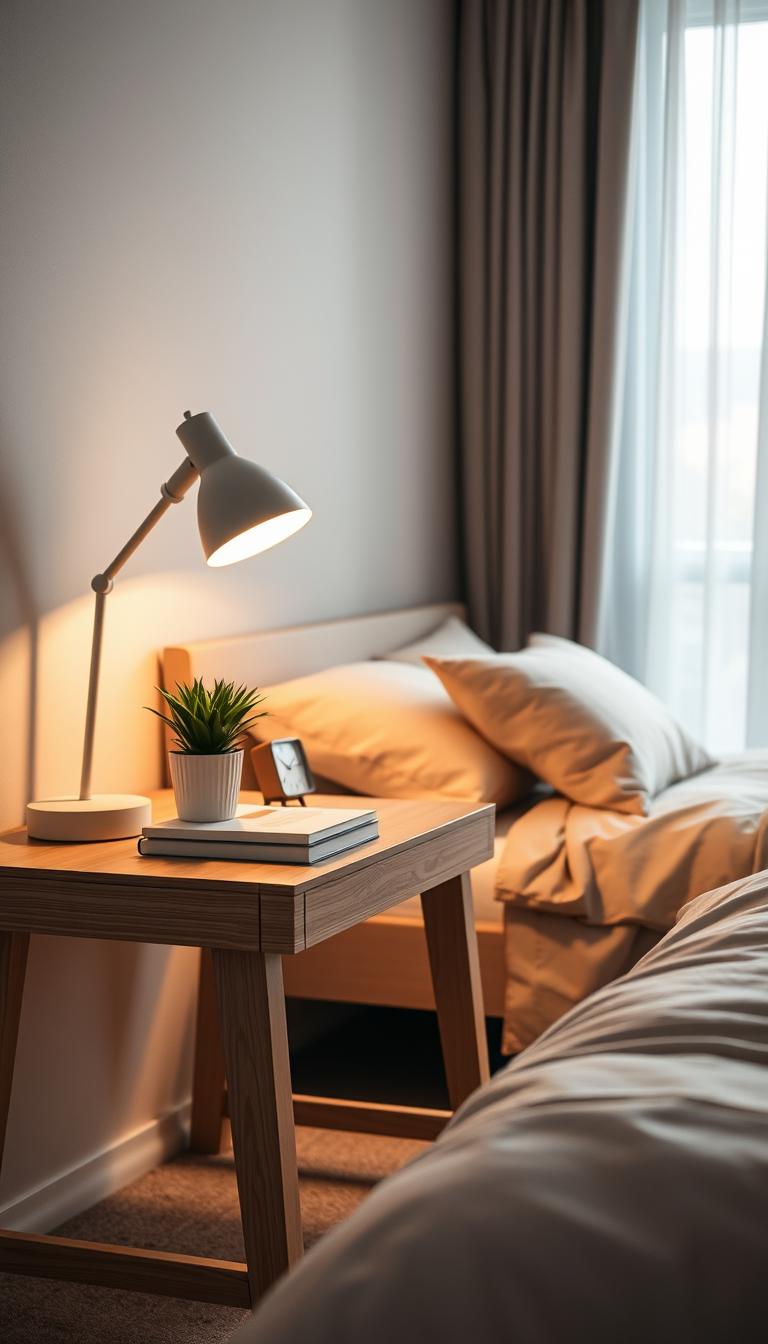
Use closed storage to tuck away work at bedtime
I love a nightstand-as-desk when square footage is tight — a single piece that holds morning coffee, quick emails, and the lamp you read by. Choose a desk-table hybrid with drawers or a cabinet face so paperwork and chargers disappear after hours.
Small rituals help. Keep a shallow tray for active items and slide it into a drawer before lights out. Place a warm-shaded lamp at the back corner to free surface area and cut glare on screens.
- One grommet and a fabric sleeve solve cable clutter.
- Match mattress height so the piece reads intentional beside the bed.
- Set a one-minute setup: close laptop, stow mouse, tuck notepad.
Tip: If you share the space, pick soft-close drawers for quiet nights. This simple bedroom office approach keeps the space calm and functional.
Closet Offices and Cloffices: Hidden Workspaces That Blend In
Closets often hide the best opportunities for a compact, concealed workstation. I convert narrow nooks into tidy cloffices so the room can switch moods in one click.
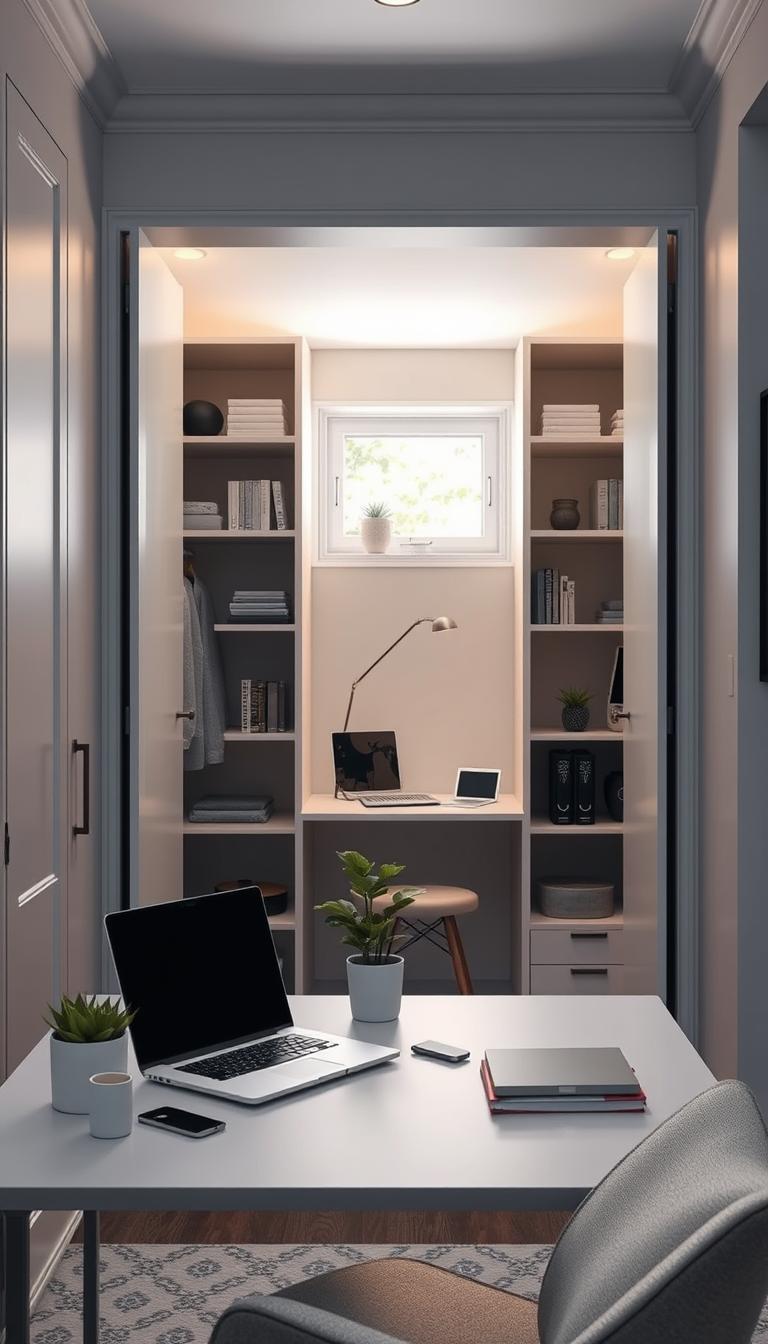
Bifold doors or curtains keep tech and papers out of sight. Bifold doors sit flush and feel built-in. If doors are awkward, floor-to-ceiling curtains soften the flow and match your style.
Paint, shelves, and lighting to make small spaces inspiring
Pick a moody or serene back wall so the nook reads intentional even when open. One or two floating shelves hold books, baskets, and a small plant.
Install a compact task light for focused work. A shallow wall-mount desk preserves legroom and leaves hidden storage for a printer or cable box.
- I turn underused closets into clean work nooks—close the doors and the room exhales.
- Level shelf heights to avoid dead space; mix baskets and vertical files for neat storage.
- In a guest setup, a cloffice lets the room pivot between hosting and weekday work without clutter.
- Run a cable pass-through near the hinge so cords don’t pinch when you close up.
| Feature | Benefit | Quick Tip |
|---|---|---|
| Bifold doors | Flush, built-in look | Use shallow handles to keep the profile clean |
| Curtains | Softens the space, flexible | Choose blackout or textured linen for a bedroom-friendly feel |
| Floating shelves | Maximizes vertical storage | Level shelves to fit baskets and devices without wasted gaps |
| Shallow desk + pass-through | Saves depth and hides cables | Set pass-through at hinge side to avoid pinched cords |
Built-Ins and Wall Desks: Storage-First Bedroom Office Ideas
A single built-in wall can act like a tidy command center, keeping work gear out of sight and close at hand. I often lay out one cohesive elevation that nests wardrobes, shelves, and a desk so the room reads calm and organized.
Built-ins reclaim vertical real estate and keep surfaces clear—no piles, just a quiet backdrop that supports sleep and productivity.
Integrating wardrobes, shelves, and a desk in one wall
I design the run so closed storage hides cables and tech while a few open shelves hold meaningful objects. Choose furniture-grade finishes and a hint of wood to add warmth that lasts.
Fold-down and floating desks to free floor area
A fold-down panel desk clears the floor in seconds—ideal for yoga or play. Floating desks keep the baseboard visible and make the small space feel lighter.
- One-wall system: wardrobes + desk + open shelves for balance.
- Mixed storage: closed tech bays with a couple of curated shelves.
- Wiring plan: I map walls for power and task zones so the home office wiring stays hidden and safe.
- Evening glow: a slim toe-kick or under-shelf LED keeps the area soft at night.
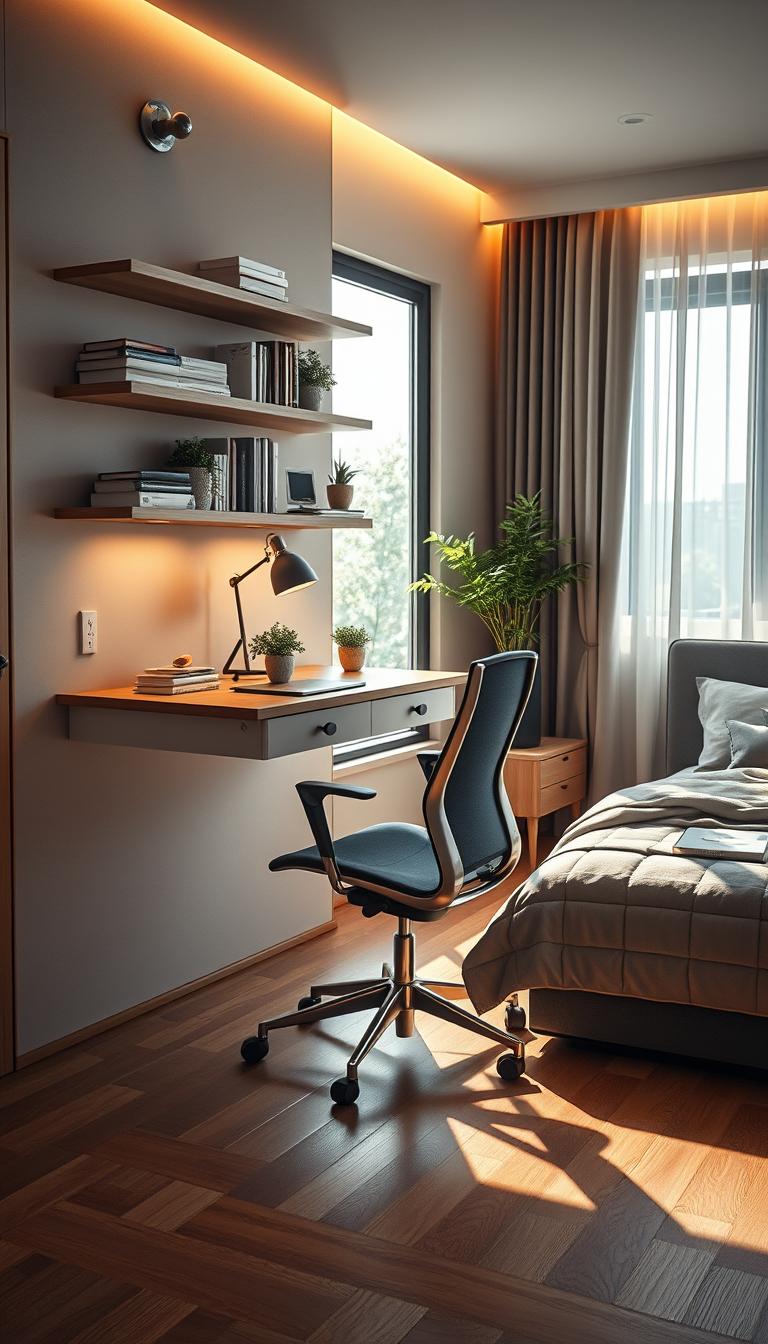
Leaning Into Natural Light and Views for Better Focus
Good daylight does more than brighten a room—it helps your eyes and your attention work smarter. I aim to place the desk where soft, even natural light hits from the front or at a 45° angle. That reduces eye strain and gives you flattering, steady illumination for video calls.
I look for a pleasant view that lets your eyes take micro-breaks. A brief glance out the window resets focus without pulling you off task. When glare is a risk, I angle the screen and add sheer shades to keep the scene calm.
Positioning for reduced eye strain and better video calls
- Front or side light: place your desk so daylight hits your face or comes from 45° to avoid shadows.
- Test at different times: move the desk during morning and afternoon to map sun shifts.
- Backup key light: add a dimmable lamp matched to daylight if front light isn’t possible.
- Limit distractions: keep the window in your periphery and use sheer shades if you’re easily pulled away.
I run a quick camera test before finalizing placement. Clients notice a productivity bump when light quality feels intentional—your brain reads it as support, not noise.

| Strategy | Benefit | Quick Action |
|---|---|---|
| Front/45° natural light | Reduces eye strain; flattering on camera | Place desk near window; angle monitor |
| Sheer shades | Softens view; cuts distractions | Install lightweight fabric shades |
| Dimmable key light | Stable light when daylight is weak | Use adjustable LED with daylight tone |
| Time-of-day test | Find best daily position | Try desk placement morning and afternoon |
Calming Color, Texture, and Decor for a Restful Workspace
Subtle color shifts and natural materials can quiet the mind and sharpen attention. I lean on soft blues and warm neutrals to create a room that supports morning focus and evening rest.
Powdery blues—think Benjamin Moore Blue Bayou—pair beautifully with limewash plaster on the walls. Limewash adds a gentle, mottled surface that catches natural light and lamplight without glare. The result feels lived-in, not fussy.
A touch of wood and a plant or two brings biophilic calm. I use burl wood or a simple oak shelf for warmth and a low-pile rug and linen shades for texture. Leather or woven throws add a human touch that helps the space feel grounded.
Lighting is key: layer a dimmable lamp, overhead soft light, and a small task source so evenings ease into rest. Pick one stand-out accent—a piece of art, a ceramic vessel, or a leafy tree—to hold personality without clutter.
Want extra inspiration? Check curated office decor ideas that work in compact rooms.
| Element | Benefit | Quick pick |
|---|---|---|
| Powdery blue walls | Calm mood; energizes daytime focus | Benjamin Moore Blue Bayou or similar |
| Limewash finish | Soft texture; gentle light diffusion | Muted plaster tones |
| Wood accents | Biophilic warmth; stress reduction | Burl wood shelf or oak trim |
| Layered lighting | Flexible light for work and rest | Dimmable lamp + soft overhead |
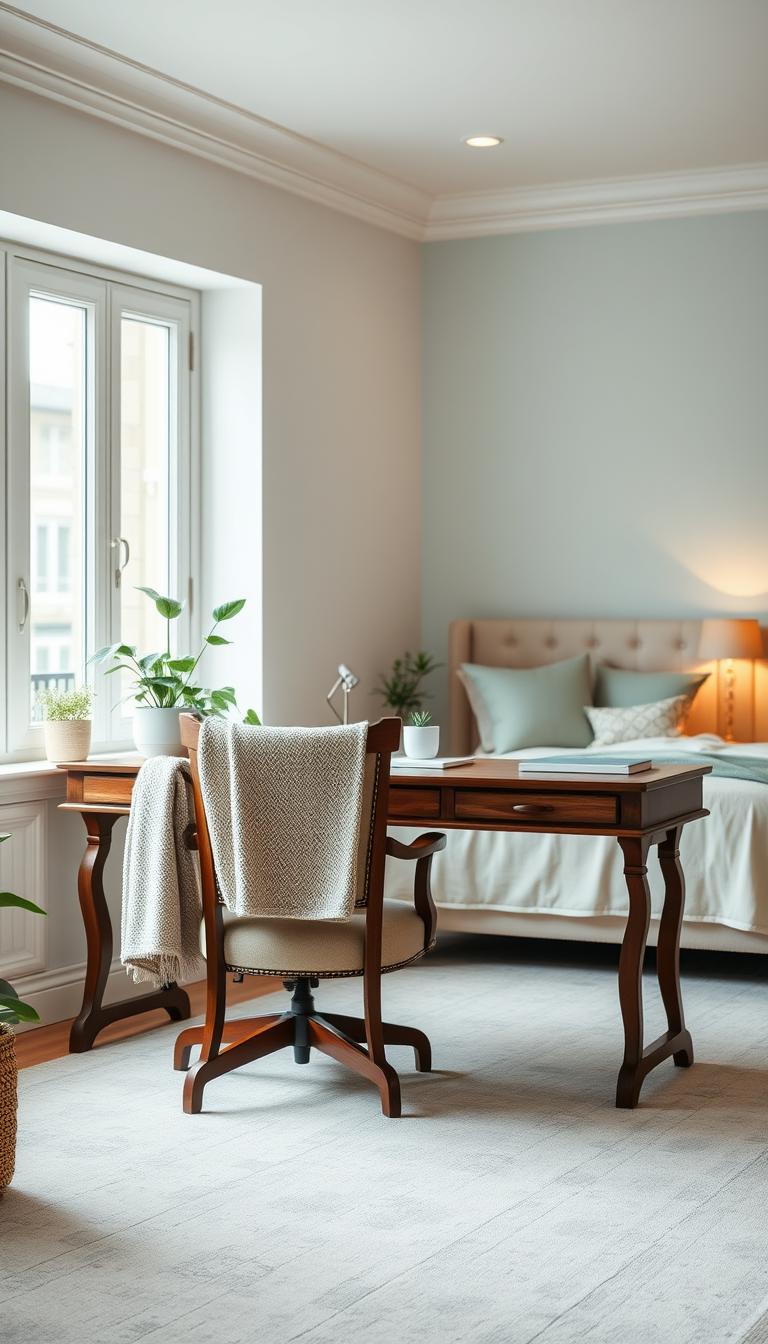
Declutter Systems That Keep Your Bedroom Office Peaceful
Start by listing every gadget and supply you own; clarity beats chaos.
I inventory equipment, then sort items by how often I use them. I toss what I don’t need and keep only the essentials that earn daily or weekly space.
Quarterly purges and daily tidy-ups that stick
Five minutes each evening makes a huge difference. I clear surfaces, corral cords, and shut a drawer so the room wakes calm the next day.
Quarterly, I schedule a purge like a meeting. I set a bin for donations and remove anything that has drifted back onto surfaces.
Hideaway spots for printers, papers, and cables
Right-size your storage so nothing floats without a home. Put the printer in a ventilated cabinet and stash paper in labeled files on neat shelves.
Create a slim mail-to-file tray and a tech charging drawer so piles can’t form on the desktop. A micro-nook by the door keeps returns and library books from piling up.
- I inventory and sort by frequency so storage matches use.
- Schedule quarterly purges—treat them like appointments.
- Nightly two-step setup: stow devices, wipe the desk. Repeat.
- Add a “small wins” list inside a cabinet door for motivation.
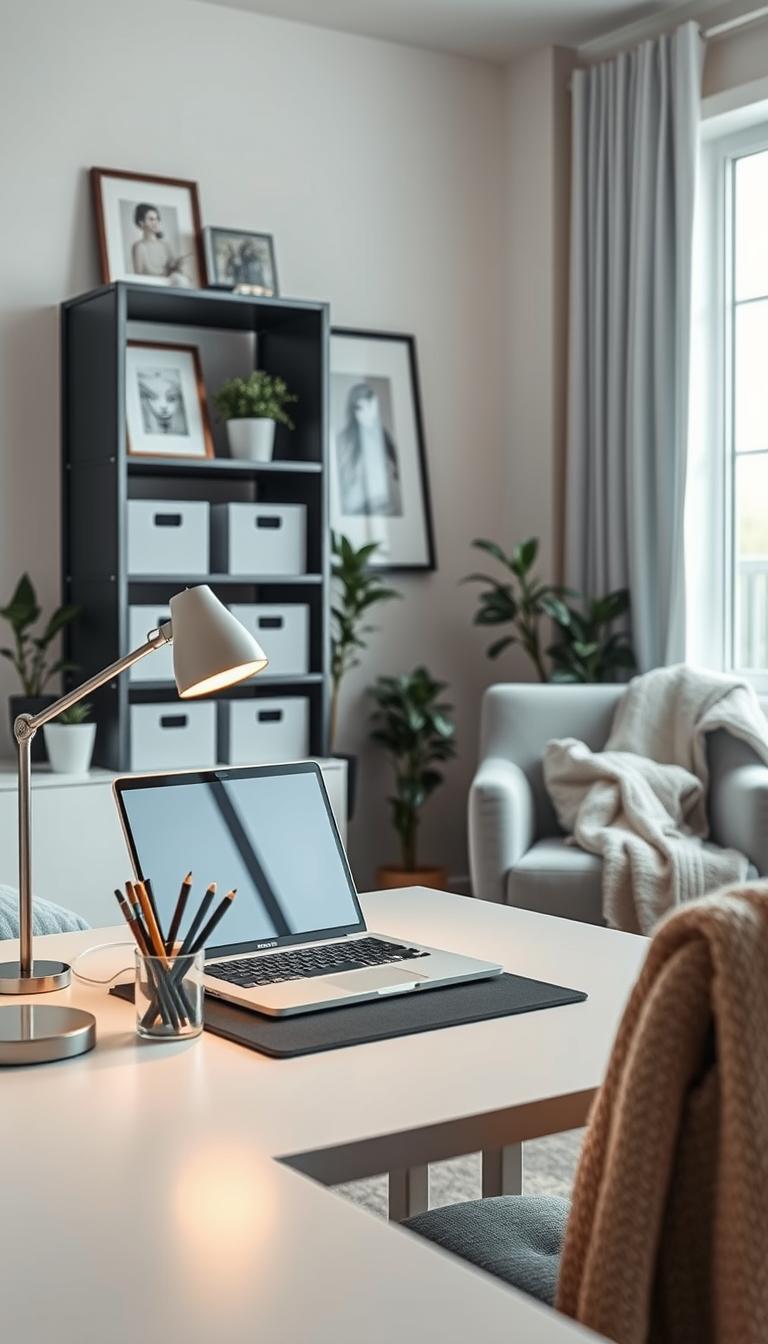
| Action | Benefit | Quick tip |
|---|---|---|
| Five-minute evening sweep | Keeps surfaces calm | Set a timer and clear visible clutter |
| Quarterly purge | Resets baseline clutter | Block the time and have donation bin ready |
| Hidden printer cabinet | Reduces visual noise | Ensure ventilation and cable pass-through |
| Mail-to-file & charging drawer | Stops desktop piles | Label files; use a fabric sleeve for cables |
These small systems save you time and protect the calm of your workspace. I’ve seen a simple setup change turn a messy room into a peaceful, usable space at home—especially in a tiny bedroom office nook.
Corner Nooks, Window Tables, and Cozy Spots That Work
A well-placed corner can become a focused island that keeps work energy contained. I often carve one small area so the rest of the room stays restful.
A slim table by the window makes the spot airy. It brings a calming view without overwhelming the space. Place a leggy chair and a wall-hugging lamp to keep circulation open.
I love carving a corner that feels like a tiny studio—one desk, one chair, one purpose. Corners naturally cut visual noise and help you drop into flow. Style the nook with a small plant and a single art piece so the spot looks composed on and off camera.
Keep proportions modest so the bedroom keeps balance. Echo one tone from your bedding in a cushion or frame to tie the look together. If you share the room, pick a second corner for reading or note-taking to reduce bottlenecks.
- Carve a focused corner: one desk, one chair.
- Use a slim table by the window for light and view.
- Keep decor minimal: a plant and one art piece for a clean look.
| Spot | Benefit | Quick tip |
|---|---|---|
| Corner nook | Reduces distractions | Choose shallow desk depth |
| Window table | Natural light and calm view | Offset monitor to avoid glare |
| Shared setup | Prevents overlap in small spaces | Assign a second compact area for notes |
Bedroom office ideas that favor corners and window tables create a tidy, usable spot without stealing the whole room. Try it for a week and see how the small change shifts your focus.
Standing Desks and Flexible Setups for Changing Routines
A compact adjustable desk gives you options when the day — and energy — shift. In a small room, an adjustable standing solution fits narrow footprints and moves when you need the floor clear for yoga or guests.
I recommend a lightweight model you can disassemble or wheel away. One quiet-motor unit with memory presets makes sit-to-stand transitions effortless, so you save time and keep focus.
Plan one cable channel and a slim anti-fatigue mat to keep the workspace tidy and trip-free. Add a perch stool for short stints — it helps you change posture without losing momentum.
- I favor a foldable option if you host overnight guests; it stows fast and frees the room.
- Keep essentials in a rolling caddy so the setup can relocate without chaos.
- End-of-day ritual: lower, clear, roll — and the space is calm again in minutes.
Guest Room + Office: Multipurpose Layouts With Style
A guest room should feel like warm hospitality first. Then add a small work spot that tucks away when visitors arrive. I start by deciding how often guests stay—occasional or frequent—and size the bed and desk to match.
Balancing a welcoming bed area with a functional desk
Make the space calm. Place the desk in a quiet corner with a welcoming chair so the room shifts naturally between uses. A cohesive palette helps the workspace read as part of the suite, not an afterthought.
- Choose priorities: smaller bed + larger desk for frequent hosting compromises; reverse for occasional stays.
- Use a closed cabinet for supplies so surfaces stay serene and cords are hidden.
- A folding luggage rack and a clear nightstand keep guests comfortable while the desk doubles as a vanity with a mirror.
- Wall-mounted desks and sconce lights save floor space in tight layouts.
- Store linens in labeled bins for a quick reset. Leave a welcome note and Wi‑Fi details on the desk—small touches matter.
| Element | Benefit | Quick tip |
|---|---|---|
| Desk in corner | Quiet work zone | Pick a comfy chair and soft task light |
| Closed cabinet | Calm surfaces for guests | Keep chargers and papers inside |
| Fold luggage rack | Welcoming bed setup | Store under bench when unused |
From Attic to Garage: Alternative Places to Build a Bedroom Office Adjacent
When you lack a spare room, I scout under-eaves spots, bright landings, and even a garage bay for a tidy work area. These nearby places let the main sleeping space stay calm while you get real work done.
Start by assessing basics: noise, temperature swings, and power. An attic often needs insulation and a quiet HVAC solution. A garage bay may require added outlets and a window or skylight for daylight.
Practical conversions I recommend:
- Turn an attic alcove into a compact nook with a shallow table and built-in shelves.
- Fit a landing with a slim table and a pendant light to create a focused area without stealing square footage.
- Combine a tidy laundry room and work setup for weekday tasks, keeping the sleeping room tech-free.
Keep circulation clear. Even a small setup needs a direct path to the door and a defined task zone. Add a shallow closet retrofit nearby to store files and seasonal gear. That simple move keeps the main guest area serene.
Quick upgrade checklist
| Place | Primary upgrade | Why it matters |
|---|---|---|
| Attic | Insulation + LED task light | Comfort year-round; good light for focused work |
| Landing | Shallow table + pendant | Minimal footprint; visible path keeps circulation clear |
| Garage bay | Outlets + window or skylight | Makes space usable and pleasant; reduces glare |
| Laundry combo | Closed storage + sound dampening | Preserves bedroom calm; practical multi-use area |
Office Bedroom Design Inspiration: Styles, Materials, and Lighting
Soft neutrals, warm wood, and layered lamps turn a small nook into a calm, camera‑ready area.
Today’s best bedroom office ideas embrace quiet palettes and tactile materials: limewash or muted walls, burl wood accents, linen shades, and leather touches. These choices read well on video and feel easy to live with.
I often tell clients to keep a single curated shelf rather than a crowded gallery wall. It looks intentional on calls and gives one place for character without visual noise.
Layer lighting—ambient, task, and a soft backglow—to flatter faces and calm the nervous system. A sculptural lamp can be the only décor you need; it brings personality without distraction.
“I like a single art piece or a shelf with three objects. It anchors the camera frame and keeps the focus on the person in it.”
Modern minimal, warm wood, and layered lighting ideas
- Modern minimal with warm wood keeps lines clean and the room human.
- Limewash walls and soft metals add depth without camera clutter.
- Style one shelf with restrained decor for a polished background.
- Save a mood folder of images—clarity speeds good decisions.
| Element | Benefit | Quick tip |
|---|---|---|
| Warm wood trim | Adds tactile warmth; biophilic appeal | Use a single wood tone to keep cohesion |
| Layered lighting | Flattering video presence; flexible mood | Combine dimmable overhead, task lamp, and backlight |
| Limewash or muted walls | Soft depth; reduces glare on camera | Pick a low-sheen finish for even light |
| Minimal shelf styling | Clean background for calls | Limit to three objects and one plant |
Final note: think of the workspace as a companion. Tune materials, color, and light so the room supports routines and shows you at your best.
Conclusion
Treat the space like a partner: give it clear boundaries, good light, and a home for things, and it will support both productivity and rest.
Choose one small idea to try this week—turn the desk away from the bed, hide cables, or tidy your backdrop. Do that and you’ll notice a real shift fast.
Keep iterating. Small changes stack into big wins over time. Let your home guide the way and shape the space to match how you live.
If you get stuck, return to basics: clear surfaces, a supportive chair, and gentle task lighting. I’m rooting for your bedroom office to feel quiet, capable, and truly yours.