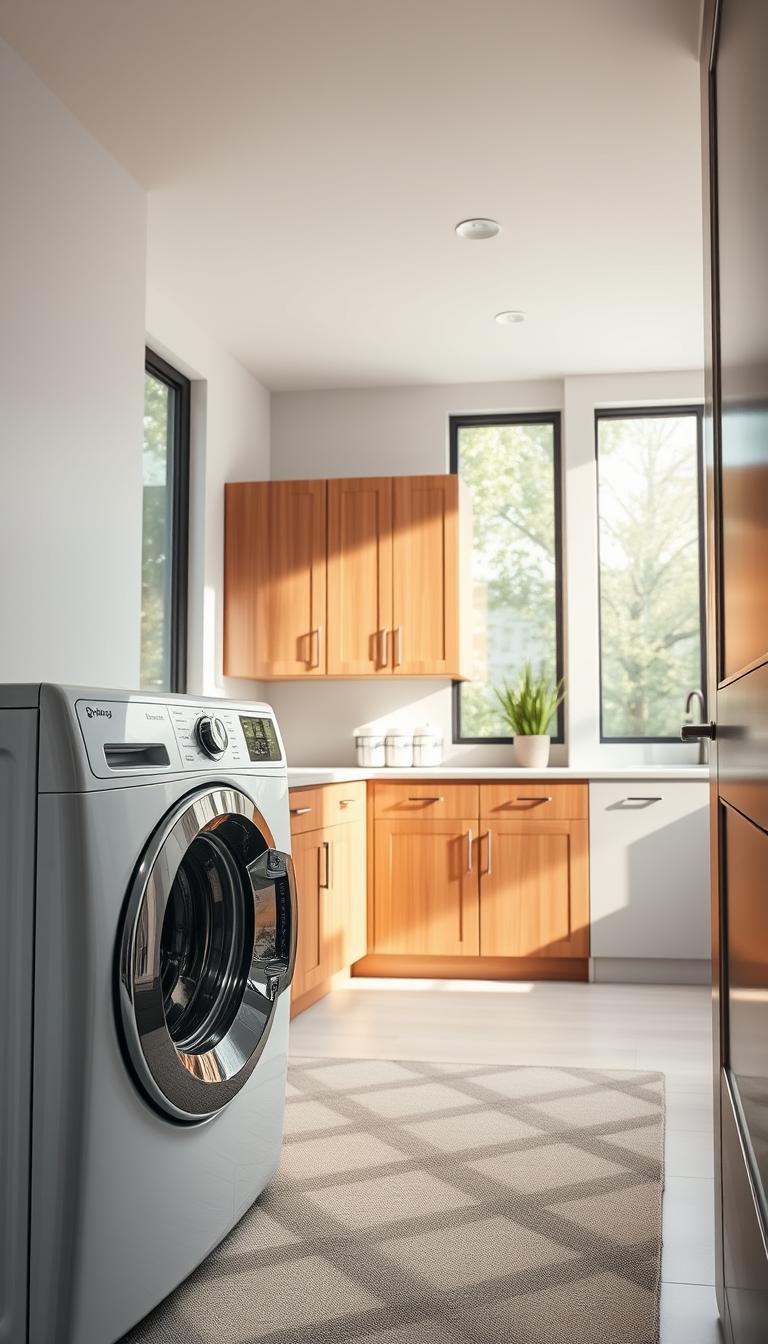
What if a simple update could make your laundry feel less like a chore and more like a calming, useful space? I asked that same question while staring at my cramped, beige room. I wanted a plan that blends pretty storage, smart layout, and lasting materials.
I used display-worthy canisters and open shelving to lift the mood. I added statement lighting and a durable backsplash so spills don’t steal the shine.
Along the way I balanced beauty with function. Smarter storage sped up every laundry day. Small swaps—new hardware, a rolling island, better baskets—gave big returns without a full remodel.
You’ll get step-by-step ideas and design inspiration so you can make this space work for your home and your routine. I’ll also flag pitfalls—like fragile wallpaper near damp zones—so you avoid costly mistakes.
Key Takeaways
- Balance style and function with display canisters and easy-access shelves.
- Small upgrades can have outsized impact—think lighting, hardware, and containers.
- Choose durable surfaces and tiles that stand up to drips and spins.
- Pick a layout—side-by-side or stacked—that fits your way of living.
- Use flooring patterns and storage to hide lint and keep things tidy.
Quick Wins That Instantly Modernize Your Laundry Room
Simple swaps—like ditching boxes and using matching jars—shifted the whole vibe. I cleared out mismatched bottles and decanted detergents into airtight, labeled containers. The result: cleaner lines and faster grab-and-go on busy days.
Swap bulky packaging for uniform containers.
- I use sealed glass canisters for pods and a smaller jar for dryer balls—no clashing labels, no spills.
- Keep daily supplies at shoulder height; store seasonal extras up high. Shelf zoning makes the room intuitive the moment you walk in.
- Choose a shared color story—clear glass, white ceramic, amber—so your walls and cabinets can shine.
Style open shelves with baskets and glass canisters.
Open shelves become both storage and styling zones. Wicker baskets corral odd socks and small cleaning items. A handled basket moves to the counter when it’s time to wash and tucks back when you’re done.
“Designers often recommend open shelving for quick access and display.”
Use vertical wall space with a slim rail and S-hooks for brushes or hang-dry items. Paint the shelf underside to match the wall—it reduces shadows and feels lighter. For renters, go with removable shelves and damage-free supports.
Quick copyable win: place a narrow tray on the counter for daily-use bottles to keep drips contained and surfaces tidy.
Modern Laundry Room Storage Upgrades That Work Hard
A good storage plan turns a tight space into an organized, calm corner you actually want to use.
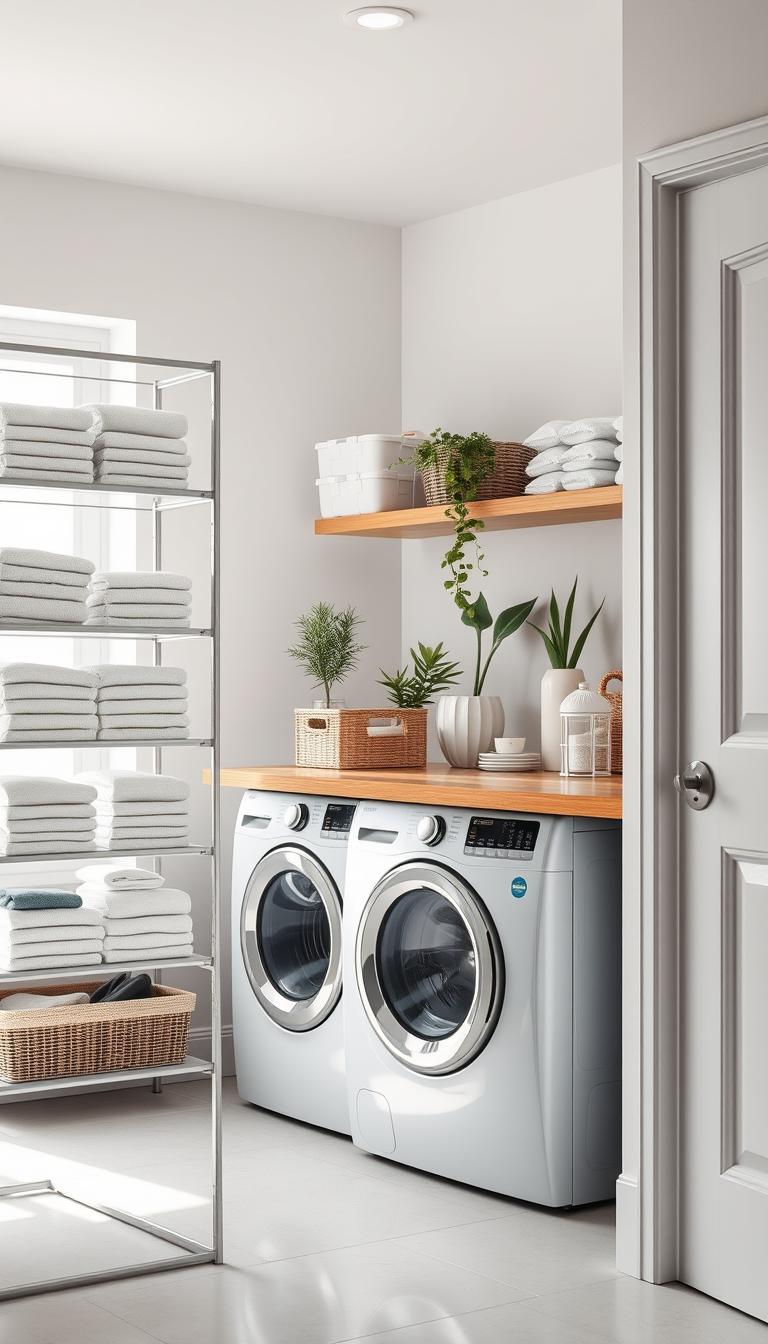
I pair closed cabinets for bulk goods with one or two open shelves for daily reach. Closed fronts hide clutter; open shelves keep everyday items visible and quick to grab.
Extend cabinetry to the ceiling to add real capacity and stop dust from piling up on top. Tuck rolling hampers under a continuous countertop—one per family member—and they vanish from sight when not in use.
Small upgrades that save time
- Pipe-style drying rail: a black steel or brass bar clears counters and holds shirts and delicates.
- Shallow cabinet: keep sprays and stain removers beside the washer and dryer for one-door access.
- Interior dividers: tall-bottle slots, pull-out trays, and a slim tilt-out for lint sheets.
“Good design hides the mess but celebrates the tools you use every day.”
| Upgrade | Benefit | Quick tip |
|---|---|---|
| Ceiling-height cabinetry | More capacity, less dust | Measure tall refills before ordering shelves |
| Under-counter hampers | Clutter-free counters | Color-code for each person |
| Pipe drying rail | Vertical air-dry space | Install near vented area for airflow |
Pro move: add an under-shelf LED strip so interior cabinets are bright and things stay easy to find even at night.
Smart Layouts: Side-by-Side, Stacked, and Rolling Islands
A smart layout can turn tight square footage into a calm, useful place for chores. I picked layouts based on how my family moves through the house and what we actually use.
A rolling island adds folding surface and storage without the cost or permanence of a built-in. Pick one with locking casters and a lower shelf for baskets—stable when you fold, mobile when you need floor space.
Stacked washer and dryer to reclaim floor space
Stacking compact units is ideal in a narrow layout. It frees floor for a hamper zone or a tall cabinet. Confirm venting, hookups, and a level floor; vibration control and access panels matter.
“Stacking maximizes footprint efficiency; side-by-side gives the easiest service access.”
- If your room is tight, a rolling island wins—extra counter when you need it, out of the way when you don’t.
- I prefer side-by-side when there’s width; it gives a continuous counter and easier maintenance access to appliances.
- Check door swing clearances—machine, cabinet, and room doors—so traffic flow stays smooth.
| Layout | Best for | Key feature |
|---|---|---|
| Side-by-side | Wide spaces | Continuous counter, easy service access |
| Stacked | Narrow spaces | Maximizes floor, adds vertical storage |
| Rolling island | Tight multi-use spaces | Portable counter, locked casters, hidden baskets |
Pro tip: tuck a slim pull-out for supplies or a hidden step stool between machines and the wall. The little inches you reclaim make this place work harder for you.
Surfaces and Countertops: Warmth, Durability, and Style
Choosing the right countertop changed how my daily folding feels—warmer and easier on the elbows.
Butcher block is my go-to when I want instant warmth without a big spend. Light wood reads contemporary; darker or reclaimed planks feel cozy and lived-in.
I love butcher block for instant warmth—it’s soft to touch, easy to sand and oil, and easy to repair after years of use.
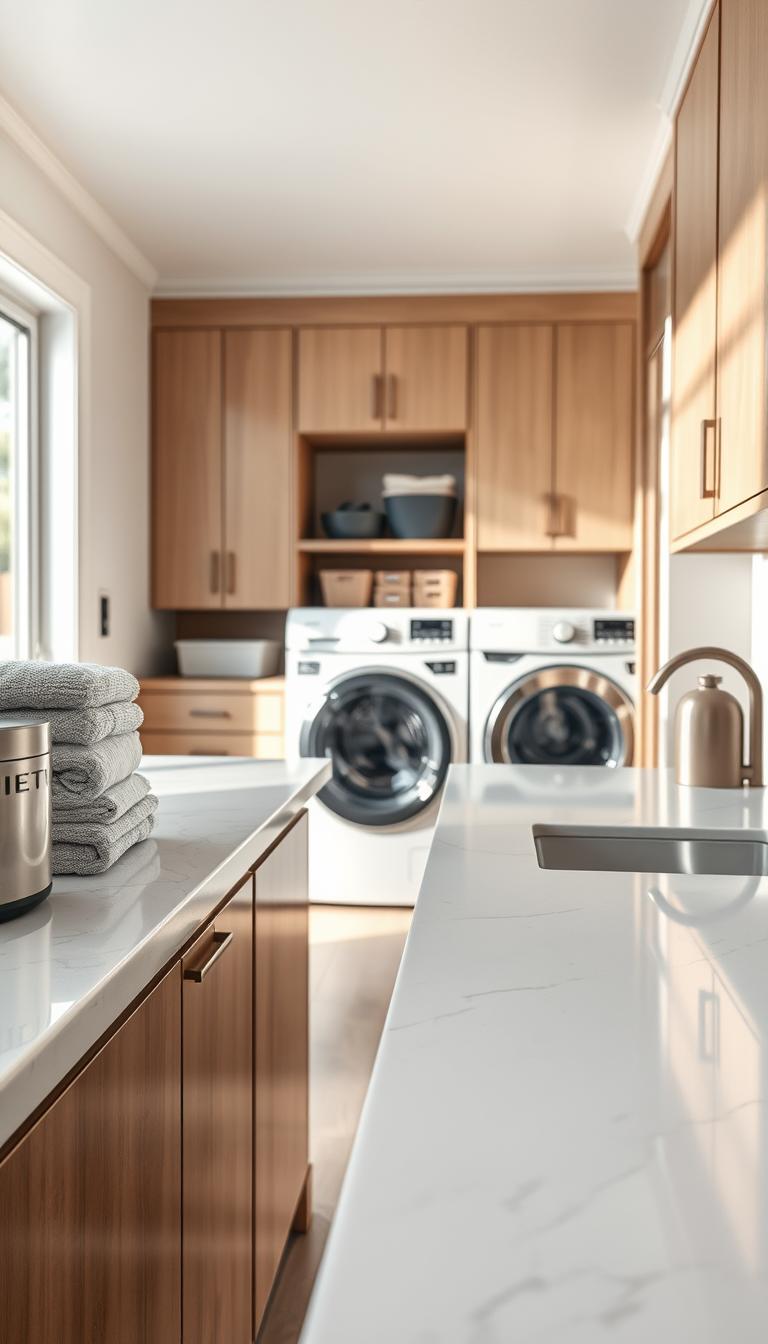
Neutral counters that adapt
Neutral countertop options—quartz, solid surface, or laminate in a quiet tone—play nicely with any cabinet color you choose later.
Pair a neutral top with a bold wall color and you can swap paint without redoing surfaces. For heavy use, pick stain-resistant finishes so maintenance is quick and low-stress.
- Seal wood well near the sink and machines to prevent swelling and gaps.
- Balance a hard tile backsplash with a softer counter material to avoid a cold feel.
- Prioritize a continuous counter if you fold often—no seams to catch knits.
- Consider a waterfall edge on a small island for durable, polished corners.
“A mixed-material approach—wood island plus neutral perimeter—gives warmth where you touch and durability where you spill.”
Tip: tie the counter tone to hardware or open shelves for a cohesive finish that reads intentional and still lets your color choices shine.
Walls That Wow: Wallpaper, Wainscoting, and Backsplashes
A patterned wall can turn a practical corner into the room’s best conversation piece.
Graphic tile makes a natural focal point. Install a bold tile backsplash behind the sink or machines and keep adjacent walls calm so the pattern can sing.
I pair neutral wallpaper with painted beadboard or shiplap for texture and durability. The board hides scuffs and makes touch-ups simple. Repeat one color from the paper in a cabinet or shade for cohesion.
Graphic tile and patterned backsplash for a focal point
Choose two or three hues max across tile, paper, and paint to avoid visual overload. Finish edges with a slim metal trim for a clean, modern profile that complements hardware.
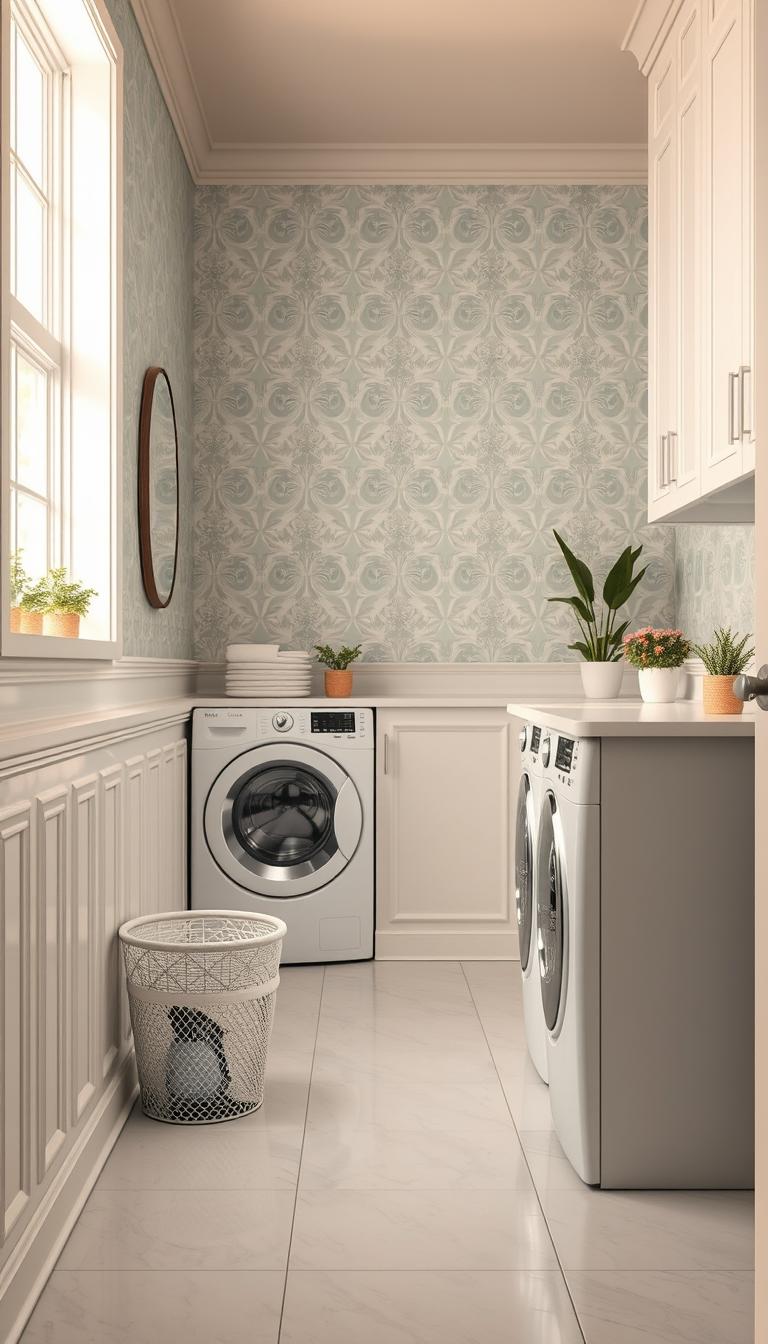
Pair wallpaper with beadboard or shiplap
Neutral patterned wallpaper stays timeless and lets you change appliances or paint later without redoing walls. For high-splash areas, pick wipeable papers and avoid fragile materials where damp clothes might hang.
Ceiling wallpaper as the unexpected style move
Ceiling wallpaper lifts the gaze and adds delight—designer Lisa Gilmore uses playful prints with a Roman shade to great effect. For renters, peel-and-stick paper on a feature wall or ceiling gives big impact and an easy exit.
“Ceiling prints add pep without crowding the floor plan.”
Statement Lighting That Transforms the Room
A bold light can make this small space feel like a curated corner, not a utility closet.
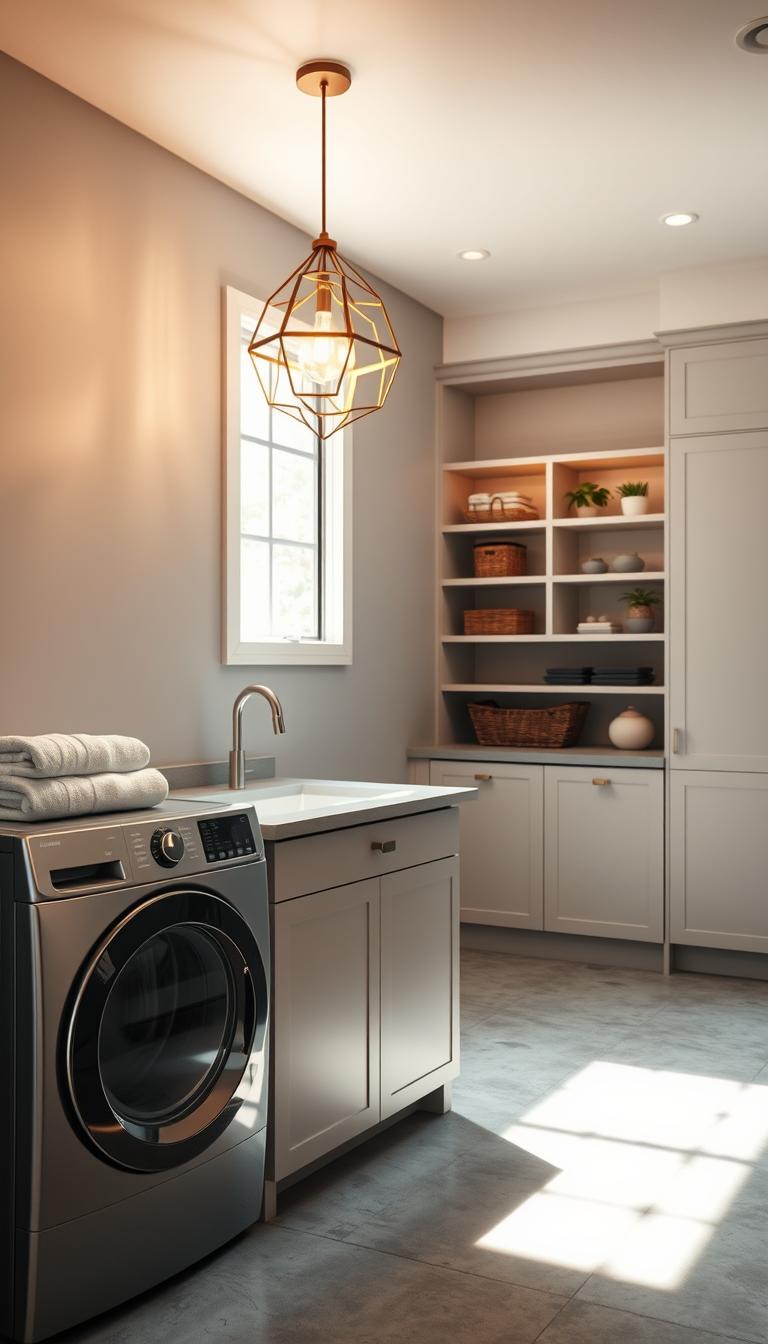
I use a layered plan: bright recessed cans for chores and a sculptural pendant for mood. Put these on separate switches so you control task versus atmosphere.
Placement matters: center a pendant between machines and sink or above an island. Add under-cabinet LEDs for clear task light—no shadows while you fold.
Fixture choices include brass or matte black for warmth, or milk glass for a soft glow. For low ceilings, pick a flush mount with character.
“A single sculptural fixture can instantly elevate how the space feels.”
- Use warmer bulbs (2700–3000K) for a cozy vibe; cooler (3500–4000K) for crisp clarity.
- Install dimmers to turn a work area into a calm evening room.
- Match finishes loosely—close cousins, not twins—for cohesive style and polish.
| Layer | Purpose | Quick tip |
|---|---|---|
| Recessed cans | Bright, even task light | Separate switch for chores |
| Decorative pendant | Focal point and mood | Center over island or work zone |
| Under-cabinet LEDs | Spot stains, read labels | Warm white for true colors |
| Dimmer control | Adjustable ambiance | Use for evening loads |
Cabinetry Details That Feel Custom
Good cabinets are quiet stars — they shape how the laundry room works and how the room reads at a glance. I like simple changes that deliver a built-in look without a full rip-out.
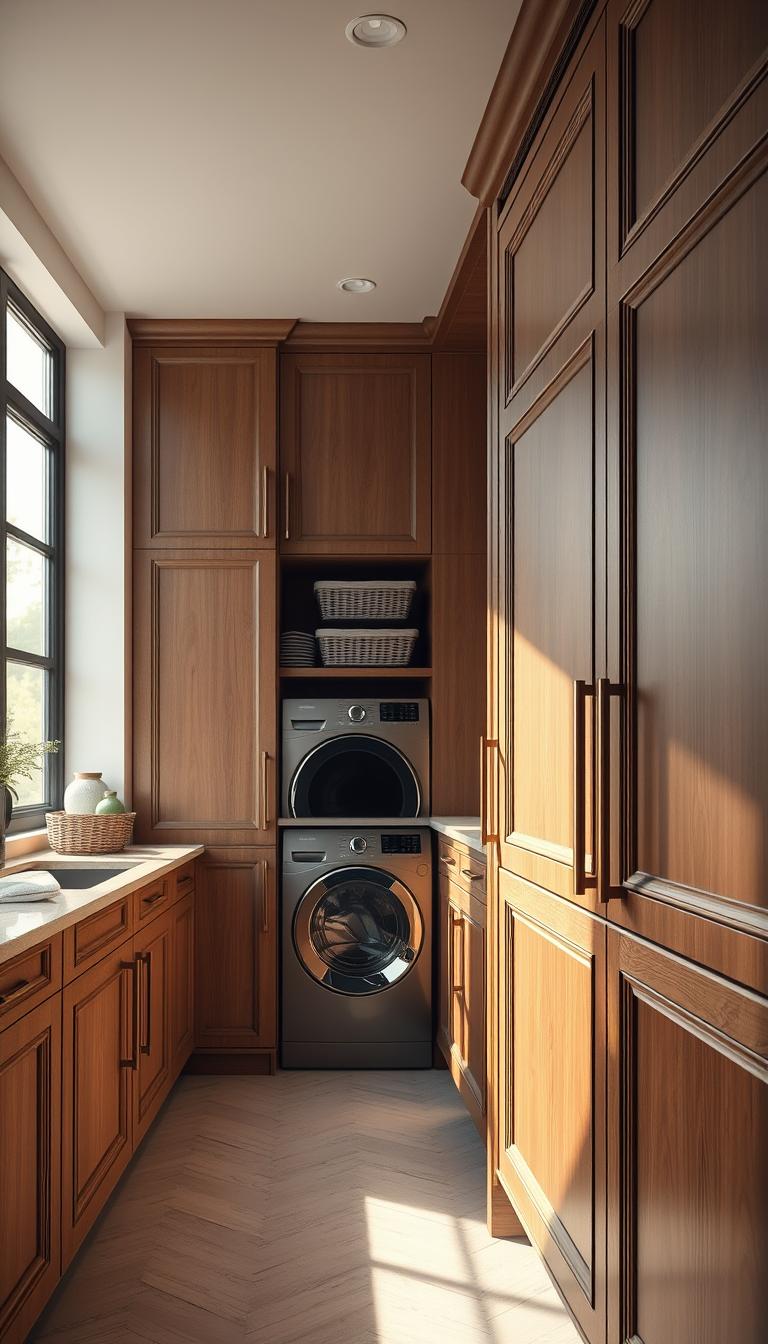
Flat-front doors for a minimalist profile
Flat-front doors erase visual clutter with clean planes. They make small rooms read calmer and keep the silhouette tidy.
Crown and decorative molding to elevate builder-grade
Add crown molding and a slim trim to shop-grade boxes and they instantly look custom. A deeper cabinet color paired with subtle trim reads expensive, not fussy.
- A simple stile-and-rail door with small reveals bridges classic and contemporary; it’s easy to clean and timeless.
- Choose integrated pulls or slim bar hardware aligned across doors for rhythm and calm.
- I like a single wood accent — a floating shelf or toe-kick — to warm an all-painted run.
- Paint interiors a light neutral so you find items fast; small choices that marry form and function.
- Soft-close hinges and full-extension drawers add quiet luxury to daily tasks.
Pro tip: tuck a tall cabinet for brooms and airers to hide chaos and keep the line of the room clean. Thoughtful cabinetry details are a high-impact, low-stress design move you’ll notice every day.
“Little trims and better hardware make everyday storage feel intentionally built.”
Color Strategies: From Calm Neutrals to Moody Drama
Color can quietly steer how a small service area feels—calm, bright, or theatrical. I lean on palettes that solve real needs: hide scuffs, reflect light, and link fabrics to finishes.
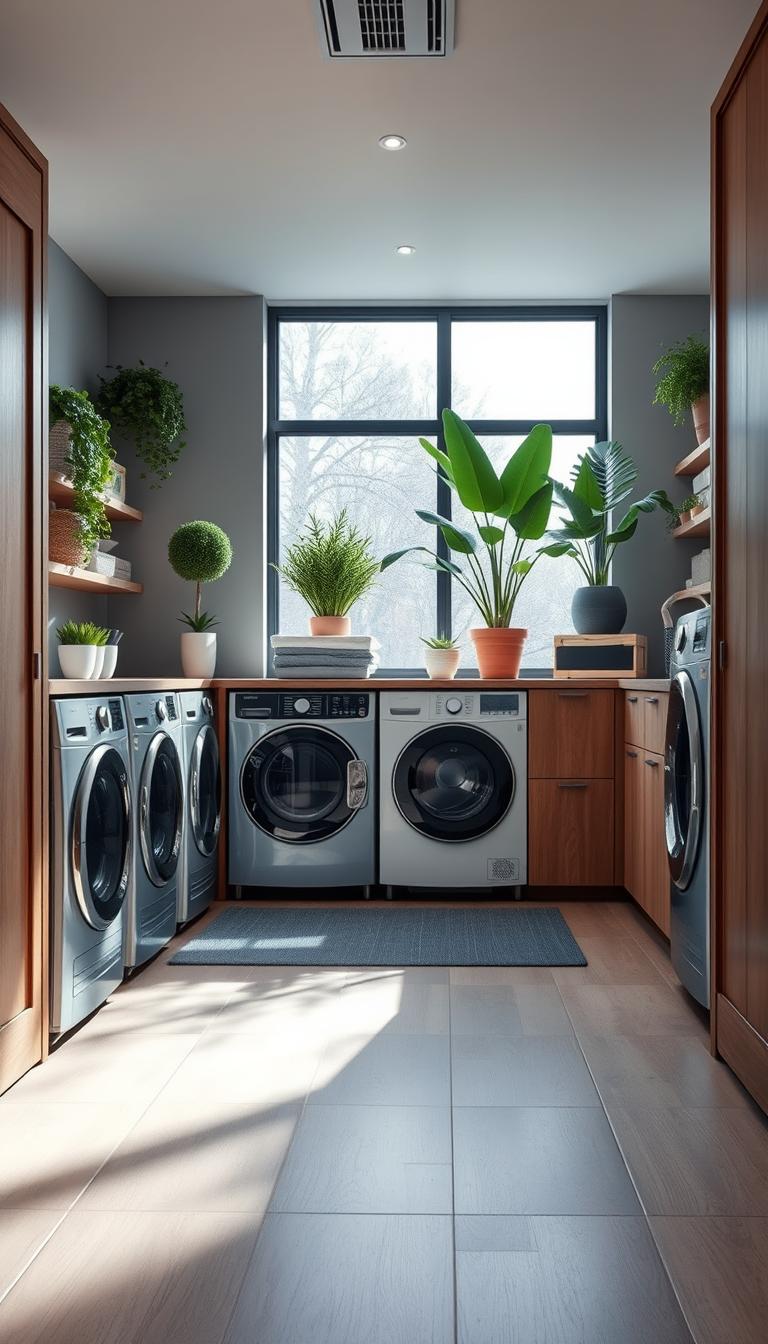
Timeless blue and white
Blue-and-white feels fresh and forever. It pairs beautifully with brass or polished chrome and keeps walls bright. I often suggest this when clients want crisp clarity and easy updates.
Warm neutrals and light woods
Sand, oat, and cream read as calm. Add light wood and wicker for a spa-adjacent vibe. These tones hide everyday wear and soothe the eye.
Moody dark cabinets
Charcoal, deep green, or navy deliver drama. Use matte hardware and a lighter backsplash for balance. Dark cabinets read luxe when paired with soft countertops.
Jewel tones and playful pops
Teal, emerald, or aubergine bring energy. Keep walls neutral so the cabinets lead. Paint shelf backs a contrast color—small surface, big payoff.
- Use the 60/30/10 rule: main color, secondary support, and a 10% accent.
- Echo a cabinet hue in a rug or art to stitch the space together.
- Test large swatches in natural light before you commit.
Flooring That Holds Up and Looks Great
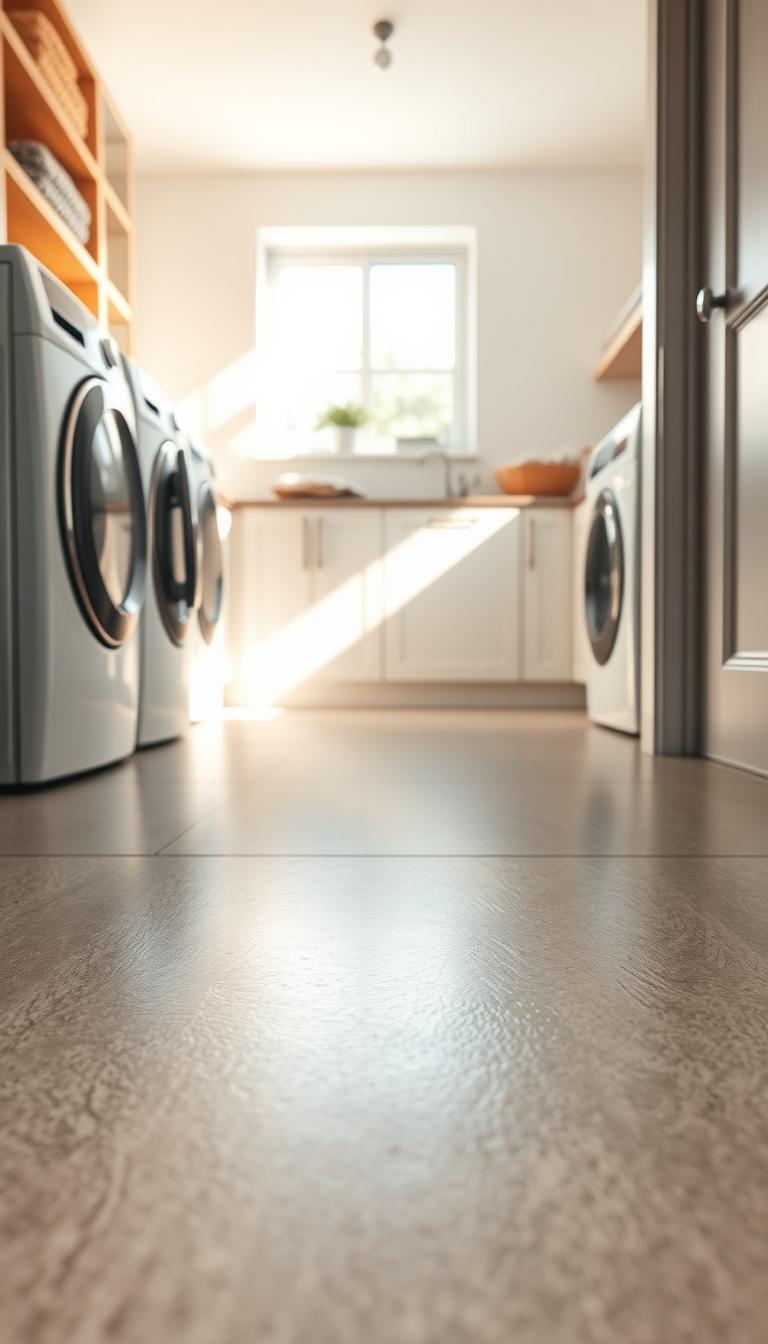
The right tile underfoot can turn a practical area into a quietly beautiful one. A thoughtful floor choice makes the whole laundry room feel intentional and easier to keep tidy.
Herringbone is classic and moves the eye. Pick a contrasting grout to show the weave, or match grout for a softer plane. Point the herringbone toward the focal wall to visually lengthen the room.
Checkerboard—Bianco Carrara with Nero Marquina—gives timeless contrast. Stone or porcelain squares hide scuffs and add instant character underfoot.
Geometric tiles bring energy. Keep cabinets and walls pared back so the floor reads as the star. If patterns feel bold, add a subtle border or inlay at the edges for controlled interest.
Practical musts:
- Prioritize slip resistance and textured finishes to hide lint and footprints.
- Large-format tile cuts grout lines and speeds cleaning.
- Use stain-resistant grout and proper sealing—maintenance is a design choice.
- Consider radiant heat for cozy mornings and better comfort on tile floors.
“A well-laid floor does more than look good—it makes daily chores feel calmer.”
Small Space Solutions: Closets, Hallways, and Nooks
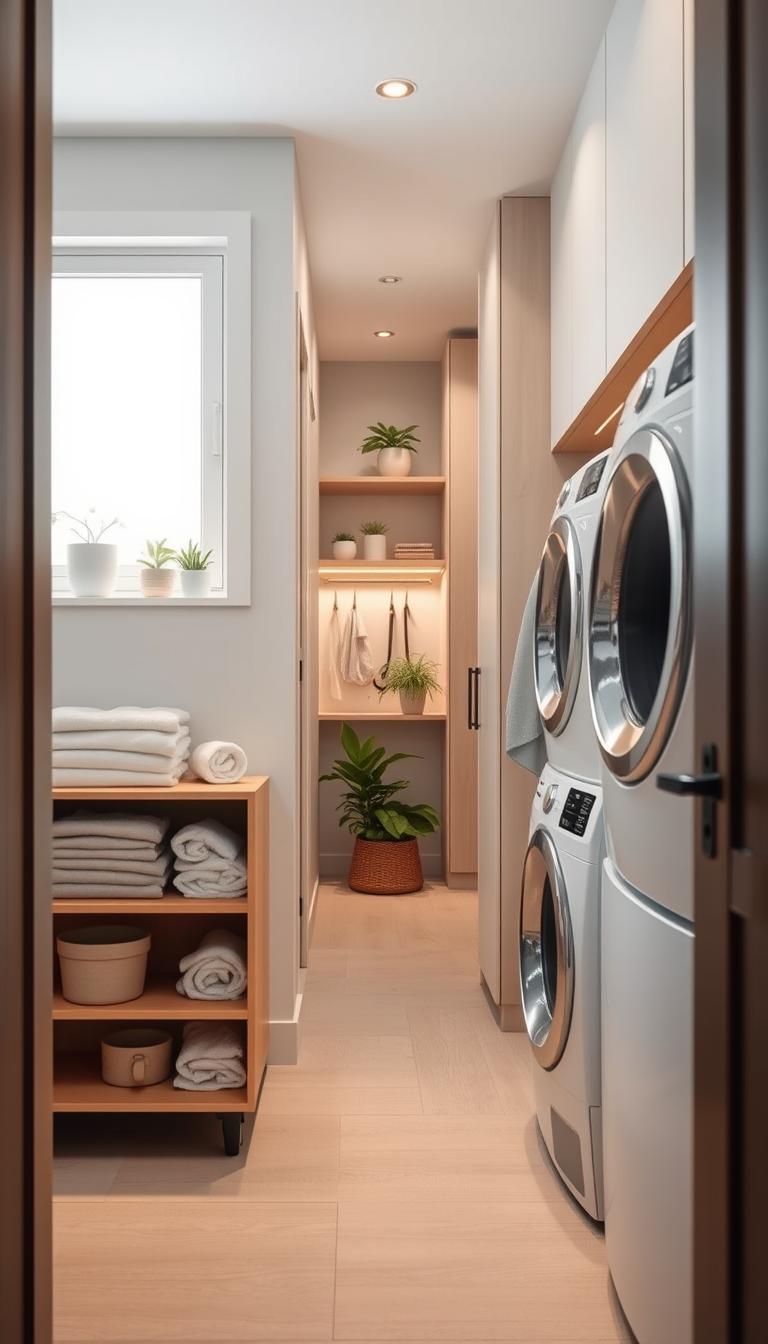
Tight corners taught me to think up, not out. When square footage shrinks, vertical moves save the day. I treat a tiny closet or hallway as prime real estate for storage and function.
Over-the-door racks and self-adhesive hooks are my go-to. They lift detergents, brushes, and hang-dry pieces off counters. No power tools. No fuss. A foldaway ironing board tucks into a tall cabinet and frees the floor instantly.
Over-the-door racks and self-adhesive hooks
In a closet niche I add racks to hold pods and sprays. Utility hooks create zones for lint brushes, mesh bags, and stain sticks. They make chores faster and keep the washer area tidy.
Built-in vertical drying racks and foldaway ironing boards
A built-in drying rack folds flat but holds a surprising amount of clothes on laundry day. Slide a slim cart between the washer and wall for extra supplies. Mount a narrow ledge at shoulder height as a small folding perch when counter space is missing.
| Solution | Best for | Quick tip |
|---|---|---|
| Over-the-door rack | Closet niches, doors | Use lightweight bottles on top shelf |
| Self-adhesive hooks | Hallways, cabinet sides | Place at varying heights for tools and cloths |
| Vertical drying rack | Tight rooms needing drip-dry space | Mount near a vent or above a drip tray |
| Foldaway ironing board | Tall cabinet storage | Tuck behind bi-fold or pocket doors |
Small changes add up: shallow shelves above machines carry light items while a single deep shelf holds bulky baskets. Mirrors or glossy doors reflect light and make tiny space feel larger.
“Think vertically—it’s the easiest way to add function without stealing the floor.”
Make It Multifunctional: Mudroom, Pantry, and More
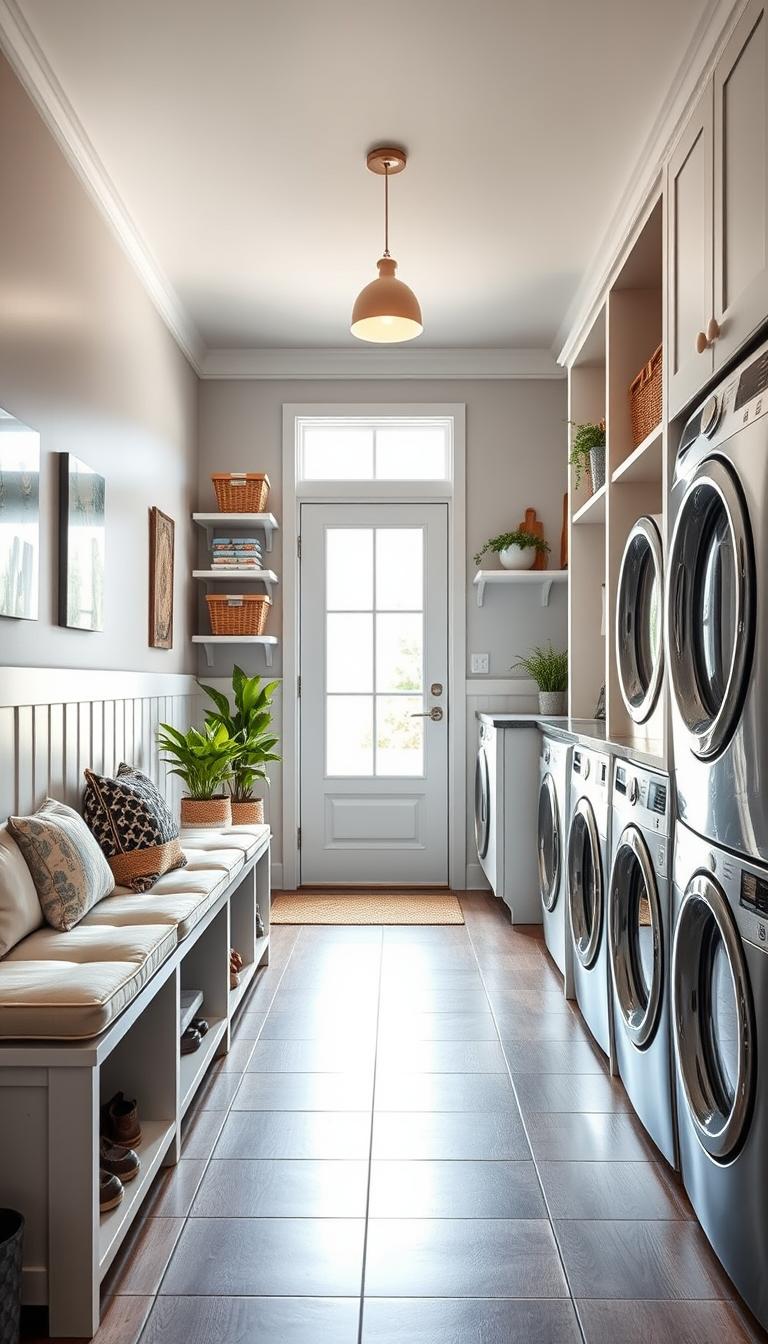
I started treating our service area like a small household hub—one place that handles shoes, snacks, and muddy paws.
Repeat a wall treatment—tile, paneling, or paint—across the pantry shelves and the washer zone so the whole place reads cohesive. That visual rhythm makes separate functions feel like one thoughtful design.
I love a hardworking combo: hooks and a bench at the entry, pantry pull-outs nearby, and closed cabinetry for bulk storage. Open cubbies keep grab-and-go items visible.
Pet care fits nicely here. Add a raised pet-wash with a handheld sprayer and a curb so water stays put. A shallow feeding nook under a counter hides bowls when you’re not using them.
Practical checklist
- Durable floor and washable runners for wet weather and paws.
- Deep sink with a high-arc faucet for boots, vases, or paint trays.
- Repeat hardware finishes and one anchor color for unity.
“A shared space works best when circulation is clear—door to sink to machines—so life moves, not piles.”
| Feature | Benefit | Quick tip |
|---|---|---|
| Continuous wall finish | Visual cohesion across uses | Match paint or tile grout color |
| Pet-wash station | Easy cleanup, less tracking | Raised curb and handheld sprayer |
| Hidden feeding nook | Tidy, out-of-sight bowls | Slide-out trays under counter |
Want ideas for combining functions? See this guide to combine mudroom, pantry, and laundry for layouts and examples.
Luxury Touches on Any Budget
I find that subtle built-ins often deliver the biggest boost to how a space performs and feels. Little clever moves read expensive without a heavy price tag.
Custom concealed drying racks pull out when you need them and tuck away when you don’t. They keep lines clean and add real function for delicates and small loads.
A built-in step stool hidden in the toe-kick makes upper cabinets usable. No wobbly ladder, just a solid, safe step that slides back into place.
Hospitality-style amenities
I added a compact beverage fridge and a small coffee station for weekend laundry marathons. It’s a tiny morale boost that changes how chores feel.
- Upgrade to a deep utility sink with a pull-down sprayer for easy rinsing.
- Swap basic knobs for solid-brass or matte-black hardware for one elevated touch.
- Edge your countertops with a waterfall or eased profile to protect elbows and baskets.
Lighting and textiles matter: dim-to-warm scenes make bright sorting chores feel crisp and evening resets feel calm. A plush, washable runner adds comfort and color underfoot.
“A single framed print and a slim shelf over the backsplash turn a work area into a place you enjoy.”
| Feature | Benefit | Quick tip |
|---|---|---|
| Concealed drying rack | Hidden when idle, easy access when needed | Install above machines for drip control |
| Built-in step stool | Makes high cabinets safe and reachable | Mount on soft-close slides in toe-kick |
| Beverage fridge | Hospitality feel and quick refreshment | Choose a compact, counter-height unit |
| Deep utility sink | Professional rinsing, less mess | Pair with a pull-down sprayer and splash mat |
Modern Laundry Room Inspiration Board: Patterns, Art, and Accessories
I pin a tiny inspiration board when I start a refresh—just enough to steer color and pattern choices. This keeps decisions simple and prevents clutter.
Lean botanicals, rugs, and playful wallpaper
Lean botanical prints on floating shelves add effortless charm. I swap framed greens each season; it’s kinder to walls than many nails and keeps the space feeling fresh.
A washable runner with a bold pattern brightens the path to the machines and hides lint. Pair one whimsical wallpaper panel with calm paint elsewhere so the design feels joyful, not frantic.
Wicker baskets, bowls, and shelf styling
Wicker baskets soften hard lines and add texture. I assign one for dryer balls and one for lost-and-found socks. A small catchall bowl by the backsplash collects coins and buttons—no more mystery rattles.
- Simple mood board: one wallpaper or rug, a couple of prints, woven baskets for soul and storage.
- Shelf formula: function (canisters), texture (basket), then art—stop before it feels crowded.
- Pull one color from art into a towel or shade to make the whole room feel stitched together.
“Keep the palette tight—two neutrals and one accent—and your space will read calm and cohesive.”
Planning, Placement, and Practicalities
A well-placed laundry area saves steps and keeps small habits from turning into big chores. I planned location, service runs, and door swings before I picked finishes—do that first and you’ll thank yourself on install day.
Best location: near bedrooms or with a laundry chute
Place your washer dryer near bedrooms when possible. Shorter trips mean fewer baskets left in hallways and a faster routine.
A laundry chute that drops into a cabinet basket is a clever fix when floors don’t align. It keeps clothes contained and beats lugging loads down stairs.
Plumbing, venting, and electrical must-haves
Confirm plumbing, venting, and dedicated circuits before you design. Function first saves costly rework later.
- Stacked European-scale washer units fit compact closet niches and free floor space.
- Vent a dryer per code; use ventless units only where ducting is impossible.
- Plan doors and clearances so machine access is simple and serviceable.
Pro tip: add bright general lighting plus task lights in windowless rooms, include a GFCI near sinks, and store cleaning supplies up high behind child-safe latches. Also map delivery paths for new appliances so installers can get units into the home without surprises.
“Measure twice, wire once—planning is the best shortcut to a calm, usable space.”
What Not to Do in a Modern Laundry Room
I learned the hard way that some design choices look great in photos but fail fast in daily use. Before you pick a wallpaper or pile on shelves, consider moisture, ventilation, and how the space will actually function for your family.
Avoid fragile wallpaper in damp zones
Skip delicate wallpapers like silk or grasscloth near sinks, hang-dry areas, or any place steam and splashes reach. Moisture is their kryptonite; they peel, stain, and invite mold. If you love pattern, choose a washable paper or tile accent instead.
Don’t overcrowd with decor or off-topic storage
Too many objects slow you down. Overstuffed shelves turn useful walls into visual noise and make chores feel harder.
Keep holiday bins and sports gear out of the utility area. This space works best when it stays focused on laundry tasks and quick access.
Store cleaning supplies safely away from heat sources
Store cleaning supplies in a cool cabinet, away from heater vents, the dryer exhaust, and motors. Heat can break down chemicals and raise safety risks. Childproof latches are a smart, simple add.
“When in doubt, edit—every item should earn its way by improving utility, safety, or serenity.”
| What to Avoid | Why it Fails | Better Way |
|---|---|---|
| Silk or grasscloth wallpaper | Damage from steam and splashes | Use washable paper, tile, or painted beadboard |
| Overcrowded open shelving | Visual clutter; slows chores | Limit to essentials; use closed cabinets for bulk |
| Cleaning supplies near heat | Degrades products; safety hazard | Store in a cool, ventilated cabinet with child locks |
| Open shelves by dryer exhaust | Lint buildup and stains | Use closed fronts or labeled boxes |
Quick checklist: protect walls behind sinks, plan ventilation, choose one strong pattern, and purge items that don’t serve daily use. That way the space stays calm, safe, and useful.
For detailed prep tips before a refresh, read this helpful guide on how to plan a smart remodel: read this before you redo your laundry.
Conclusion
When function and feeling meet, a simple space becomes a helpful, restful corner of the home.
I don’t think you need a gut renovation to make a lasting change. Small, smart ideas—better containers, a focused light, smart shelving—stack up fast and make chores feel easier on the day-to-day.
Pick a layout that fits your life. A side-by-side run gives counter space; stacked machines free the floor. Treat one wall as your design moment—a tile backsplash or a single panel of wallpaper can shift the mood for the entire laundry room.
Edit with intention: keep only what serves the task, add one hospitality touch, and let color follow function. Use this guide as your inspiration and checklist, then take the first simple step that feels right for your home.