Can a single feature make your living room feel like home and still look fresh?
I often tell clients that the fireplace is the heart of the room — a true focal point that shapes how a space feels and functions. I love mixing rough-hewn beams, painted brick, and floor-to-ceiling tile to balance country charm with a clean, airy aesthetic.
In this piece I’ll show practical inspiration: herringbone fireboxes, whitewashed stone, reclaimed timber mantels, and simple paneling that adds warmth without clutter. You’ll see how scale, beams, and a well-placed wall surround can anchor furniture, guide traffic, and invite gatherings.
My promise: I’ll translate style ideas into an achievable plan for your house — from hearth to floor — with sustainable choices and heat-smart options that work in real living spaces.
Key Takeaways
- The fireplace serves as a welcoming focal point for your living room and home.
- Layered textures — stone, brick, and reclaimed wood — create lasting charm.
- Scale and beams shape how a room feels and how furniture arranges.
- Sustainable materials and efficient inserts boost comfort and lower impact.
- I’ll help you turn inspiration into a practical plan for your living space.
Why a Modern Farmhouse Fireplace Anchors Your Living Space
When a wall carries a bold surround, the rest of the living space finds its rhythm. Oversized hearths or floor-to-ceiling treatments give the eye one steady place to land.
What a focal point does: it organizes seating, balances walls and windows, and tells you where art and rugs should sit. Once that anchor is set, furniture and traffic flow feel obvious.
I tell clients that scale matters. Tall shiplap ceilings and continuous surrounds boost presence. Wider hearths calm long rooms so the eye can rest.
“A clear center simplifies decisions — you know where to gather and why.”
- Materials guide the gaze: textured brick reads softly; geometric tile reads crisp.
- In open plans, double-sided units define zones without blocking light.
- Sliding panels hide screens so function doesn’t steal the point.
| Strategy | Effect | Where to use |
|---|---|---|
| Vertical surround | Emphasizes height | Vaulted ceiling walls |
| Wider hearth | Anchors long sightlines | Main living room wall |
| Double-sided hearth | Zones open plans | Between living & dining |
Modern Farmhouse Fireplace
A well-crafted hearth blends honest materials with calm lines to make a room feel rooted the moment you enter.
I define the modern farmhouse fireplace as a hybrid: heritage textures paired with clean geometry. Think stone or brick surrounds, a reclaimed wood mantel, and a tidy finish—plaster, shiplap, or paneling—that keeps the walls quiet.
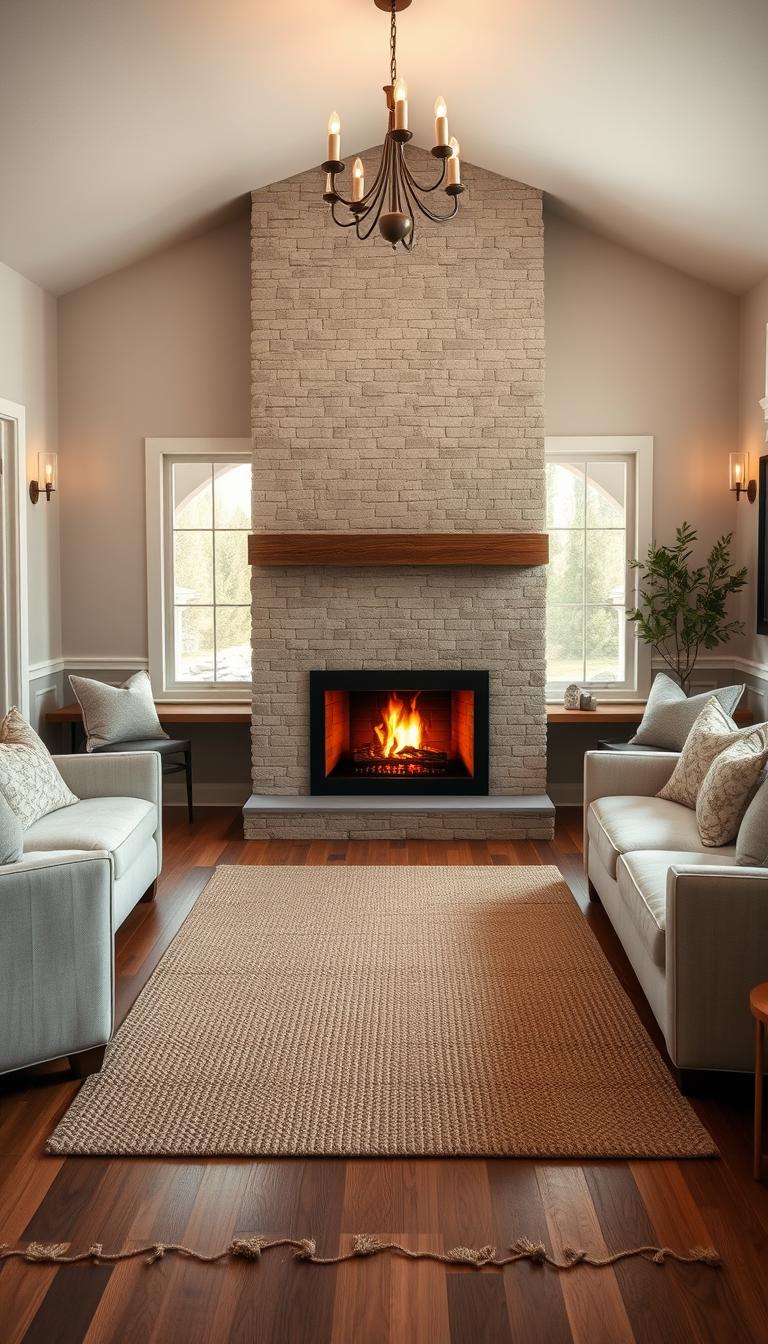
Core ingredients: a stone fireplace or brick face, a strong wood mantel, and simple wall planes. Whitewashed brick gives airy serenity. Stained, off-black brick delivers subtle drama while still reading farmhouse at heart.
- Scale matters: floor-to-ceiling massing suits tall rooms; a wider hearth steadies long floors.
- Function meets form: inserts or stoves boost heat without losing character.
- Tactile balance: smooth plaster beside rough stone, warm wood against cool masonry.
| Feature | Effect | Best For |
|---|---|---|
| Whitewashed brick | Airy, neutral backdrop | Light-filled living room |
| Stained brick or dark finish | Moody contrast, modern edge | Open-plan or high-contrast walls |
| Reclaimed beam mantel | Warmth, sustainability | Period houses and new builds alike |
“The best hearths feel like they’ve always belonged to the house.”
I often tailor details to the home—new or old—so the result feels authentic and lasting. The goal is simple: a room that feels grounded the minute you step in.
Textural Mixes: Stone, Brick, and Wood for Character-Rich Surrounds
Pairing rugged masonry and warm wood turns a plain wall into a memorable room anchor.
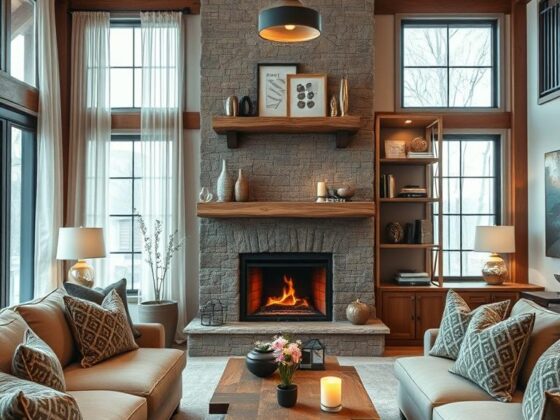
I often pair a stone façade with a rough-hewn beam mantel and soften the joints with over-grouting. Debbie Mathews used Grandfather Mountain Stone with a lighter grout and a weathered beam to get that updated rustic feel—timeworn but tidy.
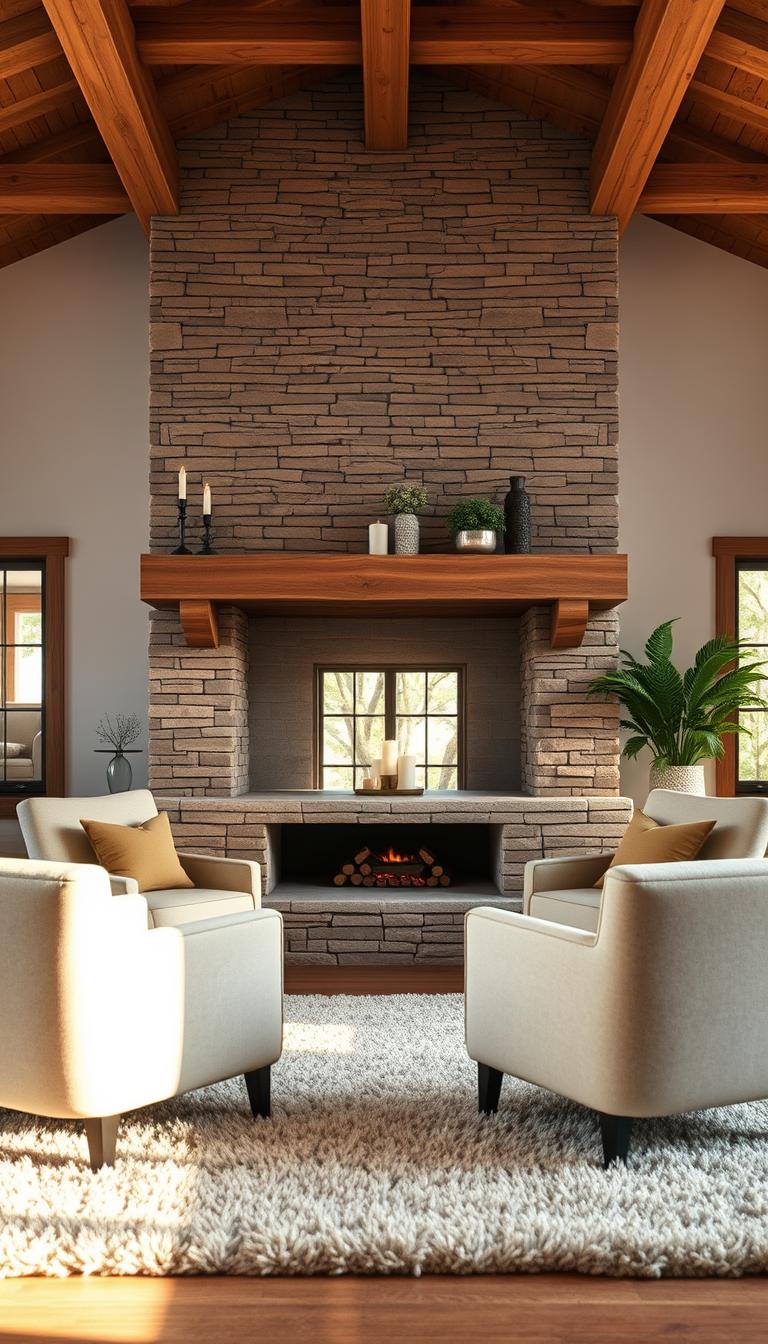
Pair stone façades with a rough-hewn beam mantel and soft over-grouting
Over-grouting mutes sharp shadows and makes the stone feel cloudlike. A chunky beam mantel reads as an intentional anchor and keeps the eye grounded on the wall.
Whitewashed brick and beam mantels for a warm, neutral look
Painted white brick plus a light wood mantel calms a busy living room. Whitewashing unifies texture and lets furniture and tile choices sing without competing.
Reclaimed barn wood surrounds as a rustic alternative to brick
Reclaimed barn wood offers warmth when you want to avoid more brick on the floor or wall. Pair it with a herringbone firebox and a limestone or brick hearth for subtle depth.
- Tactile harmony: wood grain against cool stone adds visual and physical contrast.
- Balance massing: if the surround is heavy, keep adjacent built-ins light; let the mantel shine.
- Maintenance tip: sealed stone and oiled wood age gracefully—skip glossy finishes.
Plaster, Paneling, and Shiplap: Clean Lines with Farmhouse Warmth
A pared-back surround of plaster or shiplap can make the whole living area feel composed and light.
Minimal plaster surrounds soften light and give the fireplace a timeless, gallery-like presence. Venetian plaster adds subtle movement and a matte glow that works on walls and ceilings. Pair that finish with a simple timber mantel so the look stays grounded and honest.
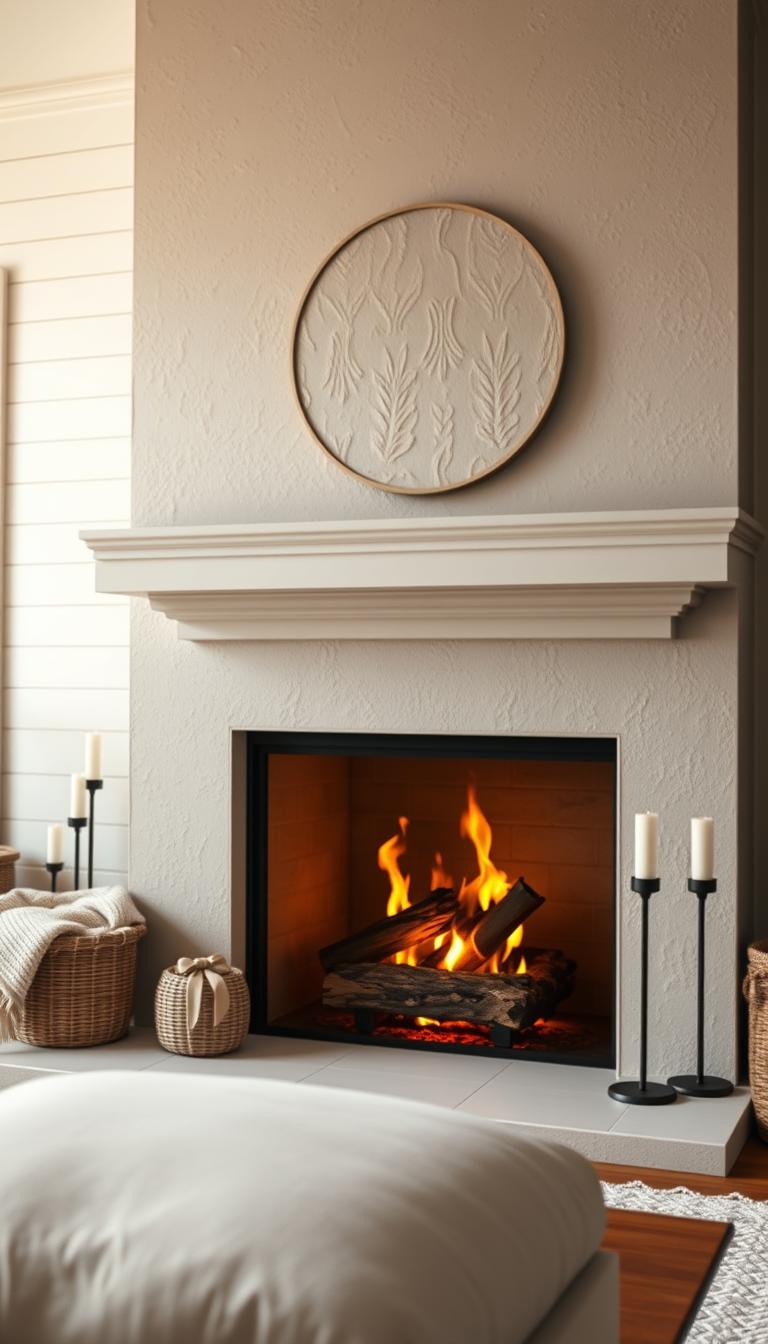
Minimal plaster surrounds that feel timeless and airy
Keep finishes matte to hide touch-ups and keep depth. A slim surround and a plain wood mantel suit smaller rooms; taller ceilings welcome vertical paneling that climbs the wall.
Paneled overmantels and shiplap walls that extend visual height
Shiplap overmantels that run into vaulted ceilings lift sightlines and make a room read taller. Paneled porches wrapped in tongue-and-groove can turn an outdoor hearth into an all-season retreat—I’ve done this for a client and it felt like adding a second home.
- Match paint between the mantel wall and adjacent walls to keep lines calm.
- Pair plaster with natural wood and stone so the mix feels collected, not contrived.
- Style sparingly: one leaning artwork and a sprig of greenery is often enough.
“Clean lines are calming — that quiet is the secret sauce of modern farmhouse style.”
Go Big: Oversized Hearths, Floor‑to‑Ceiling Surrounds, and Vaulted Ceilings
Big-scale hearths change how a room reads — they make tall spaces feel intentional and lived-in. A floor-to-ceiling surround calms vast volumes and gives a house a steady center. That massing makes a long room feel composed and easy to arrange.
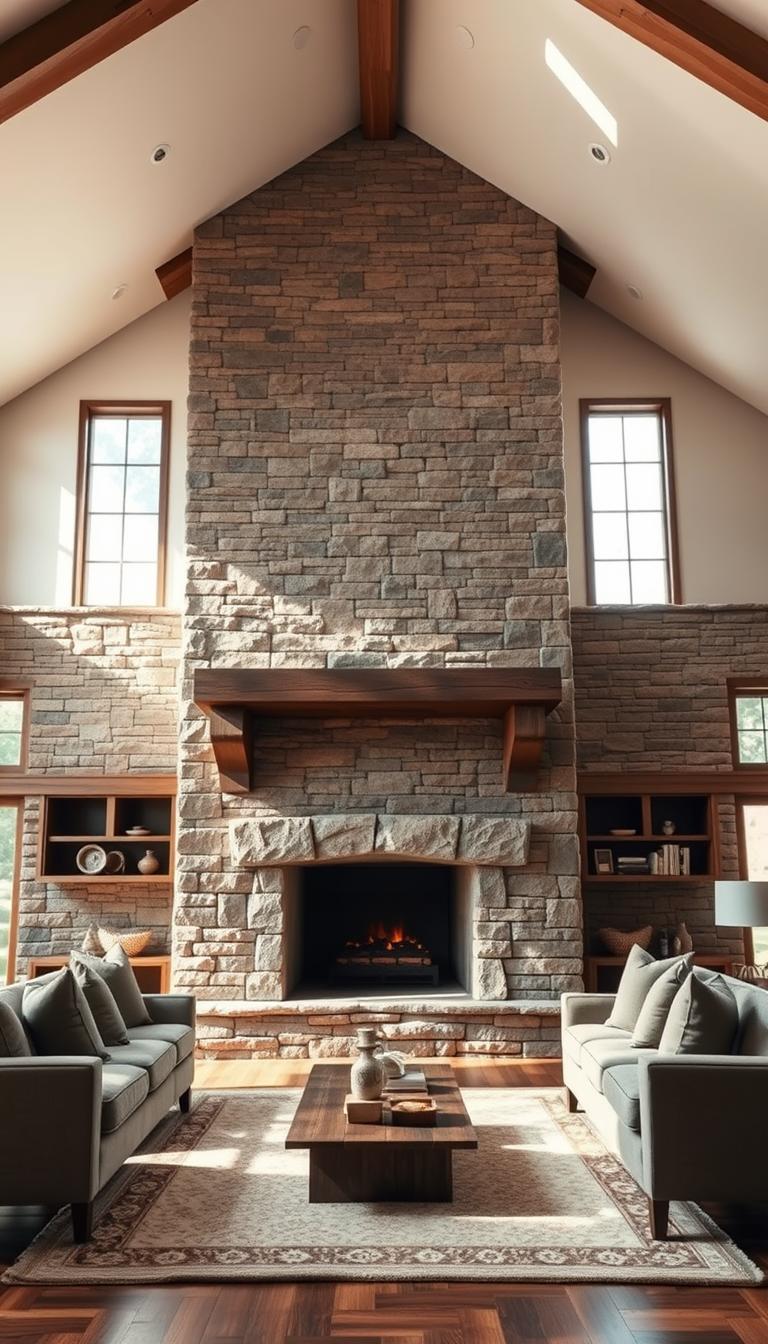
Monolithic chimneys that reach beam-and-board ceilings
In some barn renovations I’ve seen granite slabs run up to timber roofs. The chimney becomes a vertical anchor that ties beams to floor. At INNESS, a monolithic hearth meets a timber-clad roof and the result feels inevitable.
Designing around high, vaulted, or barn-style ceilings
Proportions matter. Widen the firebox and hearth in long rooms. Go taller with a slim footprint under peaked ceilings. Align the mantel with nearby beam heights so sightlines sing.
- Comfort: large hearths invite family and pets to gather.
- Practical: big fireboxes often need efficient inserts or tight doors to heat an open area.
- Safety: large chimneys need engineering and proper substrate supports—don’t skip this.
| Strategy | Effect | Best For |
|---|---|---|
| Floor‑to‑ceiling surround | Calms tall volumes | Vaulted living room |
| Wider hearth | Anchors long sightlines | Main family room wall |
| Stone or gray brick massing | Strong country drama | Reclaimed barn conversions |
“Scale done right feels inevitable, not oversized.”
Color Stories: From Soft Neutrals to Moody Blacks and Muted Greens
A carefully chosen palette turns a surround into a quiet statement that holds a room together.
I favor warm whites and taupes when you want the fireplace to soothe, not shout. These tones let furniture and art breathe while keeping the living area calm.
Olive-painted panel molding can wrap the surround for a grounded statement. It reads like soft drama and pairs well with light wood mantels.
For contrast, stained or blackened brick alongside white walls makes the firebox pop. A black-framed firebox amplifies that contrast without stealing the look.
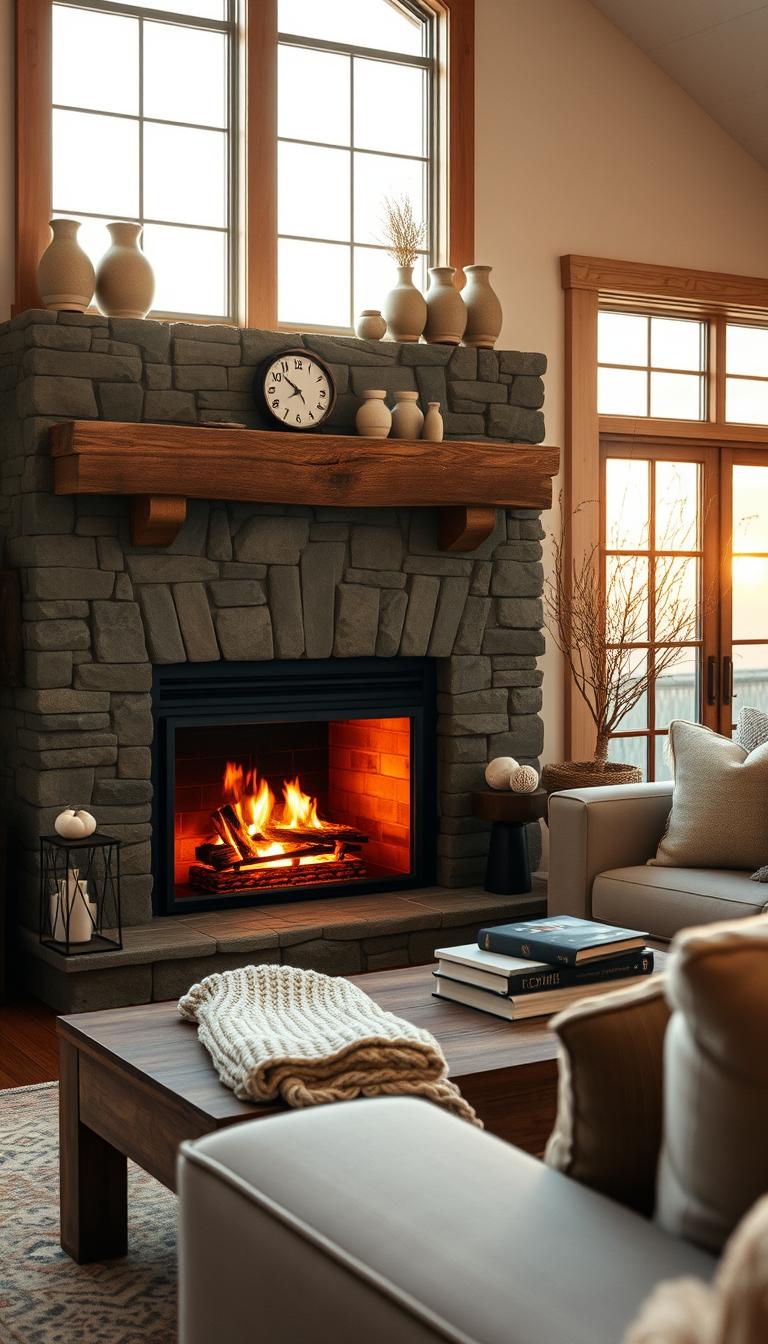
I recommend testing swatches in daylight and near flames—firelight changes color depth. Also, place color on surrounds, not inside the firebox; use heat-appropriate coatings only.
- Use wood tones to warm cool paint.
- Pull a green or black accent into pillows or a rug for cohesion.
- Keep vaulted shiplap ceilings light so the room breathes.
“Color enhances, texture roots — together they deliver the right look.”
| Choice | Effect | Best For |
|---|---|---|
| Soft neutrals | Soothing backdrop | Small living room |
| Olive panel molding | Subtle drama | Surrounds with wood mantel |
| Stained/blackened brick | Strong contrast | Bright walls, vaulted ceilings |
Tile Moments: Geometric, Herringbone, and Reclaimed Tile Accents
A bold run of patterned tile can turn an ordinary wall into the room’s main act. Floor-to-ceiling geometric tile often replaces a mantel entirely. A black-and-white motif modernizes the surround and reads sharp without fuss.
I like herringbone inside the firebox for a classic, crafted look. It nods to tradition while keeping the hearth tidy and textural.
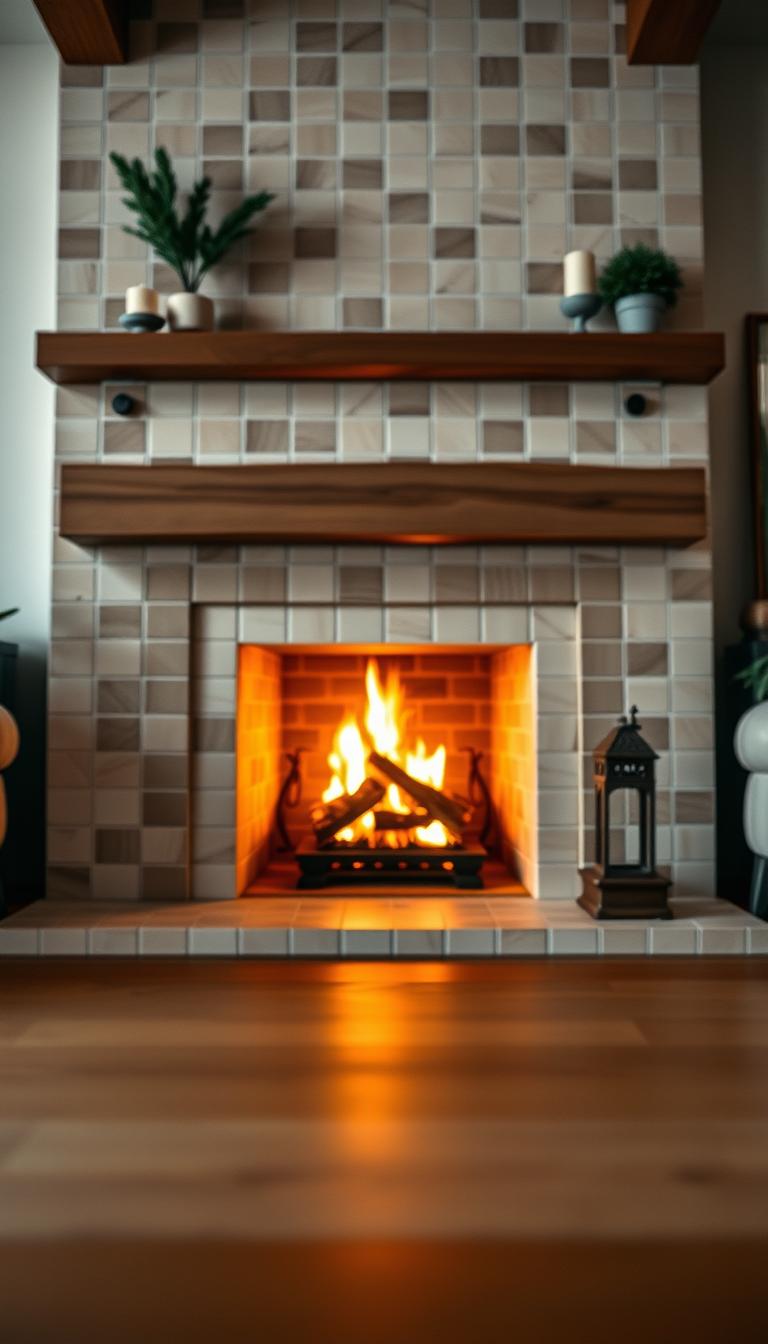
Floor-to-ceiling geometric tile as a statement surround
Use larger motifs on tall walls and smaller patterns in modest rooms. Minimal, flush installs let adjacent shiplap and matte black paint heighten contrast.
Herringbone fireboxes for classic farmhouse detail
Herringbone inside the firebox reads timeless. Reclaimed tile, especially in a kitchen hearth, brings color and history in a single, sustainable move.
- When tile leads, keep styling minimal so the surround can sing.
- Prefer matte finishes over glossy for fewer reflections at night.
- Use grout as a design tool—tone-on-tone for calm, contrast for crisp lines.
- Finish edges with schluter or stone trims for neat transitions where tile meets plaster or wood.
- If tile extends to the floor, choose slip-resistant options and seal grout; wipe down regularly.
“Pattern is a quiet superpower—choose scale carefully and the room will thank you.”
For more tile ideas and practical tips, see this fireplace tile guide.
Material Edge: Concrete Blocks, Metal Faces, and Brass Accents
Raw materials can give a hearth true character — think concrete texture and metal edges that read honest and restrained.
Concrete masonry block chimneys often stay raw. Their coarse surface and scale bring an industrial edge to a spare interior. Use this when the area has breathing room and good ceiling height.
Flush black metal faces keep lines tidy. I like pairing them with simple painted paneling so the surround reads refined, not heavy. Metal doors also help with heat performance and safety.
Brushed‑brass details act like jewelry. Thin frames, slim screens, or a narrow surround catch the firelight without tipping into glitz. A Malm‑style gas unit adds a mid‑century note and sculptural warmth where a stove suits the plan.
- Concrete blocks: celebrate texture; leave them bare.
- Black metal face: crisp outline with efficient doors.
- Brass accents: subtle, reflective, and measured.
- Warm textiles and timber soften the industrial interior.
Keep it edited: when materials are bold, a minimal surround is best. Let scale and silhouette do the talking — the right accents will elevate the design without cluttering the room.
Mantels and Styling: Beams, Patina, and Understated Decor
A beam with real age changes how a living area feels — instantly warmer and more lived-in. Reclaimed timber beams bring grain, checks, and little stories. I recommend keeping their patina: clean gently, don’t strip the surface. That worn finish reads like history, not damage.
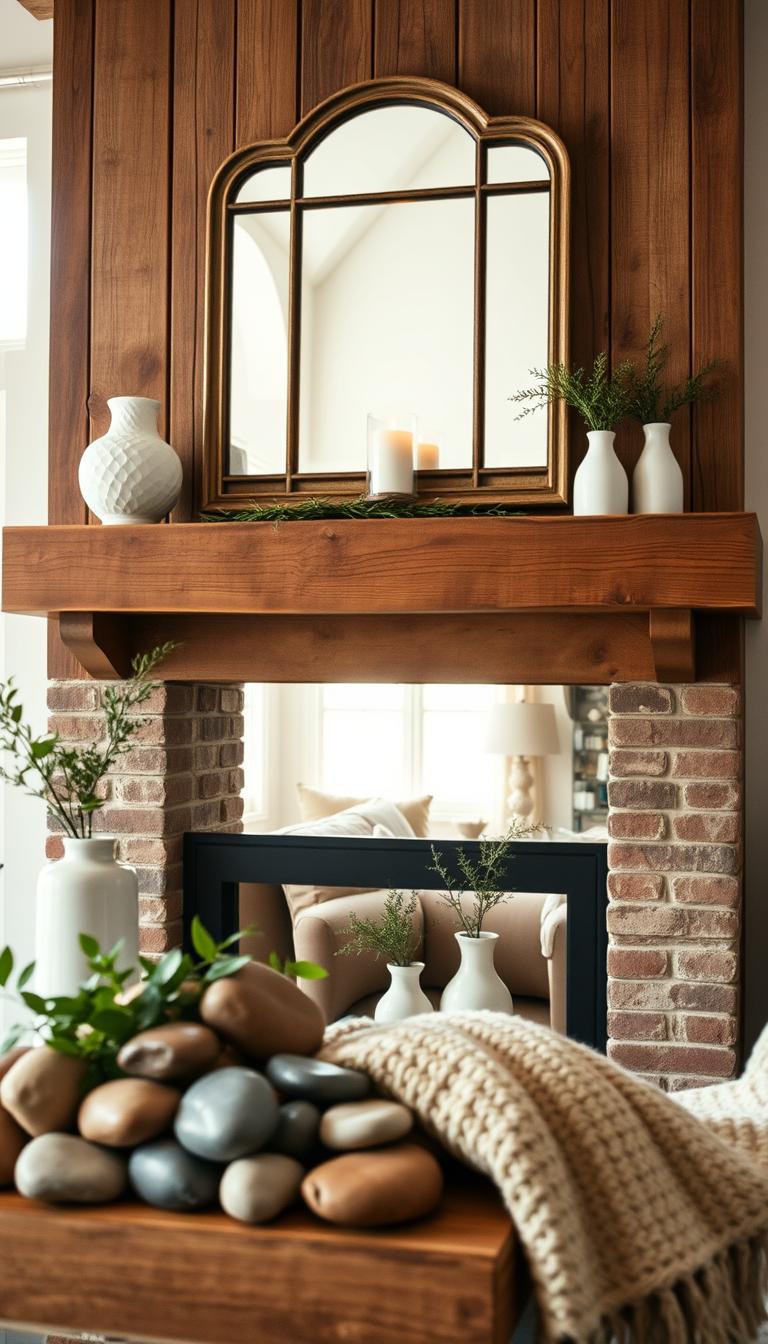
Style with restraint. One leaning artwork, a branch in glass, and a small candle grouping is enough. A tidy screen serves families well—safety with a little sparkle.
Proportion, height, and furniture placement
Match the mantel width to the firebox or the TV for calm symmetry. Set mantel height at seated eye level when possible. Arrange furniture so seating frames the hearth without blocking sightlines—your family will naturally gather there.
“We edited a mantel to five pieces and the room exhaled — less truly felt like more.”
| Element | Tip | Why it matters |
|---|---|---|
| Reclaimed beam | Keep patina; oil lightly | Preserves character and touch |
| Mantel styling | One art piece, subtle foliage | Feels collected, not staged |
| Screen | Choose attractive, safe design | Protection for family + visual finish |
Beyond the Living Room: Kitchens, Bedrooms, Porches, and Double‑Sided Designs
Bringing a flame into unexpected rooms makes daily life feel slower and better. I help clients place hearths where they change routines—breakfast nooks, screened porches, and snug bedrooms.
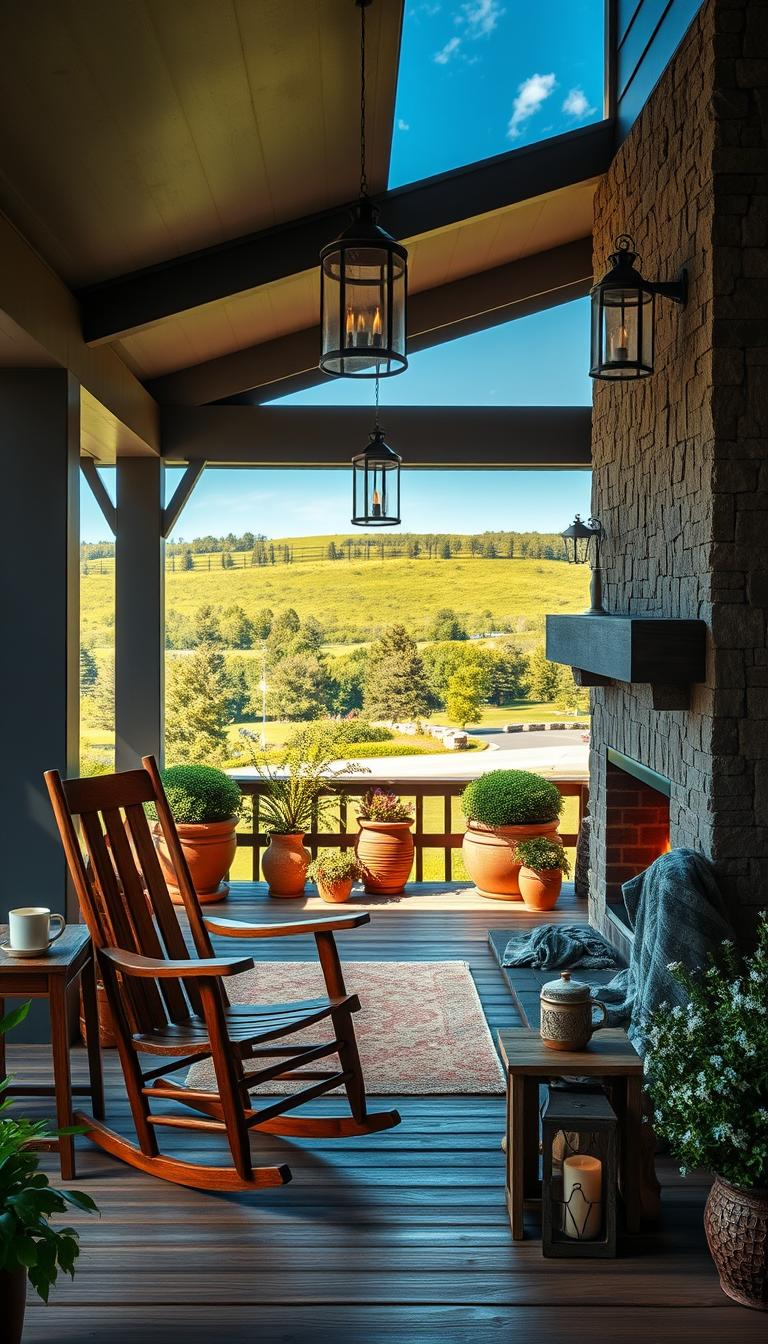
Screened‑in porches with white brick fireplaces turn shoulder seasons into favorites. Keep shiplap on the ceiling and a matching beam to tie the porch back to the house.
In the kitchen, a small hearth by a breakfast area adds ritual. A reclaimed wood mantel or a simple stone fireplace slab can warm the room without crowding work zones.
Bedrooms benefit from floor‑to‑ceiling brick and a herringbone firebox. Use quiet materials and low profiles so the space stays restful.
Double‑sided hearths to zone open plans
Double‑sided wood burners on a concrete plinth divide zones with one flame and two experiences. Think of them as a medieval hallhouse idea updated for a country or barn conversion.
- Materials that travel well: brick, stone, and sealed concrete resist weather outdoors.
- Ceiling and beam cues: carry interior finishes to porches for cohesion.
- Safety: respect clearances and add screens—practical and pretty.
“One hearth can give a house many quiet places to gather.”
Practical Warmth: Inserts, Stoves, Safety Screens, and Finishes
You can keep the room’s character while dramatically improving how much heat your hearth actually gives. Small interventions—an insert, a stove, or a fitted screen—make a big difference in comfort and safety.
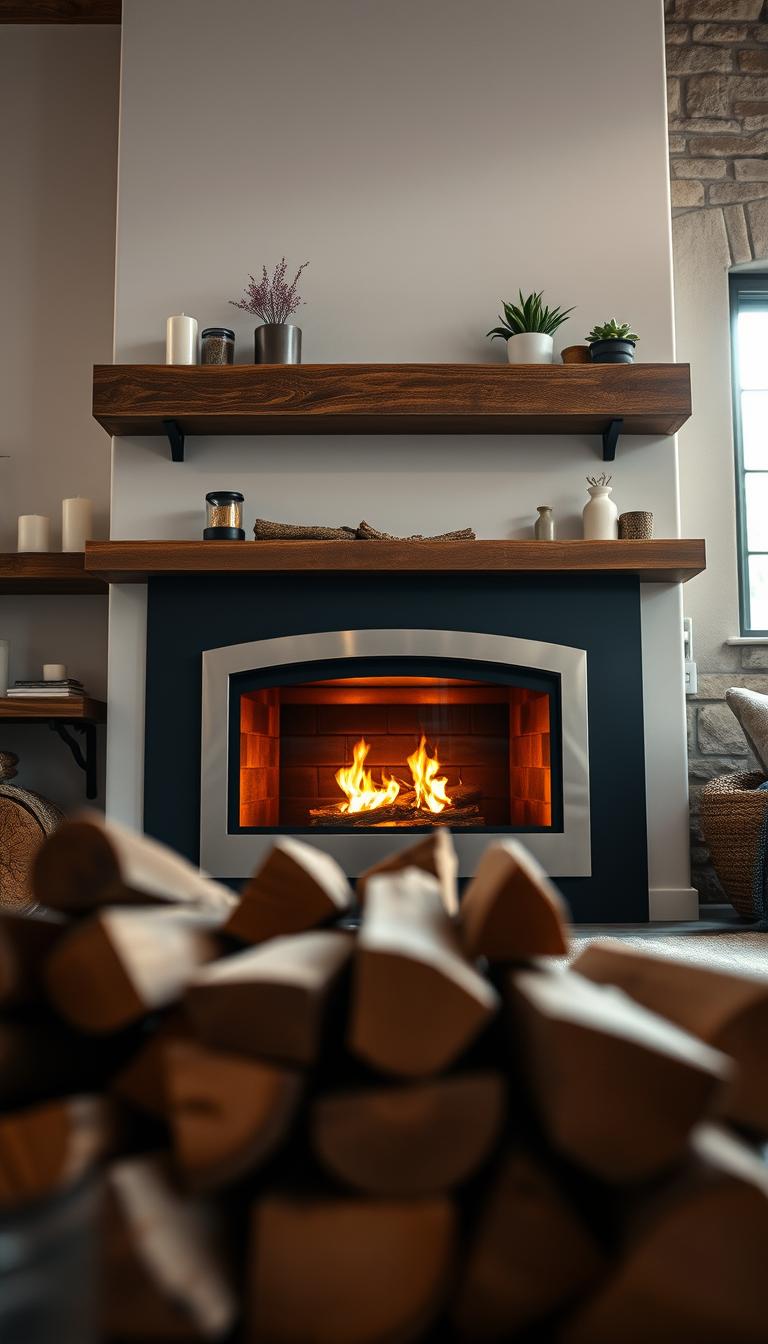
Adding a stove inside an existing opening
Placing a stove in an old fireplace burns wood far more efficiently and boosts usable heat. Drafty chimneys get a performance upgrade without losing the surround’s charm.
Choosing screens, hearth tiles, and heat‑safe paints
Well‑fitted screens protect families and look intentional—artisan metalwork reads like jewelry for the room. Refresh the hearth with durable tile; reclaimed tile adds personality and cleans easily.
When painting masonry, use heat‑resistant latex on external walls only. Never paint inside the firebox.
- Concrete plinths give stability and clean lines under stoves or double‑sided burners.
- Schedule annual chimney sweeps, gasket checks, and safe ash handling.
- Mind clearance zones for mantels, walls, and the floor—small moves, big safety gains.
“Warmth, light, and that quiet crackle do more for wellbeing than you might expect.”
Conclusion
When proportion, material, and light agree, the hearth becomes the room’s natural gathering place.
I hope this guide gave you clear inspiration to shape a focal point that fits your ceiling heights, floor runs, and interior flow. Pick a stone fireplace, a tidy brick face, or a warm timber mantel—let texture tell the story.
Choose color by testing swatches near windows and the hearth; soft neutrals and moody tones both work when they respect the wall planes and daylight in your living room.
Remember safety and comfort: add inserts, screens, and heat‑safe finishes so beauty lasts. Let mantels age—patina is where real charm lives.
Next step: pick the material that moves you and sketch a simple plan. Thanks for inviting me into your home design journey—may your room feel warmer for it.