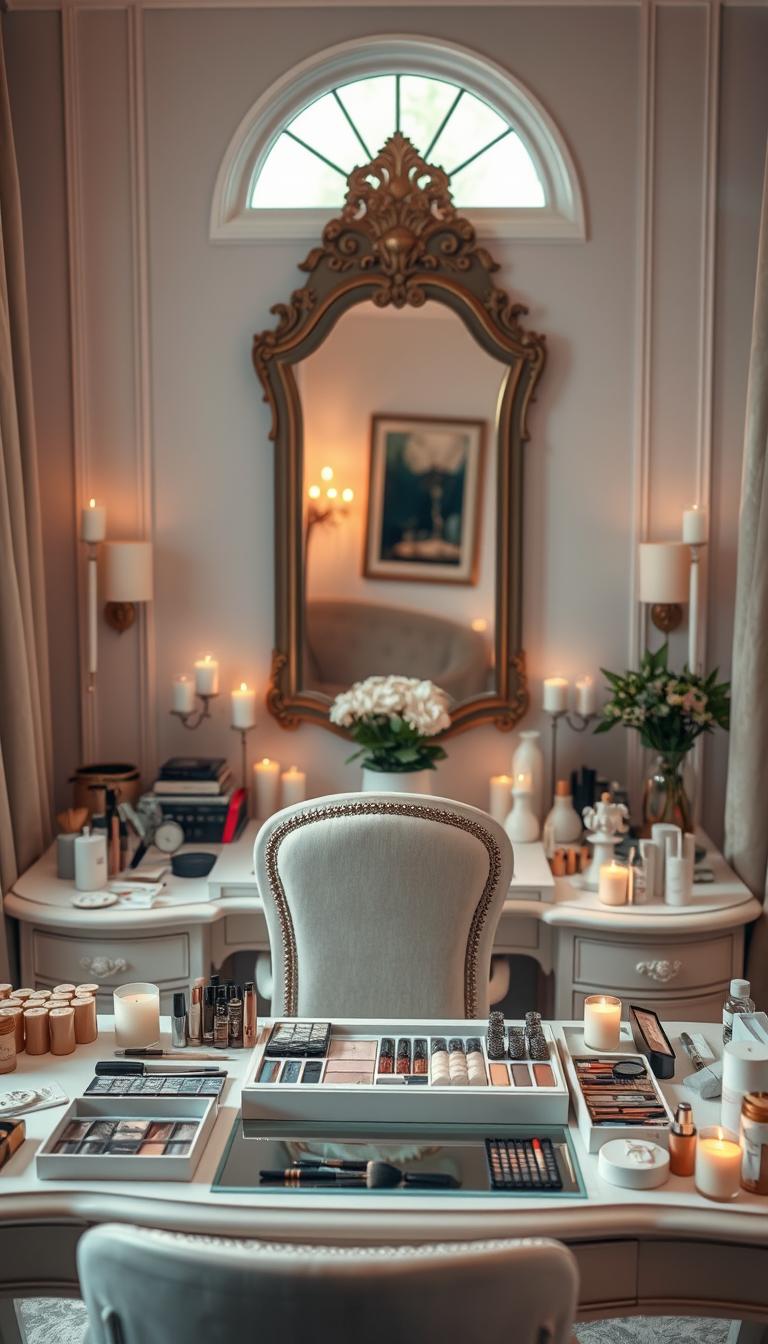
Ever wondered if a tiny corner in your home can feel like a calm, luxe sanctuary?
I’ve seen functional spaces fit into as little as 3×3 feet, and I’ve planned vanities that need 4–6 feet of wall and 2–3 feet of depth. Whether you’re in a studio apartment or a house, smart planning makes the difference.
I start by asking about your habits: how much time you spend getting ready, when daylight hits your room, and which products you actually reach for. Those answers guide storage, seating, and lighting choices that support your daily flow.
Expect practical, evidence-backed tips—think 4000K LED task lights for true color—blended with cozy touches that spark joy. No giant budget required; we build the space in sensible layers so the room becomes calming, efficient, and stylish.
Key Takeaways
- Small spaces can work hard when planned around daily routines.
- Prioritize lighting and right-sized furniture for real-life use.
- Smart storage cuts visual clutter and boosts serenity.
- Evidence-backed choices (4000K LEDs) help accurate color and calm.
- Layer improvements over time—style grows with function.
Start Here: Design a Peaceful, High-Function Space You’ll Use Every Day
Map your routine first. List every step you take each morning and evening—skincare, base, eyes, hair tools—and map those steps to three zones: a seated task area, standing storage, and a well-lit mirror line.
I ask clients to match zones to habits. When items live where they’re used, setup time falls and visual clutter drops 30–40%. That’s real time back in your day.
- Start with your rhythm: weekday vs. weekend routines reveal what to prioritize.
- Define a calm place to sit with a supportive chair and clear sightlines—less distraction, more focus.
- Keep everyday products within arm’s reach; stash rarely used items higher or farther away.
- Choose a soothing palette and soft textures so the place feels restful and true to your style.
- Map zones on paper before you buy—where your face meets the mirror and where your hands land next.
- Build a 90-second reset ritual each night so the next morning feels effortless, not like work.
| Routine Step | Best Zone | Storage Tip |
|---|---|---|
| Skincare | Standing storage near sink | Clear trays on open shelf |
| Base (foundation, concealer) | Seated task area at mirror | Drawer dividers for daily products |
| Eyes & lashes | Well-lit mirror line | Small containers at eye level |
| Hair tools | Designated hook or shelf | Heat-resistant mat and cord wrap |
Plan Before You Buy: Measure, Budget, and Map Your Routine
Start by measuring what you actually have—walls, walkways, and outlets tell the truth about what will fit. Pull a tape and sketch wall spans, ceiling height, outlet distances, and the path you walk each day. Those numbers prevent buying a table or desk that crowds your knees or blocks a door.
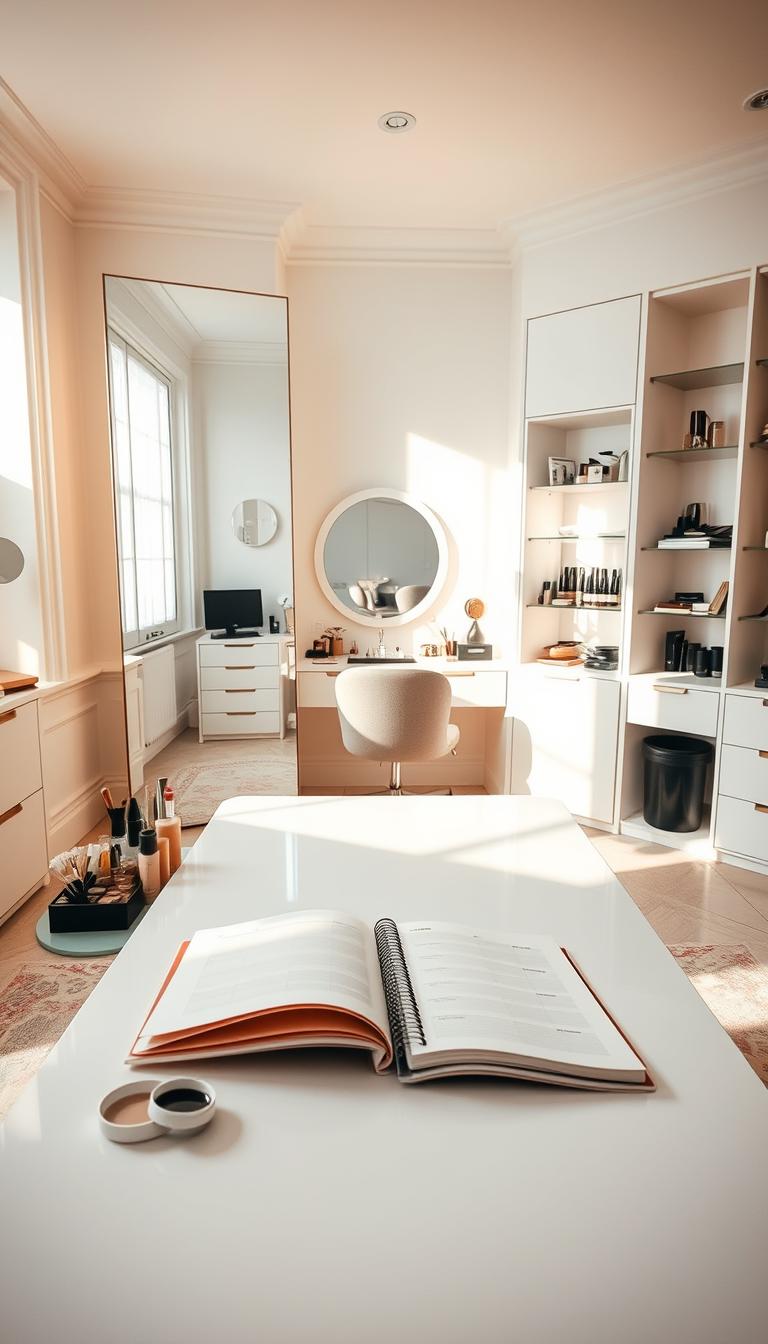
Measure your room, wall widths, outlets, window light, and traffic lines
Stand at your window at your usual get-ready time and note how long daylight helps you. Mark walkway clearances so no one trips when you sit or stand. Minimum footprint is 3×3 feet; a 2–3 foot depth keeps the floor clear and legs comfortable.
Set a realistic budget: DIY under $500, mid-range, and custom options
Budget in phases. Under $500 covers DIY lights and a solid surface. $500–$1,500 brings mid-range vanities, good lighting, and storage. $1,500+ gets custom built-ins and pro lighting placed exactly where you need them.
Match storage, lighting, and seating to your daily habits
Decide seat height and knee clearance so your desk or vanity fits your posture. Calibrate storage to your products—shallow, wide drawers for palettes; vertical cubbies for bottles and brushes. Write a simple zone list: face/mirror line, tools drawer, skincare station, and hair tool cubby. Little planning saves time and makes the space work.
Smart Layouts for Any Home: Bedroom Corners, Closets, and Compact Rooms
Smart layouts turn awkward nooks into useful, beautiful places you’ll use every day. I design with light, traffic, and function in mind. That simple trio solves most layout headaches.
In a bedroom, place a desk or dressing table perpendicular to the window. This catches soft daylight across the face without glare. Use a compact chair that tucks fully under the table to keep the floor clear.

Closet conversions that feel custom
An L-shaped vanity makes corners work harder in a walk-in closet. Add outlets at counter height and a vent or small fan so heat tools don’t trap warmth. I recommend slim shelving for vertical storage and a narrow mirror on the inner wall.
Small-space fixes that free the floor
Wall-mounted floating units free visual weight and expand walking room. Pair one with a fold-down mirror so the surface disappears when you need space. Reflective finishes and a well-placed mirror borrow light on darker days.
- Apartment-friendly: portable tables, removable hooks, and clamp lights for renters.
- Keep sightlines clear—avoid seating in a door swing or bathroom path.
- Use vertical nooks for slim organizers so essentials stay within reach.
- Add a small rug to define the zone and soften sound underfoot.
| Location | Best fit | Key tip |
|---|---|---|
| Bedroom | Desk/table by window | Angle to catch daylight |
| Closet | L-shaped vanity | Outlets + ventilation |
| Compact room | Floating unit | Fold-down mirror |
Lighting and Mirrors that Flatter: From Natural Daylight to LED Task Lights
Start with light — it’s the single biggest upgrade for clarity and comfort. I favor layered lighting: bright task, soft ambient, and small accents. This combo removes harsh shadows and makes colors read true.
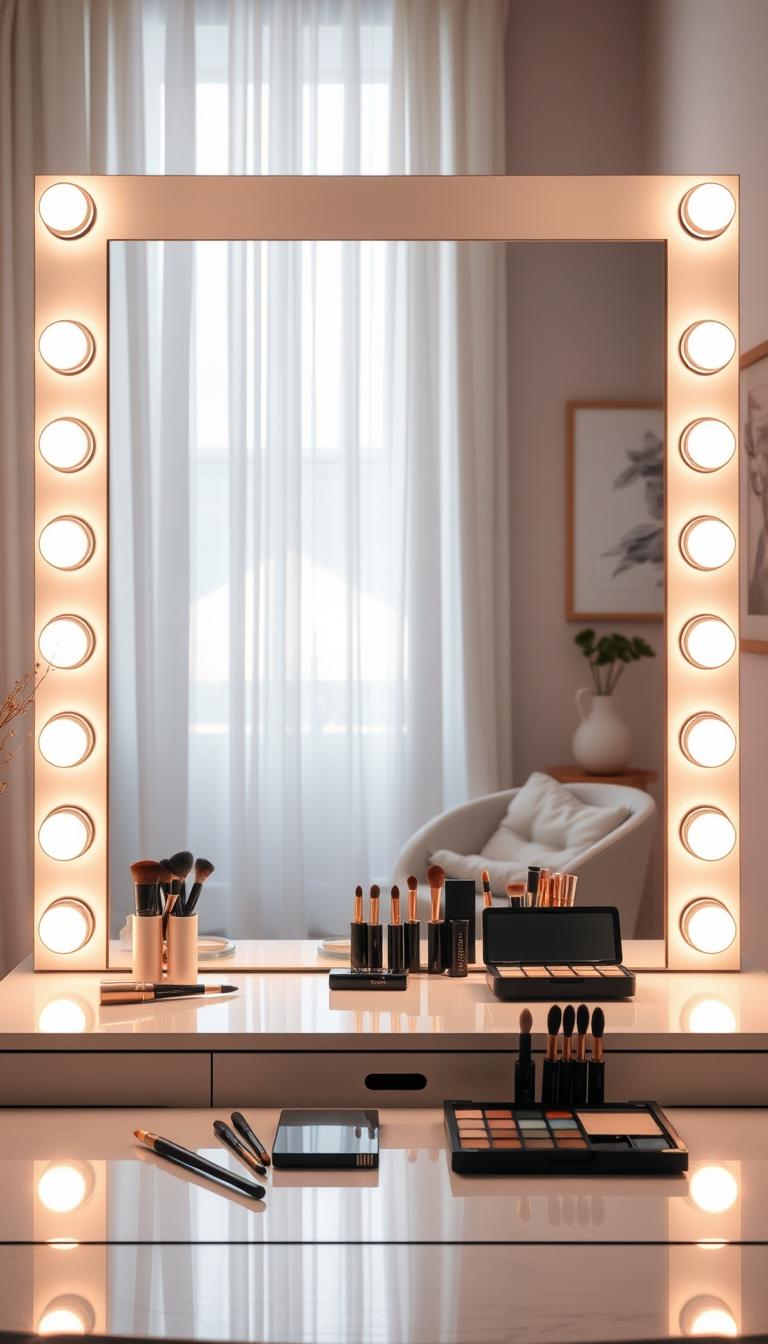
Layer task, ambient, and accent lighting to eliminate shadows
Aim task lighting at face height on both sides of the mirror. That balances illumination and reduces shadowed lines when you work.
Choose 4000K LED for accurate color—it mimics neutral daylight without skewing warm or cool. LEDs also run cool, sip far less energy, and last much longer than incandescent bulbs.
Mirror essentials: height, size, magnification, and side lights
Set the mirror center at seated eye level so your spine and shoulders stay relaxed. Add a small magnifying mirror for detail work, then step back to check the whole face.
- I layer bright face-level task light, soft room light, and a dimmable accent for mood.
- Diffuse glare with frosted glass covers or fabric shades.
- Use a sheer on the window to borrow soft daylight and keep the table surface shadow-free.
| Feature | Placement | Benefit |
|---|---|---|
| Task lights (4000K LED) | Both sides of mirror, face height | Even color, minimal shadows |
| Ambient light | Ceiling or wall wash | Gentle fill, less contrast |
| Magnifying mirror | Side or clamp on table | Precision work—brows and liner |
| Diffusers | Frosted glass or fabric | Comfort, reduced glare |
Clutter-Free Beauty: Storage, Drawers, and Clear Containers that Keep Everything Visible
Visible storage beats buried drawers every time—if you can see it, you’ll use it. I build systems that map to real habits so products aren’t forgotten or wasted. A little order saves time and money.
Start with drawers: add dividers so pencils, liners, and small tools stay put. Shallow sections are perfect for palettes and compacts.
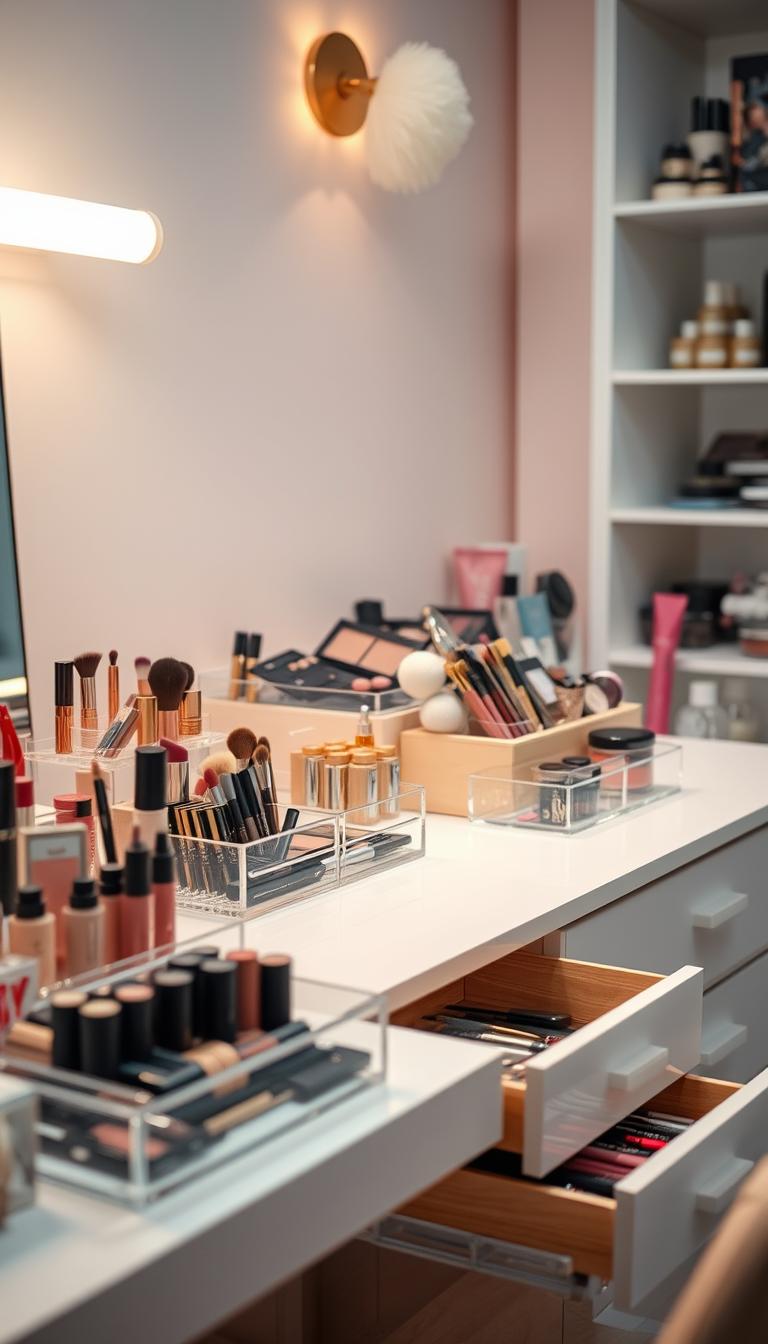
Tools that free your table and your head
Vertical shelving and pegboards make walls functional without stealing floor space. Magnetic strips keep metal tools easy to grab.
Make contents visible
Clear acrylic trays and glass jars show what you own. When items are visible, you use them before they expire. Label purchase dates and rotate seasonally—tints in summer, richer textures in winter.
“I sort by use-frequency: top drawers for daily products, lower drawers and labeled boxes for backstock.”
- Keep brushes upright in cups with breathable fillers to protect bristles.
- Corral hair tools in a heat-safe bin with wrapped cords so they don’t sprawl across your table.
- Store duplicates in labeled boxes away from the prime zone to keep visible space calm.
- Build a 90-second reset: cap pencils, toss wipes, return items to their home.
For more organizer ideas, check this guide to the best organizers.
Makeup Rooms Style Playbook: From Hollywood Glam to Minimal Scandinavian Calm
A few deliberate choices will change how you feel at the mirror every morning. I pair practical moves with a clear visual plan so style reads as calm, not cluttered.
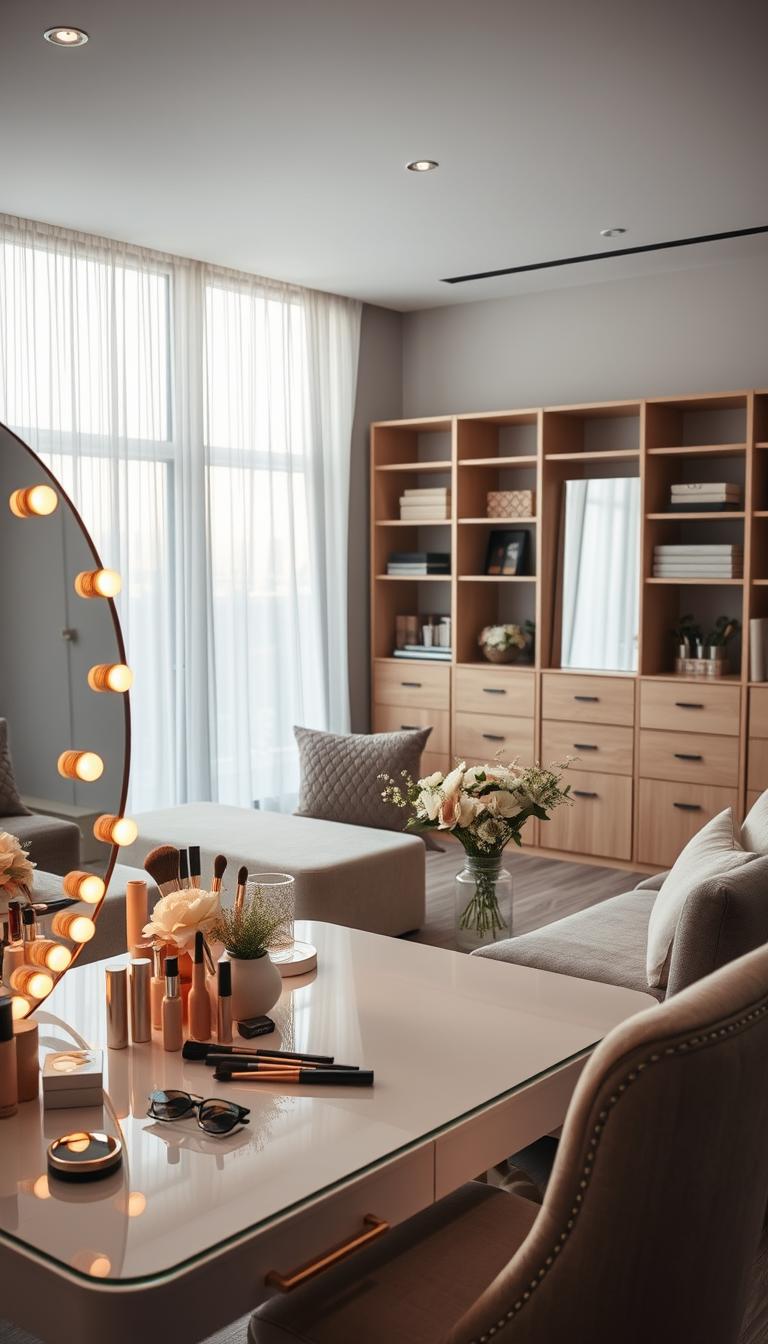
Glam details that sparkle
Hollywood glow: a bulb-lit vanity, mirrored trays, and subtle gold accents create warmth without glare.
Velvet seating lifts the chair into a focal piece. Mix metals sparingly so gold still reads special.
Minimal Scandinavian calm
Lean on white and light wood with clean lines. Brass hardware adds gentle warmth so the palette never feels cold.
Keep furniture simple and surfaces almost empty—one small tray and a single vase is enough.
Boho, rustic, and industrial mixes
Natural wood, rattan storage, and Edison bulbs add texture and quiet the mind. Reclaimed shelving gives a lived-in, honest edge.
Luxe or moody finishes
For drama, balance deep wall color with a luminous mirror and select gold highlights. Marble or stone surfaces anchor the look and add lasting polish.
- I mix furniture finishes within one palette so the space feels curated, not matchy-matchy.
- Velvet on a chair invites you to linger; keep surface things minimal so your eyes rest.
- Use color with intent: one dominant, one supporting, one accent for lasting cohesion.
- If the bedroom connects, echo one material or metal to tie both spaces together.
Budget-Friendly DIY and IKEA Hacks: High Style Without the High Price
A few smart IKEA hacks and thrifted finds will give you high style on a shoestring. I lean on small, visible upgrades that change how a space feels—without custom costs.

Under $100: quick wins that look custom
Clear boxes, adhesive hooks, and marble contact paper are my go-tos. They make a surface read edited, not crowded.
- Clear boxes keep essentials visible and tidy.
- DIY dividers from foam board fit drawers or a simple table top.
- Repurpose glass candle jars for brushes and lip items.
$100–$300: simple builds that feel built-in
The IKEA MALM dresser plus a desktop becomes a roomy vanity. Add floating shelving and LED strip lights for a clean, built-in vibe.
- A compact desk under a window is a perfect place to sit.
- Tiered trays lift everyday products and flowers off the surface for fast tidy-ups.
$300–$500: small investment, big polish
Stock-cabinet bases make sturdy dressing table options. Finish with an accent wall, extra outlets, and a mirror you already own for luxe results.
“I once used a Vernay console under a window, wrapped shelves in marble-look film, and paired a velvet dupe chair—total boutique feel for very little.”
- Add stick-on pucks, dimmable LED strips, or clamp lights instead of rewiring.
- Protect the floor with a washable rug tile so beauty meets practical care.
- Snap a before-and-after image; it keeps momentum when you’re doing one affordable project at a time.
Conclusion
Even a compact wall or narrow nook can become a daily sanctuary. I’ve seen tiny plans save people time and lift their mornings.
Start with the essentials: honest , lighting, a right-sized vanity, and a supportive chair. A minimum 3×3-foot footprint works; 4–6 feet of wall and 2–3 feet depth is even more comfortable.
Choose 4000K LEDs and side lights so color reads true. LEDs beat incandescent on efficiency, heat, and lifespan.
Use clear containers, labels, and seasonal rotation to cut clutter. Keep the floor and surfaces clear with smart shelving and a two-minute reset—tomorrow-you will thank you.
Make it kind to your nervous system: edit often, spotlight a few joyful things—flowers, a scent, or a small framed photo—and tweak one thing this week.