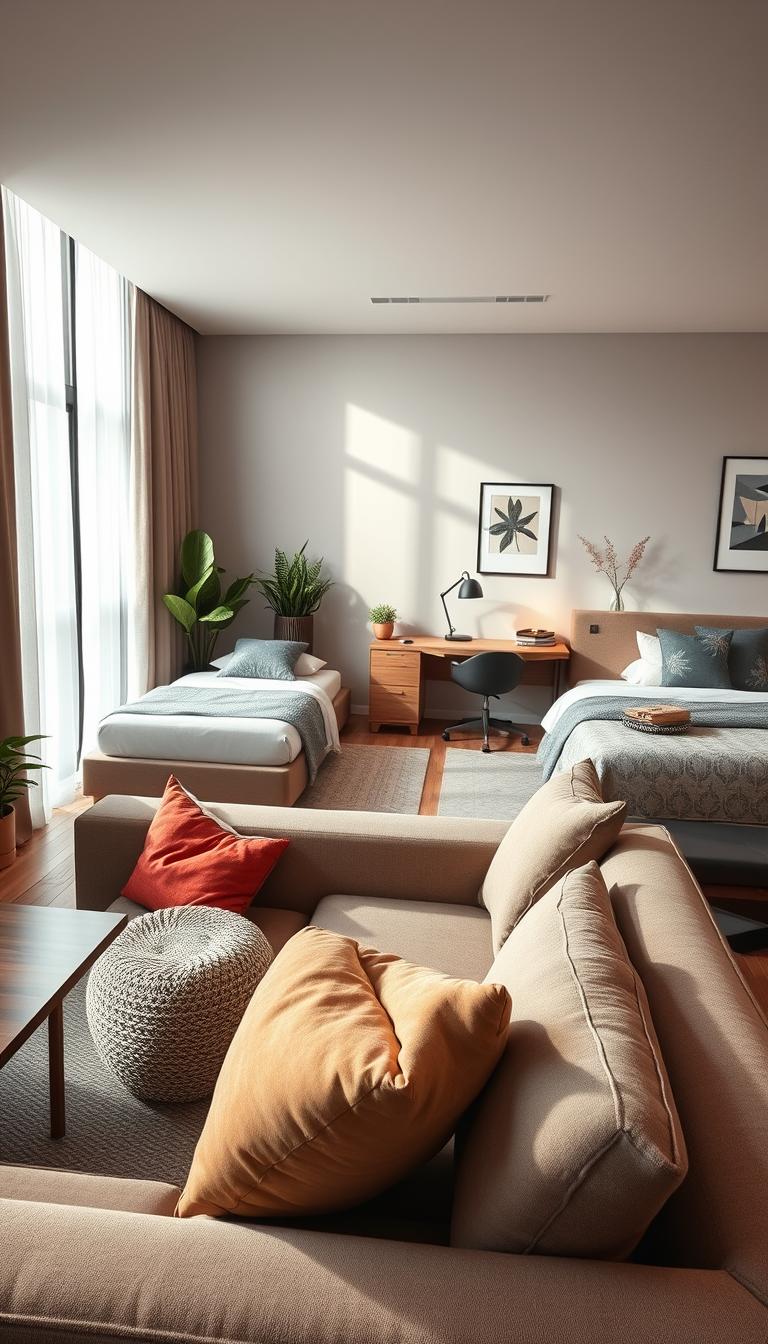
Can one small studio feel both restful and truly functional without a big renovation? I ask that because I’ve helped clients turn tight layouts into calm, usable homes.
I’ll show you how a balanced living room bedroom setup looks and feels — and why clear zones matter. Think airy dividers like IKEA’s Kallax, sheer ceiling-track curtains, or a folding rattan screen to let light flow while separating areas.
We’ll explore layouts, renter-friendly moves, and smart storage that keep clutter down. Loft beds and low-profile sofas free floor area so the main space reads as a proper living zone.
Expect practical design ideas—rugs to define areas, vertical storage to tame the mess, and color choices that nudge calm. I’ll weave in wellness tips that make your place feel larger and more peaceful, fast.
Key Takeaways
- Use lightweight dividers and sheer curtains to define zones without blocking light.
- Choose multifunctional furniture to maximize every inch.
- Rugs and lighting create distinct areas within a single space.
- Vertical storage and one-tall-unit strategies reduce visual clutter.
- Color palettes and low-profile pieces boost calm and perceived size.
Start Here: What Makes a Harmonious Living Room Bedroom Combo
Think of your studio as a set of small scenes — each needs its own stage and light. I often begin by naming zones: seating, sleeping, and eating. That clarity guides every choice.
Soft separation keeps the space airy. Use ceiling-track sheers, open bookcases, or a half-height wall so natural light moves through the plan.
- Anchor the layout on one primary wall and natural light to keep sightlines calm.
- Let rugs, shelves, and curtain panels define an intimate bed nook without closing it off.
- Choose one focal area for socializing; let the sleeping area recede with tone-on-tone textiles.
- Place one tall storage unit rather than many small pieces to cut visual clutter along walls.
| Divider | Light | Storage |
|---|---|---|
| Sheer ceiling curtains | High | Low |
| Open bookcase | High | High |
| Half-height glass wall | Very High | Medium |
Measure your area before you buy. A smart layout makes daily life easier and sleeping feel truly restorative.
Define Zones Without Closing Off Space
You can carve distinct zones without building walls; smart dividers do the heavy lifting.
I often start with ceiling-track sheers. They glide open by day and cocoon the sleeping area at night. That way, windows stay useful and privacy arrives when you want it.
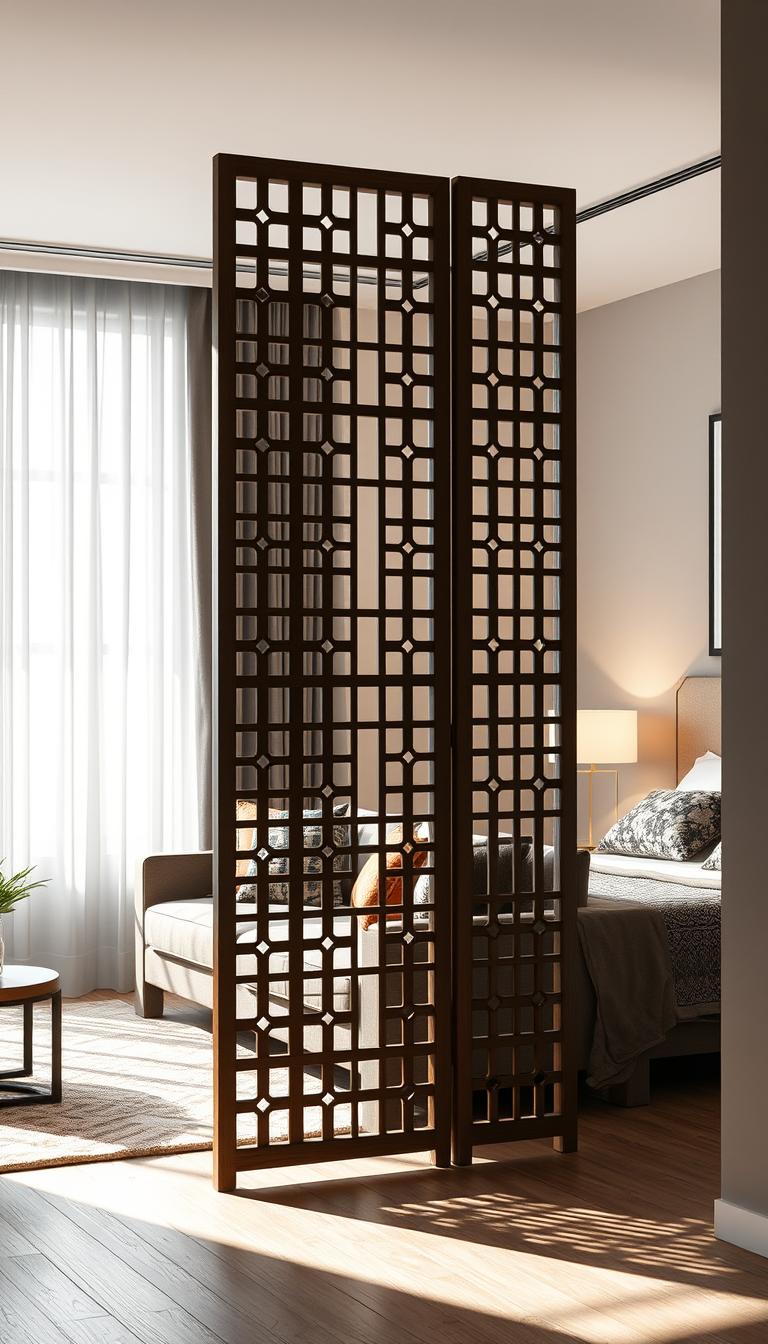
Airy curtains and folding screens
Ceiling-mounted sheer curtains preserve daylight when windows sit to one side. They pull closed for sleep and slide wide for company.
Folding rattan screens — like Urban Outfitters’ Ria — filter light and fold flat when you want the space to breathe.
Open storage dividers and rugs
Open bookcases such as IKEA Kallax double as storage and a semi-transparent divider. You get sightlines and useful cubes for books and baskets.
Area rugs anchor a seating area or bed nook without adding bulk. A rug defines the sleeping area visually so the sofa reads as its own zone.
Glass, half-walls, and placement
Glass partitions with curtains give privacy at night while keeping light all day. Half-height walls separate zones without feeling boxed in.
Practical tips: angle the sofa away from the bed, try a mid-room headboard for a low divider, and keep 30–36″ paths so the space feels connected yet distinct.
| Divider Type | Light | Privacy | Storage |
|---|---|---|---|
| Ceiling sheers | Very High | Moderate (when closed) | Low |
| Rattan folding screen | High (filtered) | Low–Moderate | None |
| Open bookcase (Kallax) | High | Low–Moderate | High |
| Glass / half-height wall | Very High | High (with curtains) | Medium |
- Keep materials consistent — oak, black steel, and linen tie pieces into one style.
- In a studio or small apartment, test placements with painter’s tape before buying a large divider.
Smart Layouts That Make One Room Feel Like Two
Placement and scale do the heavy lifting when you want one space to behave like two. A clear plan saves you from buying furniture that fights the floor plan.
Bed and sofa side-by-side in rectangular rooms
In long rectangles, I set the bed and sofa along the same wall to create two lanes—one for sleep, one for socializing. This keeps sightlines open and traffic flowing.
Opposite walls for a dynamic flow
Facing walls can feel deliberate and dynamic. Put the sofa on one side and the bed on the other so the seating area reads as the focal zone.
Seating behind the bed in narrow studios
In tight studio apartment layouts I often place two chairs and a small table behind the bed. It frees the center so you don’t walk straight into the mattress.
Angle key pieces for a more playful floor plan
Rotate a sofa or bed 10–15 degrees. That tiny shift breaks the “bowling-alley” feeling and adds personality without sacrificing function.
Use niches, arches, or L-shaped rooms to tuck in the bed
Use an arch or niche to hide the bed. A curtain at the arch gives near-bedroom privacy in an apartment. Float a rug under the sofa—let the front legs sit on it—to define the seating area.
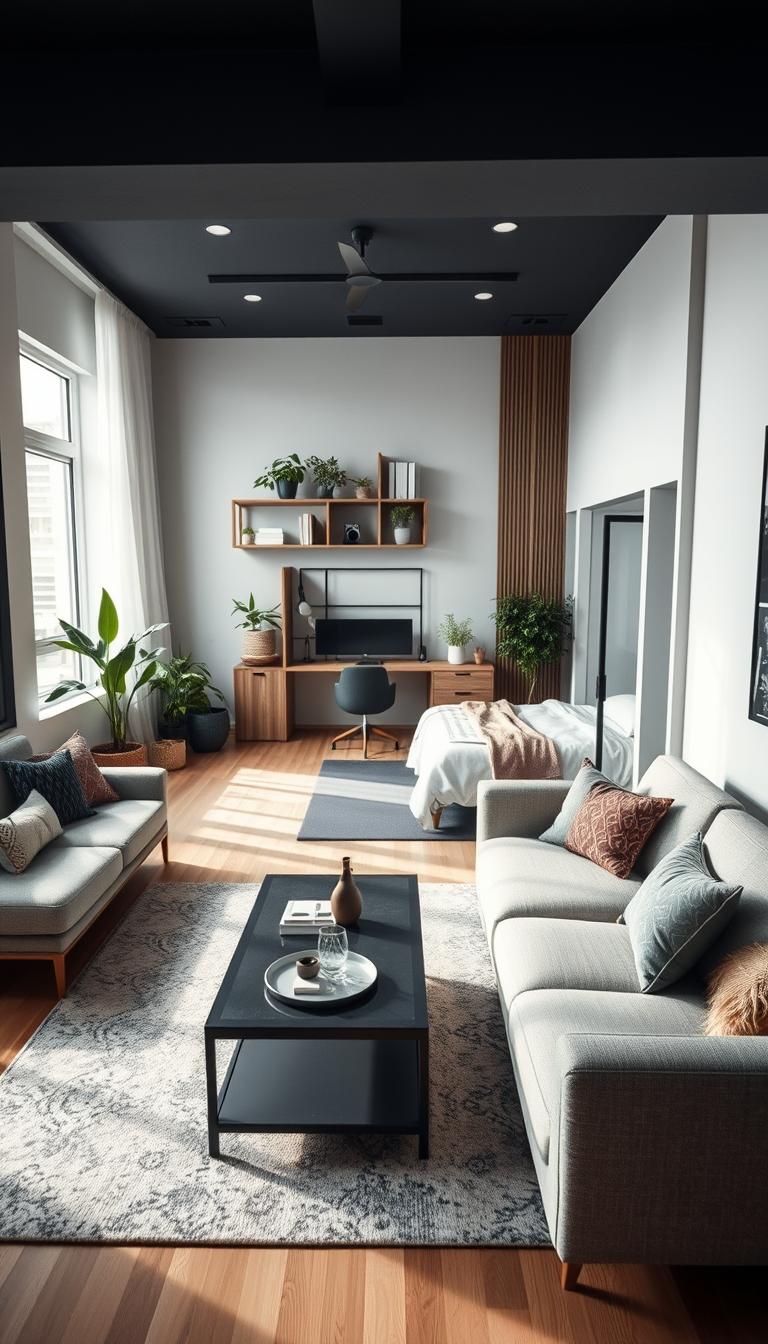
Quick rules I use: keep 18″ between sofa and coffee table and preserve a 36″ path. Sketch two layouts and measure—then pick the plan you can actually live in.
Multifunctional Furniture That Works Overtime
Choose furniture that earns its keep—day and night—so your small space adapts without drama. I favor pieces that fold, lift, or hide, because they let you enjoy one open plan that still does separate jobs.
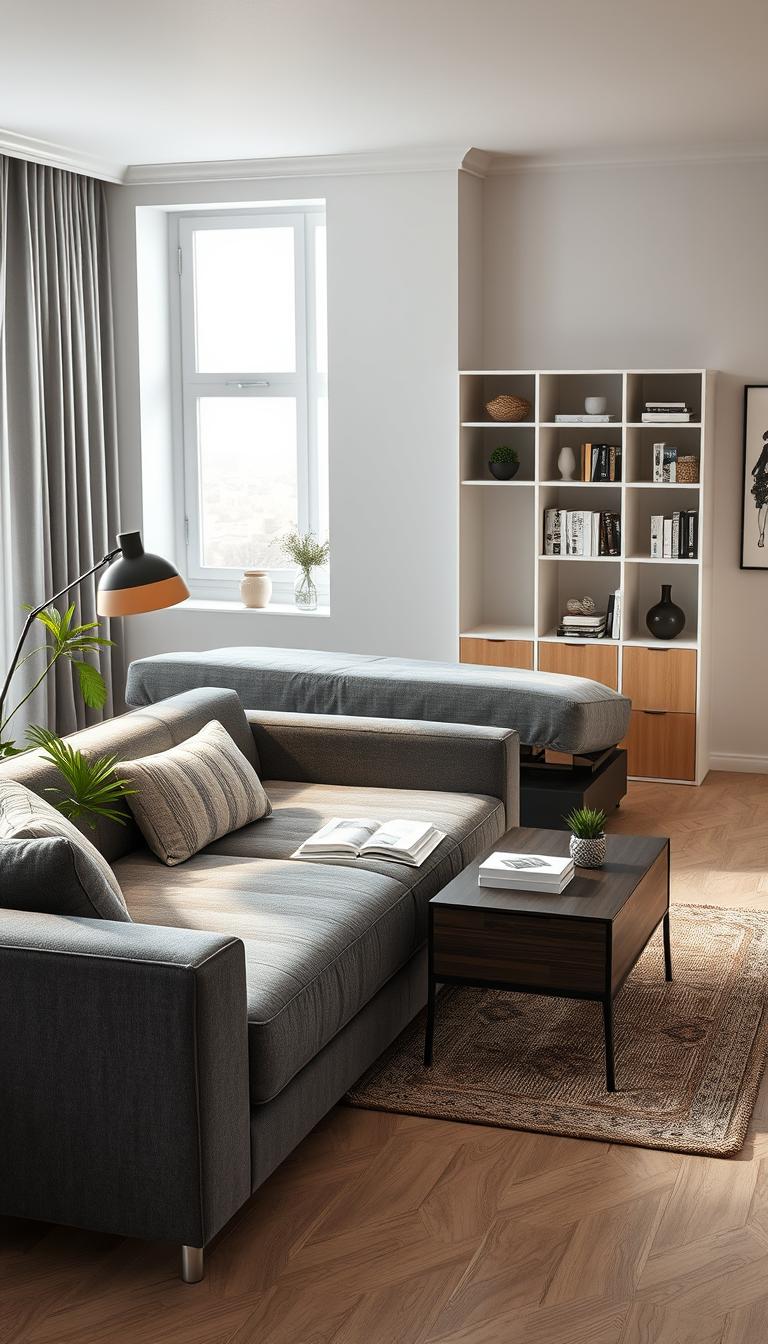
Sofa beds and daybeds keep the seating zone feeling like seating. A quality sofa bed converts quickly and looks tidy by day. IKEA examples like the TARVA-style sofa bed work well when paired with unified storage units.
Shelves that tuck a bed away
Murphy beds and chest-style Murphy units reclaim floor area by folding up. The chest version reads like a dresser when closed—handy if you want the bed out of sight.
Lift-top tables and multi-use ottomans
Convertible coffee tables become a dining or work surface and hide clutter beneath a lift-top. Storage ottomans double as nightstands and extra seats. These pieces add function without extra floor furniture.
| Piece | Main Function | Hidden Benefit |
|---|---|---|
| Sofa bed | Seating & sleep | Quick conversion |
| Murphy chest | Sleep tucked away | Looks like a dresser |
| Lift-top coffee table | Surface & work | Under top storage |
| Storage ottoman | Seat & bedside | Linen storage |
- Stick to a tight material palette—wood, linen, matte black metal—for cohesion.
- Measure the full open footprint so doors and drawers stay usable.
- I keep one tray with bedtime essentials that tucks away when the bed folds up.
Storage Strategies to Keep a Small Living Space Tidy
A neat plan for where things live changes how the whole apartment feels and functions. I’ve seen clients sleep better when clutter lives in a few smart places. Start with the largest voids—under the bed and up high.
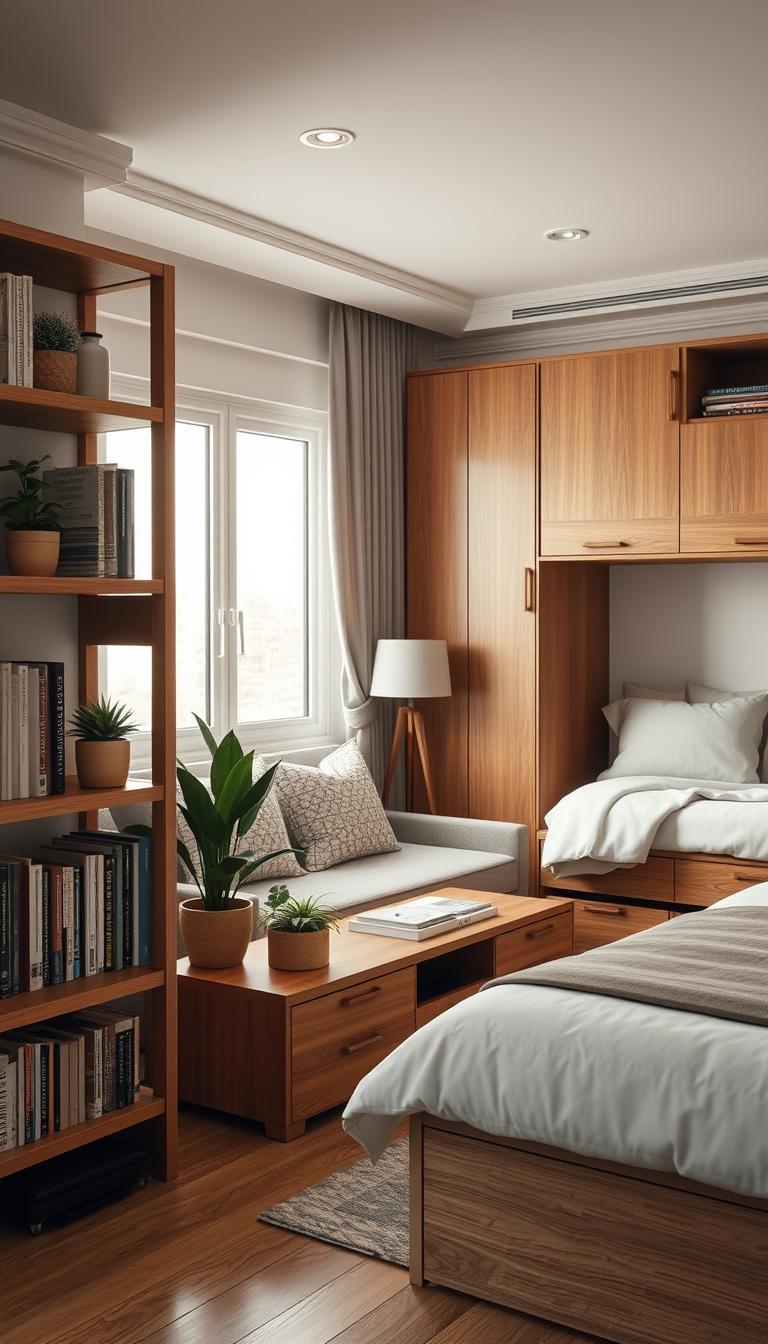
Under-bed solutions and lift-up frames
Go under the bed: drawers or lift-up frames swallow linens, duvets, and seasonal clothing. If you use a sofa bed, keep a labeled bin for bedding so conversion stays quick and tidy.
Tall systems vs. scattered pieces
One tall wardrobe or cabinet wall reads neater than many small cabinets. Your eye rests on a single plane, and the floor feels cleaner. Leave 2–3 inches of breathing room above tops for visual calm.
Use vertical real estate and rails
Add over-door and over-bed cabinetry—prime real estate most people ignore. Hooks, wall rails, and a sleek garment rack along a wall double as a soft divider and daily storage. Soft drawer organizers keep socks and cords from spilling across the area.
| Strategy | Best for | Use case |
|---|---|---|
| Under-bed drawers / lift-up | Bedding, seasonal | Maximizes floor area; hides bulky items |
| Tall cabinet wall | Clothes & gear | Creates tidy visual plane along a wall |
| Over-bed / over-door cabinets | Rarely used items | Uses vertical space; clears surfaces |
| Hooks & garment rack | Daily wear | Acts as divider and quick storage |
- Tip: Keep everyday items in the top third of storage; stash seasonal gear under the bed.
- Use clear, labeled bins so the living area feels effortless.
Color Palettes That Calm and Cohere
A soft, disciplined palette makes a small space feel calm and organized. I pick paints and textiles to guide the eye, so one apartment can read as several thoughtful areas without feeling busy.
Light neutrals to make the room feel larger
If you crave openness, start with warm whites and light beiges. They reflect daylight and make the area feel breathable.
Tip: use matte finishes to diffuse light if windows are limited.
Blue and gray for timeless serenity
Blue and gray calm visual noise. I’ve used mid-gray walls and soft blue bedding to quiet a compact sleeping nook while keeping the seating area airy.
High-contrast: light living area, darker sleeping nook
A lighter common area with a darker bed nook clarifies function immediately. Your brain reads the contrast as separate zones—no divider required.
Bold and cocooning: charcoal or black with wood textures
Want cozy? Charcoal or near-black walls plus warm wood add depth without feeling cave-like. Keep textiles lighter so the area still breathes.
Calm base with vibrant accents to define zones
Commit to a simple color scheme—grays and creams—and punctuate with pillows, art, or a rug. Match undertones across paint and fabric so the palette hums instead of clashes.
- Let bed textiles echo a tone from the sofa or rug to link zones.
- Test paint in morning and evening; light shifts a room feel fast.
Lighting Layers for Living, Lounging, and Sleeping
Light layered well makes each area feel intentional and easy to use, day or night. I start with a soft wash of ambient light so the whole room feels even and welcoming.
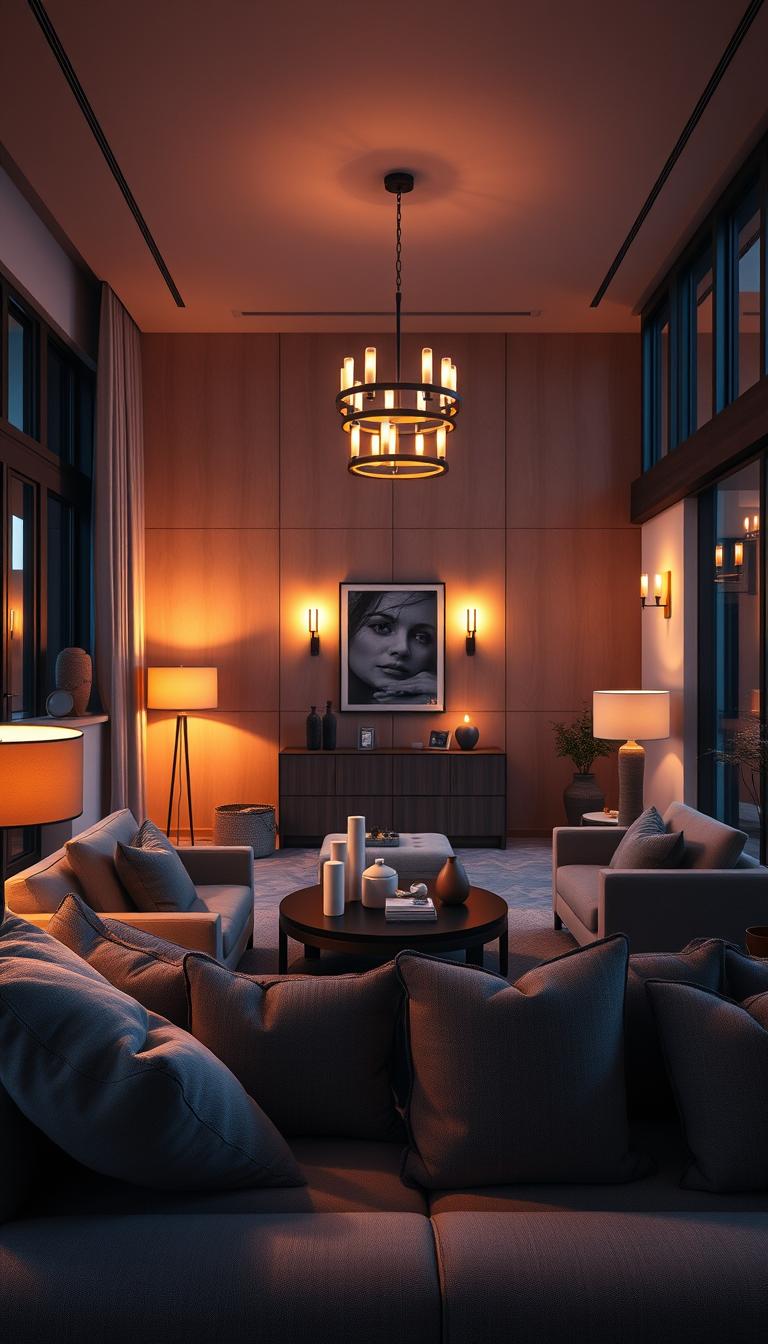
Ambient lighting to brighten the entire space
Ceiling fixtures or plug-in pendants give an even base glow. Put the living and sleeping zones on separate dimmers so evenings can unwind gradually.
Task lamps for reading nooks and desks
Add swing-arm lamps at the seating area and bedside. They save surface area and focus usable light for reading or work without flooding the entire area.
Accent lights to highlight art and focal points
Use small spotlights or LED strips to graze a textured wall or shelf. Accent lighting anchors a focal point and makes the design feel intentional.
Window treatments to maximize natural light
Floor-to-ceiling sheers lift height and spread daylight. Layer blackout panels behind them for deep sleep.
- Bounce light with a mirror opposite the window to expand brightness.
- Keep a warm-glow lamp on the coffee table for lounge mode.
- Choose 2700–3000K bulbs for cozy, circadian-friendly evenings.
- Avoid harsh downlights above the bed; indirect light feels restorative.
Textiles and Touch: Make the Room Feel Cozy, Not Cluttered
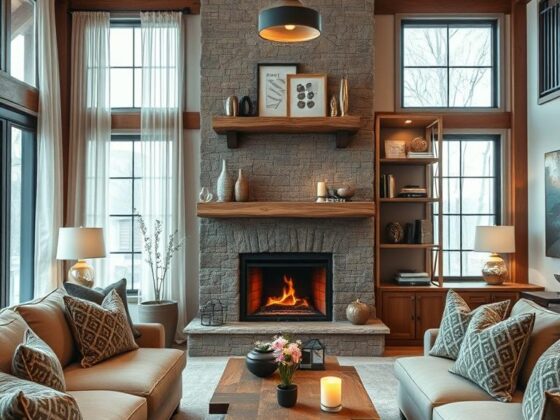
Textiles do heavy emotional lifting — they shape how a small apartment feels the moment you step in. Start with grounding pieces and add accents that echo across the plan. That approach keeps a space warm without visual excess.
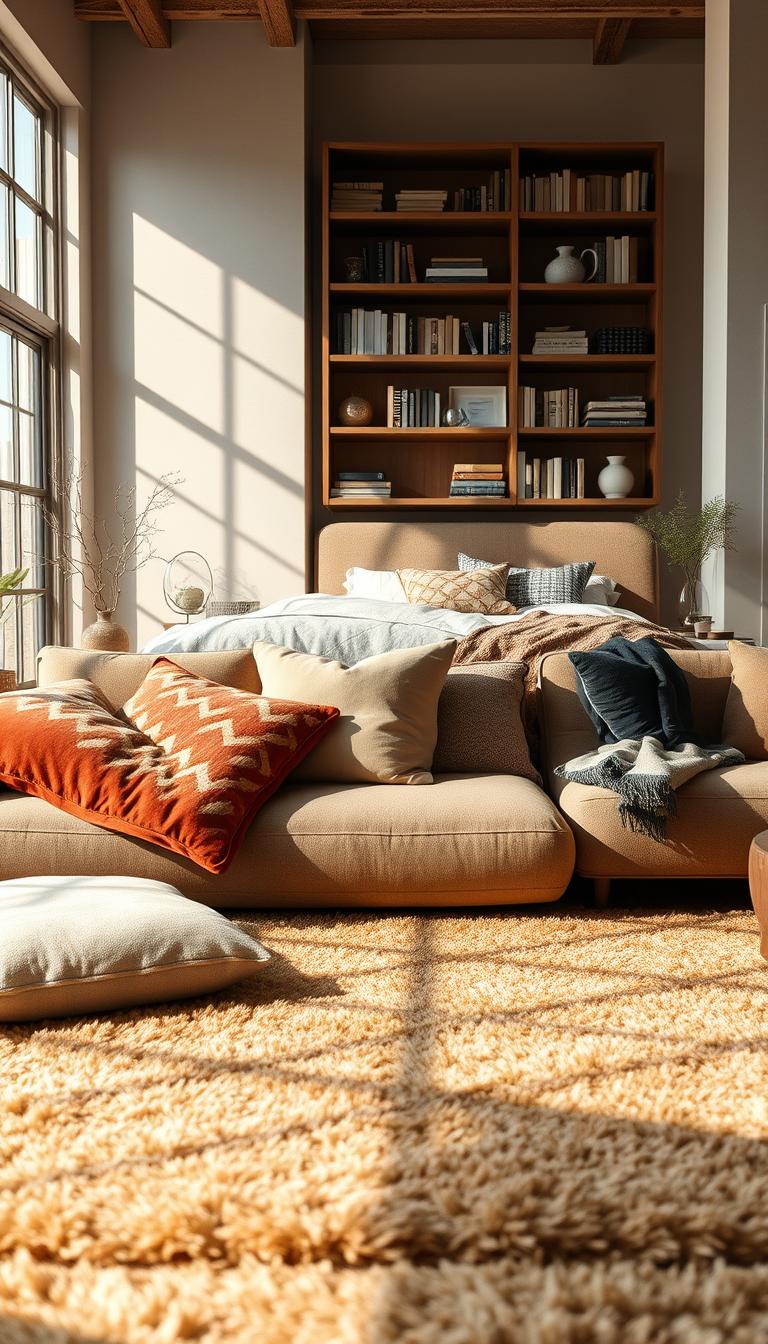
Layer rugs to ground seating and sleeping areas
Layer a large neutral rug first, then place a smaller patterned rug to mark the seating area. Align the smaller rug with the seating area edge so boundaries read clearly.
Add a soft runner beside the bed so mornings start with a cushioned step. Choose low-shed rugs in small spaces—cleaning stays easy and the area looks fresh.
Plush bedding, throws, and cushions for a cozy bed nook
Keep bedding tactile but tonal: linen sheets, a quilt, and a plush throw. Repeat one fabric across cushions and the bed to tie the zones together.
- Use a bench with a folded throw at the foot of the bed for a hotel-level finish.
- Limit patterns to two scales—one bold, one subtle—to calm the visual field.
- Stash extra throws in an ottoman for guests and quick warmth.
Textiles soften hard lines from casework and make the whole room feel lived-in and intentional. Personally, I prefer Scandinavian-style large rugs by the bed or under seating to anchor each area without fuss.
Go Vertical: Lofts, Shelving, and Tall Ceilings
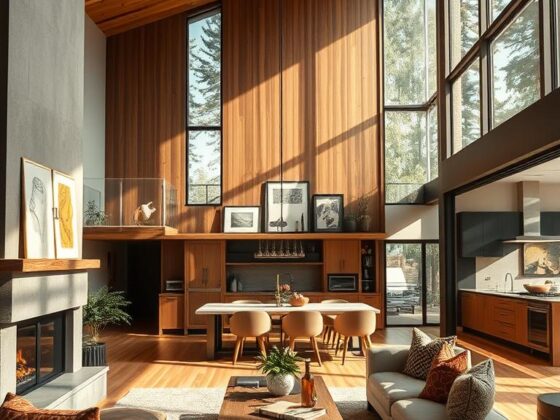
When ceilings rise, you can stack functions—sleep up top, live below—and the entire plan breathes. I’ve used lofts in Scandinavian-style studio apartments to carve a true living space beneath a raised bed.
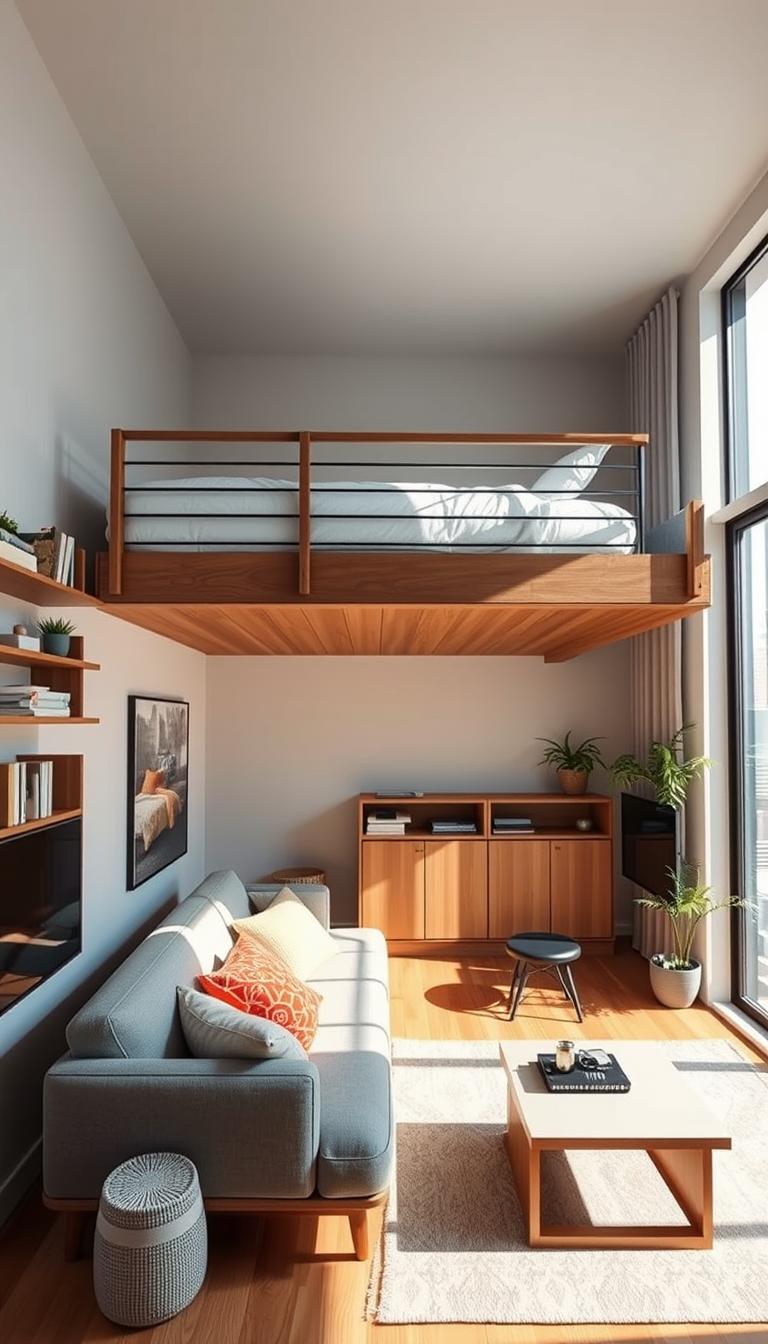
Loft beds that create usable space underneath
If your ceiling allows, a loft bed instantly frees floor area for a sofa, desk, or dining nook. Keep at least 33–36 inches of headroom above the mattress for comfort.
Choose a light wood or white frame so the structure feels airy. A slim stair with built-in storage gives you extra drawers on the way up.
Floating shelves and wall runs for display and storage
Mount long floating shelves high on the wall to hold books, plants, and art without stealing floor space. Run them around corners for a wraparound effect.
Tip: treat the underside of the loft like a ceiling—paint or wood slats warm the area below and make the space feel finished.
- Use wall-mounted sconces and clip lights under the loft to brighten the living zone.
- When a full loft isn’t possible, a raised platform with drawers still delivers storage and subtle separation.
Room Dividers That Do More Than Divide
A good divider does more than split a space — it creates function and mood. I’ve found that the right piece can give privacy at night and a sense of openness by day.
Sliding barn doors are my go-to when clients want quick privacy without building a wall. They glide closed for sleep and slide wide for hosting. Pick soft-close tracks so the daily rhythm stays quiet and calm.
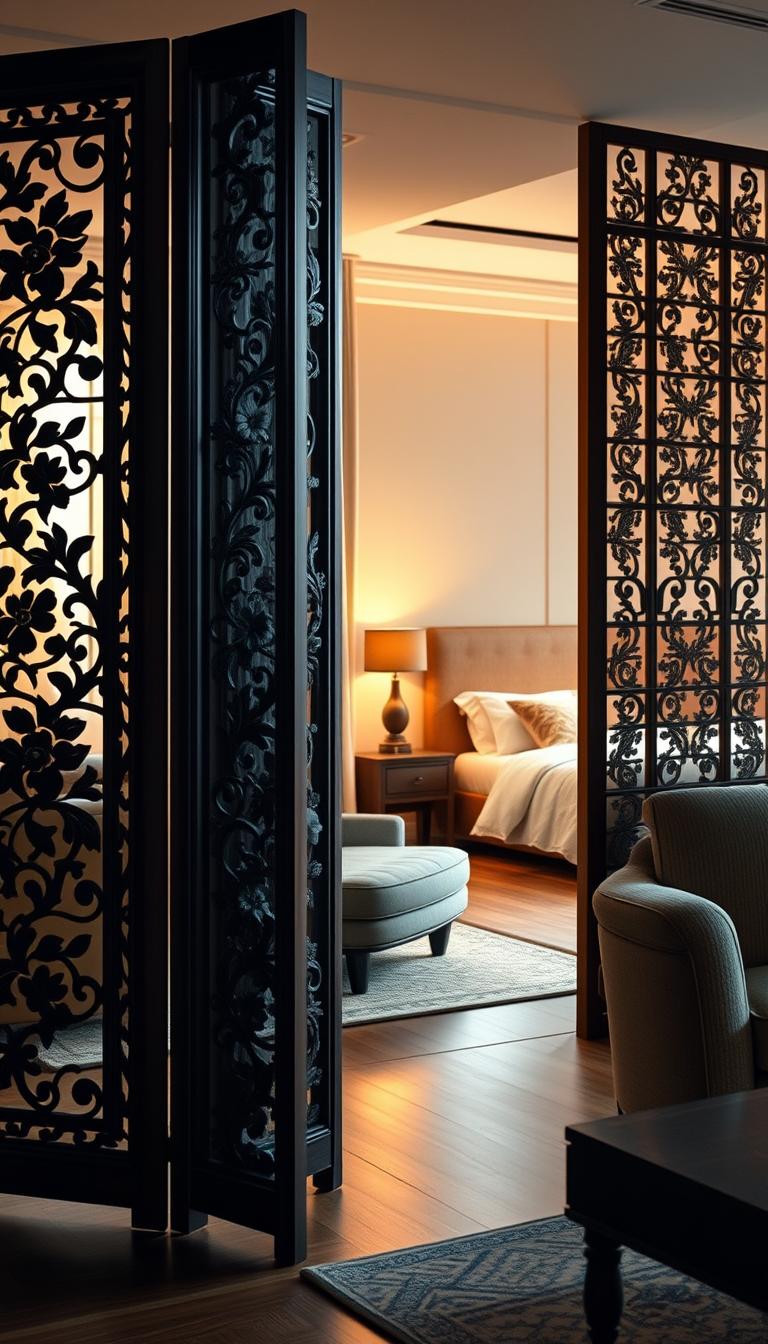
Headboards and low cabinets as subtle separators
A mid-room headboard acts like a low wall. It screens the bed but keeps sightlines open. Low cabinets do double duty: storage and a visual divider. They’re perfect for perching a lamp or plant and add useful surface area.
Glass-and-steel partitions and half-height walls
Steel-and-glass partitions keep light moving while defining an area. In small apartments they feel airy and intentional. Half-height walls break sightlines to the bed without shrinking the space.
- Choose finishes that match trim or furniture so the design reads cohesive.
- If seating backs up to a divider, leave 12–16 inches clearance for comfort.
- Favor dividers that store—open shelving adds weight and function.
- Install dimmers on each side of a sliding divider so lighting suits the activity.
Want examples? See a simple guide on how to divide a space into a sleeping area with practical options here. I often combine two strategies—say, a low cabinet plus a sheer—so the plan feels layered and alive.
Style Cohesion: Tie the Living Area and Sleeping Area Together
Small choices—like matching wood tones and a single rug—pull a studio into one calm picture. I use repetition to make separate zones feel like parts of one home.
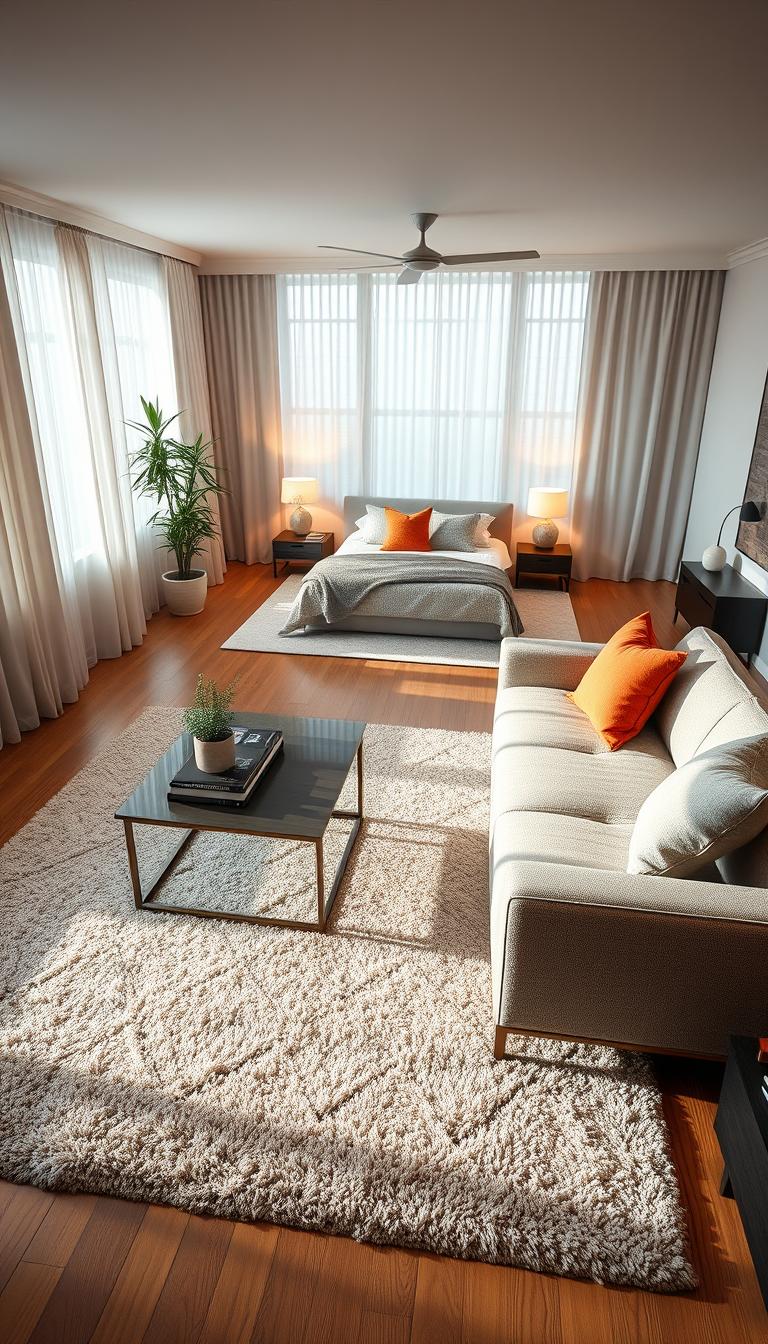
From client case studies, repeating materials and an echoed accent color gave instant cohesion. One tall storage unit looked neater than a scatter of mismatched cabinets.
- Repeat materials—same wood tone or metal finish across the living area and bed zone.
- Choose a single color scheme and let accents reappear on sofa pillows and the bed throw.
- Keep silhouettes similar: slim arms on seating, slim legs on tables and nightstands.
- Carry a single rug tone across both areas to connect the floor plane.
- Align artwork heights and match lighting temperature so the mood stays steady.
“Curate with restraint—every extra object competes for attention in a compact space.”
Finish with matching planters and a few repeated textures. That small discipline makes a room bedroom pairing read as thoughtful design rather than clutter.
Living Room Bedroom Combo Ideas You Can Try Today
A few quick edits make a studio feel larger and calmer fast. I often test small moves first and keep what works.
Corner bed to open up the floor plan
Tuck the bed into a corner to free the center for movement. That single change clears traffic and makes the layout feel intentional.
Low-profile furniture to exaggerate height
Choose low sofas, short headboards, and slim tables. Low pieces stretch vertical sightlines and make a ceiling read taller.
Mirrors to reflect light and expand space
Place a large mirror opposite the window to bounce daylight. It visually doubles the area and brightens darker corners.
Greenery to add life, texture, and calm
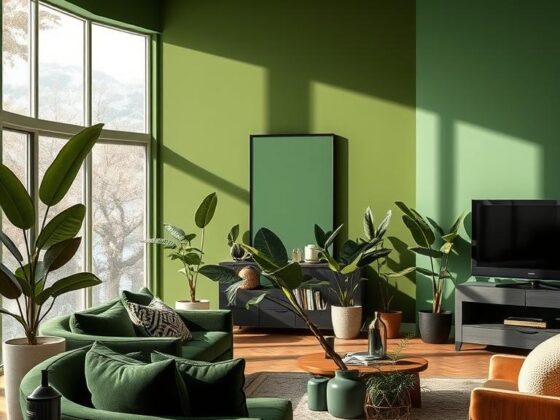
Layer plants—snake plant, pothos, and a taller ficus—to soften the room feel. Natural tones and textured planters bring cozy contrast without clutter.
- Convertible coffee table: use it to work or eat, then fold it down to reclaim the seating area.
- Modular seating: reconfigure for guests or solo nights—flex wins in a small apartment.
- Narrow console: behind a sofa for hidden storage and subtle zone definition.
| Idea | Benefit | Quick tip |
|---|---|---|
| Corner bed | Frees center floor | Angle the head 10–15° if space allows |
| Low-profile furniture | Boosts perceived height | Match leg style across pieces |
| Large mirror | Reflects light, doubles view | Lean it on a wall instead of hanging |
| Layered greenery | Improves mood, texture | Use varied planters for depth |
One final rule: simplify. Edit decor, refine the color palette, and let light lead the way. I promise the room will thank you.
Conclusion
A small studio wins when zoning, storage, and light all work as a team. A clear living room bedroom plan pairs soft dividers—curtains, bookcases, or glass—with multifunctional pieces like a Murphy bed or a lift-top table.
Start with layout and light, then layer dividers to define a bed area and a sofa area without building walls. Pick one tall storage unit to keep sightlines calm and choose a restrained palette so surfaces and textiles speak the same language.
Use layered lighting and a mirror to amplify depth. Ground both zones with rugs so the floor reads as connected, not cluttered. Edit often—fewer, better pieces make your home easier to use.
I design for how you live today; comfort is the final measure of success in any small-space combo.