What if your bedroom could quiet your mind the moment you walk in? I ask that because I’ve seen how small changes turn a noisy room into a true retreat.
I’ll show you a practical way to transform your room using Japanese Bedroom Decor—ideas that respect wellness and fit real homes. Expect simple swaps: earthy colors, tactile finishes, and fewer visual distractions.
We’ll focus on design choices that calm your nervous system: natural textures, soft edges, and lighting that breathes with your day. I’ll also guide you on choosing a bed frame and key furniture so the space feels open, not cluttered.
Along the way I share evidence-based color psychology and biophilic tips, plus quick weekend projects you can trust. Ready to create a serene, useful, and beautiful bedroom that supports your daily rhythm?
Key Takeaways
- Small, intentional changes can calm your space and mind.
- Use natural materials and muted colors for better focus.
- Pick simple, durable furniture—especially a supportive bed frame.
- Layer lighting and texture for morning freshness and evening calm.
- Adapt ideas to apartments and family homes with easy swaps.
What Makes Japanese Bedroom Decor So Calming Today
When we strip away visual clutter, the space itself begins to breathe. I see this in client projects all the time: less stuff, clearer sightlines, and an immediate drop in mental noise.
Minimalism with meaning means curating what truly serves sleep, comfort, or daily flow. It isn’t about owning nothing. It’s about asking every piece to earn its place.
Minimalism with meaning: less visual noise, more mental ease
Function and restraint matter. Japanese interior design values tidy sightlines and negative space. That gives your brain fewer stimuli to process and more room to rest.
- Keep surfaces calm — one purposeful object per zone.
- Choose furniture that doubles as storage to reduce clutter.
- Treat the bedroom as protected: items must improve comfort or routine.
Nature-first aesthetics for a present-day retreat
Wood, stone, linen, and plants mimic the textures our bodies find soothing. Soft edges and low profiles invite the body to exhale.
We pick finishes for quality and longevity — fewer, better things cut decision fatigue and keep the space calm over time. The result is a japandi bedroom influence: gentle simplicity, tactile warmth, and balance that helps your room actually feel like a retreat.
| Finish | Feel | Why it works |
|---|---|---|
| Oiled wood | Warm, tactile | Shows grain, ages well |
| Limewash | Matte, soft | Diffuses light, low glare |
| Natural linen | Airy, breathable | Comfort + texture without noise |
Combine Neutral and Natural Tones for a Balanced Palette
Start by choosing a calm palette—earthy foundations with a whisper of cool hues. I like to begin with warm, natural tones and then introduce soft accents so the room feels cohesive and restful.
Warm earth tones with light blues and muted greens
Build the base with warm earth tones—sand, clay, and deep brown give the space weight and comfort. Then layer in light blue and grayish green accents to add air and calm.
The Truss Interiors example by Julee Wray shows this well: deep browns anchor the room while pale blues and muted greens keep the eye moving without noise.
Soft contrasts instead of stark black-and-white
Skip sharp contrasts. Choose soft pairings—clay with fog gray, sand with sage—to keep the room gentle on the eyes.
- Start with large surfaces: walls, rugs, and curtains, then echo tones in bedding and cushions.
- Use a small dose of dusty rose to warm cool palettes without drama.
- Pull one accent into the bed with a throw or lumbar pillow for cohesion.
- Consider matte limewash or chalk paint to soften reflections and bring in subtle light.
These japandi bedroom ideas favor harmony over drama. That quiet balance is what helps a room actually feel like a retreat.
Incorporate Different Wood Tones to Add Depth
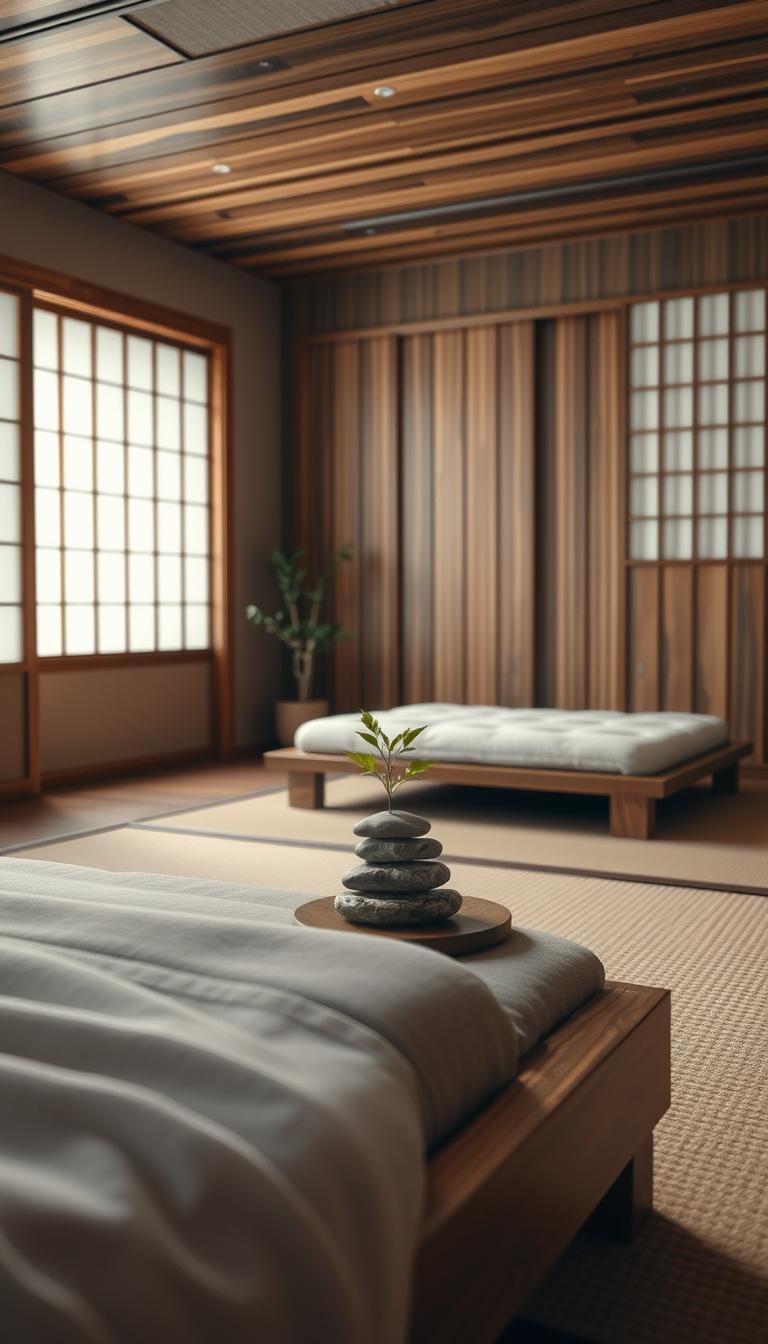
A thoughtful blend of light and dark woods brings depth and calm to a sleeping space. I often ask clients to think of wood as a palette rather than a single finish.
Mix light oak or ash with a single darker species—walnut or cherry—to add depth without visual clutter. Let grain and patina guide your choices; subtle variation reads as craftsmanship, not chaos.
In one Truss Interiors vignette, a patterned dresser sits next to a sculptural chair. The contrast creates a focal point rooted in materials, not excess. That kind of pairing keeps the room grounded and tactile.
- Repeat a dominant tone across two to three pieces—nightstands, a bench, or a slatted wall feature—to keep the bedroom design cohesive.
- Choose touchable finishes—oiled, matte, or hand-rubbed—and avoid high gloss that adds glare to a quiet space.
- Sample boards under your own light; woods shift from store to home.
| Pairing | Effect | Tip |
|---|---|---|
| Light oak + walnut | Warm contrast, anchored focal point | Use walnut for accents and small furniture |
| Ash + cherry | Subtle grain interest, refined warmth | Match undertones (warm with warm) |
| Single wood wall or headboard | Ties palette, adds texture | Keep large pieces lighter in small spaces |
Layer Different Textures for Quiet Interest
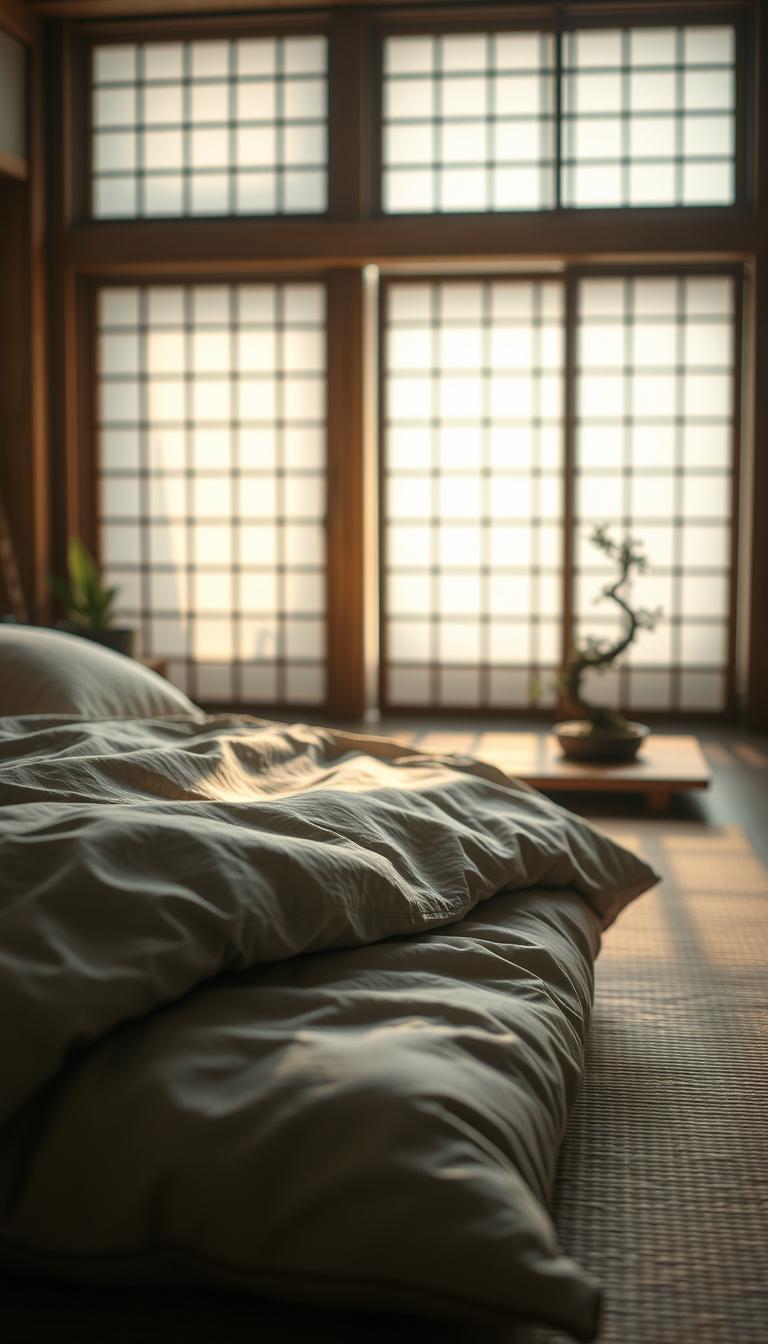
Soft surfaces and tactile contrasts are the fastest route to a soothing sleep space. Start with one bold textile—like a cloth mural on the wall—and add simple, breathable layers on the bed.
I love how a Truss Interiors vignette pairs a cloth mural accent wall with a fluffy, quilted comforter. The mural’s organic shapes sit against the comforter’s sharp geometry. That contrast keeps the eye engaged without noise.
Cloth murals, linen bedding, and woven throws
Choose natural fibers—linen, cotton, wool—for breathability and a gentle hand. A nubby woven throw adds quiet depth while linen sheets keep sleep cool.
Balance soft textiles against clean-lined furniture
Pair plush textiles with clean-lined wood furniture so the room feels cozy, not cluttered. Test touch as much as sight—run your hand over fabrics before you buy.
- Keep the palette tight so texture does the work.
- Use one sculptural pillow instead of many cushions.
- Opt for washable covers and low-pile rugs if allergies are a concern.
| Texture | Piece | Why it works |
|---|---|---|
| Cloth mural | Accent wall | Organic pattern adds depth without clutter |
| Quilted comforter | Bed layer | Sharp geometry contrasts soft wall forms |
| Nubby throw | Bench or bed | Tactile interest and cozy feel |
| Smooth wood | Bench or chair | Provides structure and tactile contrast |
Use Nature Motifs Without Visual Clutter
Nature motifs work best when they whisper, not shout, through one or two deliberate choices.
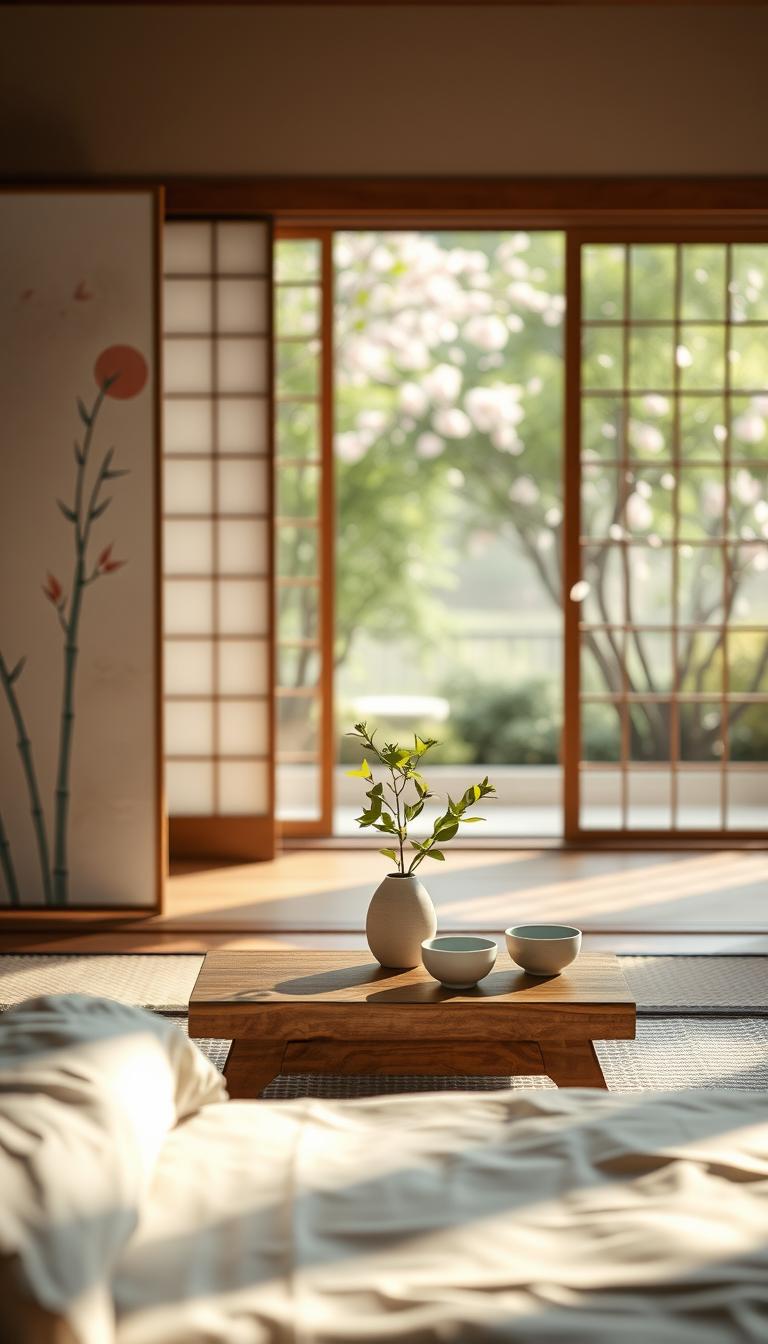
I lean toward delicate botanicals in drapery or a single piece of wall art—think ink-wash leaves or a muted landscape print. One well-placed textile behind the bed reads as intentional, not busy.
Living pieces—bonsai, a slim bamboo stalk, or a simple ikebana—add ritual and life. I often place greenery where the hand naturally reaches, by the nightstand or dresser, to invite a gentle moment of touch.
Keep frames matte and choose soft paper textures so light doesn’t glare. If you rent, washi-tape-friendly prints and lightweight scrolls are easy to hang and swap seasonally.
- Limit motifs to one or two moments to avoid repetition.
- Use minimal vessels so the plant form remains the star.
- For low light, choose hardy species or preserved stems for lasting effect.
| Motif | Where to place | Why it works |
|---|---|---|
| Botanical drapery | Behind headboard or single wall | Ties textile and furniture; soft focal point |
| Bonsai or ikebana | Nightstand or dresser | Small scale, ritual touch, low visual weight |
| Paper scroll or calligraphy | Between windows or above outlet | Matte surface reduces glare; adds calm art |
| Bamboo or preserved stems | Corner or tray on bench | Architectural form that stays low-maintenance |
Result: A calm, nature-forward style that feels rooted and easy to live with. Small choices like these bring soft inspiration from a japanese interior tradition without overwhelming the room.
Streamline Your Belongings to Create Space
Start by editing what you own—space grows when you choose less, not more. I coach clients to edit first and buy second. That approach clears mental clutter before one single new piece enters the room.
Essential furniture with hidden storage
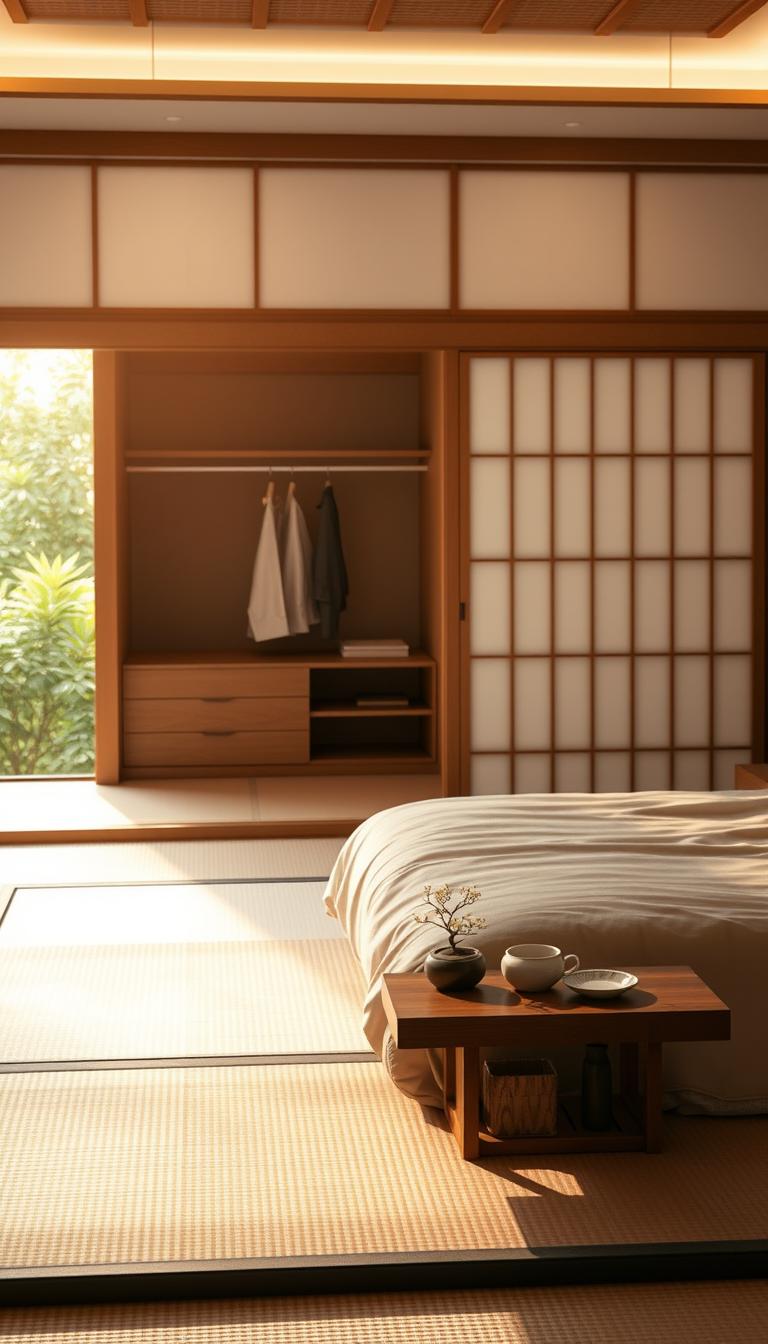
Prioritize pieces that hide things. Think under-bed drawers, lift-top benches, or a tansu-inspired dresser. These elements keep daily items out of sight and give the room a calmer rhythm.
Curate surfaces: one purposeful object per zone
Try the “one purposeful object per zone” rule—one sculptural lamp, one tray, one book. Your eye needs a single place to rest.
- I borrowed Erin Roberts’ method: keep belongings minimal, colors muted, and reserve bold tones for necessary pieces.
- Place daily-use items within arm’s reach; store the rest to reduce decision fatigue.
- Create clear pathways so the evening routine flows without friction.
- Maintain order with seasonal edits, matching baskets, labels inside drawers, and a donation box that leaves when full.
These small ways turn storage into calm. It’s japandi design as a lifestyle—less to manage, more to enjoy. You’ll feel the shift immediately: more space, more silence, more ease.
Use Plenty of Natural Light and Soften It Thoughtfully
Sunlight, gently handled, becomes the quiet backbone of a restful interior. I always begin by mapping where daylight enters and how it travels through the room.
“Map the sun first,” is my go-to line when I meet a client. That tells me which walls reflect best and where glare will hit at noon.
Maximize windows and skylights when you can. In rentals, keep panes clear and favor lightweight sheers to invite a soft glow. Skylights lift low ceilings and make a small bedroom feel airy.
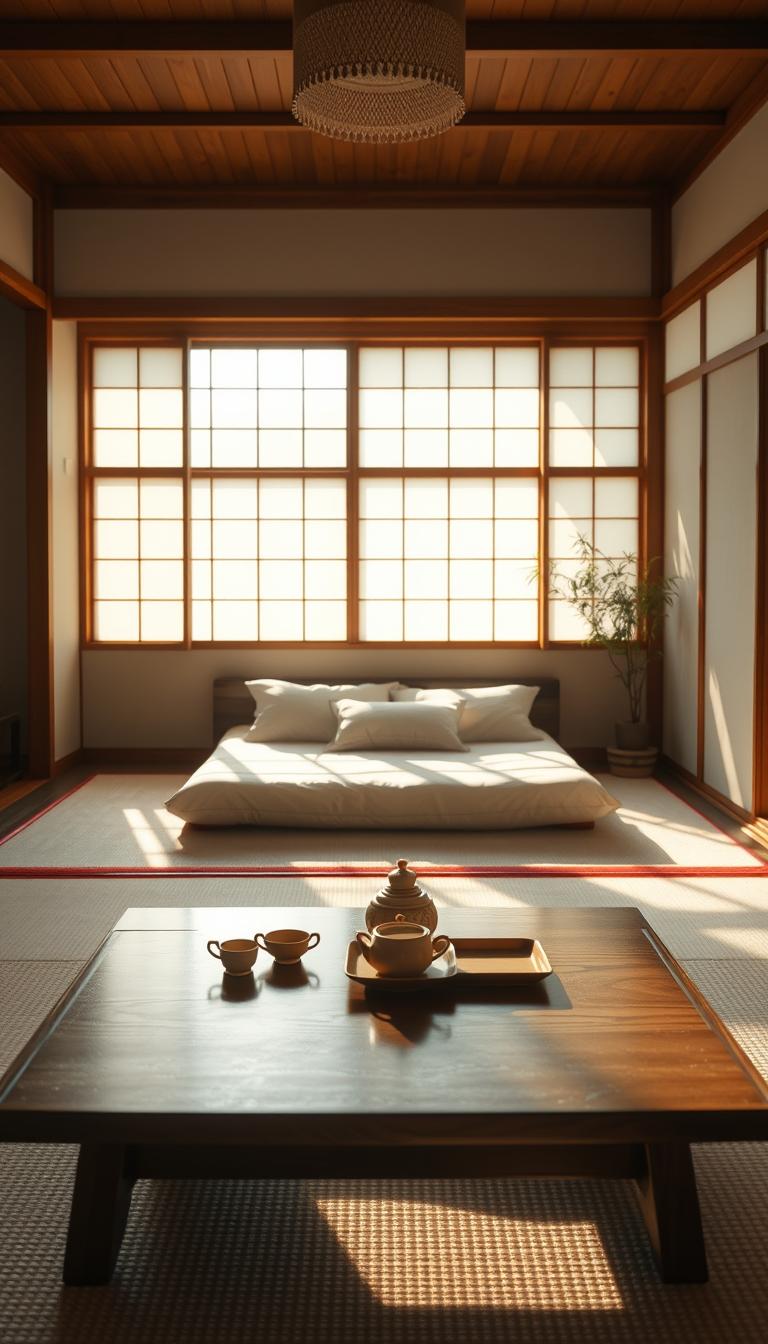
Sheers, shoji-inspired treatments, and paper shades
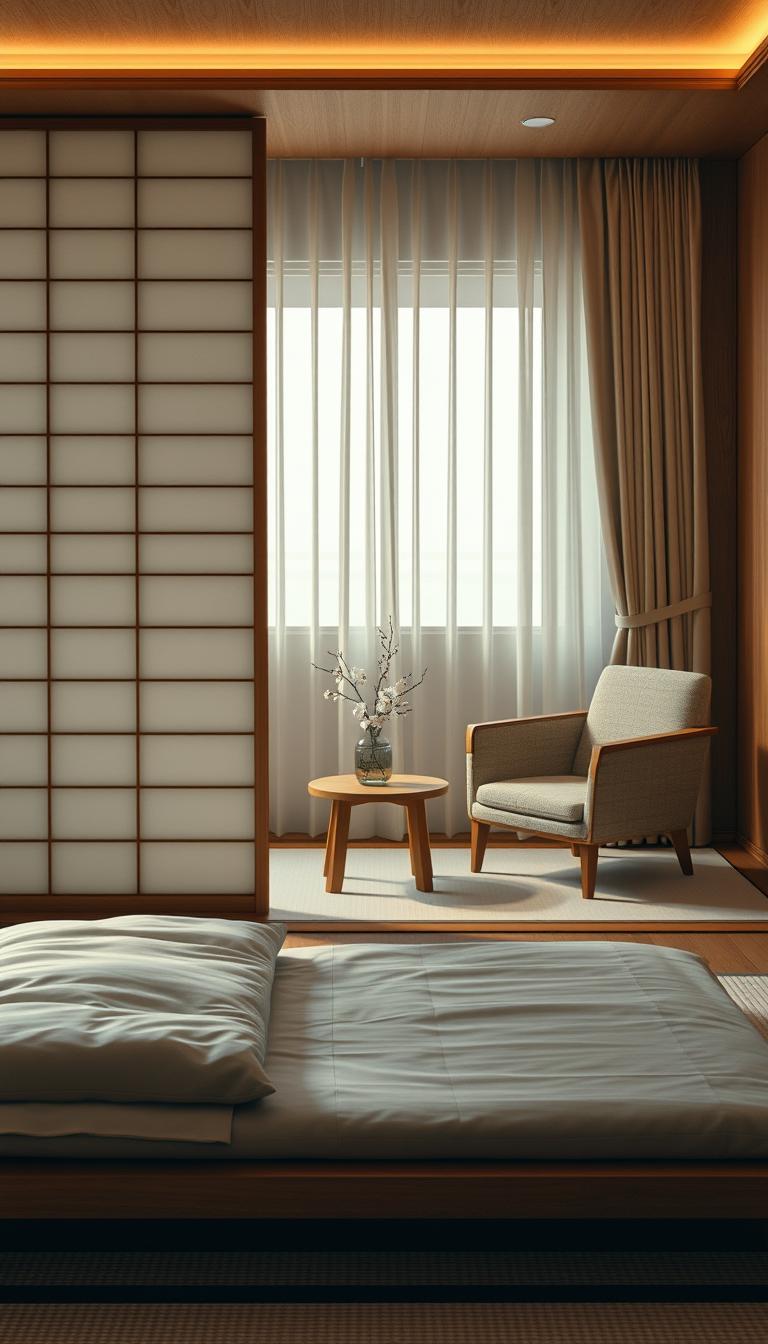
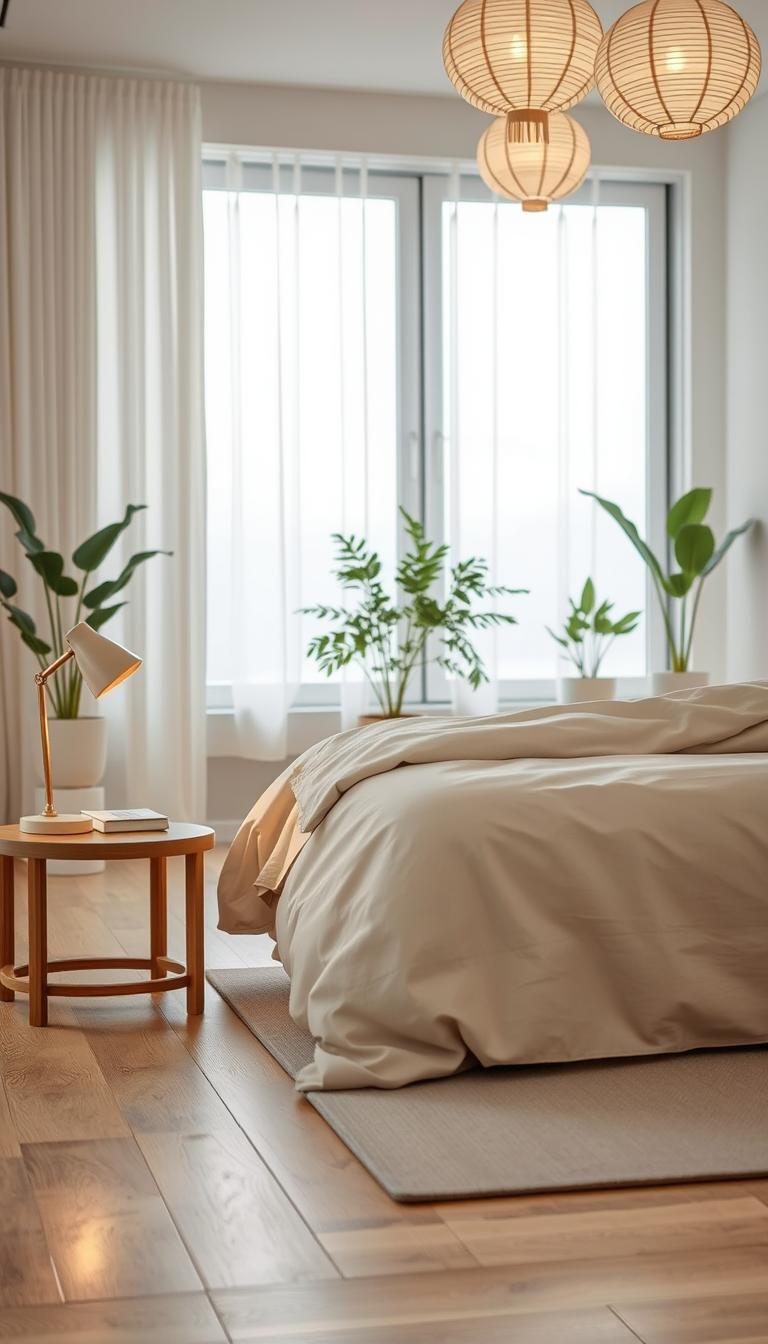
Shoji-inspired screens or paper shades diffuse glare into an even, calm wash. Paper lanterns add a warm, tactile quality that pairs well with linen and wood.
Light placement that honors circadian rhythm
Place lighting in layers: warm bedside lamps for winding down, low floor lights for night navigation, and task lamps for reading. Use dimmers to shift mood quickly.
- A sunrise simulator with sheers eases morning wakes.
- Aim for warmer evening color temperatures to support sleep.
- Keep reflective surfaces matte so light reads as a gentle glow, not a glare.
“The goal: light that’s generous by day, restful by night.”
Add Interest With Art That Supports Serenity
Art can be the quiet punctuation mark that completes a restful room. I often use a single piece to add focus without adding noise. It’s about movement, texture, and breath.
I look for abstract pieces with soft, organic shapes—movement without noise. Daytrip Studio’s work, noted by Iwan Halstead, shows how one textured canvas can lift a space while keeping minimalism intact.
Choose pieces that calm. Calligraphy, hanging scrolls, and muted landscape prints bring ritual and a sense of place. Keep inks neutral and fibers natural for a timeless match.
Abstract pieces with organic shapes
Place an abstract above the bed or on a side wall. Let the form echo bedding or a rug so the room feels unified.
Calligraphy, scrolls, and landscape prints
Use slim frames and matte finishes. Rotate a single piece seasonally to refresh your inspiration without redecorating.
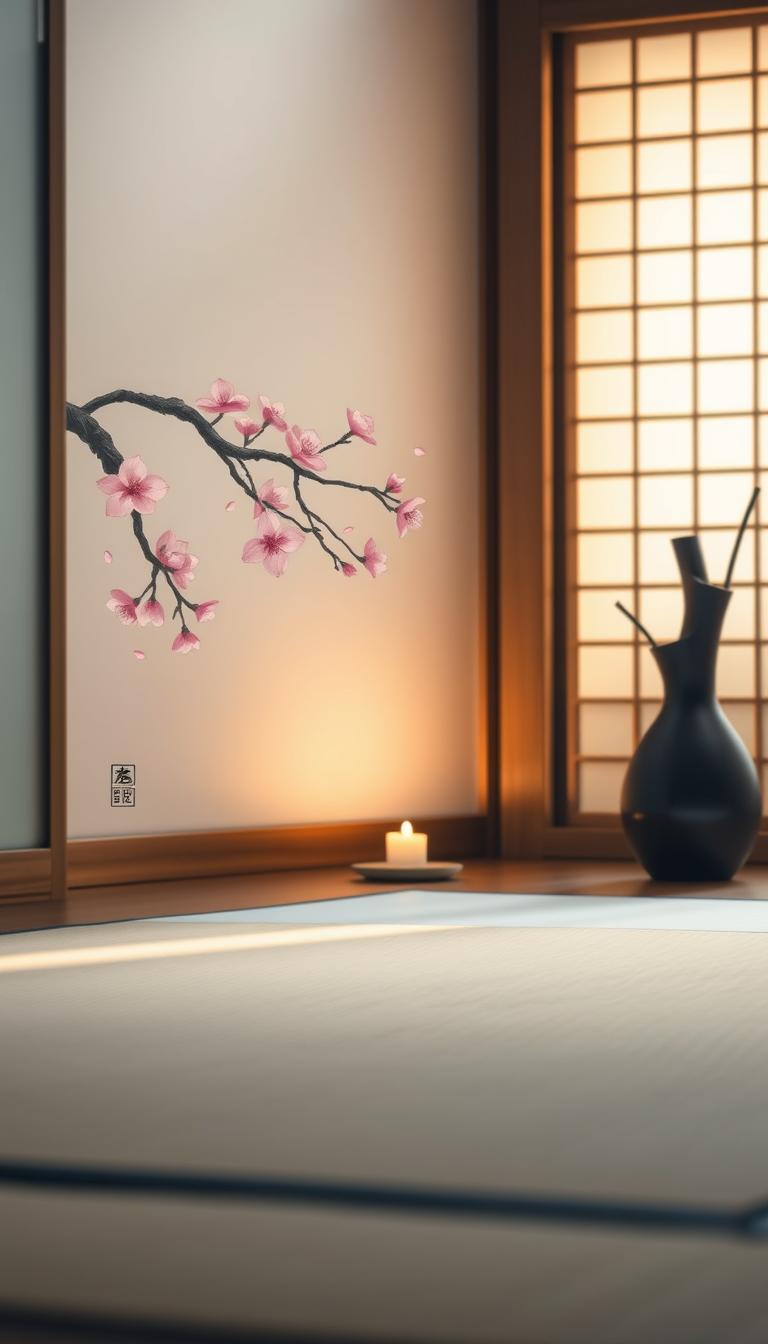
| Type | Effect | Practical tip |
|---|---|---|
| Abstract, organic | Soft focal point, calm movement | Scale to furniture; keep frame slim |
| Calligraphy / scroll | Ritual texture, cultural depth | Choose neutral inks and natural paper |
| Landscape print | Widened perspective, outdoor echo | Muted palette; hang at eye level |
| General rule | One strong piece better than many | Repeat a palette color subtly to tie style together |
Put in a Low, Wooden Bed Frame for a Grounded Look
A low bed anchored in wood changes the feel of a room—suddenly everything sits lower and calmer. I like this way because it makes the bed the quiet center rather than the loudest thing in the space.
Daytrip Studio recommends a low wooden bed frame with light linen bedding, a textured woven throw, and a soft heathered cushion. That combo keeps the bed open and unobtrusive so the room feels larger and more restful.
Platform beds and futon alternatives
If a futon doesn’t fit your life, choose a slim platform bed with rounded corners and a quiet profile. A simple frame with strong slats gives longevity and support.
Finishes that invite touch
I favor matte or oiled finishes for wooden bed frames. They feel warm to the touch and cut glare at night. Limewash can work on headboards for a softer, worn look.
Cozy layers without bulk
Layer linen sheets, a heathered lumbar, and a woven blanket. Add a lightweight wool throw if you run cold, or percale sheets if you run warm.
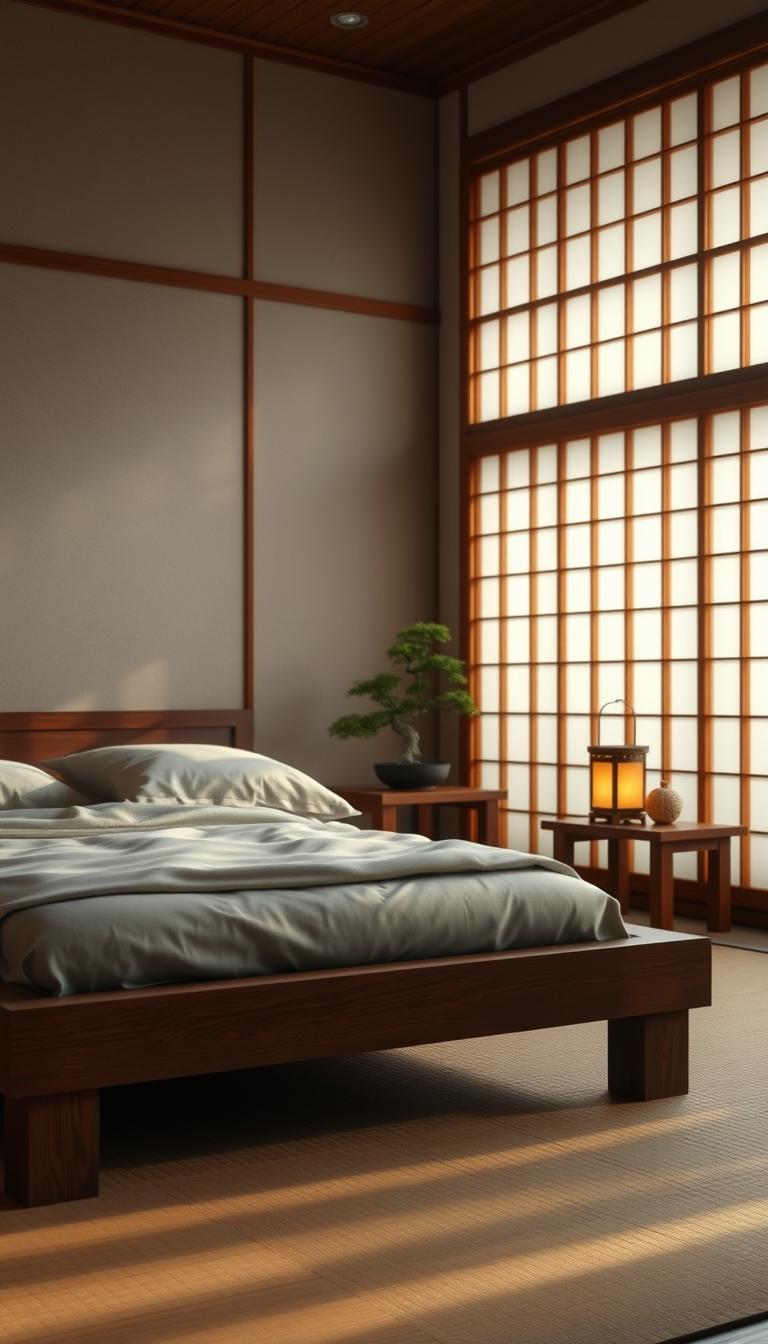
| Choice | Effect | Tip |
|---|---|---|
| Low wooden bed | Grounded look; longer sightlines | Pair with low nightstands |
| Matte/oiled finish | Invites touch; reduces glare | Test in your light before buying |
| Platform with slats | Durable support | Choose center support for longevity |
| Linen bedding + woven throw | Cozy without bulk | Select breathable fibers for comfort |
Include Rustic Elements for Organic Warmth
A single handcrafted piece can change the whole mood of a room. I use one or two rustic elements to temper clean lines and add soul. These small elements make the space feel lived-in and inviting.
Daytrip Studio blended rustic and contemporary pieces in a recent project I admired. Handcrafted bedside stools acted like tiny sculptures. They added a tactile, organic form beside a simple bed.
Work with your existing color palette so rustic wood reads integrated, not random. Choose pieces with visible tool marks or grain—the feel of the hand builds connection.
Limit accents to one or two zones. A live-edge tray, a hand-thrown vase, or a warm stool by the bed can bridge refined modern lines and earthy tones.
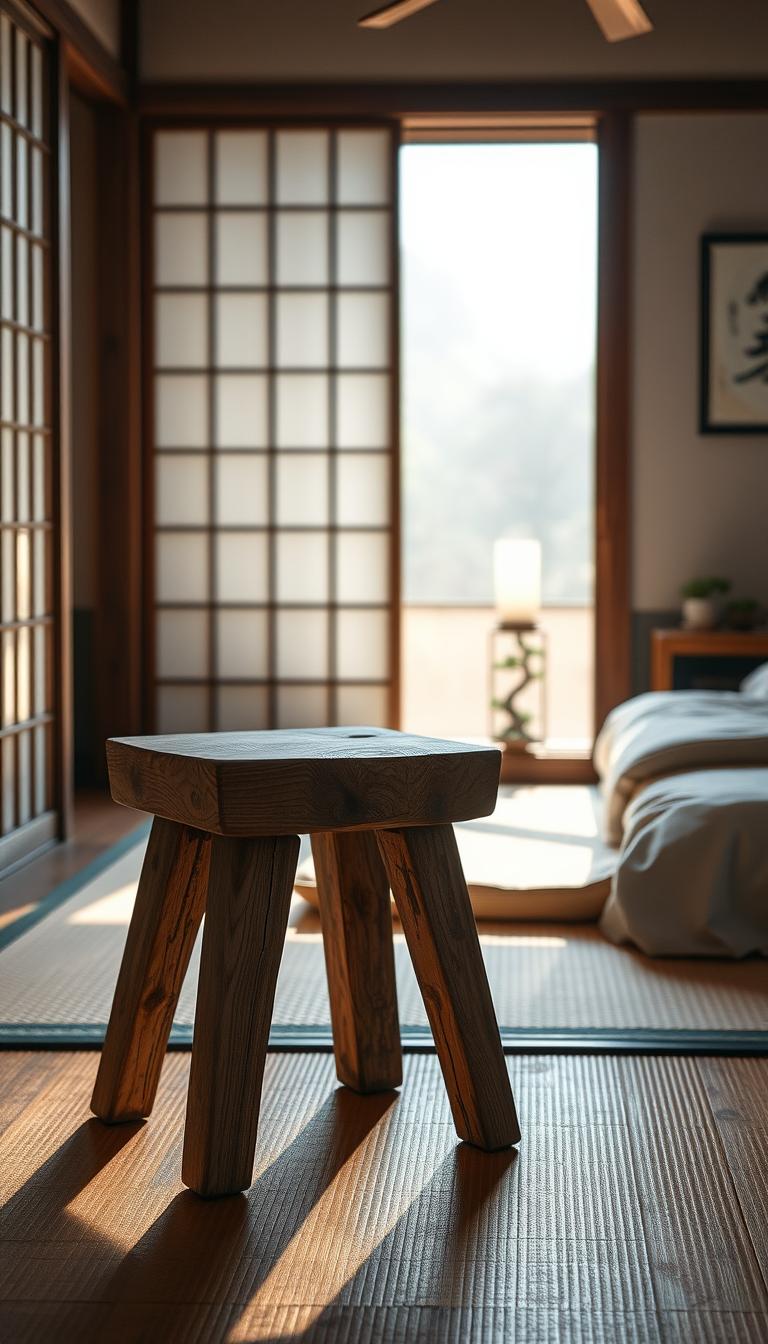
| Rustic Piece | Effect | Practical Tip |
|---|---|---|
| Handcrafted stool | Organic focal point; balances cool palettes | Place by nightstand; choose smooth finish |
| Live-edge tray | Textural surface; adds story | Use on dresser or bench; keep colors earthy |
| Hand-thrown vase | Small scale ritual; tactile interest | Limit to one shelf or tray; match tones |
| Patinaed lamp base | Soft warmth; intentional age | Prioritize craftsmanship and quality |
- Keep the palette earthy so accents fit the room’s tones.
- Prioritize quality—rustic should feel deliberate, not rough.
- Let patina develop; nicks and dings add story and warmth.
The goal is organic warmth that complements, never overwhelms. Add a clay-toned cushion or warm wood stool to rebalance the room’s color and feel. Small, well-made pieces deliver the biggest return.
Give the Room Multiple Purposes Without Chaos
A flexible room feels intentional when every piece has two lives. I like to plan so the space adapts to guests, movement, and quiet practice without visual noise.
Foldaway options clear floor space fast. Designer Erik Munro used a folding bed to turn a guest area into a meditation and exercise zone. He paired a lively silk wallpaper with calm artwork so both functions feel balanced.
Practical ways to keep the plan calm:
- I’m a big fan of foldaway furniture—beds, benches, and low tables that tuck away when you need open floor.
- Zone with a rug and subtle color shifts so each function has a home.
- Use slim storage for mats, blankets, and props so items are easy to reach and out of sight.
- Consider lightweight dividers—portable screens or low shelving—for quick boundaries without heaviness.
Manage cords, keep finishes consistent, and set simple rituals for each corner. These ideas help the room work harder while staying soft, restorative, and true to a japandi bedroom influence.
Balance Is Key: Light and Dark, Soft and Structured
I begin every plan by plotting anchors and soft landings across the floor plan. That simple “balance map” shows where a dark anchor will sit and where textiles or paper lanterns will soften the view.
Erik Munro’s advice rings true: pair black accents—like a woven bench or curtain poles—with off-whites, buffs, and creams. The result is a structured but serene look that still feels welcoming.
Mix plush with tailored. Think a linen duvet beside a clean-lined bench. Add wood slats or a trimmed headboard for structure and paper lanterns for softness.
- Calibrate color so one dark element grounds the room rather than dominates.
- Repeat a dark finish across hardware, frames, and poles for cohesion.
- Balance texture: a ribbed throw against a smooth sheet, woven shade versus matte wall.
The best japandi bedroom balances are felt, not just seen. When the room exhales with you, you know you’ve hit the right note—timeless, calm, and durable through seasons and trends.
Create a Visual Anchor to Ground the Space
A single bold ground plane makes the whole room read as intentional and calm. I use this trick with clients to define where sleep lives and where movement happens.
I once saw OWIU Studio place a black tatami beneath a raised bed. That color block quietly marked the sleep zone and made the rest of the room feel organized.
Tatami mats, dark area rugs, and slatted walls
Put a tatami or deep rug under the bed so the floor reads as a single, calming plane. A slatted headboard wall adds vertical rhythm without fuss.
Contrast as a tool for depth, not drama
Contrast should add depth, never shout. If your wall is dark, lighten bedding. If your floor is pale, choose a deeper rug to center the composition.
- Keep the anchor large enough to matter, and simple enough to disappear into the whole.
- Repeat the anchor tone once—say a lamp or frame—to tie the look together.
- For renters, modular tatami tiles or a bound rug give the same effect and are reversible.
- Mind proportions: align the anchor with bed width and nightstand placement for cohesion.
| Anchor Type | Effect | Practical Tip |
|---|---|---|
| Black tatami | Defines sleep zone; adds depth | Use under a raised bed; repeat tone in one accent |
| Dark area rug | Centers the bed on a light floor | Extend 18–24″ beyond mattress for balance |
| Vertical slatted wall | Subtle shadow play; vertical anchor | Keep slat spacing even; match to nightstand height |
“The right anchor creates a restful look you feel the moment you step inside.”
Room Dividers and Slat Walls: Form Meets Function
A well-placed divider can turn an open plan into a calm, functional retreat. I use these moves to create zones that feel intentional without closing the room off.
Vertical wood slats are a long-standing detail in japanese interior design — they give rhythm, shadow, and subtle separation. Curved slat dividers act like sculptures; they guide the eye while keeping things airy.
Practical options I recommend:
- Shoji-inspired room dividers with paper panels bring privacy and soft light — ideal for studios or multifunctional spaces.
- Curved wood slat dividers add sculptural texture; they perform as both screen and artwork.
- A three-quarter height slat wall can double as a headboard, giving architectural presence without bulk.
Shoji screens and paper room dividers
Shoji and other paper screens filter daylight and keep sightlines gentle. They work well where you want separation but still want a glow of light between zones.
Curved wood slat dividers as sculptural texture
Curved slats create soft shadows that shift all day. Choose slat spacing to filter, not trap—enough gap to let light and sightlines pass.
Three-quarter height slat headboard ideas
A three-quarter wall behind a slim bed frame anchors the sleep zone without a heavy mass. Match wood species to your existing pieces for a cohesive look.
- Vertical slats at the wall make gentle, moving shadow—nature’s own artwork.
- In interior design, place dividers to guide movement and frame views, not just to block them.
- If you rent, freestanding dividers and screen panels give the same effect and reconfigure easily.
Result: These dividers prove that practical boundaries can be beautiful and that small changes in material and placement define a lasting style.
Materials, Flooring, and Lighting Choices that Define Style
Materials set the mood—soft linens and warm wood calm, while stone adds quiet presence. Start by choosing natural materials that feel good underfoot and against skin: wood, stone, cotton, and linen. I often recommend limiting the palette so each surface reads intentional.
Floor choices matter. I like limewash or concrete-look floors for subtle movement and resilience. Layer tatami or sisal mats for warmth, texture, and grip where you stand most.
Wood selection guides the room’s tone. Try white oak or ash for a pale, airy base; cherry or walnut adds depth. Sample boards under your light before you buy—colors shift in real rooms.
Lighting that supports rest and focus
Paper lanterns cast a soft, cloud-like glow. Pair them with diffused task lighting so you can read without harsh shadows.
“Keep layers dimmable and warm to hold a japanese zen calm after dusk.”
- Start with natural materials—wood, stone, cotton, linen—for timeless texture and comfort.
- Use limewash or concrete-look floors, then add tatami or sisal for tactile warmth.
- Choose paper lanterns plus soft task lamps; make all layers dimmable and warm.
- Care for materials: oil wood, vacuum natural rugs gently, and launder linens in cool water.
Design tip: pick a core trio of finishes and repeat them across furniture and textiles. Fewer, well-chosen materials age with grace and keep the room feeling grounded at all hours. For sample inspiration, consider Japandi selections to see how these choices play together.
Japanese Bedroom Decor
A few well-placed traditional touches give a modern room instant warmth.
I often add small rituals—a noren in a doorway, a tokonoma-style vignette with a scroll and ikebana, or a moment of incense—to make a space feel lived-in and calm.
Traditional touches: noren, tokonoma-style vignettes, incense
Keep these elements light. One fabric divider or a single alcove with a scroll reads intentional.
A sprig of ikebana or a slim incense dish brings ritual without clutter.
Storage-first furniture and clean-lined decor
Choose storage that hides life. A tansu-inspired chest or a low wooden bed with drawers keeps surfaces calm.
Repeat wood across a bed, bench, and slim shelf to tie the look together.
Japandi bedroom ideas for the modern American home
Translate japandi design into easy wins: neutral walls, a wood slat accent, and a paper lantern for soft light.
For apartments, use modular rugs and a freestanding slat screen to define zones without renovation.
- One art moment, one plant, one textured throw—let quiet details shine.
- Prioritize quality joinery and real veneers for lasting comfort.
- Durable finishes and a washable duvet keep family life workable and calm.
| Element | Effect | Practical tip |
|---|---|---|
| Noren divider | Soft threshold; defines zones | Hang in a doorway or closet entrance |
| Tokonoma vignette | Focused ritual; visual pause | Keep scale small; rotate a scroll seasonally |
| Tansu-inspired chest | Hidden storage; tidy surfaces | Choose oak or walnut for lasting finish |
| Paper lantern | Diffuse, warm light | Use dimmer or low-watt bulb for bedtime |
“Small, well-made pieces give a room its calm.”
Conclusion
Small, steady changes are the easiest route to a restful room you’ll actually keep. I’ve found that honoring calm through material choices, proportion, and light turns a busy room into a true space that restores.
You now have practical ideas—from palettes and textures to slat walls and layered lighting—to shape your sanctuary. Pick one way forward: clear a surface, add a grounding rug, or swap harsh bulbs for warm dimmables.
There are many ways to get the look, but the best path is the one you’ll sustain day to day. Keep editing, keep softening, and keep choosing what helps you exhale.
Good design supports life. Start small, stay steady, and your bedroom will be beautiful—and deeply supportive—tonight and for years to come.