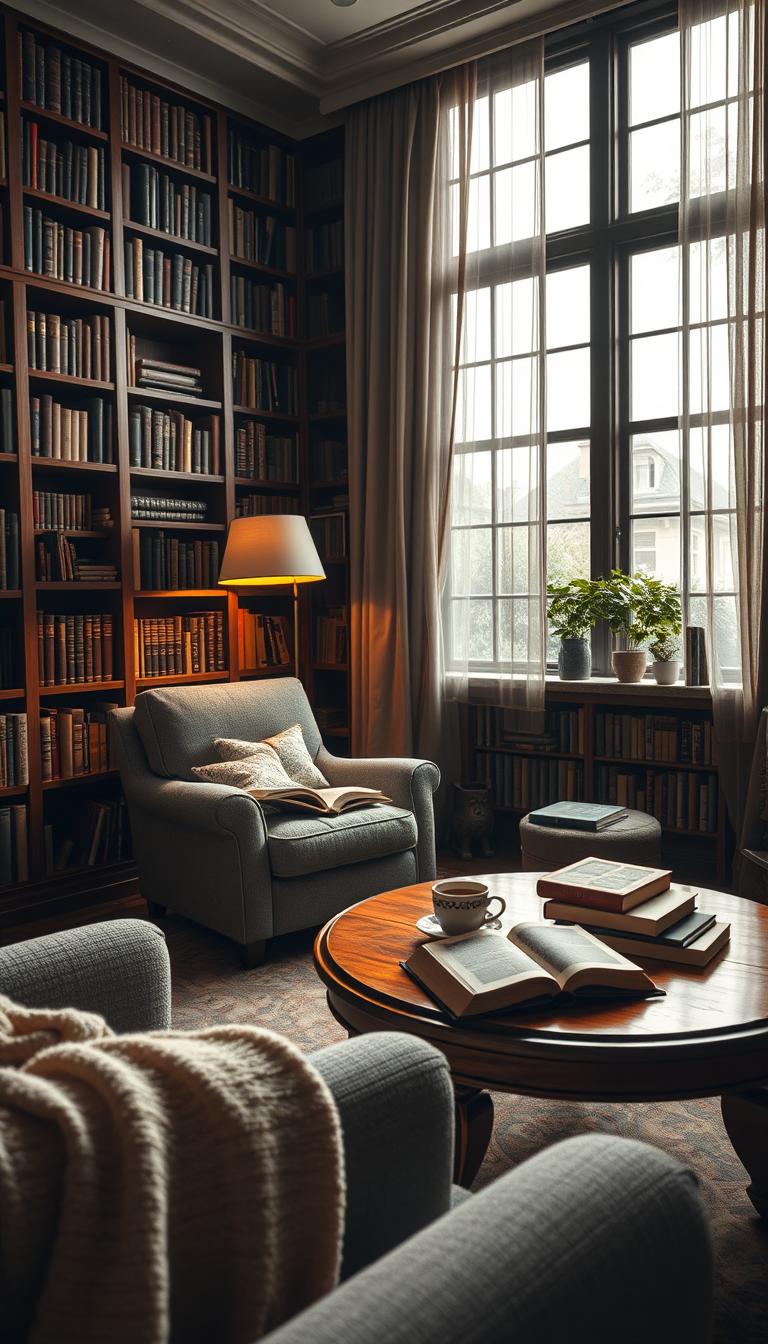
I have a question for you: what if a small corner could change the way you live and think?
I believe a personal sanctuary for reading does more than hold books. It frames a daily wellbeing ritual that invites calm, curiosity, and focused rest.
From double-height bookcases in a West Village stair hall to cozy attic nooks, I’ve seen how smart choices make any space feel intentional. Built-ins around a window, glass-front cases, and a comfy bench can transform an awkward alcove into a cherished retreat.
In my projects, I pair ergonomic lighting, cozy seating, and thoughtful storage so the room works for families and solo readers alike. Color matters too—soft blues and greens soothe, while bolder palettes energize creative work.
Stick with me and you’ll find practical tips — hallway shelving, closet-to-nook conversions, and platform ladders — to reclaim underused corners without a major overhaul.
Key Takeaways
- Make it a habit: Treat reading as daily ritual for wellbeing.
- Use built-ins and glass-front cases to make small areas feel intentional.
- Balance display and daily-use shelving to future-proof your collection.
- Match color and light to mood—calm or energized as you need.
- Reclaim underused spots with clever shelving and seating ideas.
Inspiration-First Home Library Ideas for Every Room
Every room hides potential for a reading corner if you know where to look. I’ll help you map the right place for books so your collection fits life, not the other way around.
From living rooms to bedrooms: finding the right place
Start with a quick room scan: look up, over, and around—above doors, under windows, along corridor walls. A dining room with low sun can glow with dark paint and a cozy wall of shelves, as CeCe Barfield Thompson showed in a recent project.
In living spaces, wrapping a wall with built-ins creates presence without crowding. Bedrooms benefit from towers flanking the bed plus swing-arm lamps to free nightstand space.
Balancing display, comfort, and daily use
Display vs. function: use glass fronts and picture lights for prized editions, and reserve durable lower shelves for kids’ books and daily reads. For tight space, choose slim-depth shelving and vertical stacking to keep circulation clear.
Micro-zones work well—seating in one place, a small desk in another—so your library adapts by time of day. Leave breathing room and mix in art and objects so the collection can grow gracefully.
Small-Space Home Library Ideas That Maximize Every Inch
Small footprints force creative thinking — and some of my favorite shelves hide in plain sight. I’ll show you simple moves that make a tiny space feel intentional and calm.
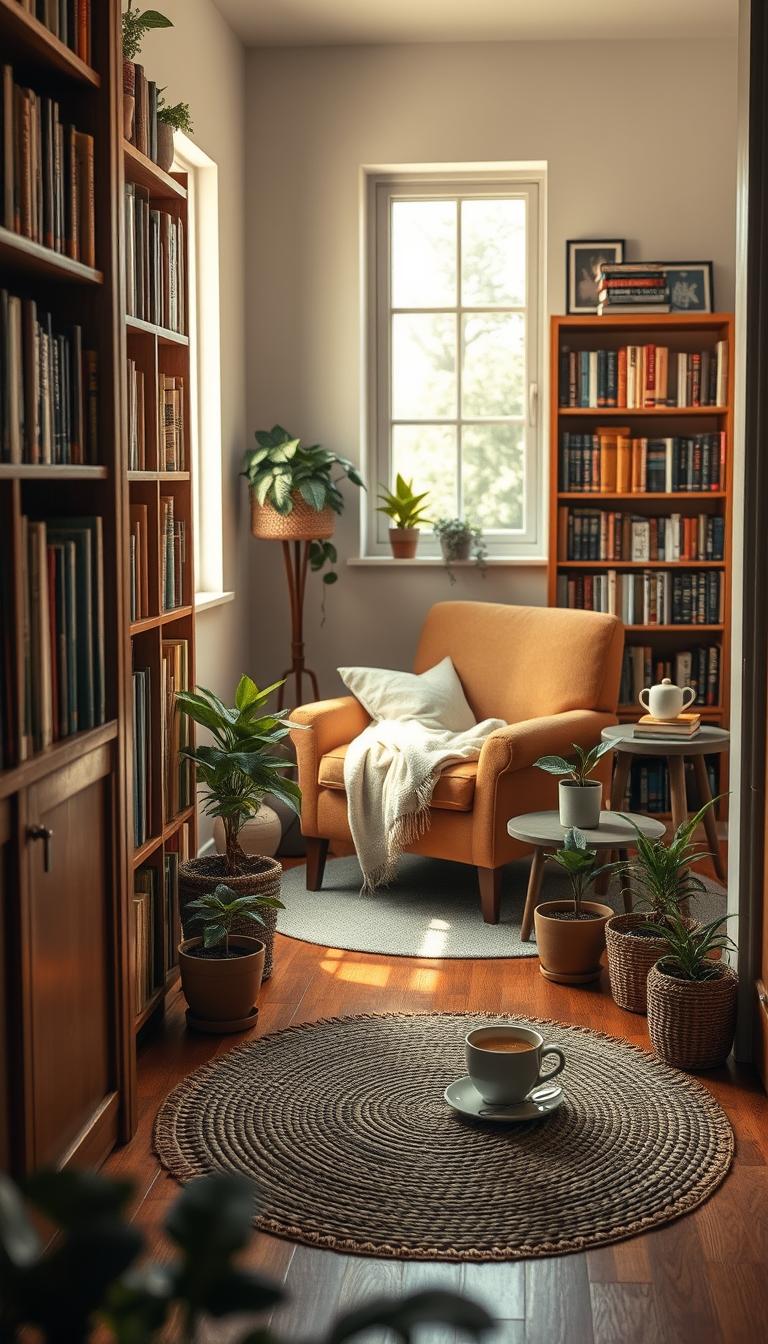
Hallways and stair walls as stealth shelving
Shallow shelves along a corridor or above a stair handrail turn idle wall into a compact bookshelf. Use picture lights and consistent sightlines so the installation reads like architecture, not clutter.
Closet-to-reading-nook conversions
Pull out a closet and add wall-to-wall books, a cushioned bench, and a sconce. The result is a snug reading nook that feels like a cocoon, not a retrofit.
Attic alcoves and awkward corners put to work
Concentrate built-ins on one wall in an attic to free the center for a small desk or mat. Wrap shelving around a corner and tuck in a petite chair to define a micro corner that invites lingering.
“Think slim profiles, hidden drawers, and targeted lighting — small changes that keep a tiny library from feeling cramped.”
- Safety first: allow handrail clearance and anchor shelves properly.
- Use drawers, baskets, and a discreet cabinet for neat storage.
- Choose low-glare LEDs and task sconces for comfortable reading light.
Go Floor-to-Ceiling with Bookshelves
A wall that climbs to the ceiling can turn an ordinary room into an archive of your life. I’ve specified double-height bookcases for clients who wanted big impact and massive storage without losing warmth.
Think about proportions: mix varied cubbies with a few uniform bays so the elevation breathes. Leave negative space for art, and add shelves that hold picture lights—this prevents the wall from feeling heavy.

Access matters. Rolling and hook-on ladder systems, plus safe platform landings, make top tiers functional—not just pretty. I always recommend closed bases for games and media and glass-front uppers to visually lighten tall runs.
Lighting and safety go hand in hand. Integrated picture lights and sconces bring spines to life and cut eye strain in the evening. Anchor units to studs, use anti-tip hardware, and choose shelf thickness to support a growing collection.
Styling tip: group by subject, mix vertical and horizontal stacks, and tuck in a sculptural object or two so the display reads curated but remains easy to use. A tall wall like this can make any home feel like a small, beloved library.
Carve Out a Window Nook with Built-Ins and Seating
Place a seat where light gathers and you’ll find mornings change. I frame windows with bookcases and a cushioned bench to make a magnetic reading nook that feels intentional and easy to use.
Bench and seating basics: choose a bench depth of 18–22 inches. Use medium-density cushions and a lumbar pillow so the seating stays comfy for long reads without swallowing the room.
Handle glare with sheer drapery or adjustable shades. Add a pivoting lamp for cloudy days so task light follows your book.
Paint soft greens or pale blues around the window to amplify natural light. A subtly glossy ceiling or reflective trim helps bounce daylight deeper into the nook.
- Under-bench drawers hide throws, chargers, and headphones.
- Shelves flanking the window keep favorites at eye level and make space for a small chair nearby.
- In a living room, a window bench doubles as extra seating for guests without bulky furniture.
| Element | Recommendation | Benefit | Notes |
|---|---|---|---|
| Bench Depth | 18–22 in | Comfortable seating + circulation | Include drawer storage |
| Cushion Density | Medium-firm | Support for long reading sessions | Add lumbar pillow |
| Light Control | Sheer drape + pivot lamp | Reduces glare, improves task light | Adjust for afternoon sun |
Multifunctional Rooms: Dining Room Libraries, Living Rooms, and Offices
A single room can flex from dinner to deep focus with a few thoughtful moves. I’ve seen a Manhattan apartment where dark paint made a dining-and-reading combo feel intimate and polished.
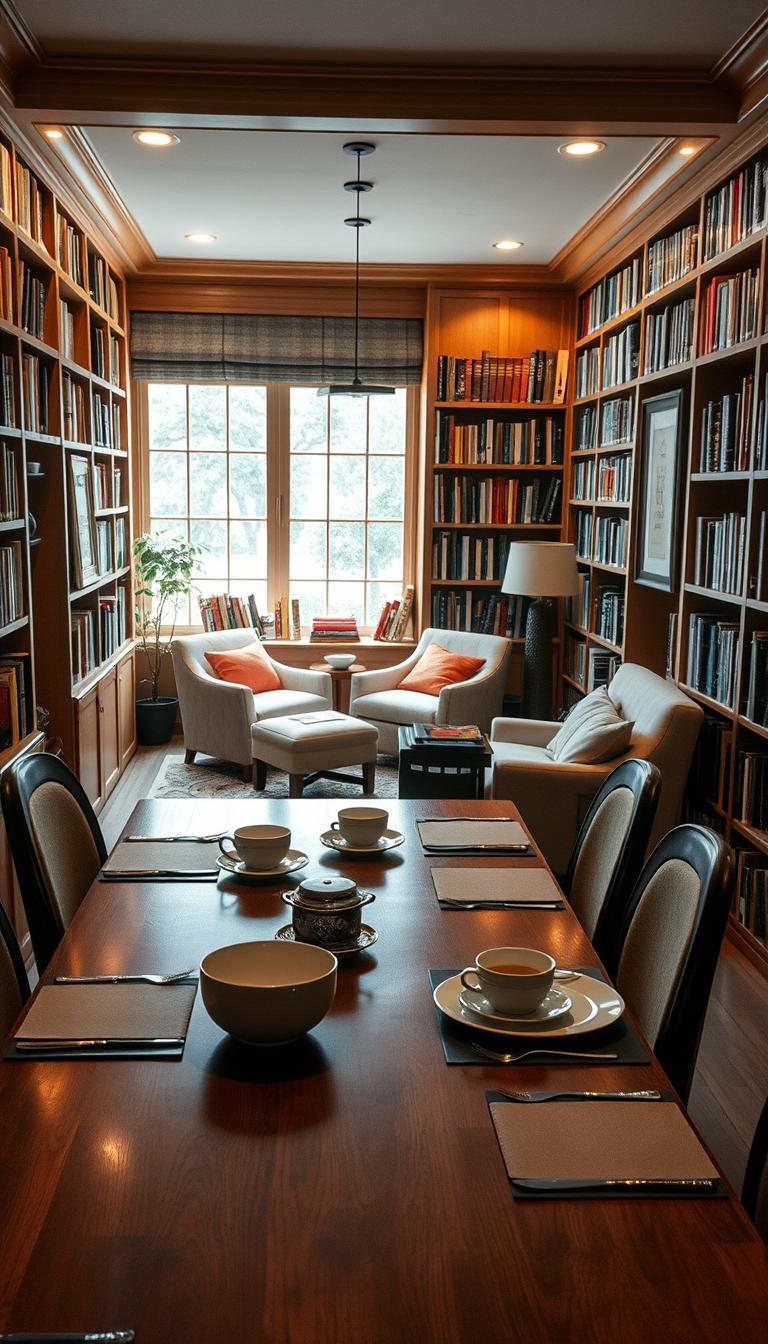
Dining-and-reading combos with wall libraries
Mount shelves on one wall and keep a sturdy table nearby so the surface doubles as a spread for books and a meal. Add dimmers to shift from dinner to study mode in seconds.
Living rooms that double as libraries
In living rooms, layer seating, rugs, and art so the area moves between conversation and quiet reading. Keep favorite titles at arm’s reach and leave clear circulation paths for guests.
Office libraries with desks integrated into shelving
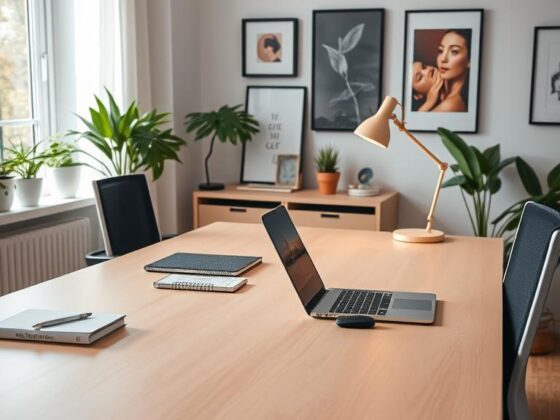
For an office, I tuck a desk into a run of shelves—built-in work surfaces, drawers for files, and hidden cable channels keep the zone tidy and efficient.
- Acoustics: rugs and curtains mute noise.
- Lighting: overhead dimmers, picture lights, and a task lamp at the desk.
- Flow: place the table and seating to protect traffic patterns during meals or meetings.
Tip: do a weekly reset—clear the table and reshelve books—to keep a multifunction space inspiring, not cluttered.
Color, Texture, and Lighting for a Relaxing Reading Room
A few thoughtful hues and the right light can turn an ordinary room into a calm retreat.
Calming palettes: I favor greens and blues for restoration and focus. Soft sage or muted teal soothes the eye and helps reading feel natural. Pastel lilac is a clever choice for a newer wing — it separates zones without shouting.
Moody vs. bright: Decide whether you want a cocoon or an airy gallery. Stained paneling and rich velvet make a moody room feel wrapped and secure. Or lean into sunlit spaces where architecture and light take center stage.
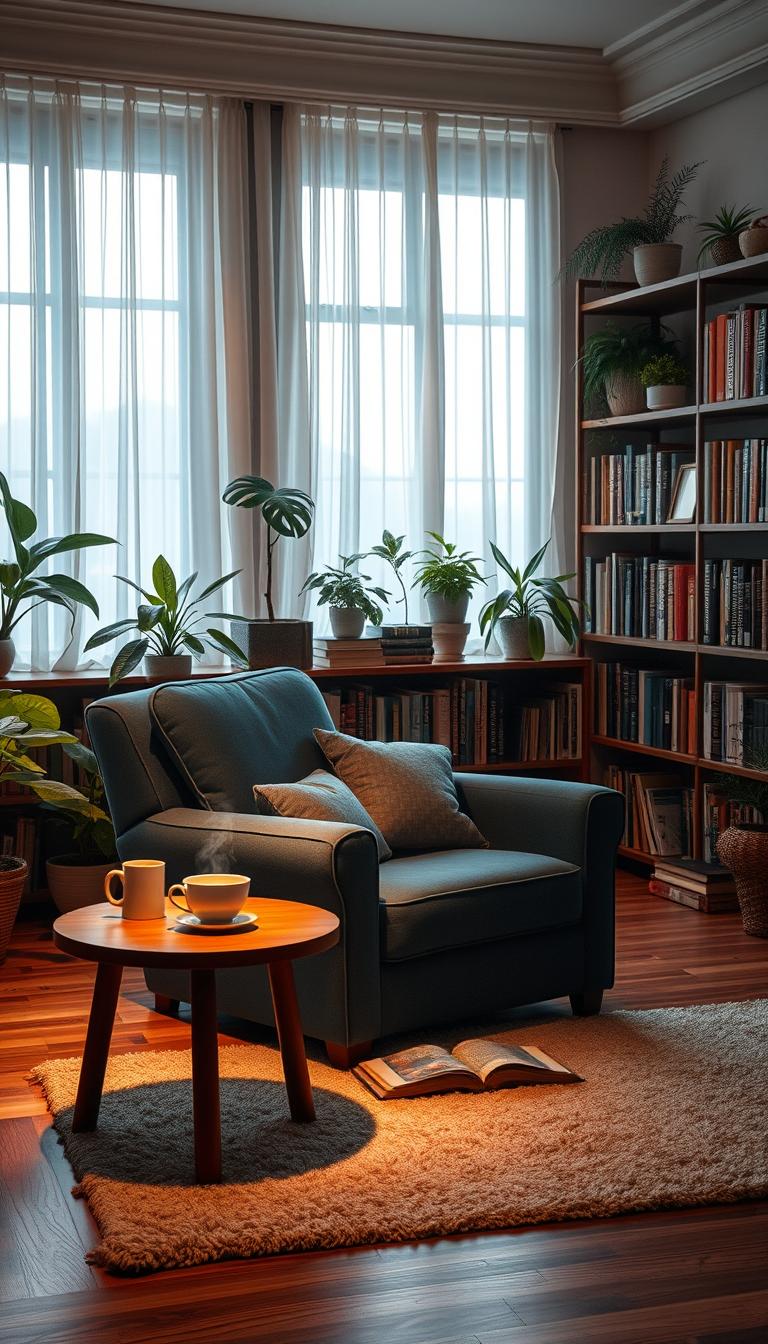
Layered textures and art
Mix cotton, velvet, and sheepskin to add depth without clutter. Nature-inspired prints or family photos give the decor soul.
“Sit, breathe, read a page — if your shoulders drop, your palette and lighting are on point.”
- Lighting plan: ambient glow, task lamps for pages, and picture lights to highlight shelves.
- Use bulbs at 2700–3000K and low-glare fixtures for crisp evening reading.
- Art direction: vintage prints, sculptural lamps, and personal photography keep the room lived-in.
Try this simple test: sit in your favorite chair and read one page. If you relax, you’ve hit the right balance of color, texture, and light.
Built-Ins and Custom Details That Elevate Your Library
A thoughtful mix of ornament and function turns storage into a style statement.
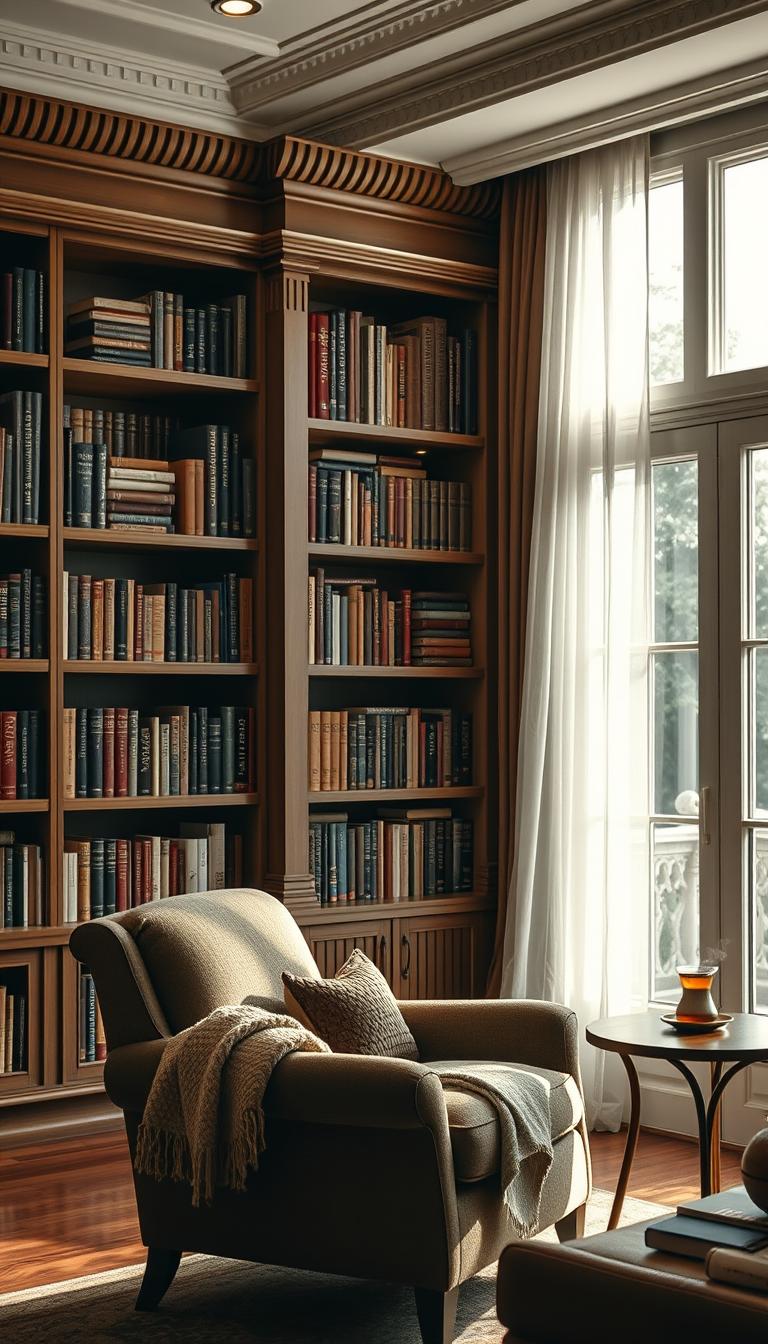
I often specify trellis or latticework on lower cabinets to give run-of-the-mill shelves character. It nods to classic craft without making the wall feel fussy.
Trellis, picture lights, and adjustable sconces
Picture lights and adjustable sconces lift artwork and spines at night. I route wiring through backs and add cable pass-throughs so tech stays out of sight.
Gold accents, mirrored panels, and statement ceilings
Gold on shelf lips, frames, or sconces warms moody paint and reads luxe in small doses. Mirrored panels behind shelving amplify depth and make off-the-shelf units feel built-in.
Try a glossy or coffered ceiling to bounce light back onto pages and visually raise a room.
Glass-front cases to reduce visual clutter
Glass-front bookcases cut dust and tidy a display while keeping the silhouette clean. Use soft-close hardware and adjustable pins so form supports long-term function.
“Small details—mirrors, gold trim, and the right lamp—turn storage into something you want to live with every day.”
| Detail | Benefit | Practical note |
|---|---|---|
| Trellis panels | Add texture without bulk | Keep lower cabinets ventilated |
| Picture lights & sconces | Layered, glare-free lighting | Hardwire or use integrated channels |
| Mirrored backs | Creates depth in tight rooms | Use thin, safe mirror panels |
| Glass-front cases | Protects books, reduces clutter | Choose UV-filter glass for rare editions |
Merge Rooms Smartly: Library-Worthy Zones in Shared Spaces
An evening-ready dining area can quietly turn into your best reading retreat. I’ve used low-sun rooms painted deep blue in a Manhattan project so the space feels intimate at night and pages read with strong contrast.
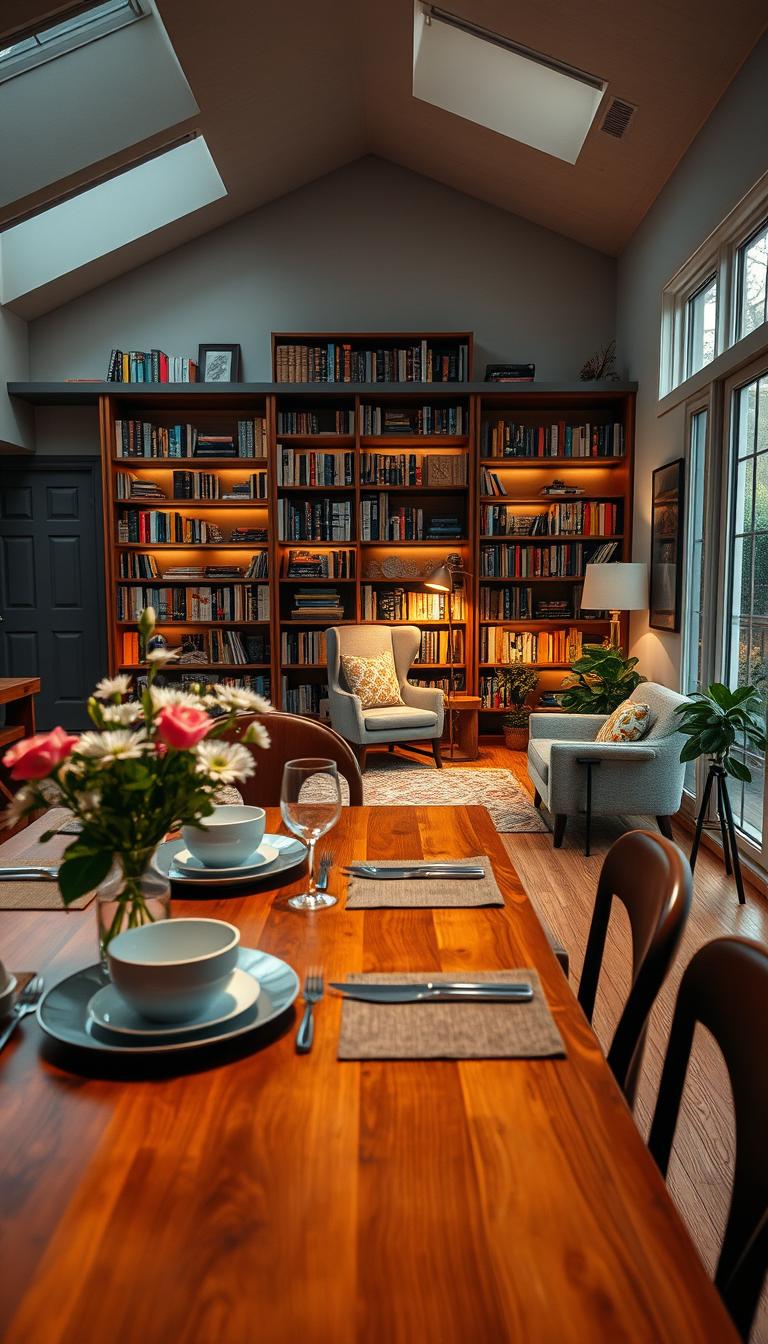
Dining room + library for nighttime reading
The table doubles as a perfect reading surface. Add felt pads, a tray for your mug, and a runner to protect wood when books stack up.
Storage strategy: closed bases hide linens and games; open uppers hold go-to titles and cookbooks. This keeps the room tidy for guests and usable for reading time.
Lighting: layer a chandelier on dimmers, picture lights on shelves, and a nearby floor lamp for task clarity. Brass accents warm the palette and catch low light beautifully.
- Manage sound with rugs and a soft-close drawer for dinnerware.
- Define zones subtly with a rug or slim console so the space flows.
- Simple routine: clear the table and reset lights each evening to turn the shared space into a nightly ritual.
Create a Cozy Fireplace Reading Nook
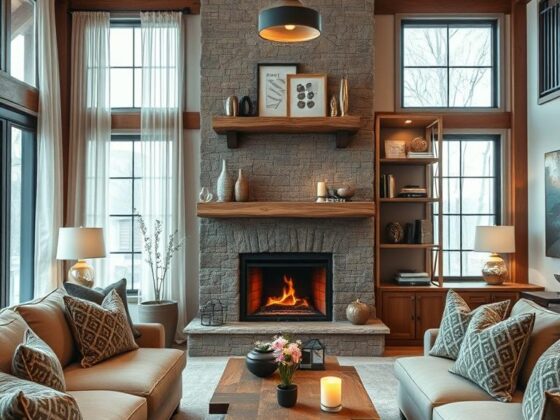
A fireplace can anchor a serene reading corner that invites you to linger. Nest the area with warm textures and a steady glow so the space feels intentional and calm.
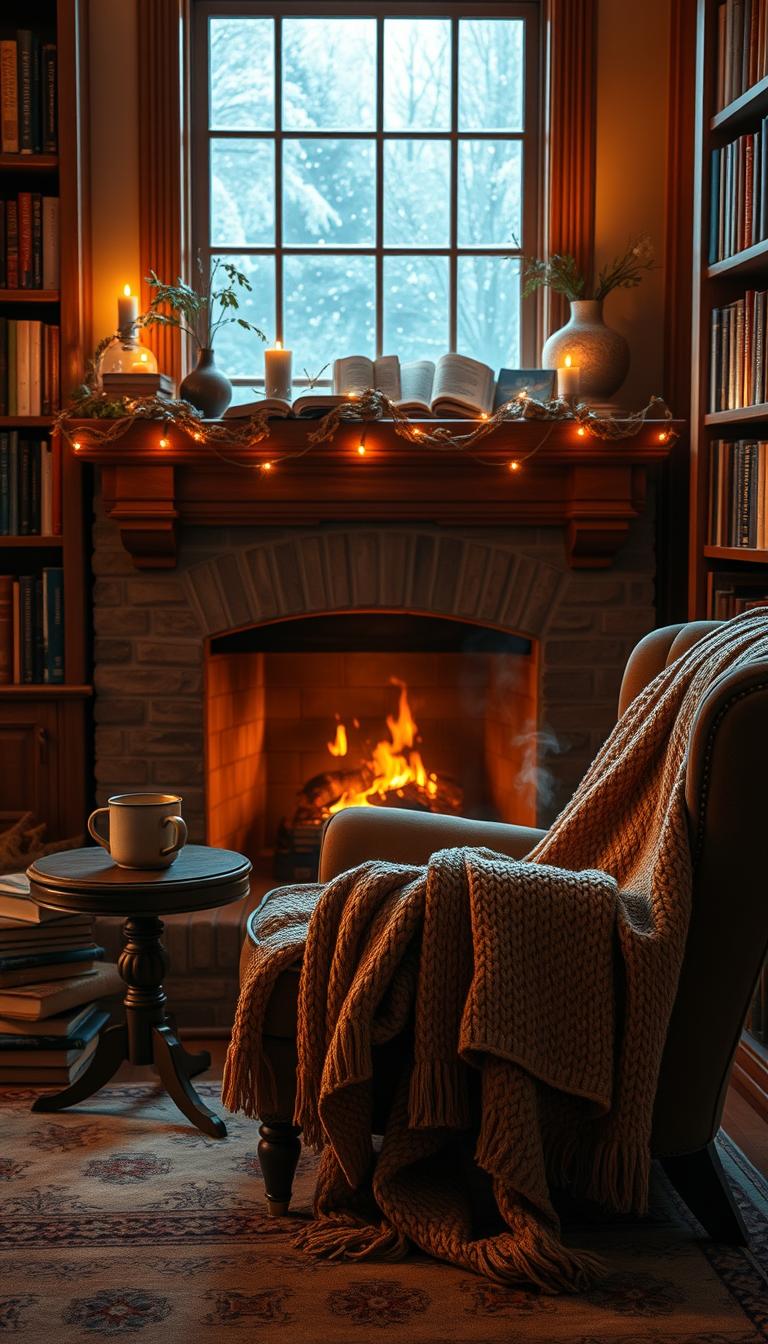
I place shelves on either side of the hearth to cradle the vignette. That symmetry reads classic and keeps favorite titles at hand.
Seating matters. I pick a supportive chair plus an ottoman, or two chairs for conversation. A petite side table holds a mug and the current book.
Layer the light: a task lamp by the chair, soft mantel uplighting, and picture lights on shelves. Together they make evening reading easy on the eyes.
Dark greens or charcoal on the mantel sharpen the mood. Warm metals—brass or aged bronze—add a gentle shimmer and lift the palette.
- Tip: tuck a small desk nearby if you want a day-to-night work nook.
- Keep heat-sensitive materials clear of the fire and allow proper clearance for finishes.
- Rotate seasonal decor on the shelves so the vignette stays fresh year-round.
Bold Moves: Contrast Colors, Color Drenching, and Unconventional Designs
Make a bold color choice and watch a room reshape itself around your books. A saturated hue can read like architecture when you commit—so choose with intent.
I often paint shelves in a deep red against clean white walls and add a blue ceiling for drama. It frames the collection and makes the ceiling feel deliberate rather than accidental.
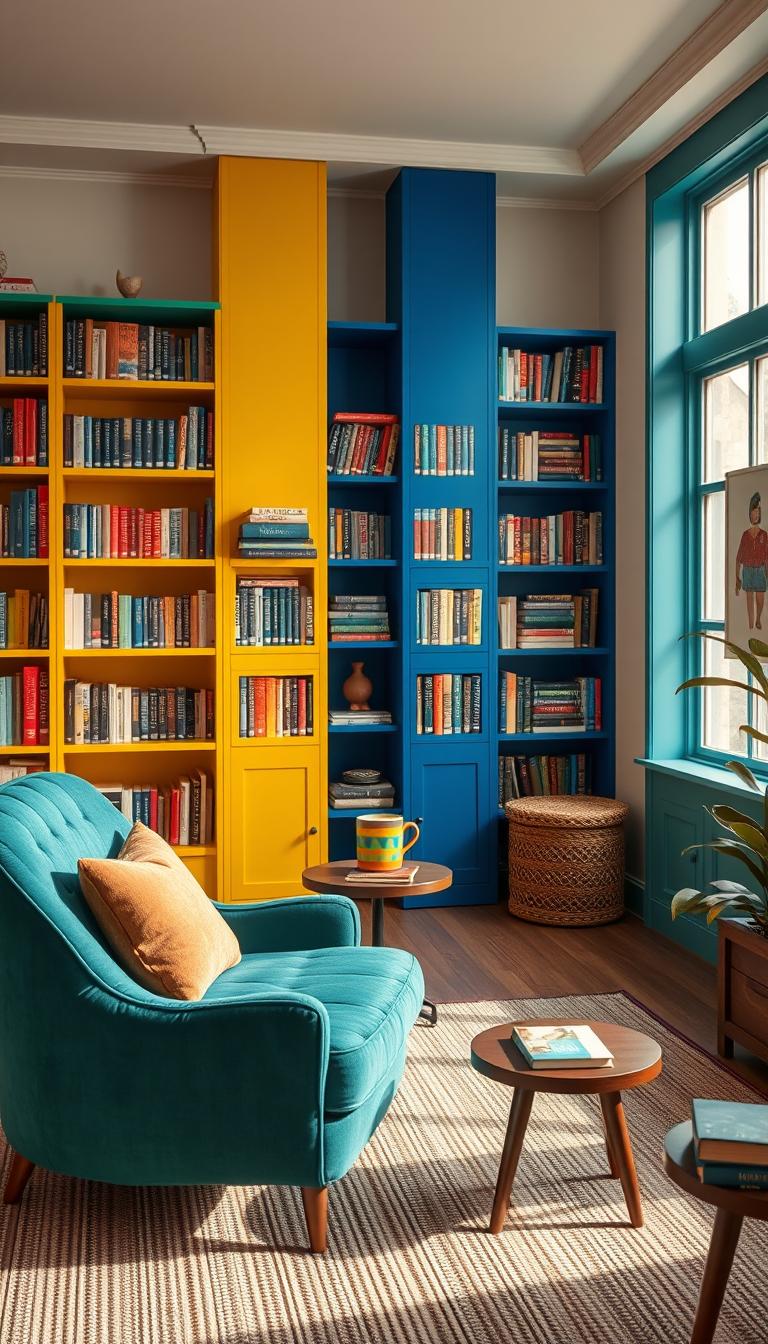
Color drenching—painting walls, trim, and storage the same shade—creates an enveloping, focused vibe. Blue-on-blue rooms are a reliable classic: they soothe and read stately with tan leathers and natural textures.
Maximalist living rooms that double as a library welcome patterns, art, and objects alongside books. The trick is rhythm: repeat a hue, limit scale clashes, and leave a few calm zones so the eye can rest.
- Test first: make a board with sheen samples—satin or semi-gloss on shelves reflects light and wipes clean.
- Build a palette from a favorite color (love bold green? start there) so the scheme feels cohesive.
- Keep a labeled touch-up kit for chips—bold hues benefit from easy maintenance.
“Commitment breeds coherence—pick the color you love and let it lead the way.”
Personal Touches: Heirlooms, Vintage Finds, and Memorabilia
Personal objects give a room its memory — they make books feel like chapters in your life. I like to mix old cameras, a signed baseball, or a small heirloom among stacks so the space reads as lived, not staged.
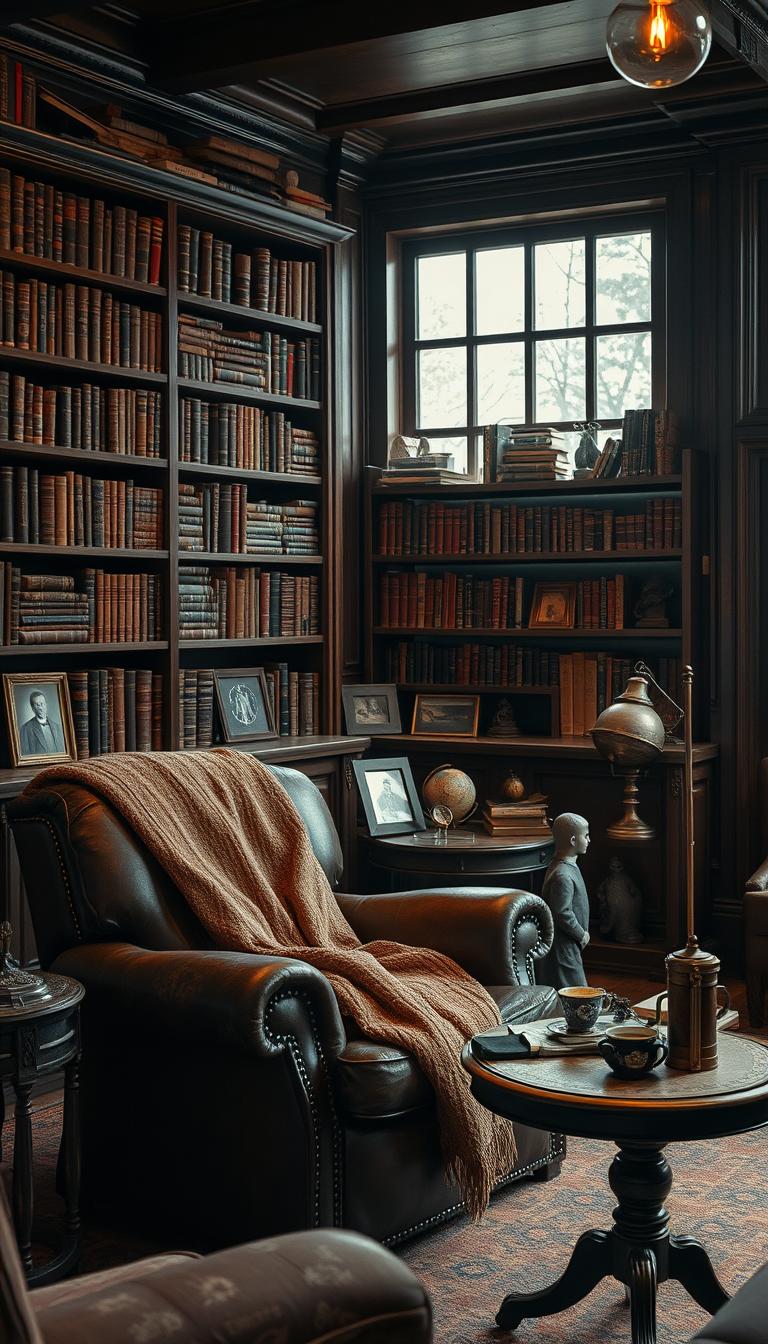
Curating collections alongside books
Start by leaving breathing room on a few shelves. That pause lets your collection and daily life expand without looking crowded.
I corral small items on trays and stands, and I use sturdy bookends to keep things tidy. Rotate displays by season so the room feels fresh and you edit thoughtfully over time.
- Protect rare finds: use archival stands and avoid direct sun for delicate pieces.
- Unify objects with a limited material palette and consistent frames to create calm cohesion.
- Let photos appear as accents — books still lead the narrative on the shelf.
“Sprinkling personal pieces among volumes turns storage into storytelling.”
Media-Friendly Libraries: Incorporate Your Television Seamlessly
A television doesn’t have to rule a room — it can sit quietly among books and art.
I frame the screen with a run of shelves so the TV reads as part of the wall. Use wider bays nearest the screen and tighter book towers at the ends to anchor the composition.
Paneling or fabric behind the screen visually recesses it. Add picture lights and adjustable sconces so the eye sees a gentle glow, not harsh glare. Calibrate brightness and add bias lighting to cut eye strain during evening viewing.
Smart storage keeps devices and cords out of sight—vented doors and cable channels keep gear cool and tidy. Balance spines and objects around the screen so books remain the focus.
- Frame the TV with open shelving and closed bases for extra storage.
- Consider a frame-style or art-display mode to blend the screen with decor.
- Use this approach in a living room or office for a multiuse space at home.
The result is a media-friendly library that supports reading, work, and family movie night without sacrificing style. For a deeper build guide, see a practical example of a modern smart library here.
Seating, Desks, and Ergonomics for Long Reading Sessions
A few ergonomic moves — the right seat, a simple footrest, and smart lighting — change how you read all day.
I pick furniture that supports posture and feels inviting. Choose a chair with good lumbar support, a soft but firm seat, and arm height that lets you hold a book comfortably.
Chairs, window seats, and dual seating corners
Window benches work for one or two sitters when you add a firm cushion and a lumbar pillow. Back-of-knee height matters for circulation; test it before you commit.
Dual seating corners — two chairs angled toward a shared table — make a quiet conversational nook that still respects concentrated reading. A small swing-arm surface keeps tea and notes within reach without cluttering the floor.
Desks and office-friendly setups
Integrate a desk into shelving so reference books sit above and drawers live below. In an office, put the task chair on casters and keep a nearby lounge for long reading sessions — two modes in one room.
- Lighting: adjustable lamps centered over work zones.
- Support: use a footrest to reduce neck and back strain.
- Flow: keep clear walkways so you don’t trip when lost in a chapter.
Storage Strategies: Ladders, Enclosed Bases, and Display Niches
When shelves climb high, practical access and neat storage keep them useful. I focus first on how you reach the top tiers and then on what you hide below.
Library ladders and platform access
I recommend rolling-rail ladders for long runs—smooth, durable, and easy to move. Hook ladders are great for short runs or intermittent use.
For ceiling-high spans, a platform landing makes sense. It gives safer access and a place to pause while you fetch tall books.
Closed storage for games and devices
Enclosed bases hide board games, devices, and cables so the room stays calm. Soft-close doors and ventilated panels keep gear tidy and cool.
Label interior drawers and add cable pass-throughs. That simple step keeps chargers and remotes out of sight but easy to find.
“Glass-fronts and picture lights protect prized volumes and make display niches feel intentional, not dusty.”
- I size shelf depth for mixed media: 10–12″ for art books, 8–10″ for novels, and shallow upper shelves for small objects.
- Use adjustable pins and heavy bookends so you can rearrange without rebuilding the wall.
- A slim mobile table or cart creates a staging spot for returns, repairs, and quick sorting.
| Feature | Recommendation | Benefit |
|---|---|---|
| Ladder type | Rolling rail or hook | Safe access vs. compact storage |
| Base storage | Closed cabinets with vents | Hides games, devices; reduces visual clutter |
| Display niche | Glass front + picture light | Protects books; adds soft ambient glow |
Small rituals matter: return books to the cart, close cabinet doors, and wipe glass once a month. Those habits keep your shelves feeling curated and ready to read.
Specialty Collections: Cookbooks, Kids’ Books, and Research Libraries
Tailoring shelves to purpose keeps a collection useful and beautiful—simple choices make a big difference.
Designing for chefs, children, and academics
I fit cookbooks on sturdier shelves with wipeable finishes and place them near the dining or kitchen zone for quick reach.
Kids’ setups use lower shelves, front-facing displays, and playful color cues. I favor durable materials and rounded edges for family safety.
Research spaces get lighter palettes, flexible task lighting, and vintage prints. I add protective stands for rare or antique volumes and limit direct natural light to preserve paper.
Create a quiet corner in an office with subject clusters at arm’s reach. In shared rooms, baskets help quick cleanup and rotating themes keep kids engaged.
“Map an index—group by subject so the shelf works as hard as you do.”
| Type | Key Feature | Quick Tip |
|---|---|---|
| Cookbooks | Sturdy shelves + wipeable finish | Keep near dining/kitchen for ease |
| Kids’ books | Low shelves + front display | Use rounded edges and bright cues |
| Research | Light palette + task lighting | Protect rare volumes; index by subject |
Home Library Design
Good room planning begins with a habit, not a blueprint — where do you reach for a book most days?
I pull the big lessons together so you can act with confidence. Start by naming your why: reading for calm, study, or family time. That tells you which move to make first.
Practical rules I use: mix floor-to-ceiling shelving with a window bench, use glass-fronts for prized volumes, and keep closed bases for everyday clutter. Hallways, closets, and attic nooks add up to a full room library without a full remodel.
- Palette: pick calm greens or blues, or a saturated hue if you want drama.
- Lighting: layer ambient, task, and picture lights — put them on dimmers.
- Future-proof: allow spare shelf space and adjustable fittings so your collection grows.
“Pick one actionable idea now — a wall of shelves or a window bench — then build momentum.”
| Step | Why it matters | Quick action |
|---|---|---|
| Define your why | Guides scale and mood | List daily reading habits |
| Choose a first move | Makes progress tangible | Install a bench or one wall shelf |
| Layer lighting | Comfort across hours | Ambient + task + picture lights on dimmers |
Conclusion
A simple shelf and a good lamp can be the first step toward a room you truly want to be in. Start with one move — a sunny window bench, a dining wall repurposed for nighttime reading, or a fireplace corner for slow weekends.
I favor practical wins: floor-to-ceiling shelving with a ladder, glass-front cases for prized volumes, and hallway or closet swaps that add quiet storage. Invest in supportive seating, layered lighting, and tidy bases that keep surfaces clear.
Let color set the mood—calming greens to unwind or bold hues for creative spark. Keep it personal: mix books with heirlooms so the place feels like you.
When you’re ready for more inspiration, check these curated home library interior ideas and build out from the light where you read most.