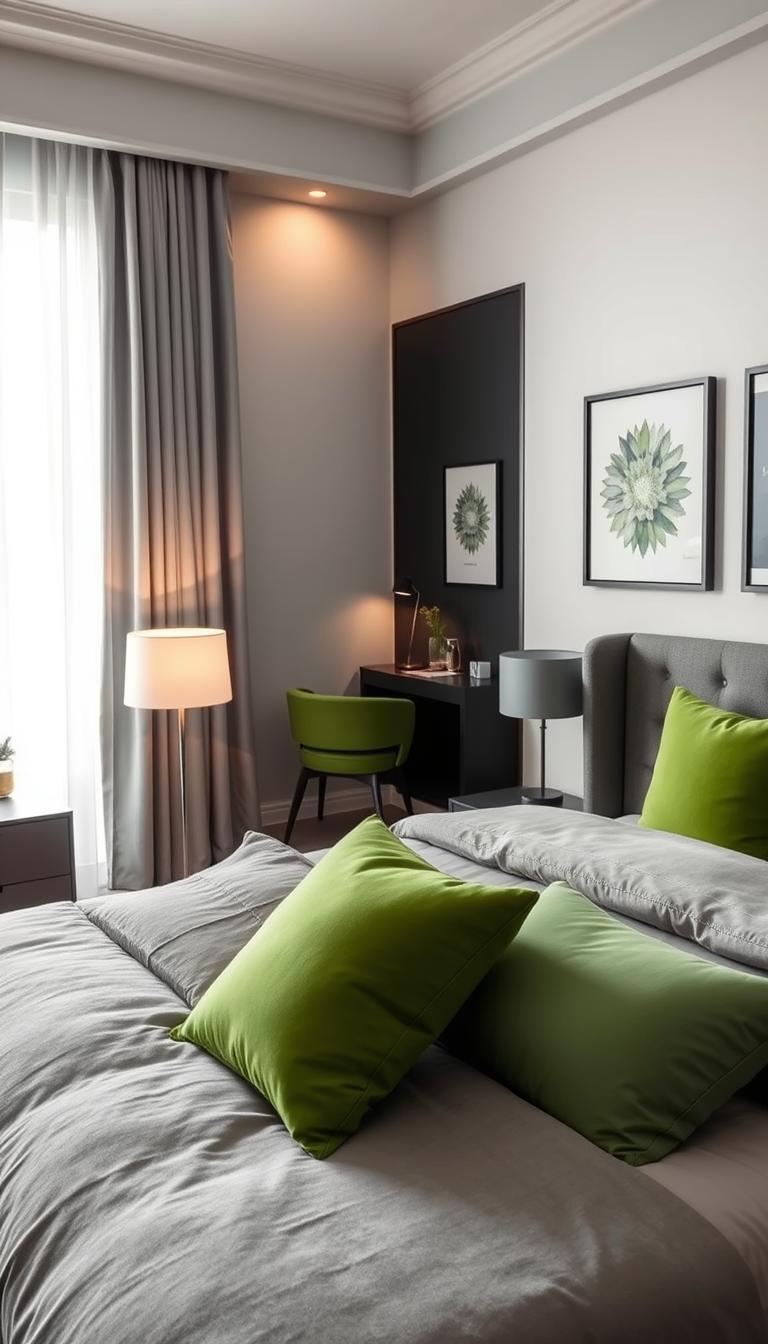
Can a simple palette really transform how you sleep? I ask that question every time I start a project, because the right tones change mood fast.
I work with deep forest hues and cool neutrals to craft a grounded, calming retreat. Small moves—an accent cushion, a soft throw, or a statement headboard—shift atmosphere without a full overhaul. Green grey pairings flex from moody luxury to peaceful, earthy calm.
I’ll map practical bedroom ideas that tie bedding, walls, furniture, and lighting together. Expect nature-inspired cues, a touch of sage for softness, and steps that support better sleep. By the end, you’ll have a clear palette and simple edits that make the room look intentional and feel like your personal retreat.
Key Takeaways
- Small accents can pivot a room’s atmosphere quickly.
- Mix deep greens with cool neutrals for balance.
- Layer bedding, walls, artwork, and lighting for continuity.
- Sage tones add softness without stealing focus.
- Prioritize placement of the bed and a soft headboard for comfort.
- Use lighting like a dimmer for a boutique retreat feel.
Why Grey and Green Make a Calming, Balanced Bedroom
Deep botanical tones bring an instant sense of warmth, while cool neutrals steady the eye and calm the mind. Together, these choices form a green grey palette that reduces visual clutter and soothes stress.
The warmth of deep greens meets the neutrality of soft grey
I’ve seen how dark foliage shades read as luxurious and snug, while pale neutrals keep the scene measured. Use varied shades—charcoal, mid, and pale—to give depth without drama.
From modern minimalism to biophilic design: styles that fit
This pairing suits clean, minimalist rooms as well as nature-led interiors with texture and plants. Biophilic cues—wood, stone, living greens—help the space feel like a calm retreat.
- 60/30/10 rule: majority neutral, sizeable green, small accent.
- In small spaces, keep walls light and add greens via textiles.
- Choose sage for openness; reserve deeper tones for cozy focal points.
These simple moves are some of my favorite bedroom ideas. They help a room feel like rest without a full remodel—just smart bedroom design.
Paint and Walls: From Accent Walls to Serene All-Over Tones
An accent wall behind the bed is the fastest way to change a room’s mood. I often recommend this when clients want big impact with little fuss. A statement accent wall in forest or emerald projects luxury and warmth without crowding the space.
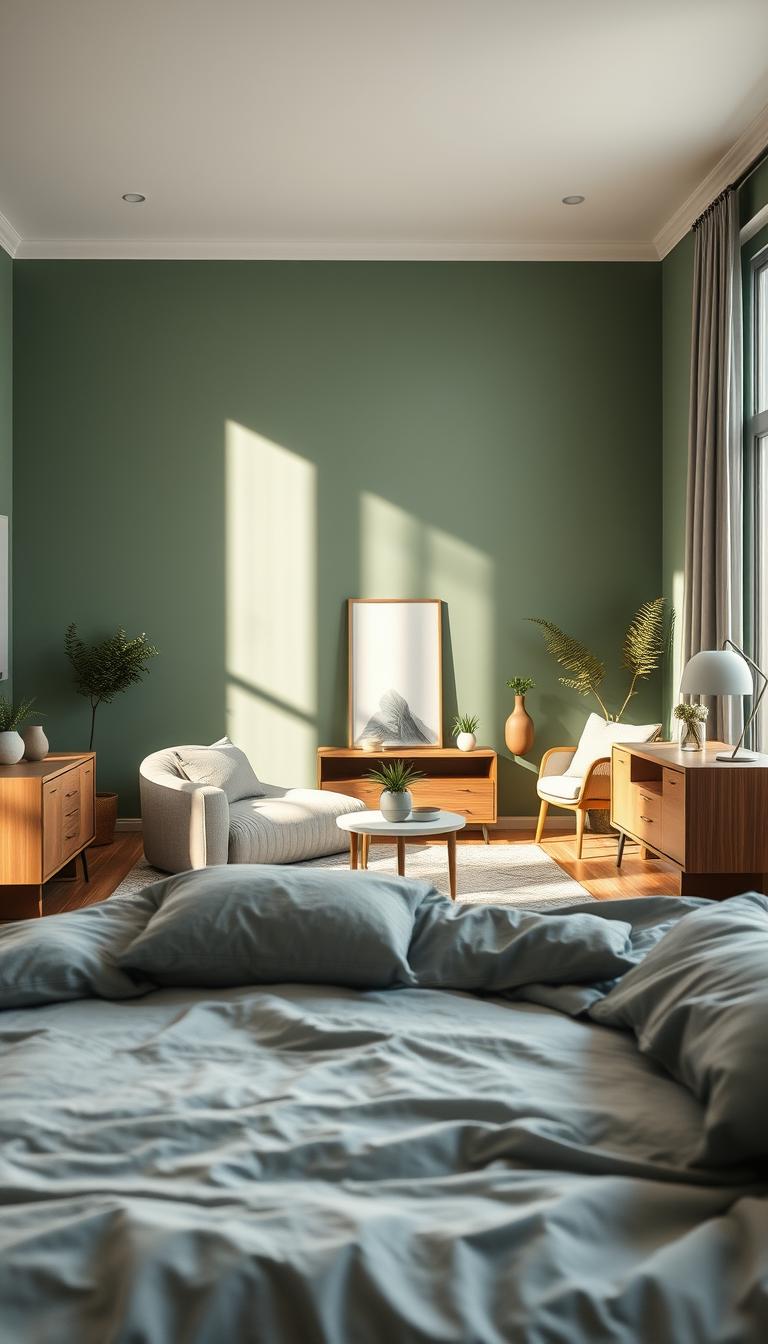
Statement accent wall ideas
Go deep for drama. A single lush surface acts like a backdrop, lifting textiles and furniture into something more refined.
- Hotel feel: pair a tall upholstered headboard with matching bedsides and warm gold light fittings to make the wall sing.
- Pattern play: choose a woodland mural or small botanical wallpaper for nature-first patterns that feel curated, not cluttered.
Sherwin-Williams shades to try
I reach for specific paints by name so clients know what to ask their pro.
- Pewter Green (SW 6208) — deep, enveloping, dramatic.
- Nurture Green (SW 6451) — fresh and nature-forward.
- Evergreen Fog (SW 9130) — a sage-leaning neutral that holds up in low light.
- Courtyard (SW 6440) — confident, garden-inspired tone.
Pairing grey tones for all-over walls
If you prefer full-room coverage, I balance charcoal, mid, and light grey tones to set the right mood. Charcoal makes a snug cocoon. Mid grey keeps the composition tailored. Light hues keep the space airy.
“In dim rooms I lean on Evergreen Fog; in bright rooms, Pewter Green reads rich without feeling heavy.”
Tip: Bridge paint and materials with warm woods or woven textures so transitions feel intentional. A well-chosen wall anchors bedding, furniture, and light to create cohesive bedroom ideas that last.
Bedding and Textiles: Layer Soft Grey with Lush Green Accents
Start with bedding that feels like a gentle hug. I like to build from a soft grey base—percale or sateen sheets, a quilt, then a knitted throw. Textured blankets and cushions add warmth fast.
Here’s how I layer to make the bed read calm and curated.
- Base first: soft grey sheets, a lightweight quilt, then a heavier knitted throw for depth.
- Velvet moments: add an emerald pillow or a single velvet throw to create a touchable focal point.
- Mix textures: linen for breathability, bouclé for coziness, velvet for richness—your hands and eyes will thank you.
- Seasonal swaps: use grey florals in summer; switch to green tartan in winter to cocoon the space.
To keep color harmony with nearby walls or furniture, echo a paint shade in one pillow or throw. Limit yourself to three bedding tones—two greys and one green—and lean on texture so the bed looks layered, not busy.
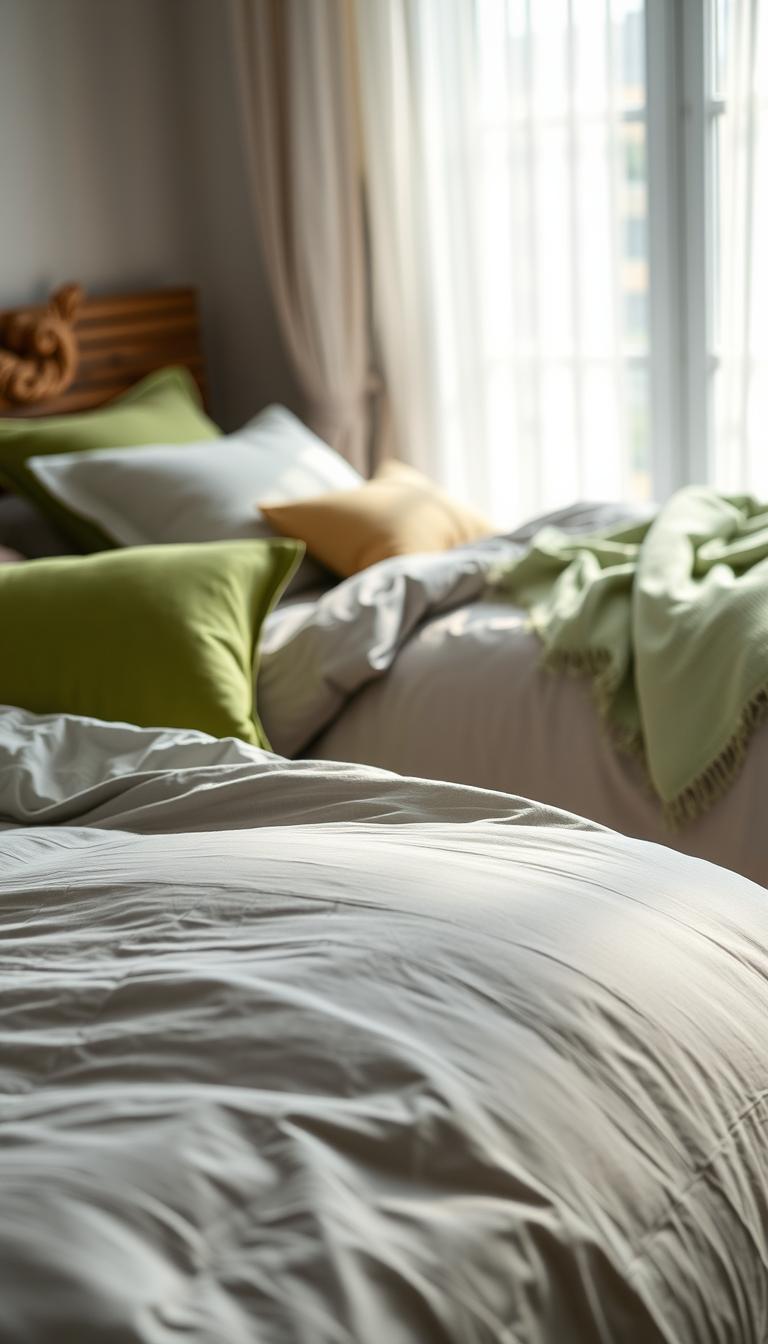
“A single velvet cushion lifts the whole composition without overwhelming the sleep space.”
Furniture and Materials: Grey Pieces, Natural Elements, and Texture
The right mix of upholstered pieces and natural materials keeps a space grounded. I like to start with soft, upholstered seating and low-profile storage so larger items feel light. This approach makes even a compact room seem intentional.
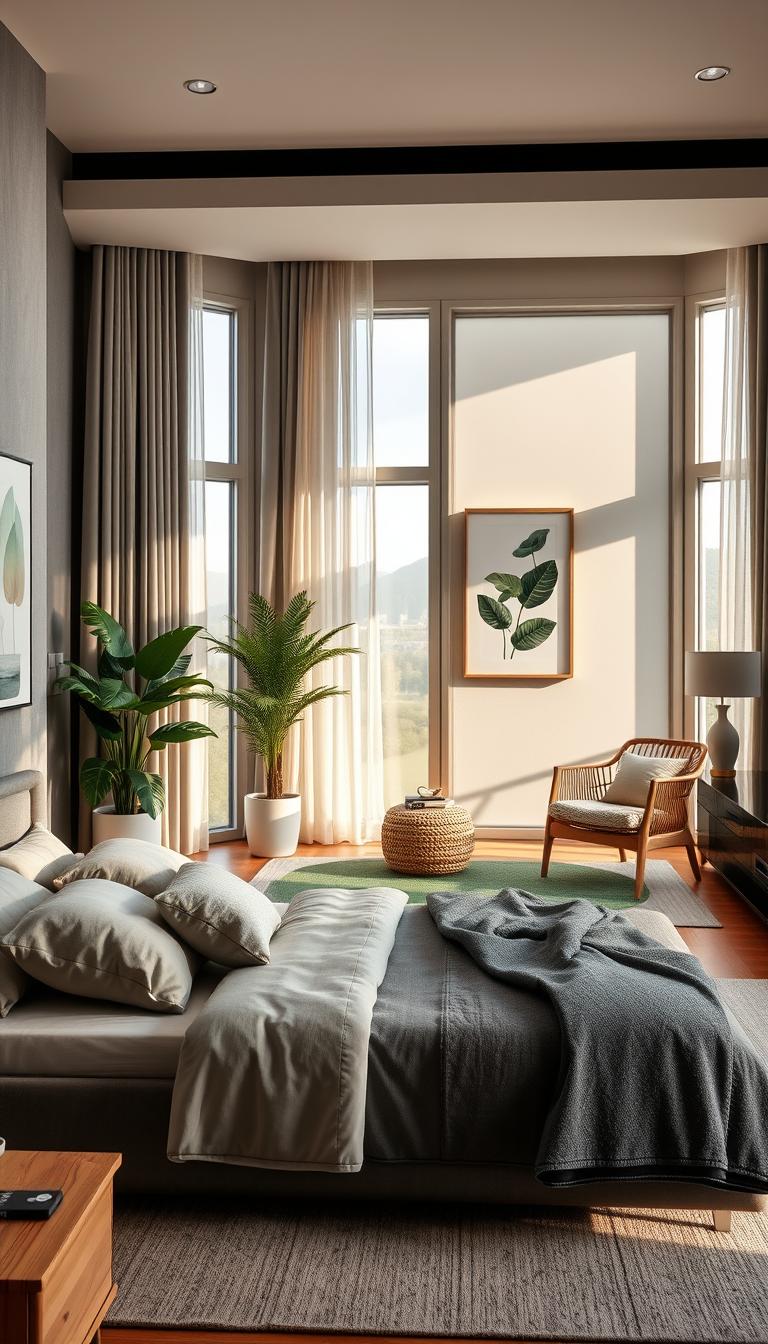
Balancing dark walls with soft seating
Against darker walls I specify soft grey furniture—an upholstered bed, a cozy armchair, or a light dresser. These choices restore visual balance and stop the room from feeling heavy.
Tip: pick one grey furniture piece to anchor the layout and let textiles carry the rest of the palette.
Wood, rattan, and woven accents for a nature-rich look
Wood nightstands, rattan lamps, and wicker baskets add a 70s-tinged, sustainable feel. I use warm wood tones to tie sage accents into the scheme without overloading color.
Choosing a statement headboard for a hotel-style focal point
A grand headboard in velvet or channel tufting becomes the room’s anchor. Pair it with matching bedsides and simple hardware—brushed brass or matte black—to lift the style quickly.
“One bold headboard organizes the space in one move and makes the whole room feel curated.”
- Mix finishes—light wood, a grey dresser, woven baskets—for a collected look.
- When space is tight, choose wall-hung shelves and slim bedside tables to keep floor lines visible.
- Add a single green ottoman or bench to echo wall color and create cohesion.
Lighting That Elevates the Atmosphere
Lighting sets mood faster than paint—swap harsh glare for layered glow. I start here because light changes how the whole room feels like a retreat.
Warm lamps, sconces, and small gold fittings give an instant hotel vibe. Place matching bedside lamps or sconces for symmetry. A hint of gold warms cool tones and makes textiles read richer.
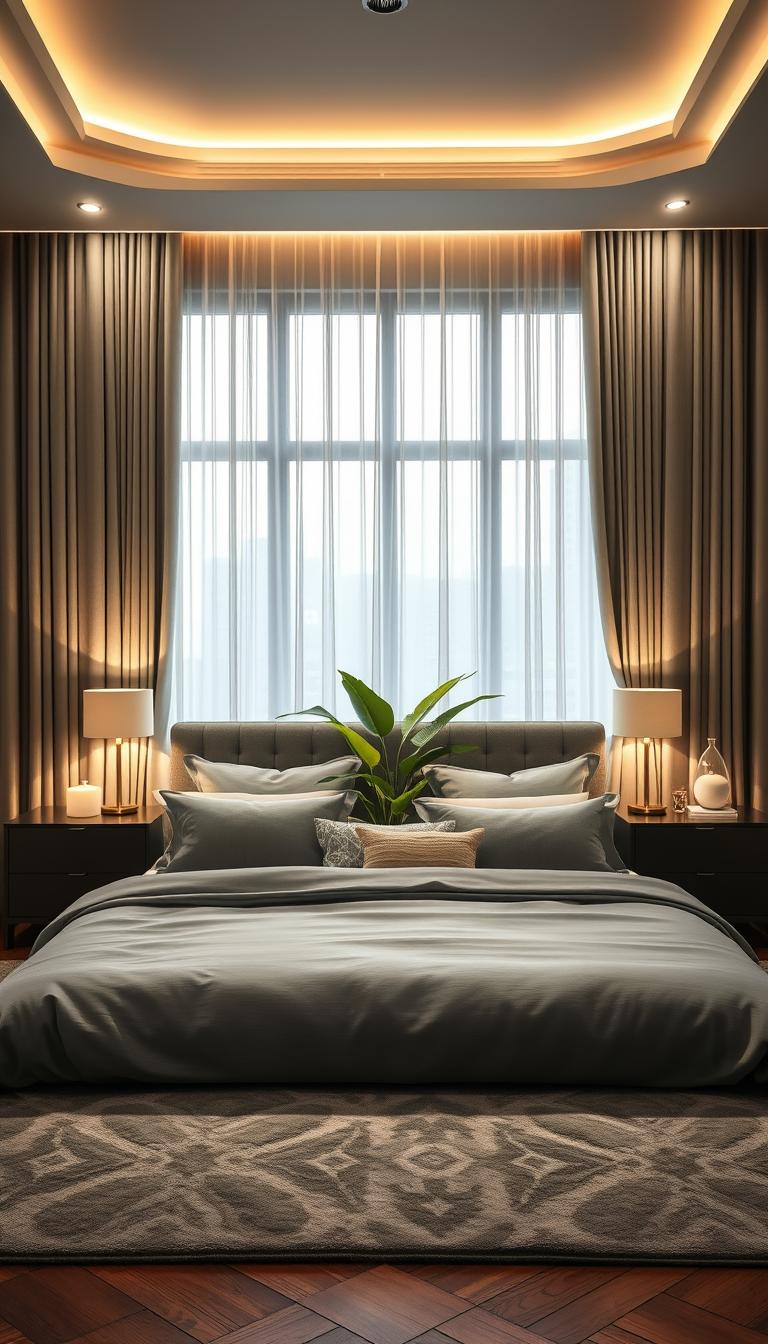
“Ditch the big light”—I tell clients this all the time. Use three layers: ambient (a shaded lamp), task (a focused reading light), and accent (a small picture light or candle). The result is depth and calm.
- Swap overhead glare for table lamps and wall sconces to help your body wind down.
- In tight space, choose plug-in sconces to free nightstand surfaces.
- Pick warm white bulbs (about 2700K) and add a dimmer—instant control over atmosphere.
“A dimmer is a tiny upgrade that changes how a room makes you feel.”
For more curated tips on colour and fixtures, see dark green and grey bedroom ideas for hotel-style finishes and practical bedroom ideas.
Patterns, Artwork, and Accents for Personality and Balance
Patterns are like spices—used sparingly, they bring a dish to life. I lean on small repeats: a pinstripe throw, a checked cushion, a subtle botanical pillow. They add rhythm without crowding the composition.
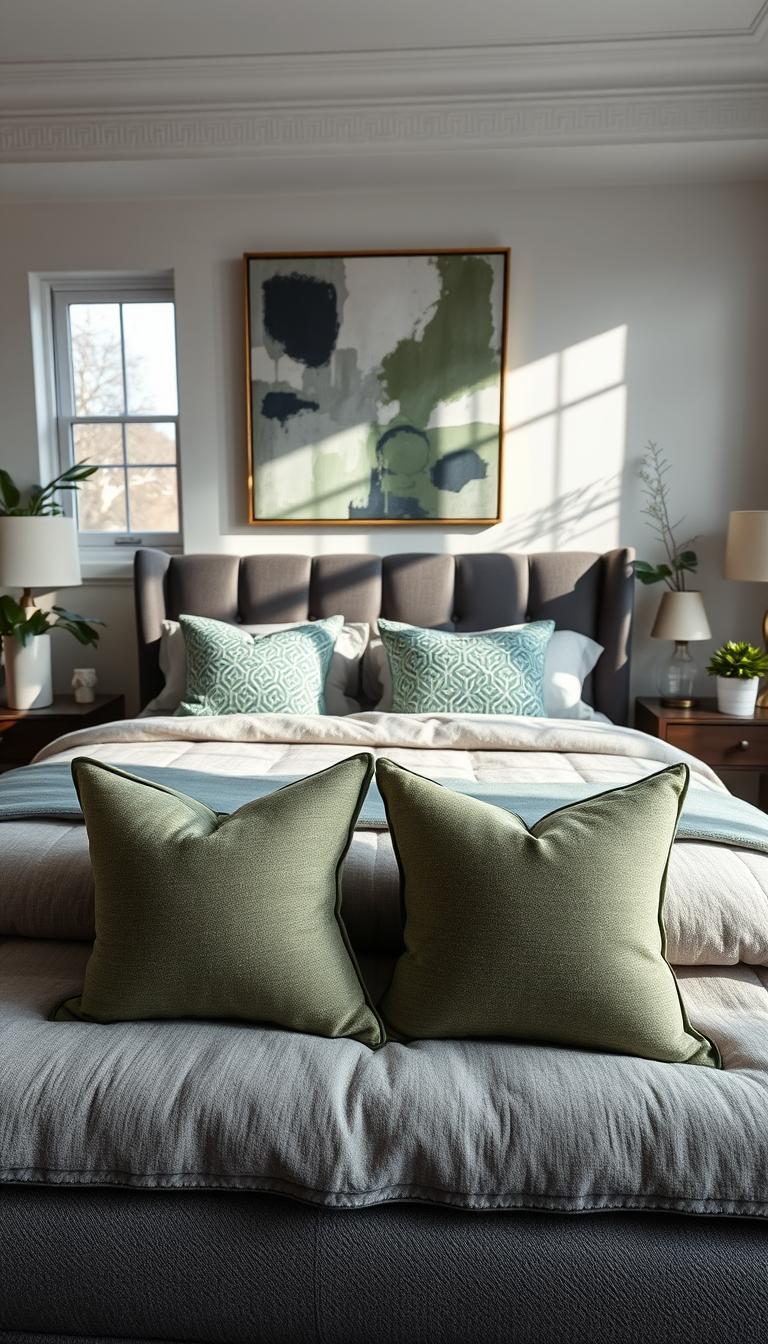
Introduce stripes, checks, and botanicals without overwhelm
If patterns make you nervous, start tiny. A single check cushion or narrow stripe throw gives interest while keeping calm. Swap prints seasonally—airy grey florals in summer, deeper green tartan in winter.
Art that echoes the palette
Choose artwork that reflects your taste and ties into the palette. Gallery walls feel personal; a single landscape reads serene. Keep frame finishes to two repeats so the display reads ordered.
Complementary color pops and living accents
A mustard, orange, or warm brown pop wakes up sage and soft neutrals. Add plants where you see them daily—by the bed or dresser—for a biophilic boost that lowers stress.
“When I edit a room I usually limit patterns to one textile, one color pop, and one green accent—clean, balanced, intentional.”
- Quick rule: one patterned textile, one color pop, one living accent.
- Repeat two frame finishes to keep visual calm.
- Rotate seasonal patterns to keep the scheme fresh.
Grey and Green Bedroom Ideas You’ll Love Right Now
Simple swaps—one wall, a new headboard, a couple of lamps—can lift a night’s sleep into something hotel-like.
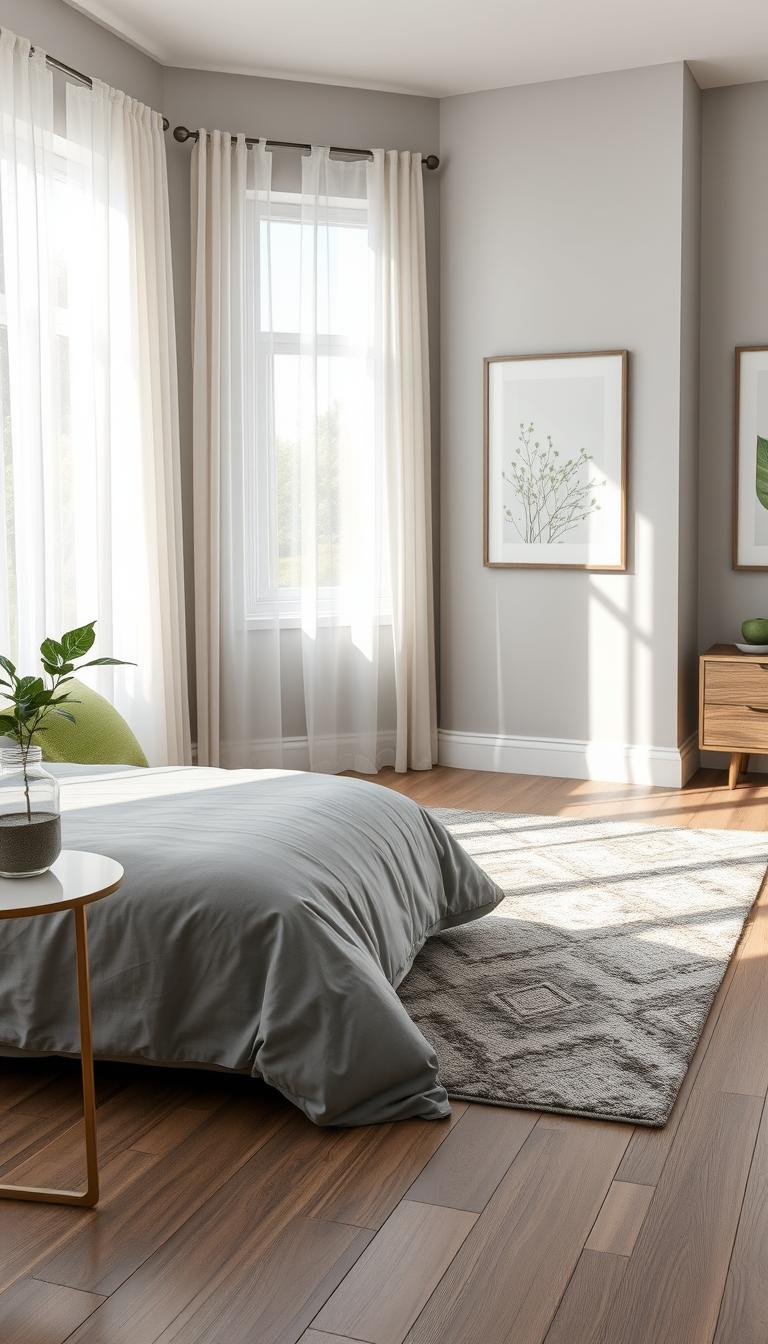
Dark accent wall + gold lights for a 5-star feel
Go bold: a dark accent wall behind the bed paired with a tall upholstered headboard and matching bedsides creates instant hotel energy. Add gold lights for warmth that flatters textiles and skin tone.
Soft bedding layers with deep cushions for comfort
Start with soft grey bedding in varied textures. Layer deep green cushions and a velvet throw to add contrast and a pulled-together, boutique vibe.
Minimalist pale backdrop with restrained accents
Prefer calm minimalism? Paint walls pale grey, keep surfaces clear, and add one green accent or a sage throw so the design breathes.
Emerald accents that belong in your space
Emerald velvet works for pillows, a throw, or an accent chair. Tie it back to the palette with a small artwork or a matching throw to make the piece feel intentional.
“Swap a green throw, add two lamps, and center the bed under your accent wall—fast, high-impact upgrades.”
For more curated tips, see dark green and grey bedroom ideas to refine these bedroom ideas tonight.
Conclusion
, One measured change—walls, light, or a textile—can redefine how your space will feel like. Use these bedroom ideas to choose a focal wall, then build the rest around that choice.
I favor a green grey palette for clear tones that support calm. For bedroom design, keep furniture simple, pick one piece of grey furniture, and layer light for evening wind-down.
Plants and nature elements add balance. Wood details and soft textiles root the scheme. A touch of sage, tidy surfaces, and fewer things will turn your room into a true retreat.
Start small: one wall, one lamp, one new textile. Momentum in design grows fast—try it this week and enjoy the change.