What if a compact room could calm you the moment you step in? I ask that because I’ve seen tiny baths transform into spa-like havens with the right choices. A few calm tones, clean lines, and layered lighting change how the whole space feels.
I recommend frameless glass for the walk-in shower to keep sightlines open. Extending the same floor tile into the shower adds continuity and makes the room feel longer. Recessed storage and wall-hung pieces free up floor area so the layout breathes.
Lighting is the quiet hero: a mix of task, ambient, and dimmable accents cues you to relax. Porcelain tiles give durability and easy care, while oversized or backlit mirrors amplify light without clutter. I’ll also flag budget moves—keeping plumbing where it is and using sliding doors—to save money and space.
Stick with a handful of tactile details—a crafted vanity top, a sealed texture underfoot—and your remodel will feel intentional and serene. These ideas help you plan quick wins now and thoughtful upgrades later.
Key Takeaways
- Use frameless glass and continuous tiles to lengthen the visual flow.
- Layer lighting—task, ambient, and dimmable accents—for function and calm.
- Choose porcelain tiles and sealed textures for durability and low maintenance.
- Save space with recessed storage, wall-hung pieces, and sliding doors.
- Keep plumbing in place to control budget; invest in a few lasting details.
Why a Black Small Bathroom Feels Like a Spa Now
When I wrap a tiny room in moody tones, people relax the way they do when a door closes on noise. That cocoon effect quiets visual clutter and makes a compact bathroom read as intentional. I’ve watched clients slow down as soon as the door shuts—instant calm.
Moody cocoon effect with modern contrast
Dark walls absorb glare and sharpen details. A sliver of white tile, a chrome spout, or a warm brass accent reads like moonlight on water. Those small highlights keep the palette lively and prevent gloom.
Timeless black-and-white palettes that outlast trends
A classic black-and-white approach gives you freedom. Swap towels, art, or a plant and the look refreshes without a remodel. Matte fields next to glossy accents add depth and a tactile touch that feels curated.
Worried about chores or morning prep? Bright mirrors and targeted lighting make grooming easy while preserving the retreat-like mood.
| Approach | Effect | Quick Win |
|---|---|---|
| All-dark walls | Deep, cocooning depth | Matte paint + large mirror |
| Black-and-white mix | Timeless contrast, easy updates | White fixtures + dark tile |
| Accent metal finishes | Dynamic highlights, luxe feel | Brass or chrome hardware |
- Anchor lower fields darker, keep upper planes lighter to lift the eye.
- Use texture—matte expanses with glossy details—for a designed, not flat, space.
Start With a Space-Savvy Plan for a Small Bathroom
Start by mapping how people move through the room—clear traffic lines make a tiny layout feel generous. I sketch paths first; that reveals what can stay and what must change. Retaining existing plumbing usually saves a large chunk of budget, so you can spend on finishes that feel luxurious.
Keep plumbing in place to control budget
Keeping pipes where they are reduces labor and surprise costs. Use that savings for a quality vanity top or better tile on the floor and walls.
Use sliding doors, wall-hung fixtures, and recessed niches
Sliding or pocket doors return usable space and stop door swings from colliding with the shower or vanity. Wall-hung fixtures and a floating vanity keep the floor visible and make the room read larger.
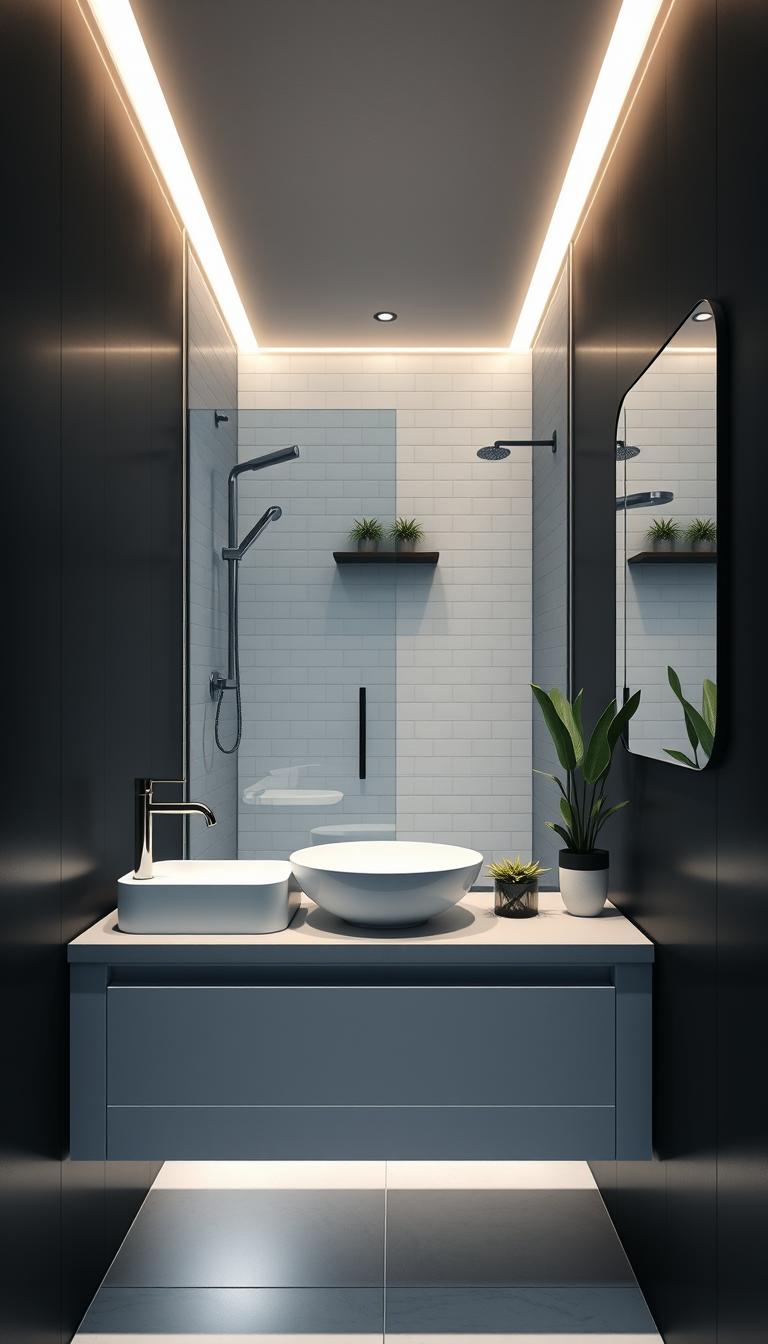
- Recessed niches hide bottles and free edges—clean lines, fewer bumps.
- Place the extractor near the shower to control moisture and protect grout.
- Plan lighting and outlets early: task light at the mirror, dimmable ambient overhead.
- Choose large-format tiles to reduce grout lines and keep sightlines calm.
- Layer storage at multiple heights: mirrored cabinet, shallow drawers, tall niche for towels.
Make a Black Accent Wall Your Focal Point
A single dark-faced wall can anchor the room and make everything else feel curated. I often pick the wall behind the vanity or shower as the hero. That one bold move reads intentional and keeps the rest of the space calm.
Balance it with white walls and soft neutrals. Bright walls and light tiles keep the room feeling open. A pale ceiling lifts the eye and makes the space feel taller.
I like a slim brass sconce or faucet against that dark field—tiny jewelry-like accents draw the eye to fixtures without clutter.
If you want warmth, echo the accent with a sliver of wood on the vanity or a thin frame. Tile the accent wall or use a moisture-friendly paint; both must be easy to wipe down near water.
- Choose one wall—behind the vanity or shower—for the bold treatment.
- Keep adjacent walls white or soft neutral to retain openness.
- Use minimal accessories; let the wall act as the art.
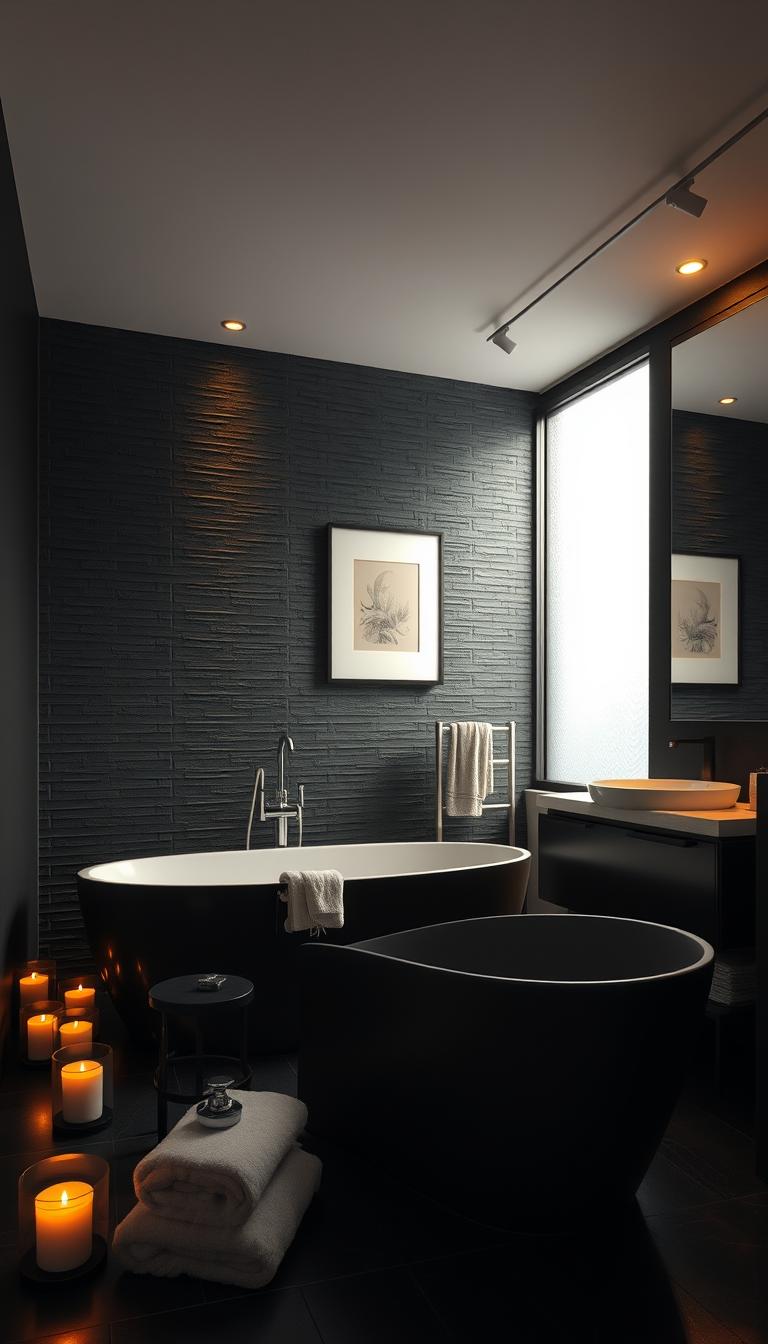
| Choice | Why it works | Quick action |
|---|---|---|
| Accent wall behind vanity | Focuses attention on fixtures and mirror | Paint or tile one wall |
| Light surrounding walls | Maintains openness and height | White walls + pale ceiling |
| Brass or wood accents | Adds warmth and contrast | Swap faucet, sconce, or vanity trim |
Go Monochrome: Walls and Floors in Black for Depth
Wrapping walls and floors in one deep tone lets texture and light do the talking. A unified shell makes the room feel intentional and calm.
Mix finishes to avoid a flat look. I use matte on large planes for velvety depth and add selective gloss on accents so reflections catch the eye. That contrast creates subtle drama without clutter.
Oversized mirrors are a must. They bounce light across the space and widen sightlines. Pair them with layered lighting—ambient, task, and accent—so the bathroom glows rather than glares.
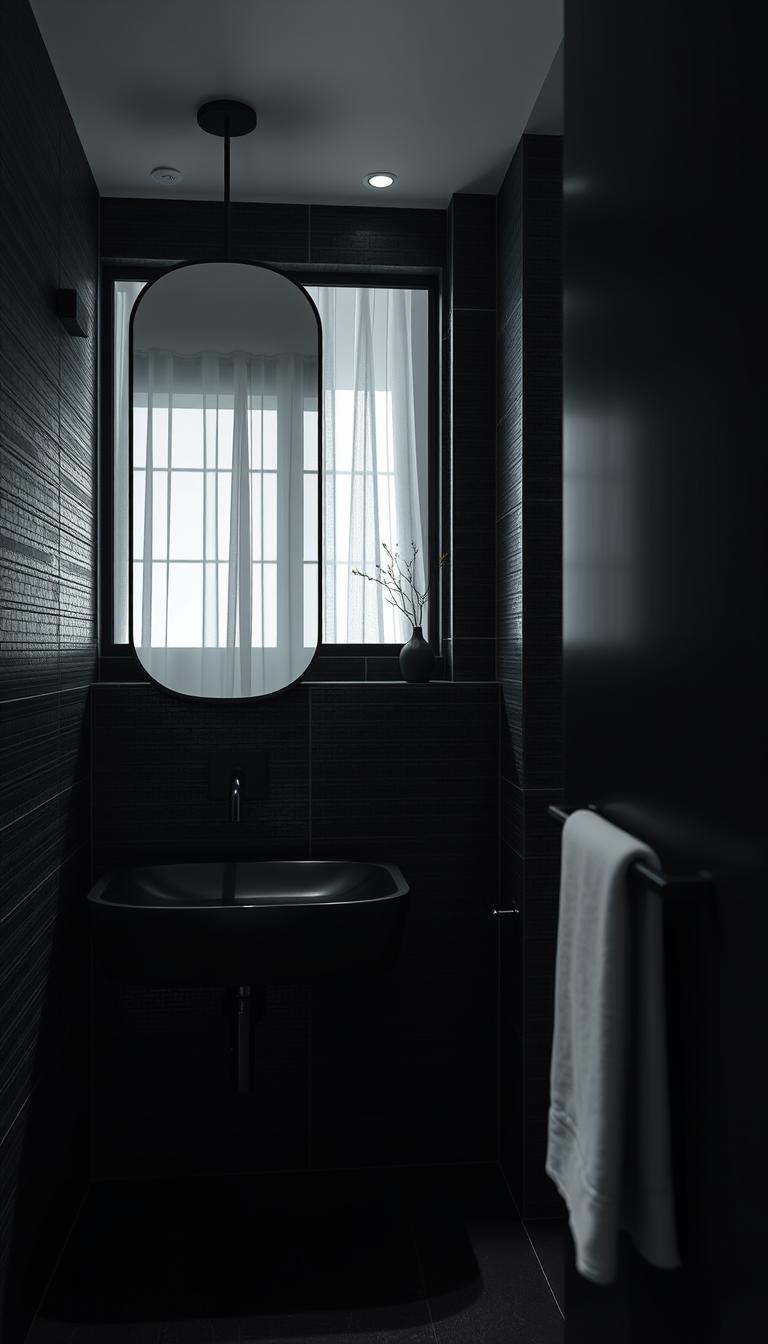
“Run the same floor into the shower—one material, cleaner lines, more visual length.”
- Choose matte or small-format glossy floor tiles for traction in wet areas.
- Keep lines clean by extending the floor into the shower for visual continuity.
- Pick a slim, wall-hung vanity to free floor space and keep the look airy.
- Use porcelain with a soft sheen if maintenance is a concern.
The result is a modern cocoon—grounded and surprisingly soothing. With the right mirrors, tiles, and lighting, a monochrome shell becomes a calm, spa-like statement in bathroom design.
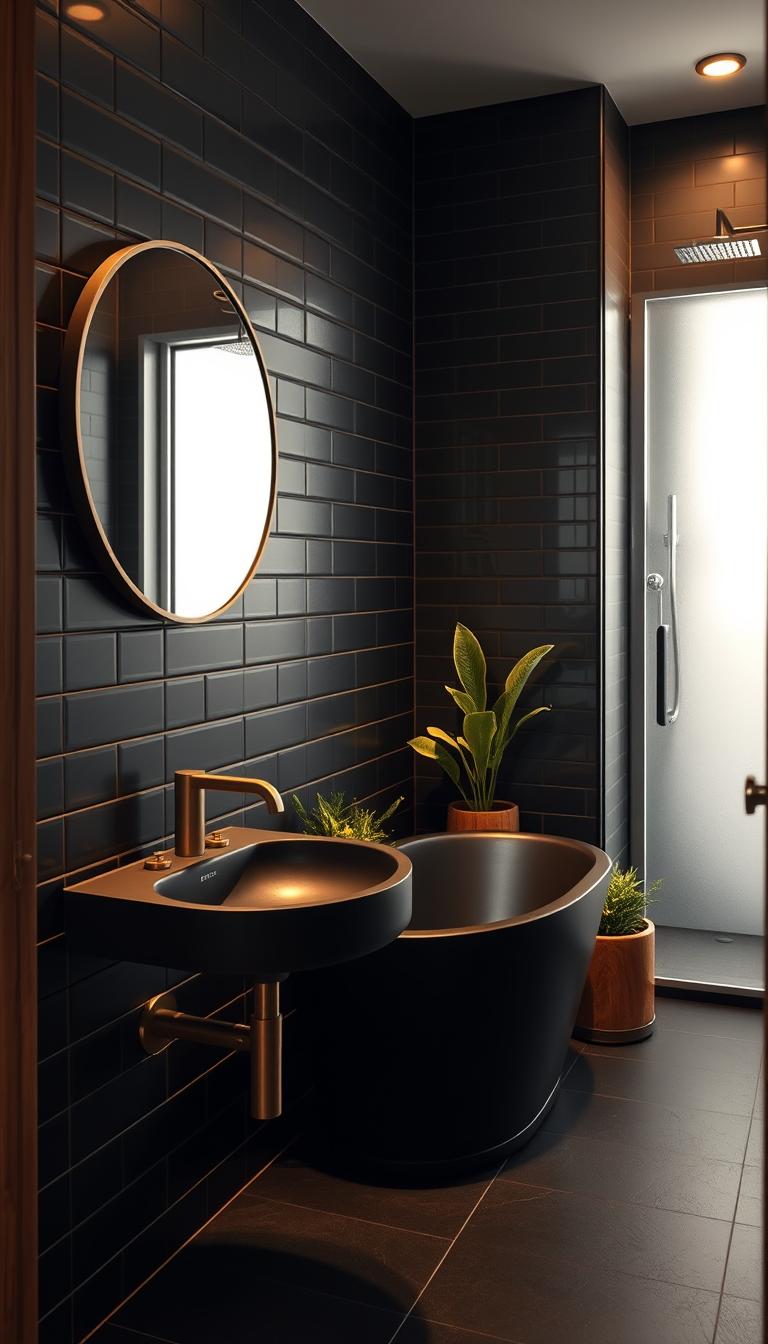
Black Subway Tile with Brass Fixtures for Elevated Style
Pairing classic subway geometry with warm metal finishes lets a tiny space feel curated. I turn to long, rectangular tiles when a client wants a look that’s both familiar and unexpected.
Warm metallic accents against dark tile
Black subway tile gives structure to a wall and reads timeless yet modern. Brass taps and sconces add a soft glow that warms the field without shouting.
Run the tile higher behind the vanity to protect walls and to make the installation feel intentional. In a shower, lining the niche with the same tile keeps bottles tucked away and the sightline calm.
Keep grout lines crisp. A medium-to-dark grout hides water spots and visually stretches the wall. If you fold marble into the plan, let it be a small counter or a thin shelf—subtle notes of luxury, not noise.
“One patterned detail—a ribbed glass shade or herringbone niche base—adds just enough interest.”
- Choose dimmable lighting so brass gently gleams in the evening.
- Tie finishes together with a matching drain cover, towel bar, or vanity hardware.
- Use the rectangular pattern to lead the eye horizontally or vertically, depending on the room.
Why it works: The contrast between tile and metal creates depth and a luxe touch. It ages gracefully, which saves money and decision fatigue down the road. I often see this combo make compact baths feel purposeful and calm.
Classic Checkerboard Floor Tiles in Black and White
A checkerboard floor can act like a visual runway, pulling the eye across the room and making it feel longer. That movement is why this pattern still works in a compact bathroom.
Choose your material carefully. A honed marble grid reads soft and luxe. Cement squares give a matte, modern punch. Both options change the look depending on fixtures and finishes.
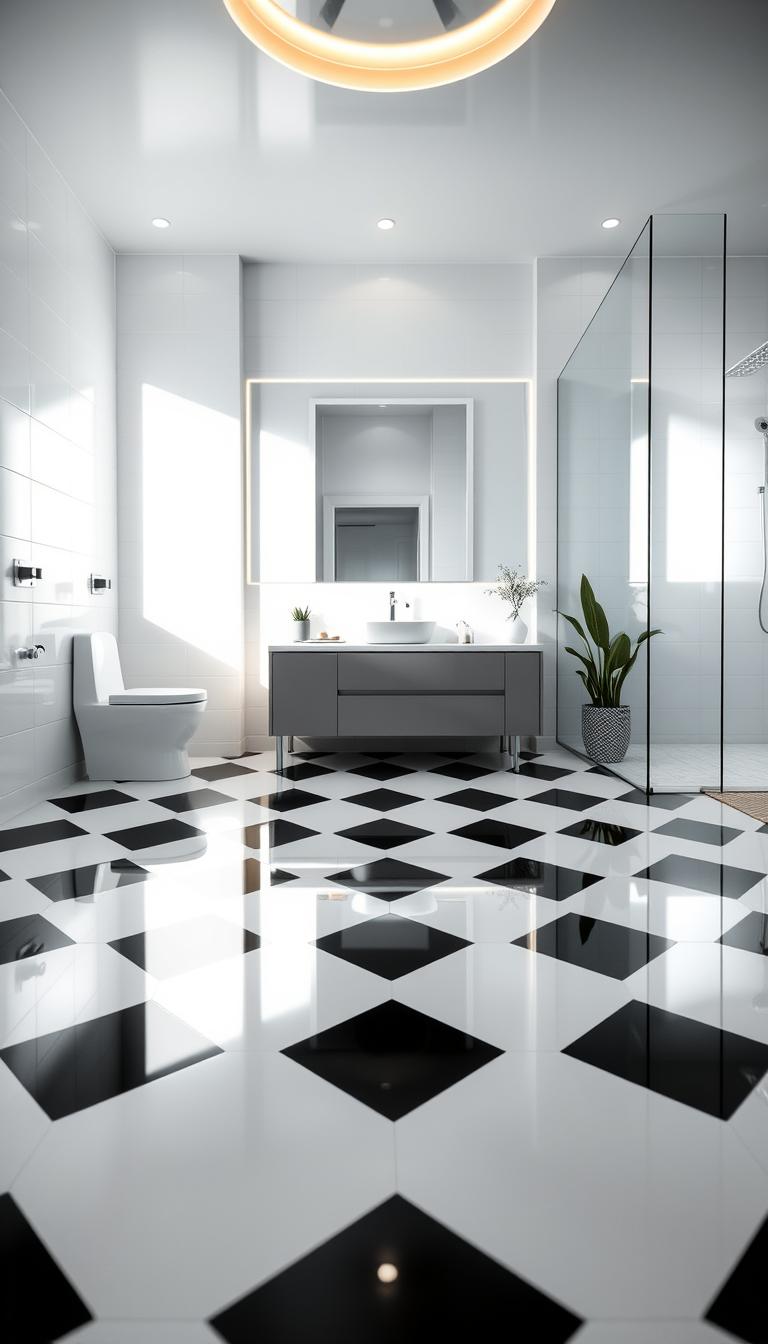
Scale matters. Slightly larger squares feel contemporary; smaller ones read vintage and charming. I usually pair the pattern with a simple vanity—clean fronts and minimal hardware—to keep the floor as the star.
- Border the field with a single-tile frame for clean edges.
- Match grout tones to each tile for a seamless, high-end finish.
- Echo adjacent wood with a warm accessory for smooth transitions.
- Consider radiant heat under stone and seal natural materials for easy care.
“Checkerboard floors create motion and depth—use scale and material to set the mood.”
Use Vertical Black Tiles to Stretch the Room’s Height
Stacking tile vertically makes the ceiling feel farther away and the room more graceful. I use this trick when ceilings feel low; it nudges the eye up and adds instant elegance.
Contrasting grout lines emphasize upward movement. A slightly lighter grout reads like pinstripes and magnifies height without busying the look. Pair the vertical field with lighter surrounding walls to keep the space open.
I often reserve the treatment for the vanity wall or the shower wall so it becomes a clear focal point. A slim brass sconce set high continues the rhythm and warms the vertical lines. Choose narrow rectangles to exaggerate height; medium rectangles feel calmer.
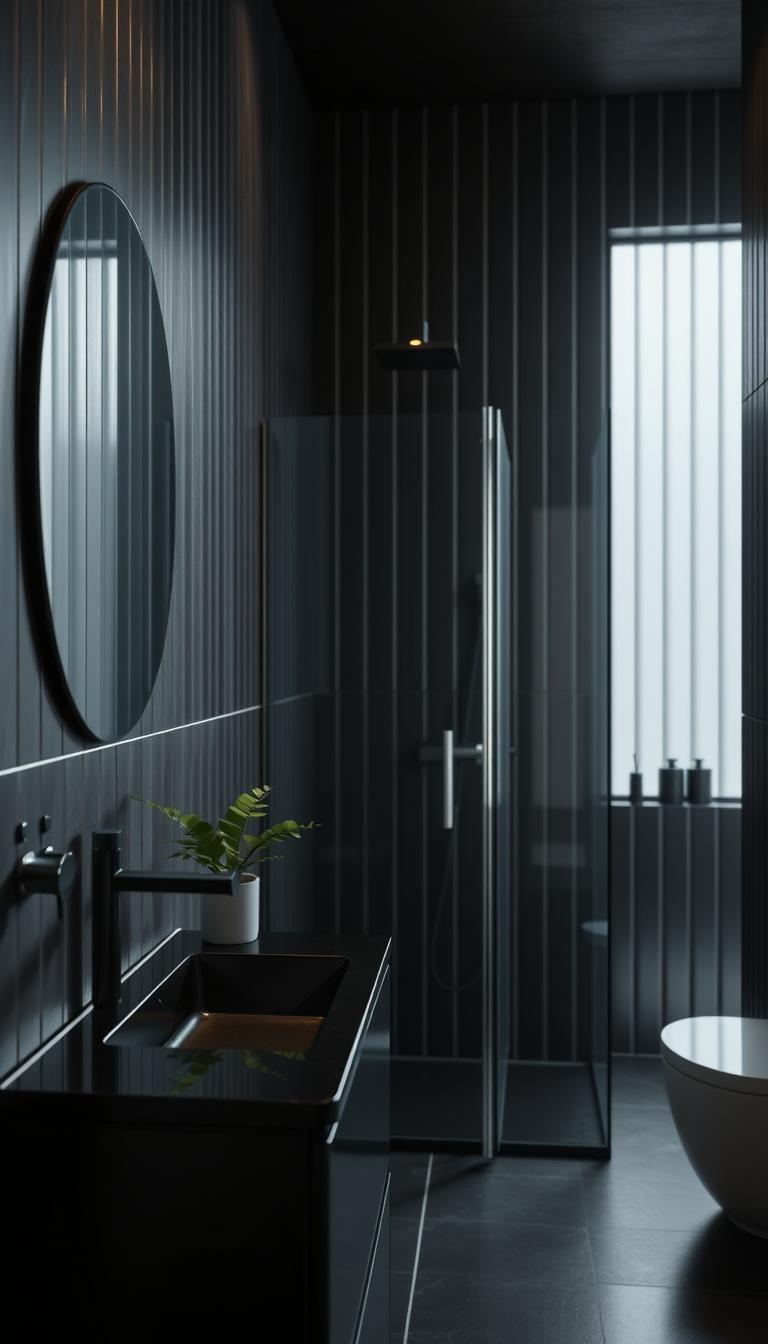
| Placement | Effect | Quick tip |
|---|---|---|
| Vanity wall | Creates a tailored focal point | Use lighter grout and high sconce |
| Shower wall | Draws eye up, adds depth | Extend waterproofing behind tiles |
| Recessed niche | Storage that follows the grid | Align shelves with grout lines |
Finish edges neatly and keep waterproofing tight in wet zones. The result: a compact bathroom that reads taller, calmer, and more intentional.
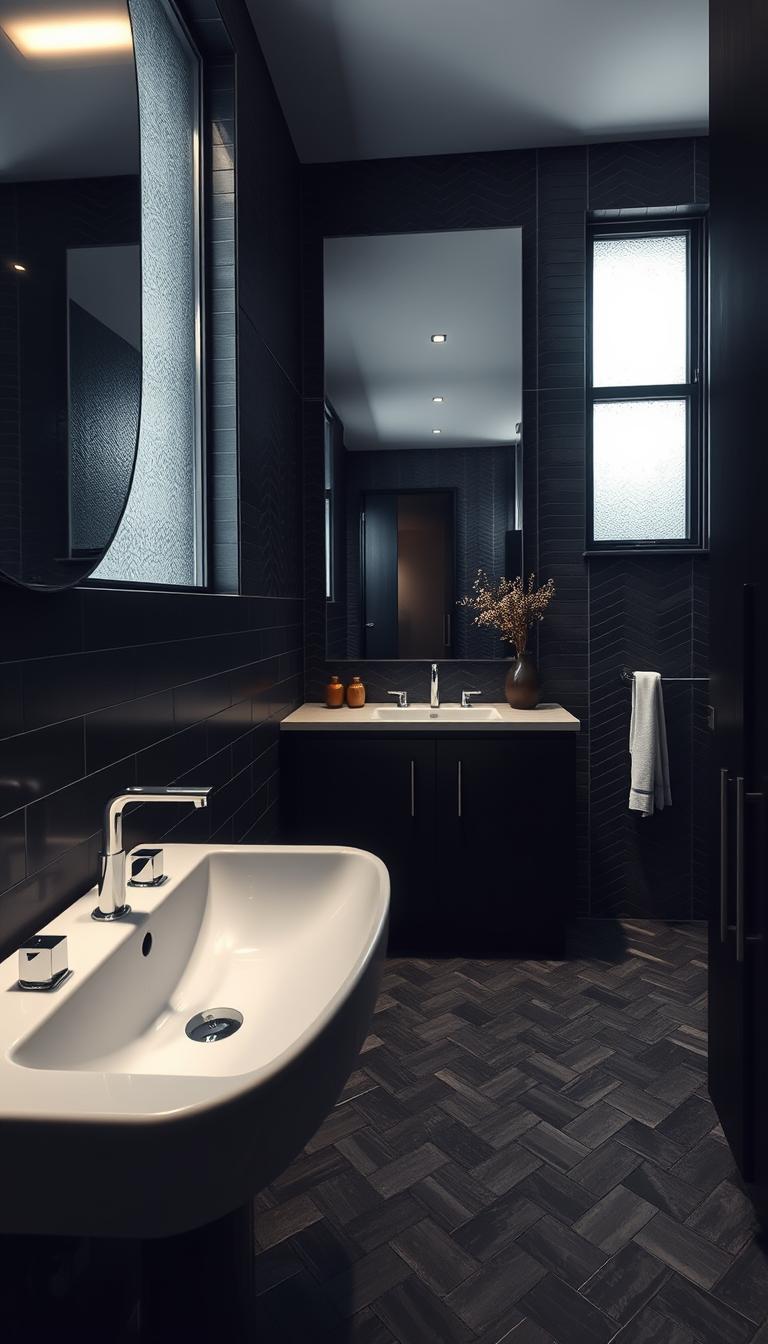
Herringbone Patterns: Dynamic Lines and Texture
Herringbone brings motion into a tight plan without needing brighter paint or bolder accents. I reach for this layout when a bathroom needs subtle energy and craft.
Why it works: The zigzag catches light and reads handcrafted. Use it on an accent wall or a narrow vanity backsplash to add detail without overwhelming the look.
For a louder statement, pick a slightly contrasting grout so the pattern pops. For a quieter read, match grout closely to the tiles. Keep tile dimensions consistent—crisp geometry breaks down with mixed sizes.
On floors, choose a matte finish for traction and comfort. Align fixtures so cut tiles fall symmetrically—clean edges make a small space feel intentional, not messy.
- Use herringbone on one wall or the vanity splash, not every surface.
- Limit other patterns so the herringbone becomes the texture hero.
- Tie in a simple metal finish to keep the style curated and cohesive.
“A narrow herringbone band can feel bespoke—like a tailored seam in the room.”
Matte Black Floor, Light Walls: Balance and Slip Resistance
Grounding the floor in a velvety matte lets the walls do the lifting with bright paint. I use this pairing when a compact bathroom needs depth without feeling heavy.
Choose matte tiles—cement, raw terracotta, or slate—for real traction. Those surfaces hold grip, especially in the shower, and they age with a soft, tactile finish.
If you prefer glossy, keep pieces under 2×2 inches so grout adds bite underfoot. That trick keeps a polished look while improving safety.
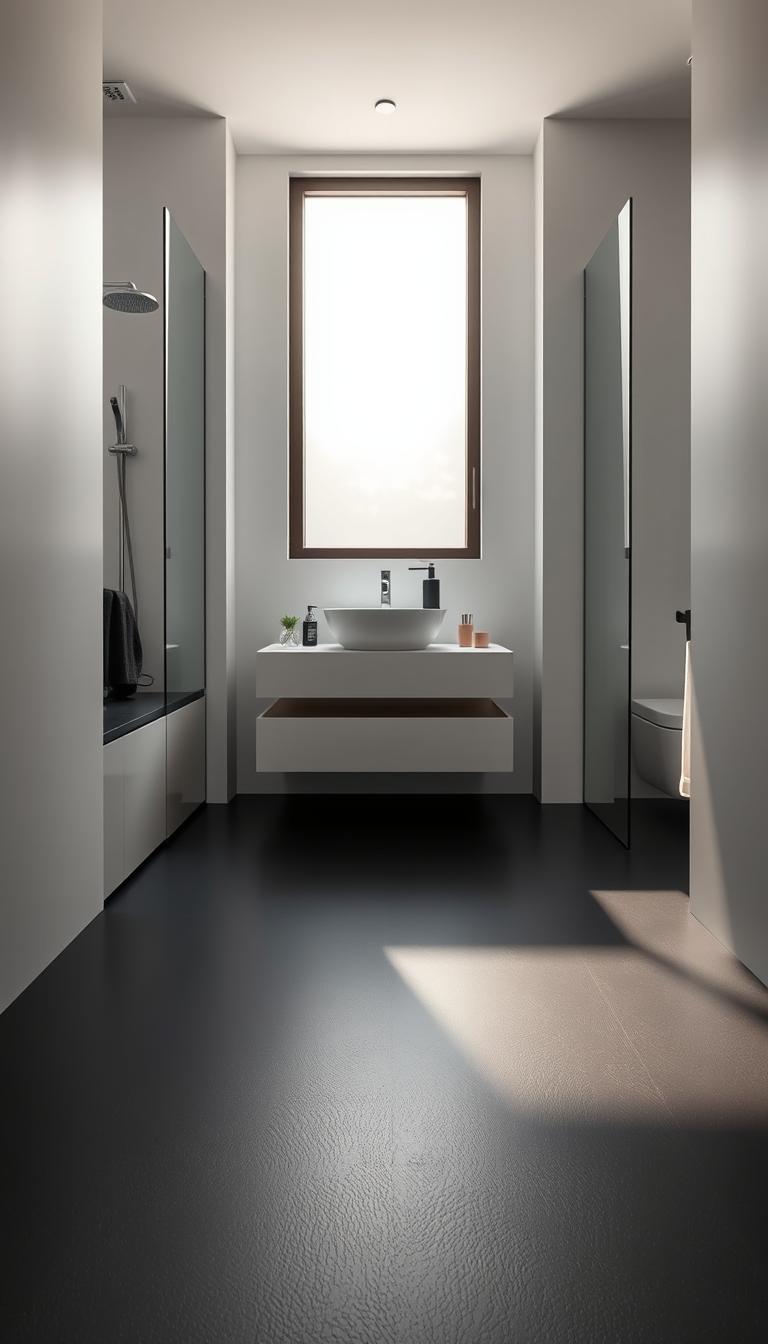
- A matte black floor grounds the space while white walls bounce light and broaden the visual field.
- Pick a leggy, slim vanity to keep the floor visible and preserve a weightless feel.
- Repeat the floor tone in a small frame or accessory for cohesion without heaviness.
- Use soft, indirect light at night to keep the mood calm but clear.
- Seal porous tiles as recommended to keep the velvety surface looking fresh.
The result is a calm, comfortable look that feels sophisticated and safe. With the right tiles and lighting, a black bathroom can read airy and grounded at once.
Blend Black Tile with Wood, Stone, and Greenery for Warmth
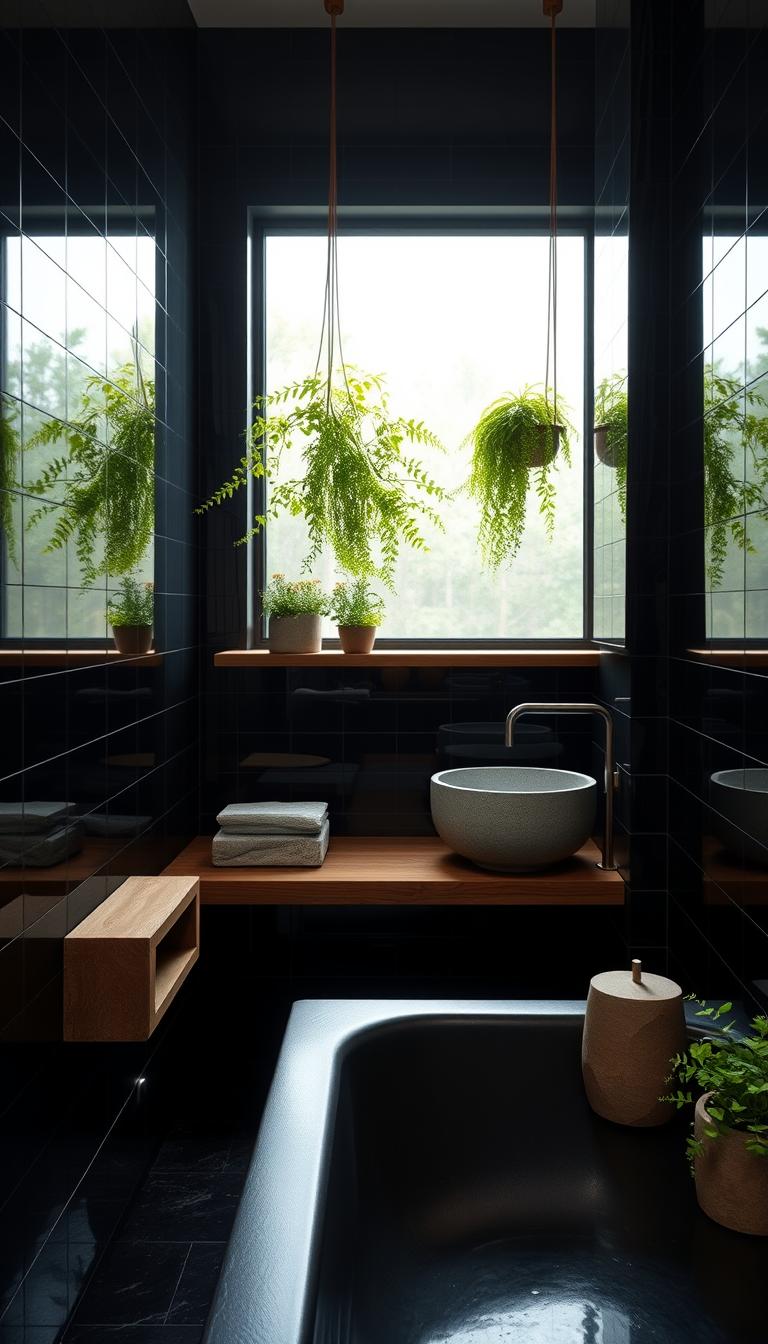
Warm wood tones and raw stone can soften even the boldest tile choices. I use that idea a lot when a dark palette needs a friendly touch. The right mix makes the room feel lived-in, not staged.
Natural materials that soften bold surfaces
Wood warms the scene. Think oak shelves, a walnut vanity face, or a thin floating ledge. Grain brings human scale and a tactile touch.
Stone and marble add cool balance. A slim marble counter or a small stone tray reads luxe and anchors the sink area.
Greenery finishes the look. One leafy plant softens corners and lifts the spa energy. Plants also damp sound and add life.
| Material | Effect | Care |
|---|---|---|
| Wood (oak, walnut) | Adds warmth, ties vanity to the floor | Seal or use moisture-tolerant finishes |
| Marble / Natural stone | Cool counterpoint, luxe look | Seal and wipe spills promptly |
| Plants & stone accents | Softens lines, adds texture | Low-light plants; occasional cleaning |
“A tight palette—two or three natural tones—keeps the space calm and cohesive.”
Add Pops of Color Against Black for Personality
Bold hues read like gallery pieces when set against deep, neutral tiles. I treat dark tile as a backdrop and add a single bright element to lift the whole look.
Swap towels, a shower curtain, or art and you change the mood without a remodel. I often start with a colorful mirror frame or a painted stool by the vanity.
Keep your palette tight. Repeat one accent color in two or three spots for rhythm. Metallic finishes bridge bright tones and deeper fields with ease.
Consider warm shades for morning energy and cool tones for evening calm. Use moisture-safe materials near the sink and shower so the pieces last.
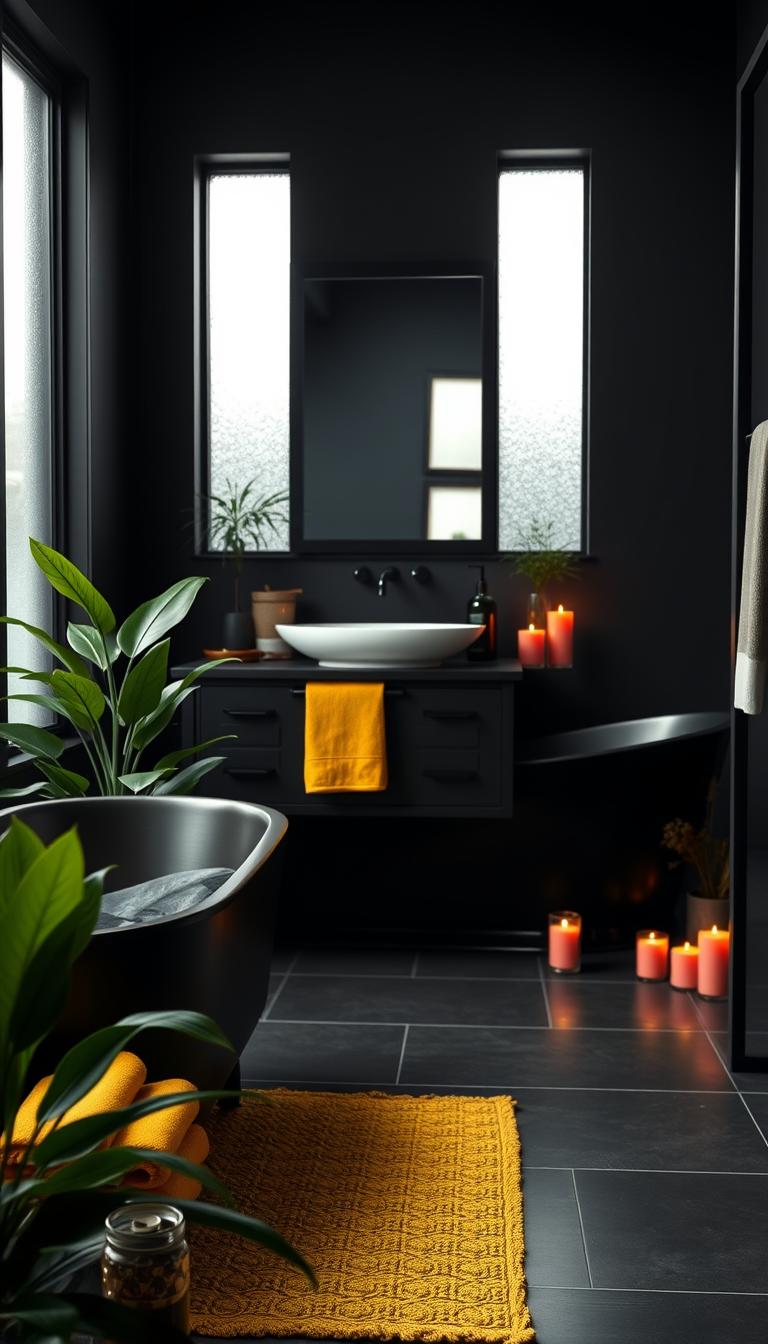
“A single saturated object can do the heavy lifting of personality.”
- I treat black like a gallery wall—bold colors pop beautifully against it.
- Swap textiles and art for seasonal refreshes with little cost.
- Use one bright mirror or stool as a bold focal point.
| Move | Effect | Quick idea |
|---|---|---|
| Towels & textiles | Instant color, easy swap | Match with one metal accent |
| Colored mirror | Bold focal point | Frame above the vanity |
| Small fixtures | Long-term personality | Choose moisture-safe finishes |
Layered Lighting for a Spa-Like Glow
Light is the silent architect that sculpts mood and keeps a tight room from feeling cramped. In a bathroom, layering task, ambient, and accent lighting makes the space both useful and calm.
Task, ambient, and accent with dimmable LEDs. Place task light at eye level beside the mirror to avoid harsh shadows at the vanity. Use a soft ambient overhead that fills the room without glare. Add a dimmable LED strip under a floating vanity or inside a niche for a gentle, nighttime glow.
Backlit and oversized mirrors to amplify light. Backlit mirrors give even, shadow-free illumination for grooming and create a halo that visually expands the wall. Oversized mirrors bounce light around, making the shower and other corners feel brighter.
Choose warm-to-neutral LEDs (2700K–3000K) to flatter skin and materials. Pick damp-rated fixtures near wet zones for safety. Keep switches simple—one for “awake,” one for “unwind.”
“Think of light as a material—sculpt it, and your bathroom feels instantly elevated.”
| Layer | Purpose | Quick tip |
|---|---|---|
| Task | Clear grooming light | Side-mounted sconces at mirror height |
| Ambient | Even room illumination | Recessed dimmable LEDs or low-profile ceiling fixtures |
| Accent | Mood and depth | LED strips under vanity or inside niches |
Materials and Finishes That Work in Wet Zones
Choose materials that stand up to steam and time—your finishes should work hard and look composed.
Porcelain and glazed ceramic for easy care
Porcelain tiles are dense, low-maintenance, and ideal for floors and shower surrounds. I specify porcelain when clients want durability that lasts through daily steam and splashes.
Glazed ceramic is a great wall surface near the sink and shower. It wipes clean, resists staining, and reflects light on darker palettes.
Slate, cement, and terracotta: texture with sealing and traction
Natural stone, cement, and raw terracotta add real texture and warmth. I use them in small doses—a ledge, a vanity top, or a niche floor—so the surface reads intentional, not overwhelming.
Sealing is non-negotiable. These materials need proper sealing and regular maintenance to stay water-resistant and beautiful over time.
Glossy vs matte on floors and walls
Matte floor tiles give better grip underfoot—especially in the shower. If you like glossy, pick small-format tiles or mosaics so grout adds traction.
Glossy tiles on walls reflect light and brighten moody schemes. Pair finishes thoughtfully: use stone or marble accents sparingly for impact, and always plan tidy transitions where walls meet floors.
- For daily steam and splashes, porcelain is a star—durable and easy to keep fresh.
- Glazed ceramic on walls wipes clean and resists staining around sinks and showers.
- Slate, cement, and terracotta bring texture but require sealing and care.
- Prioritize grip: matte finishes or small-format mosaics boost safety in wet zones.
- Always check PEI, water absorption, and sealing guidance before you buy.
“A smart mix of performance and beauty keeps the spa feeling day after day.”
For more wet-room planning tips and continuity ideas, see practical wet-room ideas that pair material choices with layout strategies.
Small-Space Fixtures: Floating Vanity, Slim Storage, Smart Mirrors
Choosing slim, wall-mounted fixtures instantly clears the visual floor and makes the whole room breathe. I’ve seen a floating vanity transform a cramped layout into a calm, efficient morning zone. It’s one of the fastest ways to add perceived space without a full demo.
Wall-hung vanities free floor area
A floating vanity creates breathing room by exposing more floor—instant visual expansion. Go for drawers instead of doors; they hold lotions, brushes, and daily items so mornings run smooth.
Split the vanity into two zones if two people share. A shallow shelf for overflow keeps counters tidy and useful.
Mirrored cabinets and recessed shelving
Mirrored cabinets deliver stealth storage and reflect light back into the room. That boost makes mirrors do double duty—storage and brightness.
Recessed shelving in stud bays turns thin walls into smart storage. Keep projections minimal so the shower and traffic flow aren’t crowded.
- Choose slim profiles and minimal hardware for a tailored look.
- Integrate outlets inside cabinets for toothbrushes and shavers.
- Pick moisture-resistant materials and line drawers where needed.
- A shallow linen tower above the toilet adds storage without crowding the walls.
“The right fixtures make a small bathroom feel efficient, elegant, and truly customized.”
Shower Solutions: Frameless Glass, Wet Room Looks, and Continuity
Clear glass enclosures erase barriers and let light carry across the space. That single move makes the shower feel like part of the whole room rather than an island.
Why it works: Frameless glass keeps sightlines open and is easy to wipe down. It makes a compact bathroom feel more generous and shows off your tile choices instead of hiding them.
I recommend running the same floor tile into the shower for a wet-room effect. Seamless floor tiles form continuous lines that lengthen the view and calm the design.
Practical notes matter. Keep thresholds low for accessibility and use correct slopes and waterproofing in wet zones. Choose a linear drain to maintain clean lines and simplify maintenance.
- Clear, frameless glass removes visual barriers and lets your eye read the room as larger.
- Run the same floor tiles into the shower to form seamless lines and a cohesive look.
- Pick a simple wall-mounted valve trim and an overhead plus handheld spray for flexible, uncluttered fixtures.
- Place a floating vanity beside a glass panel to enhance openness and show more floor.
“Function wins when beauty is backed by proper waterproofing and slope.”
| Move | Benefit | Quick tip |
|---|---|---|
| Frameless glass | Openness; easy cleaning | Use minimal clips and clear sealant |
| Same floor into shower | Visual continuity; wet-room look | Match grout and slope for drainage |
| Linear drain | Streamlined lines; easy maintenance | Install at low point of tile slope |
Black Small Bathroom Conclusion
Layered textures and careful sightlines give a tight room surprising depth. I’ve found that a clear plan, smart fixtures, and targeted lighting change how the room feels every morning and night.
Start with space-smart moves—a floating vanity, recessed storage, and frameless glass keep sightlines long. Run the same tile into the shower and pick matte floor tiles for traction and calm underfoot.
Pair dark tile with wood or stone and a sliver of marble or brass to add warmth. Favor porcelain where you want low maintenance. Let mirrors and dimmable LEDs do the heavy lifting for grooming and mood.
Design for how you live. Swap seasonable accents to refresh the look. For more practical tips and planning ideas, see these inline posts.