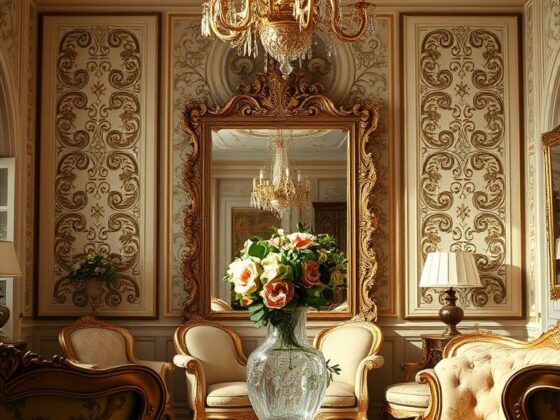
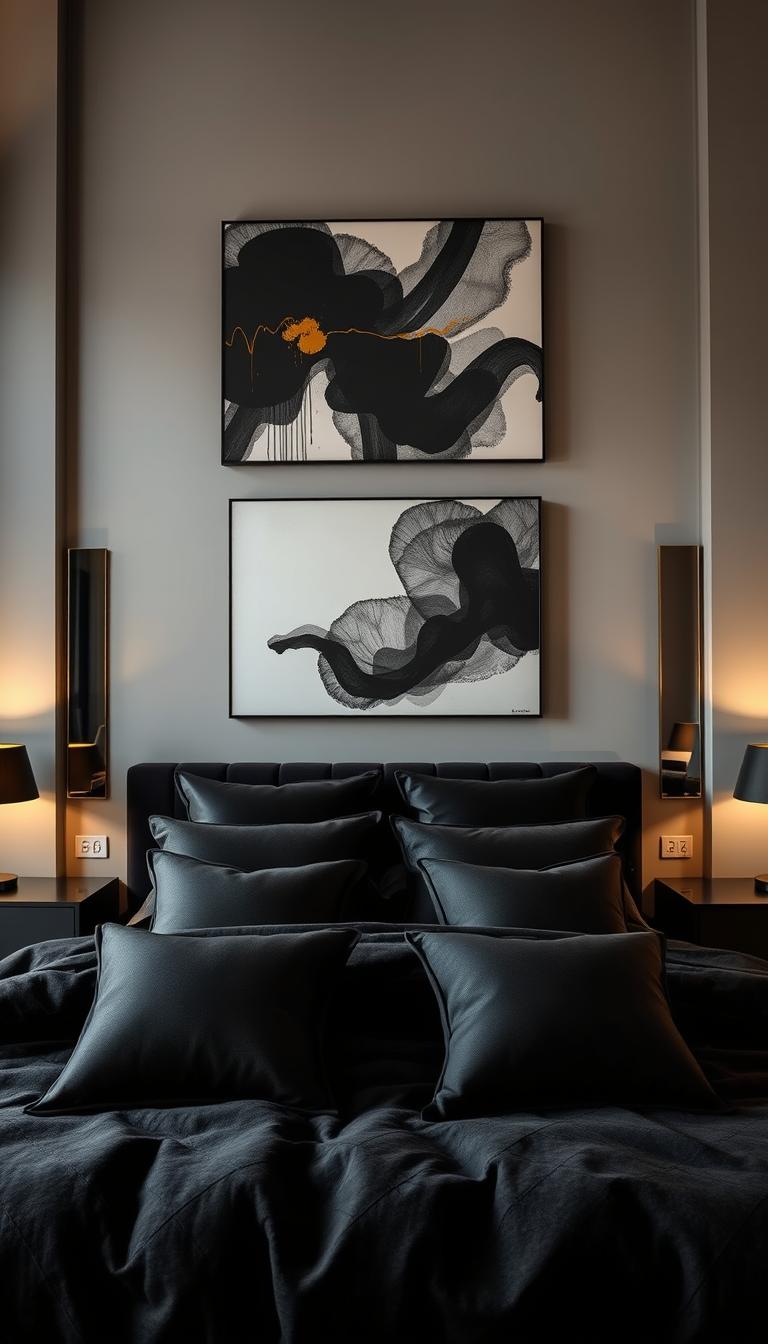
Ever wondered if a dark bedroom can feel like a warm, peaceful retreat instead of a cave?
I’ve worked with clients who feared the look, then fell in love with the result. Layering textures, warm bulbs, and a single accent wall changes everything.
Start with tactile fabrics—velvet, linen, wool—and mix matte with a little sheen to add depth. Introduce walnut or stone to soften the palette and give the room real character.
Lighting is the trick. I rely on a layered plan—ambient, task, and accent—with warm bulbs (2700–3000K) so the space reads cozy, not flat.
Small choices, like a sculptural lamp or a gallery wall, make a bold focal without a full overhaul. I’ll show practical ideas you can use this weekend to make your bed and the whole room feel intentional and serene.
Key Takeaways
- Dark schemes can feel warm and calming with layered textures and lighting.
- Use wood tones and metallic accents to soften and add character.
- Balance mood with the 70-20-10 approach for color and materials.
- Plan ambient, task, and accent lighting with warm bulbs for depth.
- Maintenance tips—dusting and lint control—keep dark rooms crisp.
Why Black Bedrooms Work: Benefits, Mood, and Sophistication
A deeper palette doesn’t steal the show; it frames the pieces you love and makes them sing.
I’ve seen time and again that a moody bedroom reads timeless. It supports your favorite furniture and art instead of competing with them.
In practice, this room style is wildly versatile. Pair sleek metals for a modern edge or warm woods and linen for a softer approach to style.
The darker color adds real depth and definition to molding, headboards, and architectural lines. It also quiets visual noise so your mind downshifts at night.
- Timeless elegance that doesn’t date.
- Practical—darker textiles hide minor marks and wear.
- Psychological calm—the cocooning effect helps rest.
Balance is the secret: use the 70-20-10 rule to let the mood lead, soften with mid neutrals, then add a small contrasting glow. Lighting matters—warm, dimmable sources make the room feel curated and comfortable rather than heavy.
The result is effortless sophistication—a design language that reads curated and livable in equal measure.
Paint and Palette Play: From Matte Black Walls to Soft Charcoals
A painted wall sets the mood—choose it deliberately and your whole bedroom will follow.
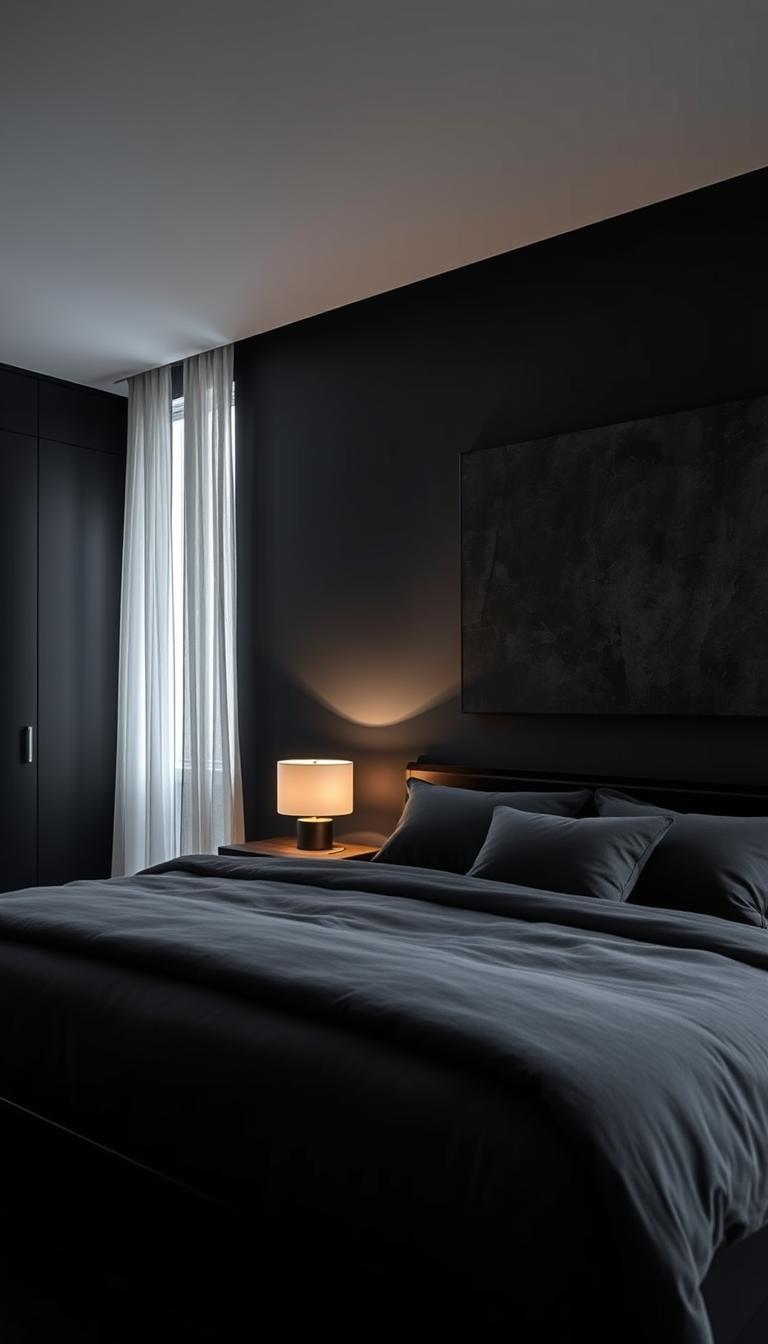
I usually recommend matte black when you want depth without glare. Matte finishes absorb light, so textures and art take center stage. On textured surfaces, matte highlights contour gently. On smooth walls, it reads velvety and gallery‑like.
Finish and practical choices
Satin or eggshell add wipe‑ability and a hint of sheen. Use them sparingly—too much reflectivity creates hot spots under lamps. Sample finishes in your actual light before you commit.
Accent strategies that frame the bed
Not ready for full immersion? A single dark accent wall behind the headboard frames the bed and adds depth without overwhelming small rooms. Softer charcoals or blacks with navy or gray undertones feel more livable.
Balancing with the 70-20-10 rule
Designers use the 70‑20‑10 rule to keep a palette feeling intentional. Think 70% dark base on walls, 20% mid neutrals like wood and linen, and 10% high‑contrast or metallic accents for sparkle. That balance keeps moody tones warm and breathable.
- Tip: Paint two 2’x2′ swatches and observe them by day and night.
Layered Lighting That Warms Up Dark Rooms
A layered lighting plan is the single upgrade that turns a dark bedroom into a calm retreat. I start with three zones: ambient, task, and accent. Each one has a clear job so the space never feels flat.
Ambient, task, and accent to prevent flatness
Ambient is general glow—recessed cans, a central fixture, or a low-profile ceiling light. Task is for reading and getting ready—sconces or bedside lamps. Accent highlights art, trim, or a textured headboard.
Bulb temperature tips: warm whites for cozy contrast
Aim for warm white bulbs around 2700–3000K. That candlelike warmth plays beautifully off black bedroom walls and textured linens without looking yellow.
Mirrors and metallics to bounce light across dark surfaces
Place a mirror opposite a window or lamp to double reflected light. Brass or bronze accents add a soft shimmer that lifts dark tones.
Dimmers for day-to-night mood shifts
Install dimmers on every circuit you can. One touch moves the space from morning function to an evening retreat.

- I like pendant lights or sculptural lamps near the bed to create pools of light and rhythm.
- Use accent lighting to graze ribbed walls or artwork for depth.
- Keep cords tidy and switch heights consistent for a polished plan.
| Lighting Type | Typical Fixtures | Use Case | Recommended Bulb |
|---|---|---|---|
| Ambient | Recessed, ceiling, low-profile pendants | Overall illumination | 2700–3000K warm white |
| Task | Bedside lamps, sconces | Reading, dressing | Warm white, higher CRI |
| Accent | Picture lights, LED strips | Art, textured walls, headboard | Warm white, directional |
Good lighting is the bridge between design and comfort. With these ideas, you get balance, focus, and the cozy pieces that make the room feel like a true retreat.
Texture Is the New Pattern: Building Depth with Tactile Layers
Layering tactile surfaces is the secret to a room that reads rich and lived-in.
I use texture to tell the story when color stays calm. Velvet, linen, leather, and wool each play a role.
Matte walls provide a quiet backdrop. Glossy ceramics or a soft sheen on a side table catch light and add contrast.
Mixing matte, glossy, plush, and ribbed surfaces
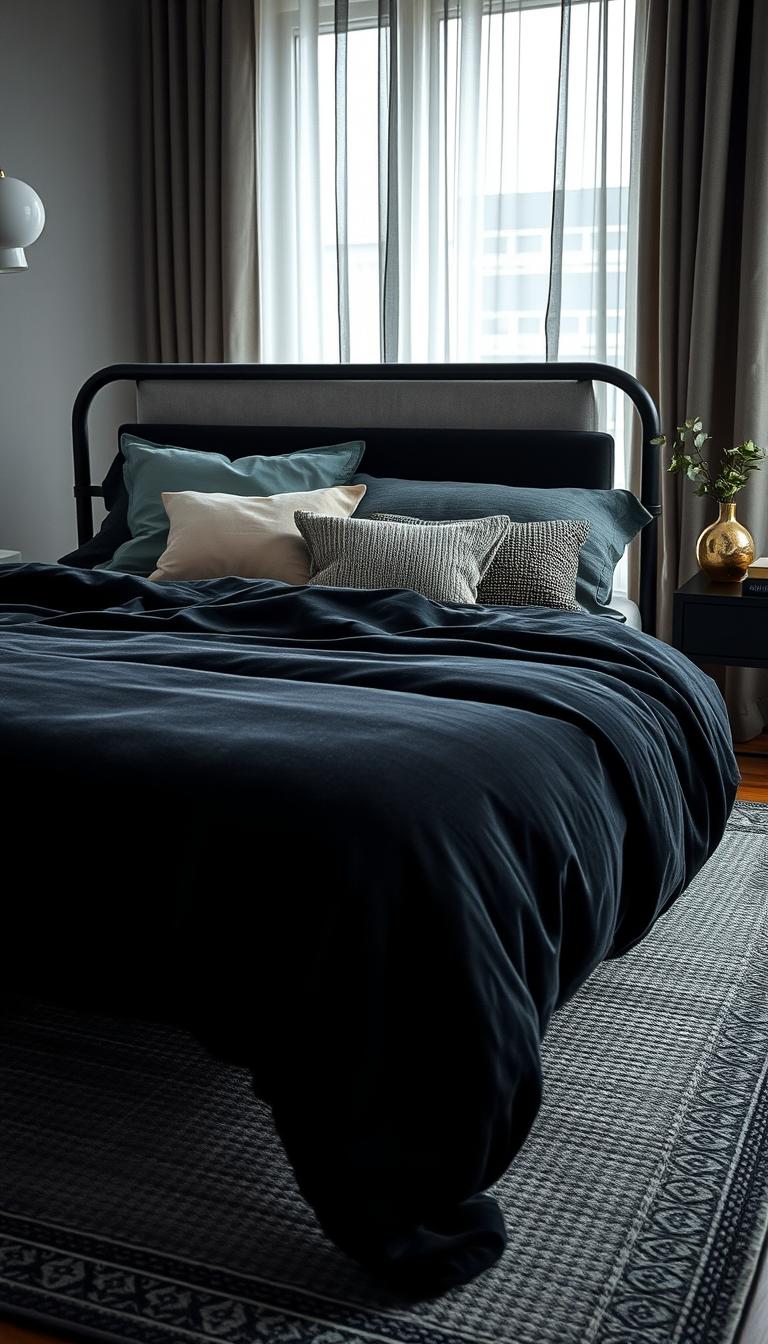
Keep the palette restrained so textures do the heavy lifting. Plush throws, ribbed knits, and low-sheen bedding make for real touch appeal.
Pairing velvet, linen, leather, and wool for contrast
I like velvet headboards with linen sheets and a wool throw. It gives the bed dimension and invites touch.
| Element | Material | Effect |
|---|---|---|
| Headboard | Velvet | Plush focal point, soft light absorption |
| Nightstand | Matte wood or matte metal | Grounding, minimal glare |
| Accent | Glossy ceramic lamp | Subtle sparkle, reflects task light |
| Floor | Nubby high-pile rug | Cozy underfoot, tactile contrast |
- Textures catch light differently from sunrise to night, keeping visual depth.
- Balance is key—if one piece is plush, let others stay tailored.
Focal Point Power: Go All-In with an All-Black Bed
A fully black bed anchors the space and gives you a clear starting point for styling the rest of the room. It’s a confident move that sets the mood and creates a true focal point without fuss.
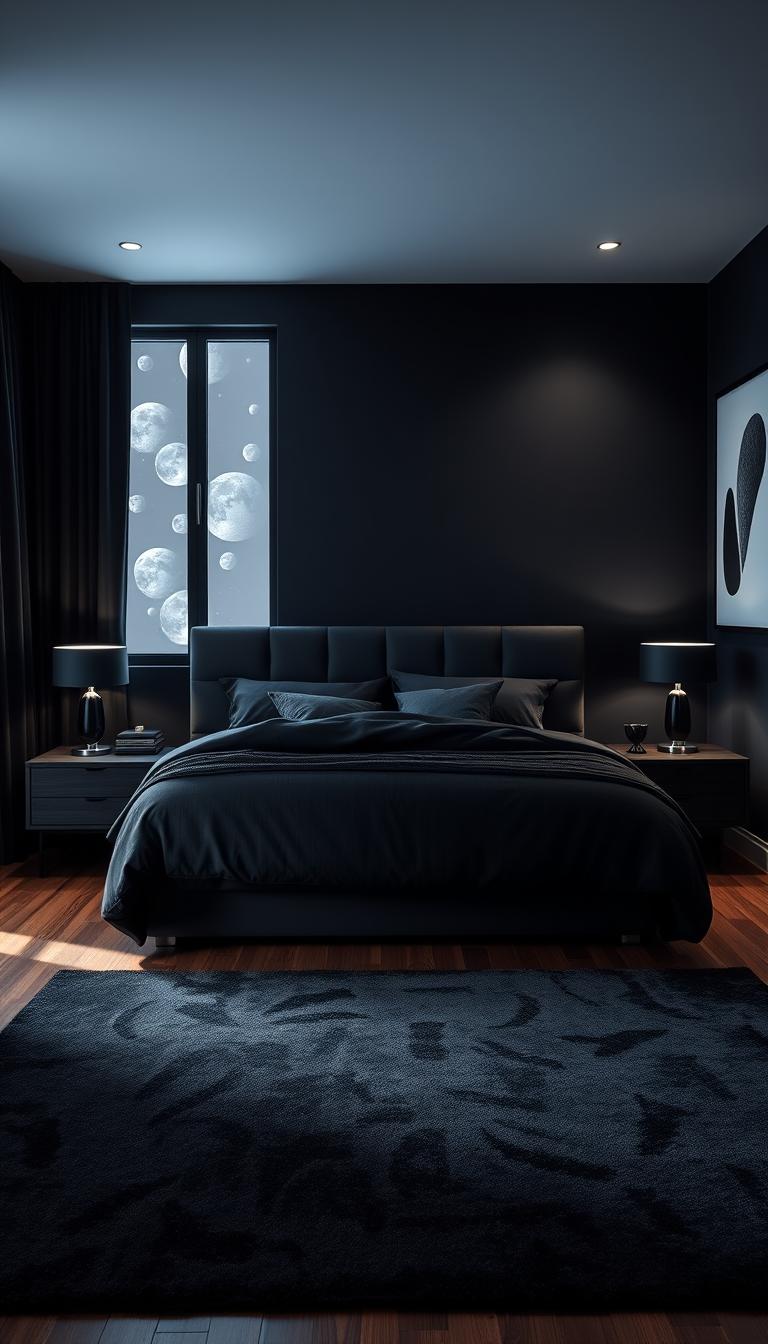
I temper the intensity with graphite bedding and layered gray pillows. A textured throw—wool or a knit—adds softness and prevents the silhouette from reading flat.
Keep nearby furniture clean-lined. Let those pieces recede so the bed stays the star. Then add one sculptural lamp to echo the statement and bring scale.
If walls are dark, introduce a soft rug or a light bench at the foot to balance weight. In small rooms, a single bold gesture like this simplifies design and cuts visual clutter.
| Element | Material | Purpose |
|---|---|---|
| Upholstery | Velvet or linen | Plush vs. tailored finish |
| Textiles | Graphite bedding, gray pillows | Layering for depth |
| Lighting | Sculptural lamp | Echoes the focal point |
Use natural daylight to your advantage—sheer drapes and clear sightlines keep the setup from feeling closed in. I like this approach because it feels curated and liveable at the same time.
Black + Wood Accents: Warming Up the Moody Palette
Warm wood tones are the easy antidote when a moody scheme needs breathing room. I lean on walnut, oak, and mid-tone stains to add grain, warmth, and natural movement.
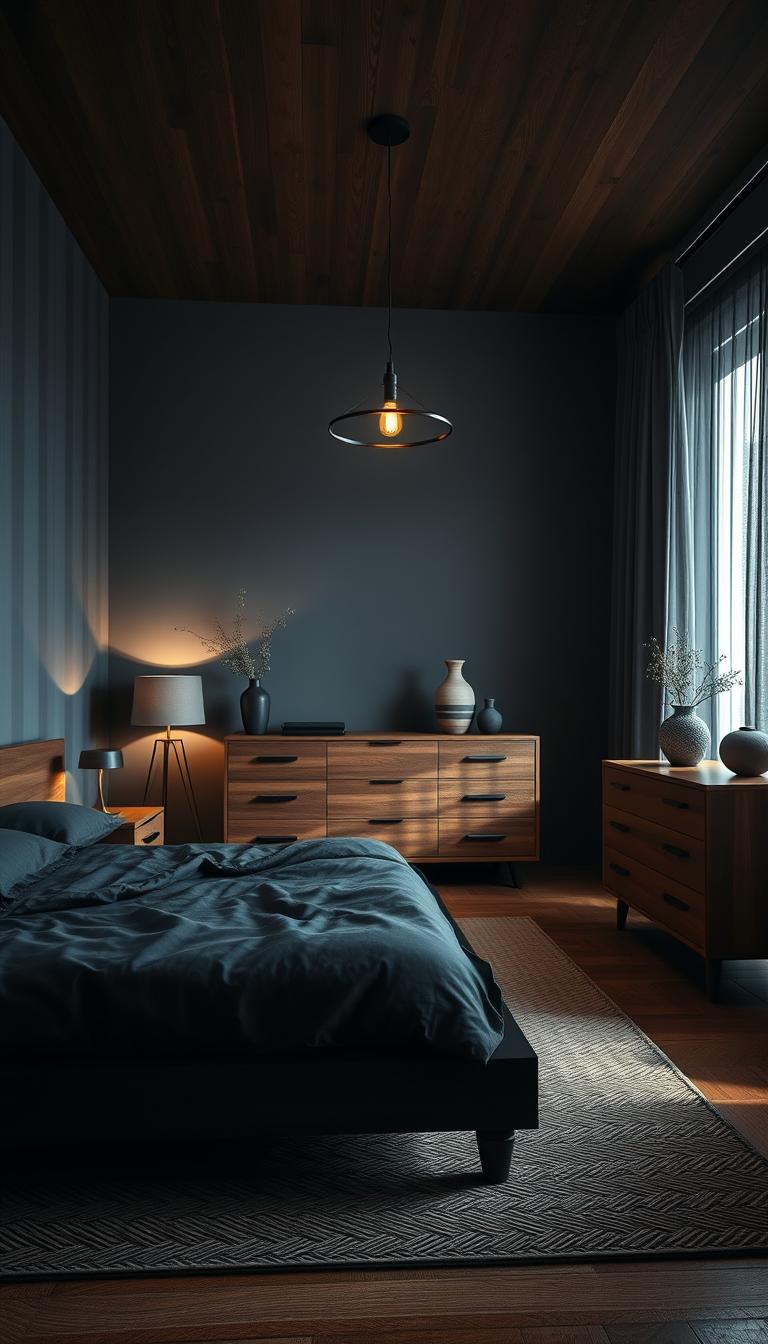
Walnut, oak, and mid-tone woods that soften dark walls
A walnut frame or nightstand introduces texture and balance without breaking the mood. Repeat the same wood tone two or three times to make the mix intentional.
If walls are very dark, a wood bench or picture frame bridges the bed and other furniture. This approach suits both compact rooms and larger suites.
Brushed brass and wood pairings for subtle shine
Brushed brass hardware and lamps add a quiet glow that catches evening light. I like brass-trimmed lamps or pulls for a sophisticated accent that never shouts.
- Use walnut or oak in repeat to create rhythm.
- Add a plant or two for freshness—green pops against the palette.
- Keep lines simple so wood and metal can do the styling work.
Result: a grounded, timeless bedroom design that feels warm, layered, and approachable.
Black and Gray Bedroom Ideas Beyond Black and White
A layered gray scheme gives a moody room quiet depth without high contrast.
Graphite bedding, pewter throws, and charcoal pillows create richness against paneled walls without the sharpness of black-and-white. I like adding a sand or beige headboard to introduce calm warmth. One warm metal pendant or sconce completes the scene at night.
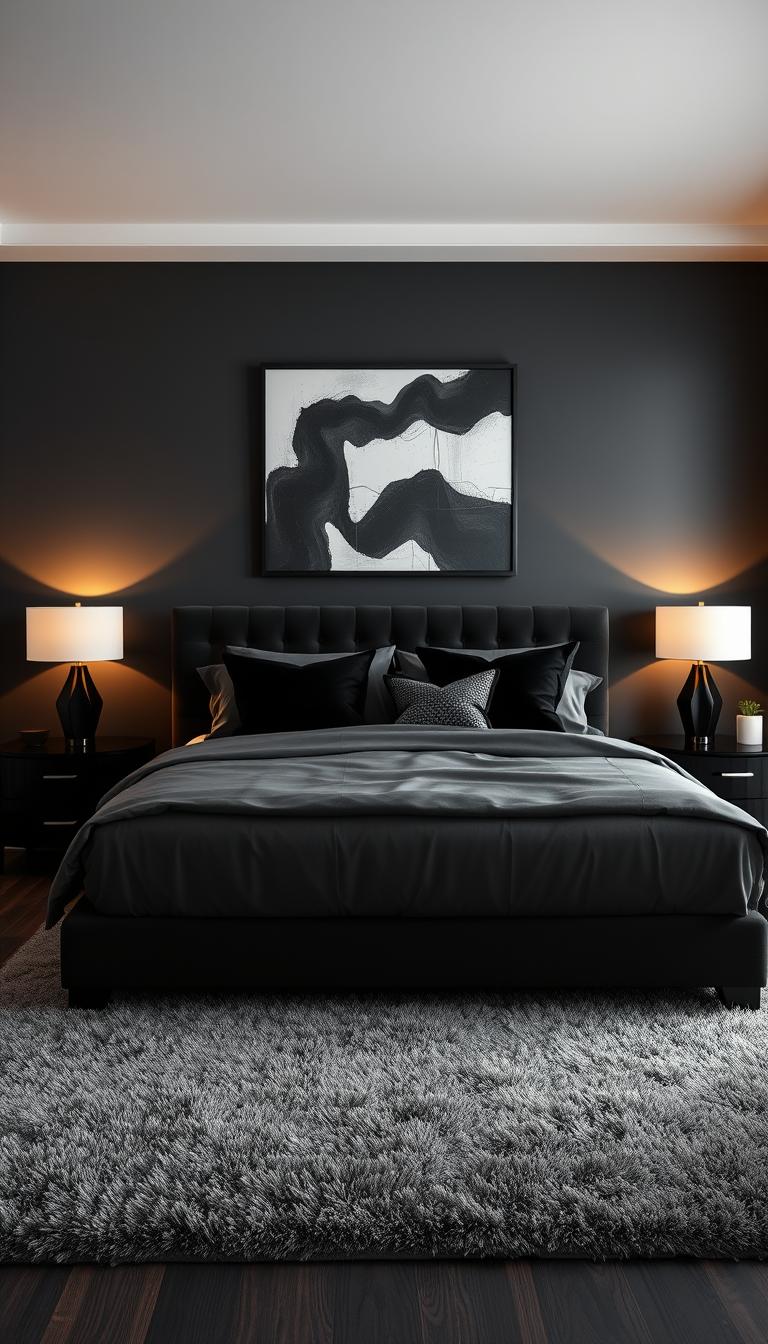
Graphite bedding and charcoal pillows for tonal layering
If black-and-white feels too sharp, go tonal—graphite bedding with charcoal pillows brings depth without harsh contrast.
- Soft warmth: A beige headboard softens the palette while staying cohesive.
- Let texture lead: Matte duvet, ribbed knit throw, and a slight lamp sheen add interest.
- One glow: A single warm metal pendant or sconce animates the palette at night.
- Keep art simple: Black-and-white or grayscale photography looks elegant here.
| Element | Material | Effect |
|---|---|---|
| Bedding | Graphite linen or cotton | Deep tonal base, easy care |
| Throws & Pillows | Pewter throw, charcoal pillows | Layered texture, soft contrast |
| Headboard | Sand or beige upholstery | Warmth without bright contrast |
| Lighting | Warm metal pendant/sconce | Subtle glow that lifts tones |
“Layering grays lets textures do the talking—it’s forgiving, restful, and easy to live with.”
This approach suits busy bedrooms. It hides wear, reads intentional, and still feels restful. Small choices—textile swaps and one warm light—make all the difference.
Mid-Century Modern Meets Moody: Clean Lines, Warm Woods
Clean mid‑century profiles can make a dark room feel deliberate, airy, and calm. I favor pieces that read light in silhouette—low frames, tapered legs, and slim hardware that let the space breathe.
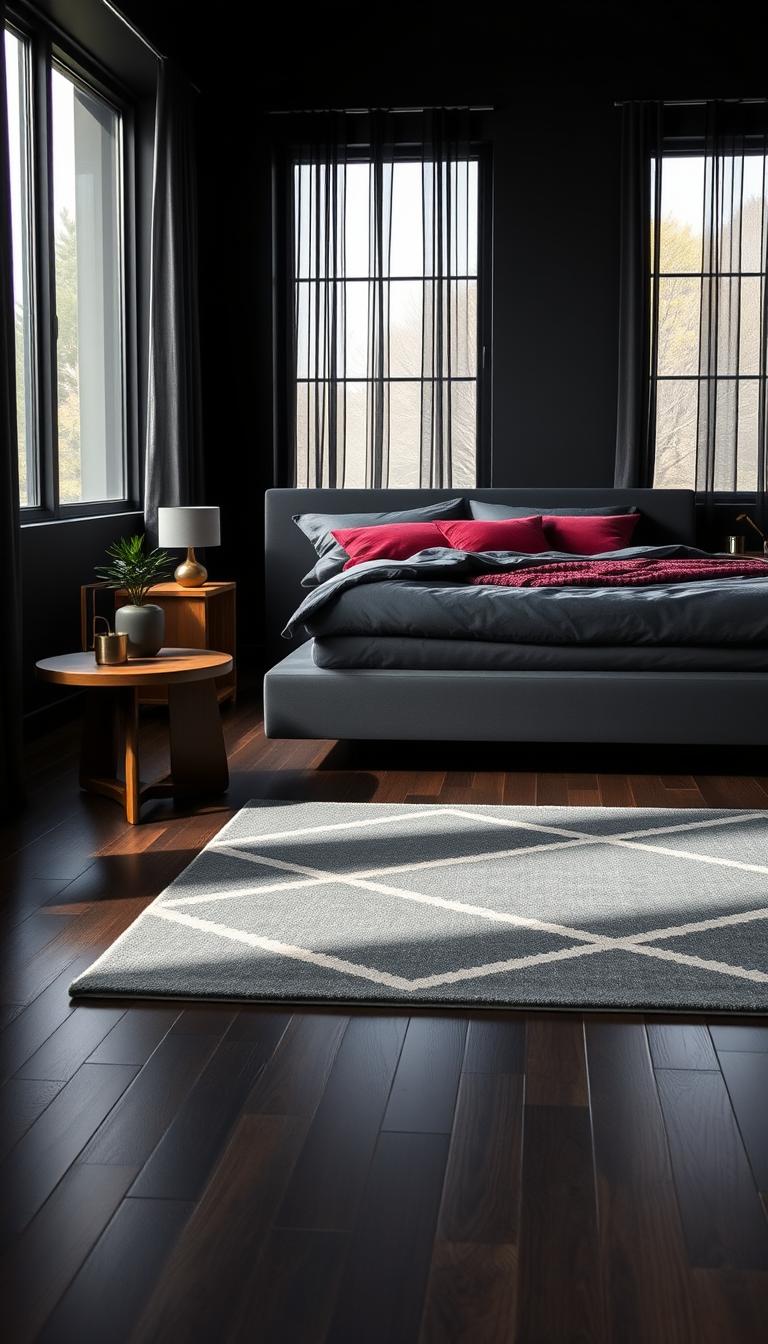
Low-profile frames, tapered legs, and rattan textures
A low walnut bed with tapered legs sits almost sculptural against matte walls. The profile keeps the sightline low so the room feels open, not heavy.
Rattan pendants or woven shades add an organic counterpoint. They bring texture and warmth that play nicely with smooth paint and crisp linens.
- Mid‑century silhouettes keep a moody bedroom feeling light on its feet.
- Warm walnut and simple lines let wood and lighting details do the talking.
- Patterned rugs and layered neutrals soften the backdrop and ground the layout.
I use this approach when a client wants vintage warmth without clutter. It’s a timeless design move that feels modern and relaxed—perfect for anyone looking for fresh ideas and approachable style.
Soft Contrast: The Black and Beige Bedroom Aesthetic
When a paneled accent wall meets sand bedding, the space becomes calm and considered.
I often recommend a channel‑tufted headboard against dark panels. The shadow lines add quiet drama without busy pattern. It feels tailored but never fussy.
Pair that with beige and sand bedding to soften the effect. White nightstands with gold hardware lift the palette and reflect lamp glow at night. The result is a warm, approachable style that still reads refined.
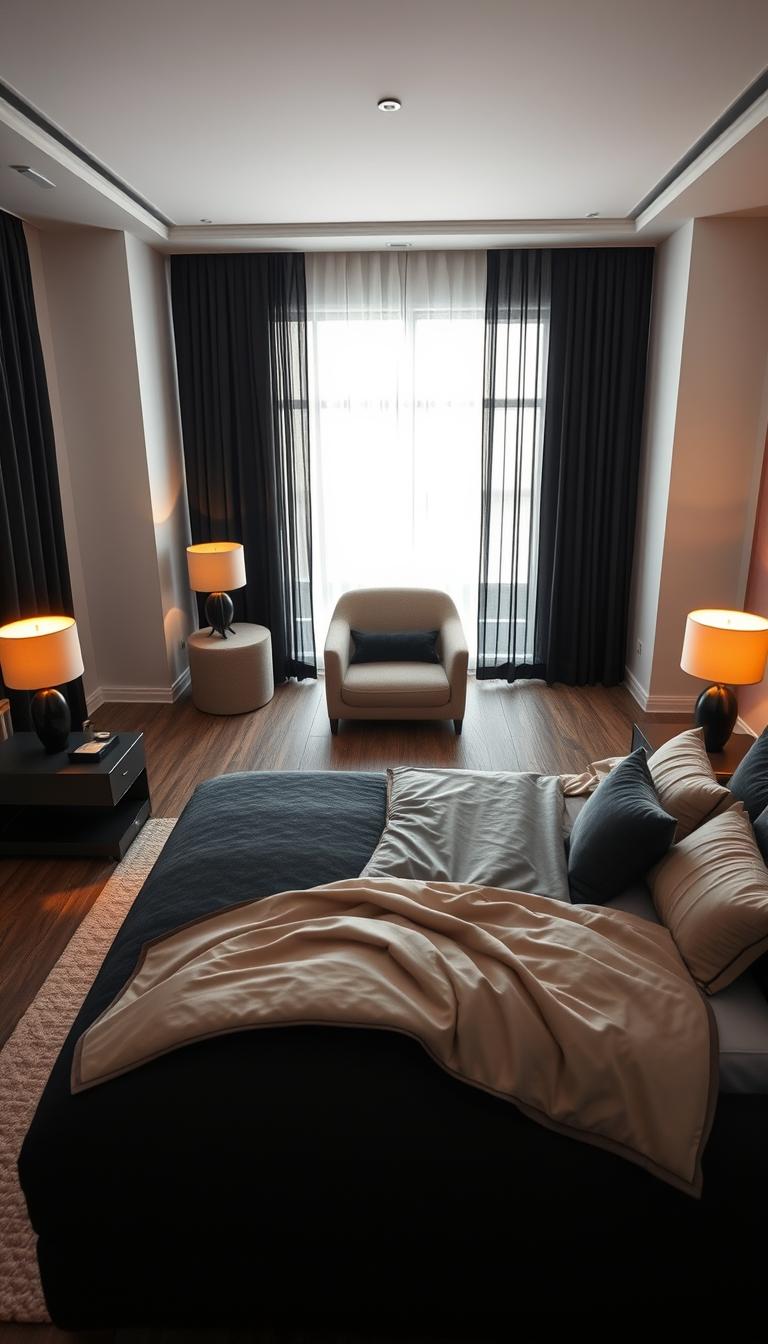
Keep accessories simple. Dried stems, linen curtains, and matte ceramics preserve the soothing feel. One sculptural lamp and a low‑pile rug are usually enough.
- Black and beige deliver soft contrast—sand tones calm dramatic walls.
- Channel‑tufting creates depth without pattern.
- Light nightstands with gold accents add brightness and warmth.
| Element | Material | Effect |
|---|---|---|
| Accent wall | Paneling | Architectural depth |
| Bedding | Sand/beige linen | Warm, calming tones |
| Nightstand | White with gold pulls | Reflects light, lifts palette |
Monochrome Movement: Texture-Driven Black Bedroom Decor
Texture does the heavy lifting in a monochrome scheme—it’s how the room breathes and moves.
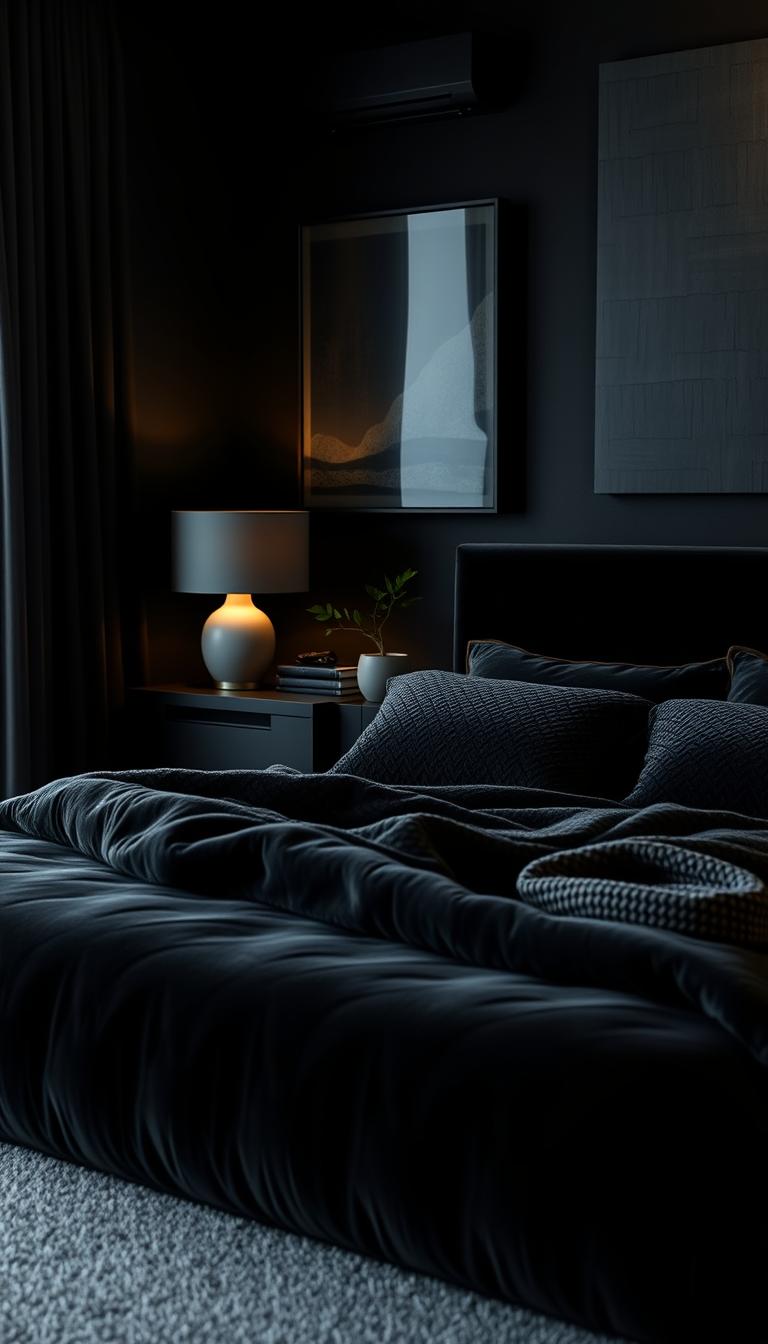
I like an upholstered headboard to start. It gives scale and a soft focal. Pair it with matte bedding for a calm, muted base.
Upholstery, throws, and shiny accents
Ribbed throws and pleated shades add rhythm. A glossy nightstand or a metallic lamp provides a tiny flash that wakes the eye.
- Keep the palette restrained: movement comes from textures, not new color.
- I often pair matte bedding with one glossy piece so finishes play off each other.
- Textured panels on a wall add architectural depth and stop a dark scheme from feeling flat.
- Choose fewer, better pieces—considered elements read sophisticated and calm.
“Monochrome feels moody and polished when texture defines the rhythm.”
Small Space, Big Impact: Black Bedroom Ideas for Compact Rooms
Tight quarters don’t mean you must sacrifice style—smart contrast and scale do the heavy lifting.
I often work with clients who worry a dark scheme will close a room in. In practice, matte black walls can work if you balance them with crisp white bedding and airy curtains.
Strategic contrast with white bedding and sheer curtains
White linens read fresh against dark walls and give the eye a place to rest. Sheer curtains protect privacy while letting natural light pour in, which matters most in a compact bedroom.
Round mirrors, sconces, and natural light optimization
A round mirror doubles daylight and softens angles. Slim brass sconces free up nightstand surface and add a warm glow for reading.
Keep furniture low-profile and integrated—built-ins and floating shelves reduce visual clutter and make the space feel larger.
- Balance: crisp bedding against dark paint keeps the room lively.
- Repeat materials so the eye sees calm continuity.
- Choose a couple of pillows and one sculptural lamp to avoid overcrowding.
| Strategy | Why it works | Quick tip |
|---|---|---|
| White bedding | Creates crisp contrast and brightness | Use breathable linen for texture |
| Round mirror | Bounces natural light and softens corners | Place opposite window |
| Slim sconces | Save surface area and add focused lighting | Choose brass for warm reflection |
Gallery Walls and Statement Art That Pop on Black Walls
A curated gallery can turn a moody wall into the room’s calm, confident storyteller.
I often set a grid of black-and-white prints above the bed to create a clear focal point. Thin brass frames and crisp mats give gallery-level contrast against dark paneled walls.
Keep bedding quiet and textural—layered neutrals and a soft rug keep the space inviting so the art remains the star. Repeat brass or dark accents elsewhere for cohesion: a mirror frame, drawer pulls, or a lamp base ties elements together.
Black-and-white grids, brass frames, and focal rhythm
Art sings on dark walls. Install a simple grid for balance. Add a picture light or subtle sconce to give pieces a warm evening glow.
- Grids above the bed create an organized focal point without clutter.
- Thin brass frames add polish and lift prints from the wall.
- Use accent lighting to create rhythm across a series of pieces.
- Keep textiles muted so the artwork reads crisp and intentional.
| Element | Why it works | Quick tip |
|---|---|---|
| Black-and-white prints | High contrast that reads graphic on dark walls | Use consistent mats for a unified look |
| Thin brass frames | Subtle shine that warms the palette | Repeat metal elsewhere for cohesion |
| Accent lighting | Highlights art and creates evening mood | Choose warm bulbs and dimmers |
Sculptural Lighting as Jewelry: Pendants, Sconces, and Lamps
Think of lighting like jewelry for the room—small pieces that change everything when they glow. I use fixtures the way a stylist uses a brooch: sparing, deliberate, and personal.
Pendant lights with warm metallic interiors throw pools of flattering light across matte surfaces. In a black bedroom, they make the bed feel framed and intimate without heavy contrast.
Adjustable sconces are my go-to for reading. They offer precise task light and serve as artful accents on either side of the bed. In tight spaces, they free up nightstand clutter.
A sculptural floor lamp adds vertical drama. It balances clean lines with soft curves and gives the room a gallery-like aesthetic. I pick pieces that read as objects first, lamps second.
Always use dimmers. Dimmers let you tune the evening mood while keeping function. That single upgrade changes how the entire design reads after dark.
| Fixture | Feature | Benefit |
|---|---|---|
| Statement pendant | Warm metallic interior | Creates flattering pools of light over the bed |
| Adjustable sconce | Swing arm, dimmable | Precise reading light & sculptural wall accent |
| Sculptural floor lamp | Tall silhouette, soft curve | Adds height and artistic balance |
Black-Framed Windows and Mirrors for Architectural Edge
A grid of mullions and a leaning mirror redraw the room’s edges and invite light in.
I often specify steel-like window frames because they read intentionally architectural. Those crisp lines give a bedroom instant structure and a modern focal point.
Leaning mirrors are my favorite tool in tight spaces. A tall mirror widens sightlines and bounces precious natural light deeper into the walls and corners.
Repeat the linear motif in textiles. A crisp white bedding set finished with black piping ties window mullions to your bed and keeps the palette cohesive.
Keep nearby furniture and accents restrained so geometry and reflected light lead the eye. If privacy matters, layer sheer panels with a pull-down shade for function without losing glow.
| Feature | Why it works | Quick tip |
|---|---|---|
| Black-framed windows | Creates architectural structure | Match mullion spacing to room scale |
| Leaning mirror | Expands perception and reflects light | Angle opposite a window for best effect |
| White bedding with black piping | Ties lines together and adds subtle contrast | Choose breathable linen for texture |
Material Luxe: Velvet Touches and Stone/Ceramic Accents
Layering velvet and stone gives a room instant tactile warmth. I use materials to set tone the way a composer uses instruments. The right mix adds depth and invites touch.
Velvet headboards, benches, and drapery for richness
Velvet is a natural partner to dark palettes. A velvet headboard or bench absorbs light and reads plush without glare.
Why it works: the fabric adds quiet sheen and a tactile contrast to matte walls. Drapery in velvet frames windows and reduces echo in the space.
- Use velvet in one or two statement pieces to avoid clutter.
- Pair velvet with neutral bedding to keep the focus on texture.
Travertine, marble, and ceramic lamps for earthy elegance
Stone elements ground a moody scheme. A travertine bench or stone-topped nightstand brings an earthy weight that balances soft textiles.
Ceramic lamps with matte glazes add hand-feel and diffuse lighting. They warm the palette and create subtle interest at night.
- Choose a ceramic lamp for soft, diffused lighting near the bed.
- Add a warm wood frame or legs to keep the mix human and inviting.
| Material | Typical Element | Effect in the room |
|---|---|---|
| Velvet | Headboard, bench, drapery | Plush texture, absorbs light, luxe feel |
| Travertine / Marble | Bench, nightstand top | Earthy weight, natural patterning, visual anchor |
| Ceramic (matte) | Lamps, vases | Soft glow, tactile surface, handcrafted look |
| Wood | Frame, legs, accents | Warmth, balance, links to other elements |
Design idea: pair one velvet piece with a stone accent and a single wooden element. The materiality does the heavy lifting—fewer, better elements create a luxe calm that keeps the bedroom feeling intentional and easy to live in.
Black Bed Decor
A well-styled sleeping surface reads like a polished outfit—texture is the accessory that seals the look.
I start with the bedding. Mix a matte duvet with silky sheets and a ribbed throw to add depth while staying in one tone. That contrast between sheen and matte keeps a bedroom from feeling flat.
Next, layer pillows in two to three sizes—linen shams, velvet euros, and a knitted lumbar. Each piece brings a different feel and invites touch.
Layer pillows, throws, and linens in varied tones and textures
Tip: Keep nightstands edited so textures shine. Too much clutter steals the effect.
Add metallic accents and graphic patterns for interest
A lamp base or bench legs in warm metal gives subtle sparkle against matte black linens. One graphic pillow—striped or geometric—introduces rhythm without changing the palette.
| Element | Material | Why it works |
|---|---|---|
| Duvet | Matte cotton or linen | Provides a calm, tactile base |
| Sheets | Silky sateen | Adds luxe sheen and contrast |
| Accents | Brass lamp, striped pillow | Breaks matte with sparkle and pattern |
Style the Fifth Wall: Black Ceilings for a Cozy Cocoon
A dark ceiling can shrink visual height in the best way, turning a tall space into a soothing cocoon.
I often suggest this in rooms with high ceilings. Painting the ceiling a deep tone brings the plane down just enough to feel intimate.
Balance is everything. Pair lighter walls and reflective nightstands or a metallic accent so the envelope doesn’t close in. A mirror or brass lamp bounces light and keeps the space airy while the ceiling reads cozy.
I prefer a matte finish overhead—matte black or a low-sheen paint prevents glare. The surface stays velvety, and evening lighting feels soft and composed.
Finish the effect with dimmers. Dimmable lighting lets you change the room from bright morning to an evening cocoon with a single touch. Subtle shifts make a big mood payoff.
| Strategy | Why it works | Finish | Lighting tip |
|---|---|---|---|
| Paint ceiling dark | Creates cocooning depth in a bedroom | Matte black or low-sheen | Use dimmers for mood control |
| Balance with light walls | Keeps room airy and open | Soft neutral paint | Reflective accents to bounce light |
| Add metallics & mirrors | Prevents heavy feel, adds contrast | Brass or bronze accents | Warm bulbs, 2700–3000K |
Maintenance and Care for Dark Bedrooms That Stay Pristine
Small daily rituals protect your room’s rich finishes and keep textures feeling fresh. I tell clients that a moody palette rewards a tiny bit of attention. The payoff is a calm, intentional bedroom that reads clean and calm every day.
Start with dust. Dark walls and surfaces show fine particles more than lighter tones. A weekly pass with a microfiber cloth removes dust without scratching matte finishes.
Dusting, lint control, and fabric refresh routines
Microfiber is your best friend. Use it weekly on surfaces and a soft brush for carved moulding. For textiles, lint rollers work wonders on bedding and drapery.
I keep an upholstery vacuum attachment on hand to lift pet hair from couches and pillows. Rotate and air out pillows when possible to refresh loft and scent.
Cleaning marks and choosing materials that wear well
Treat spills immediately. Blot—don’t rub—and always test cleaners in a hidden spot first so dyes and finishes hold. Wash linens on gentle cycles and skip bleach to avoid fading.
- Choose performance fabrics and matte lacquers that touch up easily.
- Seal stone tops to prevent rings and use coasters for bedside drinks.
- Air-dry textiles when labels allow to preserve hand and hue.
| Task | Tool | Frequency |
|---|---|---|
| Surface dusting | Microfiber cloth / soft brush | Weekly |
| Pet hair removal | Lint roller / upholstery vacuum | As needed |
| Textile care | Gentle wash / air-dry | Per label |
These small steps protect the elements that make a room feel special—matte walls, layered textures, and the finishes you invested in. For more styling and practical ideas, check out dramatic bedroom ideas.
Smart Shopping and Styling Tips for a Balanced Black Bedroom
Smart buying means selecting a handful of meaningful pieces that set the room’s tone.
I tell clients to buy less and choose better. One or two statement items beat a dozen small accessories every time.
Prioritizing statement pieces over clutter
Choose impact over volume. Pick a strong nightstand, a sculptural lamp, or a framed artwork instead of many tiny trinkets. Repeat materials—wood, matte metal, or woven textiles—to create rhythm and cohesion across furniture and elements.
Using plants, natural light, and neutral linens to breathe
Let nature and light do some of the work. Place a tall plant near a window, keep white or light linens on the bed, and let sunlight highlight texture. Warm woods and small metallic accents soften dark tones while neutral colors add airy contrast.
- Stick to the 70-20-10 palette rule for balance.
- Plan layered lighting—ambient, task, accent—early in the process.
- Repeat tones and materials to avoid visual clutter.
| Focus | Why it works | Quick tip |
|---|---|---|
| Statement pieces | Create focus and reduce clutter | Limit to 1–2 major items |
| Natural elements | Soften tones and add life | Use plants and wood repeats |
| Layered lighting | Shows furniture and art to best effect | Include dimmers and warm bulbs |
Conclusion
When you pair layered lighting, tactile textures, warm wood, and a few metallics, a moody room becomes a true retreat.
I’ve handed you the playbook: paint and palette, texture-forward styling, and smart material choices that add sophistication and character.
Lead with one confident statement—a black bedroom focal, a sculptural pendant, or gallery art—and let furniture and colors echo it. Keep care simple: dust, manage lint, and refresh fabrics gently to protect hue and hand.
Trust your choice, repeat materials you love, and edit what you don’t need. The result is an approachable aesthetic that feels curated, restful, and quietly dramatic.