
Ever wondered how a few small swaps could make your room feel completely different? I ask that because I’ve seen tiny moves create big calm in real homes.
I designed this guide to help you transform your bedroom into a calmer, better-functioning space without ripping everything out. I use small, doable steps that deliver a big impact—think smart storage and layout tweaks I test with clients.
We’ll explore color psychology that helps rest, storage that looks intentional, and tactile layers that support sleep and daily routines. I’ll also share exact strategies for compact rooms—from under-bed solutions to floating nightstands—that maximize every inch.
Expect practical finishes and wall treatments so you can picture the result and choose confidently. Ready to create a soothing space that supports deeper sleep and a happier home? Let’s start with color and mood.
Key Takeaways
- Small changes, big results: Simple swaps can transform function and calm.
- Color choices affect sleep and mood—use them intentionally.
- Smart storage keeps floors clear and looks intentional.
- Layout tweaks improve flow in compact rooms.
- Tactile layers and lighting support wellness, not just style.
- You’ll gain quick weekend wins and a plan for longer updates.
Set the Mood with Color: Light & Airy vs. Cosy & Cocooning
Color sets the tone faster than furniture — one sweep of paint can change how a room breathes. I start with palette questions: do you want the space to feel open and breezy, or snug and private?
Soothing neutrals, aquatic shades, and botanical greens for rest
Soft neutrals, aquatic blues, and botanical greens lower visual noise. They cue the brain for rest and tend to feel nurturing without demanding attention.
In sunny rooms a light palette bounces daylight and makes the space feel larger. A painted headboard or simple painted panelling adds depth without clutter.
Deep, dark, and dreamy palettes that feel secure and serene
When a client wants cozy, I reach for saturated tones. Farrow & Ball Paean Black No.294 or Preference Red No.297 behind the bed creates intimacy and a retreat-like feel.
For a grounded envelope, try Plummett on walls with Railings on trim. Darker color pairs wrap the room and feel like a warm hug in low-light spaces.
Coordinating walls, woodwork, and finishes for a cohesive room
Unify the shell: carry one color across walls and woodwork to hide visual breaks and make the whole room read calmer.
- Test undertones at different times of day before committing.
- Matte walls feel soft. A subtle sheen on trim adds quiet polish.
- Painted headboards fake architecture and focus the eye on the bed.
I’ll often tweak a sample strip with the client until the balance of light and dark feels just right for their design goals.
Small Bedroom Decorating Ideas That Maximize Space
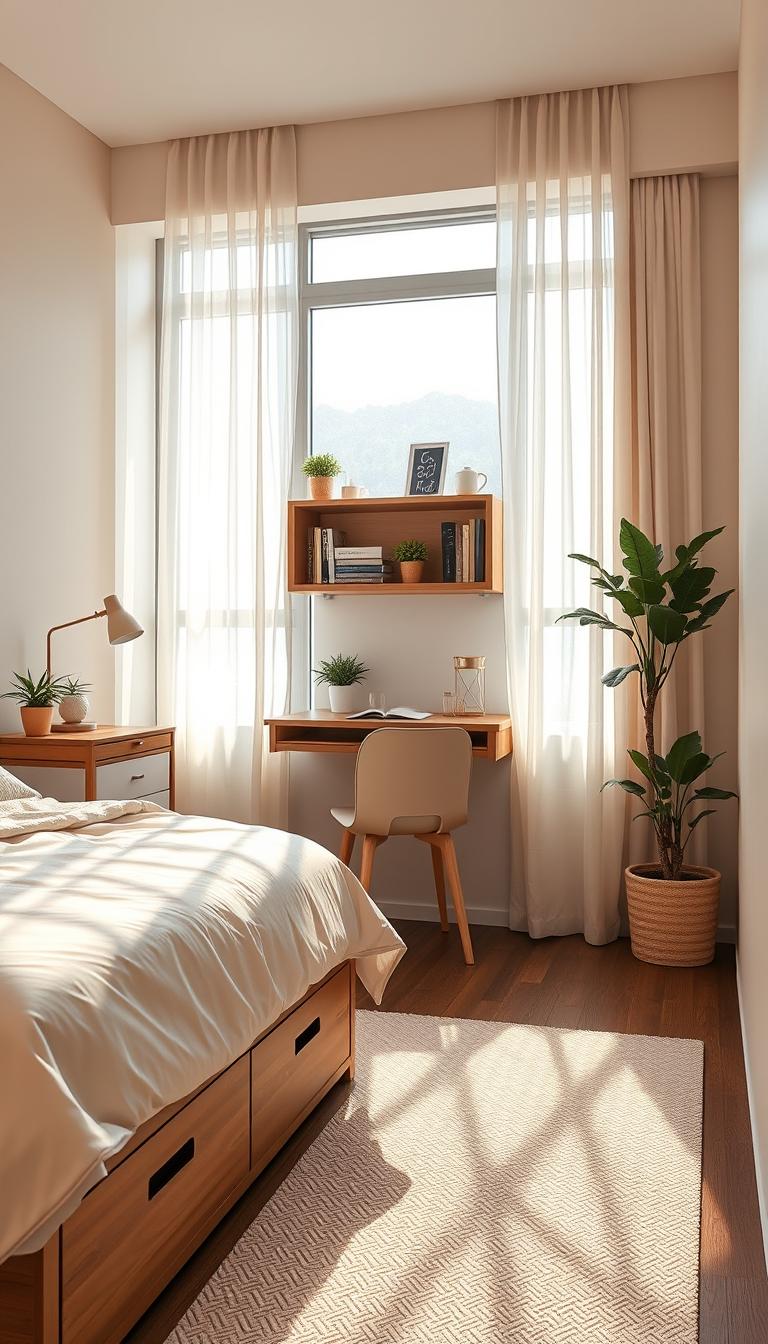
A single vertical focal point changes how you perceive a room’s proportions overnight. I use that trick with clients all the time—tall art, a painted panel, or a vertical headboard lifts the eye and calms visual clutter.
Create a clear focal point
Pick one confident wall to anchor the room. A gallery hung high or a painted panel behind the bed makes the layout feel deliberate.
Choose streamlined furniture
Scale matters. Swap oversized dressers for low, narrow pieces. A simple bed frame and a slim night shelf keep circulation open.
Use vertical strategies
Add wall shelves, a leaning ladder for throws, or pendant lights instead of floor lamps. These moves lift the gaze and free floor area.
Reimagine corners as functional nooks
That awkward corner? A compact desk or vanity ledge with a mirror does double duty and removes the need for bulky furniture.
- Under‑bed bins in consistent tones hide things without a dorm look.
- Floating nightstands and pegboards keep surfaces clear and useful.
- Edit ruthlessly: less clutter makes small spaces feel larger.
Smart Storage for Calm, Clutter‑Free Bedrooms
Good storage is invisible design: it works hard so the space looks peaceful. I treat storage as part of the architecture. When you choose the right vessels and mounts, daily clutter disappears and the room reads as intentional.
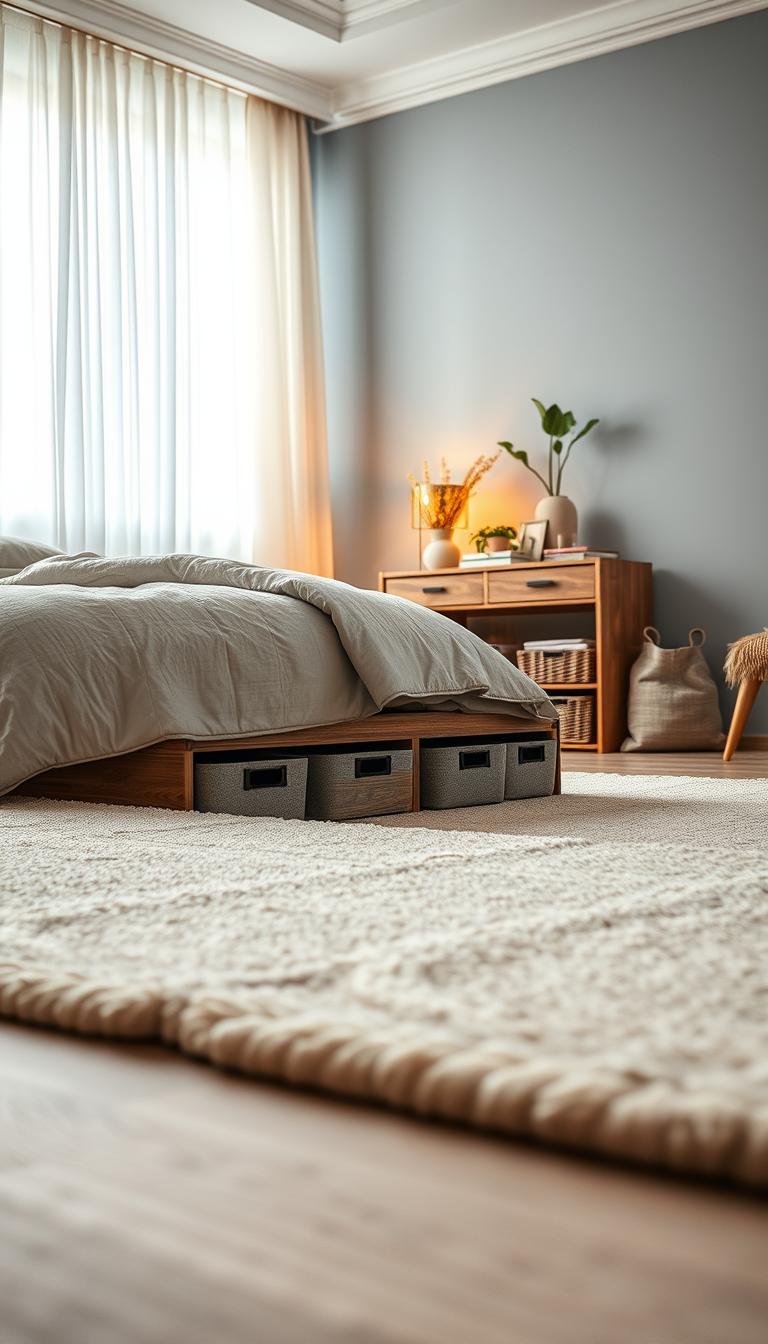
Under‑bed solutions that feel built‑in
I avoid plastic bins. Instead, I use matching fabric boxes or shallow wood crates that look like furniture, not school storage.
Sort by use: seasonal linens, off‑season clothes, and spare pillows go where you’ll grab them most. Drawer dividers make small things easy to find.
Wall‑mounted fixes: nightstands, shelves, and pegboards
Floating nightstands give you a landing spot for a book and a glass while keeping the floor clear. A slim wall shelf above each one doubles as a charging station—hide cords with adhesive raceways for tidy walls.
- Match materials: fabric boxes or wooden crates keep the look elevated.
- Pegboards: paint them to blend with the wall and hang baskets or headphones.
- Closet tip: add a high second rod or top shelf—vertical inches are free real estate.
I usually leave 15–18 inches of clear space on either side of the bed. That breathing room is as restorative as any candle and helps you keep things put away.
Statement Beds and Headboards That Anchor the Room
A bold bed can do the heavy lifting in a room, giving the whole space instant structure.
I often start there—an arched painted headboard or an airy four‑poster becomes the room’s architecture. Keep other colours calm so the frame reads sculptural, not heavy.
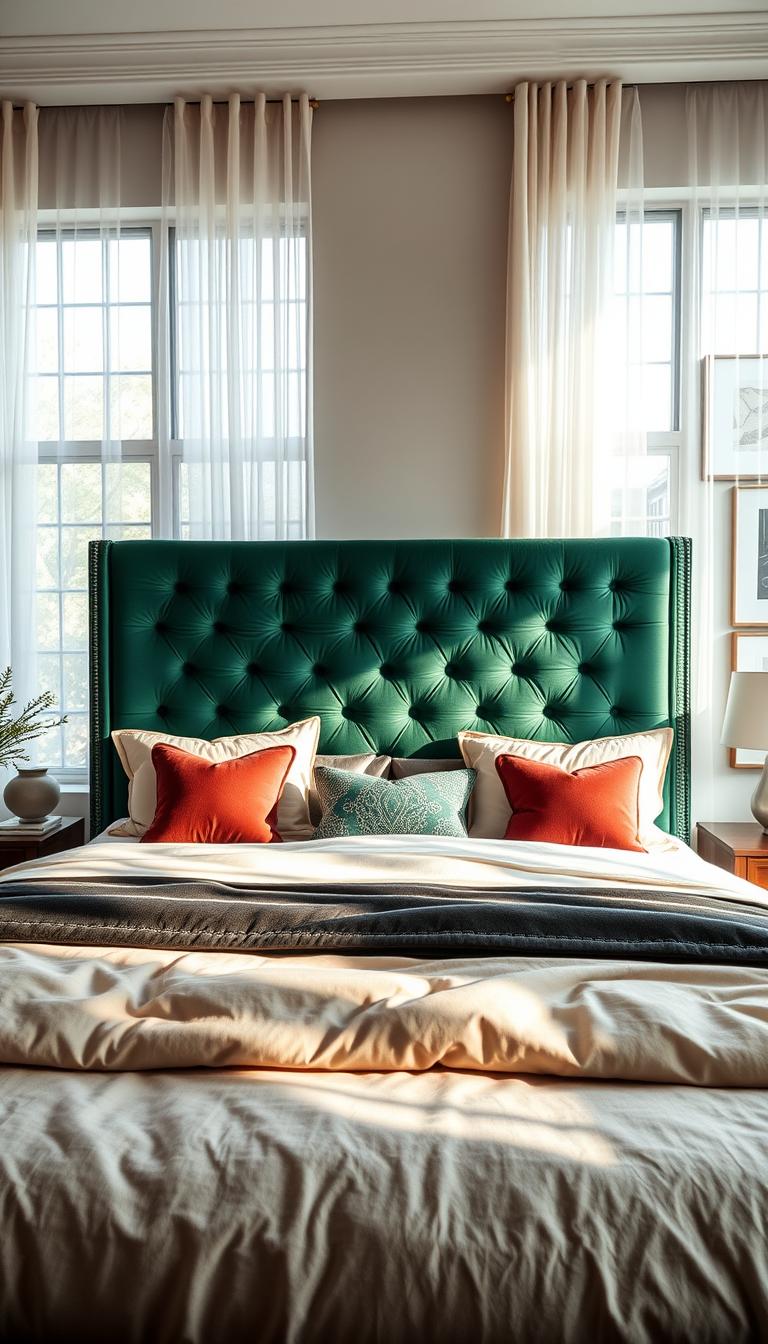
Painted headboards and architectural frames
Painted headboards add depth with minimal fuss. An arched panel lifts the eye and feels custom without costly carpentry.
For drama, a four‑poster in a simple wood tone becomes the hero. Let linens stay quiet and the frame do the talking.
Canopies and room‑within‑a‑room frames
A canopy creates instant intimacy and perceived height without stealing floor area. Think of it as a soft frame that defines the sleep zone.
Daybeds, bunks, and multifunctional choices
In compact bedrooms, a daybed under a window is both seating and sleep. Bunks are a vertical win—add curtains for privacy and a boutique feel.
- If the room lacks architecture, add it with the bed.
- Use a tapestry as a tactile headboard alternative for texture and sound dampening.
- Keep side pieces light: floating sconces and a small ledge free up floor space.
I’ve used these moves with clients who wanted a strong focal point—and the change is immediate.
Texture First: Cozy Layers That Add Depth without Clutter
Texture is the quiet trick I use to make a small room feel layered and lived‑in. Before I pick another color, I reach for linens, a low‑pile rug, and a knitted throw. Those pieces change the mood fast.
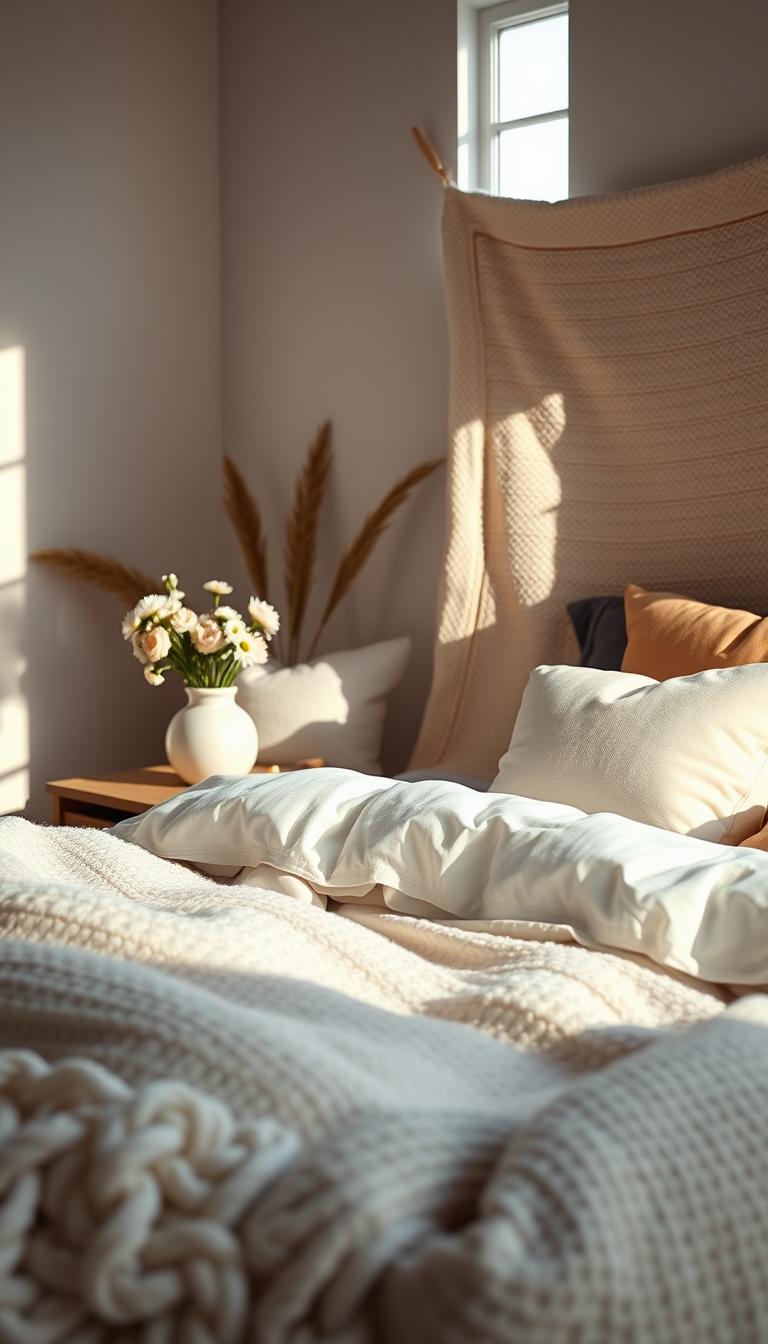
Start small: slide a rug 8–12 inches under the bed to expand the footprint and give morning toes a plush landing. Natural baskets corral bedside clutter; one large lidded basket keeps surfaces calm and tidy.
Curtains in a soft weave filter light and reduce street noise—simple moves that support deeper rest.
How I layer without the clutter
- Mix textures, not patterns—stoneware lamps, wood accents, and boucle or linen make a cohesive trio.
- Choose breathable, OEKO‑TEX sheets when you can—comfort is part of good design.
- Edit surfaces: let a few tactile showpieces do the lifting so the space reads calm, not crowded.
“Texture is the quiet path to a cozy home without more stuff.”
These small swaps help bedrooms feel intentional and restful—real wins I use with clients all the time.
Lighting Layers for Better Sleep and Better Design
Layered lighting changes how a small room feels — it stops a single harsh bulb from flattening the space.
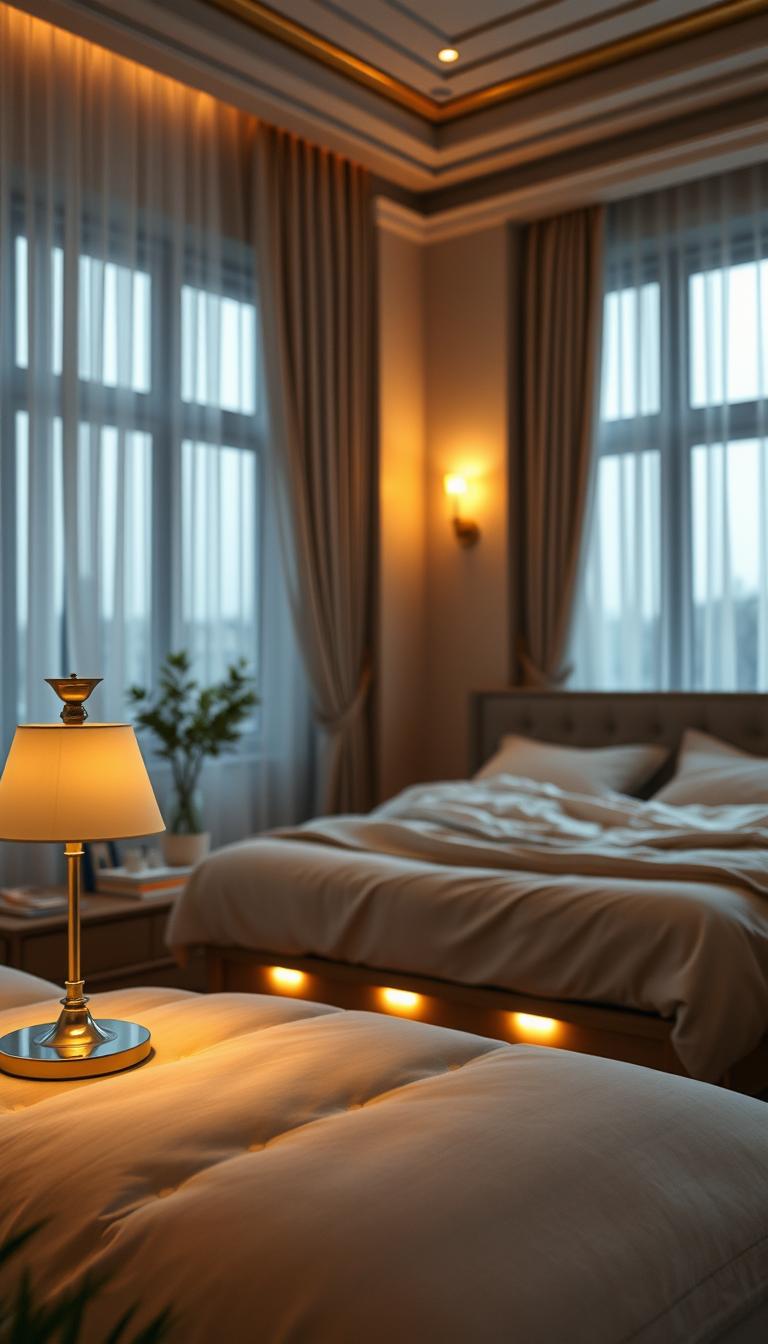
I build three layers: a dimmable overhead for general tasks, soft ambient lamps for mood, and focused task lights for reading. Each layer pulls its weight so the whole space feels intentional.
Overhead, ambient, and task lighting that flatter small spaces
Warm bulbs matter: choose LEDs around 2700K–3000K. They feel cozy and support melatonin better than cool white. If you can’t avoid an overhead fixture, add a diffuser and a dimmer to soften glare.
Warm bulbs, floating sconces, and pendants to free up surfaces
Floating sconces and hanging pendants clear nightstands and make the room feel lighter. I place task lights slightly behind and above the book — no shadows, just a clean reading beam.
- Multiple small sources read as inviting pools of glow, not one bright blast.
- Keep cords tidy with under‑bed clips and low‑profile guides.
- Match the metal finish across fixtures to make the plan feel cohesive.
“Dimmers are your best friend — they turn a room into a sequence of moods.”
Walls That Work: Wallpaper, Tapestries, and Painted Panelling
A smart wall treatment can rewrite a room’s scale overnight. I find the right finish stretches height, adds texture, or gives a quiet backdrop for furniture to shine.
Striped wallpaper for added height and visual rhythm
Vertical stripes are my go‑to for low ceilings. They create the illusion of height and steady visual rhythm without crowding the space.
If you’re nervous about full coverage, paper a single panel behind the bed. Narrow stripes read elegant and lift the eye.
Tapestries as easy, texture‑rich wall and headboard alternatives
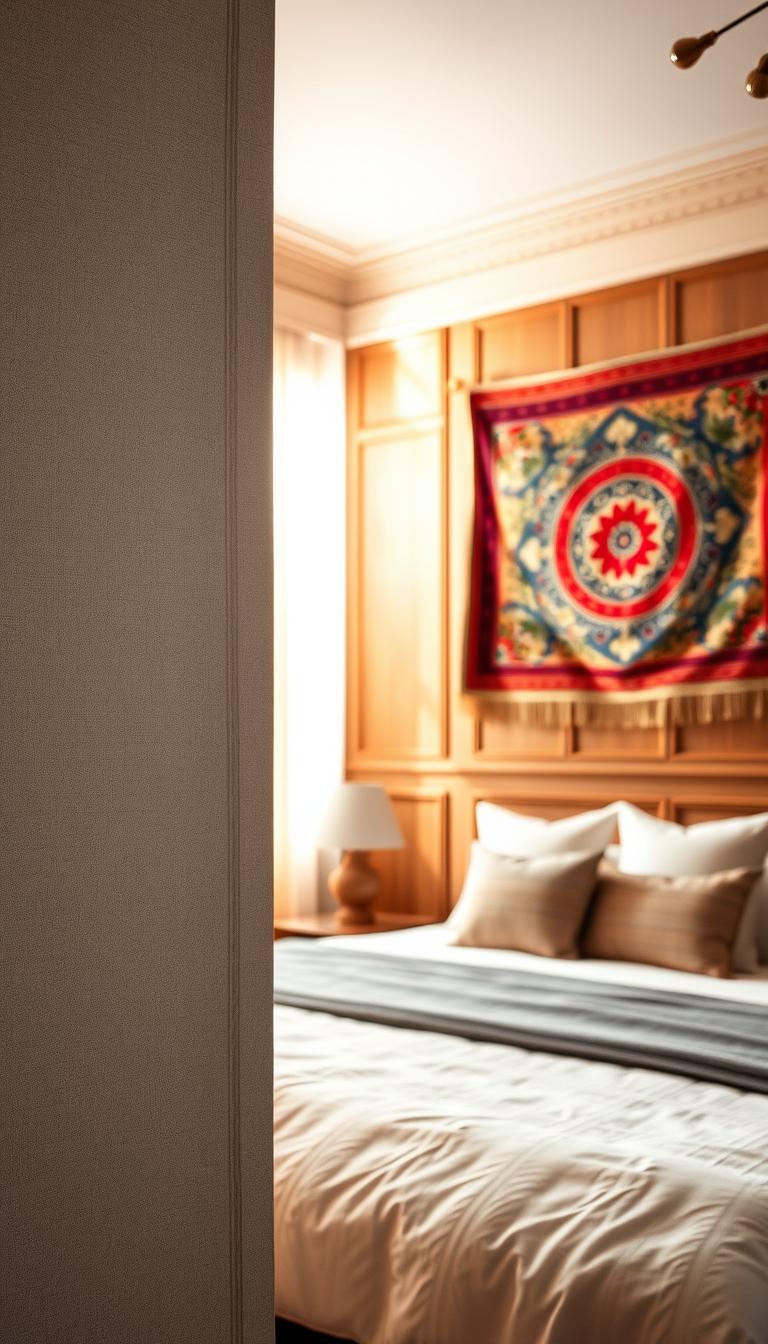
A tapestry behind the bed doubles as a soft headboard and a textural mural. It’s zero paste and instant warmth.
Pick a scale that matches the bed frame so the textile reads intentional, not accidental.
Painted panelling and all‑over color for designers’ favorite looks
Painted panelling adds architecture. Even simple wood battens give shadow and depth.
For a cohesive envelope, carry the same hue across walls, trim, and doors — the all‑over color trick designers love. Use matte or eggshell on broad planes and a slightly higher sheen on panelling to keep details crisp.
- Striped wallpaper stretches low ceilings and energizes small rooms.
- Tapestries act as easy headboard alternatives with lots of texture.
- Painted wood panelling gives instant architecture without heavy construction.
- When the bed frame is a hero, let the wall recede with a quiet paint choice.
Want more wall treatment examples? See a curated set of approaches in this designer round-up for visual inspiration that’s easy to apply.
“A thoughtful wall lets the rest of the room breathe.”
Bedroom Decorating Ideas for Balanced Layouts and Flow
A clear path through a room makes everything feel calmer and more usable.
I map walking lanes first and then choose furniture that respects that flow. Aim for 24–36 inches where possible. When pathways work, the whole space reads lighter.
Right‑sizing the bed and dresser to keep pathways clear
The right bed size matters more than most people expect. Often a queen instead of a king frees enough room for balanced nightstands and better circulation.
Keep dresser depth modest—16–18 inches is a good target—so drawers don’t block the way when open. Smaller nightstands or narrow chests keep surfaces useful without crowding.
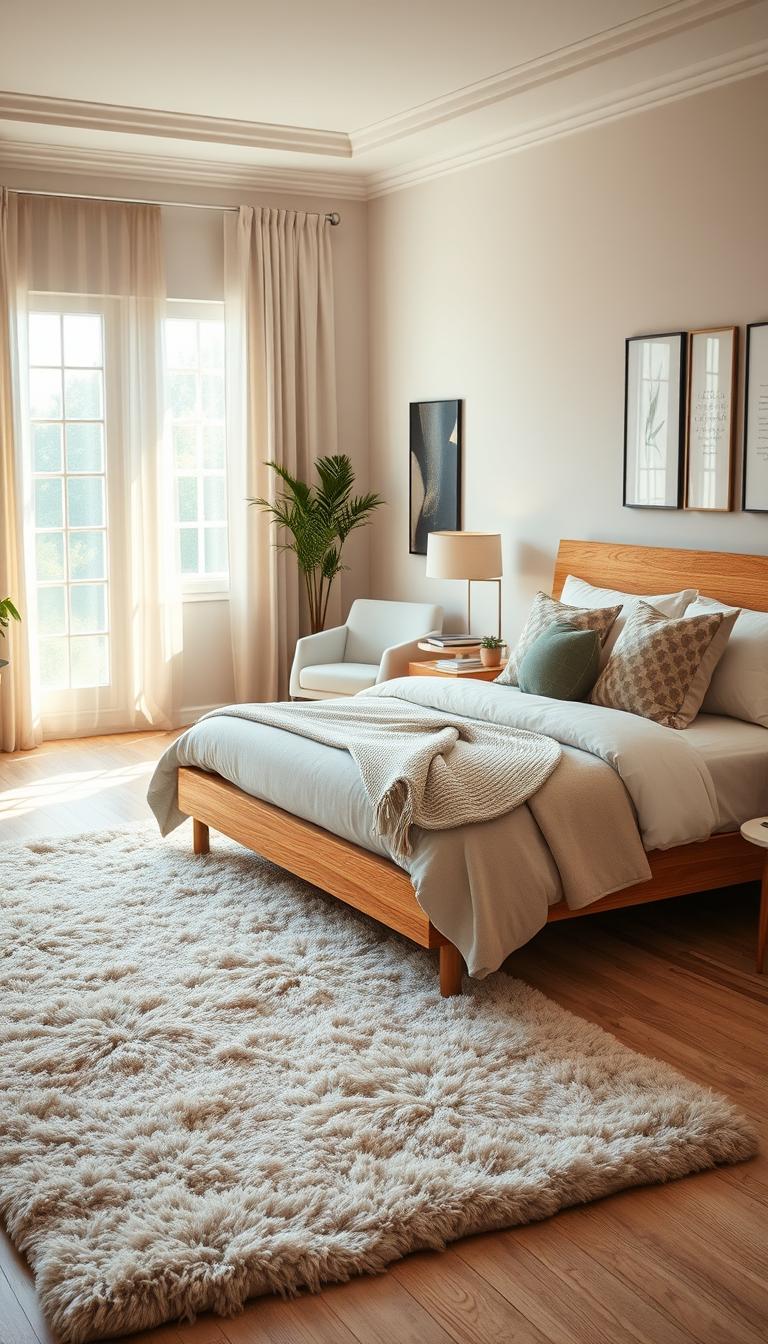
- I float the rug under the lower two‑thirds of the bed to ground the layout without crowding the perimeter.
- If doors collide with furniture, consider a pocket or barn option to reclaim floor space.
- Mount sconces to free surfaces and center them to pillow height for reading comfort.
“Sometimes the best move is removing one piece — it clears the path and calms the view.”
| Issue | Quick fix | Benefit |
|---|---|---|
| Blocked walkway | Shift bed 4 inches or swap a wide nightstand | Improves circulation and sightlines |
| Drawer overlap | Choose 16–18″ deep dresser | More usable floor when open |
| Door conflict | Install pocket or barn door | Reclaims usable floor space |
There’s always a way to improve flow. Sometimes it’s a tiny nudge, and sometimes it’s removing a piece. Either way, the room—and how you use it—wins.
From Minimal to Maximal: Find Your Design Personality
Some people sleep best in visual quiet; others need color and pattern to feel alive. I help clients choose a path that fits how they live and rest.
Intentional minimalism for rest
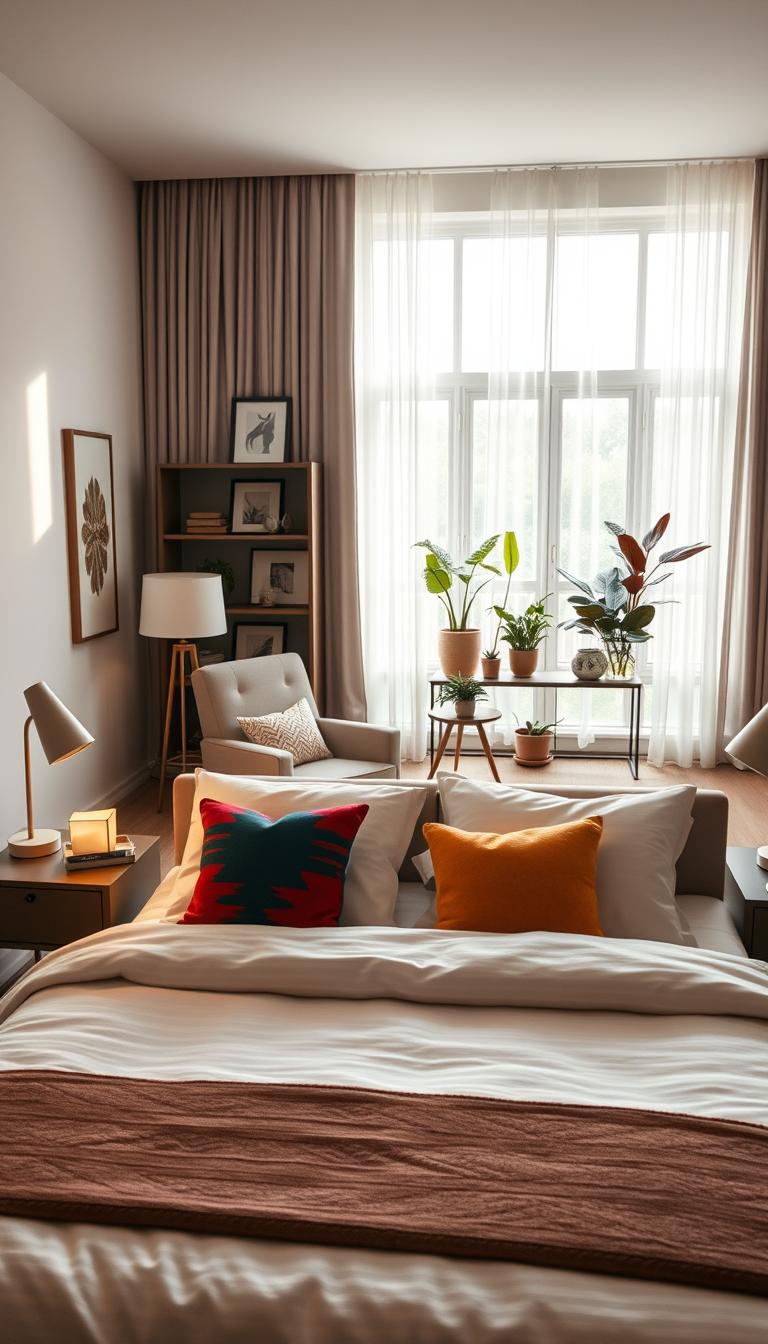
If calm is your goal, keep pieces few and meaningful. Fewer objects, textured layers, and generous negative space make it easier to relax.
Keep surfaces nearly empty. Pick one soulful object per area—a ceramic bowl or a single stem. That small restraint is a practical choice for sleep and upkeep.
Pattern play, jewel tones, and collected pieces the designer way
Love drama? Deep jewel tones—think Sherwin‑Williams Naval with wine upholstery—create a chic, enveloping “cave” that feels intentional.
Maximalism works when it’s curated. Group patterns by scale and stick to a consistent color story so the room reads collected, not chaotic.
- Architectural moves: a four‑poster or canopy creates a room‑within‑a‑room without stealing floor space.
- Build slowly: add one statement textile or light at a time and live with it.
- Practical rule: your best choice is the one you can keep tidy—systems matter.
“Personality is the point—your bedrooms should reflect how you unwind, create, and connect at home.”
For wider maximalist thinking, explore curated maximalism approaches that designers use to balance pattern and restraint.
Conclusion
Tiny updates often deliver the biggest wins for how a room functions and feels.
I recommend starting small: swap to warm bulbs, add a cozy throw, or hang a tapestry or one wall of wallpaper to give instant character. These moves shift light and texture so the room invites rest without fuss.
Think vertically—canopies or a four‑poster frame add height while under‑bed boxes in a textured fabric keep storage tidy and intentional. Floating sconces and petite tables free floor space and improve daily flow.
Edit the extra things. Right‑size the bed and dresser so pathways feel easy. Pick one upgrade this week and build momentum—your bedroom design will follow, and your home will feel calmer for it.