
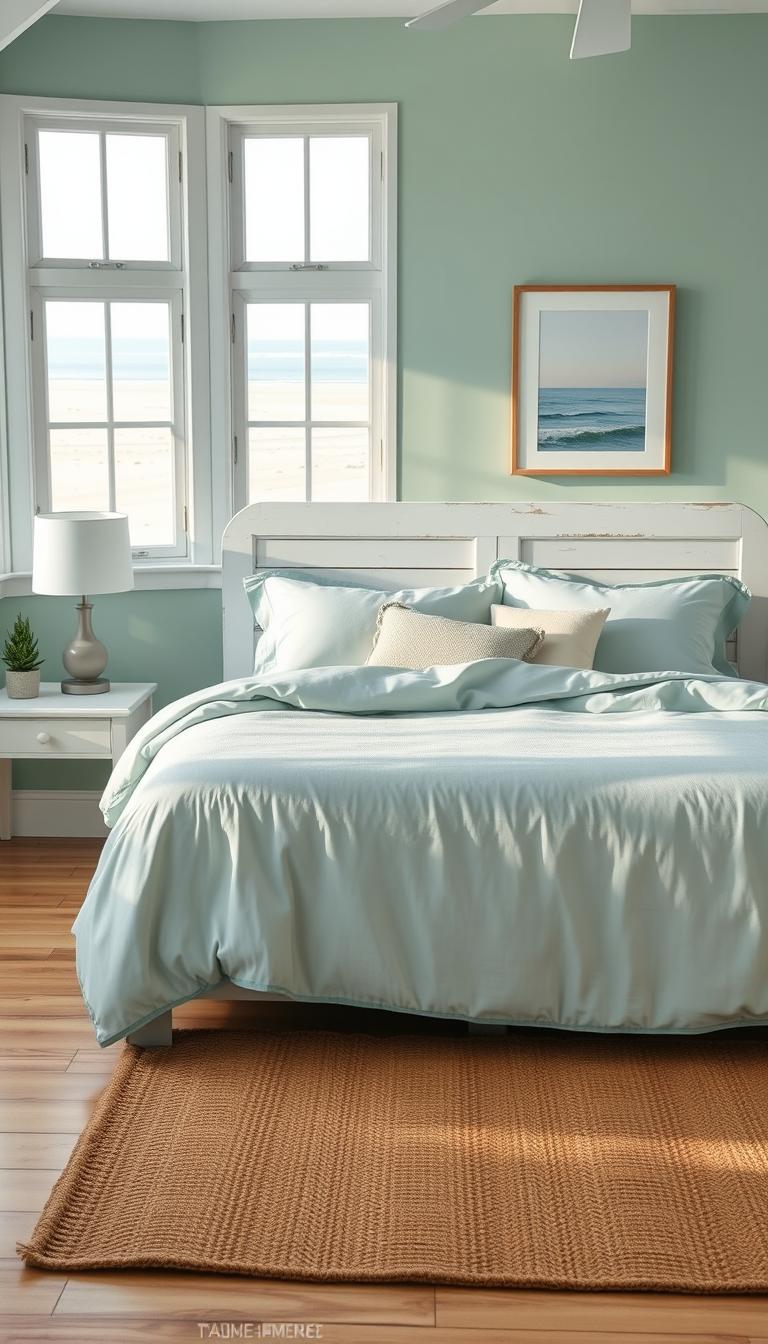
What if your bedroom could feel like a deep exhale every night? I ask that because a little shift in color or texture can change how you sleep, move, and unwind.
I’ll show you how to borrow cues from coastal rooms — from Palm Beach’s rosy glows to Sea Island’s coral-and-turquoise mixes — without turning your home into a theme park. Expect simple ideas grounded in color psychology and real designer moves so your space feels collected, not contrived.
I focus on layered textures — grasscloth, seagrass rugs, wicker nightstands — and smart swaps you can actually do. Small edits, like a woven bench or watery-toned rug, shift the whole mood.
Through practical steps for palette, bed choice, walls, and pillows, you’ll get a plan that balances where to splurge and where to save. I use “sand, sea, and sky” as a north star so the tones last and the room stays restful.
Key Takeaways
- One calm palette ties the room together and eases the mind.
- Layer texture—rugs, woven benches, and grasscloth—over a simple bed choice.
- Use designer examples for inspiration, not literal copying.
- Small changes make big impact in bedroom design and comfort.
- Know where to invest—bedding and window treatments—and where to save.
What Makes a Coastal Bedroom Feel Effortless and Relaxed
I begin with three simple references—sand, sea, and sky—because they calm the eye and simplify choices. That trio gives a clear color map that keeps a room from feeling busy. It also helps you pick furniture and finishes with confidence.
Colors and textures from sand, sea, and sky
Keep the palette sun-faded: oat, shell, seafoam, and soft blue. These tones shift gently from morning light to moonlight and make the whole space feel restful.
Natural materials: wood, rattan, seagrass, linen, and cotton
I favor lighter-toned wood, woven baskets, and seagrass rugs for warmth without clutter. Linen and cotton bedding breathe well and feel lived-in from day one.
- Textures matter: tactile rugs and throws invite touch.
- Repeat materials to make small bedrooms read bigger and more cohesive.
- Choose matte finishes over high gloss to diffuse light and create a calm hush.
Elements should whisper the coast, not shout it. The result is an intentionally collected room where you actually relax. That’s the point—design that helps you breathe easier every night.
Beyond Blue: Coastal Color Palettes Inspired by Sand, Sunset, and Seafoam
Colour choices can make a room feel like dusk, daybreak, or a calm harbor—without relying on literal coastal props. I use a thoughtful palette to set mood first, then pick pieces that support it.
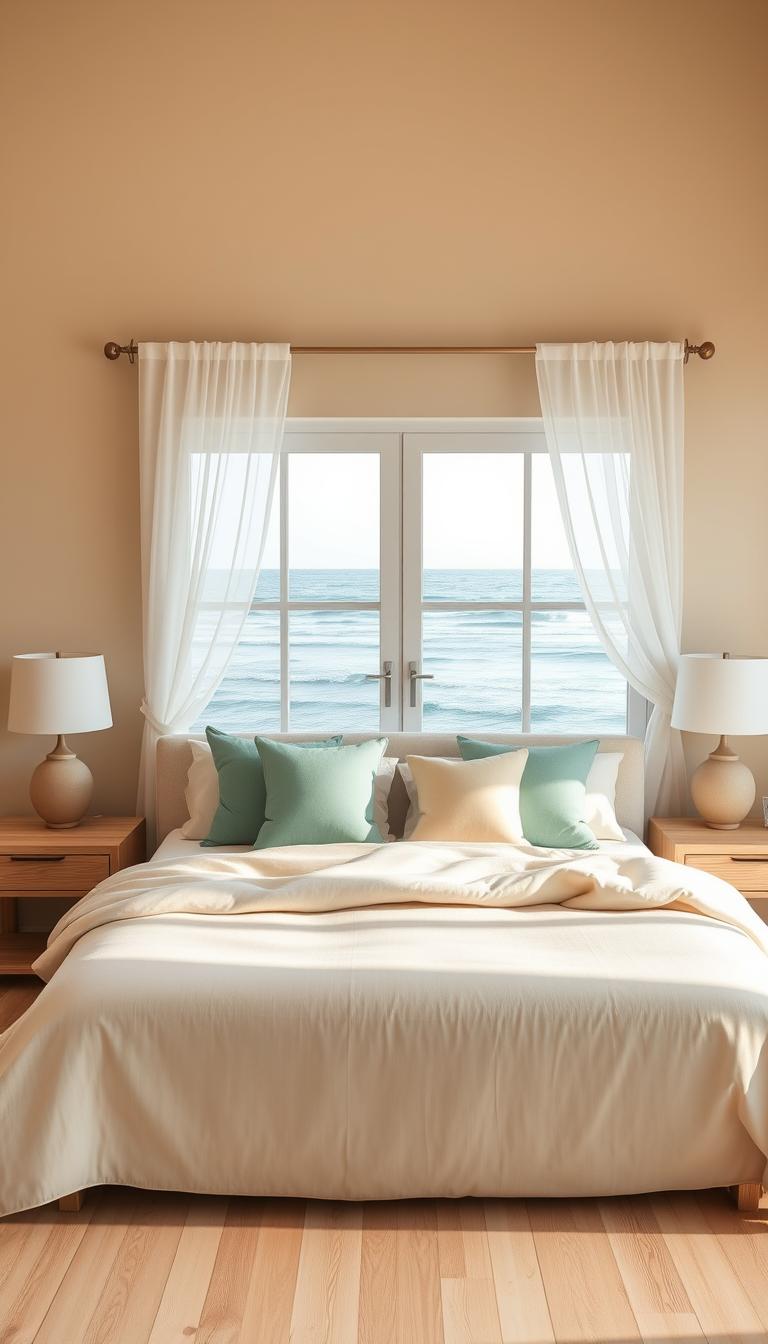
Soft blush, muted greens, and warm beige tones
I often begin with warm beige, shell pinks, and muted palm-frond greens. Those sunset-meets-seafoam tones feel coastal without defaulting to all-blue.
Pro tip: repeat an anchor color in three places—bed throw, drapery tape, and rug border—to ground the scheme.
Sepia-washed walls, sage plaids, and coral accents
“Sage windowpane plaid can give walls a sepia-washed, well-loved quality.”
Designers use Schumacher’s Luberon Plaid to wrap a room in vintage freshness. Add coral in small doses—lumbar pillows or lamp trim—to energize neutrals.
Navy, mocha, and wine tones for depth
For mood, thread in navy, mocha, or a whisper of wine. One dark element—say, a mocha side table or navy bed throw—prevents the palette from feeling washed out.
- Collect fabric swatches and move them around at different times of day.
- Think sea-inspired without shells: a seafoam nightstand or blush ceramic lamp.
- Keep the palette layered and relaxed—perfect for a beach house or any restful bedroom.
Timeless Blue-and-White Bedrooms That Channel the Coast
Layering ocean tones against crisp white makes a room feel like a thoughtful coastal echo rather than a themed set. I use that idea often when I want calm that reads collected and lived-in.
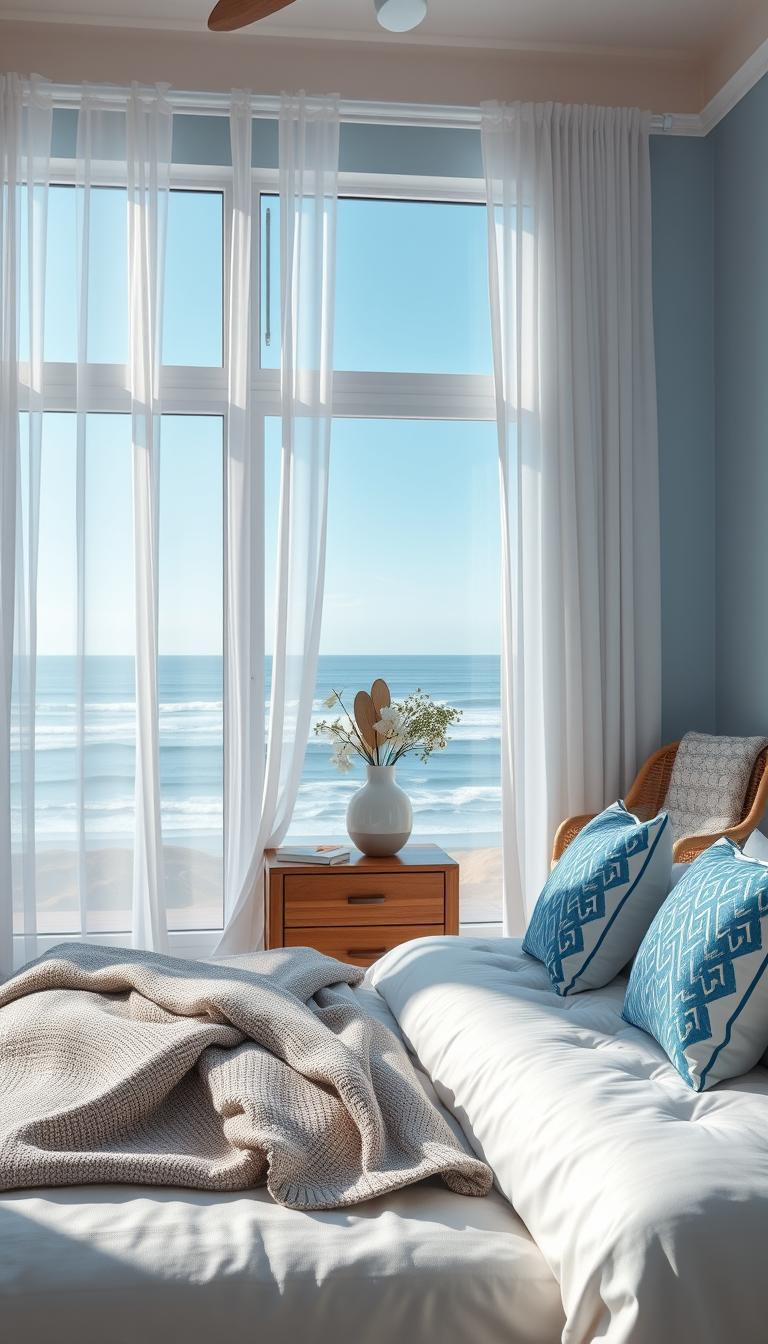
In a Fairhope, Alabama primary, a canopy with a striped valance and blue-green linen interior sets a gentle focal point. Wood-paneled ceilings washed in Sherwin-Williams Mountain Air give a soft haint blue sky above the bed.
Watery tones in rugs and drapery
Aqua dhurrie rugs ground the palette without heaviness. Paisley draperies and breezy linens echo the rug for cohesion.
Balancing crisp white walls with ocean blues
White walls keep the space open. I bring blue into textiles—an upholstered headboard or throw—so large furniture stays quiet.
“A beaded chandelier softens light and gives a little sparkle like sunlight on the sea.”
| Element | Function | Design Tip |
|---|---|---|
| Rug | Grounds palette | Choose watery tones to avoid weight |
| Ceiling | Adds sky effect | Try Haint blue (Mountain Air) |
| Wood table/bench | Warms the scheme | Use natural grain against white walls |
- Let blue live in patterns—stripes or a small paisley for story.
- If the space is small, favor white walls and layer blue in textiles.
- A simple headboard in textured blue can be the whole statement.
Layer Texture Like a Designer: Woven Elements, Grasscloth, and Seagrass Rugs
Start with one large natural surface—like a grasscloth wall or a seagrass rug—and let smaller woven pieces answer it. I do this with clients who want warmth without fuss. The effect is instant: depth, hush, and a subtly collected look.
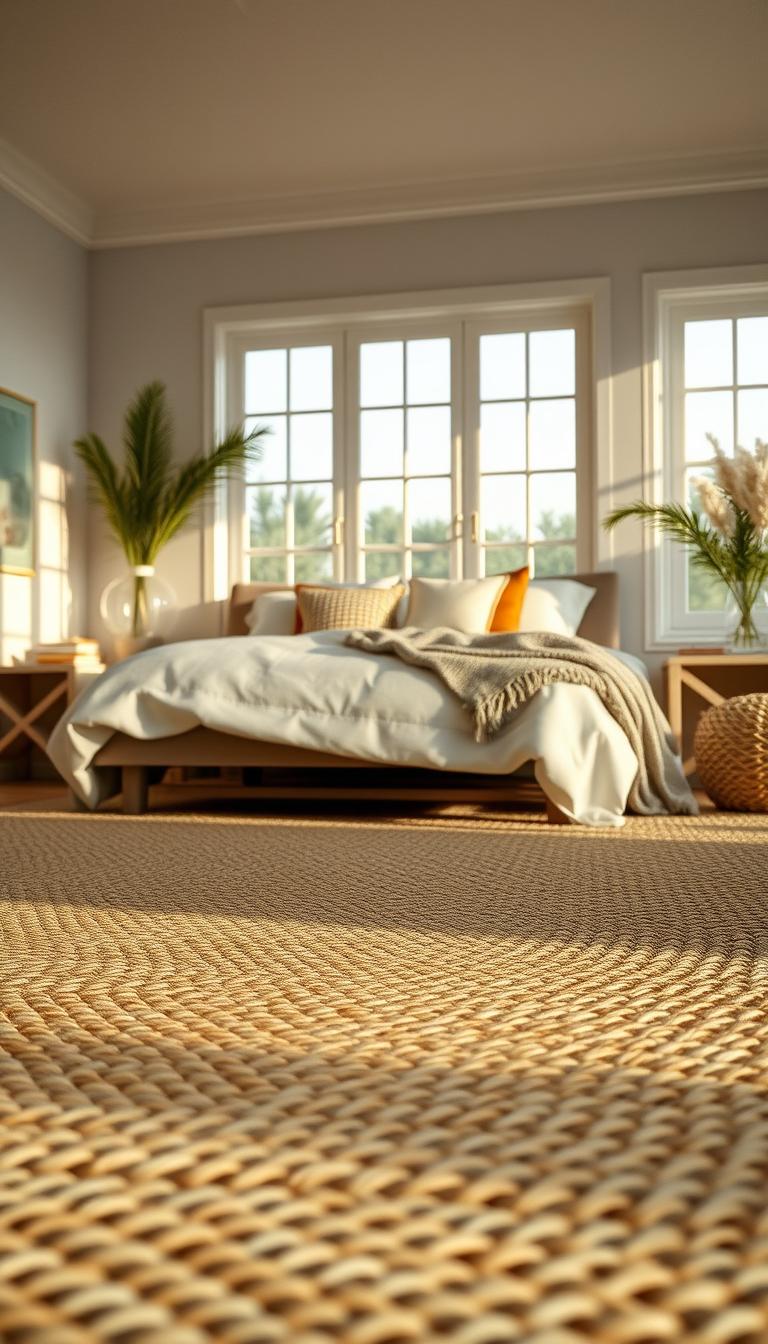
Rattan headboards, bamboo benches, and rope details give the bed presence without weight. Rattan frames add gentle curves; bamboo benches keep a corner airy. Small rope pulls, mirror frames, or a woven tray echo those curves.
Grasscloth walls and seagrass rugs for warmth: grasscloth tames echoes and adds visual grain. A seagrass rug grounds the furniture and pairs well with light oak or honey teak. For contrast, I balance a textured rug with smooth bedding—a washed percale duvet or linen quilt in sun-faded tones.
- Start with one big natural move and repeat it in small doses.
- Use wood tones to soften new-build rooms.
- If you rent, try peel-and-stick grasscloth or a large woven panel behind the bed.
The goal is simple: let texture do the work so the room feels calm, layered, and ready for barefoot afternoons.
Shiplap, Tongue-and-Groove, and Wood Ceilings for Breezy Character
A ceiling treatment can turn an ordinary room into a quietly dramatic refuge. I use overhead details to give a space personality without fuss.
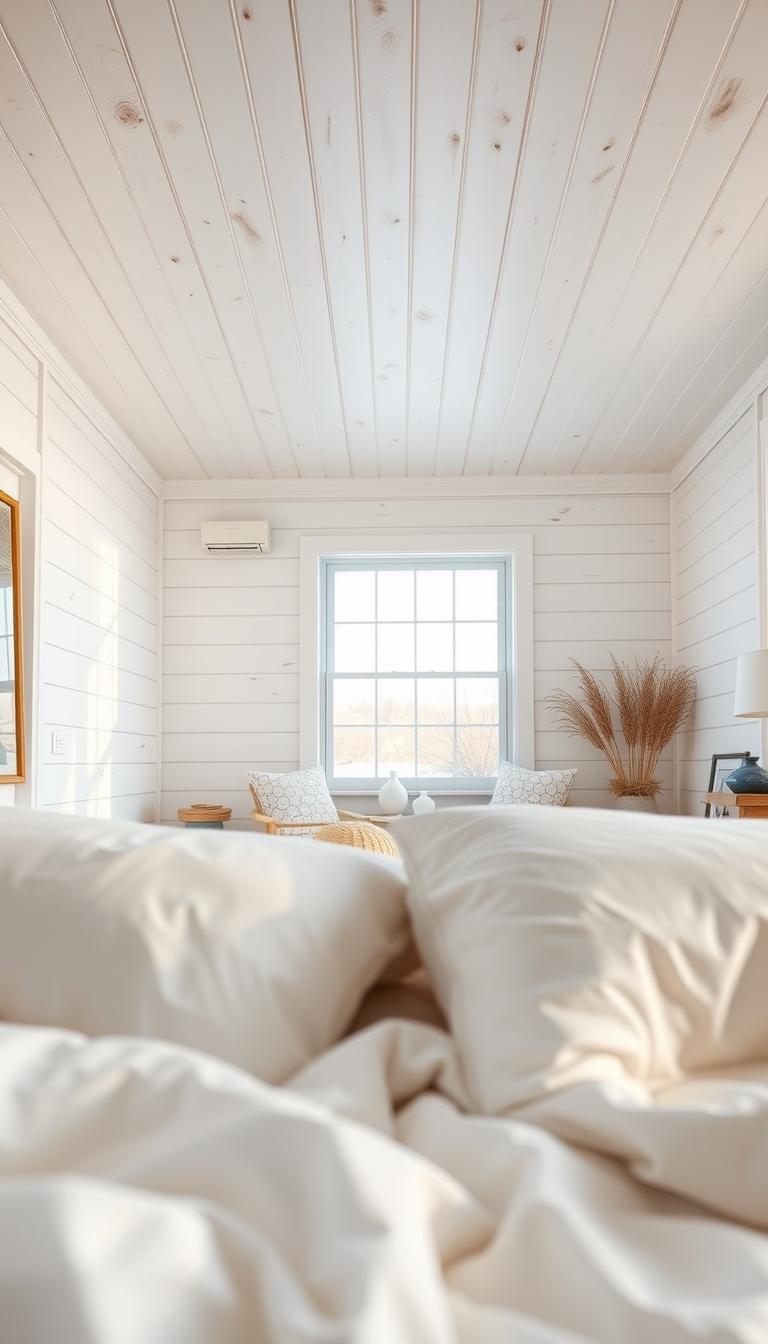
White shiplap walls can read too crisp. I temper that brightness with seagrass rugs and grasscloth-lined bookcases—Heather Chadduck Hillegas taught me this trick. Those textures warm the palette and soften echoes.
Tongue-and-groove ceilings in haint blue or soft seafoam draw the eye up. They mimic sky and make a room feel breezy. A painted wall in seafoam behind the bed is an easy weekend update that shifts mood without a full remodel.
Paneled wood details add history. Even a simple headboard wall or a natural wood ceiling lends craftsmanship to a newer house. Varying board widths or adding a cap rail keeps treatments from feeling builder-basic.
- Run shiplap lengthwise in low rooms to elongate the space.
- Use a mid-height treatment in tall rooms to cozy things up.
- Work with your designer or carpenter to conceal seams and outlets for a refined finish.
Treat the ceiling as a fifth wall—it’s a quiet, powerful way to set the tone in a restful bedroom.
Statement Beds: Canopy, Woven, and Four-Poster Styles with Coastal Soul
A bed should feel like the room’s quiet hero—drawn with a clear silhouette and textures that invite rest.
I favor one strong piece to anchor a room: a graceful canopy, a woven wicker frame, or a classic four-poster.
Mosquito-net drapery suits open-air island bedrooms but it also adds romance anywhere. Drape fine netting from a canopy frame to soften light and float the bed’s silhouette.
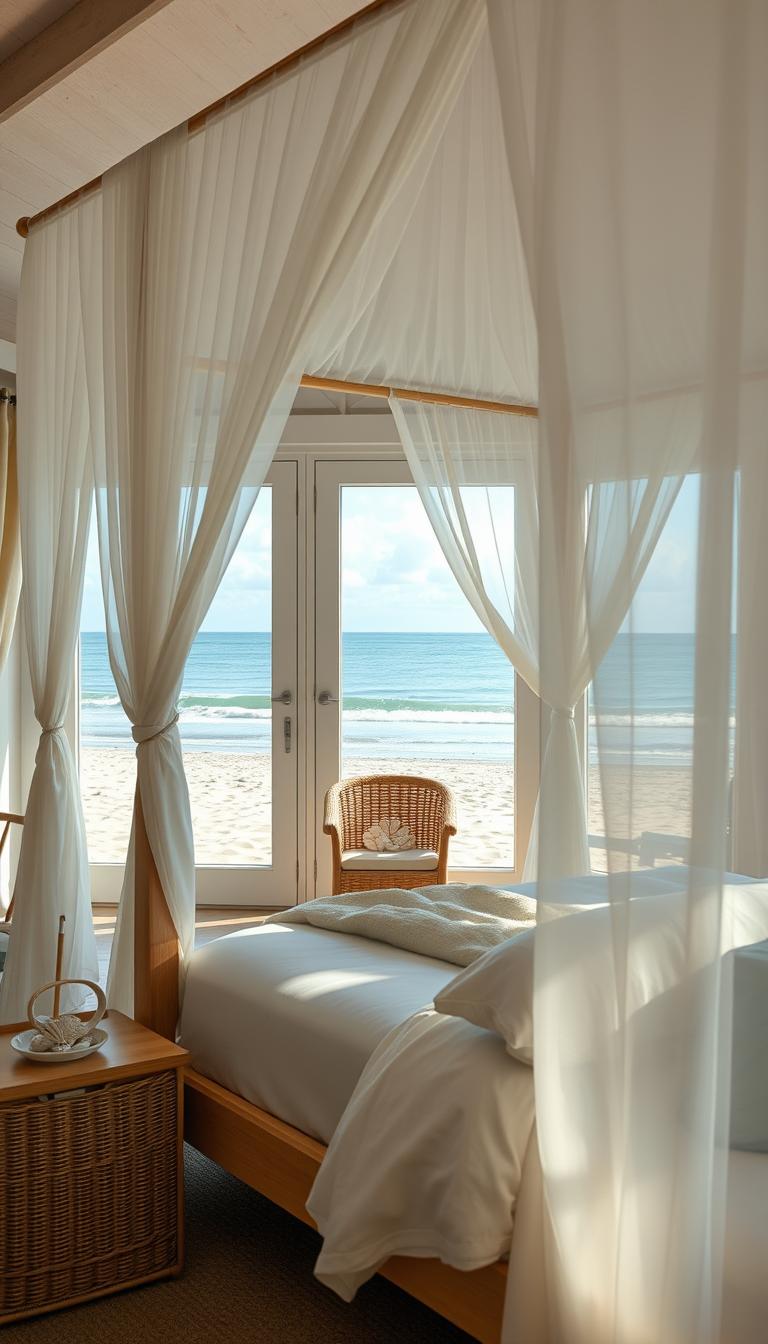
Mosquito-net drapery and canopy frames
Campaign-style canopy beds keep lines lean and let air and views flow. If your bedroom is small, pick a slim canopy with open corners to preserve sightlines.
Wicker, cane, and bamboo bed frames
Wicker, cane, and bamboo bed frames add breezy texture and age gracefully as finishes patina. A vintage bamboo tester bed bridges elegance and casual coastal charm—think Sea Island warmth.
- Pair a sculptural headboard with quiet bedding so the silhouette shines.
- Let a single statement bed carry the room; keep surrounding furniture edited and light.
- Designers like Amanda Lindroth show how one special piece sets the tone for the whole space.
“One special bed can carry a space—let it lead, then layer in texture and tone around it.”
Tip: choose natural finishes that gain story over time. The result is a calming, collected room that feels lived-in and inviting.
Small Space, Big Impact: Bunk Rooms, Built-Ins, and Shipshape Storage
I like to think of a small plan as a ship’s deck: every inch earns its keep. Built-ins let a tiny bedroom feel intentional, not crowded.
Lauren Liess fitted bunks “to the inch” in a 740-square-foot bungalow, adding one drawer per child and wall niches for small finds. That extra drawer removes the need for bulky furniture and keeps mornings calm.
Built-in bunks with marine-style sconces and curtains create privacy and save floor space. Attic bunks with portholes make tight spots playful and useful. Under-bed drawers eliminate dressers and clear traffic.
- Borrow ship logic—use wall niches and integrated drawers for clutter-free calm.
- Marine sconces give focused light without eating floor area.
- Curtains on bunks make cozy nooks for kids and guests.
- Porthole details and shiplap add whimsy while protecting walls.
Trade loose pieces for joined solutions. A wall-to-wall window seat with deep drawers can double as seating and linen storage in a small house. If you rent, choose freestanding bunks you can swap later—plan for longevity in both design and furniture.
Bold but Balanced: Patterns, Stripes, and Wallpaper in Coastal Bedrooms
Patterned walls can give a room personality—if you balance them with quiet, tactile pieces. I like to start with one active surface and let the rest breathe.
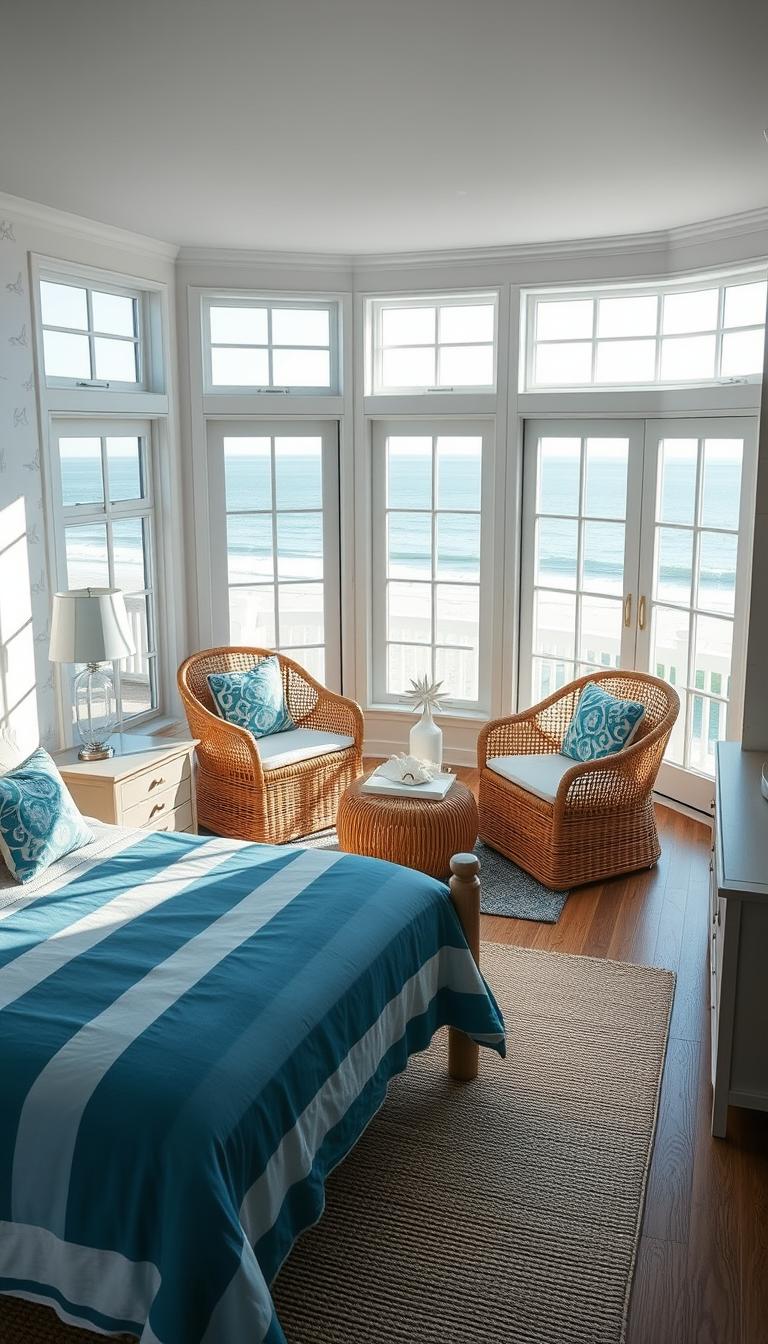
All-over pattern with blue and green balance
Small-scale aqua-and-white wallpaper calms when you pair it with neutral bedding and warm wood. A patterned wall reads fresh when one large surface—often the bed—is left plain.
I’ve seen designers mix striped headboards with Indian batik textiles to create a refined coastal look. Andrew Howard even recommends a tiny touch of red as an unexpected, controlled accent.
Subtle stripes and batik-inspired textiles
Subtle stripes on a headboard or bed skirt add crispness without shouting. Batik-inspired throws bring global soul and work well in pared-back decor.
- Tip: use a slim stripe on drapery tape or a bench cushion to tie patterns together.
- Try removable wallpaper on a single wall behind the bed if you’re unsure about a full commitment.
End result: a patterned coastal bedroom that feels collected, tailored, and calm—the right mix of pattern and plain makes the whole look sing without cluttering the colors or the room’s calm decor.
Palm Beach Punch: Tropical Prints, Pink Hues, and Playful Palettes
When I design with Palm energy, I aim for exuberance that still reads grown-up and collected. That means bright color pops tempered by natural texture. Think Coral Buff on the walls, a faux-bamboo headboard, and a woven rug to anchor the room.
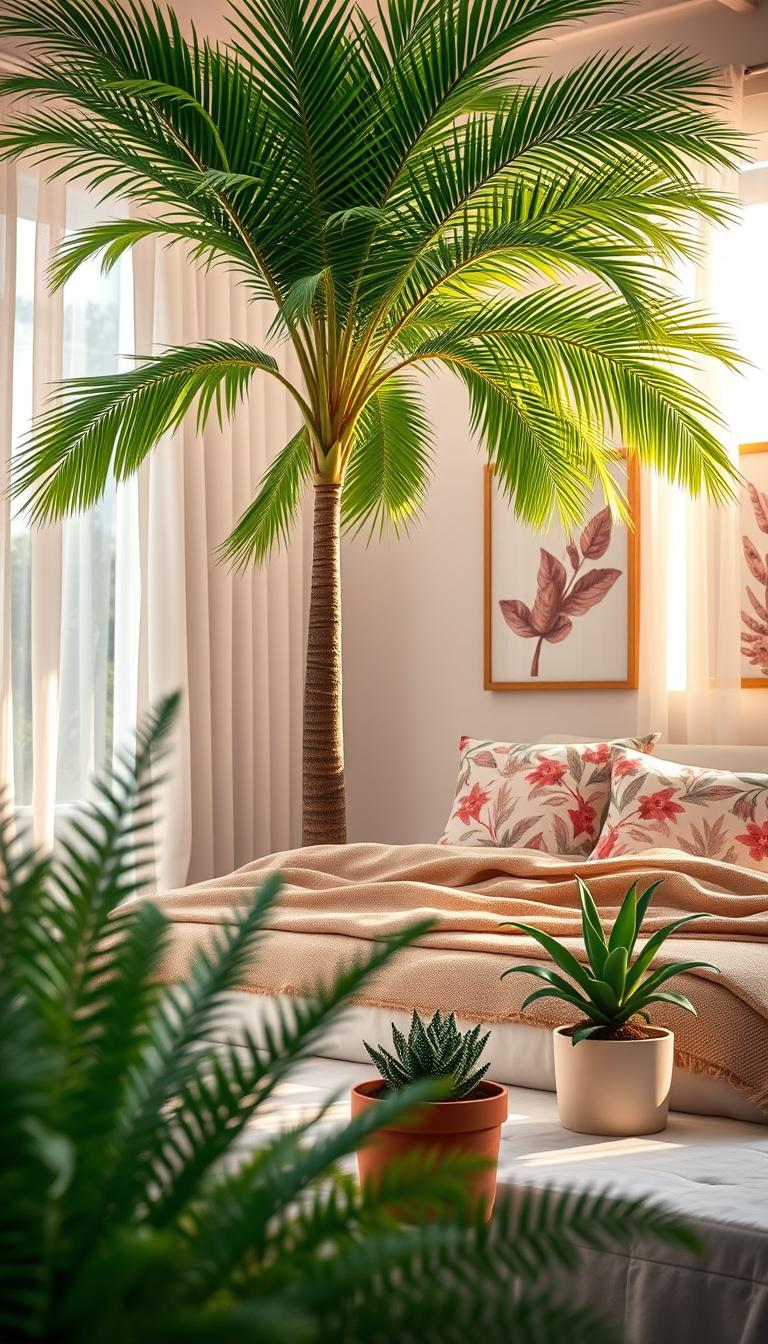
Keep the big pieces simple. A vintage headboard and crisp white bedding let tropical wallpaper or patterned pillows sing without chaos.
Use small rug hits and a curated set of pillows to spread the palette. Tailored bed skirts and clean nightstands give structure so the scheme stays polished.
Cap exuberant schemes with a calm ceiling or a pale glossy lacquer to bounce light softly. For a guest bedroom, pick one hero hue—say coral—and repeat it in a lamp, a pillow, and a piece of art.
Vintage accents—a rattan mirror, campaign chest, or slim iron lamp—keep the look charming, not kitschy. If you want more examples, see my Palm Beach inspiration.
Modern Monochrome: Neutral Coastal Bedrooms with Minimalist Ease
Let materials do the talking—raw wood, woven cane, and matte ceramics create interest without color.
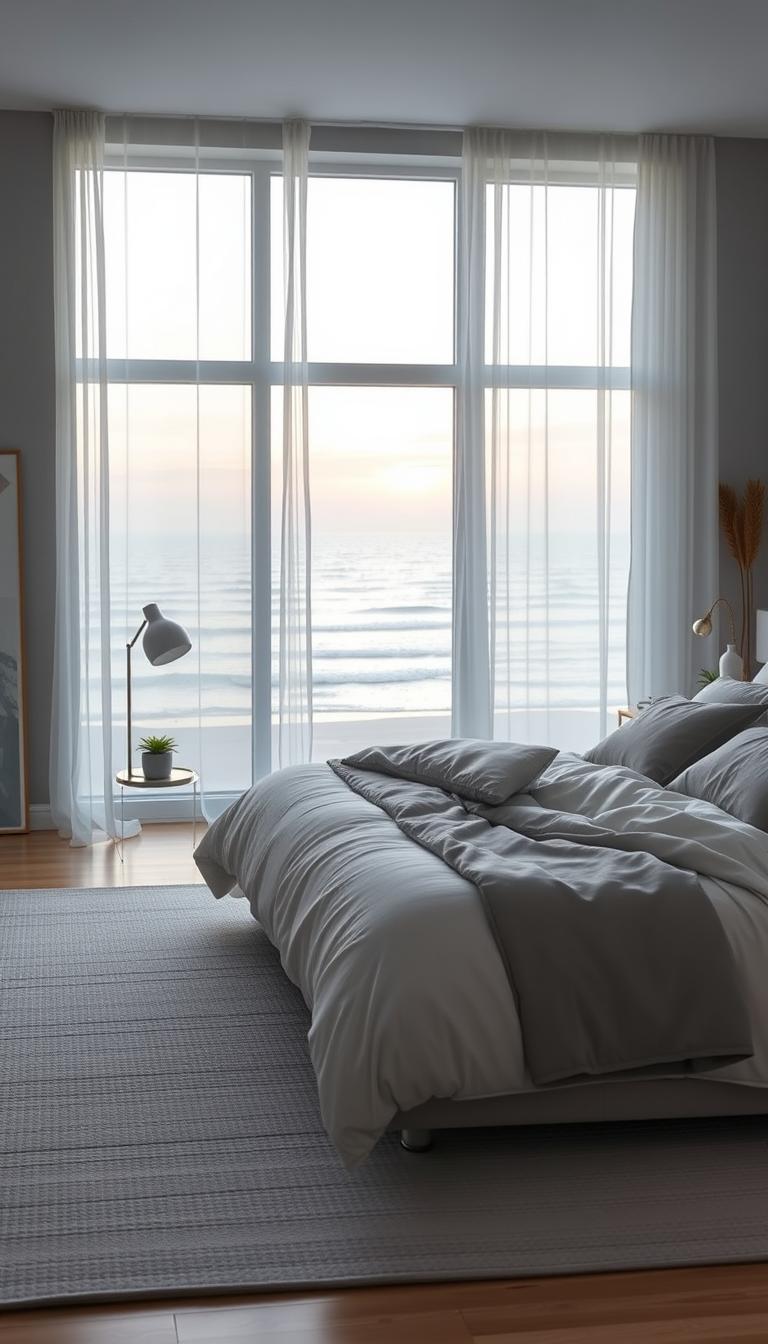
I favor a sand-on-sand palette and very edited furniture. A simple wood bed, slim nightstands, and a woven bench leave breathing room. Negative space is part of the design.
Texture replaces loud colors here. A nubby throw, washed-linen pillows, and a matte ceramic lamp add depth. Natural light, reflected off pale walls and a low-sheen ceiling, makes the room feel larger and calmer.
Pick one organic hero—a timber ceiling or a woven screen headboard—to carry the mood. Add a single piece of muted art to anchor the palette without breaking the calm.
| Element | Function | Design tip |
|---|---|---|
| Timber ceiling | Adds warmth and scale | Choose honey or driftwood finish |
| Woven screen headboard | Provides texture and focus | Keep frame lean for a minimalist look |
| Matte ceramic lamp | Soft, tactile light | Pair with linen shades and thin hardware |
- Keep hardware and lamps lean; restraint feels elevated.
- Choose tactile bedding you’ll want to sleep in—comfort is the real luxury.
In short, this approach to bedroom design yields calm, breathable rooms. The result is a coastal bedroom that feels modern, restful, and beautifully simple at home.
Ceiling and Wall Accents That Set the Tone
Start up top: a textured ceiling quietly changes how a room feels before you add a single accessory. I use small architectural moves to make spaces read calm and intentional.
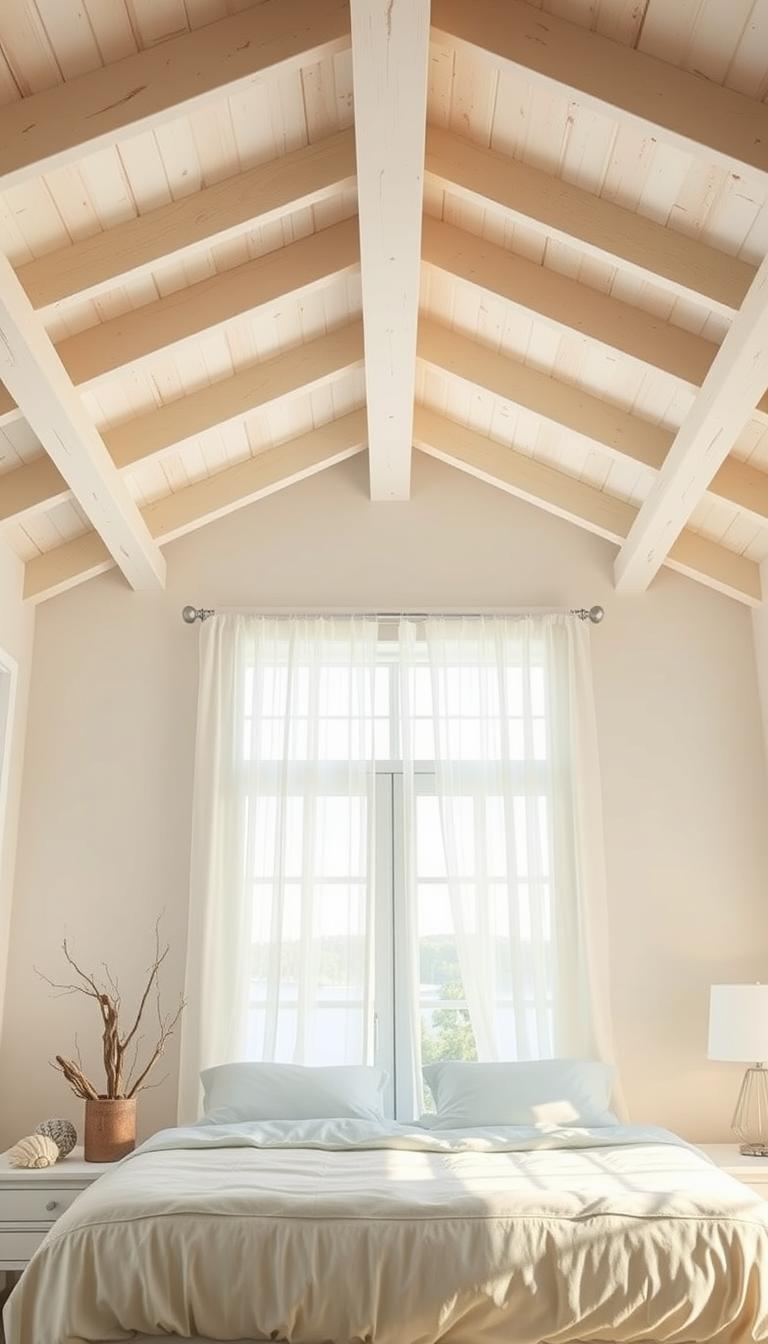
Bamboo mat ceilings and painted floors
Bamboo matting on the ceiling brings warmth and visual interest without clutter. It reads like a crafted overhead rug and pairs beautifully with a small wood bedside table.
Painted floors—stripes or a soft white—can brighten the envelope and sometimes remove the need for a rug. Built-ins and hat hooks add practical storage for throws and totes in a busy house.
Herringbone and panel treatments for texture
Herringbone wood panels and refreshed shiplap walls give shadow and depth without busy patterns. In a beach house, original shiplap in a warm white feels authentic and breezy.
Ceiling treatments also help zone a sleeping area in open-plan spaces—cozy without closing off. Pair panel details with linen drapery to soften edges and control light gracefully.
- Ceilings are the new accent wall—bamboo matting adds quiet drama.
- Herringbone and paneling deliver texture and shadow play.
- Use the same white on trim and walls; let texture carry the interest.
If you want more examples of thoughtful finishes for a calming space, see these coastal bedroom ideas.
Light Matters: Woven Pendants, Beaded Chandeliers, and Breezy Sconces
I use three light layers to make a room shift from morning tasks to evening rest.
Lighting makes or breaks mood. I ask clients to think like a designer: overhead for wash, sconces for reading, and small lamps for atmosphere.
Ro Sham Beaux beaded chandeliers cast an oceanic shimmer—many use recycled glass, so they feel beautiful and sustainable. Woven pendants add scale and texture overhead without weighing the space.
In tight corners, swing-arm or plug-in sconces free up furniture surfaces. For bunk rooms, marine-style metal sconces are practical and durable.
Dimmer switches are non-negotiable. I recommend warm-white bulbs (2700–3000K) so evenings feel cozy, not clinical. Battery or plug-in options work well for renters.
| Fixture | Function | Best use / Tip |
|---|---|---|
| Woven Pendant | Ambient texture | Use over a bed or seating to add scale without clutter |
| Beaded Chandelier | Decorative ambient glow | Choose recycled-glass beads for sustainable sparkle |
| Sconce (swing-arm / plug-in) | Task & freed surface | Mount by the bed to clear a nightstand of extra furniture |
“The right light sculpts a space and supports better sleep—beautiful and evidence-based.”
Match materials to your overall style—beads and rattan read relaxed; glass and linen shades feel tailored. A small dresser lamp can fill corners with a soft halo and make a home feel more inviting.
Rugs, Bedding, and Pillows: Layering for Comfort and Coastal Style
I always begin where you step in—the rug—then let textiles shape the rest of the room. Start with a soft surface underfoot and work up: breathable sheets, a comforting duvet, and pillows that invite you to sink in.
Chambray, linen, and cotton for breathable bedding
Chambray, linen, and cotton are my go-tos. They breathe, wash well, and layer easily across seasons. If you run warm, choose a percale duvet cover; if you run cool, try a light matelassé plus a linen throw.
Striped dhurries and blue-and-white patterned rugs
A striped dhurrie or a blue white patterned rug gives classic backbone without kitsch. Keep your colors and tones within oatmeal, shell, and seafoam so layers feel cohesive.
For shiplap rooms, soften crisp lines with plush bedding and mixed pillows—linen euros, a chambray lumbar, and a hand-blocked accent. In a guest room, add a lightweight extra blanket and label pillow inserts by firmness for thoughtful hospitality.
- I build comfort from the ground up: a soft rug, breathable bedding, and welcoming pillows.
- Vacuum rugs and launder covers on a schedule to keep layered looks feeling fresh.
Collected and Vintage: Antique Finds for a Sea-Faring Story
I collect worn pieces with stories—an iron tester bed, a campaign table, or a vintage suzani thrown across the foot—to give a room real history.
I love weaving in vintage finds so a bedroom reads like a lived-in home, not a catalog. One special piece of furniture can anchor the whole scheme and make the room feel personal.
Balance matters: dark wood beds and chests play beautifully against crisp white linens. The contrast feels a bit tropical and comfortingly weathered.
Small details tell the story. Rope doorstops, surfer lamps, bamboo mirrors, and a time-softened brass lamp add charm without clutter.
Global textiles—an old suzani, a worn batik—layer easily over neutral bedding and give rooms a collected soul. If you use wallpaper, pick a heritage pattern in a quiet colorway so the paper supports, not shouts.
“One canopy antique frame can shift the mood—romantic, nostalgic, and utterly personal.”
- Mix metals—iron, brass, and aged nickel—so things read like they’ve lived together for years.
- Hunt locally for palm-adjacent art; small regional finds bring real warmth.
- Ask a designer to help scale a key antique if you’re unsure about proportion.
| Vintage Piece | Effect | Design Tip |
|---|---|---|
| Antique headboard | Anchors the bed visually | Pair with white bedding for crisp contrast |
| Campaign table | Adds history and function | Use as a nightstand to keep lines tight |
| Canopy frame | Creates romance and scale | Drape lightweight textiles for a soft look |
| Vintage textile (suzani/batik) | Offers pattern and color | Layer over neutral foundations to avoid clutter |
Beach Style Bedroom: Sources, Furniture, and Decor to Get the Look
Turning a mood board into a livable room is easier when you know where to shop and what to prioritize. I treat sourcing like layering: start with anchor pieces, then add texture and small comforts that hold up to real life.
Where to shop for beds, nightstands, rugs, and lighting
Anchor furniture matters—look to Serena & Lily, McGee & Co., and Arhaus for beds and lighting that feel finished. Pottery Barn and West Elm are reliable for a practical bed frame, nightstands, and a rug that tolerates sandy feet.
For bedding, I pick Boll & Branch or Serena & Lily for breathable, hotel-level sheets and duvets. Wayfair and Amazon are great for budget-friendly rugs, spare guest bedding, and quick replacements.
Lighting and pendants from Pure Salt Interiors and McGee & Co. add woven texture and soft light. Invest in a quality pendant and then layer task lamps and sconces for reading and atmosphere.
Artwork and wallpaper that nod to the coast without clichés
Choose contemporary artwork—abstract horizons, muted seascape washes, or vintage nautical charts—to suggest the shore without shells or literal motifs.
For walls, grasscloth, a subtle stripe, or a small-scale botanical print reads refined and will age well. Wallpaper is best used on one wall or behind the bed so the room keeps an airy, collected feel.
- How to build your cart: bed, mattress, bedding; then rug and light; then accents—mirrors, baskets, lamps.
- For a beach house: prioritize performance fabrics and washable duvets so bedrooms stay guest-ready.
- Budget gaps: fill with Wayfair or Amazon finds for washable rugs and extra guest bedding.
“Shop anchors first, then layer—this keeps the look curated and the house functioning.”
Conclusion
Across coastal projects, designers keep returning to the same essentials—natural materials, soft palettes, and layered light. I see this in Palm Beach, Sea Island, and old cottages: the approach scales from small rooms to grand suites.
If you remember one thing, start with nature,—translate sand, sea, and sky into palette, texture, and light. You now have the ideas and the inspiration to shape a calm bedroom design that lasts.
Pick one way to begin today—swap to linen bedding, add a woven rug, or paint a ceiling haint blue. Keep your choices edited; fewer, better pieces create more calming space than cluttered collections.
Let the sea guide the senses and turn your home into a place that cares for you back. I’m cheering you on—send photos when the breeze finally lives inside your room.