Can a bedroom truly feel like a sanctuary without sacrificing style?
I ask this because I’ve seen rooms that look stunning but feel restless—and others that soothe but lack personality. I blend wellness-driven choices with high-design moves so your space works hard for sleep and looks beautiful by day.
Think deep teal with blush accents for a dramatic-yet-restful palette, or textured schemes—shiplap, reclaimed wood, linen—that bring warmth. I draw on Parisian polish and New York loft grit. Small, smart details—sound-buffering materials, layered lighting, hidden storage behind a custom headboard—make the biggest difference.
My aim is simple: marry a cohesive color story with tactile finishes so the bed becomes the calm focal point. You’ll get practical ideas to act on now and a plan to phase in bolder moves over the years.
Key Takeaways
- Balance sleep and style: choose palettes and textures that soothe and delight.
- Use layered lighting to support circadian rhythms and reading.
- Incorporate sound-buffering and soft materials for better rest.
- Pick one high-style element—wallpaper or sculptural bed—and keep the rest calm.
- Plan storage that hides clutter so mornings feel effortless.
Sleep-First Design Principles for a Calmer Bedroom
Sleep-first design starts with a plan that quiets the room before you even lie down. I begin each master plan by shaping clear pathways and a quiet zone that says, you are safe here.
Layout matters: keep both sides of the bed clear, avoid tight corners, and place the bed against a solid wall with a view of the entrance. This simple layout gives control and reduces midnight fumbles.
Materials are medicine. Breathable linen, washed cotton sheets, soft rugs on the floor, and matte finishes cut glare and wick moisture. Minimalist palettes—cement, reclaimed wood, tactile weaves—calm the eye and absorb sound.
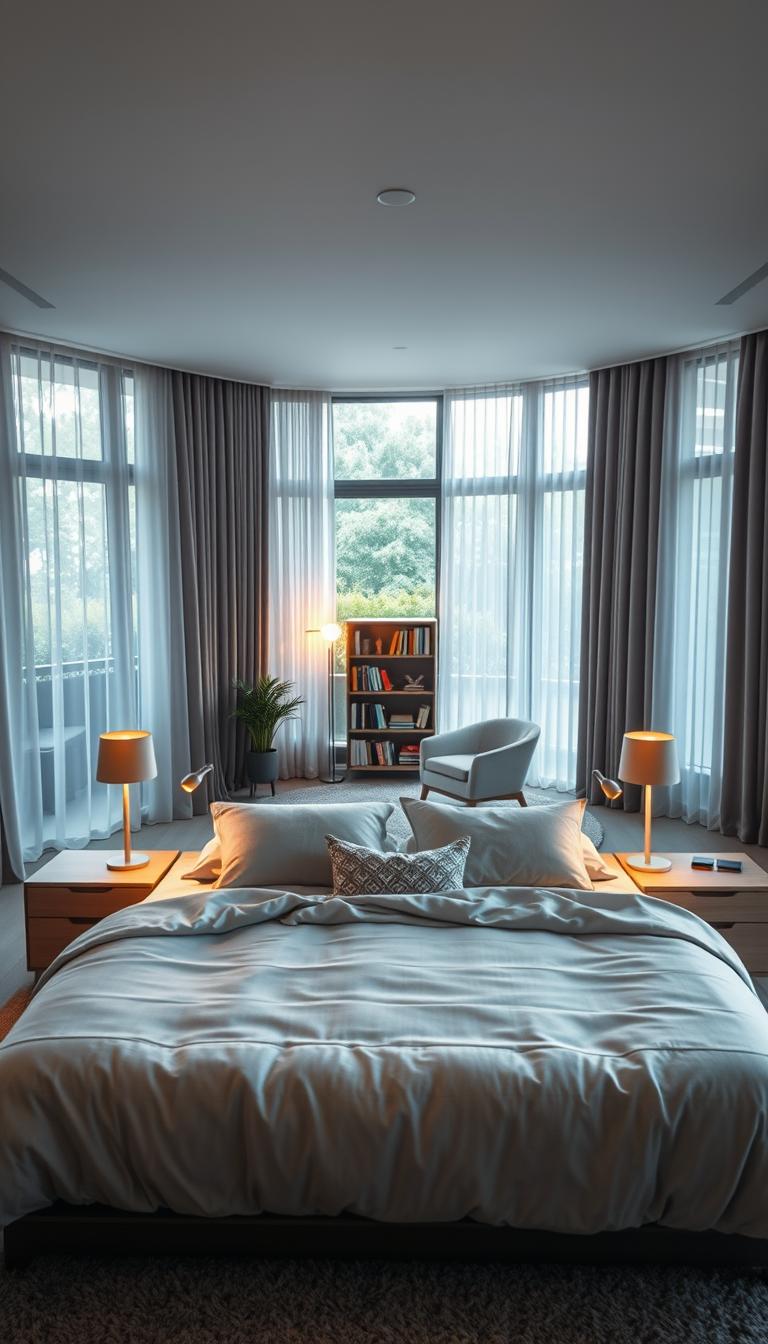
Lighting and acoustics are core elements. Layer warm, low-glare bedside lighting and use blackout treatments for nights. If you share the room, add upholstered pieces and wall hangings to mute noise.
- Keep nightstands minimal and hide cables.
- Choose furniture that fits the space so movement stays easy.
- Finish with one quiet sensory cue—lavender, a dimmable lamp, or a soft throw.
| Element | Why it helps | Quick tip |
|---|---|---|
| Bed placement | Creates security and circulation | Solid wall + entrance view |
| Floor rugs | Absorb sound, cushion steps | Place by landing zones |
| Textiles | Regulate temperature and touch | Linen duvet, washed cotton sheets |
| Lighting | Supports wind-down and wake-up | Warm, dimmable layers |
Color Palettes that Wind You Down
The hues you choose set the room’s emotional temperature long before you climb into bed.
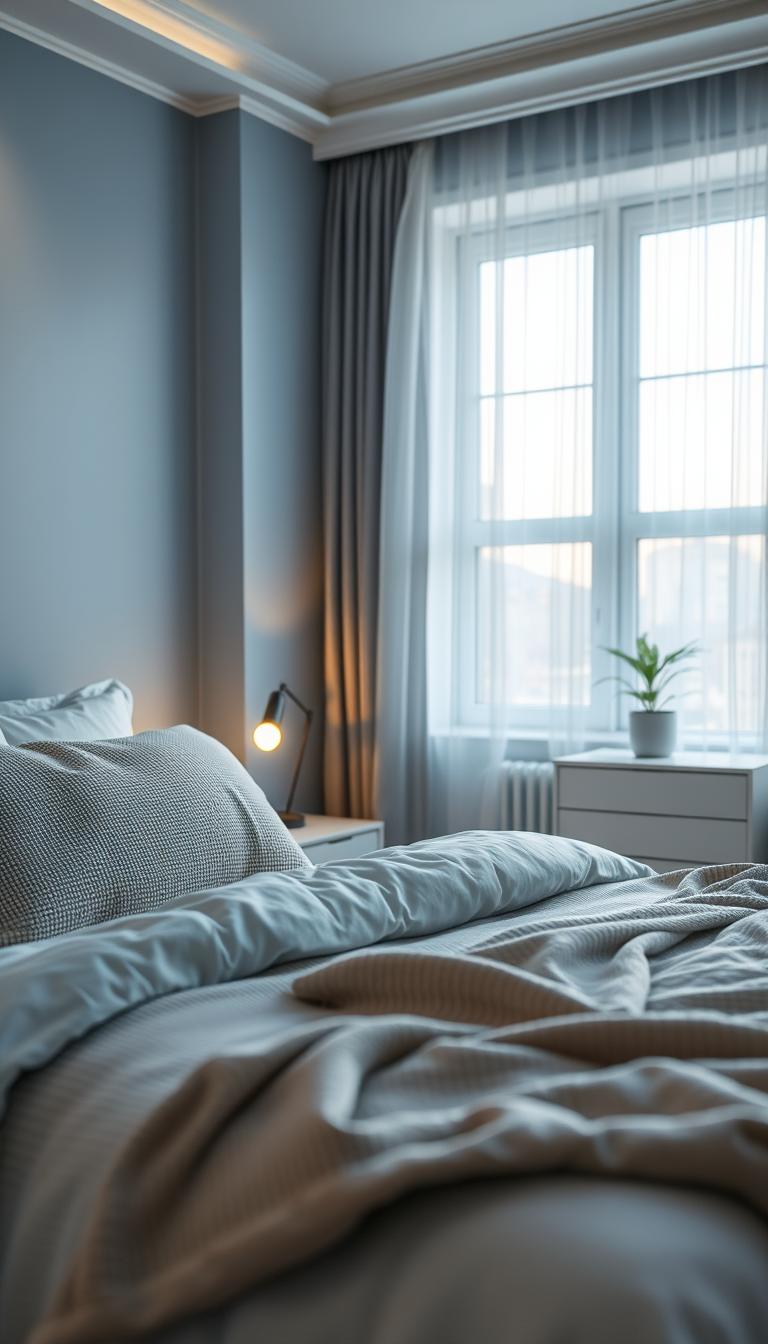
Soft neutrals and warm tones make a gentle, dusk-like glow. I favor warm creams, beige-pink, and oyster curtains from American Silk Mills to flatter skin and calm the eye. Layer clay throws and sand cushions so neutrals never feel flat.
Soft neutrals and warm tones for a gentle glow
I tell clients to think of their sweater colors—those worn tones usually translate well. Test paint samples across morning and evening light; a winner at sunrise can shift at night.
Dramatic yet restful: deep teal, blush, and walnut brown walls
For drama, I pair deep teal with a whisper of blush so the walls cocoon rather than shout. Walnut brown on a single wall, plus a canopied frame and velvet bedding, creates an enveloping, restful suite.
Gentle tones in New York apartments: filtered light and earthy hues
In a compact new york flat, I keep undertones earthy and let diffused window light do the work. A bojagi artwork by Wonju Seo and woven treatments soften glare and steady the mood.
- Quick tips: Use small accents—muted moss pillows or a rust lamp base—for visual rest.
- Match bedding tones to walls and floors to keep the palette connected and sleep-focused.
- I always test paint in situ for at least a week before committing.
| Palette | Why it helps | Best use | Quick example |
|---|---|---|---|
| Soft neutrals | Soothes the eye and flatters skin | Whole room or bedding layers | Oyster curtains, sand cushions |
| Deep teal + blush | Rich contrast that still reads calm | Accent wall or headboard wall | Teal paint + blush pillows |
| Walnut brown | Enveloping warmth at night | Single wall behind a canopied bed | Velvet bedding + bronze fixtures |
| Earthy tones (city) | Works with filtered light to reduce glare | Compact suites and apartments | Woven shades + bojagi art |
Layered Textures: The Fast Track to a Cozy Suite
I start with touch—because how a room feels under your hand sets the tone for sleep. A tight palette and varied surfaces give a calm depth that reads restful, not busy.
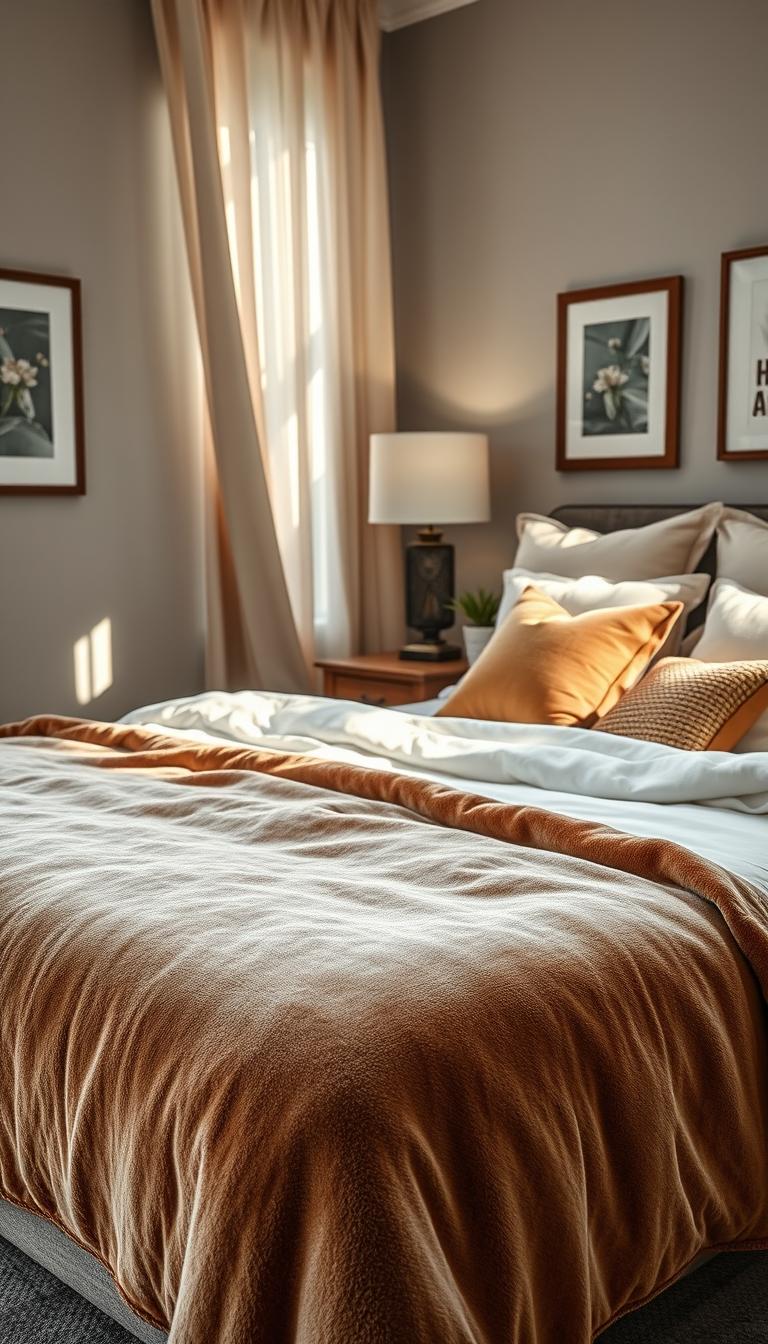
Bouclé headboards are my go-to for an immediate soft landing. In Parisian-inspired rooms I mix a bouclé headboard with Dedar fabric curtains and a soft-to-the-touch rug to keep things monochrome and luxe.
Bouclé, grass cloth, and layered window treatments
Neutral grass cloth walls scatter light like morning mist—no glare, just a warm glow. I layer a textured weave for daytime privacy with a blackout panel behind it so you control mood and darkness.
Throws, linen, and rugs that add dimension
On the bed I pair washed linen with a lightweight quilt and a nubby throw. A single wool or wool-blend rug anchors the scheme and makes mornings feel intentional.
- Keep the palette tight; vary the hand—matte ceramics, stitched pillows, slubbed duvet.
- Pick one tactile moment—a channel tuft or boucle—to ground the eye.
- Choose brushed brass or oiled wood finishes so metals feel textured at night.
This approach to texture keeps your design calm and tactile, and gives every element a purpose in the overall style.
Lighting That Works Day to Night
Good lighting guides your day and tucks you in at night. I design lighting so the bedroom shifts with you—from morning routines to late reading.
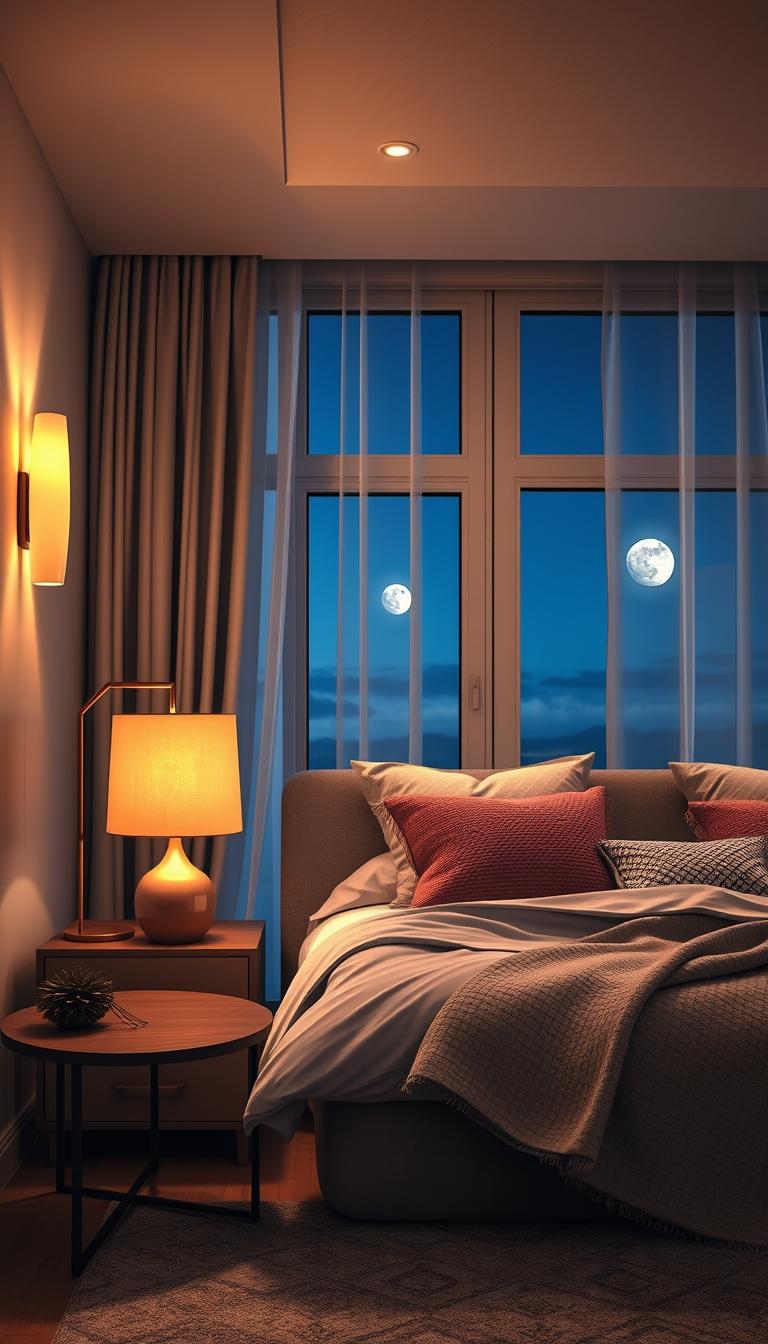
Think in three layers: ambient for overall glow, task for reading by the bed, and accent to graze art or a textured wall. That trio keeps the room balanced and calm.
Ambient, task, and accent for balance
I start with a warm ambient source—dimmable overheads or hidden cove lights. Then I add task lamps. Artemide Tizio–style fixtures give a sharp, focused beam without flooding the space.
Chandeliers, pendants, and bedside sconces
A gold pendant or antique Murano chandelier gives character, but I soften glare with fabric shades or diffusers. Slim bedside sconces and articulated lamps free up surface space and keep light off your partner.
- Use warm bulbs (2700K–3000K) and put dimmers everywhere—low warm light signals wind-down.
- Bounce light off a wall or dresser so the space reads layered, not spotlighted.
- Mind switches—three-way controls and low path lights protect melatonin on late trips to the bathroom.
- Integrate lighting with furniture—under-shelf LEDs and headboard reading lights feel built-in and considered.
- By day, maximize natural light with sheers to cut glare and keep the scheme flexible.
Furniture and Bed Ideas that Anchor the Room
Furniture choices shape how a bedroom feels and functions. I start by sizing the bed first—it’s the anchor that sets proportions for nightstands, dressers, and seating.
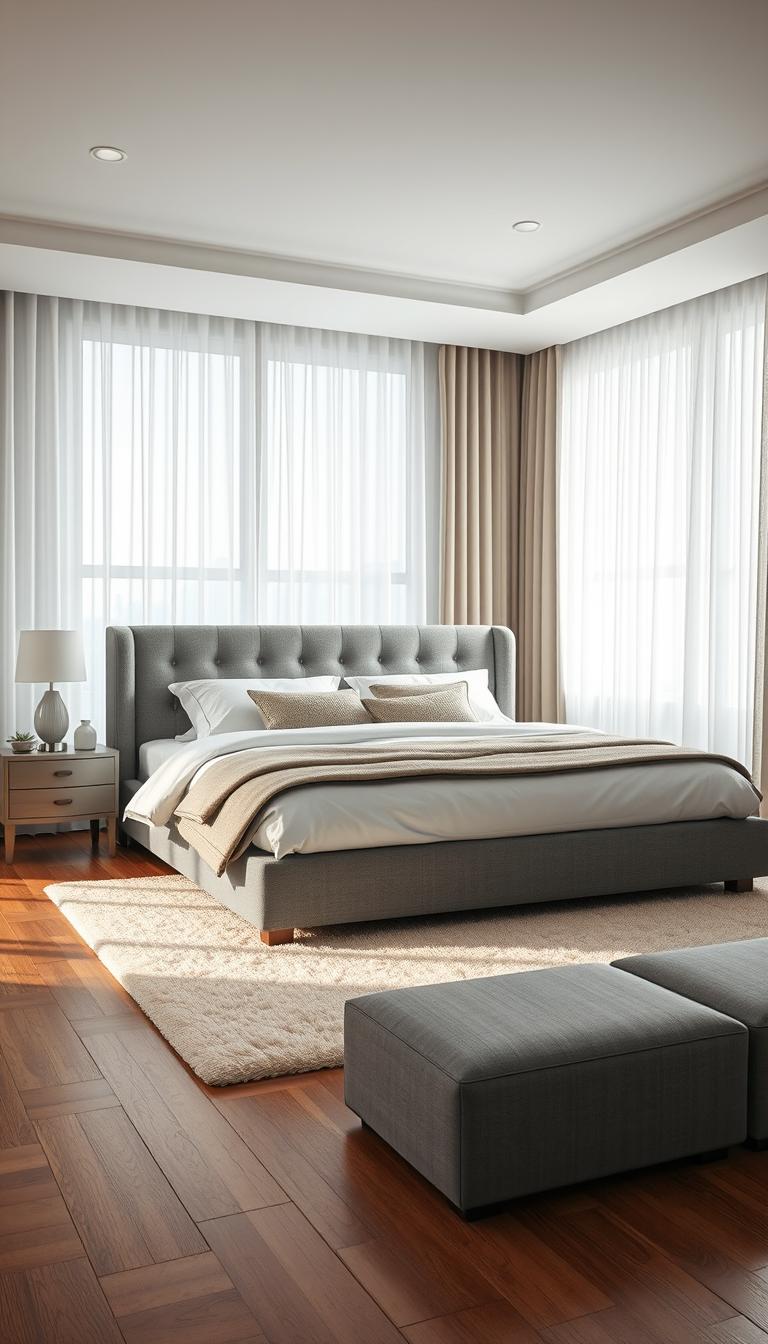
Minimalist frames in warm finishes—cement bases, slim walnut legs, soft linen upholstery—keep the space airy while feeling grounded.
From simple frames to canopied statements
A canopied walnut bed paired with velvet covers creates an elevated, cocooned look. For a lived-in, organic vibe, a reclaimed wood headboard adds soul; pair it with pale linens to keep things calm.
In ultra-modern schemes I lean on sculptural pieces—think B&B Italia profiles—with geometric bedding to soften clean lines without clutter.
- Size the bed first: it dictates nightstand and bench heights so everything reads cohesive.
- Pick nightstands that match your habits—closed storage and neat cable routes if you charge devices or read in bed.
- A single, great dresser often replaces many small pieces—fewer lines equal more calm.
Upholstered frames keep the look soft; small wood accents at rails add structure without heaviness. Edit as you go—let light and air move through the room. That restraint is how a bedroom truly breathes.
Walls, Ceilings, and Floors: Architectural Moves with Style
Architectural details—walls, floors, and the plane above your head—do more than look good; they set the room’s mood. A single move can lift a scheme and make the bedroom feel finished and calm.
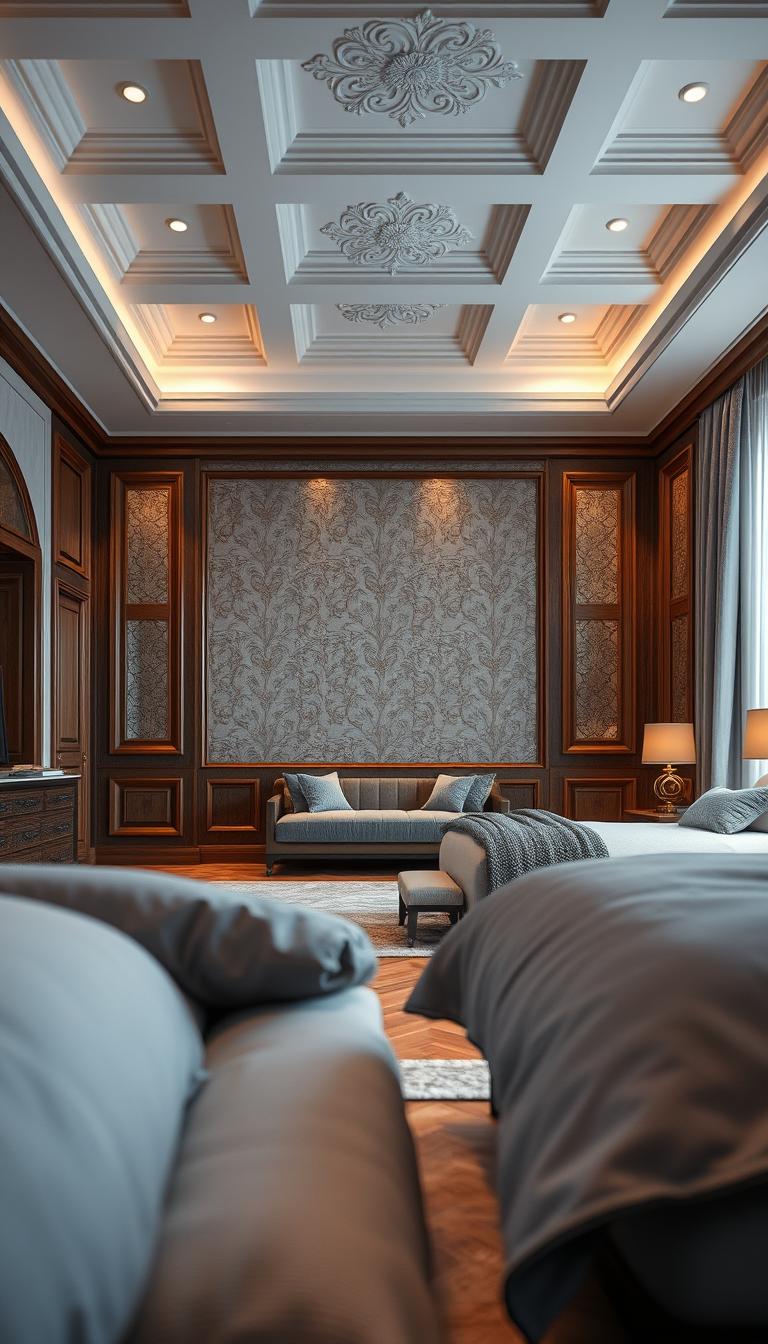
Statement walls: Gucci wallpaper, used brick, and shiplap
I often recommend one statement wall—Gucci wallpaper for a chic, seductive note, used brick for a New York loft whisper, or classic shiplap for a relaxed retreat.
Ceiling character: beams, painted coves, and modern plaster
Ceilings matter. A painted cove in burgundy or matte beams draws the eye up and feels intimate. Plaster finishes can blur transitions and read like sculpture.
Floors that feel good: micro-cement, wood, and soft area rugs
Micro-cement floors create a seamless base for sculptural beds. Oak or reclaimed wood warms the scheme; a soft rug anchors the bed and cushions morning steps.
- Keep it simple: one bold wall, soft ceiling tones, warm wood underfoot.
- For a lived-in industrial edge, pair brick with streamlined lighting and simple bedding.
- Textured wallpaper (grass cloth, linen-laminate) adds movement and helps acoustics.
For more inspiration on contemporary layouts and finishes, see contemporary bedroom ideas.
Smart Storage That Keeps the Space Serene
You’d be surprised how much serenity hides behind a headboard. I’ve seen clever builds—like Tom Joyner’s Miami headboard that conceals shoe storage—that make the master feel instantly tidy and calm.
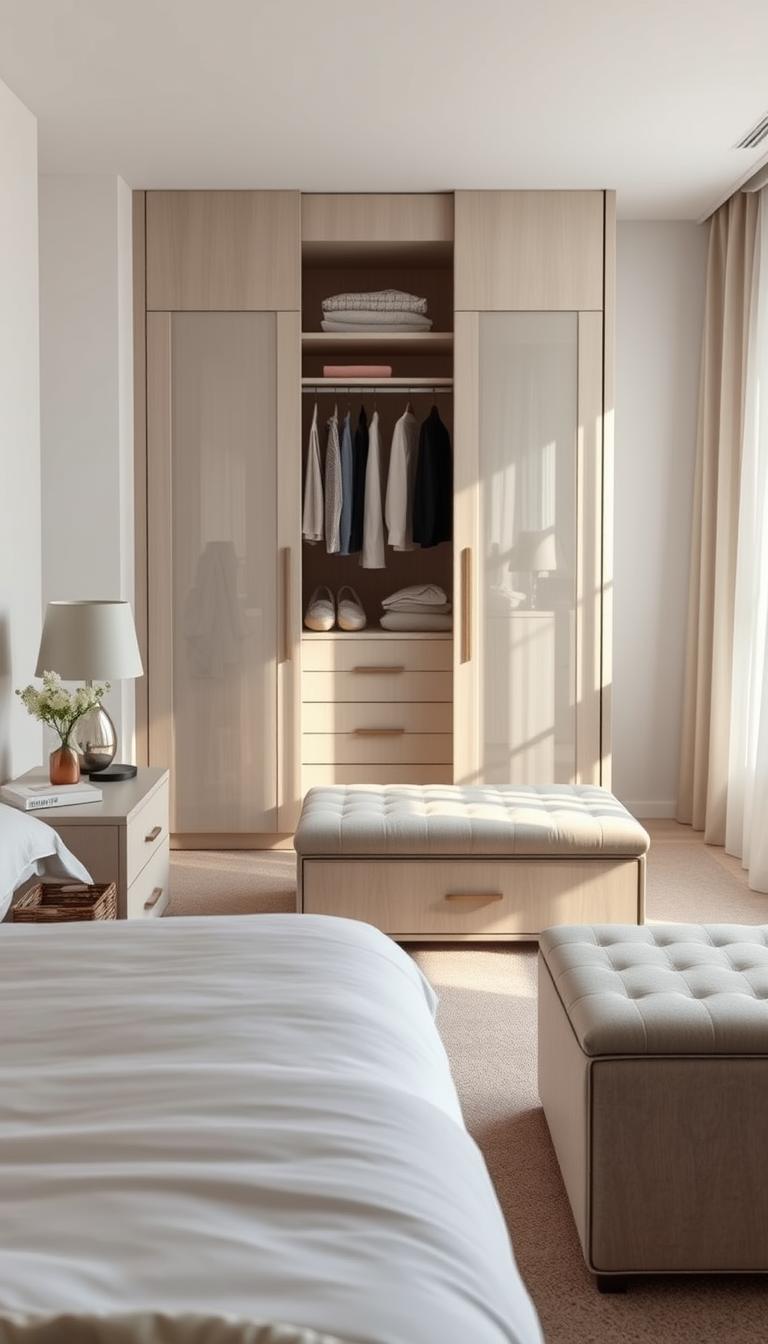
Hidden storage is my secret for instant calm. A custom headboard can stash shoes, books, or a charging dock without crowding the room. It’s a practical element that also reads high-style.
Nightstand choices matter. I pick nightstands with drawers and cord management so the surface stays clean. Wall-mounted sconces and floating shelves free floor space and simplify routines.
Closet and under-bed solutions
Closet upgrades beat another dresser every time. Double hanging, pull-outs, and dividers keep things visible and orderly.
Under the bed, soft-close bins or low drawers hold off-season bedding and sweaters. Attractive boxes and a lidded hamper keep essentials out of sight but easy to reach.
- I keep a one-in, one-out rule for master spaces to prevent slow creep.
- Use zones if you share the bed—your things stay put and mornings feel easier.
- Small trays for pockets and a tidy charging spot make daily life smoother.
Pattern, Personality, and a Sense of Place
Personality shows up in repeated motifs: a bold wall, a pillow print, and a quiet rug to anchor them.
I love maximalist pattern play—botanical headboards paired with patterned wallpaper and coordinated bedding make a bedroom feel curated, not chaotic.
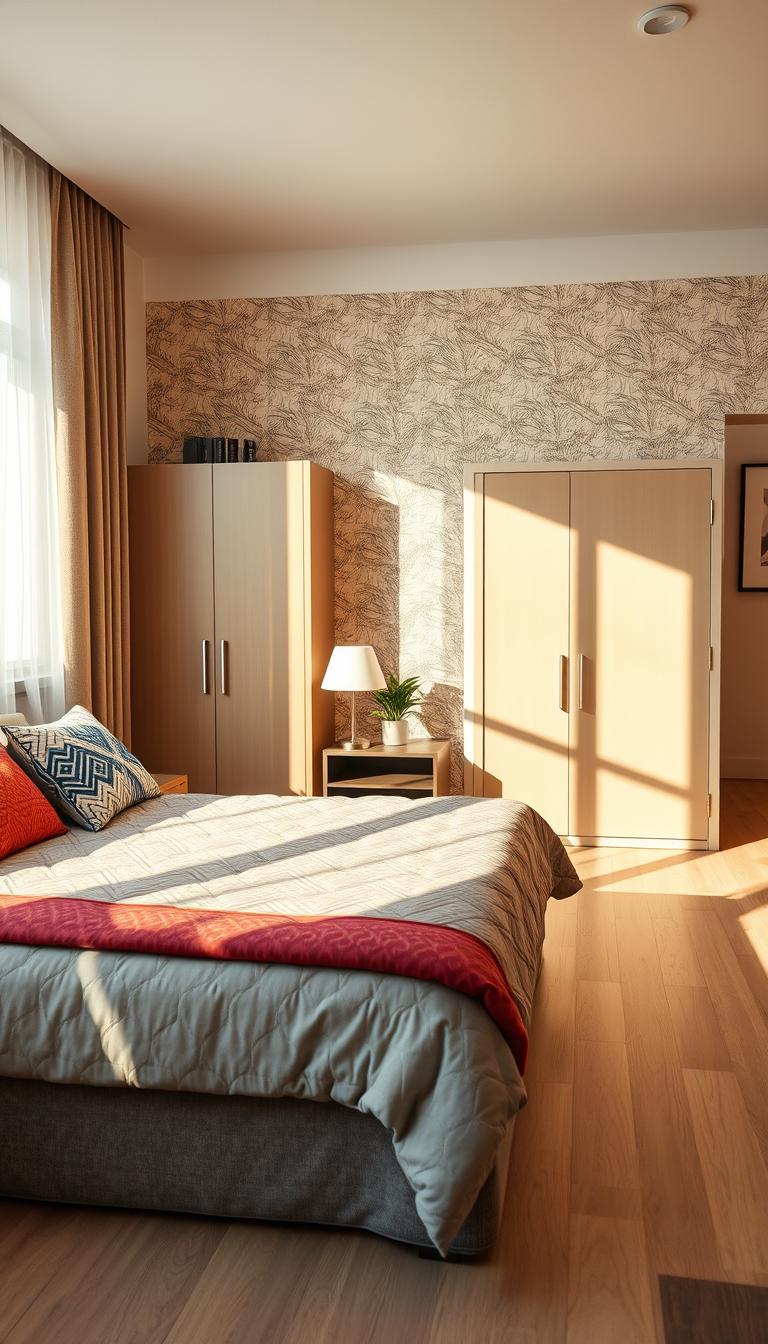
Velvet headboards and throws against Benjamin Moore Blue Danube walls read opulent and calm when you keep lighting warm and edges soft.
For Paris-inspired schemes, I mix leather beds, Art Deco tables, and modern lamps in desaturated palettes for quiet glamour.
New York industrial rooms lean on used brick, black windows, and exposed ducts for honest character. A Murano chandelier adds history and sparkle.
- Keep it simple: one velvet touch or a botanical moment can carry a room without tipping it into chaos.
- Anchor bold moves with wood accents and matte finishes so the eye has calm places to rest.
- Layer over years: start with one statement, live with it, then add the next.
| Move | Why it works | How to add | Result |
|---|---|---|---|
| Botanical headboard | Pattern brings life | Match pillows, keep rug neutral | Cohesive, fresh |
| Velvet + peacock wall | Luxurious, cocooning | Warm lighting, soft throws | Opulent calm |
| Parisian mix | Timeless elegance | Leather bed, Art Deco table | Polished, lived-in |
| Industrial accents | Architectural edge | Brick wall, metal windows | Textured, modern |
Adult Bedrooms: Timeless Design Ideas You Can Use Today
Begin with the things you touch nightly—bedding, lighting, and the rug—and go from there.
I keep projects low-effort and high-impact. Oyster-toned curtains and coordinated bedding make a calm, neutral base fast. Swap to breathable percale or washed linen sheets and a medium duvet. Add one textured throw so the bed reads layered and ready for any season.
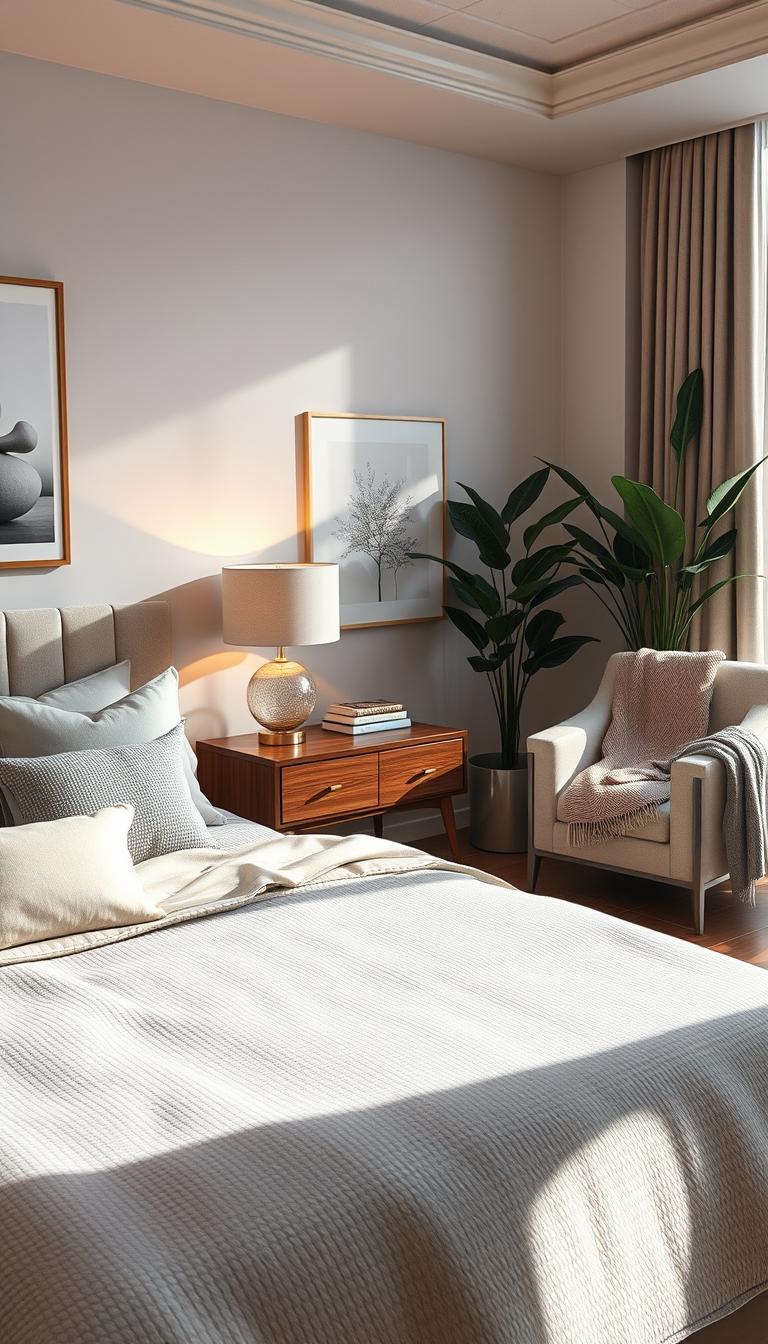
A quick-start checklist for bedding, lighting, and wall updates
- Bedding: washed linen or percale, medium-weight duvet, one textured throw for flexibility.
- Lighting: add warm, dimmable fixtures and a focused Artemide Tizio–style reading lamp.
- Wall update: choose one—grass cloth, Gucci wallpaper, or used brick—to shift the mood fast.
- Rug & textiles: anchor the bed with a rug extending ~24″ beyond the sides; layer Holland & Sherry fabrics or vintage obi accents for character.
- Nightstands & windows: edit clutter with a lidded box and integrated charging; pair sheers with blackout for daytime glare control.
| Move | Why it helps | Quick action |
|---|---|---|
| Swap bedding | Improves comfort and sleep | Buy linen or percale + medium duvet |
| Upgrade lighting | Supports wind-down and reading | Install dimmers + focused lamp |
| One wall update | Big style, low effort | Apply grass cloth or refined wallpaper |
Five-item weekend plan: new bedding, two lamps, one wall move, rug placement, and a quick closet edit. You’ll wake up to a calmer master and a clearer sense of home.
For more inspiration on modern layouts and finishes, see modern bedroom ideas.
Conclusion
When texture, light, and architecture work together, the space simply knows how to soothe.
I’ve learned that a restorative bedroom is not about more—it’s about better. Start with a good bed, breathable bedding, and a calm palette. These basics change how the master feels each night and morning.
Let your floor and ceiling do some of the work. Soft rugs, warm wood, and ceilings that diffuse light help sound and glare settle. Keep walls gentle and surfaces uncluttered.
One step at a time: upgrade bedding first, add bedside lighting next, then choose an architectural lift. Thoughtful furniture and a single tactile touch per surface make the room move with you in a kinder way.
Make one small change this week. The steady cadence of careful edits is the surest path to a timeless, deeply personal retreat.