Homiscape.com
  • Homepage
  • Ideas by Room
    • Bathroom
    • Bedroom
    • Home Office
    • Kitchen
    • Living Room
    • Outdoor
Categories
  • Bedroom
  • General
0
0
Homiscape.com
Subscribe
Homiscape.com
  • Homepage
  • Ideas by Room
    • Bathroom
    • Bedroom
    • Home Office
    • Kitchen
    • Living Room
    • Outdoor
Rococo Decor
  • General

Bringing Rococo Decor into Your Home: Tips & Ideas

  • January 30, 2026
  • Jade Hunt

Total
0
Shares
0
0
0

Can a room feel both lavish and cozy at the same time? I ask that because this style does exactly that—melding playful curves and soft pastels into everyday beauty.

I love how this 18th‑century design language makes interiors sing without feeling stiff. In my work I lean on a few core elements: asymmetry, scrolling curves, sculpted molding, and gilded accents. Those details create a sense of movement and warmth.

Over time, a few well‑chosen pieces—furniture, lighting, and textiles—can shift the whole mood of a home. I’ll show you practical steps to balance opulence with livability so your living space feels inviting, not museum‑like.

Key Takeaways

  • Soft pastels and curves add instant elegance without heavy fuss.
  • Focus on a few ornate pieces to steer the room’s feeling.
  • Mix warm metals and creams to modernize pastel schemes.
  • Use scale and placement for a graceful sense of flow.
  • Balance detail and breathing room to avoid overwhelm.

Why Rococo style is trending today in American interiors

A renewed appetite for gentle curves and pastel palettes is reshaping how Americans furnish their living spaces. Soft lines and warm metals feel fresh now because they make rooms feel inviting instead of formal.

From Baroque drama to playful lightness: what resonates now

Clients tell me they want grace without weight. The move away from baroque style focuses on intimacy rather than grandeur. That means more flowers and nature-inspired motifs, fewer heavy contrasts, and a lighter sense of ornament.

Pop culture’s push and the lived-in elegance

Romantic sets have made crystal chandeliers, gilded mirrors, and floral fabrics feel current. Today’s designers balance ornate elements with airy layouts so interiors read as both beautiful and usable.

  • Start small: pick one expressive piece to set the tone.
  • Layer light: mix candelabra-style sconces with cozy lamps for soft, usable glow.
  • Scale matters: choose furniture that fits human proportions, not a palace.
Characteristic How it reads today Practical buy
Asymmetry & curves Feels organic and calming Serpentine console or curvy side chair
Pastels & gilding Fresh, romantic palette Gilded mirror or pastel cushions
Floral motifs Nature-focused, soft Wallpaper panel or embroidered throw
Layered lighting Warm, flexible ambiance Chandelier + sconces + table lamps

Want a practical starting point? I often tell clients to shop classic pieces that anchor a room, then add softer accents over time. That way the charm lasts and the space stays livable.

Rococo Decor essentials: features, motifs, and materials to recognize

Start by spotting the signature curves and playful carvings that give the style its lively personality. I first look for S‑ and C‑scrolls, shells, and acanthus leaves—these read as ornate details without feeling heavy.
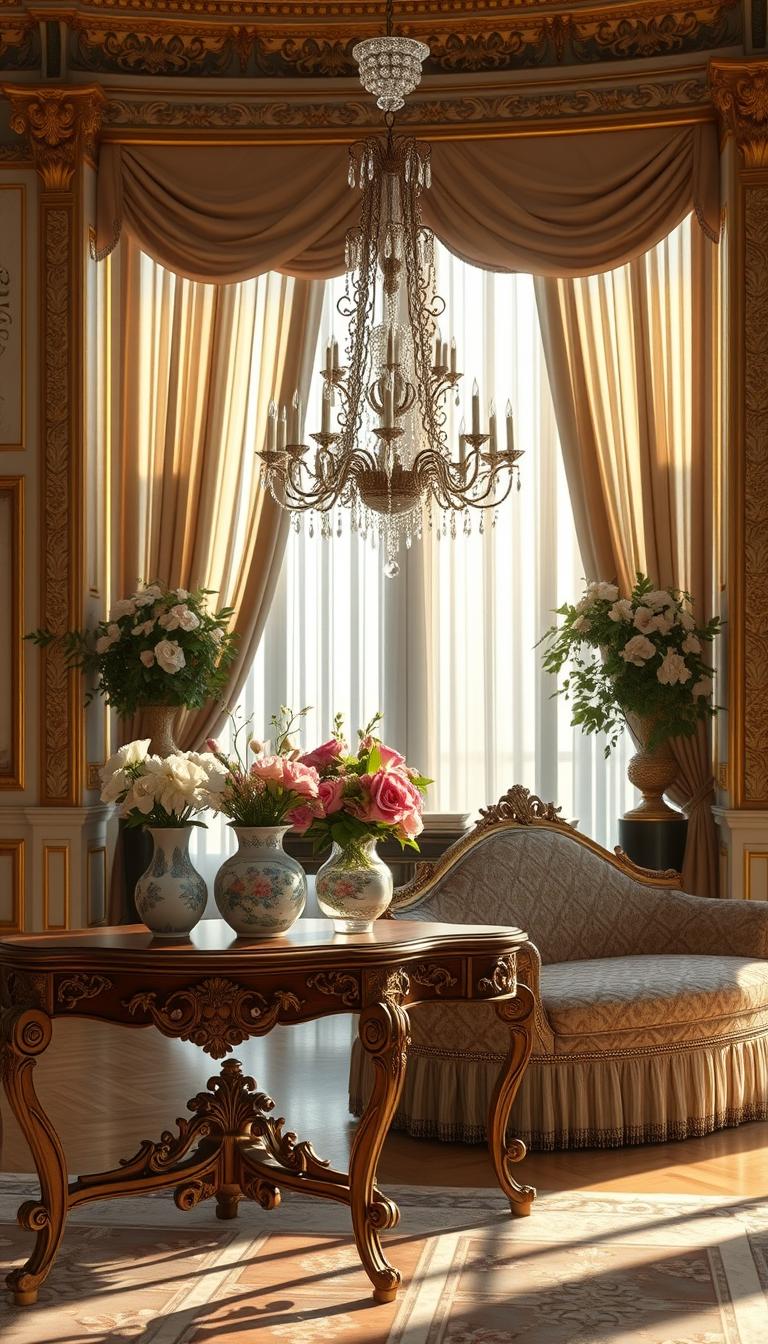
A lavish Rococo-style interior, featuring ornate golden moldings and intricate floral motifs on the walls. In the foreground, a beautifully carved wooden console table adorned with delicate porcelain vases filled with fresh flowers. The middle of the scene showcases an elegant chandelier, sparkling with crystal details, casting soft, warm light across the room. Plush, patterned upholstery on a curved settee invites comfort. The background displays large, draped windows with sheer curtains, letting in gentle sunlight that highlights the opulent textures of the fabrics. The atmosphere is serene and inviting, evoking a sense of timeless elegance and charm, ideal for showcasing key Rococo decor elements. Photorealistic details, natural lighting, captured from a slightly elevated angle to encompass the richness of the space.

Curves and carved ornament

Serpentine furniture lines and asymmetry are key elements. One serpentine console or carved chair instantly signals the era.

Color and gilding

Pastel color palettes—blush, sky blue, cream, mint—set the mood. Add gilded accents to bring warmth and timeless elegance.

Motifs, materials, and fabrics

Look for bouquets, birds, and chinoiserie flourishes across wall and mirror frames. Carved wood, lacquer, gilded bronze, and marble build quiet opulence.

Fabrics like silk, velvet, and damask add sheen and depth even on modest budgets.

  • Use mirrors with carved or gilt frames to amplify light and space.
  • Highlight one furniture moment, one lighting statement (crystal chandeliers or candle-style sconces), and one wall detail.
  • Repeat curves or gilding when mixing styles so the design reads cohesive, not costume.

Rococo vs. Baroque: how the lighter, decorative aesthetic differs

Think of this era as a gentle rebellion—ornament that leans toward intimacy rather than proclamation. In the 1730s designers reacted against strict Louis XIV formality and the theatrical baroque style.

Elegance over grandeur: softer lines, playful ornament, and serenity

I favor pieces that whisper. Curves, C‑shaped volutes, floral motifs, and warm pastels create a calmer aesthetic for modern interiors.

Baroque announces power with bold symmetry and dramatic contrasts. The other style opts for movement, lightness, and small surprises in stucco, carved wood, and illusionist painting.
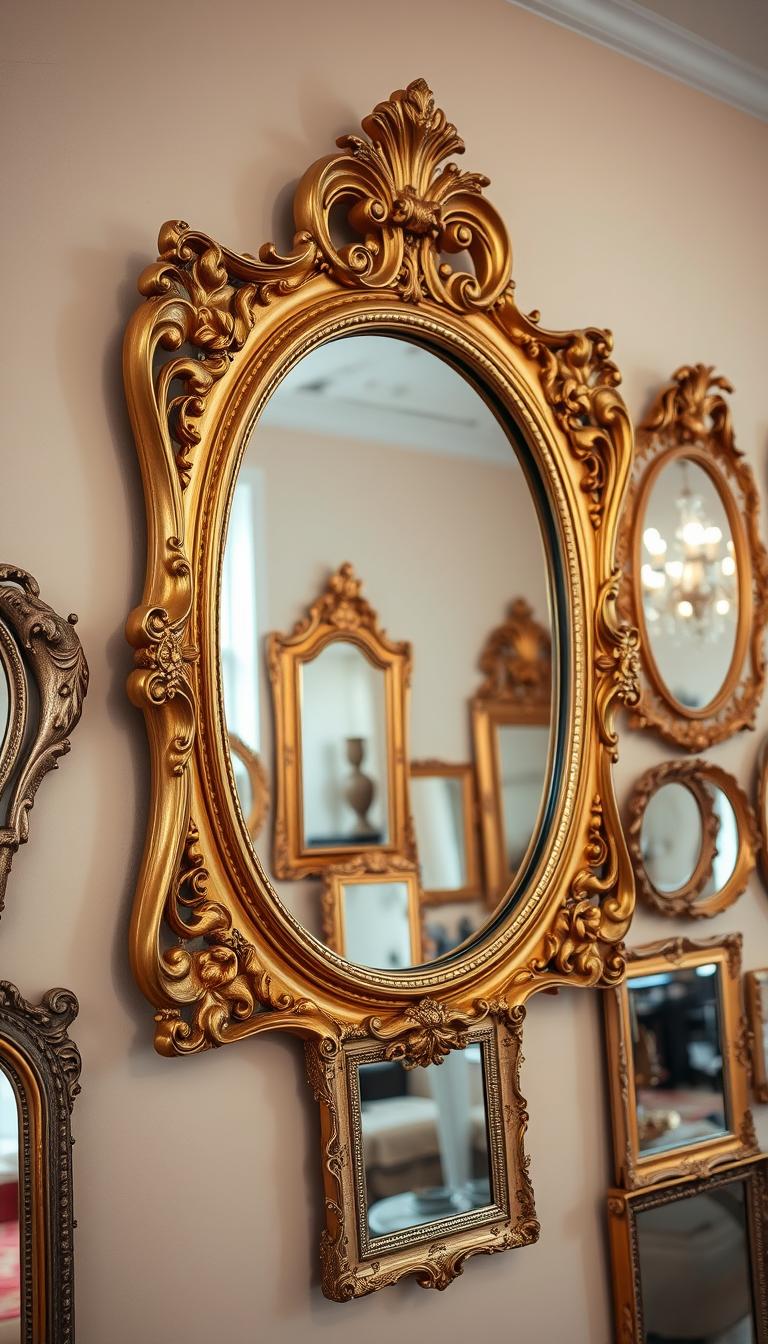
A collection of intricate Rococo mirror frames displayed elegantly against a soft, pastel-colored wall. In the foreground, a large ornate gold mirror frame with delicate floral motifs and swirling designs catches the light, reflecting a soft glow. In the middle ground, smaller frames of varying sizes hang artfully, showcasing their unique textures, including gilded edges and ornate carvings. In the background, a tastefully arranged Rococo-inspired room features subtle lighting from an elegant chandelier, enhancing the decorative atmosphere. The scene should evoke a sense of lightness and opulence, highlighting the charm of Rococo decor. Photography settings should aim for a clear depth of field, focusing on the frames while gently blurring the background to emphasize the ornate detailing of each frame. The overall mood should be inviting and sophisticated, capturing the essence of Rococo style.

  • Choose serpentine furniture and delicate frames, not massive rectilinear pieces.
  • Let mirrors and lighting play—more air between objects keeps spaces breathable.
  • Layer one darker anchor with softer elements to balance opulence and day-to-day living.

When clients ask, I say: Baroque is spectacle; this approach is about subtle beauty that works in real homes. Start with a mirror or chandelier to set the tone.

What to buy first: a category-by-category buyer’s guide

Pick a single showpiece first — it guides every choice that comes after. Start with that anchor and build layers around it. I often tell clients to let one furniture item set the tone for the whole room.
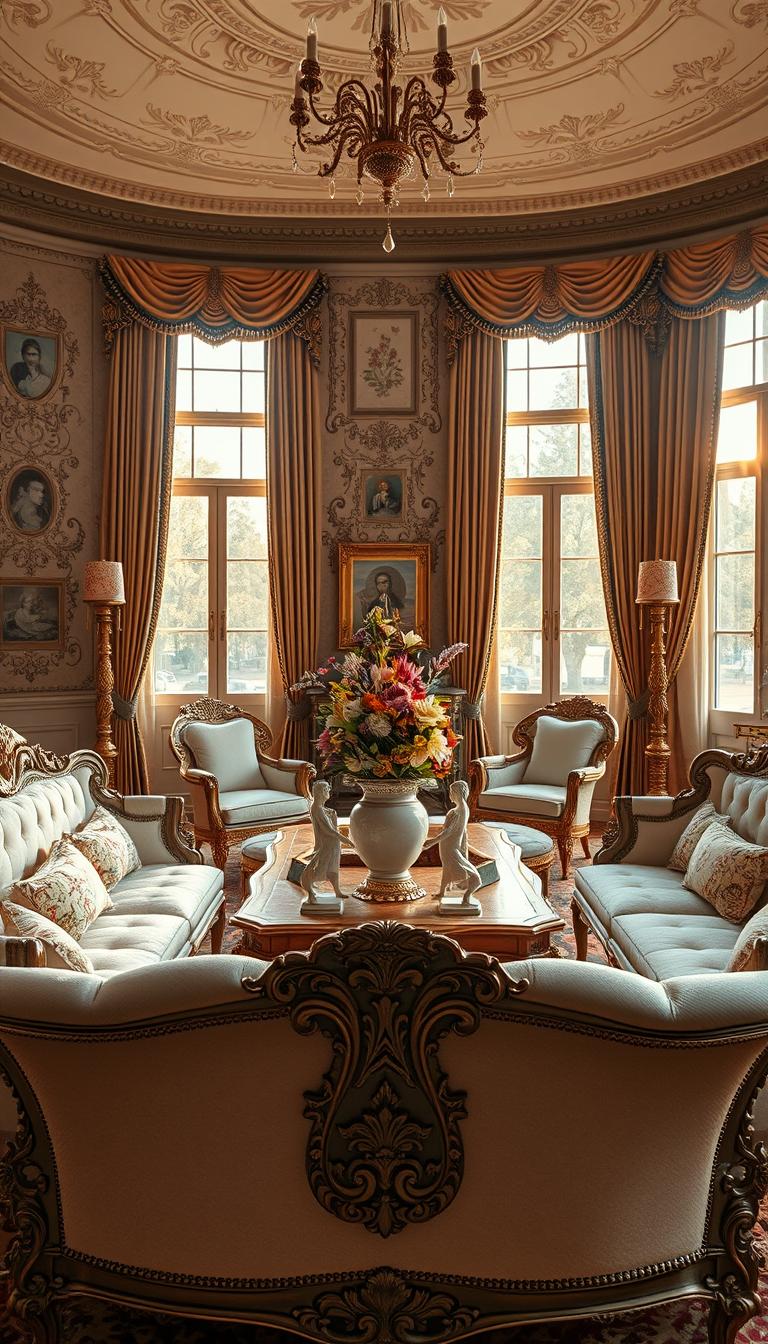
A lavish Rococo-inspired room featuring an elegant, ornate sofa with intricate carvings and plush upholstery in soft pastel hues as the foreground element. In the middle, include a beautifully crafted wooden coffee table adorned with delicate figurines and a vintage vase filled with fresh flowers, surrounded by luxurious armchairs that echo the Rococo style. The background showcases opulent wallpaper with elaborate patterns, and opulent drapes framing large windows that let in golden, soft sunlight, creating a warm and inviting atmosphere. Use a wide-angle lens to capture the room's spacious feel, highlighting the rich textures and materials in a photorealistic style. The mood should be elegant and sophisticated, perfect for inspiring readers to embrace Rococo decor in their homes.

Furniture with opulent charm

Choose a serpentine dresser, a settee with cabriole legs, or a carved console as your anchor. These pieces carry the mood and make future buys easier.

Statement mirrors and picture frames

Add a carved mirror or gilded frame next. A mirror multiplies light and introduces ornate details for a modest investment.

Chandeliers and wall sconces

Select a crystal chandelier sized to the ceiling, then layer with candle-style sconces along the wall. Lighting defines atmosphere and draws the eye upward.

Wallpaper, panels, hardware, and fabrics

Use floral or lattice wallpaper as a backdrop. Swap hardware to antique brass knobs and porcelain pulls to echo intricate details.

  • Fabrics: pastel velvets for seating and silk drapery at windows add sheen and touch.
  • Prioritize quality where hands and eyes land — drawer fronts, mirror frames, and chandelier arms.
  • For small spaces, one mirror and one chandelier can be enough; larger rooms benefit from a console and a pair of sconces.
Category Why buy first Quick tip
Furniture Anchors the room Pick a curvy, well-built piece
Mirrors & frames Amplify light Choose carved or gilded frames
Chandeliers Create vertical drama Scale to room footprint

I always recommend care too — dust carved areas, shield silk from direct sun, and secure tall mirrors. Do that and the pieces will age like quiet opulence, not wear.

Color palettes, textures, and finishes for a refined Rococo look

Color and finish set mood before furniture ever does—so pick them with care. Start by building a base of cream plus one signature pastel. That keeps the scheme calm and easy to repeat across rooms.
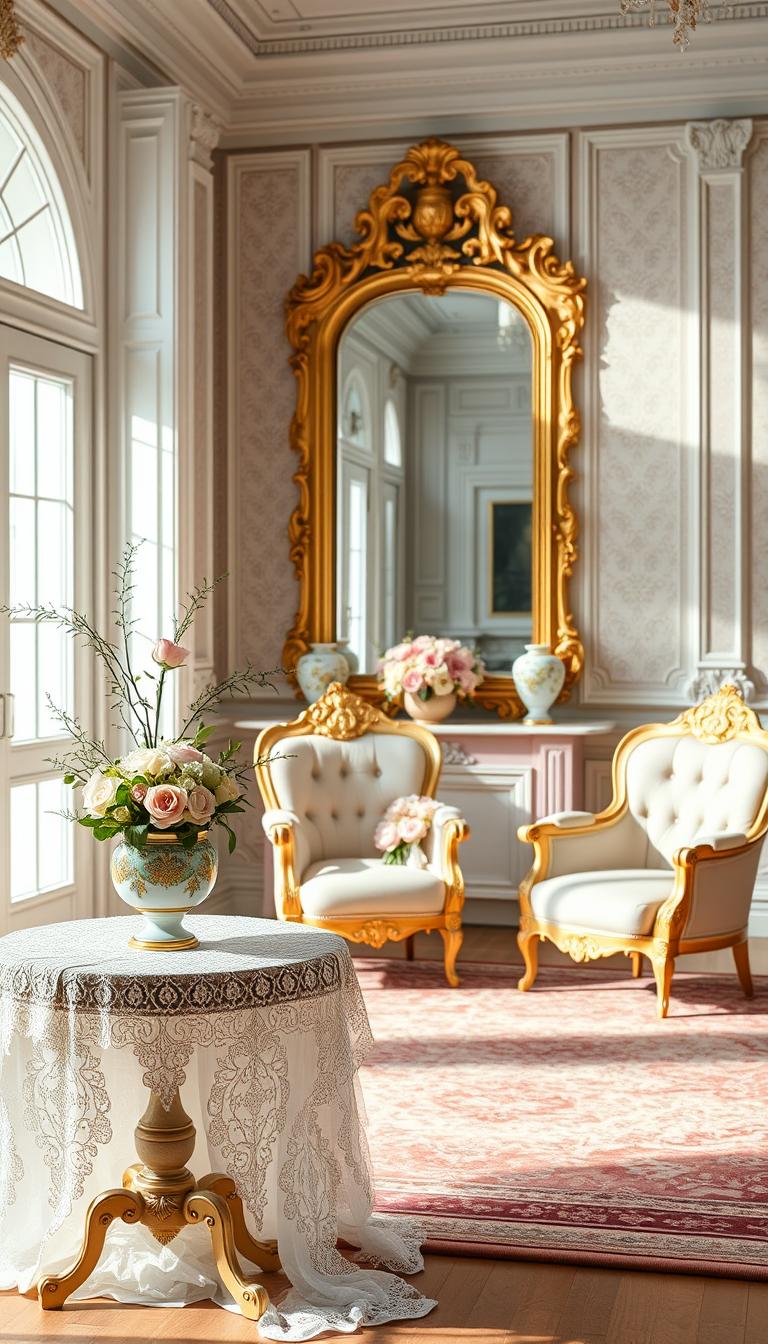
A beautifully arranged Rococo-inspired color palette featuring soft pastels such as mint green, blush pink, and delicate lavender in an elegant interior setting. In the foreground, a small table draped with intricate lace, displaying ornate porcelain vases filled with fresh flowers. The middle section showcases plush upholstered chairs with gilded accents and a richly patterned area rug that enhances the space’s luxury. The background includes a grand mirror reflecting light from a nearby window, which casts gentle shadows and highlights the detailed wall moldings and pastel-hued wallpaper. The atmosphere is serene and opulent, evoking a sense of sophistication. Soft, natural daylight illuminates the scene, creating depth and warmth. Capture the image with a wide-angle lens for a spacious feel. The overall mood is refined and inviting, perfect for a Rococo decor theme.

Signature pastels: blush pinks, sky blues, creams, and mint greens

I favor blush or sky blue as a single accent. Use it on a painted trim, a wallpapered niche, or a single upholstered piece. Small repetition ties the whole interior together without feeling matchy.

Gilding and luminous metals: adding warmth and opulence

Gilded accents on frames, lighting, or hardware act like sunlight—subtle but transformative. Repeat a gilt finish two or three times so it reads as intention, not random flash.

  • Layer textures: silk drapery, velvet seats, damask pillows for tactile richness.
  • Vary sheen: matte walls, satin wood, and bright metal touches create depth.
  • Light matters: match chandeliers and crystal clarity to your palette for cohesion.

When in doubt, make a sample board. Pin fabrics and finishes and view them at morning and evening light. It’s the easiest way to ensure lasting beauty and a balanced sense of space.

Styling your space: blending rococo style with modern interior design

When I fuse classic ornament with clean modern lines, rooms feel both curated and effortless. Pick one curved anchor piece in pastel velvet and let it lead the palette.

In living areas, I place a tufted settee or a curvy lounge chair beside a simple coffee table. That contrast keeps the look fresh and livable.
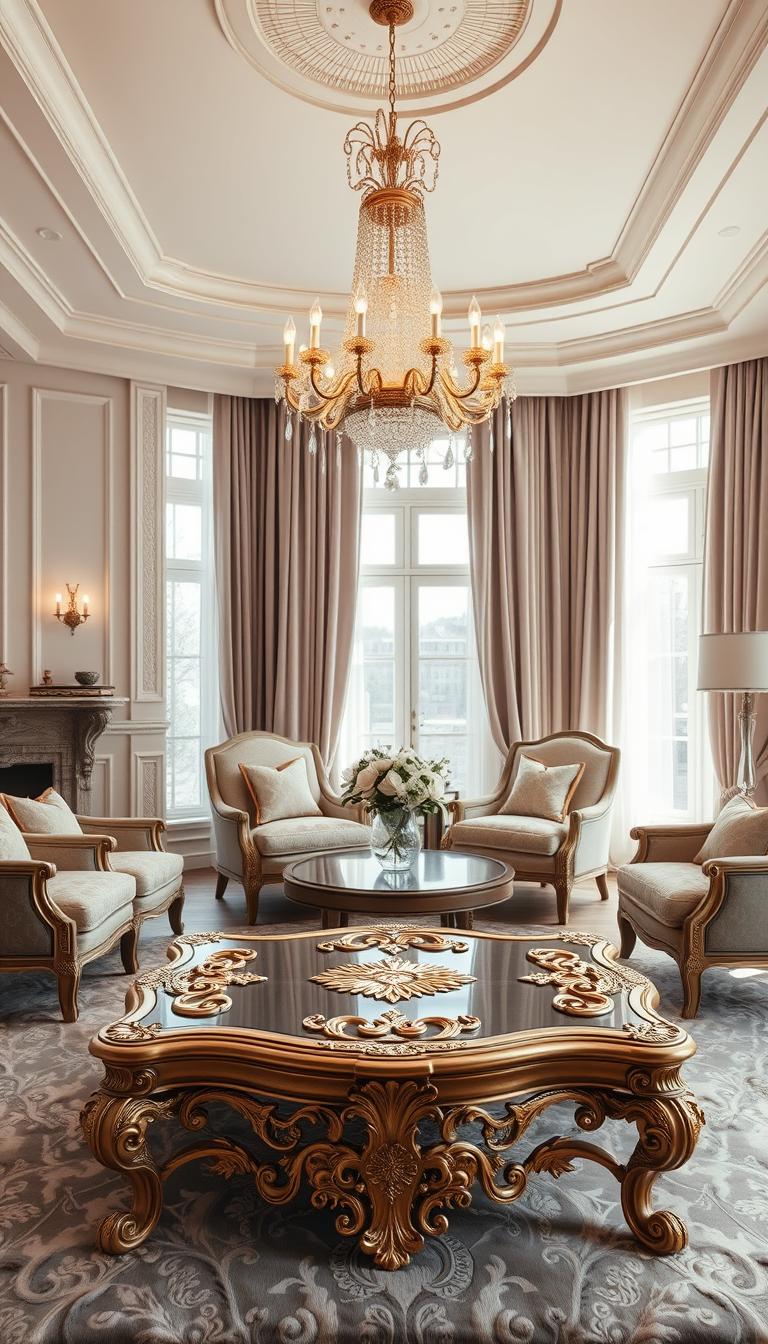
A beautifully styled modern living room that blends rococo elegance with contemporary design elements. In the foreground, an ornate rococo-inspired coffee table with intricate gold detailing sits atop a plush, modern area rug. Surrounding it, plush chairs in rich fabrics adorned with subtle floral patterns complement the opulent style. The middle of the room features a grand chandelier with crystal accents, casting warm, inviting light across the space. The walls are adorned with soft pastel hues and delicate moldings, creating a serene atmosphere. In the background, large windows allow natural light to flood the room, framed by flowing drapes that highlight the elegant design. The overall mood is sophisticated yet inviting, merging historical elegance with modern comfort, captured in high-definition photorealism.

Living rooms and sitting areas

Layer lighting: chandeliers and sconces soften fabrics and frames without glare. Repeat a gilt accent or a small mirror to tie elements together.

Bedrooms and vanity corners

Wallpaper a nook with floral or vine motifs. Add silk shams and a damask throw for immediate elegance. A mirror above a dresser brightens corners and adds charm.

Mixing eras & scale

Pair one ornate piece with clean-lined furniture decor. Keep larger curves on anchors; use smaller details on accessories so the eye can rest.

Space Anchor piece Quick tip
Living room Tufted settee Pair with a minimalist coffee table
Reading nook Wallpapered niche Add a petite chandelier and a comfy chair
Bedroom Vanity + mirror Layer textiles and repeat gilt frames
Rental Pendant or plug-in chandelier Swap hardware and use peel-and-stick molding

Conclusion

A single, well-chosen element can quietly transform how a room feels and how you live in it.

I’ve seen a mirror or a graceful chandelier change a space from ordinary to gently luxurious. Start small: pick one anchor piece and let it lead your choices.

Keep the palette light, repeat a few details, and favor comfort over costume. Over time you’ll balance opulence and ease so rooms feel collected, not staged.

If you want the history behind the movement or design roots, read an introduction that traces how these elements evolved.

Start thoughtful, layer slowly, and choose what brings joy. Do that and timeless elegance will settle into your home in a way that lasts.

FAQ

What makes Rococo style different from Baroque?

Rococo favors lightness and playful ornament over Baroque’s heavier grandeur. You’ll see softer curves, asymmetry, and delicate motifs like shells, S- and C-scrolls, and floral sprays. The palette tilts toward pastels and creams rather than deep, dramatic tones, and fabrics like silk and velvet add a refined, intimate feel.

How can I introduce this look without overwhelming my home?

Start small. Add a gilded mirror or an ornate picture frame, swap a lamp for a crystal chandelier or sconce, or bring in embroidered cushions and a pastel velvet accent chair. I often recommend layering — one statement piece plus softer accents — so the room breathes and still feels modern.

Which rooms work best for this style?

Living rooms, bedrooms, and vanity corners are natural fits. These spaces welcome tufted settees, romantic nooks, and layered textiles. But you can also add subtle touches in halls or dining rooms with wall panels, wallpaper featuring florals or vines, and elegant hardware.

What colors and textures should I choose?

Lean into signature pastels — blush pink, sky blue, mint green, and warm creams. Mix luminous metals like gilding and antique brass with carved wood and luxurious fabrics such as silk, damask, and velvet. The contrast of soft hues and shiny accents creates that timeless elegance.

Where do I find authentic pieces or reproductions?

Look to reputable antiques dealers, estate sales, and specialty shops for authentic pieces. For high-quality reproductions, brands like Ethan Allen, Restoration Hardware, and specialty ateliers offer gilded mirrors, carved frames, and upholstered furniture inspired by period design. Always check construction and finishes before buying.

How do I blend ornate pieces with contemporary furniture?

Balance is key. Pair one ornate item — a serpentine console or cabriole-leg chair — with clean-lined sofas or minimalist lighting. Keep scale in mind and use neutral backgrounds to let details sing. Mixing eras creates a curated, lived-in elegance rather than a set-like room.

Can I use wallpaper with Rococo motifs in a small space?

Absolutely. Choose delicate patterns — small florals, latticework, or chinoiserie elements — and keep color light. In a powder room or vanity nook, wallpaper can add charm without overwhelming. I recommend pairing it with simple trim and a single gilded accent to avoid visual clutter.

What lighting choices suit this aesthetic?

Crystal chandeliers and candle-style wall sconces are classic choices. For a modern twist, pick fixtures that echo scrollwork or gilded finishes but have cleaner silhouettes. Layered lighting — ambient, task, and accent — will highlight carved moldings, mirrors, and fabrics beautifully.

Is this style practical for families and pets?

It can be. Choose durable upholstery fabrics and mixes like performance velvet or treated silks for high-use areas. Reserve delicate pieces for lower-traffic spots. Hardware and knobs in antique brass or porcelain can be both pretty and functional — and easier to care for than fragile finishes.

How can I incorporate floral and nature motifs without looking dated?

Keep motifs stylized and scale appropriate. Small embroidered cushions, framed botanical prints, or subtle wallpaper motifs work well. Pair them with contemporary art or modern lighting to keep the look fresh and intentional.

What should I buy first when building a Rococo-inspired room?

Start with one anchor piece — a statement mirror, an upholstered settee with cabriole legs, or a chandelier. Then add supporting elements: gilded frames, embroidered cushions, silk drapery, and antique brass hardware. That approach creates cohesion without overspending or cluttering the space.

How do I care for gilded finishes and delicate fabrics?

Dust gilded surfaces gently with a soft brush and avoid strong cleaners. For silk and embroidered textiles, follow label instructions or use professional cleaning. Shield fabrics from direct sunlight to prevent fading. Regular, gentle care keeps these pieces looking luxurious for years.

Can I mix chinoiserie and floral motifs with European ornamentation?

Yes — they complement each other beautifully. Chinoiserie panels or porcelain accents add exotic charm to floral carvings and gilt frames. The key is restraint: choose one dominant motif and let the other act as an accent for a curated, layered look.

Where should I place a statement mirror for maximum impact?

Over a mantel, console table, or behind a focal seating area are great spots. Mirrors reflect light and amplify gilded accents and chandeliers. Position them to catch natural light or to reflect a favorite artwork for a sense of depth and movement.
Total
0
Shares
Share 0
Tweet 0
Pin it 0
Related Topics
  • Baroque influence
  • Chandeliers and gilding
  • French-inspired decor
  • Opulent interiors
  • Ornate design
  • Pastel color palette
  • Rococo style
  • Vintage furniture
Jade Hunt
Jade Hunt

Hi, I’m Jade Hunt — your friendly guide to creating a beautiful, comfortable, and functional home. At Homiscape.com, I share practical home organization tips, budget-friendly decor ideas, and minimalist lifestyle hacks to help you design a space you’ll truly love. With over 7 years of experience exploring home improvement trends and DIY projects, I believe every home has the potential to be warm, inviting, and uniquely yours. Whether you live in a small apartment or a spacious house, my goal is to inspire you to make the most of every corner. Let’s turn your living space into your dream home — one idea at a time!

Previous Article
Spring Centerpiece
  • General

Spring Centerpiece Ideas to Brighten Up Your Home Decor

  • January 30, 2026
  • Jade Hunt
View Post
Next Article
Adult Bedrooms
  • General

Designing Adult Bedrooms for Better Sleep and Style

  • January 30, 2026
  • Jade Hunt
View Post
You May Also Like
Adult Bedrooms
View Post
  • General

Designing Adult Bedrooms for Better Sleep and Style

  • Jade Hunt
  • January 30, 2026
Spring Centerpiece
View Post
  • General

Spring Centerpiece Ideas to Brighten Up Your Home Decor

  • Jade Hunt
  • January 30, 2026
Modern Laundry Room
View Post
  • General

I Upgraded My Modern Laundry Room: Here’s How You Can Too

  • Jade Hunt
  • January 29, 2026
Modern Rustic Living Room
View Post
  • General

Modern Rustic Living Room Ideas for a Cozy Home

  • Jade Hunt
  • January 28, 2026
Maximalist Kitchen
View Post
  • General

My Journey to a Beautiful Maximalist Kitchen: Expert Insights

  • Jade Hunt
  • January 28, 2026
Ikea Double Desk
View Post
  • General

Ikea Double Desk: Perfect for Shared Home Workspaces

  • Jade Hunt
  • January 27, 2026
Converted Church Home
View Post
  • General

Creating a Converted Church Home that Nurtures Wellbeing

  • Jade Hunt
  • January 27, 2026
Hayden Christensen House
View Post
  • General

Inside Hayden Christensen House: A Design Inspiration

  • Jade Hunt
  • January 26, 2026
Homiscape.com Homiscape.com

Input your search keywords and press Enter.