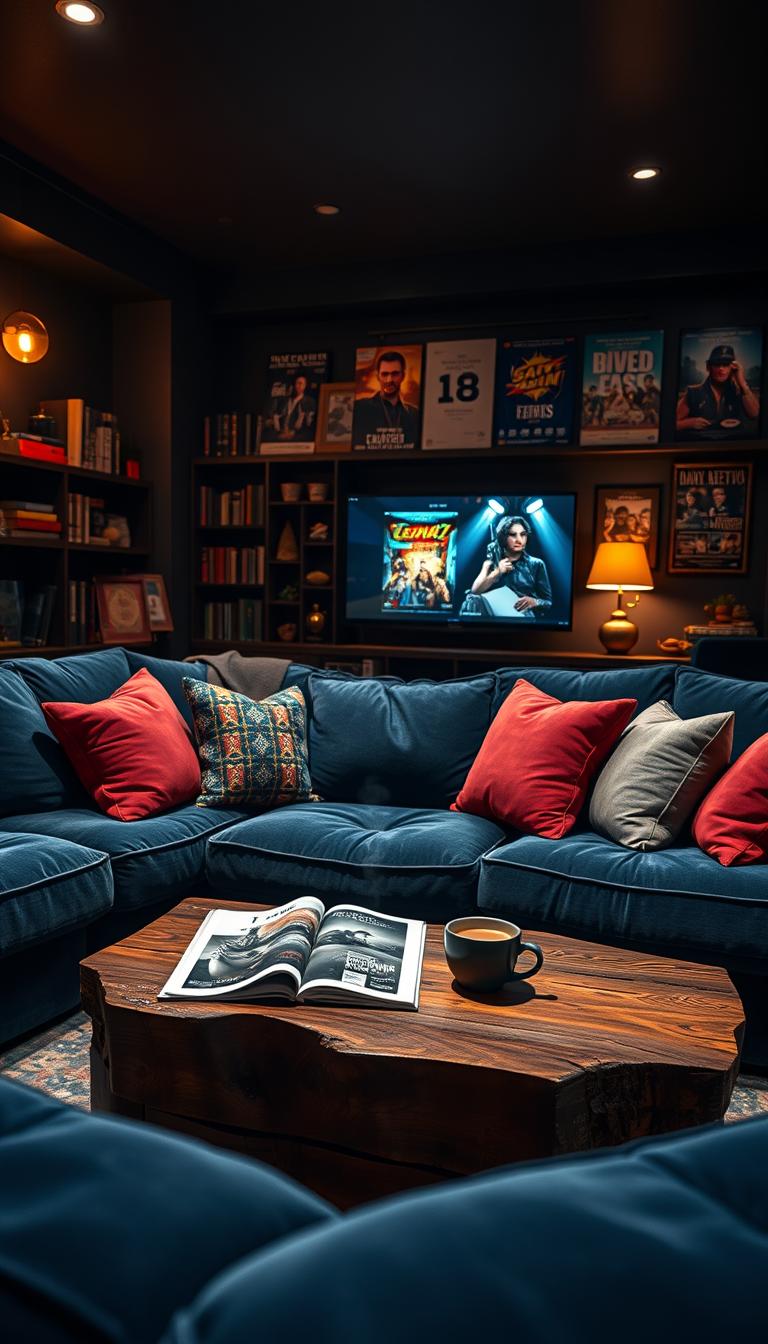
Ever wonder which seat in your retreat will actually make you linger? I ask that because the right centerpiece transforms a room. It anchors the mood, invites friends, and defines how you live in that space at home.
I guide clients to match a sofa to purpose. Long gaming nights need supportive cushions and ergonomic posture. Sports viewing asks for sightlines and layered seating. Movie marathons call for deep, loungey comfort.
Beyond shape, small details make big differences: built-in cup holders, hidden storage, USB charging, power recline, or ambient LED lighting. Those little features add practical comfort and modern style.
I’ll also walk you through materials, construction, and space planning so the furniture fits, lasts, and feels right. Think of this as a clear path from measuring to shortlisting options—so you end up with pieces you love coming back to.
Key Takeaways
- The centerpiece matters: one piece can shape the whole room.
- Choose seating that fits your primary activity—gaming, sports, or films.
- Prioritize construction and materials for longevity and comfort.
- Smart features and storage boost everyday usability.
- Measure first; pick proportions that leave breathing room in the space.
Man Cave Couch essentials for comfort, durability, and style
Your go-to seat should balance long-haul comfort with build quality you can trust. I’ve seen pieces that feel great day one and fail by season two. That’s usually the unseen stuff.
What I look for: a kiln-dried hardwood frame, quality joinery, and high-density foam so the cushions hold their shape. Skip particleboard. Choose materials that stand up to snacks, guests, and weekend marathons.
I separate man cave furniture from typical living room sofas by the extras: built-in cup holders, USB ports, and storage. Those features streamline movie nights and gaming sessions.
- Comfort trio: cushion density, seat depth, lumbar support.
- Durability: solid frame, sturdy legs, reinforced corners.
- Practical tech: integrated charging, consoles, hidden trays.
In short, you’ll want a shortlist that mixes must-haves and nice-to-haves. Take the checklist to the showroom or your cart. It keeps the choice simple and smart.
Size and space planning for your man cave
Start by treating the room like a map—every wall, window, and outlet tells you where the big piece should sit.
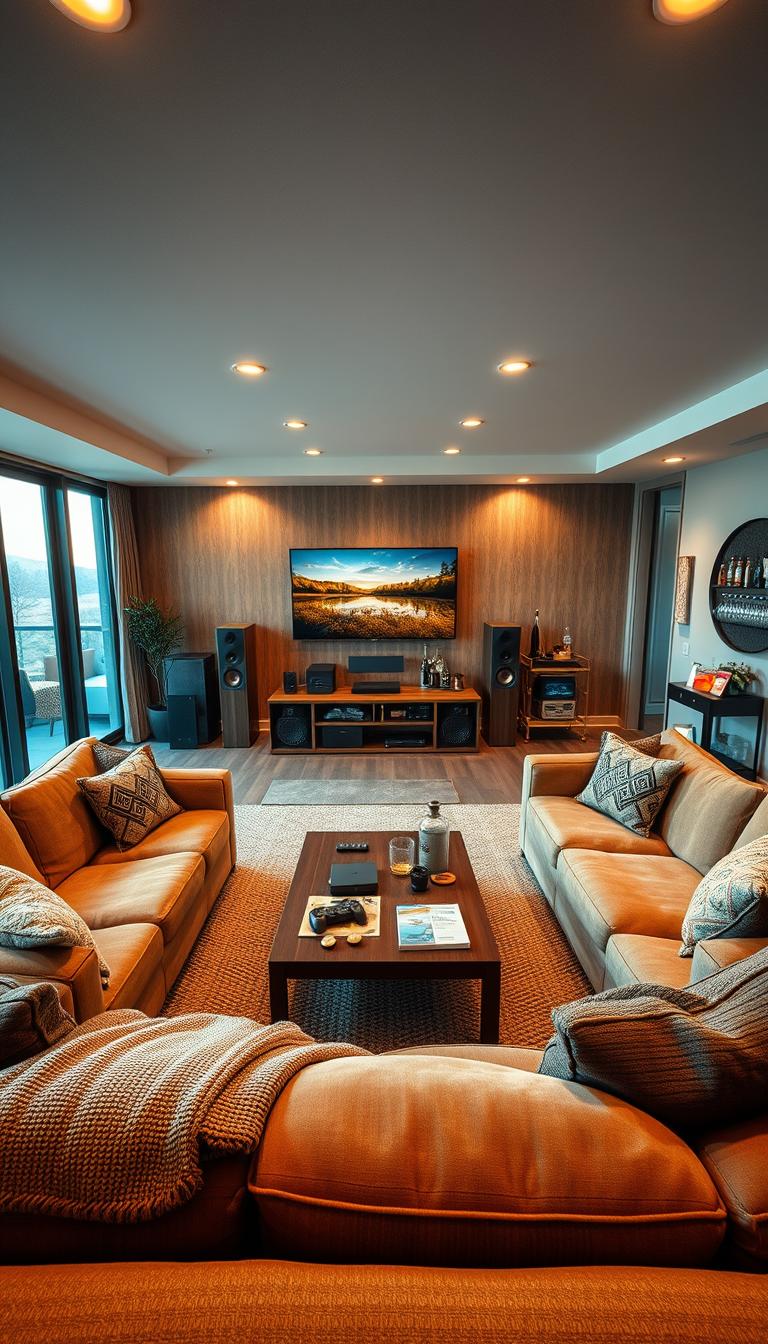
Measure everything. I walk clients through tape-measure basics: mark doors, windows, fixed elements, and outlets. Sketch the layout so scale guides the choice, not impulse.
Measuring, scale, and traffic flow for the perfect fit
Leave at least 30 inches of clearance around seating. That gap keeps traffic flowing on game nights and stops shoulders from bumping when people pass.
I’ll want the couch to be a focal point without swallowing the space. We talk seat depth and total length to match your height, lounging style, and how often you host.
“Proportion wins every time—big presence, not big problems.”
Doorways, stairwells, and modular delivery considerations
Measure delivery routes: door frames, stair turns, and ceiling drops. I’ve saved basements from heartbreak with that simple step.
- Consider modular pieces that assemble in-room when access is tight.
- Account for reclining clearances and consoles so the footprint on paper matches real life.
- Plan space for future pieces so the layout stays balanced.
Materials that match your lifestyle: leather, fabric, and performance options
I help people pick upholstery that fits real life. Choose materials that stand up to snacks, spills, and long game nights.
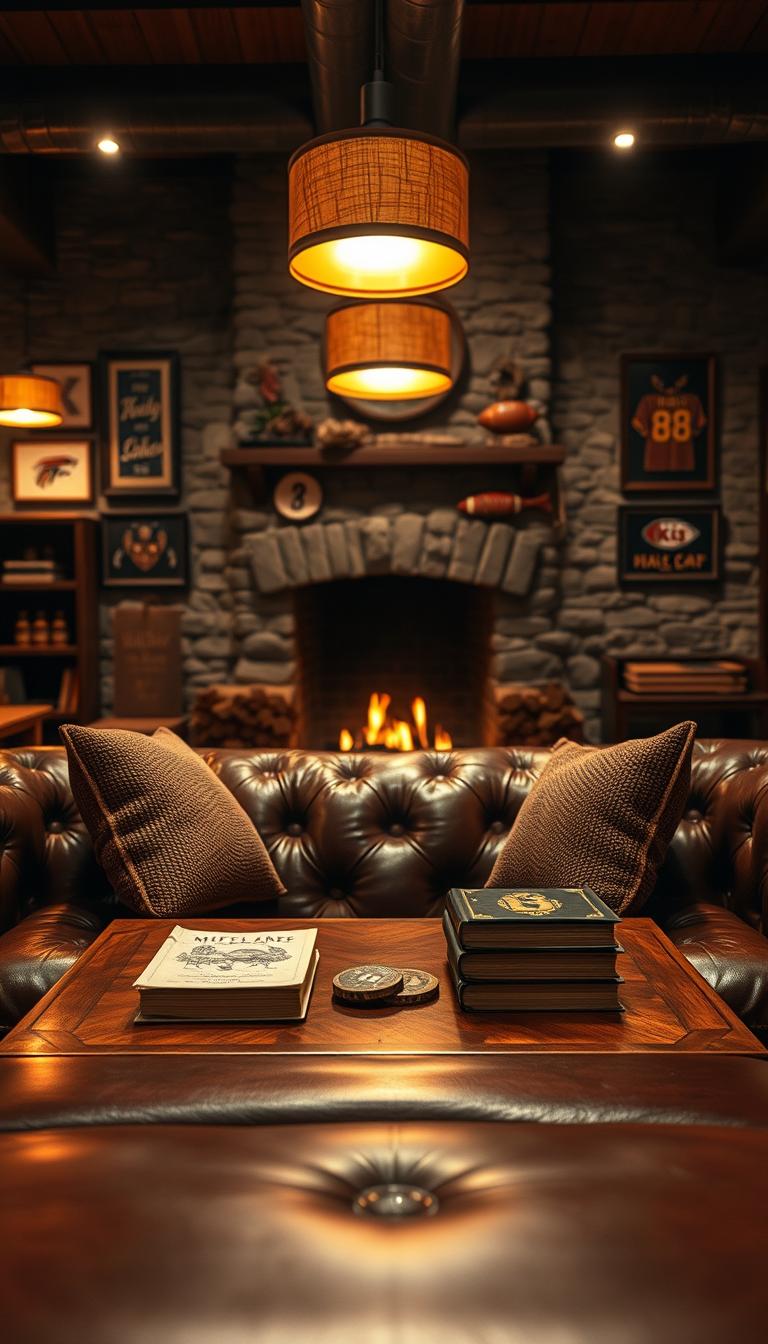
Leather brings a timeless look and ages with character. It wipes clean easily and handles heavy use well. Expect seasonal temperature shifts—cool in winter, warm in summer—and a higher price tag.
Leather: timeless looks, easy cleaning, and long-term durability
Pros: durable, develops patina, easy to wipe.
Cons: costlier, surface temperature changes, needs conditioning.
Fabric and microfiber: color range, comfort, and stain resistance
Fabric opens a wide palette. It feels cozy and comes in many textures. It may show wear faster and needs more cleaning than leather.
Microfiber is my go-to for heavy use. It mimics suede, hides marks, and spot-cleans well—great for snack-heavy nights.
Performance textiles: spill-friendly finishes and fade-resistant designs
Modern performance fabrics resist stains, fading, and abrasion. They look authentic and avoid that plasticky feel.
I match material to how you live—hosting weekly watch parties or quiet film nights—so durability and comfort align with use.
- I explain cushion feel across materials so foam cushions and surface texture work together.
- I recommend maintenance routines that take minutes per month, not hours.
- If you like clean lines, we pick textiles that drape smoothly and resist pilling.
- We also choose wood accents and legs that resist scuffs and complement upholstery.
| Material | Durability | Maintenance | Best Use |
|---|---|---|---|
| Leather | High | Wipe clean; condition periodically | High-traffic, classic look |
| Fabric | Medium | Vacuum, spot clean, occasional deep clean | Color variety, soft comfort |
| Microfiber | High | Spot clean; resists stains | Homes with snacks and kids |
| Performance textile | Very High | Simple spot care; fade-resistant | Busy households, sunlit rooms |
Comfort features that matter: reclining, storage, and tech integration
Small features change how you live in a room—especially where you sit. I focus on practical extras that you’ll use every week.
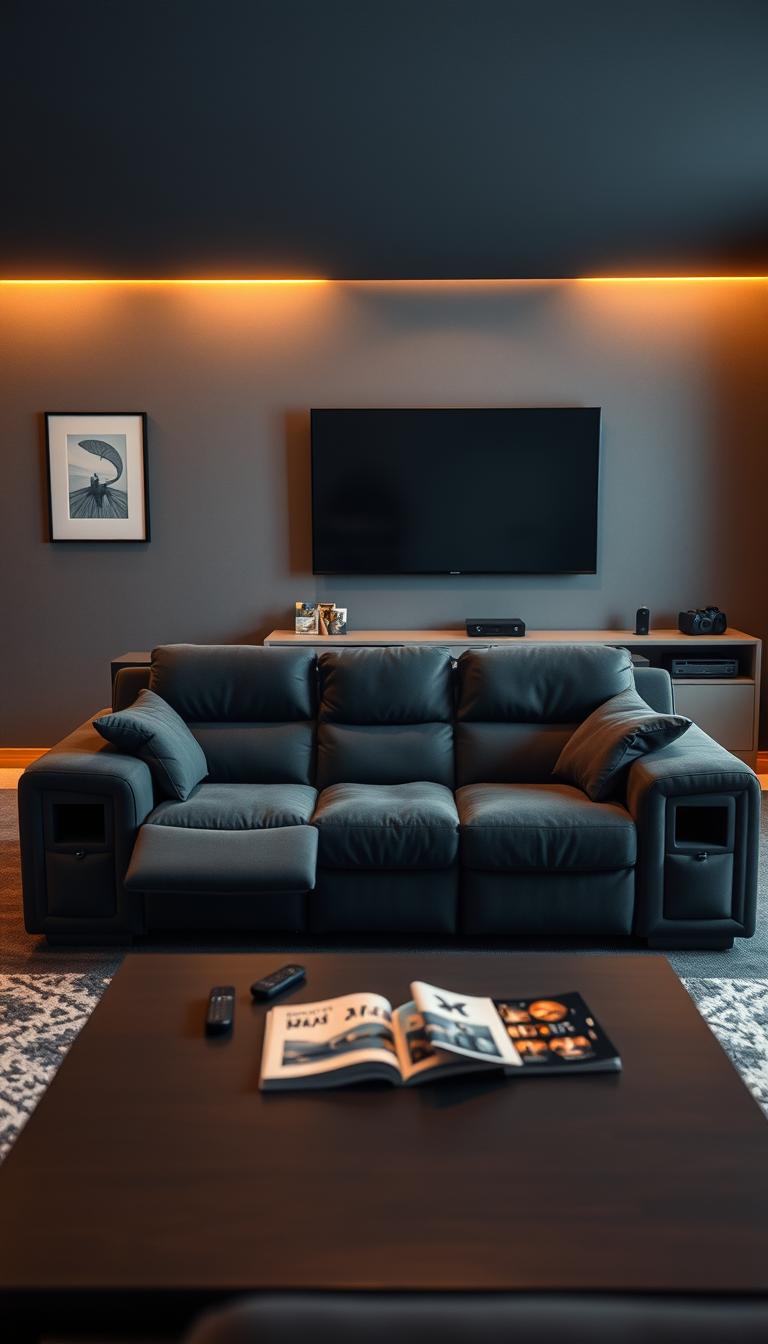
Reclining mechanisms and ergonomic support
Manual vs. power: manual reclining is simple and reliable. Power recliners adjust at a button and offer multiple positions for exact comfort.
Adjustable headrests and lumbar support keep your back and neck from tiring during long sessions. They matter more than plush upholstery for long-term comfort.
Storage, cup holders, and fold-down surfaces
A well-placed storage console corrals remotes and controllers. Fold-down sections double as mini tables for pizza or a laptop.
Built-in cup holders and extra cup holders at the arms stop spills and keep the center clutter-free.
Tech-forward seating
Look for USB ports, wireless charging pads, LED accent lighting, and optional Bluetooth speakers. These details create convenience and atmosphere without a full AV overhaul.
Map outlet access and cable routing before you buy so power features stay tidy and reliable.
| Feature | Manual | Power |
|---|---|---|
| Adjustment | Lever/body weight | Button with presets |
| Precision | Basic | Granular control |
| Maintenance | Low | Moderate (mechanism) |
Tip: Pick the few tech and storage features you’ll use weekly. That keeps your man cave intuitive, not fussy.
Popular man cave couch styles and configurations
Choosing the right style means balancing presence, comfort, and how many people you host. I’ll walk through common designs so you can picture what fits your room and routine.
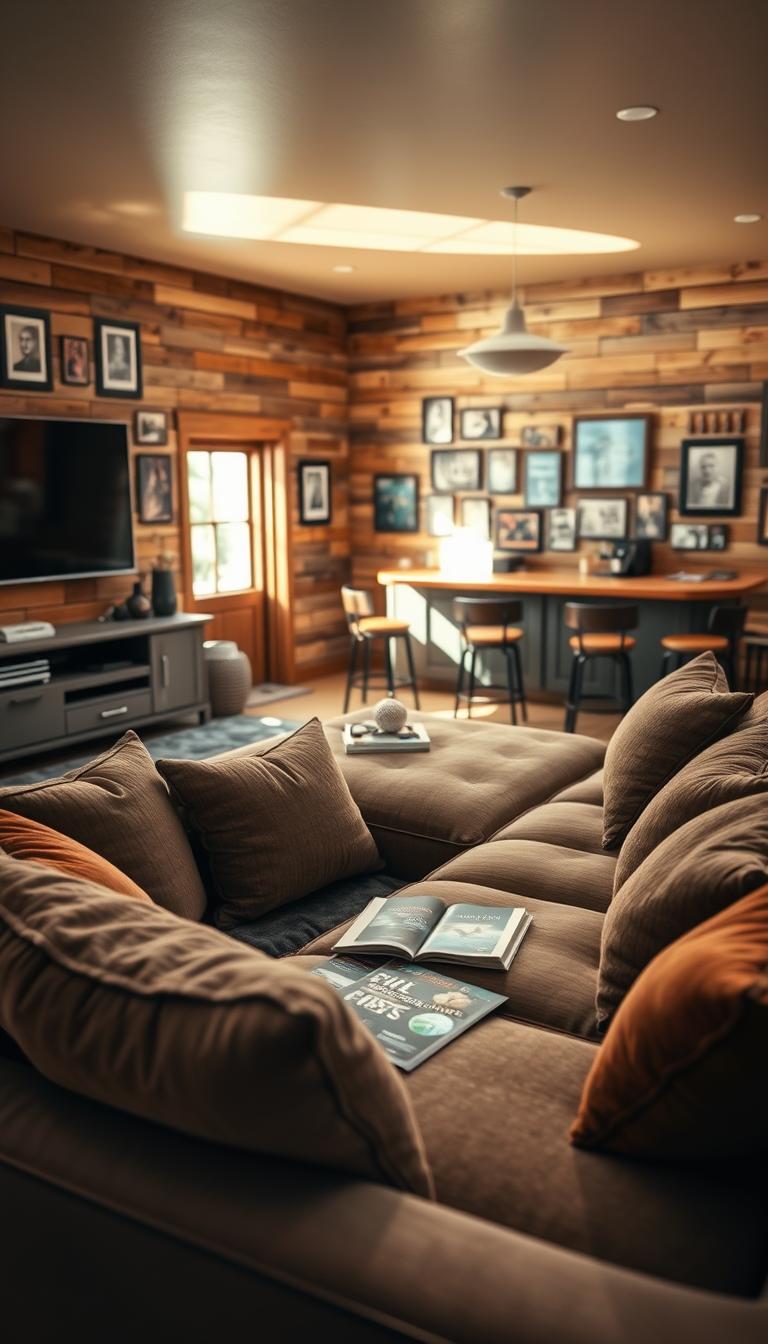
Traditional sofas: rich leather and clean lines
Classic leather sofas bring a club-room vibe. Models like the Abbyson Living Foyer or Birch Lane Landry show button tufting and nailhead trim.
Why pick one: timeless looks, durable leather, and a focused silhouette that reads as calm and refined.
Sectional sofas: L-, U-shapes, chaises, and modular pieces
Sectional layouts maximize seating. Choose an L-shape for corner use or a U-shape for centered conversation.
Examples like the Bauhaus Lawrence or Abbyson Tekana mix chaise comfort with deep cushions for long sessions.
Reclining sofas and loveseats
If convenience wins, recliners with a center console—such as the Seven Seas reclining sofa—add hidden storage and simple controls.
Home theater and gaming seating
Rows with integrated cup holders keep drinks safe during sports nights and films. Modern pieces like the Zuo Modern Fortress use metal framing for an industrial edge.
Bold sectionals—think VIG’s red-and-black—add trays and visual punch when you want the sofa to be the statement.
Tip: Add an ottoman for flexible lounging and extra storage. It’s a small piece that pays off every time guests stay late.
| Style | Best for | Standout feature |
|---|---|---|
| Traditional sofa | Timeless rooms | Leather, nailhead |
| Sectional | Large groups | Chaises, modular fit |
| Theater/gaming | Sports & movies | Cup holders, rows |
Budget breakdown: from affordable finds to luxury lounge
Money talks—so let’s map what you can get at each budget level. I lay out realistic options so your priorities guide the buy. Think of this as a quick pricing map that keeps comfort and longevity front and center.
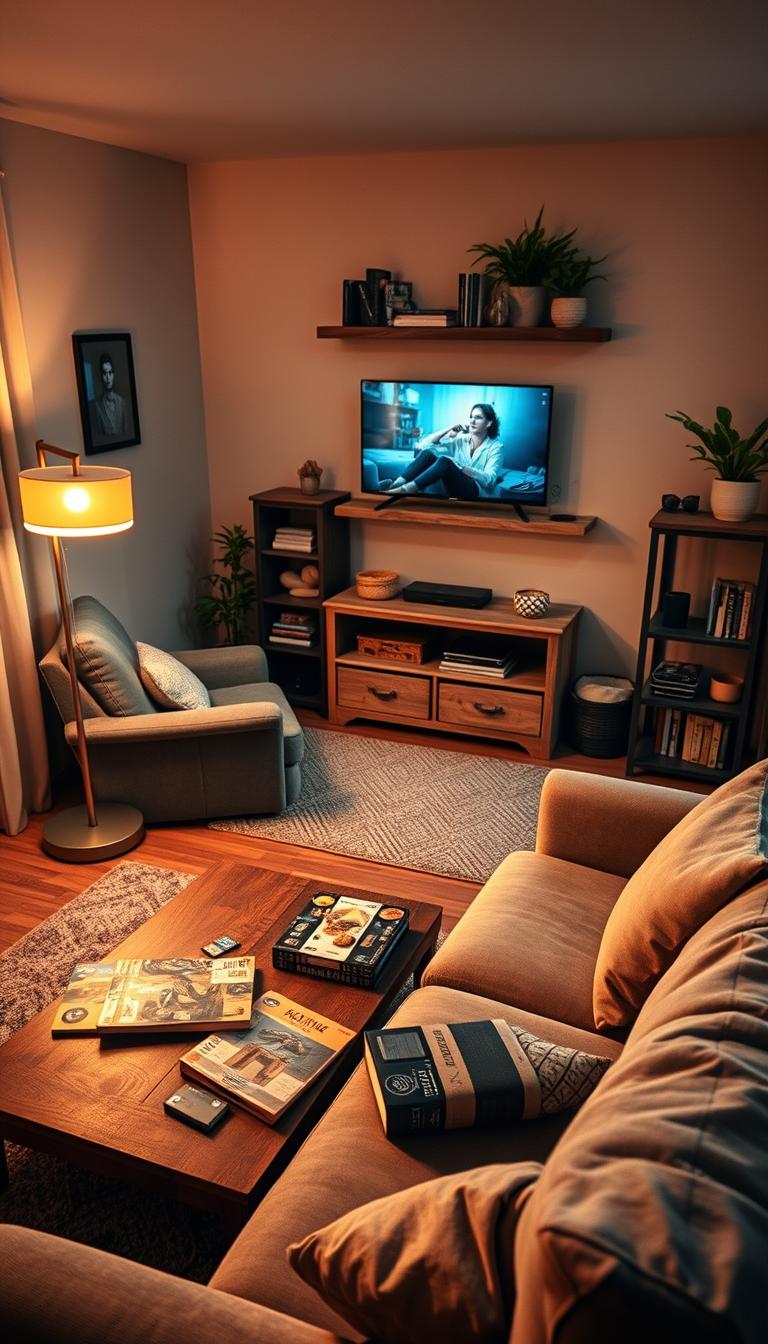
Budget-friendly picks: smart starters for occasional use
Under $1,000 gets simple options and basic recliners. These pieces are fine for light hosting and trial layouts.
Pros: low cost and many color options. Cons: lighter frames and simpler mechanisms—great as a stepping stone.
Mid-range upgrades: hardwood frames and higher-density foam cushions
$1,000–$2,500 is my sweet spot. You’ll find hardwood or mixed wood frames, better joinery, and foam cushions that hold shape longer.
These options balance daily comfort and solid construction. They’re ideal if you use the space often and want durable furniture without premium pricing.
Premium choices: top-grain leather, advanced reclining, and warranties
$2,500–$5,000+ delivers top-grain leather, hardwood frames, power reclining, and extended warranties. Custom sectionals and theater setups sit here.
I help clients weigh long-term comfort against upfront spend—sometimes a larger initial outlay saves replacements later.
| Budget Tier | Price Range | Typical Build & Features |
|---|---|---|
| Entry | $500–$1,000 | Basic frame, simple mechanisms, wide options |
| Mid | $1,000–$2,500 | Hardwood elements, dense foam cushions, better warranty |
| Premium | $2,500–$5,000+ | Top-grain leather, solid wood frame, power recline, extended warranty |
Tip: When you compare quotes, look past the photo. Check density ratings, joinery, and warranty language—the details that signal real value.
For more buying guidance and specific product picks, see the ultimate man cave couch guide.
Placement, viewing, and complementary furniture to complete the setup
Arrange furniture so sightlines and movement flow without a second thought. I set the screen, seating, and tables to work as a team so sports nights and movie marathons feel effortless.
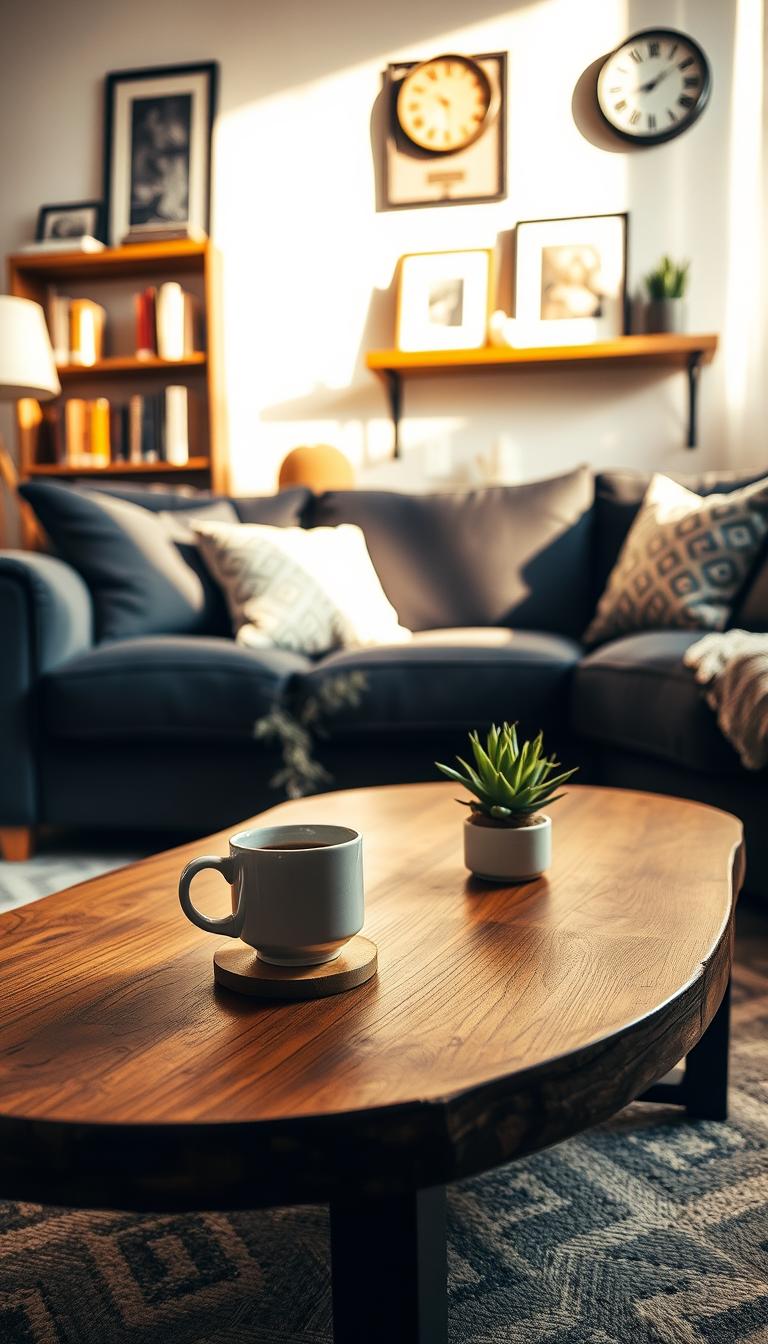
Screen distance and viewing angles for sports and movie nights
I use simple math: place seating about 1.5–2.5 times the TV diagonal. A 65-inch set sits roughly 8–13.5 feet away. Aim the screen center at or just below eye level.
Keep viewers within a 30-degree horizontal arc. That preserves detail and keeps everyone comfortable during long games or films.
Lighting control and glare reduction for a better picture
Tame glare with blackout curtains and dimmable fixtures. Bright overheads for halftime; low, warm light for dramatic scenes.
Complementary pieces: ottoman or coffee table, end tables, and media storage
Choose a coffee table or a pair of C-tables so snacks, remotes, and controllers stay handy without crowding the space. Lift-top coffee table options double as desks for casual work or dinner.
End tables should match arm height; they make reaching natural. An ottoman adds flexible seating and hidden storage for blankets and game gear.
| Item | Best use | Key benefit |
|---|---|---|
| Coffee table | Central snacks & remotes | Surface plus style |
| End table | Side reach next to seats | Arm-height convenience |
| Media storage | Consoles & cable management | Tidy tech and airflow |
Conclusion
The right seat answers a simple question: how do you actually use this room?
I recommend starting with comfort—pick a sofa that supports long sessions, then layer in features that match your rituals. A sturdy frame and resilient cushions pay off over years, and reliable reclining adds daily ease.
Size the piece so it claims the space without blocking flow. Choose materials—like top-grain leather or performance fabric—based on wear and cleaning needs.
If you want a deeper read, see the ultimate man cave couch guide for side-by-side comparisons.
One last tip: shortlist three contenders and trust your first sit test—your body usually knows before your brain does.