Can a small, timber-clad cabin feel larger than its square footage?
I ask because this mountain retreat proves it does. I toured the renovated, cedar-wrapped property and saw how simple choices change everything.
The actor behind the famous Star Wars role chose a modest, 1,935-square-foot home under $2.7 million that opens onto Altadena views and hiking trails. That mix of texture, daylight, and landscape makes the living areas breathe.
As a designer who guides clients through similar renos, I focus on the narrative: a stark early-’80s modern turned into a warm, durable refuge. Material choices—cedar cladding, exposed beams, sun-warmed concrete—rewrite a property’s story over time.
In this section, I’ll show why views and materials matter for mood, how a modest footprint supports restorative living, and which practical cues you can borrow for your own space.
Key Takeaways
- Right-sizing can expand perceived space when views and light are prioritized.
- Durable materials like cedar and concrete age beautifully and cut upkeep.
- Layered interiors + landscape create restorative living without more square footage.
- Practical, budget-conscious tactics translate celebrity design to everyday homes.
- Sensory details—scent, texture, and warmth—shape daily wellbeing.
Breaking down the latest on Hayden Christensen’s secluded L.A. cabin and why it matters now
Perched above Altadena, the renovated cabin reframes modest size as a design asset. The mountain property trades flash for quiet luxury—warm cedar cladding, exposed beams, and views that do the talking.
The actor hayden christensen bought the place for just under $2.7 million after the original team, William Hunter Collective, reworked their own design. At 1,935 square feet on 0.18 acres, the home feels intentional rather than cramped.
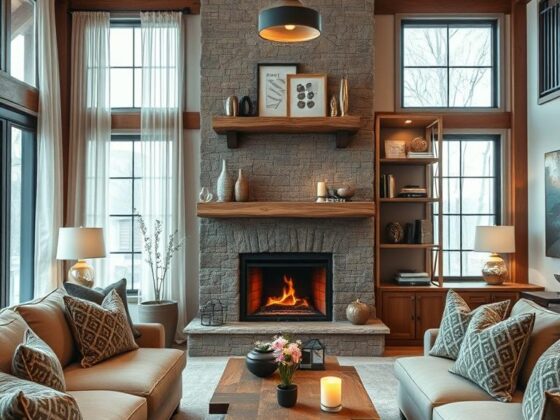
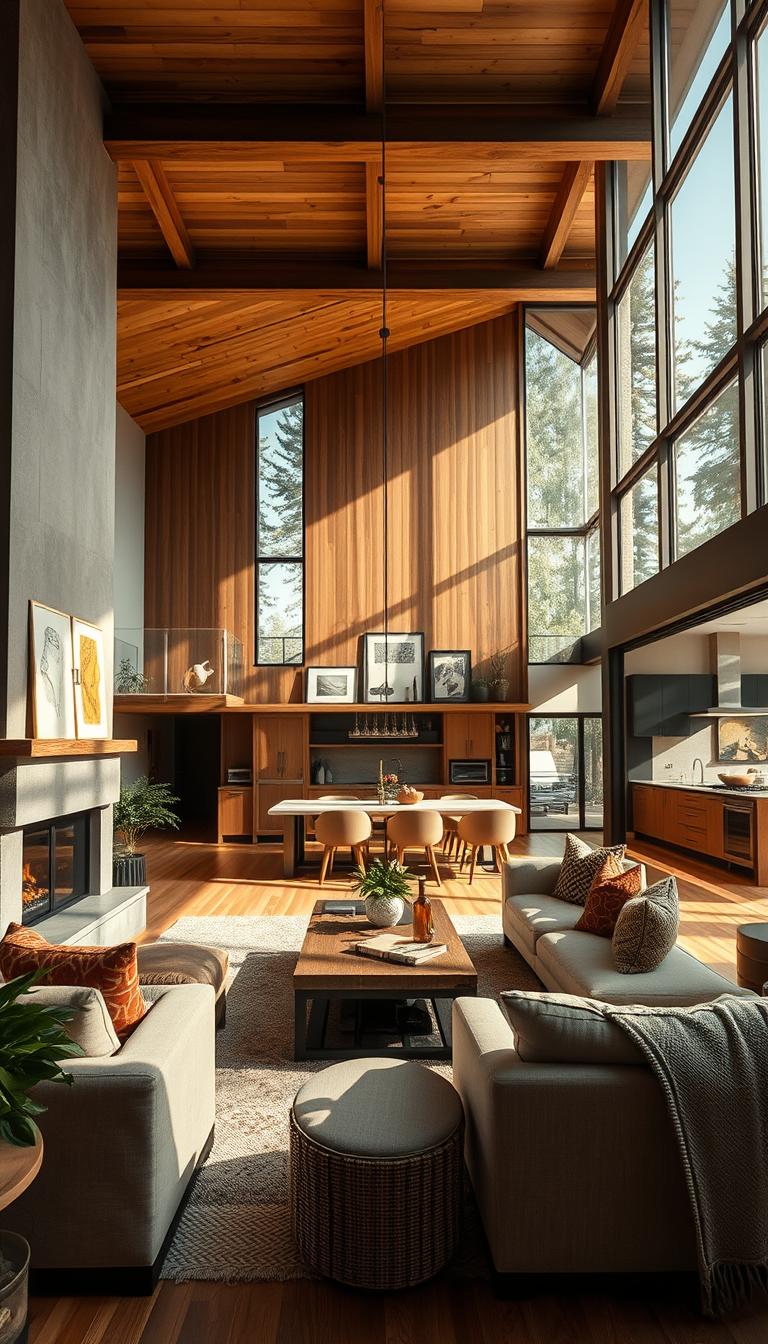
The sunken living room anchors the plan. A vintage wood-burning stove and built-in seating zone the space and pull your eye toward the valley beyond. Those choices make thoughtful walls and openings do the heavy lifting.
I point this out because buyers and renovators can measure value here. Surgical upgrades—timber cladding, durable finishes, and integrated details—raise resale and everyday wellbeing. Trail access also changes how you use a home: step outside, decompress, return.
- Why now: a present-day example of resilience and calm in design.
- Essentials: tight footprint, smart siting, big impact.
- Takeaway: prioritize site, light, and your core gathering spot—give those elements time to work.
Inside the Hayden Christensen House: layout, materials, and room-by-room design cues
You feel the mountain before you enter the front door — and the design honors that. Siting drives everything here: seating angles and window placement frame Altadena and Angeles National Forest views so interiors read larger than their footprint.
Mountain setting and view-driven planning
I start with the horizon. Point main gathering spots toward the valley and the whole home breathes. That simple flip expands perception without a single added square foot.
Materials that warm a modern shell
The exterior swapped stark white for cedar cladding and exposed beams returned from behind dropped ceilings. Original concrete floors anchor the palette and keep maintenance low.
Key rooms and smart details
The sunken living room centers on a vintage wood-burning stove and built-in seating — intimacy without clutter. In the kitchen, white oak wraps ceilings and walls while a black marble island and dark green drawers add measured contrast.
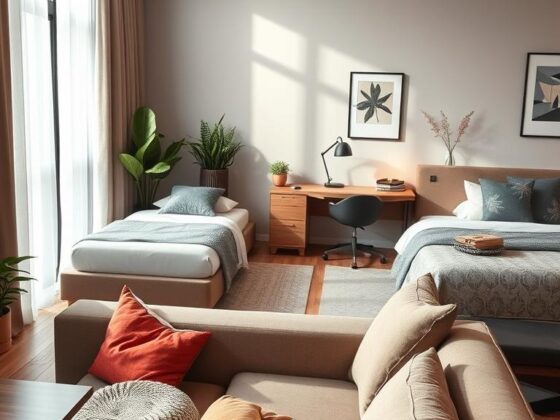
Bedrooms use hide-away vanities and integrated desks; bathrooms frame the forest with fir-trimmed windows. Opposite the kitchen, a dining table doubles as a games zone, with a ping-pong paddle display as art. Outside, native cacti and a separate studio create zones for work and calm.
Practical note: small moves—repeat brass hardware and tuck storage into bench bases—make a modest property feel curated and generous for family life.
Context in the San Fernando Valley: past properties that shaped the actor’s home style
Past properties in the San Fernando Valley quietly set the rules this retreat now follows. I look back at two key addresses to trace a through-line: privacy, views, and rooms that flow outward.
Sherman Oaks offered midcentury bones and a private pool with sweeping San Fernando Valley views. That circa-1950s, 3,000-square-foot home—designed by Kishani Perera—opened an editorial take on California casual: glass doors that dissolve the line between kitchen and pool, and settings that favor panorama over ornament.

Sherman Oaks midcentury with pool and sweeping views
The Sherman Oaks chapter taught seclusion without isolation. An open breakfast bar, living room glazing onto the pool, and community privacy shaped how a home reads as both retreat and social stage.
Studio City architectural modern: gallery walls and terraces
Studio City scaled the idea up—6,302 square feet of gallery-white walls, terraces, and a saltwater pool. That property favored terraces, an elevated master suite, and flexible family zones. Level changes like a step-down living room echo in today’s sunken conversation pit.
- Through-line: pools and terraces for play and recovery.
- Priority: seclusion, views, and flexible family spaces.
- Design lesson: sanctuary moments translate from grand suites to modest, view-led homes.
| Feature | Sherman Oaks (midcentury) | Studio City (modern) | Current Cabin |
|---|---|---|---|
| Size | ~3,000 sq ft | 6,302 sq ft | 1,935 sq ft |
| Outdoor | Pool, valley views | Saltwater pool, terraces, spa | View framing, native planting |
| Interior moves | Open kitchen, glass doors | Gallery walls, level changes | Sunken living room, built-ins |
| Priority | Privacy + panorama | Entertaining + sanctuary | Material warmth + views |
I share this because even in the Fernando Valley or up in the hills, the same design instincts recur. Whether you live in Studio City or a quieter ridge, think about view axes, a reliable pool or terrace for daily life, and one intentional room that shapes family rhythm.
For practical tools and layout ideas that translate across scales, see this design resource.
Conclusion
Good design starts with feeling, not floorplans. I’ve seen how cedar cladding, exposed beams, and a sunken living room turn a modest size into a calm, generous space.
Think of the kitchen as a mood maker: white oak, black marble, and brass accents read intentional and keep living areas uncluttered. Treat storage as structure so floors stay clear and daily living feels easier.
If you’re curious about the property’s broader story, this write-up links to reporting on the actor’s past properties for context: report and background.
Design for ritual. Carve a spot for family games or a quiet reading nook. Small, thoughtful moves—materials, light, and thresholds—do the heavy lifting. Even a celebrity role at home can read private when you let nature and good details lead.