Do you ever wonder if a small change in your kitchen could transform how your whole day starts?
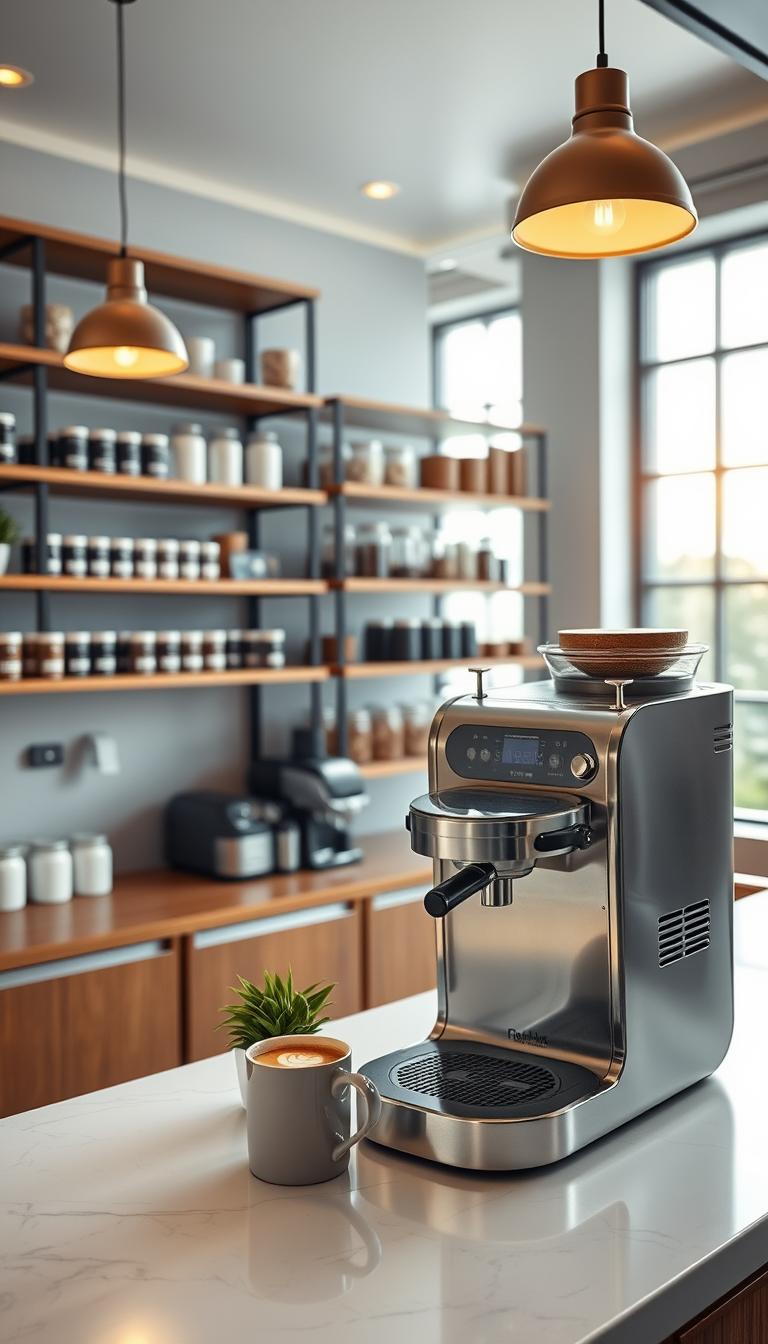
I built a compact counter station so every tool sits where my hands expect it—grind, brew, steam, pour. That simple flow cuts movement and spills, and it makes the first hour of the day feel gentler.
The setup lives on the counter near the heart of the home, which keeps the espresso gear affordable and accessible. I chose finishes that wipe clean fast and dimmable lighting so nothing glares at dawn.
When space is tight, concealed options like pocket doors hide clutter but keep function. My aim was a design that respects your time and creates visual calm before you even swallow your first sip.
Key Takeaways
- Simplicity wins: Arrange tools in a clear sequence to reduce friction.
- Countertop stations fit small kitchens and stay budget-friendly.
- Durable, easy-clean surfaces save time on messy mornings.
- Soft, dimmable light protects a calm mental state at dawn.
- Concealed storage restores serenity without losing function.
Modern Coffee Bar
When tools sit where you expect them, making coffee becomes a ritual, not a scramble. That predictability is the heart of a calm morning. I build stations so the flow follows my hands — beans, grind, brew, pour.
Core elements are simple: an espresso machine or a coffee maker that fits your habits, a good grinder, filtered water, and mugs close at hand.
Core elements: espresso machine, grinder, mugs, and concealed clutter
I use hidden cabinets and lift-top doors so the station performs fully without showing the mess. Custom inserts and pull-outs keep machines and accessories in place. A small tray under the machine catches drips and a heat-proof mat protects the counter.
Why calm starts with layout, lighting, and effortless reach
- Set the counter to match your brew sequence — beans to grinder, then machine, then cups.
- Install under-cabinet lighting and plan outlets behind cabinets for neat cord management.
- Keep syrups and spoons in shallow drawers so the surface feels open.
Tiny to Mighty: Space-Saving Coffee Bar Ideas That Actually Work
Turn a dead pocket in your kitchen into a calm, efficient coffee nook with a few smart moves.
I like to edit down to essentials. A narrow counter or shallow shelf can hold a grinder, machine, and one tray for mugs without feeling crowded.
Jessica Davis recommends warm wood with a unique stone topper for small niches — the combo looks curated and handles drips better than plain wood alone.
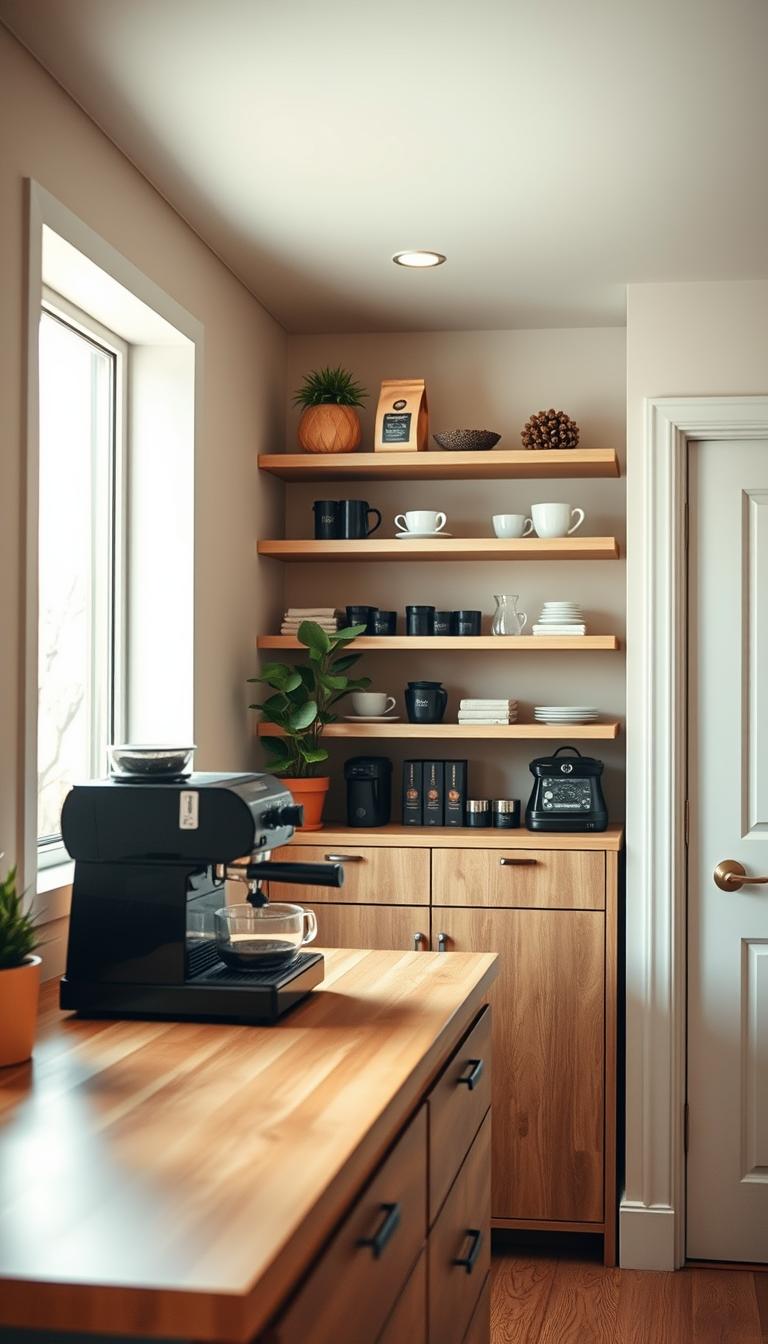
- Small doesn’t mean cramped — convert a corner or pocket niche into a focused nook with just enough countertop to grind, brew, and serve.
- Bar carts and vintage dressers give mobility and storage; drawers hide pods and mugs, and wheels tuck the setup away when guests arrive.
- For comfort, aim for 36–42 inches high; 36–38 inches feels best for tamping, and 33–34 inches for wheelchair users.
- Keep at least 16 inches depth; 24 inches breadth makes prep safer. Use slim rails and a shallow shelf so cabinets stay clear.
Upgrade a thrifted dresser by lining drawers with washable mats, adding a safe power strip at the back, and installing heat-resistant tiles on the countertop.
Pro tip: store bulk beans elsewhere and refill small jars weekly. A tidy kit turns a tiny station into a ritual that feels intentional, not squeezed.
Hidden in Plain Sight: Incognito Bars with Pocket or Lift-Up Doors
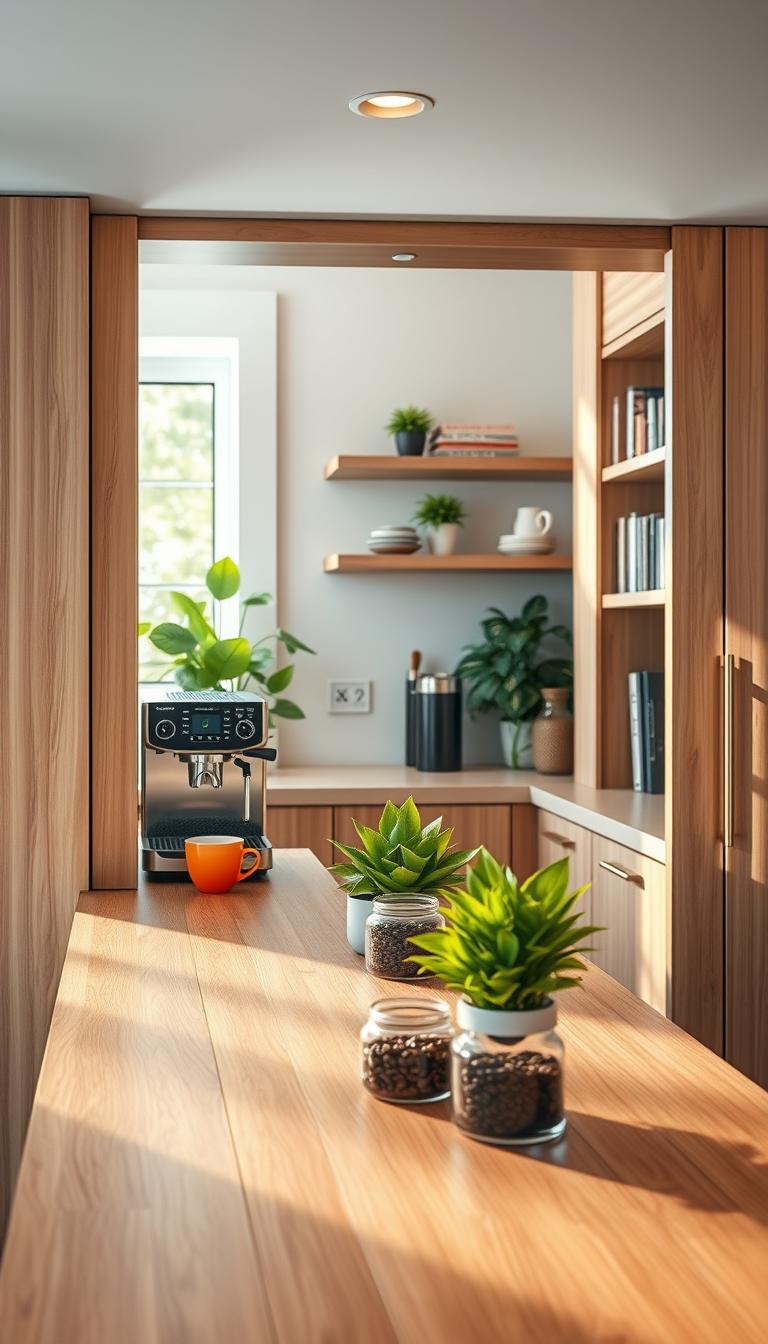
What if your morning setup vanished with a single fold of cabinetry? I design incognito zones so the ritual stays intact while the counter looks pristine. Pocket or lift-up doors hide the kit but leave it ready—plugs, outlets, and clear cord paths mean you close the doors without fuss.
Keep function inside the cabinet. Add heavy-duty pull-outs at counter height for the machine and shallow upper shelves for mugs and syrups. Custom inserts stop rattling and give each mug a home.
A wipeable mini backsplash inside the compartment protects the wood. I like a small quartz offcut behind the machine. Vent holes, magnetic puck lights, and a slide-out tray beneath the appliance make the space safe and usable.
Design details that matter
- Pocket or lift doors let the coffee zone disappear—everything stays plugged in and ready.
- Custom pull-outs reduce wrist strain and provide stable workspace for tamping or stirring.
- Plan GFCI outlets, discreet vents, and warm white oak interiors to pair with stainless appliances.
Open Shelving That Looks Good and Works Hard
Open shelves let your favorite cups and tools breathe while keeping everything easy to reach. I treat shelving like a working display—useful items first, pretty things second.
Keep the lowest shelf for the mugs you grab every morning. Store beans in airtight jars at eye level. Add a small plant or an art print for warmth. A countertop station below feels timeless and affordable.
Hide bulk in baskets. Decorative baskets in lower cubbies hide filters and napkins and add texture that softens a kitchen. Shelf risers double capacity for small cups without crowding the surface.
“Treat shelves like a shop window that also works—curate, then keep it useful.”
- Mount a slim rail under a narrow shelf to hang handles and free counter space.
- Label jars discreetly; keep scoops in a lidded container and the kettle or scale on the counter.
- If you rent, use removable hooks and picture ledges for flexible storage at home.
Do this and your coffee bar will look curated and serve your daily cup in seconds. The result is a calm, functional look that makes morning routines easier.
Backlit Shelves and Mood Lighting for a Softer Start to the Day
A few thoughtful fixtures turn a corner of the kitchen into a calm, ritual-ready scene.
I love backlit shelves because they make the small coffee bar feel intentional without bright overhead glare. The glow draws focus to mugs and jars and makes the whole look feel curated.
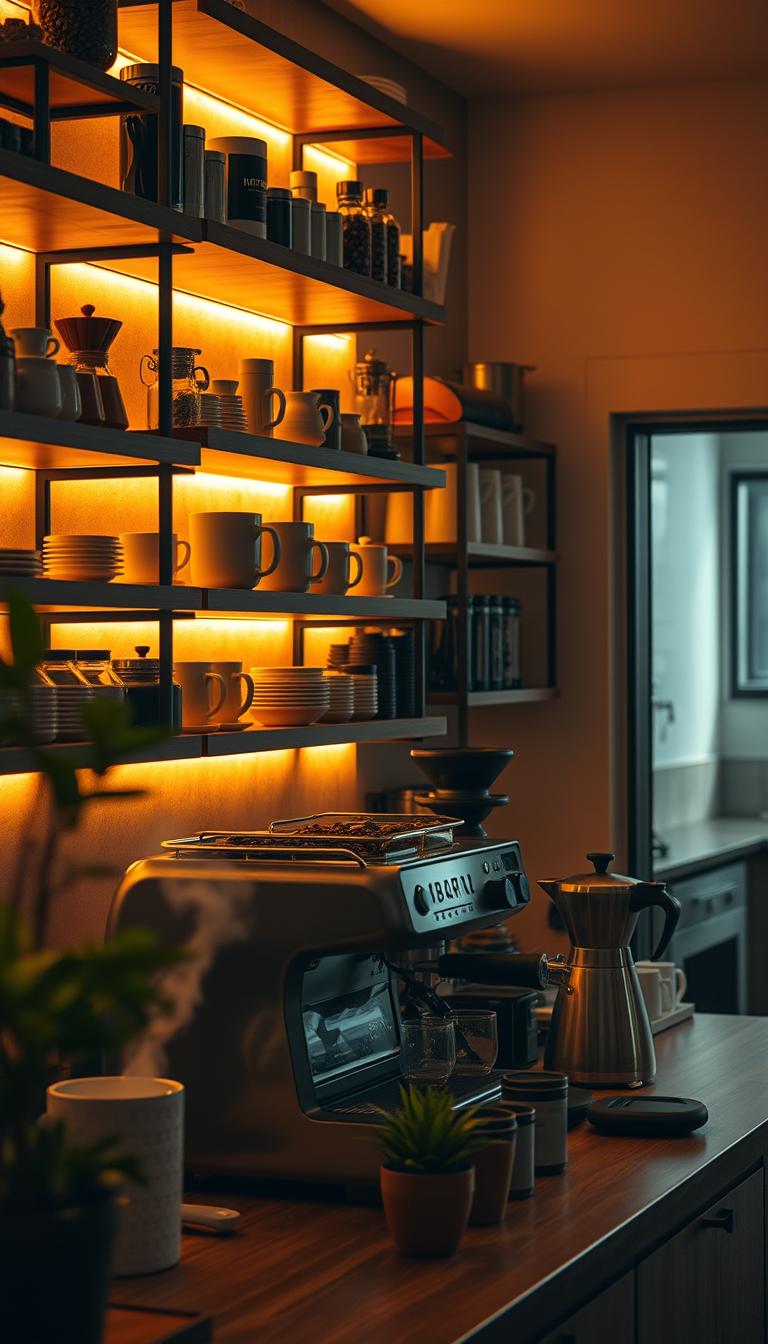
Practical choices matter: LED strips under shelves reduce eye strain and highlight veins in a marble backsplash. I use a one-touch dimmer preset so morning light stays warm and low. That gentle lighting calms you while you make coffee.
- Use warm 2700–3000K LEDs to flatter materials and soften the space.
- A single pendant or sconce can brighten the bar while the rest of the kitchen stays sleepy.
- Backlighting also helps spot spills, so cleanup is faster and the station stays fresh.
If your bar doubles as an evening nook, shifting light levels changes the mood instantly. It’s a small design move with an outsized daily payoff.
Backsplashes That Set the Tone: Zellige, Marble, and Subway Tile
A backsplash does more than protect — it sets the mood for every pour and pause at your counter. I pick materials that feel lived-in and calm, so the small coffee bar reads as intentional, not cluttered.
Zellige tiles bring hand-hewn warmth and a soft shimmer. Pair them with quartz counters, white oak, and brass hardware for a quiet, layered look that doesn’t shout.
Veined marble makes a compact bar feel theatrical. It asks for gentle maintenance — a quick wipe after milk or steam — but the payoff is a luxurious focal point that celebrates ritual.
Classic white subway tile is the workhorse. It’s budget-friendly, easy to wipe, and ideal where splashes happen. For renters, peel-and-stick subway tiles give a temporary, wipeable solution.
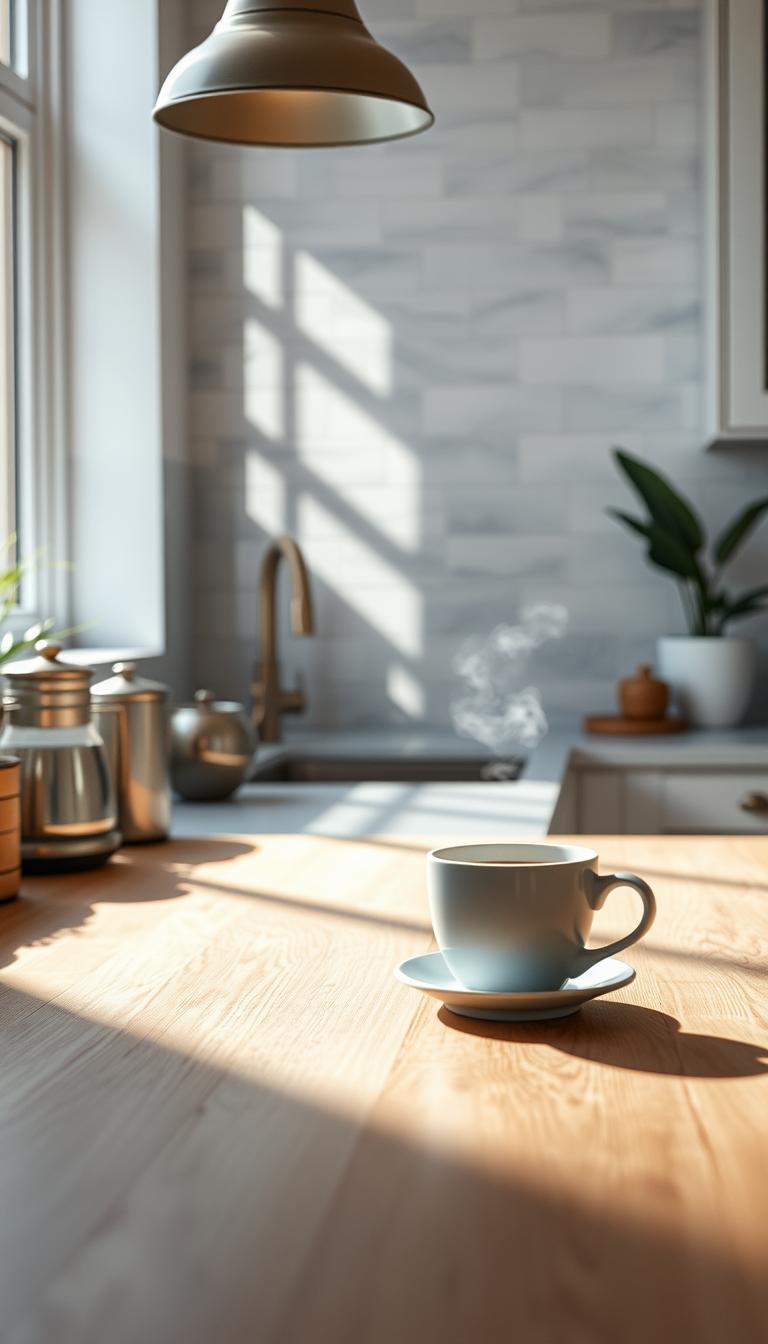
- Zellige: artisan texture and warmth—great for a grounded, artisan look.
- Marble: dramatic veining—best if you accept light upkeep.
- Subway tile: practical, clean, and easy to maintain in a busy kitchen space.
- Choose glazed tiles or sealed stone if syrups and sauces are common near the machine.
- Keep a short backsplash inside hidden cabinets so steam won’t stain interiors.
I often match grout to tile for a calm finish. Or, pick contrast grout if you want a graphic edge while the rest of the kitchen stays simple. Your backsplash is the stage—choose the tone that makes you breathe deeper when you walk in.
Countertops and Materials: Quartz, Stone, and Natural Wood
Choosing the right countertop changes how a small station feels and performs each morning.
I favor quartz slabs paired with warm wood fronts and brass pulls. That combo brings durability and a quiet, boutique look to a tiny coffee bar without fuss.
Practical choices matter. Quartz resists stains and scrapes, so it survives espresso shots and the occasional mocha mishap. A richly veined stone slab—marble or quartzite—adds character and beauty when used as a focal element.
I use end-grain or oiled wood accents for warmth, but not under the machine. Keep the main countertop hard-wearing and place a sacrificial stone or stainless tray beneath hot, damp appliances.
Elements that balance resilience and feel
- Edge profiles: simple eased or microbevel edges are easier to wipe than ornate ones.
- Finish: low-sheen surfaces hide spots and reduce visual noise in the kitchen.
- Hardware: brass or matte black keeps the look calm and refined.
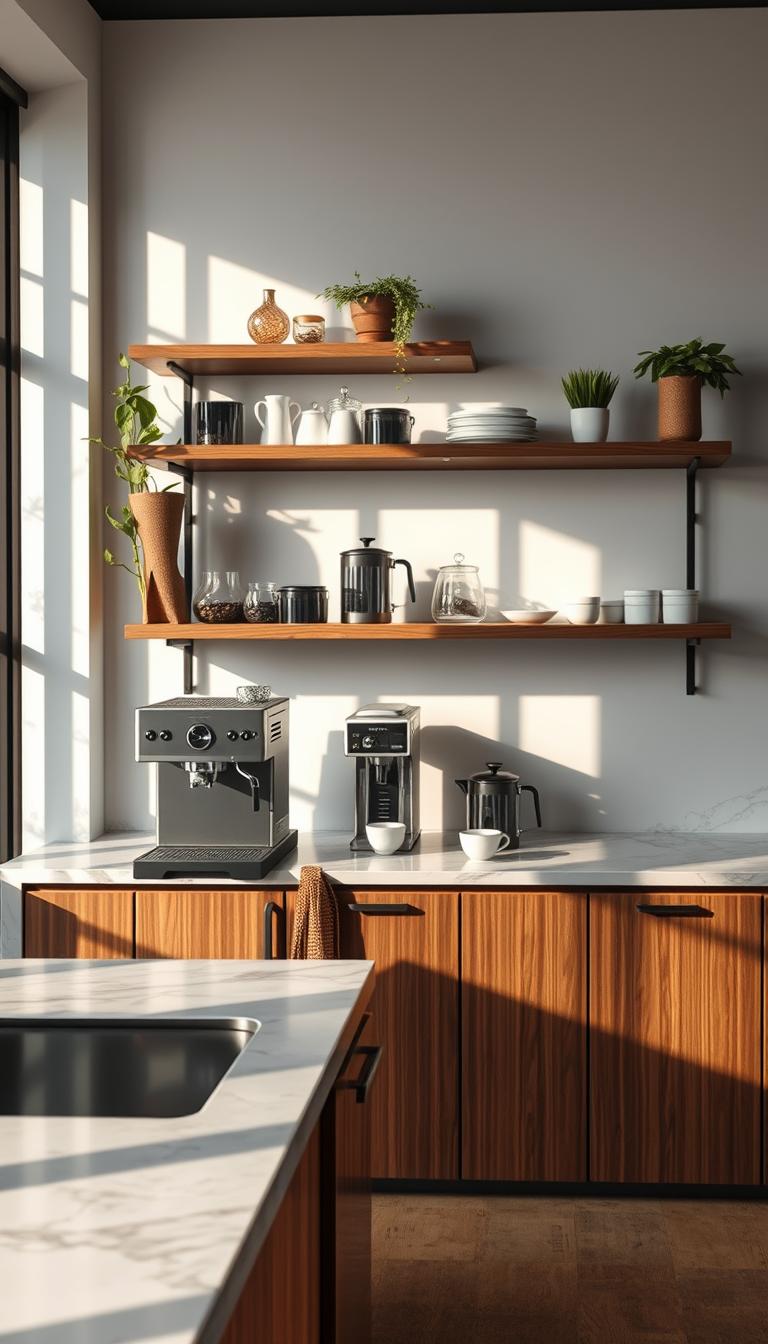
- Shelving: wood open shelves with a stone backsplash layer warmth and resilience.
For a small bar, let one standout material shine and keep the rest restrained. If it feels good under your hand at 6 a.m., you chose well.
| Material | Pros | Cons | Best Use |
|---|---|---|---|
| Quartz | Stain-resistant, low maintenance | Can look uniform if overused | Main countertop for daily coffee prep |
| Marble / Quartzite | Distinctive veining, high beauty | Needs gentle care for stains | Feature slab or backsplash |
| Oiled / End-grain Wood | Adds warmth and tactile comfort | Sensitive to moisture; needs maintenance | Accents, shelves, and trim |
| Stainless / Sacrificial Slab | Heat and moisture safe | Can feel industrial | Under machines to protect main countertop |
Placement Matters: Kitchen, Pantry, Hallway, or Bedroom?
Where you put your station shapes how smoothly your morning unfolds. I plan for clear paths first—then for style. The goal is to keep the ritual convenient without interrupting meal prep.
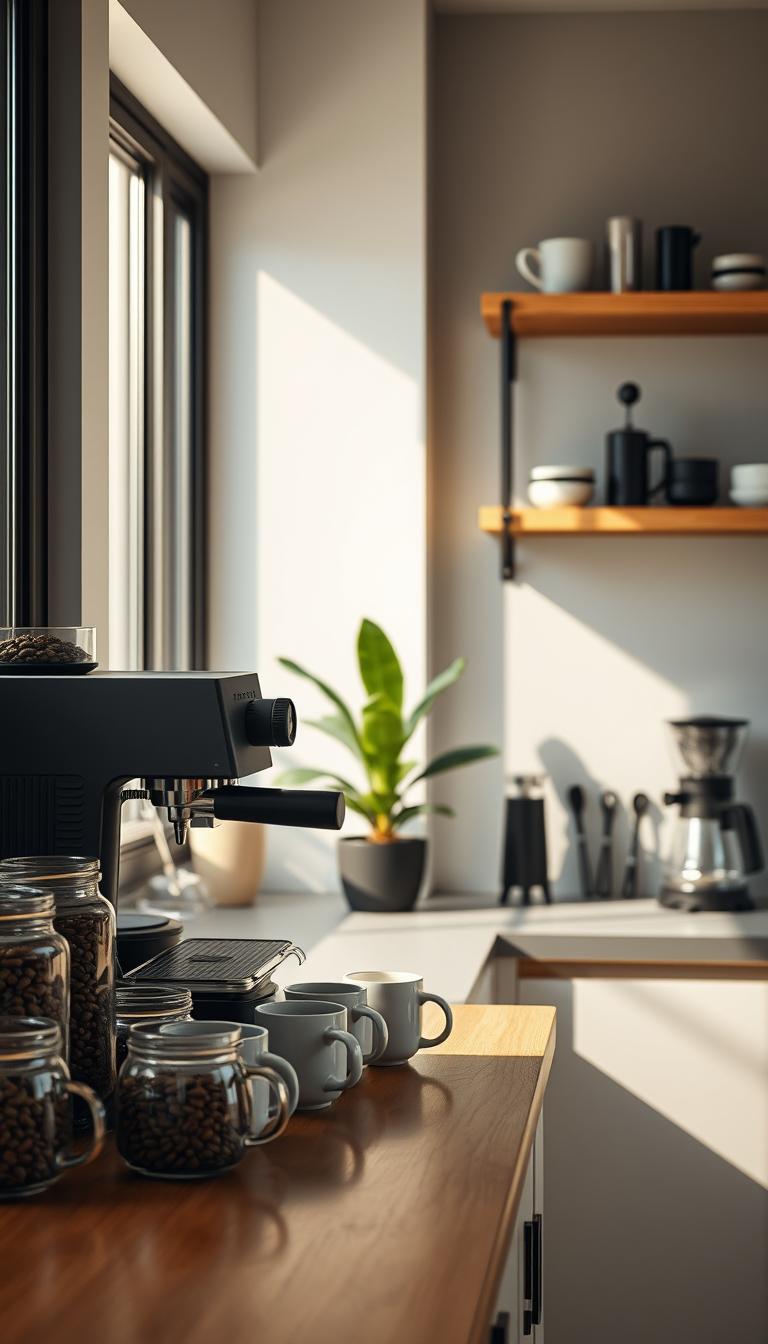
Flow planning means keeping the setup away from the kitchen’s primary cook triangle so coffee traffic doesn’t tangle with cooking. That small move reduces collisions and keeps both zones efficient.
Practical spots that work
Pantry placement hides mess behind a door and keeps supplies organized. It makes refills and cleanup quick and private.
Hallway stations shine in guest zones. Add floating brass shelves and refrigerator drawers for creamers so visitors don’t trek to the main kitchen at dawn.
Bedroom setups are a quiet luxury. A built-in automatic maker, a compact sink, a panel-ready drawer dishwasher, and a refrigerator drawer create a self-sufficient place for slow mornings or limited mobility.
Flow questions I always map
- Is there a clear route to the table or desk?
- Can two people pass without bumping elbows?
- How loud will the machine be—will it wake others?
“Place the station where it serves the day, not where it creates one.”
Practical tip: Keep trash and compost nearby for spent grounds. A small living room cart can also solve a tiny kitchen—close enough to use, far enough to keep the cook zone clear.
Color Strategy: Calm Neutrals, Sage Greens, and Bold Statements
Color can quiet a space or make it sing—pick tones that support your morning rhythm.
Soft neutrals for serenity; bold hues for personality
I lean toward warm whites and greige for small stations. Soft neutrals quiet the mind at dawn and let crema and ceramics pop.
Sage and light green bring a restorative, nature-adjacent feeling. Those hues help the coffee bar feel like a small pause in a busy kitchen.
If you want personality, paint only the niche in a deep, moody wall color. The dramatic touch keeps the rest of the space calm while focusing the eye where you want it.
Coordinating machines, kettles, and cabinetry finishes
Match an eggshell or white machine to light cabinets for a cohesive look. Repeating metal finishes—brass or matte black—across pulls and rails ties everything together with a subtle touch.
A small wallpaper panel behind shelves makes a bold backdrop that’s easy to swap. Pair the wallpaper undertone with your backsplash so the area reads as one thoughtful design, not a collection of bits.
- Tip: Use color to code zones—darker niche, lighter surrounding cabinetry—to guide where the action happens.
- Pull a hue from adjacent rooms if your layout is open so the bar feels integrated.
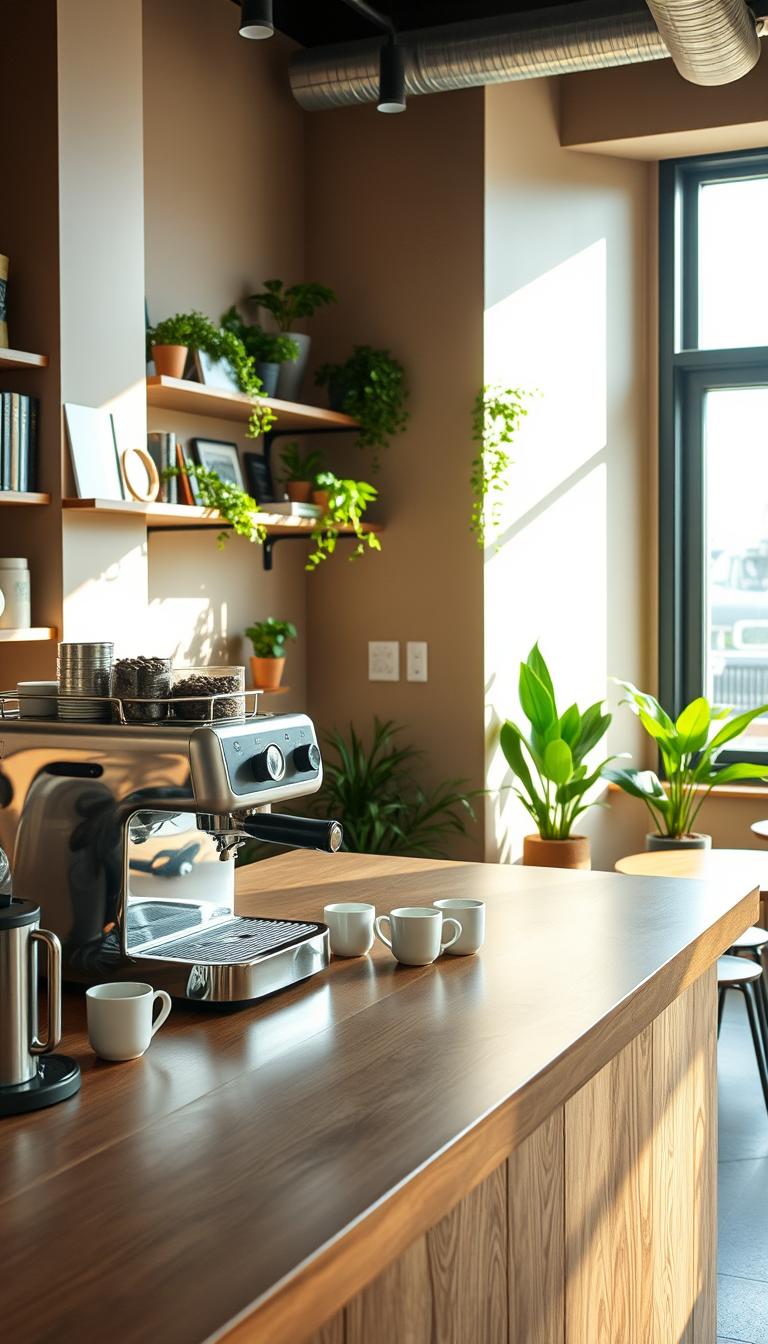
Style Your Routine: From Modern Minimal to Rustic Warmth
Your morning ritual deserves a look that supports how you want to feel. I choose finishes that help the cup feel intentional—quiet, bright, or a little soulful—so the routine reads like a small ceremony.
Dark, moody vs. white oak
Dark, moody palettes—matte black, walnut, and deep stone—create a tiny retreat. They invite a reflective espresso moment and work surprisingly well in compact nooks.
White oak brings airy warmth without glare. It reads as calm beauty in a kitchen and keeps the niche feeling open and timeless.
Midcentury and vintage charm
Midcentury flair comes from teak or walnut tones, clean lines, and a retro espresso machine that doubles as decor. Geometric mugs or small art pieces finish the look.
Repurpose a vintage cabinet for instant soul—add interior lighting and a stone top and you have a custom-ready coffee bar with character.
- Keep the visible kit minimal: machine, grinder, two mugs—everything else tucked away.
- Rustic warmth: tongue-and-groove backs, aged brass, and textured linens for cozy texture.
- Blend styles: modern pulls on an old dresser or a sleek machine against rustic shelving for layered beauty.
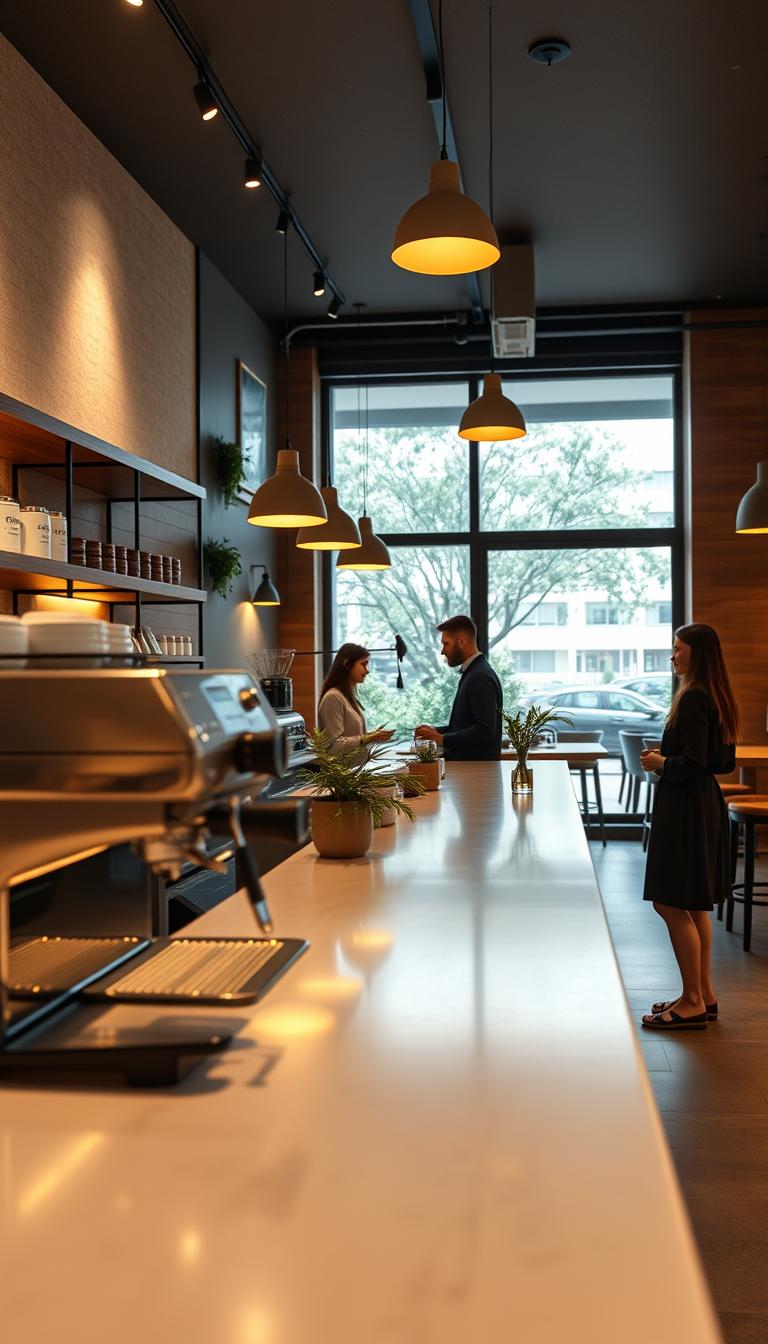
Choose one hero material—wood, stone, or tile—and let it anchor the space. The right style supports your morning rhythm: calming if you need focus, energizing if you want a jumpstart.
For more practical inspiration, see a curated list of ideas in this design guide.
Smart Storage: Cabinetry, Drawers, and Appliance Garages
Think of storage as the choreography for your morning routine. When each element has a place, motion becomes simple and calm.
I design cabinetry so the station tucks away without fuss. Custom drawer inserts and pull-out shelves fit a maker, mugs, and small ovens precisely. A white oak interior plays nicely against stainless appliances and keeps the look warm.
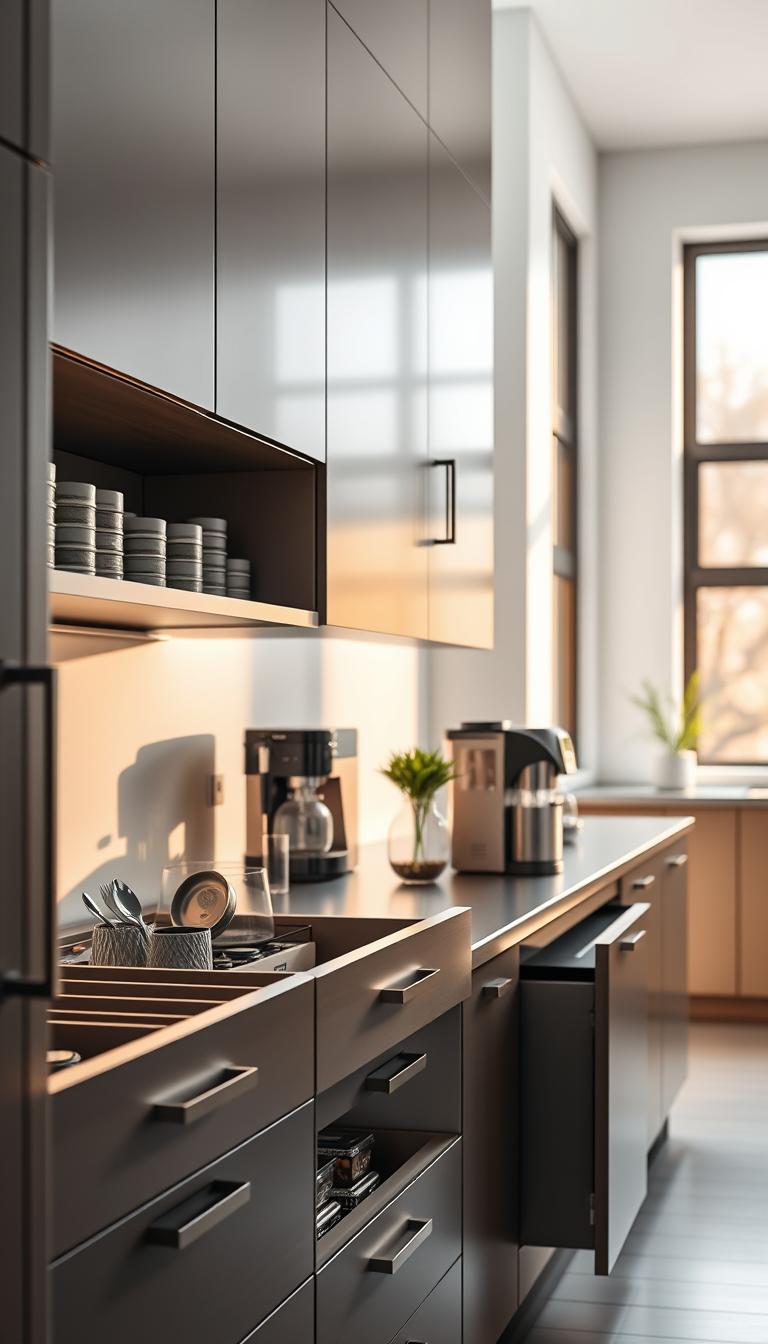
Glass doors, pocket doors, and appliance nooks that streamline mornings
Appliance garages clear the countertop and make open-use-close a single motion. Pocket doors avoid swinging panels—no dodging a hot cup. Glass doors let your favorite mugs show, and they nudge tidy habits.
Undercounter refrigerators and refrigerator drawers for creamers
Refrigerator drawers or an undercounter fridge keep milk and alt-milks at hand. Pull-out inner countertops give you a small tamping and stirring surface without claiming the main counter.
- Custom inserts stop clatter and hold scoops and filters in place.
- Shallow maintenance drawers store cleaning tablets and cloths so upkeep actually happens.
- Label shelves—beans, tea, cocoa—so guests can help themselves.
Smart storage turns a pretty bar into a practical one you’ll reach for every morning.
Coffee Shop Vibes at Home: Letter Boards, Gallery Walls, and Plants
You can craft a lived-in cafe vibe with playful signage and a tidy selection of tools. I like a peg letter board for a cheeky menu. It’s inexpensive and easy to change with the seasons.
Openly display beans, tools, and mugs without visual noise
Curate a tight edit of tampers, timers, and scales. Keep them on a small tray so they read as intentional accessories, not clutter.
Build a mini gallery wall with travel photos or vintage prints. Use matching frames to keep the look calm and cohesive.
- A letter board says “welcome” and invites a smile.
- Show beans in UV jars on open shelves; store bulk in a dark cabinet.
- Use a cup tree or rail to display your favorite mugs while keeping the working shelving clear.
- Add a small plant—an orchid or pothos—for life and color in the room.
If space is tight, limit yourself to two decorative moments—a board and a plant. Hide cables so the design feels tidy and the home vibe stays like your favorite cafe—minus the line.
Dual-Purpose Design: Coffee + Wine (or Tea) for Day-to-Night Living
A dual-use counter invites both sunrise brews and twilight toasts without feeling crowded. I design these zones so the station serves the whole day—calm mornings, sociable evenings.
Pairing a slim wine cooler beside an espresso machine keeps mugs and stemware close and tidy. I like a Gaggenau wine cooler for its quiet, precise climate control; it reads as purposeful next to your maker.
Finish choices tie the look together: mirrored or stone backsplashes and warm metals bridge the daytime ritual and evening service. Keep strong food aromas away so beans and bottles stay pristine.
Wine coolers, tea kettles, and shared shelves that feel cohesive
Place mugs on one side and glasses on the other. Morning tools stay at fingertip height; evening accessories sit slightly higher so the focus shifts as the day turns to night.
- Tuck a temperature-controlled kettle and tea tins beside the machine for a full range of drinks.
- Store bar spoons and strainers in a narrow drawer alongside tampers for coffee cocktails.
- Use flexible lighting—bright task light for morning dosing, warm dim for evenings.
| Feature | Morning Use | Evening Use |
|---|---|---|
| Shelf Layout | Mugs, grinders, filters | Stemware, decanters, cocktail tools |
| Backsplash | Stone or mirrored for cleanliness | Reflective finish enhances mood lighting |
| Cooling | Undercounter fridge for milk | Slim wine cooler for bottles |
| Lighting | Task bright (2700–3000K) | Warm dim for ambience |
“A well-placed dual station saves space and becomes the home’s natural gathering point.”
Mirrored Glam and Metallics: Small Bars That Feel Bigger
Reflective surfaces can turn a tight nook into a statement of light and calm. I’ve used mirrors and silvery mosaics to make compact setups read as intentional and airy.
A mirrored backsplash doubles light and visually widens a narrow coffee bar. It’s an instant trick for making a small space feel twice as wide.
Silvery tiles and metal shelves throw soft glints across mugs and jars. That sparkle adds subtle glamour without shouting. Pair reflections with matte counters so shimmer sits against a calm, tactile surface.
- Keep the palette tight — two metals max — to keep the look cohesive.
- Hide cords meticulously; reflections magnify clutter.
- Choose antiqued mirror or brushed tiles if fingerprints worry you.
- Try a mirrored toe-kick or side panel when a full backsplash isn’t in budget.
“Done right, reflective touches read as quiet luxury — beautiful without shouting.”
I use dimmable lighting to avoid glare and to let the design breathe. The result is a brighter nook that feels larger and more refined in the kitchen’s flow of morning rituals.
Budget to Luxe: DIY Carts, Secondhand Cabinets, and Custom Built-Ins
You can stretch a small budget into a corner that feels custom with a few smart swaps.
I often start clients with a sturdy cart or a thrifted cabinet. A cart holds a maker on a tray, a mug rack, and a neat peel-and-stick tile backsplash for easy cleanup.
Affordable upgrades bring big returns. Add shelves or racks, swap hardware, line drawers, and wallpaper the back for instant personality.
When to go custom
Invest in custom cabinetry and stone when your routine is fixed and you need precise storage. Appliance garages, tailored inserts, and a durable countertop—quartz or sealed stone—justify the cost if the space gets daily use.
- Start small: cart, mug rack, peel-and-stick tile backsplash.
- Upcycle a dresser: new hardware, drawer liners, and a wallpapered back make a charming bar.
- Layer upgrades: lighting, then shelves, then backsplash, then counters.
- Edit storage: dividers and bins stop clutter and make the station reliable.
My rule: spend where daily friction ends. That tells you when to DIY and when to hire a cabinet maker.
Conclusion
, Small choices shape soft mornings. Place your coffee bar where traffic won’t cross the main cook zones so flow feels calm and safe. A tidy spot in the pantry, hallway, or a tucked niche keeps the house moving and the ritual intact.
Aim for 36–42 inches high (33–34 if wheelchair access is needed) and at least 16 inches deep for comfortable prep. These dimensions make tamping and pouring easier and protect counters from spills.
Use backlit shelves, subway tile, and custom inserts to streamline service. Start with a cart or a thrifted cabinet if you’re on a budget; add a mini fridge drawer for creamers later. Keep materials and colors soothing so the small space supports your day.
In short: design the bar to fit your kitchen and life. Tweak over time, and let the right coffee ritual lift each morning. Here’s to calmer, better routines and practical ideas you’ll enjoy daily.