What if your staggered floors could feel like one calm, intentional home?
I’ve helped clients tame tricky multi-floor layouts so living feels simple and joyful. In this short article I’ll show how circulation, sightlines, and light shape every floor and room.
I start by mapping where people walk and what they see next. Then I layer finishes, coordinated flooring, and ceiling details to create continuity without losing privacy for bedrooms and baths.
Expect practical, budget-smart ideas you can try over a weekend and pro tips I’ve used in client homes. By the end you’ll know how to treat entries, mid-level landings, kitchens, and living areas so the whole house reads as one easy-to-use space.
Key Takeaways
- Map circulation first: focus on how you move between floors and rooms.
- Use light strategically: borrow brightness across levels with transoms and open rails.
- Continuity matters: matched flooring and trim knit spaces together.
- Balance privacy and openness: keep bedrooms quiet while living areas stay airy.
- Small changes, big impact: half walls, open treads, and simple finishes improve flow fast.
Understanding Split-Level Living Today: What a Split Level Apartment Is—and Isn’t
When short stair runs define a house, circulation and sightlines become design tools more than obstacles. I’ll walk you through the common types so you can tell a sidesplit from a bi-level and know what to expect at the front door.
What the terms mean: a true split-level home staggers floors with short stairs and a mid-entry that sends you up to main living or down to a semi-lower family area. A backsplit or sidesplit changes what you see from the street—garage on one side often shifts the house’s center of gravity.
A quick note from my projects: clients who understand the type ahead of time solve circulation problems faster—usually with visual cues and smart storage.
- “Split apartment” usually means the living room becomes an extra bedroom. You gain a sleeping room but lose shared living space.
- “Split-bedroom” plans place bedrooms on opposite sides, improving separation and privacy between sleeping areas.
- Bi-level (split foyer), stacked splits, split entry, and raised ranch all use short stairs in different patterns—each affects daylight, ceiling height, and how people move through the house.
Rule of thumb: if a listing mentions a split foyer expect a middle landing; if it touts a split-bedroom expect better privacy. Knowing the type helps you predict bottlenecks, dark corners, and where to add light or storage before you pick finishes.
Designing Seamless Flow in a Split Level Apartment
Good flow begins where the door opens: I map likely paths from the entry landing and adjust tight turns with slim furniture or moved shoe storage so people step naturally up or down without hesitation.
Circulation first
I stand at the door and trace movement. Narrow corners get skimmed by narrower benches and by clearing the first tread so the stair run reads safe and intentional.
Layered sightlines
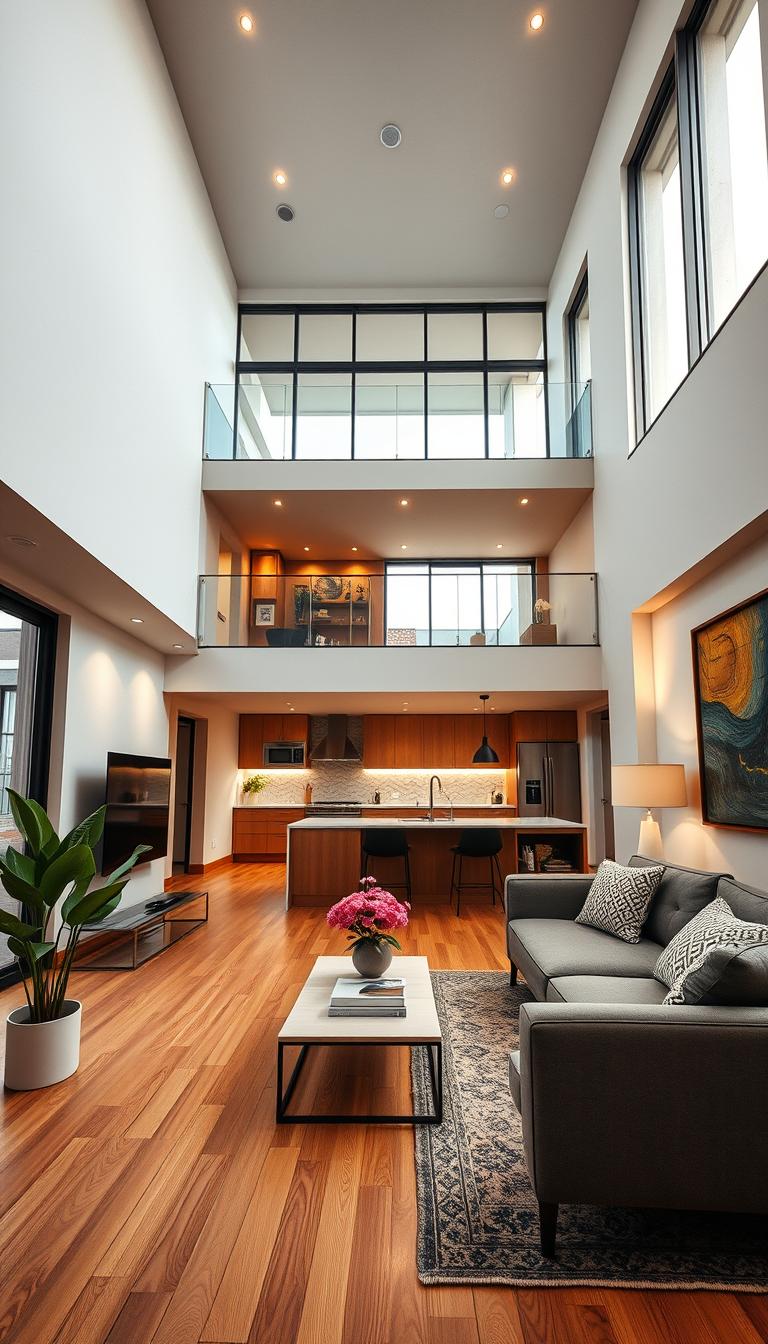
Swap solid railings for open balusters and add half walls or interior windows to the living area to keep visual connection between floors. This keeps rooms feeling linked while protecting acoustics and privacy.

Light as a connector
Use transoms, a skylight over the stair run, and reflective paints to pull daylight from upper windows into lower interior spaces. Lamps and step lights fill gaps where windows are limited.
Unified finishes & smart separation
Run one flooring species and tone across floors and match stair nosings to avoid visual breaks. Keep ceilings and trim consistent so each level reads as part of the same home.
Zone day uses—kitchen, dining, and living—together, and tuck bedrooms and bathrooms into a quiet upstairs cluster. Where two levels split functions, soft rugs and layered lighting protect privacy while maintaining flow.
- Tip: align handrails and door casings from bottom to top to give the eye a steady line.
Room-by-Room Flow Strategies for Living Areas, Kitchens, Bedrooms, and More
Think of each landing as a tiny foyer that sets the mood for the floors above and below. A slim console, mirror, and wall hooks keep the front entry tidy and friendly. Add motion lights at the door and the first tread so people arrive safely when hands are full.

Living and family rooms breathe when seating faces the circulation paths. Float a sofa perpendicular to the stairs so conversation includes both the upper living room and the lower family room. Use an airy railing to keep sightlines open and let light travel between spaces.
Kitchen and dining: align prep zones with the dining path. If the kitchen sits up a half flight, place a landing cart or narrow sideboard near the stair. A round dining table eases traffic in tight areas and keeps people moving.
For bedrooms and bathrooms, cluster doors at the quiet end of the hall. Soft-close hardware, blackout shades, and a runner in the corridor reduce noise and protect sleep in the bedrooms.
Home office nooks work best tucked into mezzanines or stair turns. A low bookcase makes a safe guard and an acoustic pinboard soaks up sound between stories.
Where the garage meets the house, create a practical mudroom: closed cubbies, a washable runner, and a boot tray by the door keep grit off the main floor and simplify daily comings and goings.
“Simple moves—consistent rugs, aligned rails, and a landing cart—make a house feel like one coherent home.”
| Area | Quick fix | Benefit |
|---|---|---|
| Foyer / Door | Slim console, mirror, motion light | Safer arrivals, tidy drop zone |
| Living room / Family room | Float sofa, open railing | Connected sightlines, easier conversation |
| Kitchen / Dining | Landing cart, round table | Smoother prep-to-dining flow |
| Garage / Mudroom | Closed cubbies, durable floor | Less dirt tracked inside |
Want more practical ideas? See these room-by-room tips for quick weekend updates that improve how your home feels and functions.
Conclusion
A house that feels cohesive often comes down to simple choices at the stairs and landings. Start at the entry, then solve the next decision point on each level—clear sightlines, consistent finishes, and smart lighting knit two levels into one calm space.
I’ve seen tiny fixes change how a home functions: a brighter stair, a matched floor, or a lighter railing invites movement and keeps each room working for daily living. Keep shared rooms open and private zones quiet to preserve comfort and rhythm.
If you want a quick read on typical layouts and trade-offs, see this guide to the pros and cons of split-level homes. Save this article as your checklist and revisit room by room when flow needs a refresh.