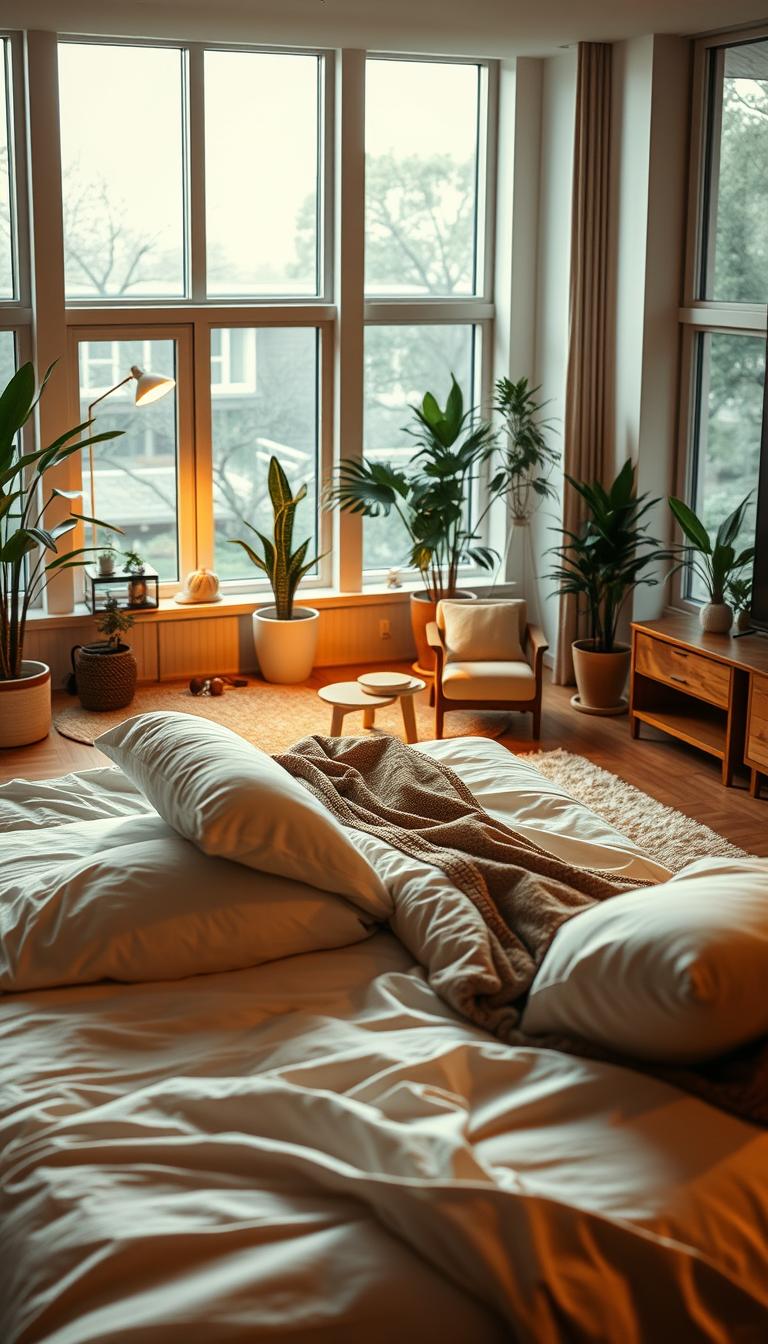
Can one small space truly feel like a restful bedroom and a stylish living area at once? I ask this often when I walk into studio apartments that need calm and function. I’ll show you how to make that combo feel intentional, not improvised.
I lean on smart separators—sheer curtains, open bookcases like IKEA’s Kallax, and foldable screens—to keep light flowing while defining zones. Floor-to-ceiling storage, loft setups, and pull-down beds reclaim floor area so your living space breathes.
Color matters: white neutrals widen, blue/gray calms, and cozy darks cocoon. Add rugs, angled layouts, and mirrored surfaces to guide the eye and make small rooms feel layered and calm.
Key Takeaways
- Clear zoning makes a combined space feel polished and restful.
- Use light-permitting dividers—bookcases, sheer curtains, glass walls.
- Maximize vertical storage: over-bed cabinets and floor-to-ceiling units.
- Choose multifunctional furniture: Murphy beds, sofa beds, lofts.
- Pick a cohesive palette to tie zones together and shape mood.
Plan Your Bed-in-Living-Room Combo: Measure, Zone, and Prioritize
Good planning starts with a tape measure and an honest sketch of how people move through the living room.
Measure clearances for doors, heaters, outlets, and window swings so the bed never blocks a path or daylight. Trace the natural desire lines—those are the paths people actually use—and place furniture to respect them.
Check floor space and ceiling height. A loft opens options; low ceilings favor a sofa bed or Murphy solution. Decide goals up front: privacy, storage, or a cohesive look. That decision shapes whether you choose curtains, a shelving wall, or simple rugs to separate zones.
- Nest the sleeping zone in a niche or L-shaped corner to tuck it out of sight.
- Use one large rug per area to “draw” an invisible wall and anchor furniture groups.
- Plan vertical storage—floor-to-ceiling cabinets and over-bed cupboards—to keep the bedroom corner calm.
“Measure first, move later—small mistakes are costly in one-room homes.”
Label must-have furniture with minimum sizes so your plan stays realistic and livable. Do this and the space will work for day and night.
Smart Ways to Separate Spaces Without Building Walls
Divide a compact area without construction by choosing screens, shelves, and textiles that breathe. I rely on flexible pieces that give privacy at night and fold away by day.
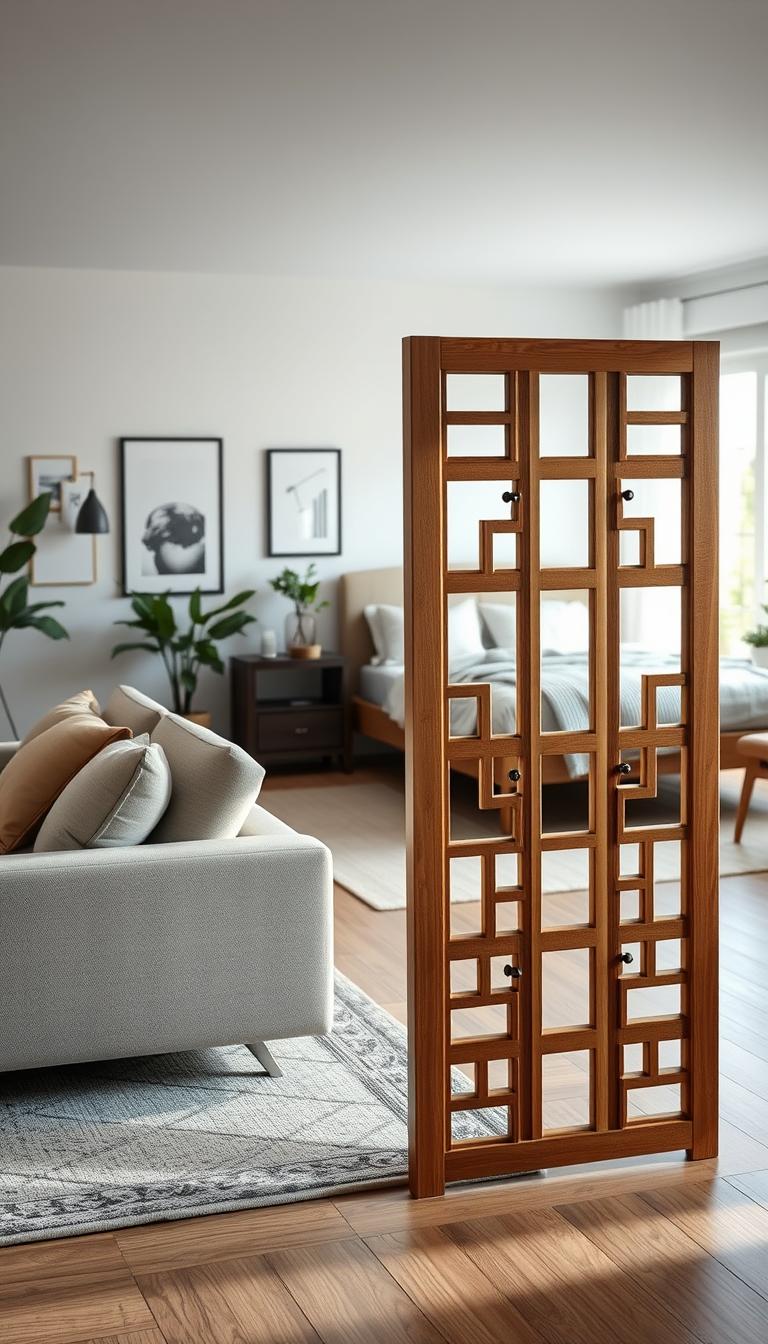
Folding screens for flexible privacy and style
Folding screens are cheap, portable, and full of personality. I often recommend rattan styles like Urban Outfitters’ Ria for a soft, light-permeable look.
Curtains and sheer panels to filter light while dividing the room
Ceiling-mounted curtains act like a dimmer. Choose sheer curtains when windows sit to one side so the sleeping area stays bright by day.
Open bookcases as divider plus storage
IKEA’s Kallax works great as a room divider and storage unit. Use bins on lower shelves and plants or books above to keep the space tidy and airy.
Rugs to anchor seating or sleeping zones
A single large rug defines an area without shrinking sight lines. Aim to have at least two front legs of the sofa or chair rest on the rug.
Glass partitions and half walls to preserve natural light
Steel-and-glass panels or a low half wall keep light moving while giving a clear boundary. Add a curtain to fully close the bedroom when guests arrive.
- I park a screen by the bed at night, fold it away for daytime living.
- Mix a rug plus sheer curtain for a layered, renter-friendly solution.
- Float a headboard as a low divider and tuck a slim console behind it.
| Divider Type | Benefits | Best For |
|---|---|---|
| Folding screen | Affordable, portable, light-filtering | Short-term privacy |
| Open bookcase (Kallax) | Storage + display, lets light pass | Studio apartments |
| Sheer curtains | Softens light, adjustable privacy | Windowed areas |
| Steel-and-glass wall | Bright, durable, can fully close | Permanent boundary with design flair |
“Keep sight lines open—let your dividers frame the space, not fence it.”
Choose the Right Bed Solution for a Multifunctional Living Area
A smart sleep system can flip a tiny space from cluttered to composed in seconds. Choose a solution that matches your routine, ceiling height, and storage needs.
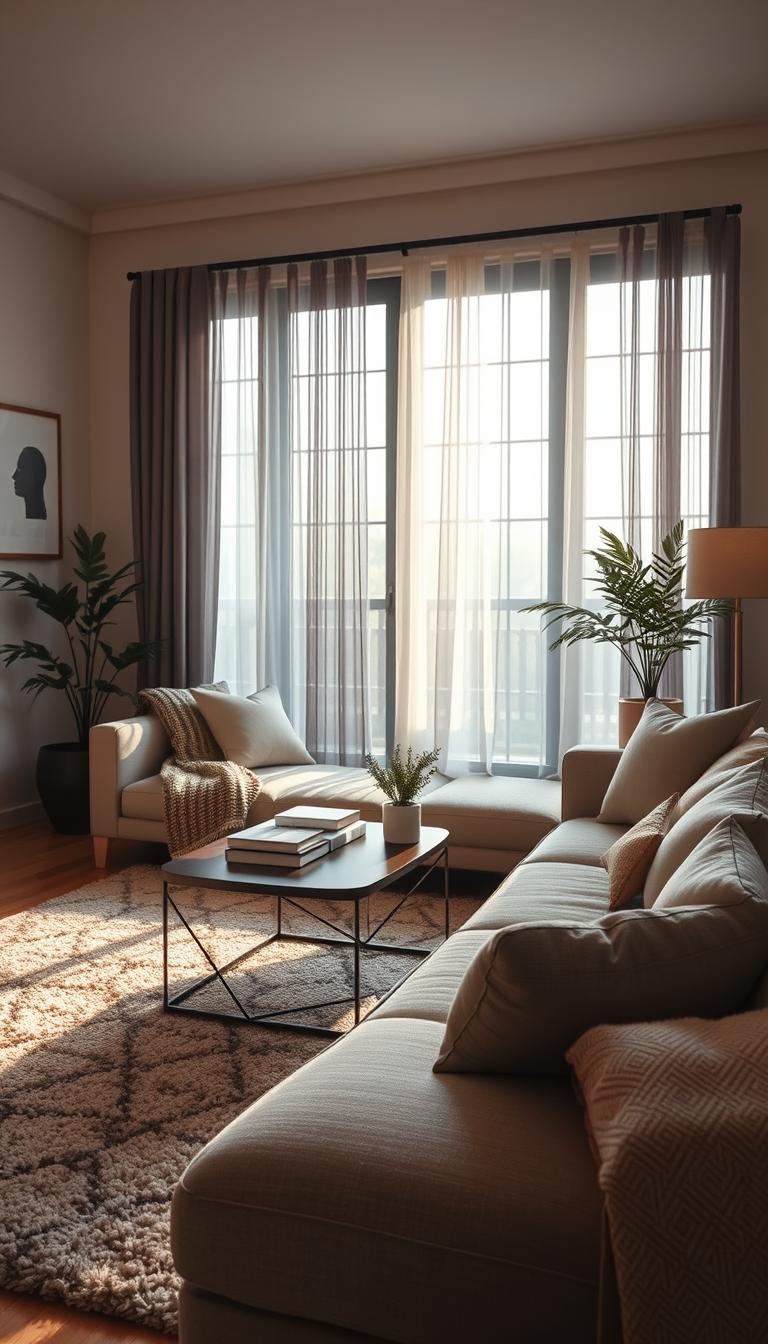
Sofa beds and daybeds: seating that sleeps
Sofa options work when daytime seating is the priority. Layer with throws and pillows so the switch to night feels effortless.
Tip: pick a model with nearby storage—an ottoman or bench hides linens and makes setup a two-minute task.
Murphy units: reclaim your floor
For very tight rooms, a wall-mounted Murphy frees the whole footprint by day. Look for versions with built-in shelves or a desk to condense functions into one tidy wall.
Loft solutions: elevate the sleeping zone
If you have height, a loft creates a clear living area below. Scandinavian-style floating lofts feel light and keep sight lines open.
- Ikea-style modular systems hide bedding and add practical storage.
- Use low-profile furniture beneath a loft to preserve airflow and scale.
- Add a slim ledge as a headboard to save floor space versus deep nightstands.
“A compact combo works when every piece earns its keep.”
Layout Ideas That Work in Real Rooms and Studio Apartments
A clear layout turns a tight studio into a calm, usable home — it’s mostly about paths and purpose. I sketch fast plans to see how furniture will feel at eye level and how people move through the space.
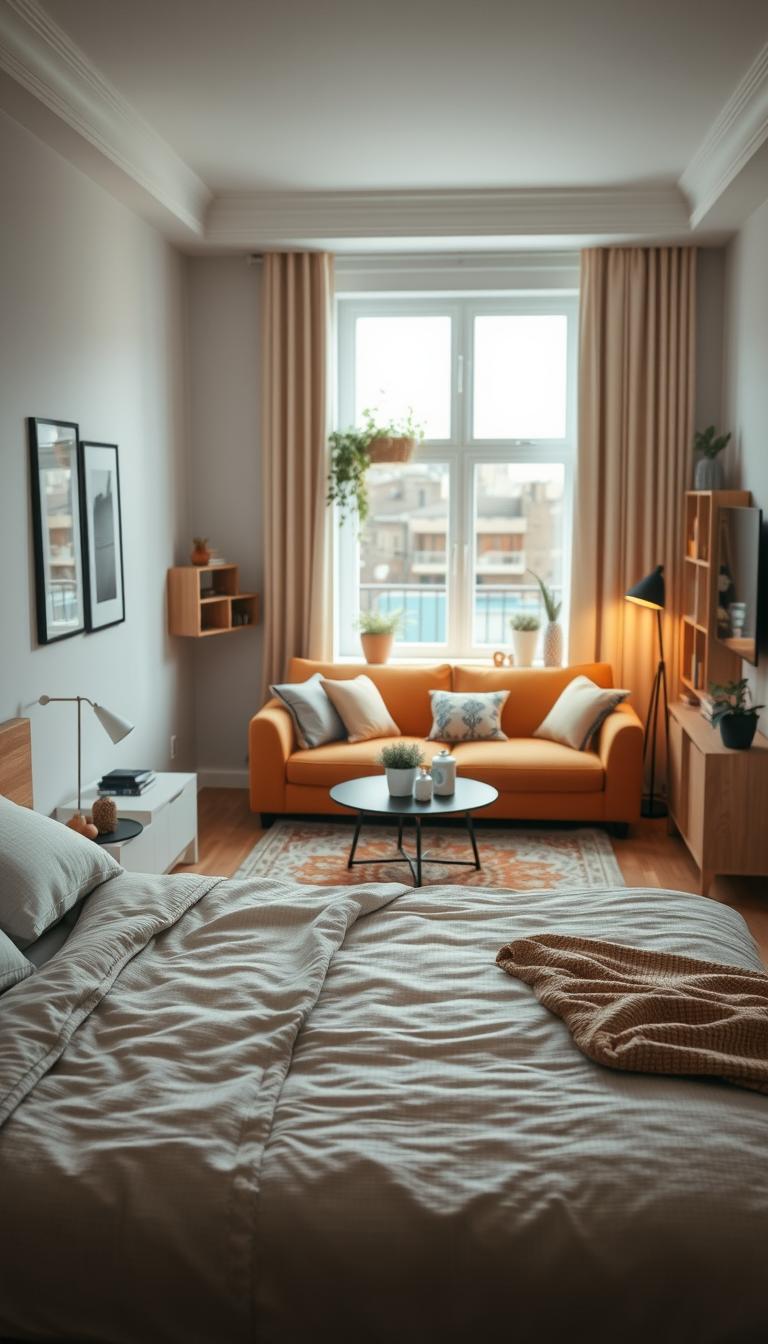
Side-by-side and opposite placements
Side-by-side zones suit long, narrow spaces. Place a sofa and bed along long walls and keep a central walkway. It feels balanced and generous.
Opposite walls add drama. Facing a couch across from the bed gives clear separation and a tidy visual rhythm.
Seating pockets and angled plans
At the foot of the bed, carve a small seating area with two accent chairs and a compact coffee table. It creates a social spot that doesn’t compete with sleep.
Try a slight angle for the sofa to break the hallway feeling. Angles and a raised platform make zones clear without walls.
- Use rugs to anchor a seating area or the sleeping zone.
- Keep a 30–36″ clear path to kitchen or bath for safe flow.
- Test layouts with painter’s tape before heavy lifting.
“Painter’s tape saves sore backs and wrong turns.”
Storage That Keeps Your Living Room Bedroom Combo Clutter-Free
When floor space is tight, think up—tall cabinets and overhead modules save the day.
Floor-to-ceiling cabinets read calmer than a patchwork of boxes. I favor one continuous storage wall because it looks tidy and hides chaos. Overhead modules above the sleeping zone corral seasonal linens and keep the area visually quiet.
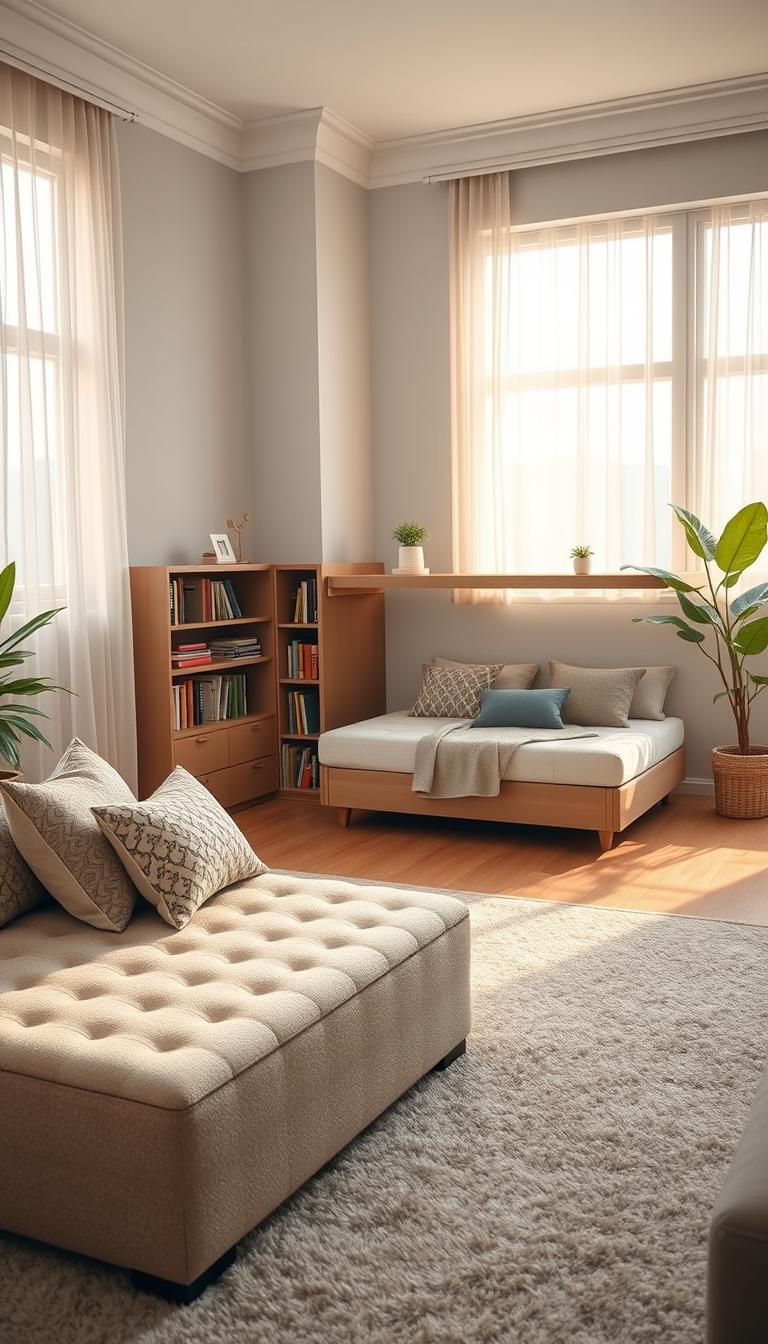
Under-bed drawers, coffee tables, and ottomans
Roll-out drawers under the mattress are gold for bulky items like duvets. A wheeled coffee table with compartments keeps remotes and chargers out of sight and slides away for guests.
Storage ottomans do double duty: extra seating, a nightstand, and a stash point. Park one at the foot to anchor the sleeping zone without adding visual weight.
- Use above-door frames and high shelves for seldom-used items in an apartment.
- Place frequently used gear at arm’s reach; keep deep storage higher up to preserve the feel of the area.
- Match finishes and pulls across units so the furniture feels unified, not pieced together.
“Label bins and baskets—future you will thank present you when it’s late and you’re ready for bed.”
For layout ideas and combo inspiration, see a curated gallery of living room bedroom solutions here. Small, smart storage choices make the whole space feel larger and calmer.
Light, Color, and Materials: Make a Small Living Space Feel Bigger
When daylight is your ally, even compact layouts read as calm and generous. I use a few simple moves to lift the eye and tie zones together so the area feels intentional and restful.
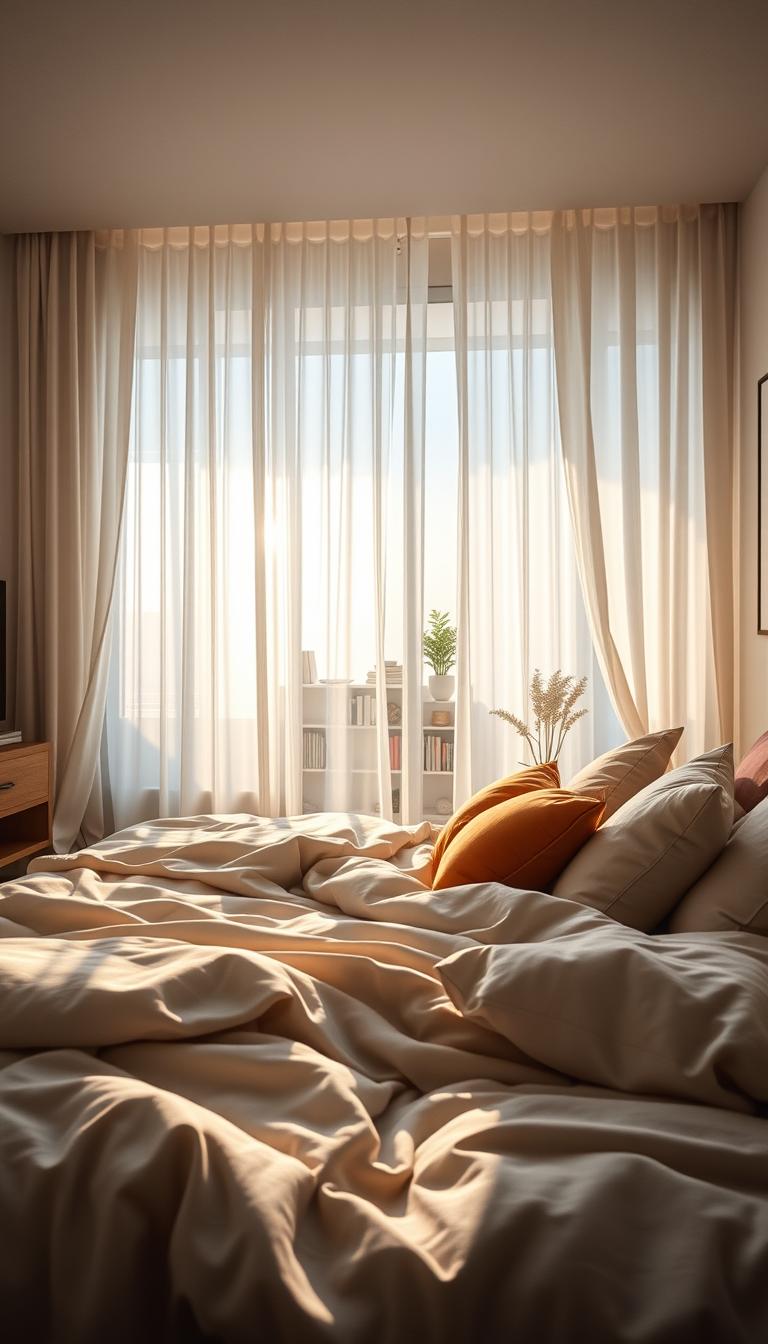
Maximize windows and use floor-to-ceiling curtains
Keep window areas clear. Slim shades or floor-to-ceiling curtains lift the eye and frame the outdoors. Sheer curtains keep light where a window sits to one side and still give privacy at night.
Color palettes: white and neutrals, blue and gray, or cozy darks
Go light and layered for an airy look. White and warm neutrals open a room fast.
Choose blue and gray when you want calm—these colors support sleep and a relaxed living style.
If you love moody tones, paint just the bedroom nook a dark color. That cue signals “night mode” without shrinking the whole area.
Unify with repeated tones and textures across zones
Repeat materials—linen, rattan, and warm wood—so every vignette reads as one home. Mirrors opposite a window bounce light deep into the space and expand the view.
I group lighting in layers: warm bedside lamps, a dimmable overhead for the seating area, and an accent sconce for reading. Keep furniture legs visible where you can; air under pieces makes the area feel bigger.
“A few well-chosen finishes make the whole place feel like one thoughtful design.”
Bed in Living Room: Ideas to Separate Spaces in a Studio
A compact studio asks for clever edges—soft dividers that make each corner feel intentional and private.
Start with light-permeable separators: a Kallax-style bookcase, sheer curtain, or folding screen tucks the sleeping area away while still letting daylight move through the space.
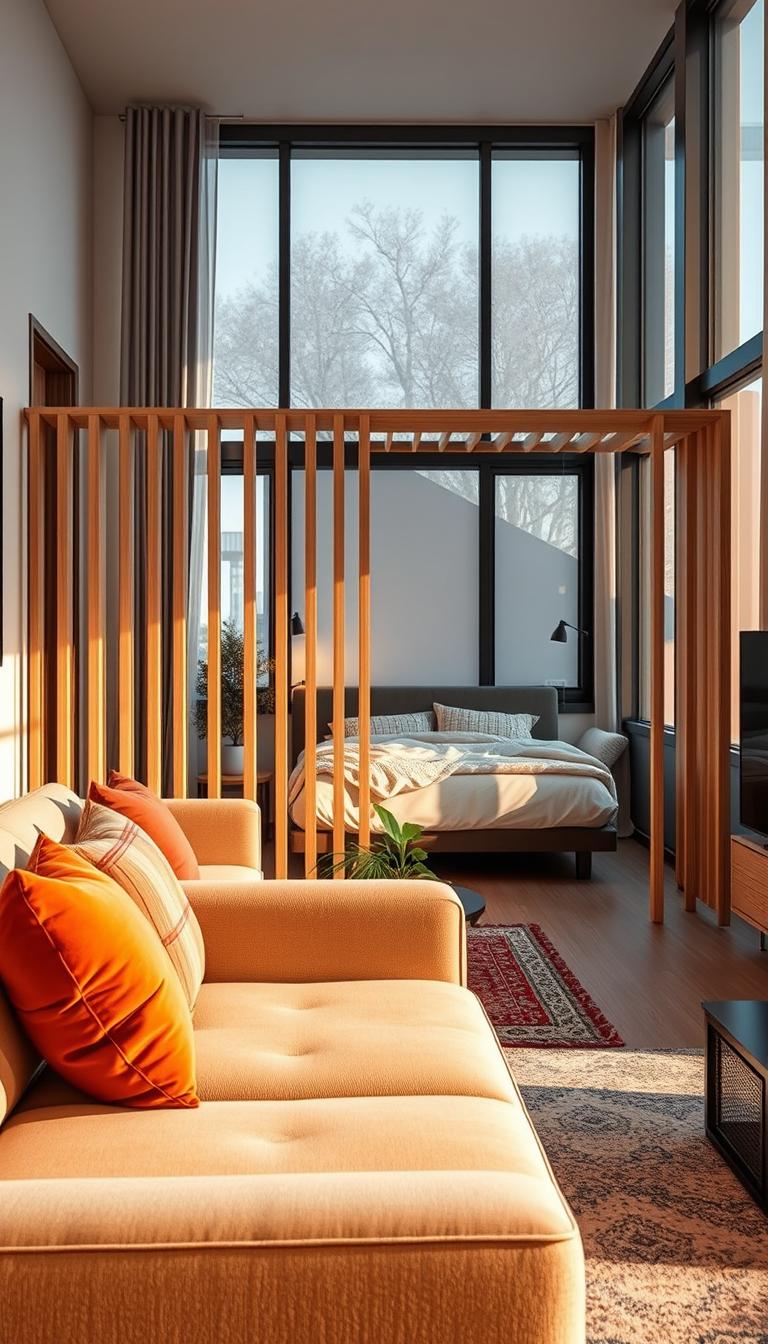
Try a steel-and-glass wall if you want a lasting split. Add a curtain on a ceiling track to fully close the bedroom when needed. For renters, peel-and-stick wallpaper or a painted accent wall behind the bed creates a clear visual zone without construction.
- Place the bed in a niche or create one with a curtain track—open by day, private at night.
- Consider a loft or loft bed to lift sleeping quarters and give a true living area below for a sofa and table.
- Keep circulation clear—no tight paths between couch and key doors.
“One well-chosen divider beats a clutter of tall pieces; match wood tones across sides so the studio reads as one calm home.”
Budget-Friendly and DIY Ways to Divide and Style
A few strategic DIY moves can carve out privacy and add personality to a tight floor plan. I love solutions that are quick to try and easy to undo when you move.
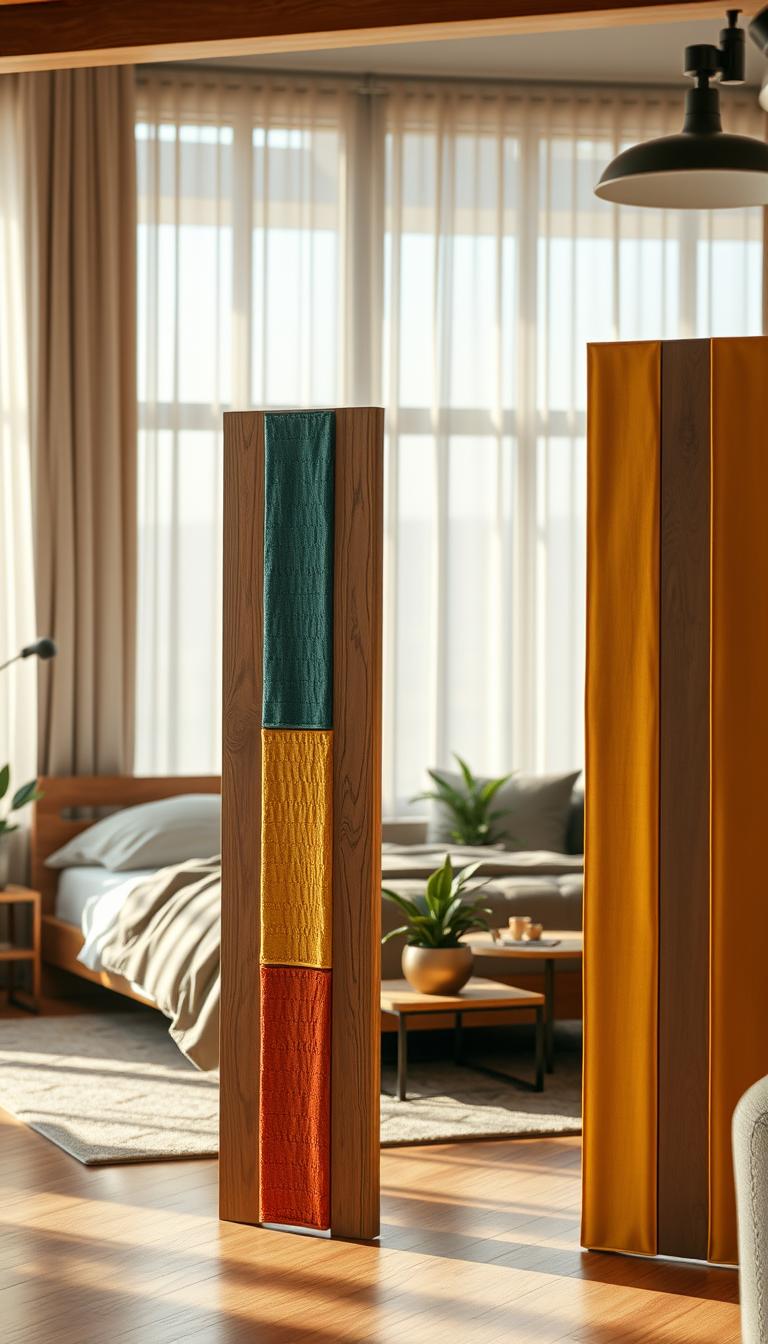
Sliding doors and barn-door tracks as renter-friendly upgrades
Barn-door tracks give near-wall privacy without building a full wall. I’ve installed a slim slab on clients’ walls to close off the sleeping area by day or night.
Hack a sliding panel with off-the-shelf hardware and keep the width generous so it fully covers the corner.
Peel-and-stick wallpaper or paint to visually zone areas
Peel-and-stick wallpaper behind the bed or sofa makes an instant zone—no paste, no panic at move-out.
Paint a single wall or use a patterned strip to signal a bedroom or seating area. Add a budget bookcase as a room divider for extra storage and display.
- Ceiling-mount a curtain track for linen or velvet panels.
- Put casters on a coffee table to roll it aside at night.
- Reuse an old door as a screen to stretch your budget.
“Choose one DIY per wall; restraint keeps a small project looking designer, not dorm-room.”
Conclusion
Think of your final layout as a daily ritual: arrange, test, and tweak until the space works for how you live today.
I recommend starting with one clear decision—privacy, storage, or social life—and let that guide your divider and furniture choices. Lean on multifunctional options like a sofa, Murphy, or loft bed to reclaim floor space without sacrificing comfort.
Keep storage vertical and finishes consistent. Use floor-to-ceiling curtains, mirrors, and a calm palette to shape light and mood. For renters, try sliding tracks or peel-and-stick accents first.
Measure, prioritize, and live with the plan for a few days. Your routines will show the last small moves that make the combo feel like a true home, not a compromise.