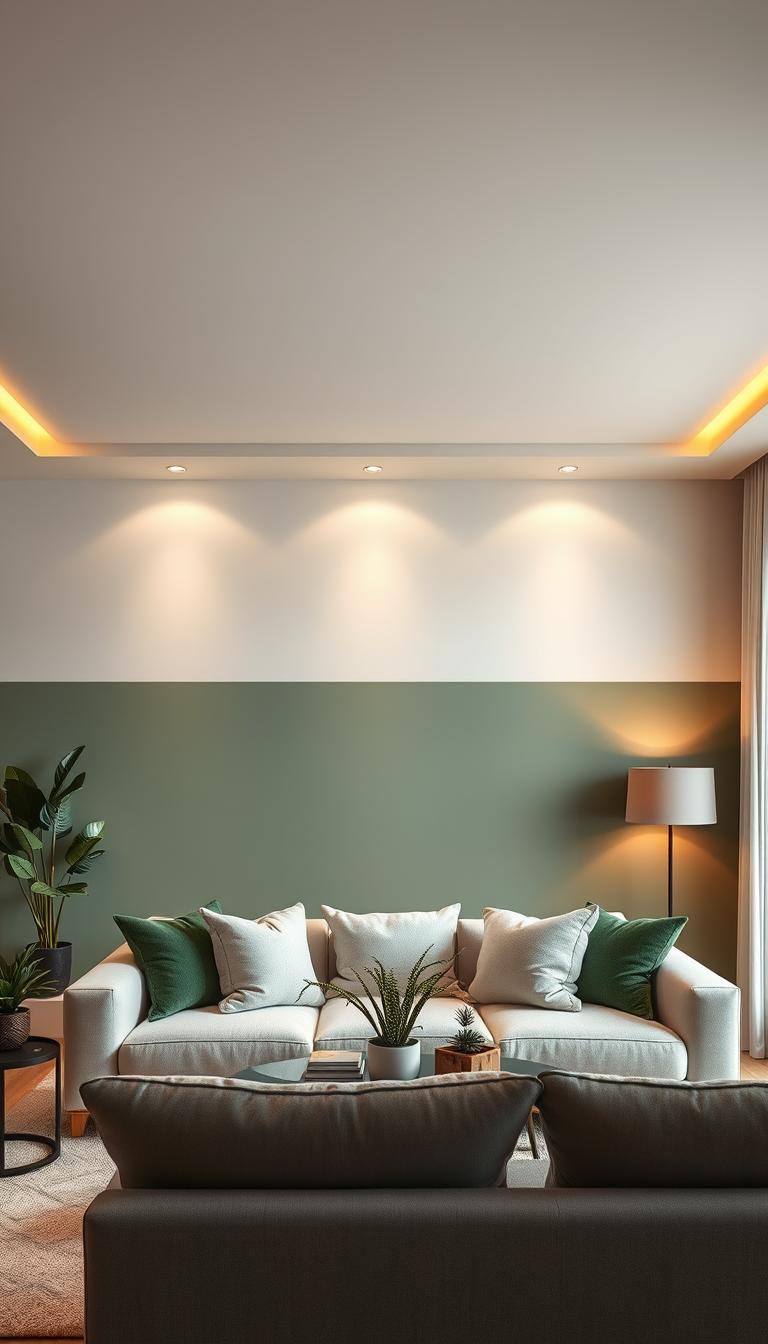
Want a simple trick that adds instant architecture to any room? I ask that question because a clean split of color can change how you see a space—making ceilings feel taller or a nook feel cozy with almost no fuss.
I’ve watched the humble two-tone wall go from a may-be to a must-try in clients’ homes. With just two swaths of paint and a crisp line, you get instant contrast and a more intentional look.
My approach blends color psychology and practical tips. Place the lighter shade on top to lift a ceiling or pick a darker lower half to hide radiators and wear. Use doors, mantels, or picture molding as anchors so the result feels bespoke, not DIY.
By the end of this guide, you’ll have clear, actionable tips and ideas to map a two-tone wall in your home that fits your style and budget.
Key Takeaways
- Two-color paint creates instant architectural interest and guides the eye.
- Placing the lighter color on top can make a ceiling feel higher.
- Align the paint line with existing features for a polished result.
- Keep one existing wall color to save time and money when possible.
- Mix complementary or monochromatic shades depending on the mood you want.
What Two-Tone Walls Are and Why They Work in Modern Rooms
With one crisp line, color can redefine a room’s proportions and mood. Painting two colors on a single wall creates instant contrast and architectural interest with almost no fuss.
I use this trick to add depth and the illusion of a higher ceiling. Placing a lighter color on the top half draws the eye up and makes small areas feel larger.
Benefits that matter
- Immediate contrast: A clear split anchors furniture and gives the space a focal point.
- Added dimension: The painted line sculpts depth without trim or carpentry.
- Illusion of height: Light shades on top lift the ceiling and make an area feel airier.
Where this works best
Use it in living rooms, bedrooms, dining areas, entryways, and anywhere you want to define an area without adding furniture.
Vary the height of the paint line—lower third, mid, or near the top—to change mood. Measure from the ceiling, use a level and painter’s tape for crisp lines, and align the break with door frames, mantels, or picture molding for a custom look.
Planning Your Two Tone Walls
Map the views between rooms before you touch a brush—those sightlines decide a lot. I start by walking the home in morning and evening light to see how color and shadow shift. This tells me where a two-tone wall will actually help the space instead of fighting it.
Think as a whole: consider how a painted line reads from the kitchen into the living room, or down a hall. A consistent set of colors ties rooms together and avoids a patchwork feel.
Use architectural lines
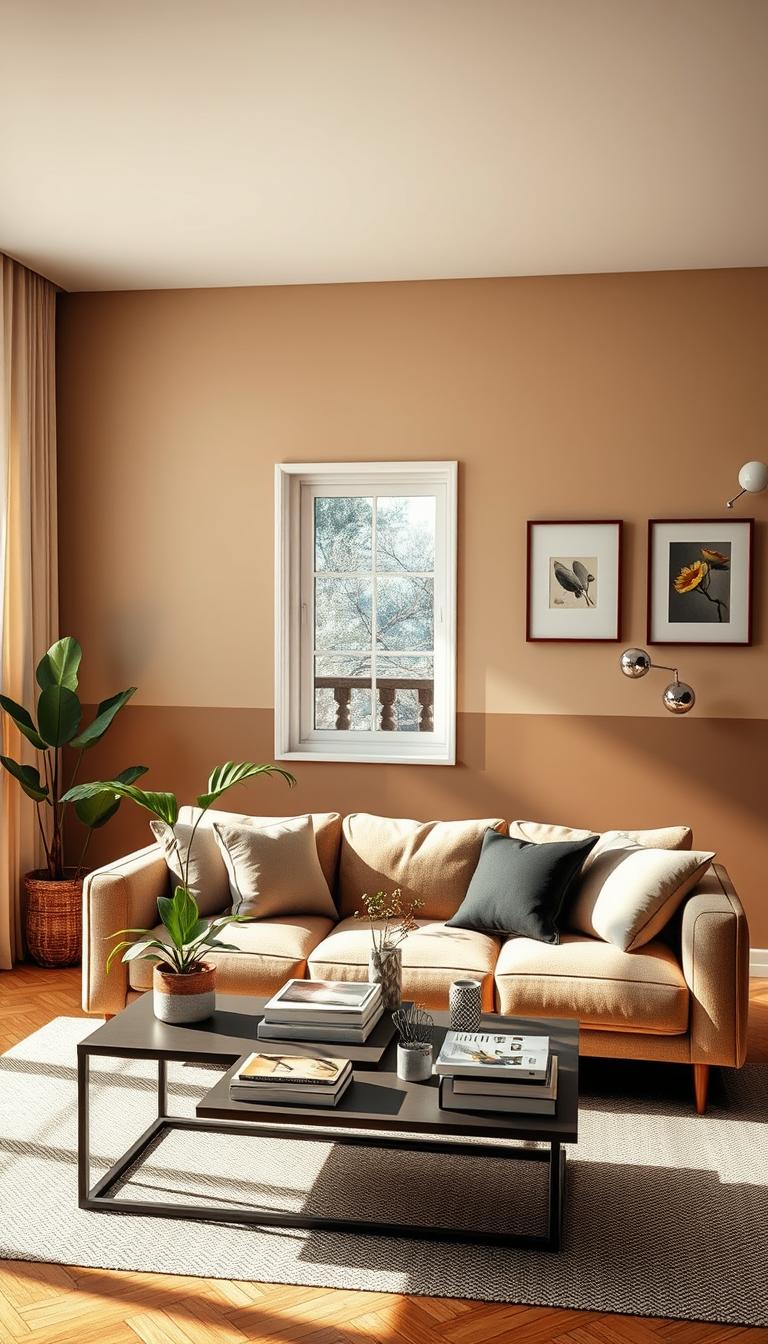
Doors, windows, mantels, chair rails, and picture molding make excellent guides. Aligning the paint break with these features keeps proportions natural.
Horizontal vs vertical breaks
Horizontal cuts can lift a ceiling or elongate a room—place the lighter shade on top to open the volume. Vertical breaks work when you want to define zones in an open plan or create a cozy corner.
- Test heights with painter’s tape and view from several sightlines.
- Follow time-tested proportions: picture rails 30–50 cm from the ceiling; panel heights around one-fifth of the wall.
- If a door or window interrupts the plan, nudge the line slightly above or below for a considered look.
Choosing the Right Two Colors for a Beautiful, Functional Room
The colors you choose set the mood — calm, dramatic, or cozy — before you even add furniture. Start by naming the feeling you want and let that guide the palette.

Neutral pairs for subtle harmony
Gray with beige, white with soft pink, or taupe with charcoal make an elegant wall color combo. Neutrals work with natural textures and layered lighting to keep a room feeling restful.
Monochromatic “ton sur ton”
Stay in one family — a misty blue up top with a dark blue below reads polished. I often vary sheen (matte above, satin below) to add texture without adding another color.
Bold and complementary combinations
Want energy? Pair a saturated lower part with a light neutral on the top half. Cactus green with terracotta or pale gray with deep charcoal creates a fresh color-on-color look.
“Repeat a hue elsewhere — pillows, art, a rug — so the paint feels intentional, not accidental.”
For curated examples and styled color pairings, see styled color pairings.
Deciding the Paint Line Height and Direction for Maximum Impact
Set the paint break with intent — the wrong height can confuse a room’s proportions. I start by picturing furniture and where the eye rests. That helps pick a height that feels natural in the home.
Guidelines and illusions
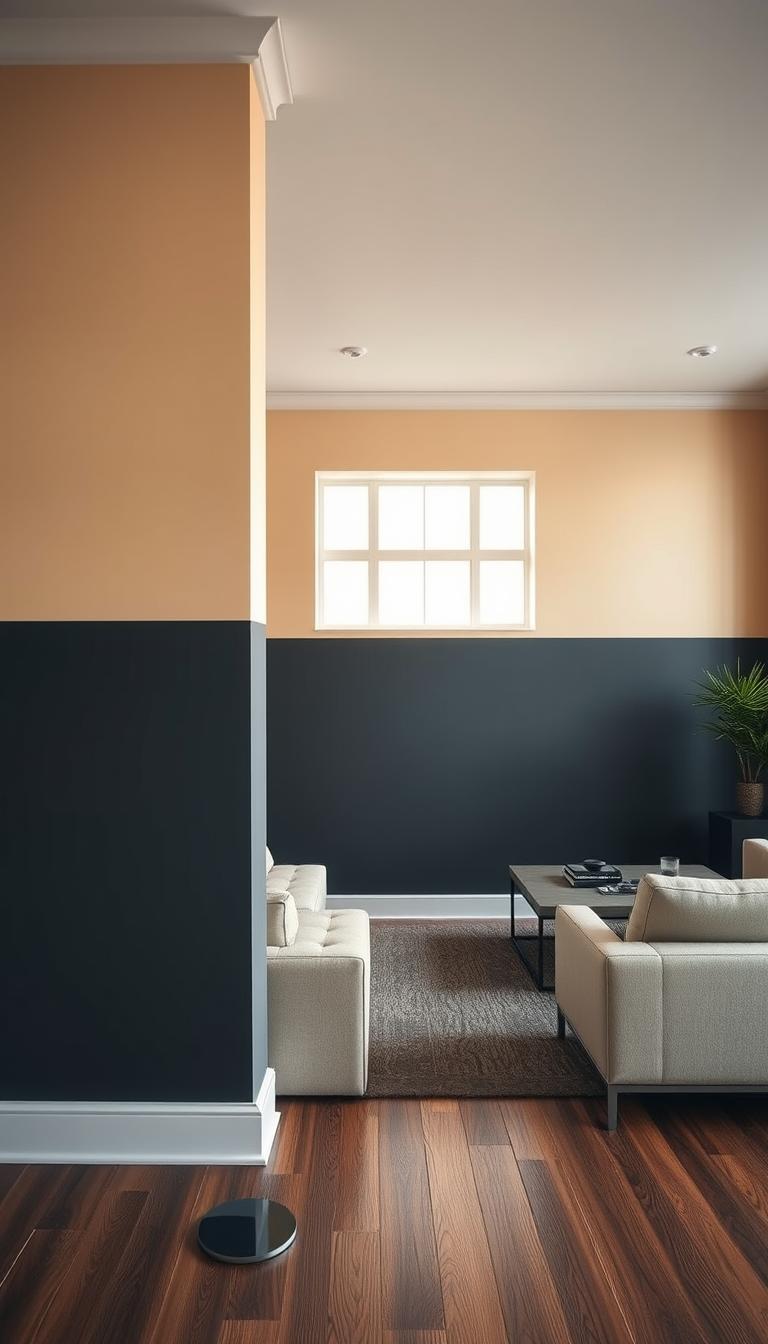
Rule of thumb: about 120 cm / 47 inches from the floor works in many American interiors. It lands between baseboards and typical artwork heights.
Picture rails often sit 12–20 inches below the ceiling. Paneling runs about 61 cm or one-fifth of the wall. Use these features to anchor the line.
- The lower third reads classic and grounded; true halves feel bold and modern.
- For tall ceilings, a darker top part pulls the ceiling down; for standard heights, lighter on top lifts the space.
- Avoid aligning the line with a window or door head — shift at least 12 inches above or below.
“Mark, measure, and then measure again; a level and crisp tape line make or break the illusion.”
| Situation | Suggested Height | Effect |
|---|---|---|
| Standard room | 47 inches / 120 cm | Balanced, works with furniture and art |
| Tall ceiling | Higher than 47 inches; darker top | Makes space feel cozier |
| Narrow hall | Lower half or horizontal low third | Wider visual feel |
| Reading nook / vertical split | Vertical line aligned with door or shelf | Defines a cozy zone |
Step-by-Step: How to Paint a Two-Tone Wall with Crisp Lines
Start by measuring from the ceiling down so your painted split looks intentional from every doorway. I mark small pencil ticks at even intervals, then use a level to link them. Measure in inches or centimeters—consistency matters more than the exact height.
Prep and measure
- Make pencil marks from the ceiling at set intervals and snap a chalk line between them.
- Apply the lighter paint first. Extend it a hair past the chalk line to seal the edge.
- Burnish painter’s tape along the chalk line; on textured walls press the tape firmly to prevent bleed.
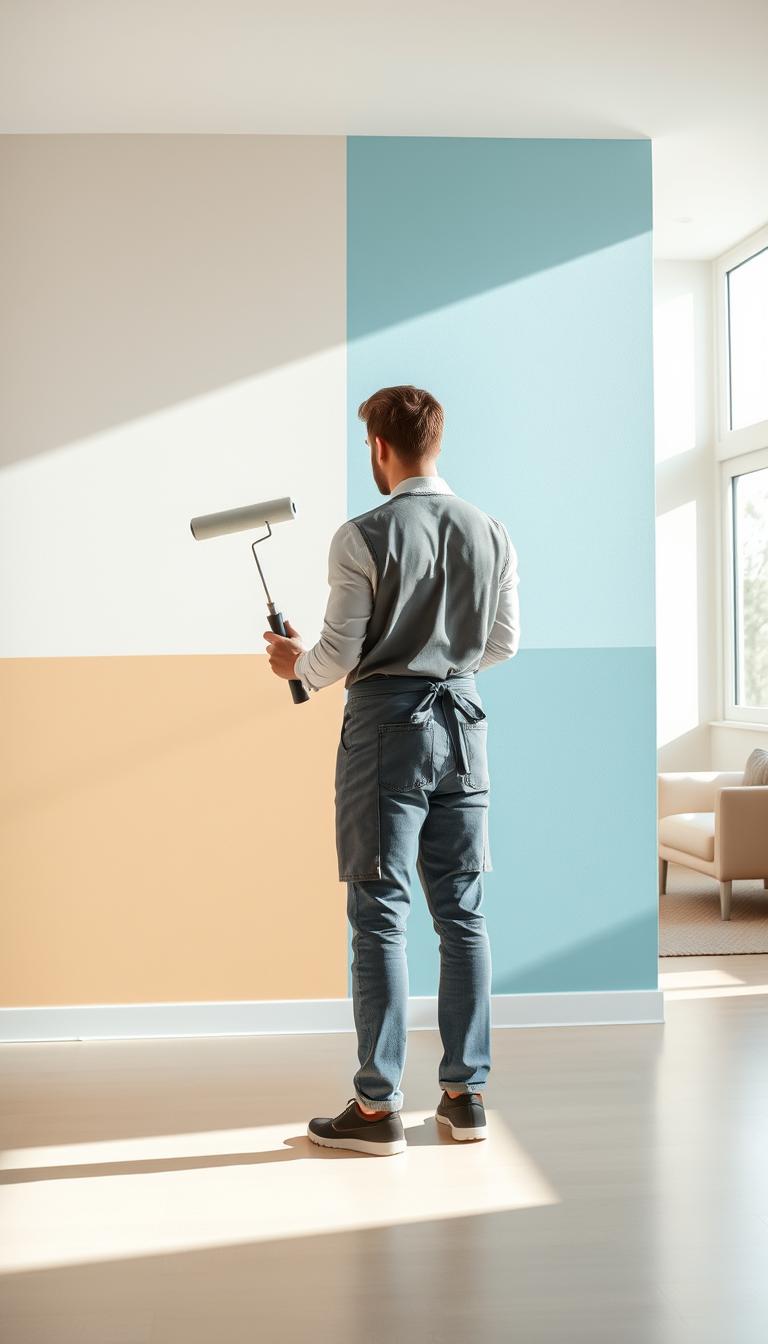
- Cut in along the tape with an angled brush, then roll the second color for an even finish.
- Remove tape while the paint is still wet. That one move gives you a razor-sharp edge.
Pro finishes and final tips
I pick matte or eggshell up top to soften glare and satin below for durability. If the floor slopes, measure from the ceiling so the line reads level. Step back in natural and artificial light to spot tiny touch-ups.
| Step | Tool | Effect |
|---|---|---|
| Measure & chalk | Tape measure, level, chalk | True, level line across the wall |
| Paint lighter first | Brush, roller | Seals base and prevents gaps |
| Tape & cut in | Painter’s tape, angled brush | Sharp edge with no bleed |
| Remove tape wet | Hands | Clean, razor edge |
For a step-by-step photo guide and extra tips, see my recommended tutorial at how to paint straight lines.
Room-by-Room Ideas to Make Spaces Feel Larger or More Intimate
A smart color split can make a small area breathe or a tall room feel cozy.
I use simple paint moves to define areas, guide the eye, and change scale. Below are quick, practical ideas you can test with tape and a sample can.

Living and dining
Vertically split a wall to carve a reading nook or anchor a media area. Echo the lower color on furniture to pull the area together.
In tall dining rooms, a deeper top and lighter bottom makes nights feel intimate. Try deep green above and a soft neutral below for that candlelit mood.
Bedrooms and kids’ rooms
Set the line at or just above headboard height for a built-in halo effect. Calm neutrals up top soothe the eye; richer shades below ground the bed.
For kids, use a scuff-friendly dark blue or green on the bottom and a lighter shade above to keep the room bright and durable.
Halls and entryways
Horizontal divides widen narrow passages; lighter paint on top helps the ceiling feel higher and the corridor feel larger. Align the break with shelves or trim so the look reads intentional.
| Area | Suggested height | Effect |
|---|---|---|
| Living / open plan | Vertical split or 47 in lower half | Defines zones without walls |
| Bedroom | Headboard height or 47 in | Creates a cozy bed focus |
| Hall / entry | Lower third | Wider, taller illusion |
| Dining | Higher darker top | Intimate, candlelit feel |
Want more ways to make a space feel larger? See practical tips to make your room feel bigger.
Conclusion
A well-placed paint line turns a plain wall into purposeful design in minutes, adding depth and clear focus to any room.
Start with intention: decide where you want the eye to rest and choose a color scheme that helps that happen. Use a level and tape like precision tools—clean prep is everything for a crisp finish.
Keep it budget-friendly by reusing an existing shade where it works and adding one new paint to change the mood. I often ask clients to test a strip, watch how it reads through the day, then tweak until it feels right.
Small moves can make a big difference in your home. Try a measured approach, and you’ll be rewarded with balance, dimension, and a design that feels truly yours. strong,