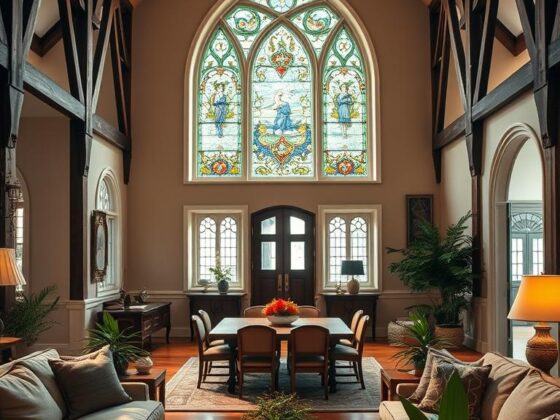

Can a cramped bath feel calm, elegant, and utterly functional all at once? I ask that because I’ve turned tight rooms into peaceful retreats for homeowners who thought they’d outgrown their space.
With smart planning, simple fixtures, and a few designer tricks, you can stretch sightlines and boost utility without a full gut renovation. Think large mirrors, airy glass, pale palettes, and recessed storage that clears counters and calms the eye.
I’ll point out code must-haves—GFCI protection, proper ventilation—and layout wins like clearances and movement zones that actually work in real homes I’ve remodeled.
Expect a step-by-step, doable plan: fixture choices, door swaps that save inches, low-flow fixtures, and finish palettes that reduce visual clutter while maximizing perceived space and light.
Key Takeaways
- Smart layouts and streamlined fixtures make small rooms feel larger.
- Mirrors, glass, and light colors expand sightlines instantly.
- Follow code basics—GFCI and ventilation—for safety and comfort.
- Recessed storage and built-ins keep counters clear and calm.
- Practical finishes and lighting reduce clutter and elevate design.
Tiny Bathroom Ideas: Smart Space Planning That Works Right Now
A calm, usable layout begins with plotting movement zones, not with picking a pretty vanity. I start by tracing the true footprint so you can see how a door swing, towel hook, or toilet paper holder might steal inches.
Minimums matter. A full bathroom usually needs about 36–40 sq ft and 5 feet in one direction for a tub. Showers should be at least 32×32 inches so you can raise your arms and bend comfortably. Older plumbing or wiring can limit relocations, so I note when to leave fixtures put.
I prioritize clear paths between door, vanity, and toilet. That keeps mornings smooth and reduces costly changes later. I also plan for a proper landing—about 15 inches beside the sink—for daily items.
- Sketch true-to-scale to test clearance and flow.
- Choose a narrower vanity (18″ deep) to make space without losing storage.
- Keep legroom in front of the toilet for comfort.
| Fixture | Minimum | Typical |
|---|---|---|
| Shower | 32×32 in | 36×48 in |
| Vanity depth | 18 in | 21–24 in |
| Full bath footprint | 36–40 sq ft | 40–50 sq ft |
Safety, Codes, and Must-Haves for Small Bathrooms
Before picking finishes, I lock down the rules that keep a remodel safe and long-lasting. Good code work protects people and preserves your design.
Electrical and moisture first: I always specify GFCI-protected outlets at the vanity to prevent shock around water. A ducted exhaust fan on a timer is non-negotiable to curb humidity, mold, and peeling paint—choose a quiet fan with the right CFM for the room.
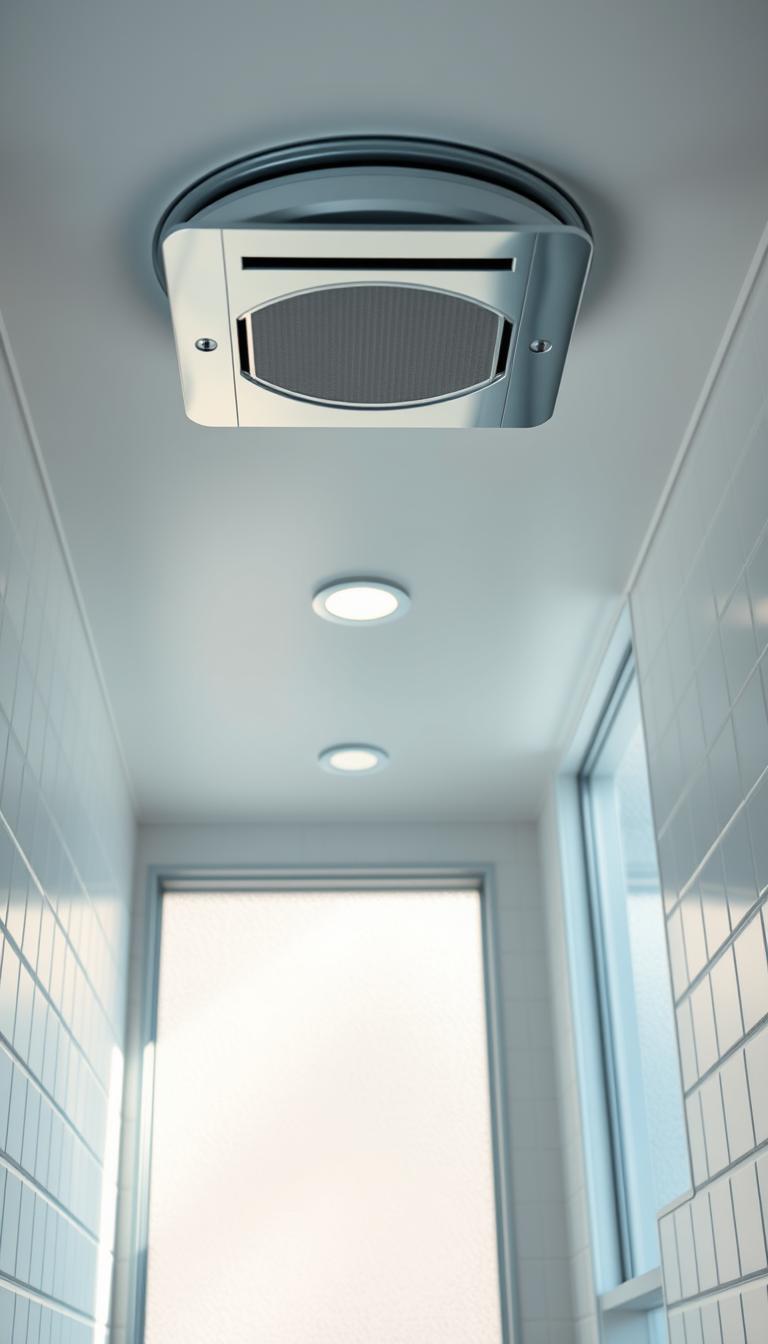
Practical minimums and professional checks
- Plan layered lighting—ambient plus task—using recessed or flush fixtures to keep the ceiling clean and the mirror shadow-free.
- Minimum shower size: 32×32 inches; go larger if you can for comfort.
- Toilet clearances: at least 16 inches from centerline to side obstacles and 30 inches in front for usable space.
- Low-flow toilets (≤1.6 gpf) save water without losing performance.
- Thinking about removing a wall? I bring in a structural engineer to confirm if it’s load-bearing before we touch studs.
Make electrical, plumbing, and ventilation decisions early. It saves rework and keeps your designer’s vision intact.
Space-Saving Doors That Make Small Bathrooms Feel Bigger
Doors shape how a small room moves — the right swap can free up inches and calm the layout.
Pocket doors slide into a wall cavity and recover the full swing radius. I use them in tight layouts to reclaim usable floor space for a vanity or storage. Add soft-close hardware and the result is quiet and luxe.
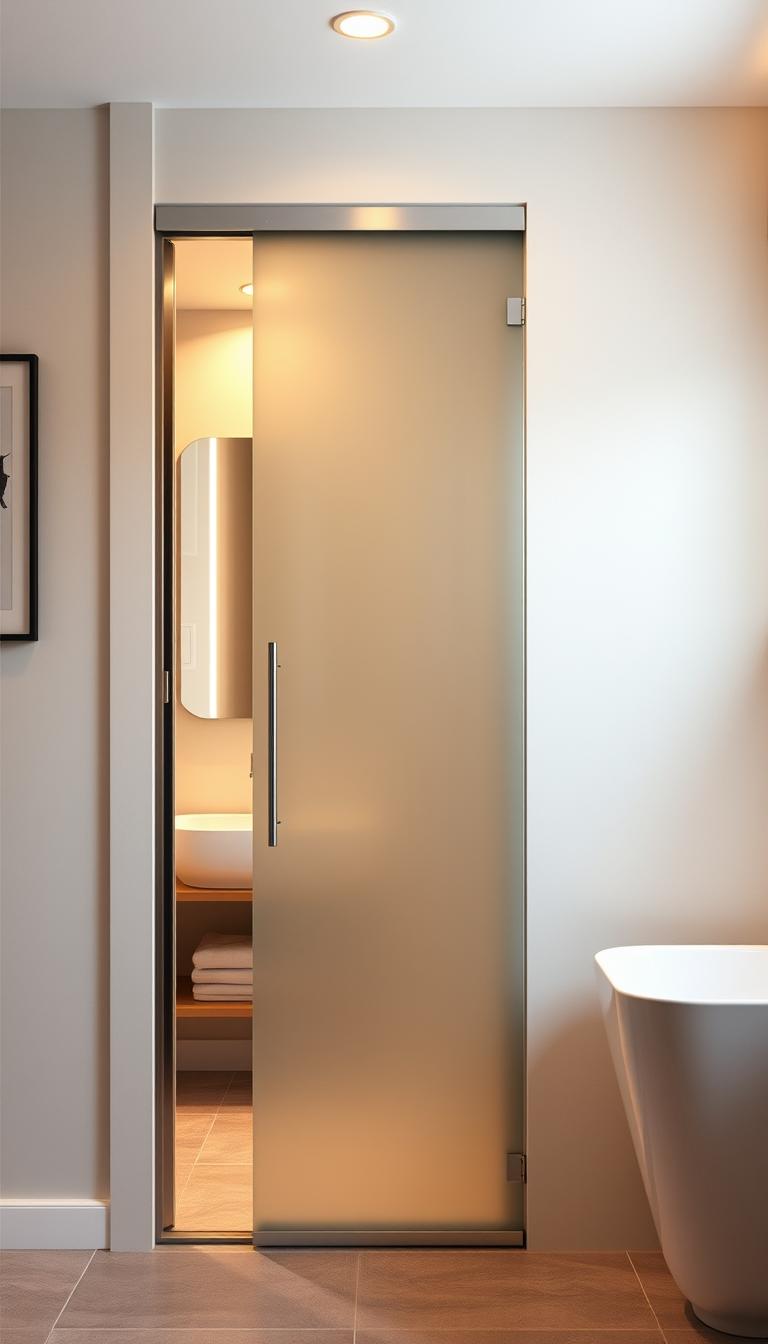
Pocket doors to reclaim swing space
They work best when walls are free of plumbing and heavy wiring. Always check for in-wall obstacles and load-bearing studs before you commit.
Slim barn doors where pockets won’t work
When pockets aren’t feasible — think sloped ceilings or plumbing stacks — a slim barn door is a tidy alternative. Keep tracks minimal and match finishes to faucets so the whole space reads cohesive.
Glass shower doors to remove visual barriers
Clear glass shower doors erase the heavy visual stop of a curtain and help light travel across the room. If privacy matters, I specify frosted or textured glass to keep openness without giving up modesty.
- I recommend quality rollers and tracks — smooth operation matters as much as looks.
- Swapping a curtain for a clear panel is a quick, high-impact upgrade that can make small bathroom layouts feel larger overnight.
- In powder rooms, a smart door choice alone can free inches you notice every day.
Glass Shower Strategies for Seamless Small Spaces
When space is tight, the shower should feel like part of the room, not a boxed-off zone. I use glass to blur boundaries and let light travel across the whole bath.
Frameless enclosures remove visual barriers and expand sightlines. They make the shower read as open air, not a separate box. Amy Switzer and other designers often choose frameless glass to visually enlarge compact wet zones.
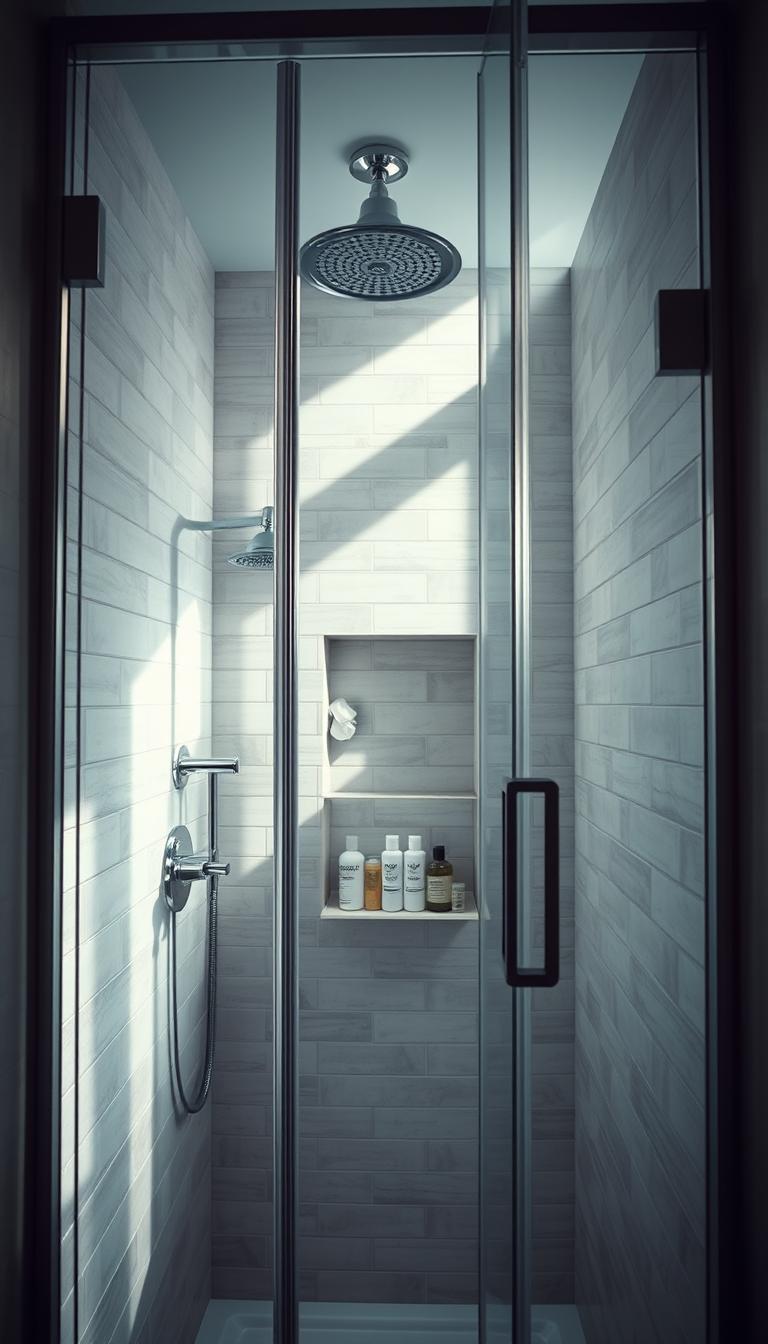
Privacy without bulk
Frosted or ribbed glass gives privacy but keeps light flowing. It’s a smart choice when the shower sits near a vanity or tub.
Doorless, spa-like walk-ins
Doorless walk-in showers feel luxurious, but they demand a precise slope and the right drain. I usually specify a linear drain along the back wall to control splash and keep the floor line clean.
Graphic metal frames for character
Metal latticework frames add a chic, structural look without closing the space. Block Renovation’s grids show how a black frame can read urban and refined while still letting light through.
- Pair clear glass with a low curb or curbless entry to maintain a continuous floor plane.
- Choose easy-clean coatings for hard-water areas—maintenance matters in small rooms.
- Use a fixed glass panel in tight layouts to replace a swinging door and save inches.
| Strategy | Benefit | Design tip |
|---|---|---|
| Frameless glass | Maximizes sightlines | Use minimal hardware and clear sealant |
| Frosted/textured glass | Privacy without heaviness | Select ribbed patterns that still transmit light |
| Doorless walk-in | Spa-like feel, open plane | Specify slope to linear drain and water containment curb |
| Metal lattice frames | Graphic separation, visual interest | Match hardware finish to overall bath palette |
Sinks and Vanities That Maximize Counter Space
Choosing the right vanity changes how a room breathes and functions. I start here because the sink and counter dictate storage, lighting, and daily flow.
Floating vanities let the floor run to the wall and make the space feel larger. I specify shallow depths—16–18 inches—so you save space without losing useful storage.
Compact sinks and smart placements
Wall-mounted, pedestal, and corner sinks keep the floor clear and open up movement zones. Pedestals give a classical look but reduce storage; I pair them with a recessed niche or slim cabinet nearby.
Single basins that work for two
When clients want to share a small bathroom, I’ve used a single trough sink with two faucets. Spectrum Design Group does this well — it keeps more counter space and feels intentional rather than cramped.
- Wall-mounted faucets free counter space and simplify cleanup.
- Extend a vanity top over the toilet for a seamless shelf in tight plans.
- Combine drawers with a mirrored medicine cabinet to keep the counter blissfully clear.
| Option | Benefit | Design tip |
|---|---|---|
| Floating vanity (16–18″ deep) | Unbroken floor line, visual lightness | Mount lower for added legroom and illusion of height |
| Wall-mounted/pedestal sink | Clears floor, frees visual space | Add recessed niches or slim shelving for storage |
| Trough sink with dual faucets | Shared use + more usable counter | Center lighting over the sink for balanced tasks |
| Shallow cabinet (16–18″ deep) | Recovers inches without losing function | Pair with drawers and a mirrored cabinet to hide clutter |
Toilet Solutions to Save Space and Streamline Design
A smart toilet choice can reclaim inches and calm the layout without a full redo. I’ve used a few tricks that make tight baths feel roomy and intentional.
Wall-hung toilets with in-wall tanks tuck the carrier into a 2×6 wall and can reclaim about nine inches of floor. They also make cleaning easier and give a modern, airy look. Plan an access panel before tiling so future service is simple.
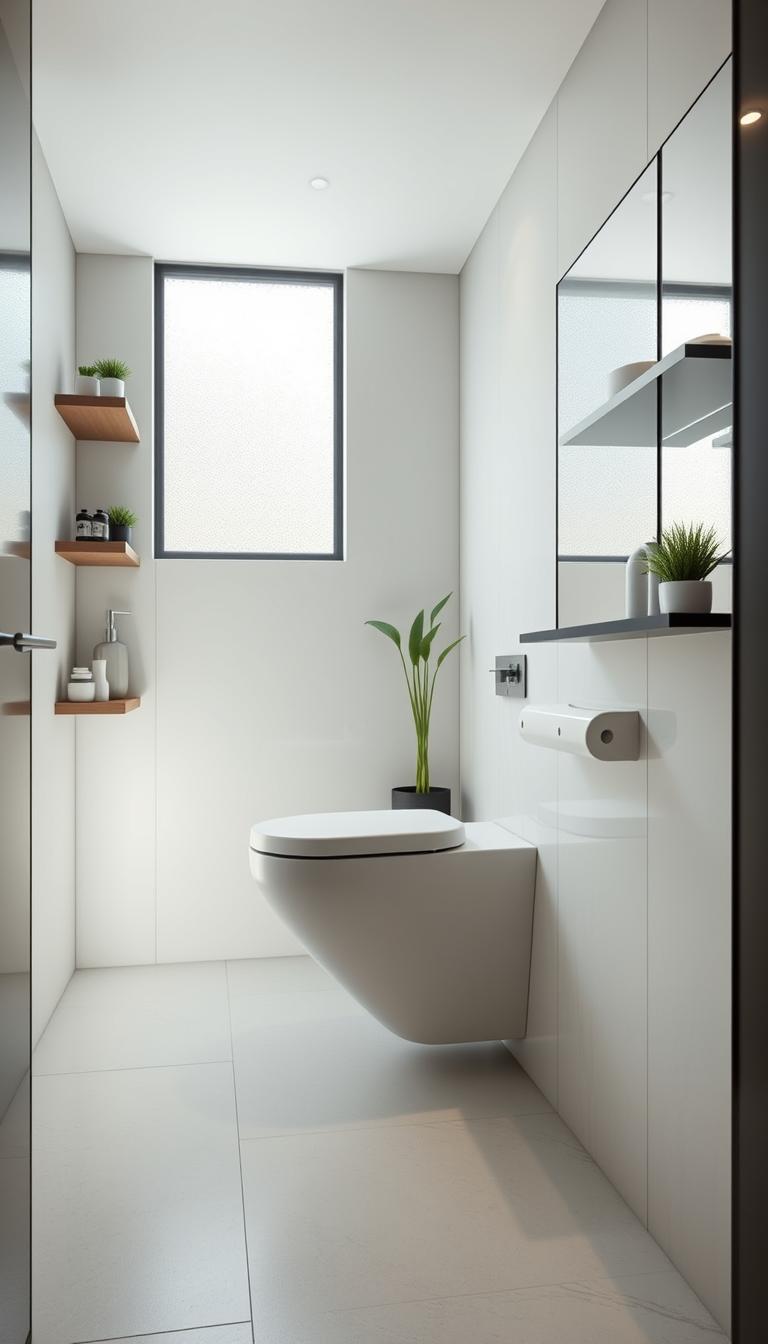
Options that work in odd plans
When footprints are quirky, a corner toilet can straighten circulation and free wall runs for storage or a vanity. Choose a compact or short-projection bowl to keep sightlines low and the room feeling larger.
- I verify clearances: minimum 16 inches from centerline to side obstacles and 30 inches in front.
- Low-flow models (≤1.6 gpf) are required in new or remodeled bathrooms and cut water bills.
- Pick a skirted bowl and match flush-plate metal to faucets for a cohesive, designer-ready look.
| Solution | Benefit | Design tip |
|---|---|---|
| Wall-hung | Reclaims floor, easier cleaning | Install access before finishing wall |
| Corner | Better circulation in weird layouts | Use short-projection bowls to save room |
| Low-flow model | Water savings, code-compliant | Choose ≤1.6 gpf for new home projects |
Small moves—a hidden tank, a compact bowl, a matched flush plate—add up. They save space, simplify maintenance, and lift the whole bathroom design.
Mirrors and Lighting That Make a Small Bathroom Feel Larger
Mirrors that span a wall and thoughtfully layered lights change how a space reads — wider, brighter, kinder.
Run a mirror wall when you can. A full-width mirror doubles reflected light and visually widens the room. Mirrored medicine cabinets bring the same benefit while hiding toiletries and keeping counters calm.
I favor backlit mirrors where sconces won’t fit. They give an even halo and keep profiles minimal. Vertical sconces at eye level reduce shadows and make grooming easier.
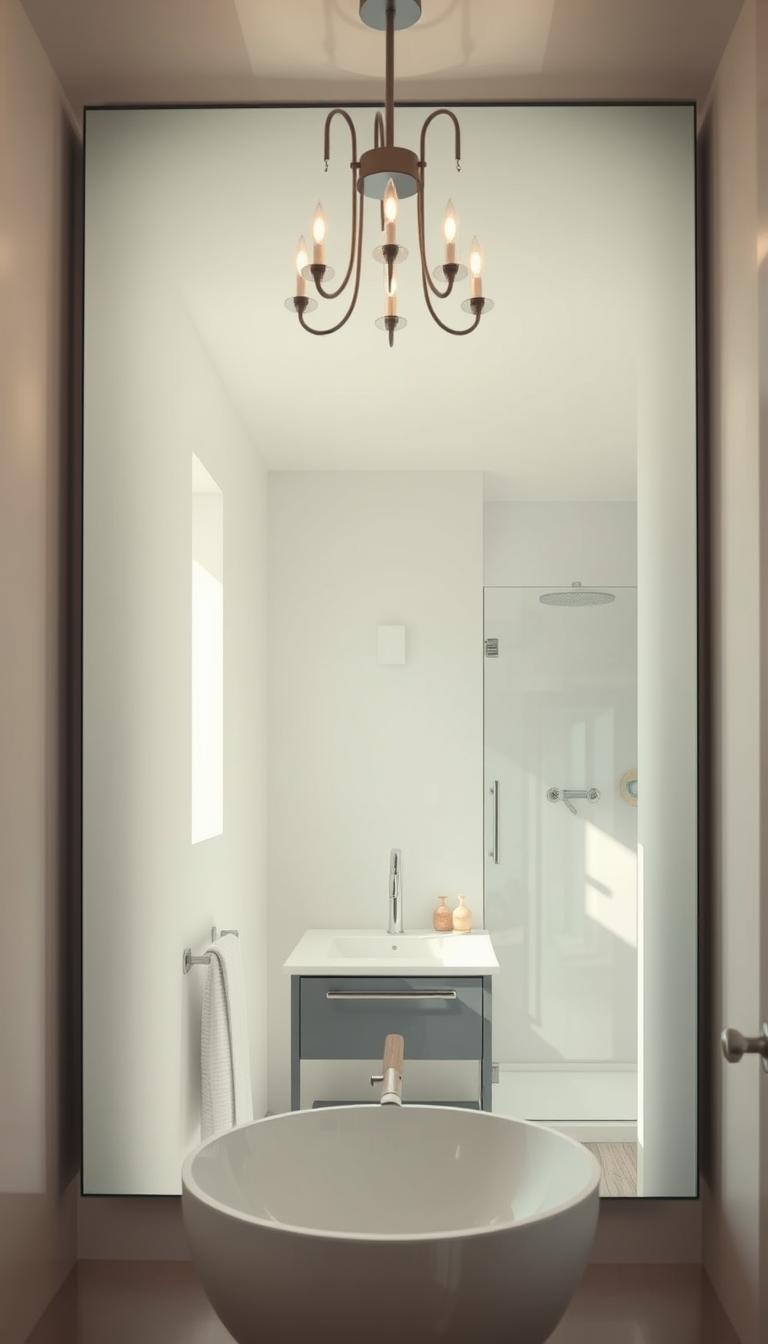
Layered lighting for a balanced look
Blend ambient (recessed or flush) with task and accent fixtures. Dimmers shift the mood from bright morning to spa-calm evenings.
Match finishes and keep warm LEDs — they flatter skin tones and finishes better than harsh fluorescents.
- Wall-to-wall mirror: doubles light and widens sightlines.
- Mirrored medicine cabinet: storage without visual clutter.
- Backlit mirror or vertical sconces: shadow-free grooming.
| Feature | Benefit | Designer tip |
|---|---|---|
| Full-width mirror | Expands perceived space | Hang at consistent height to align sightlines |
| Backlit mirror | Even facial illumination | Use warm LED strips and dimmer compatibility |
| Layered fixtures | Balanced light for tasks and ambiance | Combine recessed ambient with vertical task lights |
Color Play: Light, Bright, and Moody Palettes
Paint and finish choices are the quiet design moves that shape mood and perceived size. I’ve seen a small bath transform more from a new palette than from a pricey fixture swap.

All-white and neutrals to reflect light and expand space
All-white schemes bounce light and simplify the look. Elizabeth Vergara’s approach proves this: layered whites feel fresh and versatile.
Mix veined stone and soft metals so the space reads warm, not clinical.
Go moody: rich dark walls for depth and drama
I also recommend deep charcoals or jewel greens when you want depth. Mary Patton’s use of Benjamin Moore’s Tilled Soil shows dark can feel luxe with the right sconce and art.
Black-and-white contrasts for a bold graphic look
High-contrast black white pairings give crisp structure. Add a bold mirror or hardware to sharpen the graphic edge.
- Use one saturated color on a vanity or door to energize a neutral shell.
- Keep ceilings lighter to lift the eye, or go tonal for a cocooning vibe.
- Balance sheen—gloss for glam, matte to mask flaws—and add wood or stone to soften monochrome schemes.
| Palette | Effect | Design tip |
|---|---|---|
| All-white / neutrals | Maximizes reflected light | Layer textures and warm metals |
| Moody darks | Adds depth and drama | Use strong lighting and artwork |
| Black & white | Graphic, timeless | Pick one bold accent for focus |
Tiles, Paneling, and Patterns That Add Dimension
Texture and scale trick the eye: one confident wall can flip a cramped layout into a composed space.
I often recommend a single large-scale pattern to act as a focal point. Use it on the shower wall or the vanity run so the rest of the room can breathe.
Vertical shiplap or painted wainscoting draws the eye up. That creates perceived height and keeps a small footprint from feeling boxed in.
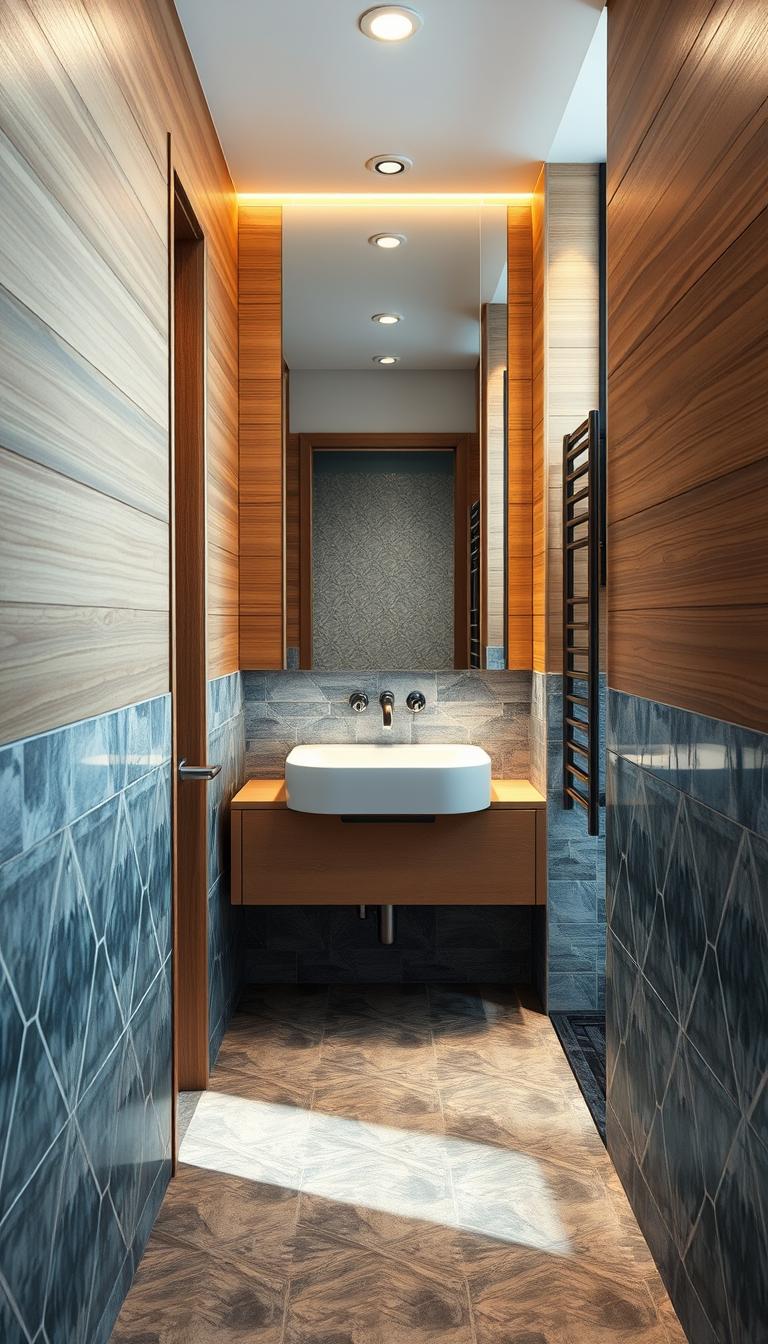
Shaped tiles and where to use them
Hex, fish scale, or arabesque tiles add character without clutter. I like them as a shower accent or wrapped behind the sink for cohesion.
Big patterns can make a small room feel larger — but use them sparingly so they don’t overwhelm.
- Scale: pick one large motif, keep neighbors calm.
- Safety: choose slip-resistant floor tile and easy-clean grout.
- Reflection: add a small glass accent to bounce light without adding visual weight.
| Element | Benefit | Design tip |
|---|---|---|
| Large-scale tile | Expands perceived space | Use on one wall or shower only |
| Vertical shiplap | Creates height | Paint light to keep the look airy |
| Shaped tiles (hex/fish) | Creates a focal point | Apply as wainscot or accent wall |
When budget is tight, focus lively tile in the shower and keep the rest quiet. Natural light loves textured surfaces — subtle shadow lines add depth all day long.
Built-Ins and Recessed Storage That Reduce Clutter
Smart storage starts in the studs: thoughtful recesses and shallow cabinets change how a small bathroom lives.
Custom built-ins that follow roof lines or a chimney run feel intentional, not tacked-on. I follow Maggie Winshall’s lead and shape shelves to the architecture so built storage adds value and stays slim.
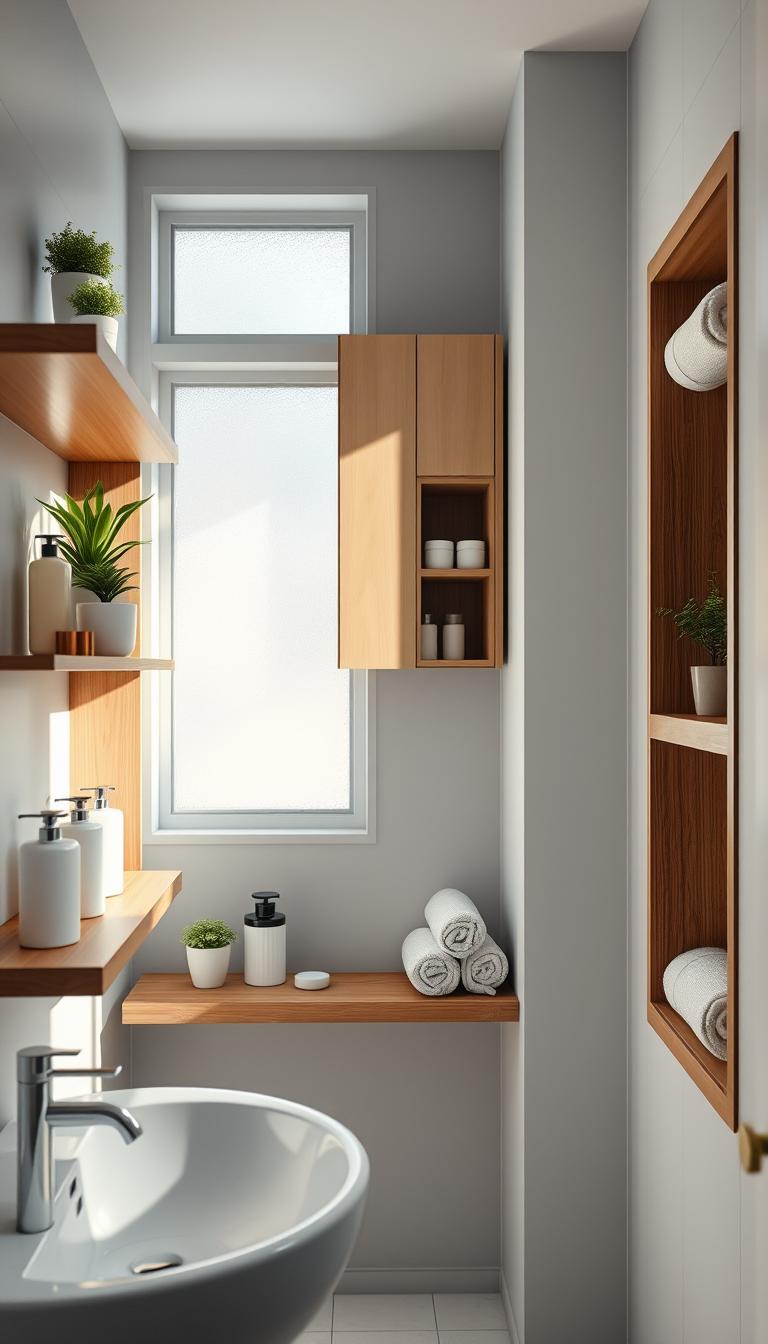
Recessed medicine cabinets and shower niches
Recessed medicine cabinets keep daily items out of sight and cut countertop clutter fast. In the shower, a tiled niche beats a hanging caddy — everything has a home and nothing protrudes.
Chair-rail ledges, shallow cabinetry, and shelves
A chair-rail ledge makes a slim landing for jars or a candle. Shallow cabinetry—4–6 inches—holds skincare and tissue without crowding the room.
Floating wood shelves warm the palette; glass shelves keep sightlines open. Use baskets to corral small items and plan wall blocking before drywall so recesses anchor securely.
- I often align shelf heights to bottle sizes to avoid wasted space.
- These built-in moves give you more storage and less visual noise, so the whole space feels calmer.
Walls, Corners, and Overhead: Sneaky Storage Spots
Most people forget vertical real estate — but I hunt for it first on every job. Over-the-toilet zones and tight corners are easy wins that keep the floor clear and the room feeling calm.
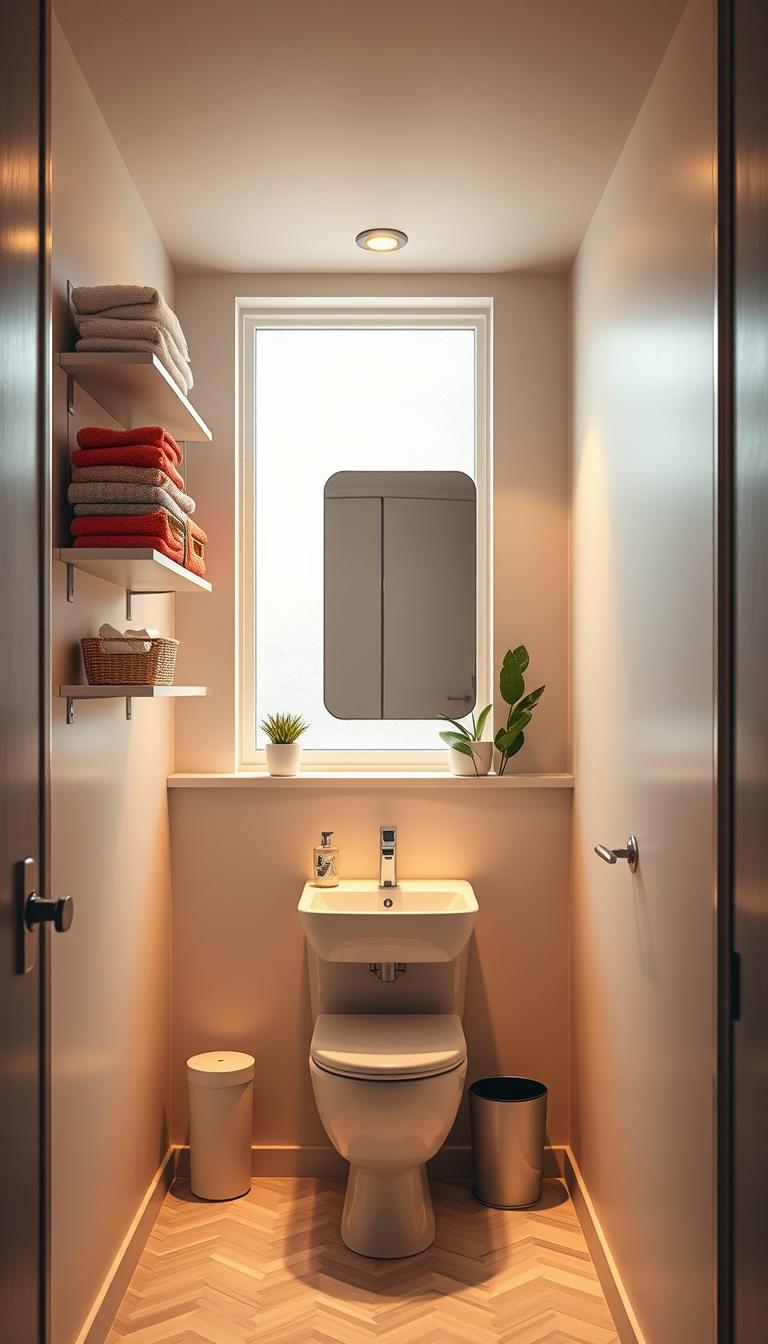
Over-the-toilet cabinets and ledges
Use the air above the fixture for a slim cabinet or open ledge. It’s prime real estate that rarely intrudes on movement.
A shallow cabinet hides daily items while a single floating shelf displays a plant and a basket. Measure towel height before you place shelves so stacks slide in and out easily.
Ladder racks and hooks for towels
A wood ladder rack holds more towels than a bar and adds warmth. I often specify one for guest baths where storage is tight.
Hooks beat bulky bars in narrow zones — they’re family-friendly and flexible. Install a few on a side wall, the back of the door, or the vanity side to keep robes and towels handy.
- Save space by prioritizing vertical runs over floor furniture.
- Corner L-shaped shelves or slim towers stash extra paper and guest towels.
- Match hardware finishes to faucets for a cohesive, designer-ready look.
Natural Light Boosts: Windows, Skylights, and Sheers
Natural daylight reshapes how a small room feels—brighter surfaces, longer sightlines, and an instant lift in mood. I encourage clients to prioritize daylight early in a plan because it multiplies every finish and fixture.
Wider windows and skylights are the fastest way to increase perceived space. Widening a window makes the whole wall read as larger. Skylights are a game-changer in windowless baths; they bring sun right to the shower and improve ventilation if you pick a venting model.
Sheer dressings soften glare while keeping brightness high. They feel airy and calm and let light filter in without heavy bulk.
Privacy without losing daylight
For privacy I lean on plantation shutters or frosted film. Both let light pour in while keeping views private.
- Pair daylight with reflective surfaces—mirrors and glossy tile—to amplify brightness.
- Keep window sills clear so light travels deeper into the space.
- Consider a transom over doors to borrow light from adjacent rooms.
| Solution | Benefit | Design tip |
|---|---|---|
| Wider window | Expands sightlines and enriches finishes | Coordinate trim color with tile or vanity paint |
| Skylight (venting) | Daylight for showers and improved moisture control | Choose venting option to aid humidity management |
| Sheer curtains / plantation shutters | Softens glare while keeping privacy | Use sheers for softness; shutters for adjustable privacy |
| Frosted film / transom | Privacy + borrowed light | Apply film to lower panes; add transom to interior doors |
Materials and Finishes for a Cohesive Small Bath
Right away I choose a metal and two textures so the room feels planned. That simple decision guides color, hardware, and how light behaves in a tight space.
Match metals and keep the palette small
I pick one metal—brass, chrome, or black—and echo it across faucets, pulls, shower frames, and lighting. Matching hardware ties the whole look together and makes the design feel intentional.
Surfaces: tiled tops, wood warmth, and stone accents
Tiled vanity tops add texture and are budget-friendly. Choose a bullnose edge and coordinate grout with the wall color for a seamless top.
Wood textures—vanity fronts or a ladder shelf—bring spa-like warmth. A small stone shelf or marble splash reads luxe without crowding the footprint.
- Match shower glass hardware to the sink faucet so finishes feel coordinated.
- Mix matte and gloss to add depth in a black-and-white scheme.
- Limit materials to two or three and choose moisture-resistant paints and sealants for long life at home.
| Material | Benefit | Designer tip |
|---|---|---|
| Brass/Chrome/Black | Cohesive look | Use one finish across fixtures |
| Tiled vanity top | Texture on a budget | Order extra tile for repairs |
| Wood & stone accents | Warmth and quality | Keep accents small to avoid visual weight |
Decor, Themes, and Designer Touches With Big Impact
Small edits—like swapping hardware or adding a sculptural mirror—deliver big style returns. I use decor to give a compact room a clear personality without fuss or major cost.
Statement mirrors act like art and light in one. Pair a sculptural mirror with a simple sconce and the whole space reads intentional. Playful wallpaper works wonders too—use it on a single wall or in a powder room to create a jewel-box feel.
Rugs, botanicals, and earth tones
A runner or a long rug warms floors and guides the eye. Living plants—ferns or pothos—thrive in steam and soften tile edges.
Earth-tone towels and stoneware accessories make the room feel like a tiny spa. A small gallery wall in black-and-white prints adds sophistication without clutter.
- Pick one theme anchor and echo it in two items to keep the look calm.
- Swap pulls to brass or matte black for an instant designer lift.
- Group daily items on a tray so counters stay tidy and curated.
For more curated small-room inspiration, see a quick collection of practical tips at small-bathroom ideas.
Declutter and Organize to Make a Small Bathroom Feel Spacious
A quick edit of what lives on the vanity changes how the whole room reads. I start by hiding visual noise and keeping daily objects out of sight. Closed storage calms the eye and helps a small bathroom feel intentional.
Closed storage to hide bottles and daily items
Hide bottles. The fastest way to make small spaces feel bigger is to tuck toiletries behind doors or in a recessed medicine cabinet. Modern units swallow a surprising number of items and keep counters clear.
Edit products, add baskets, and keep counters clear
Choose favorites, stash extras up high, and decant into matching bottles if you like an open caddy. Baskets and labeled bins stop items from spilling out and make it easy for family members to return things to their home.
- Install drawer organizers so hair tools don’t tangle.
- Float one shelf for display; keep the rest behind doors and drawers.
- Add a slim hamper or laundry hook to keep clothes off the floor.
| Tactic | Benefit | Tip |
|---|---|---|
| Recessed medicine cabinet | Clears countertop | Pick a model with adjustable shelves |
| Baskets & labeled bins | Contain extras | Store bulk items up high |
| Drawer organizers | Stops tangles and lost items | Designate zones for tools and skincare |
| Single floating shelf | Balanced display | Limit to styled essentials and one plant |
Quick habit: five minutes each week to clear counters. Good organization is the foundation that makes every design choice—and more bathroom ideas—shine.
Conclusion
Good design begins with rules and a plan—safety, sizes, and light make every choice work.
I always start with code: GFCI outlets, a timered exhaust, and minimum clearances like a 32×32 shower. Those details keep your remodel on track and your family safe.
Use doors and clear glass to reclaim inches and open sightlines. Pocket doors and frameless panels are simple, high-impact moves that free up usable space.
Pick right-sized sinks and shallow vanities. Plan recessed storage and niches early so daily clutter stays hidden and your bathroom feel stays calm.
Let daylight lead and choose a palette that serves your mood. Add one designer touch—an artful mirror or shaped tile—to make the room memorable.
When structure or plumbing is in question, call the pros. With careful planning you can make small bathroom projects feel generous in your home.