Homiscape.com
  • Homepage
  • Ideas by Room
    • Bathroom
    • Bedroom
    • Home Office
    • Kitchen
    • Living Room
    • Outdoor
Categories
  • Bedroom
  • General
0
0
Homiscape.com
Subscribe
Homiscape.com
  • Homepage
  • Ideas by Room
    • Bathroom
    • Bedroom
    • Home Office
    • Kitchen
    • Living Room
    • Outdoor
Light Pink
  • General

Light Pink: How This Soothing Color Can Transform Your Space

  • December 12, 2025
  • Jade Hunt

Total
0
Shares
0
0
0

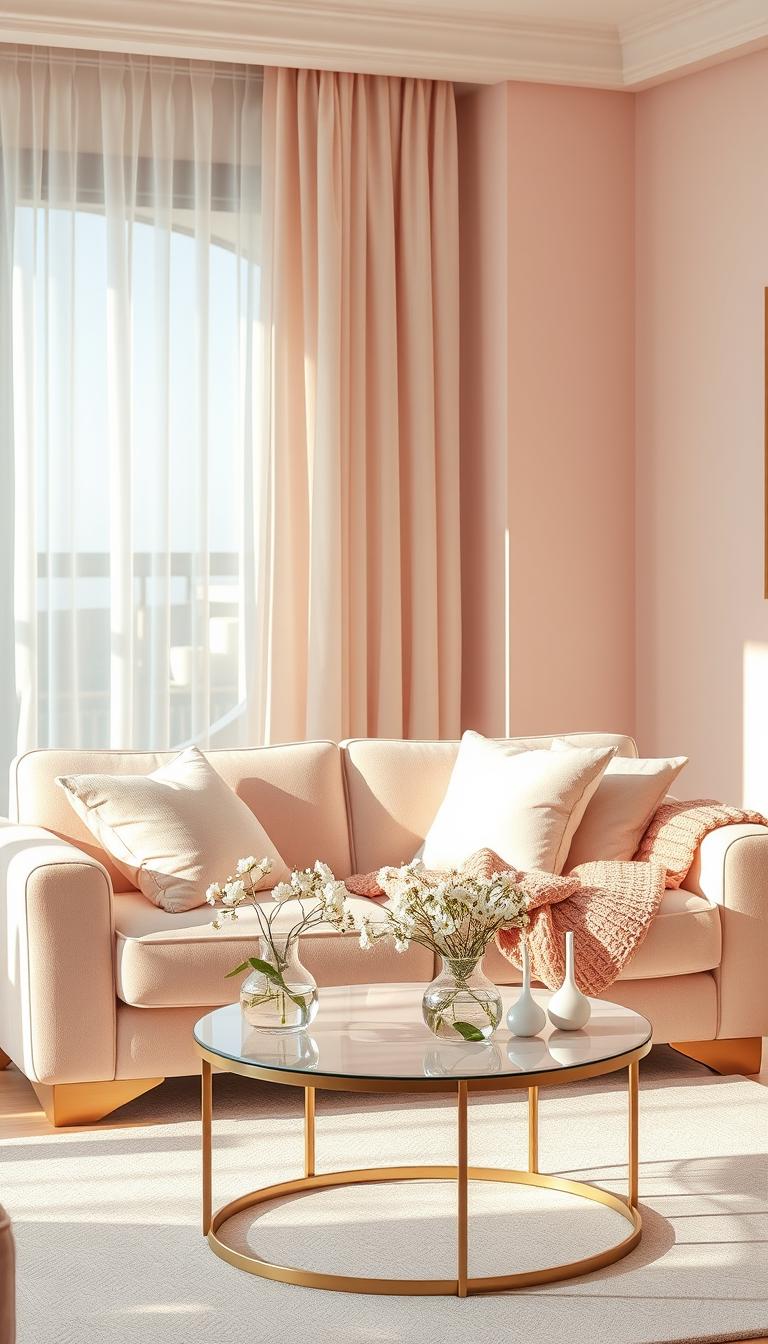
Ever wondered why a soft wash of hue can make a room feel like a calm retreat? I ask clients that all the time. A gentle blush—think low-chroma pastels—changes how surfaces read and how light behaves.

I use these tones to warm rooms without shouting. They act like dawn on walls and textiles, reducing visual noise in small apartments and making every corner breathe.

As a designer, I pick specific hexes—near #FFB5C0 or #FFD1DF—because their high luminance keeps things airy. They bridge cool whites and warm woods and help transition between neutrals and stronger accents.

In practice: a pillow, a vase, or a single wall can shift mood. Culturally, this hue signals care and calm. Start small, watch the effect through the day, and let the room tell you the way forward.

Key Takeaways

  • Soft pastels can calm a room and reduce visual clutter.
  • High-luminance, low-chroma choices enhance natural light.
  • Small accents often deliver big emotional shifts.
  • These tones bridge materials—wood, white, and bold accents.
  • Try samples and observe changes during the day.

What Is Light Pink? A Clear Definition for a Design Dictionary

I call this hue the gentle mediator in any palette—soft, low-key, and surprisingly strategic.

In digital color spaces, the color sits near hex codes #FFB5C0 (RGB 255,181,192; HSL 351.1°,100%,85.5%) and #FFD1DF (RGB 255,209,223; HSL 342°,100%,91%).

Both are pastel, high-lightness, low-saturation entries in the red-magenta family. They read as pink soft to our eyes, so designers use them to calm a room or brand without losing warmth.

  • Finder color picks: #FFB5C0 and #FFD1DF are common and behave similarly in real spaces.
  • The HTML/CSS named color lightpink is #FFB6C1 — a close cousin worth listing separately in a dictionary color entry.
  • Functionally, it bridges cool whites and warm woods, smoothing mood and adding cohesion.

“A small sample on trim taught me more about shift and scale than a swatchbook ever did.”

Identifier Hex RGB HSL
Common Finder #FFB5C0 255,181,192 351.1°, 100%, 85.5%
Alternate Finder #FFD1DF 255,209,223 342°, 100%, 91%
Named Web Color #FFB6C1 255,182,193 350°, 100%, 85.9%

For practical use, sample the hue on trim or a small accent wall. Watch it in morning and evening light to learn the best way it serves your space.

Light Pink Color Codes and Values at a Glance

Consistent results start with exact numbers. Below I boil the essentials down so designers and developers can match a hue across screens and print.
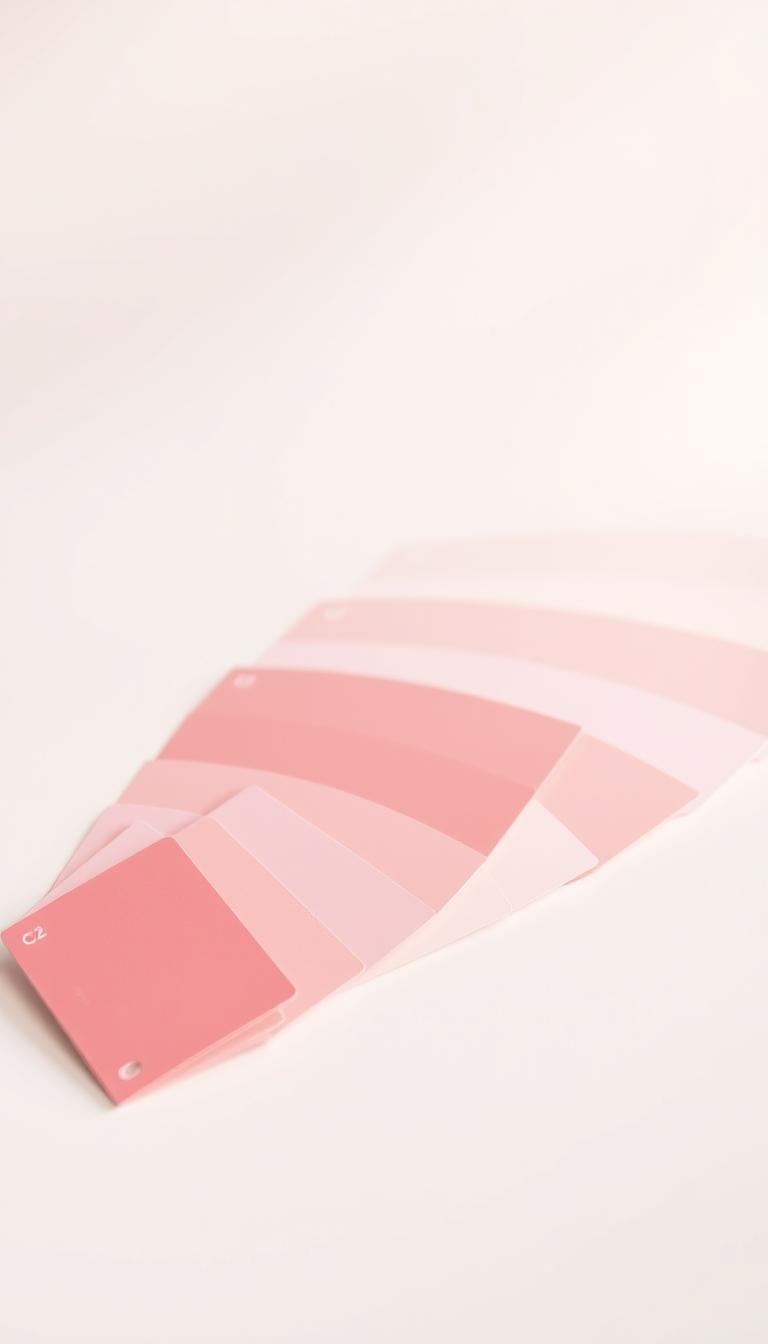
A collection of light pink color codes displayed artistically on a clean, minimalist backdrop. In the foreground, several color swatches showcasing various shades of light pink, such as pastel pink, blush, and baby pink, arranged neatly in descending order by hue. In the middle, a subtle gradient transitions through the shades, creating a visually pleasing flow. The background is a soft, slightly blurred white that enhances the pink hues without distraction. Soft lighting with a warm tone bathes the scene, giving it a soothing, inviting ambiance. The overall composition conveys a sense of tranquility and elegance, perfect for illustrating the calming effects of light pink in interior design. Super high resolution for detailed viewing.

Hex, web-safe, and binary

#FFB5C0 — web-safe neighbor: #FFCCCC. Binary: 11111111,10110101,11000000.

RGB and percentage values

#FFB5C0 = rgb(255,181,192) — rgb% 100%, 71%, 75.3%.
#FFD1DF = rgb(255,209,223) — rgb% 100%, 82%, 87% (note the 87% blue lift).

HSL and HSV details

HSL places these in the magenta-leaning band: 351.1°/100%/85.5% (#FFB5C0) and 342°/100%/91% (#FFD1DF).
HSV shows high value with low saturation — think bright, soft colors rather than saturated tones.

CMYK for print workflows

Start proofs with these CMYK conversions: #FFB5C0 → 0,29,25,0; #FFD1DF → 0,18,13,0. Paper and ink will shift perception, so always proof.

Platform snippets: CSS, iOS, and Android

  • CSS: color: #FFB5C0;
  • SwiftUI: Color(red: 1, green: 0.71, blue: 0.753)
  • UIKit: UIColor(red: 1, green: 0.71, blue: 0.753, alpha: 1)
  • Android Compose: Color(0xFFFFB5C0)

“Log both hex and HSL values — designers read relationships, developers read codes.”

Light Pink Contrast and Accessibility Guidelines

Contrast decisions make or break whether a hue reads as friendly or unusable in an interface.

I test early and often. For #FFD1DF the relative luminance sits near 72%, so it glows on screens. That brightness helps mood but challenges foreground choices.
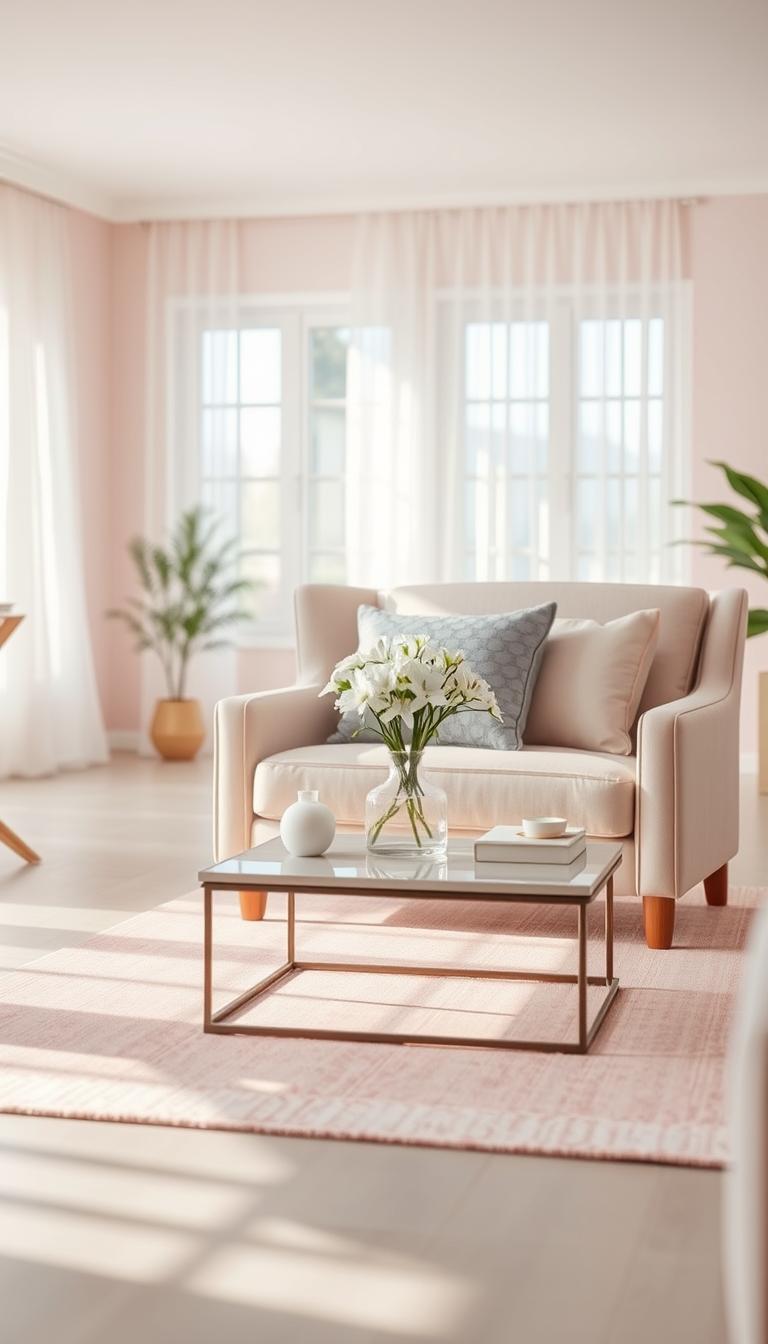
A serene interior space featuring light pink accents creating a soothing atmosphere. In the foreground, a comfortable, elegantly designed lounge chair upholstered in light pink fabric, adorned with contrasting throw pillows in soft gray and white. The middle ground showcases a minimalist coffee table with a vase of fresh white flowers, complemented by a light pink runner underneath. The background reveals a softly lit room with light pink walls, large windows allowing natural light to pour in, and sheer curtains gently fluttering. The overall mood is tranquil and inviting, captured with soft, diffused lighting and a slight depth of field effect to emphasize the elements in focus. This photorealistic image should illustrate the calming contrast of light pink in a stylish, accessible living environment.

Contrast Against Black vs. White

#FFD1DF vs. black scores about 15.4:1 — well within AAA. Use that pairing for readable text and strong CTAs.

#FFD1DF vs. white is roughly 1.4:1 — decorative only. Don’t use this for body text or essential labels.

Luminance and Readability Considerations

That ~72% luminance makes the hue feel soft and airy. But value contrast matters as much as hue.

“On light panels I always choose near-black text and bold weights — it keeps hierarchy clear.”

  • I recommend dark, near-black text on pale panels for UI and signage.
  • For hover/focus states, darken the foreground or lower the panel’s lightness slightly to meet contrast rules.
  • Avoid pale text on white buttons; instead use blue or charcoal for icons and labels.
Context Foreground Contrast Ratio
Panel/background Black (near #000) 15.4:1 (AAA)
Panel/background White (#FFF) 1.4:1 (Insufficient)
UI recommendation Near-black text / bold weights Passes AA/AAA when adjusted

Good practice: pair the hue with decisive darks, test on the web, and treat accessibility as essential design. I do this in every project — it keeps spaces calm and usable.

Light Pink Shades, Tints, and Tones

When clients ask for “a bit richer,” I point to a measured progression of darker and desaturated hues. It helps to see how each step behaves in a room. I guide choices by purpose — field color, anchor, or highlight.
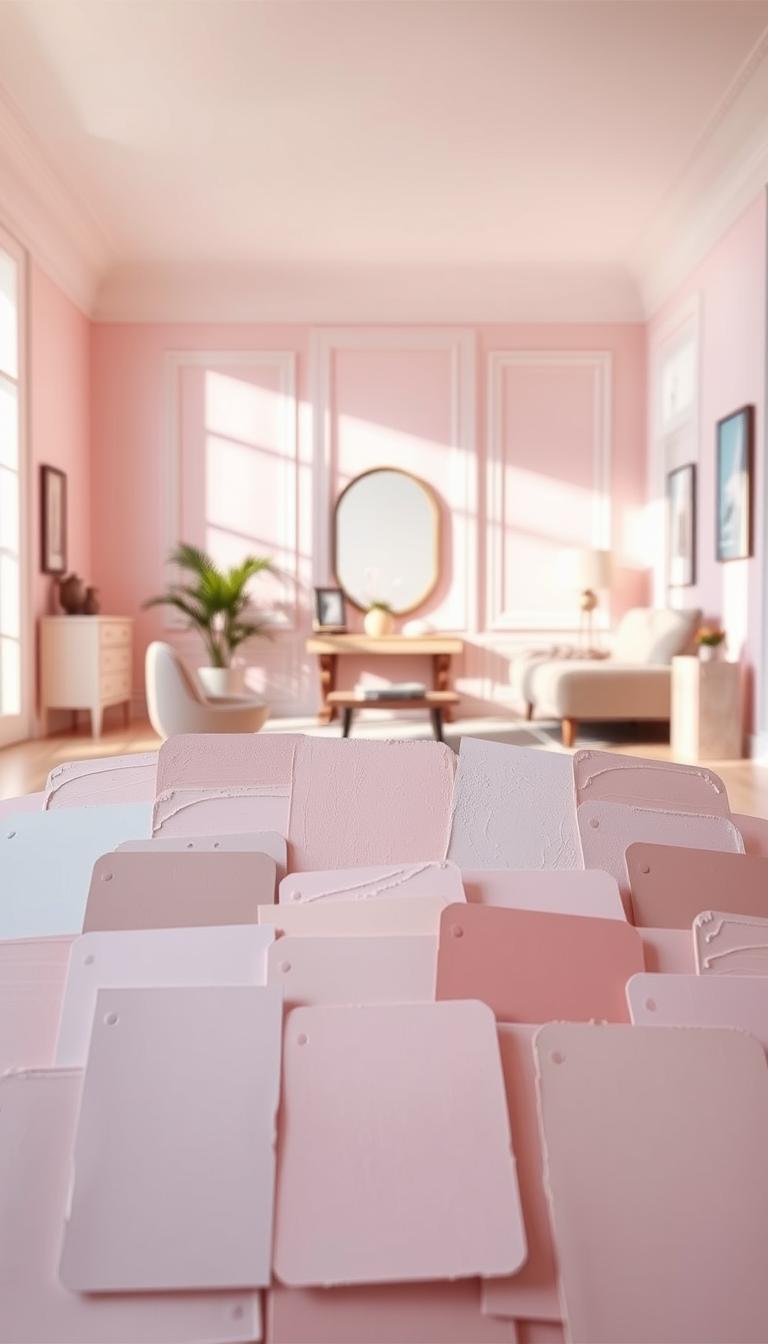
Foreground: A collection of various light pink paint swatches arranged in an aesthetically pleasing manner, each showcasing subtle differences in shade, tint, and tone. Middle: A well-lit room with soft, diffused sunlight illuminating the swatches, casting gentle shadows that accentuate the textures of the paint. Background: A minimalist interior design featuring light pink walls, tasteful furniture, and decorative elements that harmonize with the overall color palette. The atmosphere is serene and inspiring, inviting viewers to imagine how light pink can enhance a space. The lens should capture the scene with a slight depth of field for added focus on the swatches. Aim for a photorealistic representation with high definition, emphasizing the soothing and transformative qualities of light pink.

Shades

Shades add depth. Move from #FFD1DF toward #E2B9C6 and #C6A2AD for warmth without losing softness. Darker steps like #8D747B or #382E31 create sophisticated accents for cabinetry or frames.

Tints

Tints float. Options such as #FFE5ED and #FFEFF4 bounce light and keep rooms airy. Ultra-light tints like #FFF4F7 read as pale pink that feels like daylight, not stark white.

Tones

Tones mute saturation. Samples like #F4DBE2 and #EFE0E4 feel grounded and modern. They balance pale fields and deeper punctuation, preventing a scheme from becoming saccharine.

“I map these colors as a gradient — clients choose the right step when they can see the whole range.”

Category Sample Use
Shade #C6A2AD Hardware, frames, accents
Tint #FFEFF4 Ceilings, wide walls, nurseries
Tone #EFE0E4 Structure, trim, grounded fields

Light Pink

These near-identical swatches reveal how a slight hue shift completely changes mood. I walk clients through this all the time—one chip nudges toward warm, another hints at cool. The differences matter in textiles, paint, and branding.

A serene interior space showcasing light pink as the central theme. In the foreground, a beautifully arranged bouquet of soft pink peonies sits gracefully on a polished wooden table. The petals are lush, exuding a sense of tranquility. In the middle ground, a cozy seating area features a plush light pink sofa adorned with elegant throw pillows, inviting relaxation. A delicate pastel rug anchors the space, harmonizing with the color palette. In the background, large windows allow natural light to pour in, casting a soft glow across the room, enhancing the soothing atmosphere. The image should feel warm and inviting, embodying a sense of peace and rejuvenation, captured in high definition with a soft focus lens to emphasize the gentle hues and textures.

Similar Colors and How They Behave

Pastel Pink (#FFD1DC) skews a touch more red and gives a rosier warmth. Pig Pink (#FDD7E4) leans magenta and reads feather-light on walls. Vanilla Ice (#F3D9DF) and Pale Pink (#FADADD) are paler, ideal when you want barely-there warmth.

Named Web Colors

The HTML/CSS named lightpink is #FFB6C1 and the web pink is #FFC0CB. They sit in the same family but differ from common picks like #FFB5C0 or #FFD1DF.

Where It Sits in the Family

From pastel to vivid, these tones live on the calming end. I pair rose-adjacent hues with camel or ink for quiet luxury. Culture and fashion shape choices—some clients want nostalgia, others a modern hush.

  • Lavender Pinocchio (#EBDDE2) brings a soft lavender whisper for bedrooms.
  • Use these shades to link warm neutrals and cool accents in a palette.

See more related tones at shades of pink.

Color Mixing and Paint Recipes for Light Pink

Mixing the right wash for walls starts with exact percentages, not guesswork. I share two reliable recipes I use in the studio and on job sites.

Eight-primary approach:

Eight-Primary Method: Percentages and Balance

For a near-#FFD1DF wall, try 15% red, 3% magenta, and 82% white. Mix, make a swatch, and view it in morning and evening light.

Five-Primary Method: Simplified Mix

Prefer fewer tints? Use 11% magenta, 7% yellow, and 82% white. The yellow keeps the tone warm and livable without oversaturating the field.

  • Finish matters: satin bounces light; matte calms the surface.
  • For trim or cabinetry, add a touch of grey to deepen without losing cohesion.
  • Bring a printed swatch for a spectro read at the counter when matching brand color.
  • CMYK reference: #FFD1DF ≈ 0,18,13,0 — always proof on your substrate.
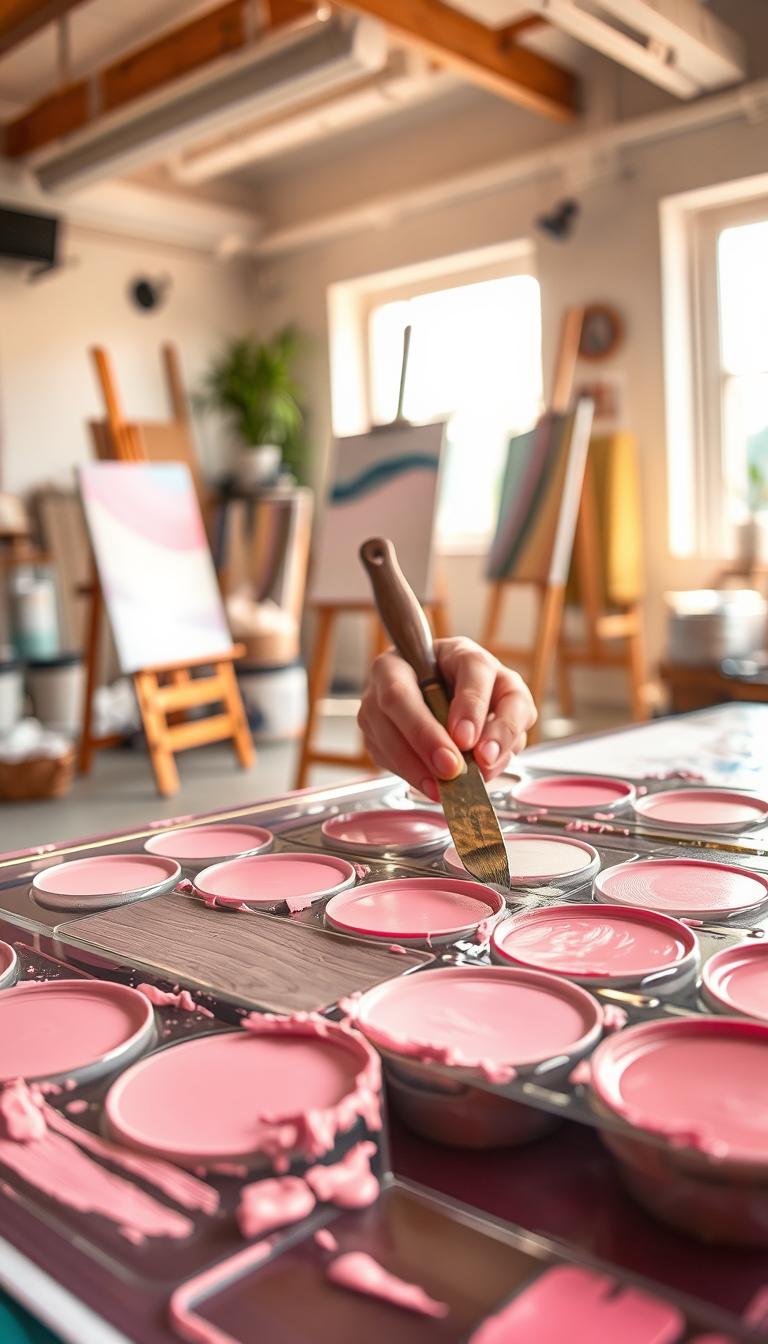
A photorealistic depiction of a vibrant color mixing scene focused on light pink hues. In the foreground, a clear glass palette holds varying shades of light pink paint, each blending seamlessly into one another, with delicate brush strokes visible. In the middle, a skilled artist's hands, clad in modest casual attire, are working with a palette knife to mix the colors, showcasing the rich textures of the paint. In the background, a softly lit art studio is illuminated by warm, natural light streaming through a large window, highlighting easels and scattered art supplies. The overall atmosphere exudes creativity and serenity, inviting viewers into the calming world of color mixing, emphasizing the soothing qualities of light pink.

“Paint a 24×24-inch swatch on foam board and move it through the room — it’s the fastest truth-teller.”

Method Primary Mix Best Use
Eight-primary 15% Red, 3% Magenta, 82% White Near-#FFD1DF wall swatches
Five-primary 11% Magenta, 7% Yellow, 82% White Simpler mixes; warm fields
Trim/Cabinet Add 1–2% Grey to base mix Refined contrast without losing palette

Design Palettes and Combinations Featuring Light Pink

Good palettes start with one confident choice and then gather supporting colors around it. I pick a main hue, then test how furniture, textiles, and metal finish it.

A beautifully arranged design palette featuring an array of light pink hues as the central focus. In the foreground, showcase elegantly stacked color swatches displaying soft blush, pastel rose, and muted salmon tones. The middle ground highlights a modern interior setting, featuring accents like plush cushions, decorative vases, and art pieces that complement the light pink color scheme. In the background, a softly lit room with natural light streaming through large windows creates a warm and inviting atmosphere. The lighting is bright yet soft, enhancing the subtle variations in the pink tones. Capture this scene from a slightly elevated angle, hinting at a stylish, serene space perfect for relaxation and creativity.

Summer Pairings

I pair #FFD1DF with grounded brown #60302D and olive #85822E. Add #ECCAD5 for a layered, linen-friendly look that reads warm and lived-in.

Winter Pairings

For refined winter schemes I use plum #703260 and amethyst #B551A1. A cool neutral like #EEE8EE keeps the field calm and gallery-like.

Spring Pairings

Spring calls for leafy #626B48 and dusty mauve #BEA3AB. Finish with breathable #F3EEE8 for airy backgrounds that feel fresh.

Analogous Combinations

For quiet tonal flow, move from #A75C6D to #C5A5AF and #D7B9BA, anchoring with deep #3D3235 for contrast.

Quick uses:

  • Introduce a blue accent (indigo upholstery) to anchor pale fields.
  • Use a darker tone on rugs or hems to add depth.
Season Key Hexes Accent Use When to Use
Summer #60302D, #85822E, #ECCAD5, #FFD1DF Linens, clay, pillows Casual, sunlit rooms
Winter #703260, #B551A1, #CCB2BA, #FFD1DF Curtains, art, throws Structured, elegant spaces
Spring #504147, #626B48, #BEA3AB, #FFD1DF Cushions, trim, vases Fresh, botanical interiors
Analogous #3D3235, #A75C6D, #C5A5AF, #D7B9BA Bedrooms, tonal walls Calm, layered schemes

Using Light Pink in Interior and Digital Design Today

A soft wash across walls or textiles changes how daylight reads in a space. I use pale washes to make rooms feel larger and calmer without losing warmth.

Calming Spaces: Walls, Textiles, and Accents

At home, a wall in #FFD1DF brightens a room without the glare of pure white. Textiles in #FFB5C0 add a tender, touchable layer that invites presence.

Try linen bedding with a grounded headboard. The space feels cocooned, open, and easy to unwind in the evening.

For a subtle statement, a single console or runner signals welcome at the door.

A serene and inviting interior space featuring a contemporary living room adorned with light pink accents. In the foreground, a plush light pink sofa adorned with soft white and gold cushions invites relaxation. On a sleek glass coffee table, a small bouquet of fresh white flowers adds a touch of elegance. The middle ground showcases a minimalist decor with light pink wall art and pastel decor items. Soft, natural light filters through sheer curtains, casting a warm glow across the room. In the background, light pink accents can be seen in the form of subtle wall paint, plush area rugs, and decorative items that harmonize the entire space. The atmosphere is calm and soothing, ideal for a peaceful retreat or a digitally-designed aesthetic that transforms any environment into a tranquil haven.

Digital/UI Applications: Hex Choices, Contrast, and States

On screen, pick a primary hex and publish it in your kit. Use CSS: #FFB5C0; SwiftUI and UIKit initializers keep cross-platform color consistent. Document hsv targets so developers know how to nudge states.

“Pair pale panels with near-black text; that contrast reads clean and humane.”

Context Recommendation Why
Background #FFD1DF High luminance (~72%) keeps fields airy
UI states Lower lightness / small saturation + hover Provides perceptible feedback
Contrast Text near-black 15.4:1 on black; 1.4:1 on white

Pro tip: that 87% blue lift in #FFD1DF gives a fresh effect—great for wellness apps or calm living rooms. Keep a developer block with hex, hex code, and platform code in your design system for faster handoffs. For more shade guidance, see shades of light pink.

Conclusion

Treat this color like a neutral with feeling—use it to steady a palette and warm materials. I find its high value in hsv and HSL keeps fields airy and forgiving.

Note the common hex targets—#FFB5C0 and #FFD1DF—in your dictionary color so teams align. Record rgb and hsv notes in your design system for reliable handoffs.

For paint, start near 82% white with small magenta or magenta+yellow adjustments, then test on the wall. Contrast is essential: #FFD1DF scores ~15.4:1 on black and ~1.4:1 on white, so plan foregrounds accordingly.

I pair this hue with lavender and a disciplined blue accent. It reads modern, humane, and quietly lasting—just the kind of color I reach for when a space needs to feel kinder.

FAQ

What exactly is a soft, pale pink and how does it differ from other rose tones?

A soft, pale pink is a desaturated, light tint in the rose family — think pastel or pale rose rather than vivid magenta. It reads gentle and airy because it has high brightness and low saturation, which sets it apart from deeper rose or pig pink shades used in bolder palettes.

Which hex, RGB, and HSV values should I use for a calm, airy shade?

For a calming, airy tone try a hex around #FFDDE6 with an RGB near 255, 221, 230. In HSV that’s roughly 340° hue, 13% saturation, 100% value. These numbers work well on screen and translate reasonably to print with CMYK adjustments.

How do I convert web hex to reliable CMYK for paint or print?

Convert hex to RGB, then use a color-managed workflow or software like Adobe Illustrator to get CMYK. Expect some shift — printed inks reduce brightness and can add warmth. I always proof on the intended paper and tweak cyan and magenta to preserve that soft appearance.

What are accessible contrast rules when using a pale rose background?

Aim for WCAG AA at minimum: normal text needs a contrast ratio of 4.5:1 against the background. Against very pale backgrounds you’ll need near-black text or increased weight. For headings or large text, 3:1 can suffice, but I prefer higher contrast for clarity.

Can you recommend hex alternatives for different moods (pastel, warm, cool)?

Sure — for pastel softness try #FFDDE6, for warmer blush lean toward #FFE4E8, and for a cooler, lavender-tinged variant use #F2EAF0. Each shifts the mood: pastel feels soothing, warm reads cozy, and cool reads serene.

What are simple paint mixing recipes for achieving a pale rose tone at home?

Start with a white base and add tiny amounts of red and a touch of yellow to warm, or a dab of blue to cool. A typical ratio is 98% white, 1% red, 1% yellow — adjust drop by drop. For a more muted tone add a hint of green or gray to desaturate.

How does this soft rose perform across seasons and design palettes?

It’s versatile: pair with light neutrals and wicker for summer; deep greens and navy for winter; fresh greens and creams for spring. It adapts by contrast — low contrast for calm rooms, higher contrast for lively spaces.

Are there standard CSS, SwiftUI, and Android snippets I can copy for this shade?

Yes. In CSS use background-color: #FFDDE6; in SwiftUI Color(red: 1.0, green: 0.866, blue: 0.902); in Android XML use #FFDDE6. Always test different displays and include accessible states for hover and active styles.

How do I choose between this pale hue and the browser color named “lightpink” (#FFB6C1)?

Choose based on brightness and intent. The browser “lightpink” is slightly stronger and more saturated. If you want a softer, airier feel pick a paler hex like #FFDDE6; if you want a recognizable web-safe feel, #FFB6C1 is a reliable option.

What fabrics, finishes, and materials pair best with a pale rose wall?

Natural linens, matte plaster, and warm woods create a nurturing atmosphere. Satin or silk accents add subtle sheen for depth. I often recommend plants and woven textures to balance the softness and bring in organic contrast.

Will a pale rose make a small room feel larger or cozier?

It can do both. Light, desaturated hues reflect more light, making spaces feel larger and airier. If you add warm textures and layered lighting it becomes cozy without feeling boxed in — a sweet spot for bedrooms and nurseries.

How does the hue interact with cool tones like lavender or blue-gray?

Pairing with lavender or blue-gray creates a serene, spa-like palette. The cooler neighbors pull the rose toward a delicate mauve and help keep the scheme sophisticated. I like this combo in bathrooms and calming work nooks.

Are there cultural or psychological effects tied to this shade I should consider?

Studies link soft rose tones to calmness, nurturing, and reduced stress. Culturally it often reads as gentle and reassuring. Use it where you want to foster rest, empathy, or soft-friendly branding gestures.

What are common mistakes when applying this color digitally or in paint?

The biggest mistakes are under-testing across devices and over-saturating in print. Avoid tiny text on pale backgrounds and don’t rely solely on a single sample—check multiple lights, displays, and materials before committing.

How do I maintain consistent color across web, mobile, and print?

Use hex for web, sRGB profiles for screens, and convert with color-managed tools for print. Keep swatches, document the hex/RGB/CMYK values, and request physical proofs for paint and print to ensure consistency.
Total
0
Shares
Share 0
Tweet 0
Pin it 0
Related Topics
  • Calming Pink Hues
  • Light Pink Decor
  • Light Pink Home Decor
  • Pink Color Palette
  • Pink Color Psychology
  • Pink Color Scheme
  • Pink Decor Inspiration
  • Pink Interior Design
  • Pink Room Transformation
  • Soft Pink Aesthetics
Jade Hunt
Jade Hunt

Hi, I’m Jade Hunt — your friendly guide to creating a beautiful, comfortable, and functional home. At Homiscape.com, I share practical home organization tips, budget-friendly decor ideas, and minimalist lifestyle hacks to help you design a space you’ll truly love. With over 7 years of experience exploring home improvement trends and DIY projects, I believe every home has the potential to be warm, inviting, and uniquely yours. Whether you live in a small apartment or a spacious house, my goal is to inspire you to make the most of every corner. Let’s turn your living space into your dream home — one idea at a time!

Previous Article
Ikea Kitchen Cabinets
  • General

Ikea Kitchen Cabinets: Affordable Solutions for Your Dream Kitchen

  • December 12, 2025
  • Jade Hunt
View Post
Next Article
Scandinavian Design
  • General

I Love Scandinavian Design: How to Bring it into Your Home

  • December 13, 2025
  • Jade Hunt
View Post
You May Also Like
Hayden Christensen House
View Post
  • General

Inside Hayden Christensen House: A Design Inspiration

  • Jade Hunt
  • January 26, 2026
Living Room Bedroom Combo
View Post
  • General

Creating a Harmonious Living Room Bedroom Combo

  • Jade Hunt
  • January 26, 2026
Color of the Year
View Post
  • General

Color of the Year 2026: What’s Trending in Home Design

  • Jade Hunt
  • January 25, 2026
Japanese Bedroom Decor
View Post
  • General

Japanese Bedroom Decor: Bringing Calm into Your Space

  • Jade Hunt
  • January 25, 2026
Western Style Bedroom
View Post
  • General

Western Style Bedroom Ideas for a Serene Retreat

  • Jade Hunt
  • January 24, 2026
Grey and Green Bedroom
View Post
  • General

Discover the Perfect Grey and Green Bedroom Color Scheme

  • Jade Hunt
  • January 24, 2026
Man Cave Couch
View Post
  • General

My Man Cave Couch: How to Pick the Coziest Spot

  • Jade Hunt
  • January 23, 2026
Palm Leaves Decor
View Post
  • General

Palm Leaves Decor: Bring the Tropics into Your Home Decor

  • Jade Hunt
  • January 23, 2026
Homiscape.com Homiscape.com

Input your search keywords and press Enter.