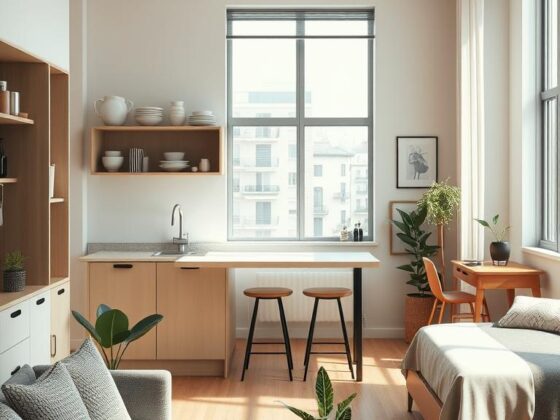
Can a simple divider change how you sleep, work, and feel at home?
I ask that question at the start of every planning session. I want to know how much privacy you need, how you use the room, and how to keep natural light flowing.
Think of a divider as a gentle shoreline—shaping the space without building a wall. It keeps sightlines soft, sound muted, and movement easy.
I match solutions to your daily rhythm. From airy slatted screens to quiet curtains, the right design keeps daylight traveling while carving out calm nooks for reading, work, or rest.
Practical wins: better sleep, clearer zones, and a smarter flow that still feels bright and open.
Key Takeaways
- Ask three questions first: privacy, use, and light.
- A light divider can shape a room without closing it off.
- Materials matter — choose slats, glass, or fabric to keep daylight moving.
- Good design protects sleep and supports daily routines.
- Stylish options exist for modest budgets and lasting value.
Why Bedroom Dividers Work: Privacy, Light, and Flow in One Smart Move
A smart screen does more than split a room — it rewrites how you move and feel in it.
Great design balances cocooned privacy with openness. A thoughtful room divider creates micro-zones so the sleep area feels sheltered while the rest of the space still breathes.
Light is precious. The best solutions borrow, filter, and bounce it — slatted wood, reeded glass, and open shelving keep rooms luminous while giving form.
Flow matters for wellbeing. A well-placed screen guides circulation around the bed instead of through it. That reduces nighttime bumps and daytime clutter and keeps routines calm.
I often buffer high-activity zones (desk, dressing) from rest zones. In shared setups, a partial-height or translucent partition protects privacy without making two cramped boxes.
- Sightlines: Redirect attention to a feature wall or shelf, not the bed.
- Psychology: Defined boundaries lower decision fatigue.
- Practical: Many options are freestanding and renter-friendly.
| Approach | Light | Privacy |
|---|---|---|
| Slatted wood | High — filters and bounces | Medium — visual screen, some openness |
| Reeded glass | High — transmits diffuse light | High — obscures detail |
| Open shelving | High — preserves flow | Low–Medium — depends on styling |
Bedroom Dividers
The right split begins with three simple priorities: privacy, natural light, and circulation.
Top priorities for a serene bedroom: privacy, natural light, and layout
My checklist starts with privacy—full, partial, or just a suggestion. Your answer narrows materials fast, from opaque panels to gauzy drapery.
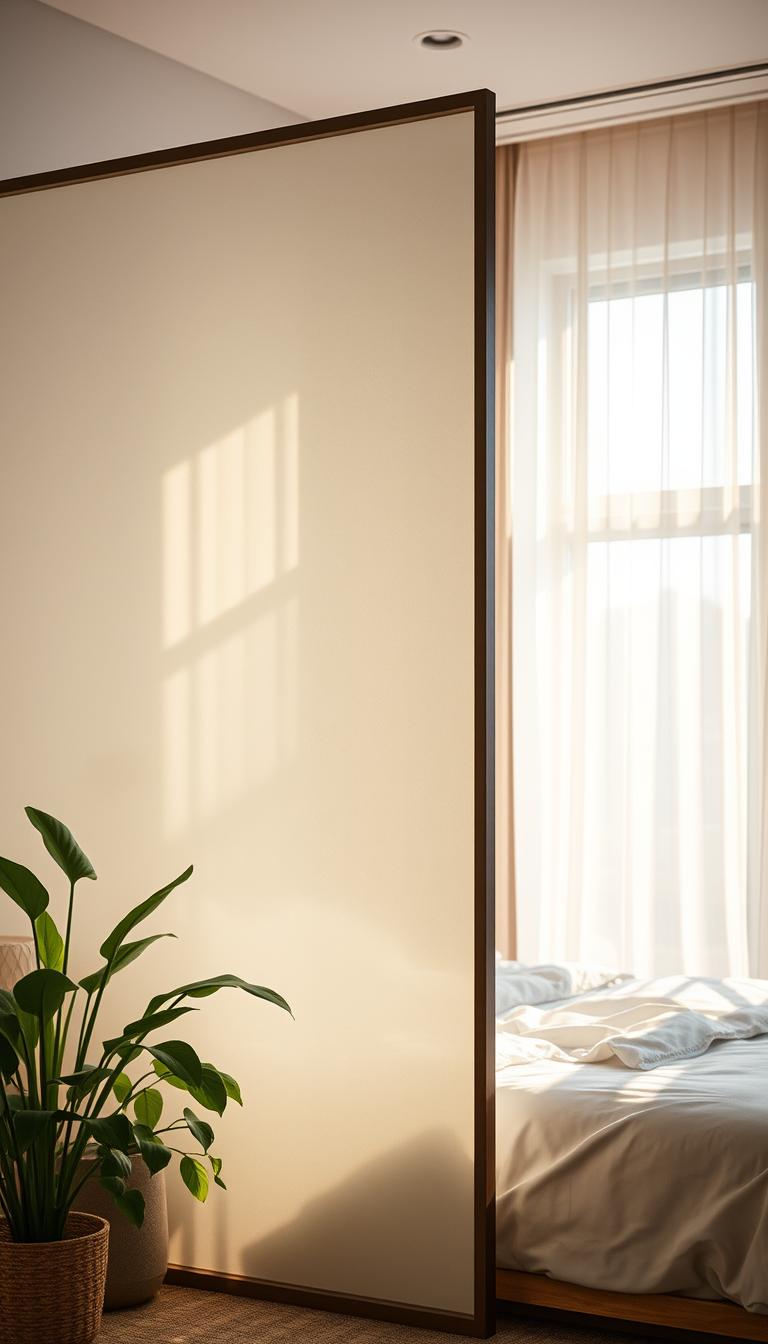
Next is natural light. If windows sit behind the proposed screen, pick perforated, glass, or open units so daylight still reaches the bed.
Layout is the third leg. I map paths for dressing, working, and entering the room so the divider supports movement rather than blocking it.
Matching divider ideas to your design style and room size
Style matters. Industrial rooms favor slim metal and glass. Boho rooms warm up with macramé or linen. Classics rely on wood joinery and vintage screens.
For small spaces, prioritize thin profiles and translucent surfaces that don’t crowd the room. Tall ceilings? Go vertical with floor-to-ceiling slats or bookcases.
If your design style shifts, choose modular or reversible pieces you can repaint or reconfigure. In homes with kids or pets, anchor units and round edges first.
| Priority | Best option | Why it works |
|---|---|---|
| Privacy | Opaque panel or heavy drape | Full visual block for restful sleep |
| Natural light | Reeded glass or open shelving | Diffuses sun while keeping brightness |
| Layout | Freestanding screen or bookcase | Guides circulation and adds storage |
Let There Be Light: Airy Room Divider Ideas That Don’t Block the Sun
Letting light lead your plan changes everything about how a room feels. I favor solutions that define zones without stealing daylight.
Thin wooden slats that define zones while preserving natural light
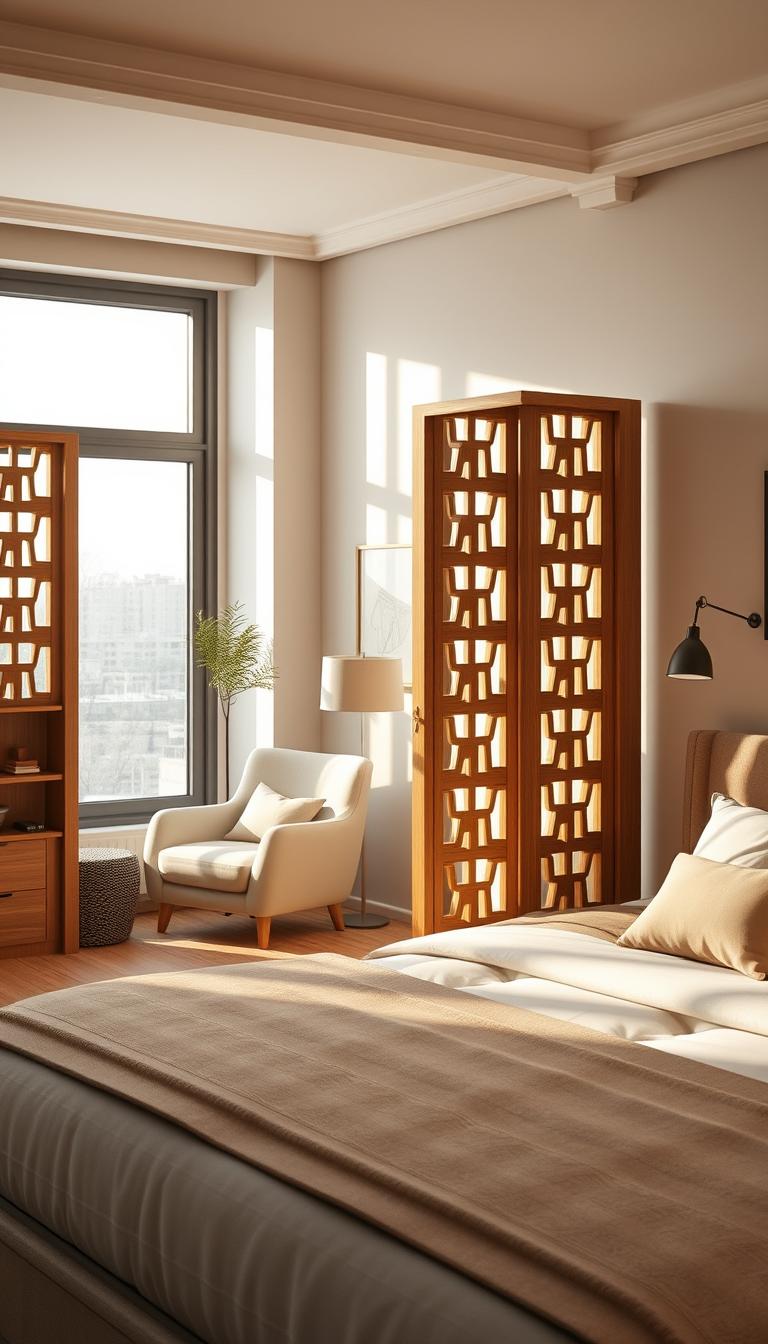
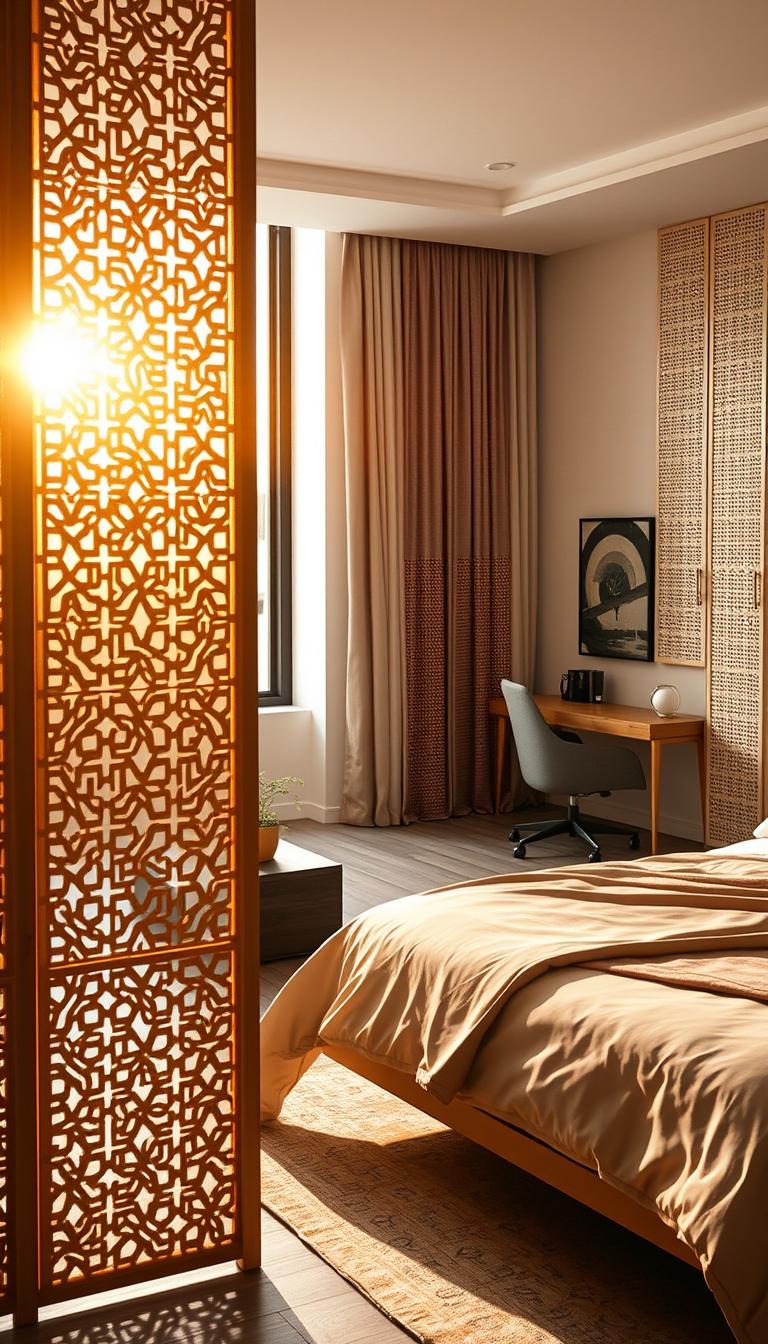
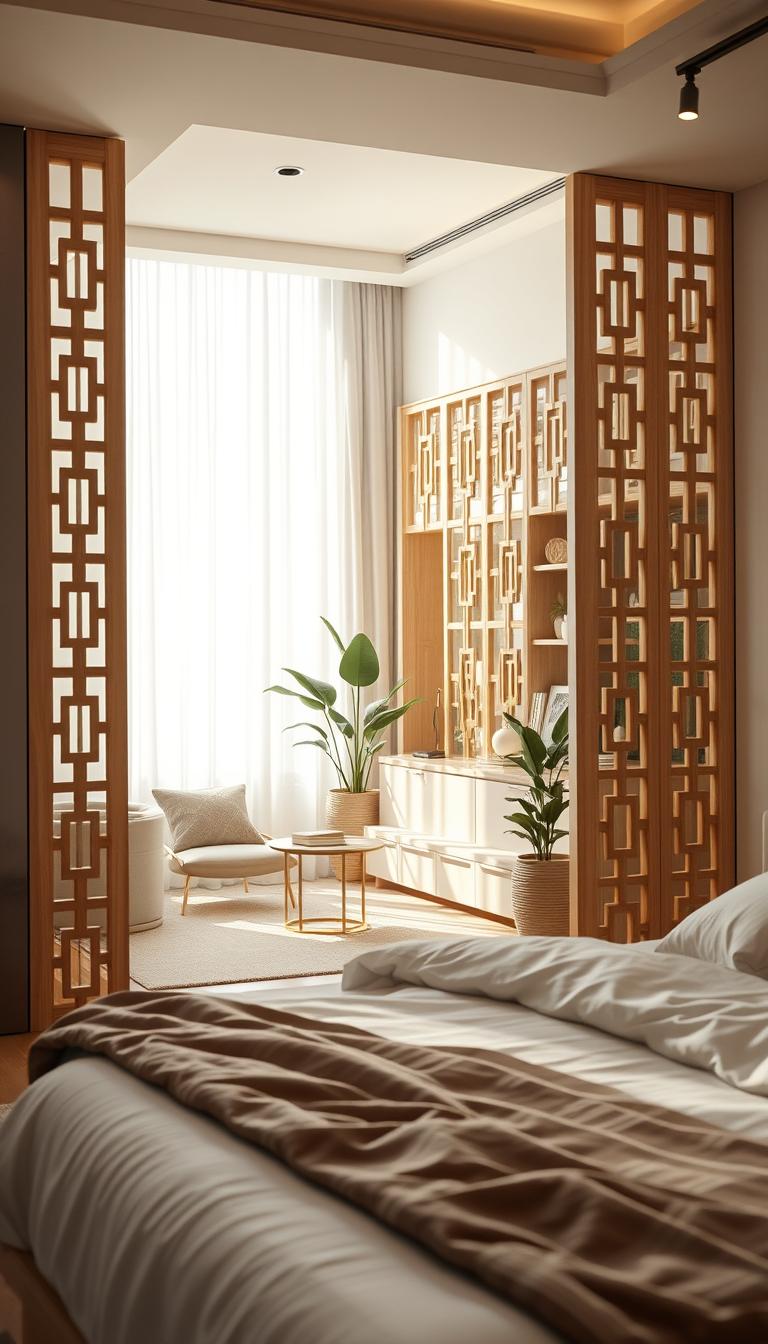
Thin wood slats act like a sun filter. Rays pass through, but the sleep area still reads as its own place.
Adjust spacing for privacy. Tighter slats block sightlines. Wider slats keep the space airy.
Glass and steel partitions for airy separation with modern edge
I love a glass-and-metal partition for a modern feel. The slim steel grid gives rhythm while glass keeps the room bright.
Mix wood finishes into the palette so the look stays warm, not cold.
Partial glass walls to keep a small room feeling open
Partial glass walls that stop at the ceiling carve a calm alcove without shutting off daylight. Use clear, reeded, or frosted glass based on privacy needs.
Mirrored folding screens to bounce light in small living bedrooms
Mirrored folding screens are magic in compact spaces. Place panels opposite a window at a slight angle to bounce sunlight deeper without glare.
- Tip: Choose a screen or divider based on sightlines and how much borrowed light you want.
- Tip: Warm textiles and wood floors soften glass-and-steel schemes.
| Solution | Light | Privacy | Best for |
|---|---|---|---|
| Thin wooden slats | High — filtered | Medium — adjustable | Windows behind the divider |
| Glass & steel partition | Very high | Medium — depends on glass | Modern living room or sleep nook |
| Partial glass wall | High — ceiling-height | High with frosted/reeded options | Small rooms needing openness |
| Mirrored folding screen | High — reflective boost | Low — visual only | Studio corners and narrow rooms |
Soft Separation: Curtains and Drapery That Create Calm, Flexible Zones
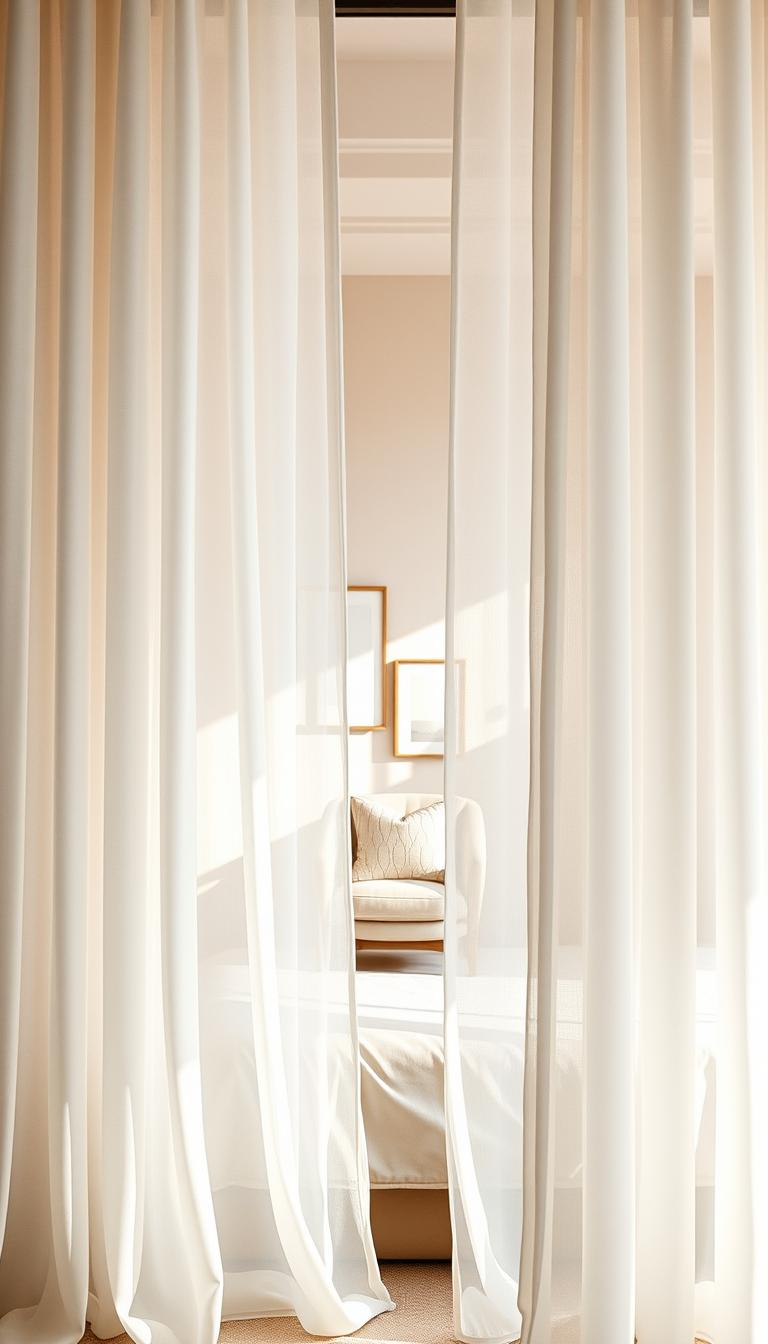
A ceiling-mounted track turns fabric into a room-shaping tool. It’s a quick way to make a sleep sanctuary or to hide a work nook when you want the space to feel restful.
“I used drapes to carve zones after parties — they give great privacy in the evening,” said Dane Austin.
Ceiling-mounted drapery to carve out a sleep sanctuary
Ceiling tracks let panels glide wall-to-wall, so with one pull you create a quiet cocoon. For rentals, tension rods and discreet anchors keep the change reversible and landlord-friendly.
Velvet vs. sheer panels: choosing texture for privacy and mood
Velvet panels add weight and superior privacy; sheer or linen filters daylight and keeps movement soft. I often specify two layers—sheer by day, blackout by night—to keep flexibility without sacrificing calm.
- Sound: Heavy fabrics absorb echo and soften hard-floor acoustics.
- Style: Ripplefold headers stack neatly for a tailored look in tight clearances.
- Texture: Choose moss, sand, or dusky blue to lower visual stimulation and support your nervous system.
- Practical: Floor-length panels that kiss the floor act like a screen without puddling or trapping dust.
Doors That Disappear: Sliding, Pocket, and Barn Door Ideas for Bedrooms
Sliding doors can vanish into the wall and feel like a magic trick in tight spaces. I like solutions that keep light moving while giving clear separation when you need it.
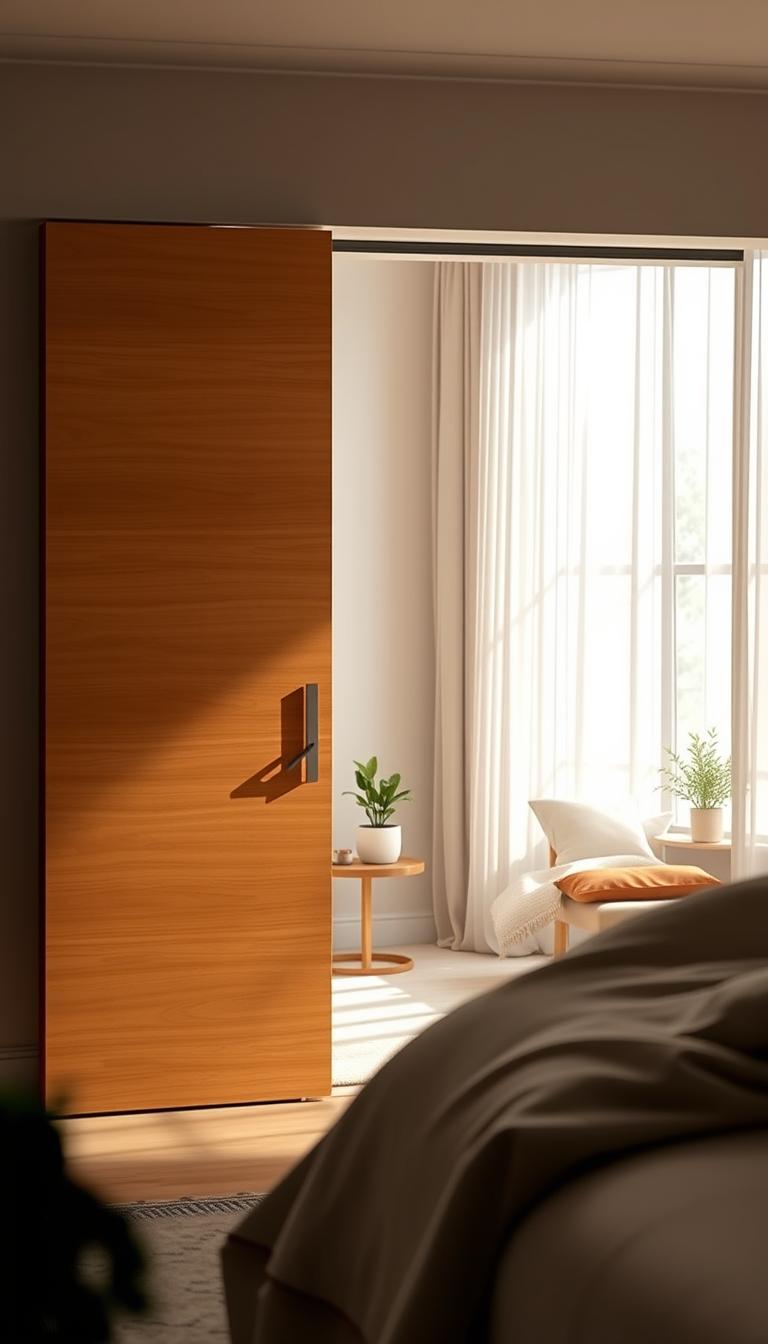
Glass pocket doors keep visual connectivity and let daylight pass while offering privacy. Pair reeded or frosted glass to blur silhouettes but still share brightness.
Barn doors and simple sliding frames
Barn doors add rustic charm and a firmer barrier than curtains. Many kits install for under $200 and make a quick, high-impact upgrade.
For an industrial vibe, build a sliding frame from two-by-twos, Masonite, wheels, and a plumbing pipe track. Color-match the track or choose blackened metal for contrast.
“Soft-close hardware made nights calmer for a client who shares one small room,” I often say.
- Tip: Pocket doors save swing clearance and keep the room visually open.
- Tip: Keep widths at least 30 inches so furniture moves smoothly later.
- Tip: Combine a door with a side panel for partial screening when full closure feels heavy.
| Solution | Light | Privacy | Best fit |
|---|---|---|---|
| Glass pocket door | High — shared daylight | Medium — frosted/reeded options | Small rooms needing openness |
| Barn door | Medium — depends on material | High — solid closure | Rustic or mixed styles |
| Pipe-track sliding frame | High — slim profile | Medium — depends on panel | Loft or industrial style |
Storage-Savvy Dividers: Bookcases, Cubbies, and Headboards That Work Double Duty
Smart shelving does more than hold books; it carves purpose into a room while keeping light and air flowing.
I often pick pieces that pull double duty—practical and pretty. A well-planned room divider becomes a tidy backbone for daily life.
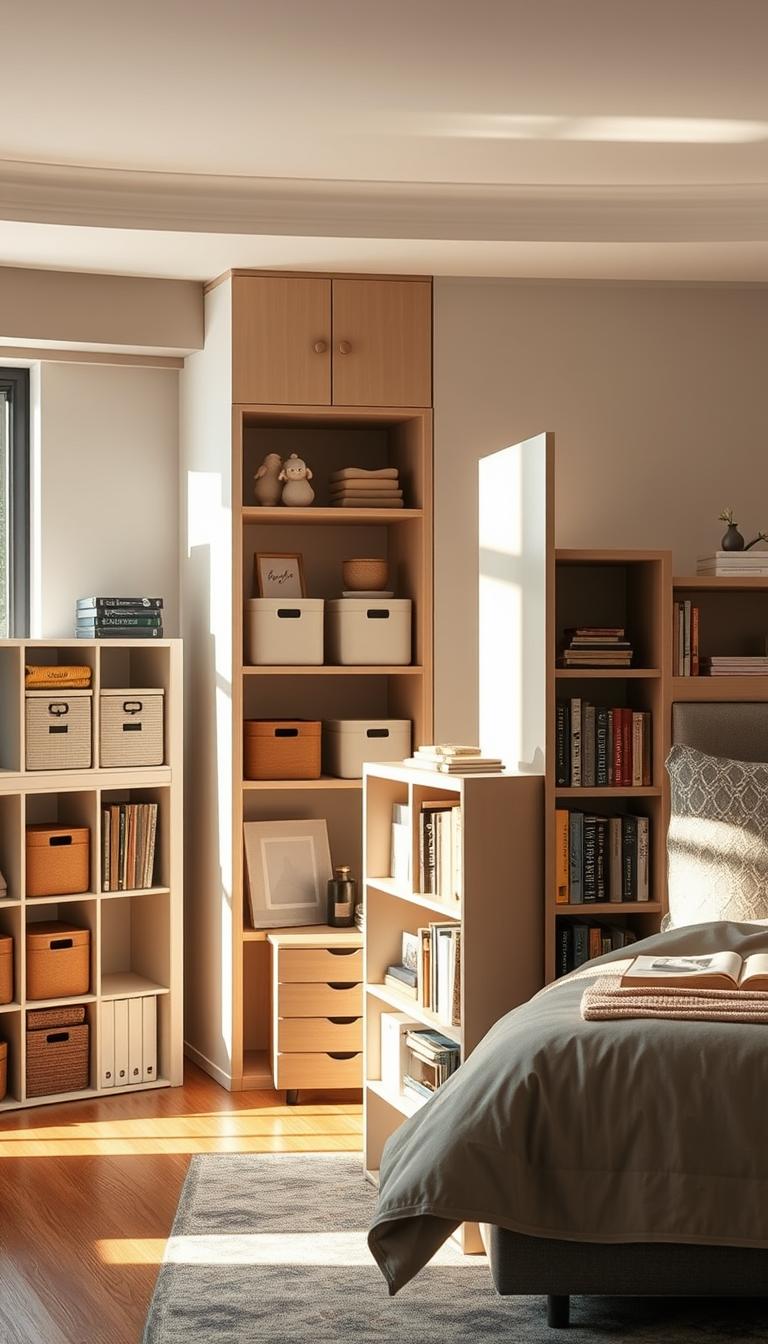
Floor-to-ceiling units act like light, hollow walls. They offer display, storage, and subtle privacy while keeping sightlines open.
Open shelving filters daylight and showcases decor. Anchor tall units to studs and secure bases for safety in homes with kids or tremors.
An oversized headboard with rear shelving can hide a small desk and turn a sleep area into a quiet office nook. I’ve used this trick to tuck clutter behind the bed and keep mornings calm.
Modular cubbies adapt as needs change. Today they hold clothes; tomorrow they hold toys or office gear. Back-to-back tall units give storage on both sides and form a cozy tucked-in bed zone.
For airiness, stagger shelf heights and leave negative space. Add concealed bins low down for cables, yoga props, or bedtime reads so surfaces stay serene.
Quick checklist:
- Floor-to-ceiling units act like architectural walls with display and storage.
- Open shelving filters light while organizing decor; anchor to studs for safety.
- Modular cubbies adapt as life changes—easy to reconfigure from dressing to office.
- Back-to-back tall units create storage on both sides and a cozy tucked bed zone.
Built-In or Bespoke: Architectural Moves That Quietly Divide Space
A thoughtful insert can split a big room into usable parts without the heaviness of a full wall. I favor moves that feel like they belong to the house—small, considered, and helpful.
Refurbished doors and old window frames as character-rich screens
Salvaged doors add warmth and a story. I repurpose a solid leaf or glazed panel to make a soulful divider that still lets light breathe through glass panes.
Old window frames work especially well over partial-height walls. They give separation while keeping daylight flowing. Seal and stabilize vintage materials to avoid squeaks and splinters.
Columned dividers that direct traffic without blocking light
Columned room pieces suggest a threshold. They guide movement and feel like the plan was always intentional.
Use a shallow plinth or low shelf between columns for keys, plants, or a bedside book. Match trim profiles so the new element integrates with existing design.
- Salvaged doors and frames create light-friendly, history-rich screens.
- Partial-height walls topped with vintage windows divide without stealing daylight.
- Translucent panels blur views where a bed meets a traffic path.
Textural Screens: Trellis, Macramé, and Linen for Organic Warmth
I love how a tactile screen can make a corner feel intentional and calm. Natural fibers and simple structures add texture without fuss. They make a room feel lived-in and kind.
Indoor trellis work brings greenery and decor together. Train vines or hang planters to create a living divider that breathes. Stain the wood warm to match floors or paint to echo trim for a built-in look.
Macramé adds handmade softness. Mount a panel on a dowel with ceiling hooks for a clean, reversible install. You can nestle small air plants into knots for a sculptural touch.
Linen panels drift with air and glow in daylight. Use a weighted hem so the fabric hangs true near vents. In minimalist or boho style, linen creates gentle separation—great for meditation corners or reading perches.
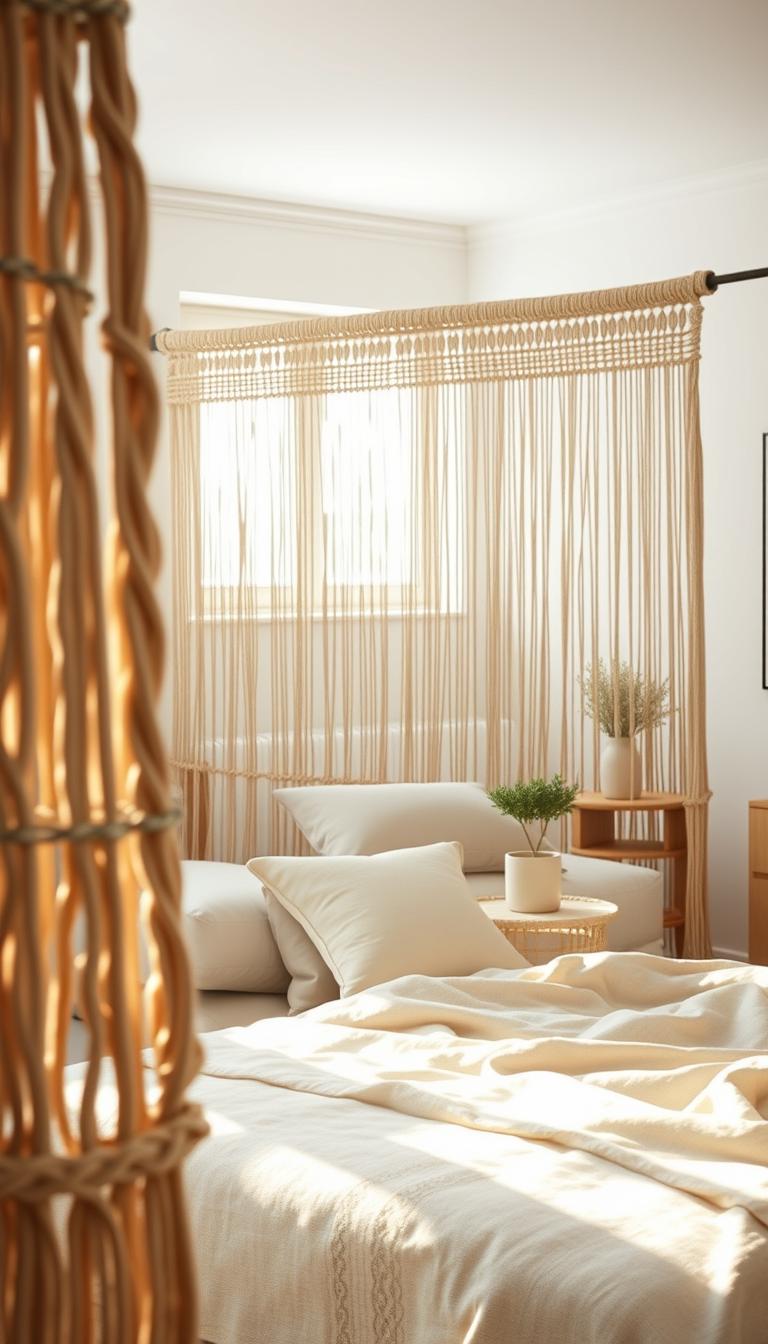
- These materials give soft division, not full privacy—ideal for calm rooms.
- Choose low-light plants if the divider sits away from windows.
Room Divider Ideas That Match Your Ceiling, Walls, and Color Story
A well-chosen screen can act like a punctuation mark for a room, giving a seat or corner its own meaning.
I once used a chinoiserie panel in deep green to ground a large reading nook — the chair finally felt like it belonged. Match or contrast with intention and the space reads as thoughtful rather than patched together.
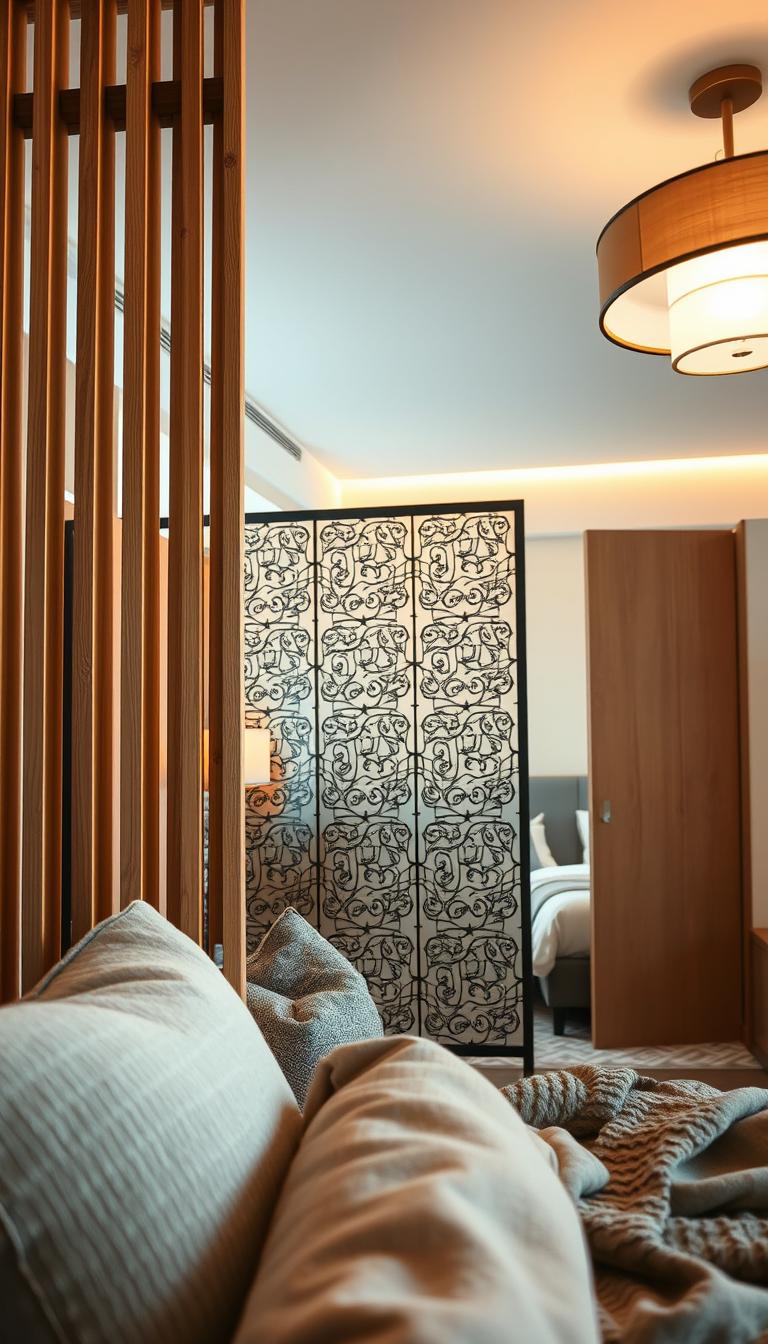
Using a contrasting screen color to ground a reading nook
A contrasting screen anchors a seating area and gives the eye a place to rest. Pick a slightly desaturated accent so the change feels calm, not shouty.
Echoing ceiling tones with vintage screens for cohesive design
If your ceiling wears a bold hue, echo it on a vintage screen to tie the scheme together without repainting a wall. Repeat the screen tone in a throw or pillow nearby for cohesion.
- For low ceilings, choose vertical patterns to lift sightlines.
- For tall ceilings, use horizontal banding to balance scale.
- Consider sheen: matte hides fingerprints; satin reflects lamp light softly.
- Use natural textures—rattan or canvas—to keep the palette grounded.
Studio Apartments and Small Living: Smart Ways to Divide Without Shrinking Space
Small homes need clever moves that add function without feeling heavy. I often work with clients who want privacy and light in equal measure.
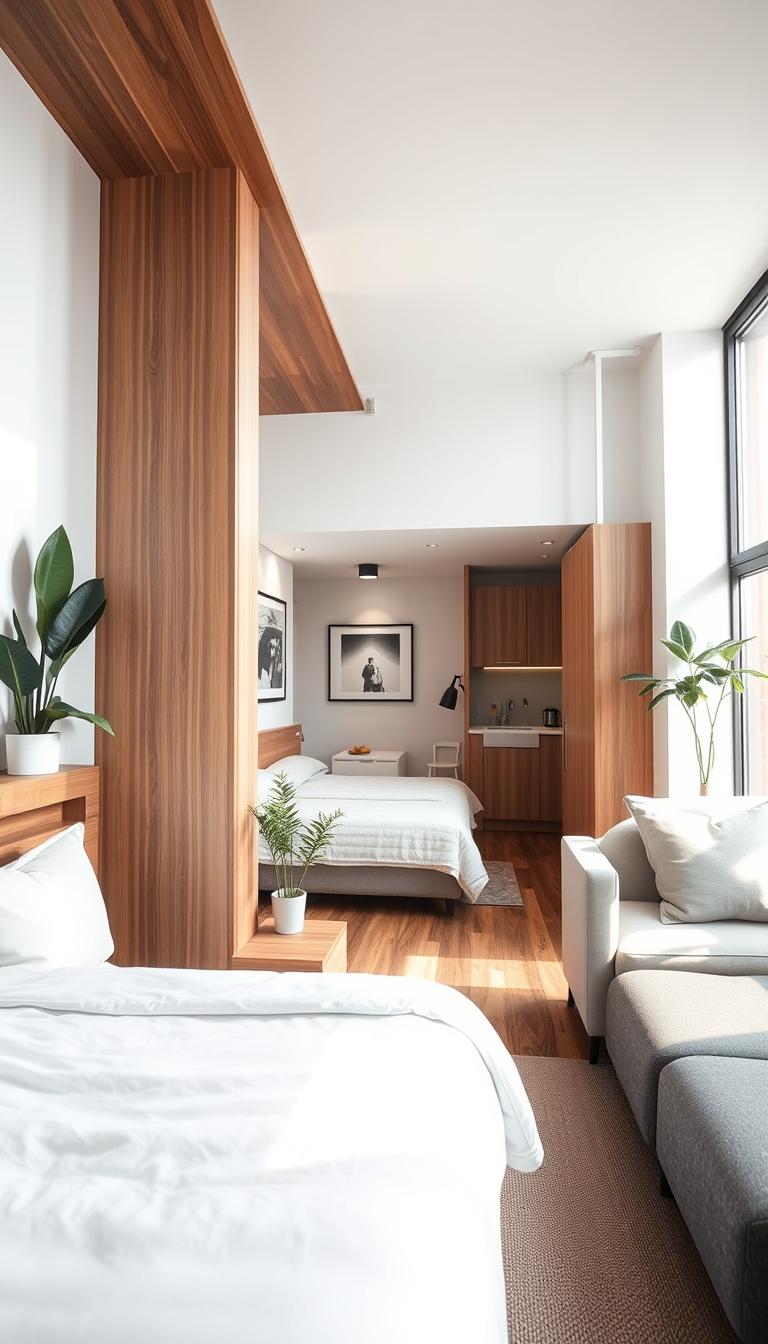
Folding screens are the studio’s best friend — lightweight, movable, and easy to tuck away. I recommend shoji panels for shared light, or fusuma for stronger privacy.
Folding screen room dividers for quick, movable privacy
A folding screen can carve the sleep or work zone at night and fold flat by day. Put mirrors on the back to bounce daylight into the living room and make the space feel larger.
Suspend shelves from the ceiling to define entry or dressing zones
Ceiling-suspended shelves cue a threshold without heavy mass. They hold books, plants, and keys while keeping floors clear.
- Keep pathways clear: aim for at least 30 inches so the room stays breathable and safe.
- Choose rolling bases or collapsible frames for fast reconfiguration.
- Clip-on battery lights under shelves add soft evening glow without wiring.
- Use light colors and vertical lines to visually enlarge tight quarters.
Want more ideas on carving open plans? Try this screen room divider guide for inspirational layouts.
Wood, Metal, or Glass: Choosing the Right Material for Your Bedroom Divider
Material choice shapes light, sound, and the room’s personality. I always ask where you want warmth, where you need light, and how much sound control matters.
Warm wood for cozy decor and DIY tweaks
Wood feels familiar and calming. You can stain, paint, or panel it to match your decor and it ages nicely.
DIY builds with plywood and common lumber often cost less than store options. For sustainability, pick FSC-certified wood and low-VOC finishes.
Slim metal frames for contemporary style
Metal frames give a slim profile and a modern edge. They disappear visually and suit industrial or minimalist schemes.
All-glass and mixed panels to keep light flowing
Glass maximizes daylight. Use frosted or reeded panels where silhouettes need softening. I often blend wood and glass for warmth plus glow.
- Maintenance: glass needs wiping; raw wood benefits from oiling.
- Acoustics: thick wood mutes sound more than metal-and-glass grids.
- Finish tips: match metals to existing hardware or choose contrast on purpose.
| Material | Light | Privacy | Maintenance |
|---|---|---|---|
| Wood | Filtered — medium | High — solid options | Oiling or finishing; low upkeep |
| Metal frame | High — slim profile | Low–Medium — open look | Wipe clean; rust-resistant finishes best |
| Glass / Mixed | Very high — shares daylight | Medium–High with frosted glass | Regular cleaning; seals for longevity |
Want technical tips on choosing materials? See our guide on choosing internal room divider material for more on finishes and performance.
DIY Bedroom Divider Projects You Can Start This Weekend
A few tools, good fabric, and some hinges are all you need to craft a screen that fits your life. I like projects that feel doable and look intentional. Below are four quick options you can finish in an afternoon or over a weekend.
Build a DIY folding screen with fabric and hinged panels
Staple breathable linen or canvas to simple frames. Alternate hinge sides so the folding screen concertinas neatly and stores flat.
Create a wood divider screen sized to your space
Use plywood and common lumber to build a custom screen—many builds cost under $200. Pre-drill, add corner braces, and finish with a low-VOC topcoat.
Repurpose doors or shutters into a unique folding screen
Join salvaged doors with hinges, sand edges, add soft-close hardware, and seal for a character-rich result that moves easily.
Tree branches and wooden blocks for an organic, artful partition
Anchor branches or chunky blocks in a sturdy base with stones. Weave fairy lights for soft glow and secure everything for safety.
- Pro tip: Add hidden casters to heavy pieces so rearranging the room stays effortless.
- Material tip: Choose breathable fabrics and water-based finishes to keep air quality fresh.
Flexible Screens: Open-and-Close Options for Multi-Use Bedrooms
When you need a quick transition between work and rest, movable screens are the quiet hero. They let a space change function without renovation and keep mornings calm.
Shoji panels glow with backlit warmth. They preserve light and softness while hinting at separation. Fusuma panels, by contrast, give deeper visual privacy — great when guests stay over or when you need a full sleep sanctuary.
I often recommend locking-wheel bookcases as a hybrid solution. Roll one out to create an office by day and tuck it back at night. They work best on hard floors and when casters have strong locks.
- Shoji screens glow softly and preserve daylight.
- Fusuma panels grant deeper privacy for overnight guests.
- Locking-wheel bookcases let rooms become an office or a guest zone fast.
- These options protect sightlines more than sound — layer rugs and drapery if acoustics matter.
- Map caster turning radii and cable management before installing mobile pieces.
| Option | Light | Privacy | Best for |
|---|---|---|---|
| Shoji screen | High — translucent | Medium — visual blur | Shared rooms needing light |
| Fusuma panel | Low — opaque | High — solid block | Guest stays or deep sleep zones |
| Locking-wheel bookcase | High — open shelving | Low–Medium — depends on styling | Hybrid office/guest spaces on hard floors |
Privacy Levels: How to Get the Right Feel for Sleep, Work, and Relaxation
Start by picturing the doorway: what should greet you, and what should stay out of sight?
Sightlines first. From the main seat and the entry, note what you want visible. That decision narrows material choices fast.
Sleep zones often need solid or layered solutions. For daytime calm, translucent or open panels usually work well.
Sound is trickier—soft finishes matter. Pair a divider with rugs, heavy curtains, or wall hangings to mute echoes and protect rest.
- I map tasks to privacy: heads-down work needs more opacity; relaxing wants light and a view.
- Consider height—a 5–6 foot screen can shield a bed without crushing the scale.
- Mix materials: a solid base for grounding, see-through top for borrowed light.
- Use dimmers and warm bulbs near the split to keep evenings circadian-friendly.
Test before you commit. Mock up with cardboard or sheets to feel how movement, sightlines, and sound change. I always do this with clients—it saves money and gets the mood right.
Measure, Mount, and Anchor: Safety and Installation Tips
Before you cut holes or buy hardware, measure and picture how the unit will live in the room. I say this after years of fixes where a missed stud or a shifting plan caused extra work. A calm plan keeps the project tidy and safe.
Start with a survey: map studs, outlets, HVAC returns, and door swings. Note baseboards and vents so your piece sits plumb and quiet. For sliding panels, check ceiling clearance and the floor path.
Anchoring tall units and shelving
Bookcases used as a divider should be secured with L-brackets to wall studs and anchored at the bottom to prevent tipping. Open shelving needs the same care—especially in homes with young children or in earthquake-prone areas.
Ceiling tracks, floor guides, and quake-wise fixes
Use ceiling tracks with floor guides for sliding doors so panels glide straight and don’t wobble. In quake zones, lower the center of gravity: secure bases, avoid top-heavy decor, and add safety film on any glass panels.
- Measure twice, install once: mark studs and swings before you place the piece.
- Anchor to studs: L-brackets and anti-tip straps add peace of mind.
- Leave clearance: shim for baseboards and vents for a rattle-free fit.
- Rental-friendly: use tension posts or cleats to limit holes while keeping stability.
- Hardware checks: match weight ratings and pick corrosion-resistant finishes for humid rooms.
I often mock-install with cardboard or a bookcase pushed into place. It’s a cheap way to feel sightlines and circulation before final hardware. Do that, and you’ll sleep easier knowing the installation was done right.
Budget to Bespoke: Cost-Savvy Ways to Divide a Bedroom
You don’t need a big renovation to create useful zones—small buys often start the best experiments.
Start with affordable moves. A basic four-panel folding screen costs about $20–$50 at big-box stores. It’s light, easy to move, and a perfect test for how a new layout feels in your room.
I’ve used a folding screen to try sightlines before recommending a permanent plan. If you like the change, step up: barn door DIY kits often run under $200 and add real function and charm.
When to invest: choose custom metal-and-glass partitions if daylight is scarce and you need a slim, light-passing solution. Opt for bespoke built-ins when storage and architectural presence solve multiple problems at once.
- Cheap pieces can look luxe with paint and new hardware.
- Reuse salvage doors to add character on a budget.
- Factor anchoring, hardware, and time into the final cost.
- Pick reversible options if resale matters.
| Option | Cost Range | Best for |
|---|---|---|
| Folding screen | $20–$50 | Quick tests, flexible room zoning |
| Barn door kit | Under $200 | Function + style, low-install DIY |
| Custom glass & metal | Higher | Light sharing, sleek separation with storage potential |
Conclusion
Make one small change and the whole room can shift. Start with purpose: know whether you need privacy, borrowed light, or better flow. That clarity makes choosing room divider ideas fast and sure for your home.
Whether you pick soft drapery, glass-and-steel clarity, or a storage-rich bookcase, the right piece will not simply separate—it will harmonize. The best room dividers find a way to divide room energy without shutting life out.
Small moves matter. Folding screens, suspended shelves, or a trellis can reset a corner in an afternoon. Invest where it lifts daily wellbeing—calmer sleep, tidier corners, easier routines—and let your style steer materials so the solution feels like it always belonged in the space.
I’ve seen many rooms find their rhythm with one intentional choice. Yours can too.