
Homiscape.com
  • Homepage
  • Ideas by Room
    • Bathroom
    • Bedroom
    • Home Office
    • Kitchen
    • Living Room
    • Outdoor
Categories
  • Bedroom
  • General
0
0
Homiscape.com
Subscribe
Homiscape.com
  • Homepage
  • Ideas by Room
    • Bathroom
    • Bedroom
    • Home Office
    • Kitchen
    • Living Room
    • Outdoor
Curtain Room Divider
  • General

Curtain Room Divider: A Simple Way to Redesign Your Room

  • December 18, 2025
  • Jade Hunt

Total
0
Shares
0
0
0

Have you ever wondered if one soft swipe could change how your whole space feels? I ask that because I’ve redesigned countless small homes with a single move—a curtain drawn on cue.

I’ll show how a simple textile can create zones without dust, permits, or drama. It gives you privacy and calm flow—bed here, work there—then opens when guests arrive.

Unlike heavy partitions, curtains breathe. They filter sound, lift style, and keep energy moving. Think spa-like pockets that feel intentional, not improvised.

Practical, renter-friendly, and budget-savvy, this way installs fast and moves with you. Later, I’ll compare blackout vs. sheer options, and share two solid installation paths—DIY wire and ceiling track—so you can pick what fits your life.

Key Takeaways

  • Fast impact: A curtain can redefine space in an afternoon.
  • Privacy and light: Choose fabrics to balance both.
  • Renter-friendly: Easy to install and remove without damage.
  • Style matters: Texture and length turn function into design.
  • Two install options: Affordable wire or smooth ceiling track.

Why a Curtain Room Divider Works for Modern Spaces

A soft partition can turn one open floor into separate zones in minutes. I use this trick in tight layouts all the time. It gives instant privacy and keeps the airy feel people love.

Think of it as a temporary wall that tucks away when you want flow. Ceiling-mounted tracks fit into existing structures, even dropped ceilings, so installation is often quick and clean.

Instant privacy, light control, and flexible layouts

In an open-plan living room, a room divider is the fastest way to create a private area without heavy construction. Pull it closed and the space feels settled; slide it open and you get full flow again.

In a studio, separating the bed from the main area improves sleep and focus. Your brain learns the zones: work at the desk, rest in the sleeping frame.

  • Acoustics & light: Soft panels soften sound and reduce glare. Pair sheers for daytime light and blackout for night privacy.
  • Versatility: Commercial-grade track systems handle long spans and hide neatly when you don’t need them.
  • Design boost: Vertical fabric adds rhythm and frames focal areas without rigid lines.

“I used a track in my apartment and it felt custom — not makeshift.”

Today’s homes need to do more. A well-chosen panel makes a single area serve work, rest, and play with style and ease.

Plan Your Space: Measure, Choose Fabric, and Pick a Track

Decide what you need the space to do first; that goal makes measuring and fabric selection simple.

Identify the area—bed privacy, a compact home office, or a guest nook. Name the purpose and everything else lines up.

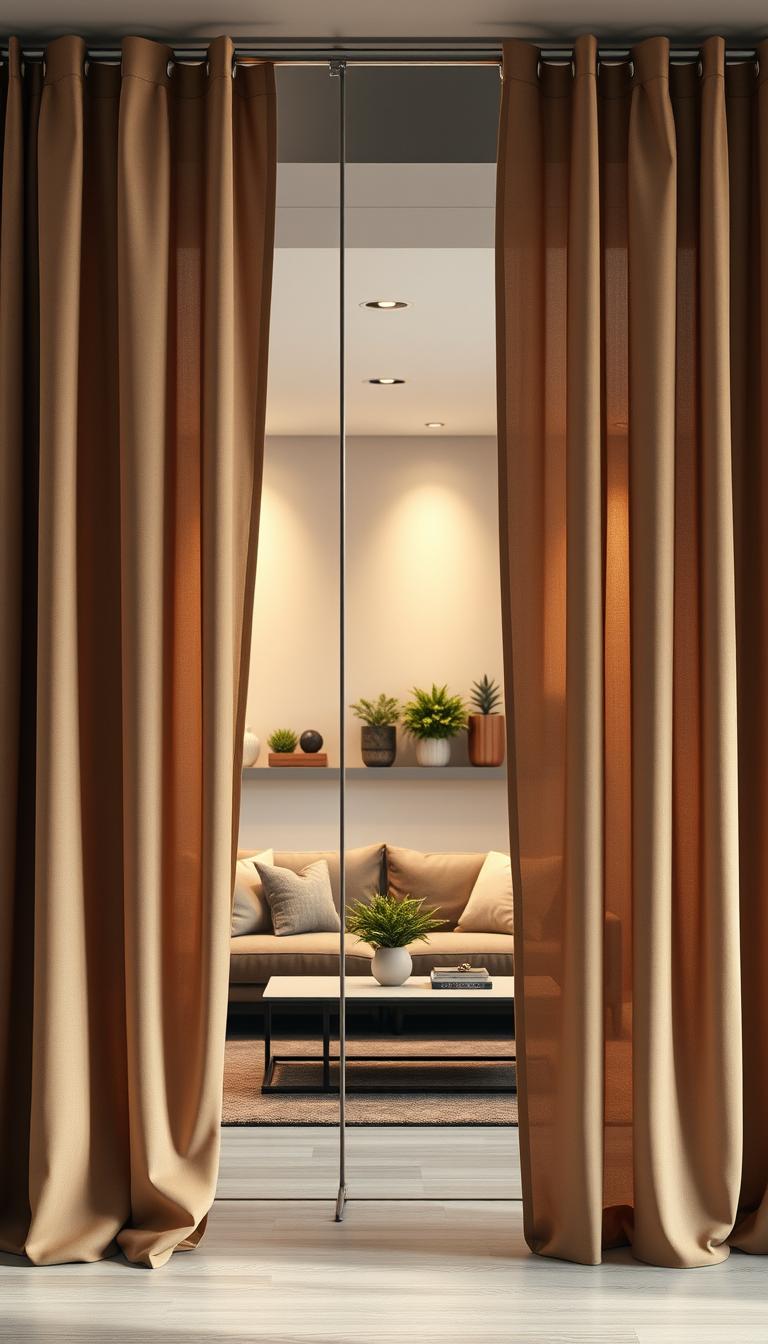
A well-planned interior space showcasing the process of selecting a curtain room divider, focusing on a bright, inviting room. In the foreground, a sleek table is cluttered with measuring tapes, fabric swatches in various textures and colors, and a stylish curtain track system. In the middle ground, a designer is seen measuring the dimensions of a window, dressed in professional attire, with a thoughtful expression. The background features a beautifully decorated room, accented with soft natural lighting streaming through the window, highlighting the walls and existing decor. The overall atmosphere is one of inspiration and creativity, encouraging home redesign and organization. The image is photorealistic with high definition, emphasizing colors, textures, and details.

Measure and map

Measure the full run where the curtain will travel: wall-to-wall or post-to-post. Then take ceiling height to floor, noting baseboards or vents.

Factor hardware clearance. Many ceiling systems leave about 3 inches from hook bottom to track top. Subtract that from your finished drop.

Pick fabric and track

Blackout panels block light and protect privacy—great for a bed corner or media area. Sheer panels filter daylight for shared living areas.

  • Layering: Sheer in front, blackout behind for flexible light control.
  • Textures & style: Linen-like weaves feel warm; satin reads modern.
  • Track kit tips: Look for a pre-drilled aluminum track (1 1/8″ W x 1″ H) with connectors. It cuts with a standard hacksaw and mounts to ceiling or wall.

Order a swatch if color matters. Note care: hand wash, low-heat dry or air dry, iron damp, and expect dye-lot variance and 10–12 day standard shipping.

“Measure twice, then picture where the panel will stack—clearance matters when you open it.”

Curtain Room Divider Installation: DIY Wire Method or Ceiling Track Kit

You can build a soft partition this afternoon with basic items and a steady hand. Below I walk through two reliable approaches so you can pick the right fit for your budget and use.
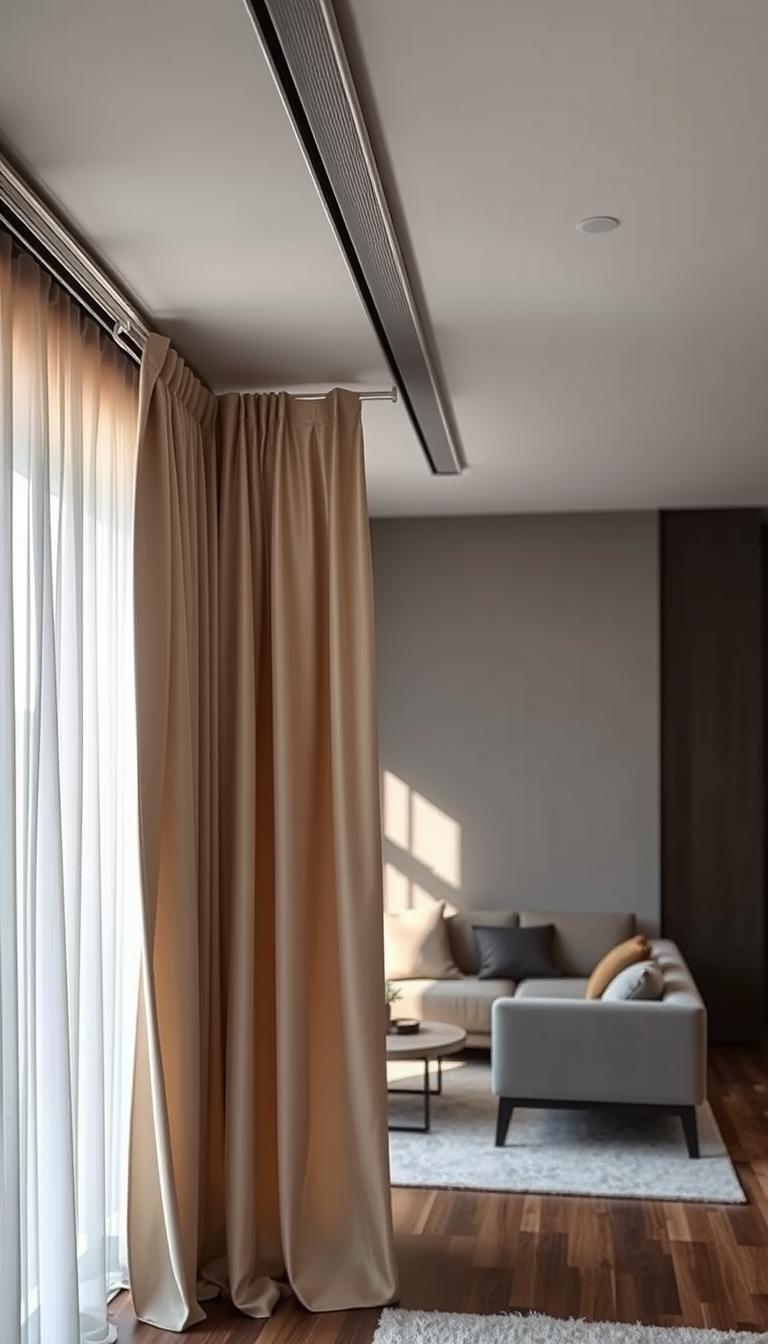
A photorealistic image of a modern room featuring a curtain room divider installed using a ceiling track kit. In the foreground, the sleek aluminum track is mounted seamlessly to the ceiling, with a stylish, flowing curtain in soft, neutral colors elegantly draping down. In the middle ground, the room showcases a cozy seating area with tasteful decor, such as a contemporary sofa and a small coffee table, creating an inviting atmosphere. The background includes a hint of natural light streaming in through a nearby window, highlighting the textures of the curtain and furniture. The overall mood is serene and sophisticated, conveying a sense of privacy and stylish redesign in a living space, captured from a slightly elevated angle to emphasize the installation.

Budget DIY: clear wire and command hooks

My favorite starter is the wire method. Gather two command hooks, clear wire, glue, sheer curtains, scissors, and an optional frame hook.

Measure the span, cut the wire, knot and glue the ends so they don’t slip. Mount the first hook near the start point and the second on the ceiling or opposite wall. Loop the wire over both hooks and thread the curtains gently.

Tip: Keep tension modest. Too much pull can pop hooks off the surface. This setup shines with sheers and short runs and costs under $50.

Upgraded option: ceiling-mounted track kit

For heavier fabrics and daily use, choose an aluminum track (about 1 1/8″ W x 1″ H) with gliders, brackets, screws, connectors, end caps, and roller hooks.

Track sections usually arrive pre-drilled. Connect multiple 3-foot lengths with included connectors, trim with a hacksaw, cap the ends, and snap in roller hooks for a smooth glide.

Mounting choices, cuts, and care

Choose ceiling mounting when you want a full-height look or to avoid window trim. Choose wall mounting when ceiling structure is inaccessible.

  • Plan the stack so the divider doesn’t block doors or vents.
  • Anchor into studs or use proper anchors for safety.
  • Blackout panels block most light; check fabric weight ratings before install.
  • Care: hand wash, low-dry or air dry, iron while damp for a crisp hang.

“Measure twice and picture where the fabric will park when open.”

Style, Function, and Daily Use Tips

Good styling turns a hanging panel into a purposeful backdrop that feels both calm and deliberate.

Design choices matter: start with color psychology. Soft neutrals calm a living area; deep blues or greens ground a home office; warm tones make a guest bed nook feel inviting.

Textures are your secret sauce. Slubby, linen-like weaves add depth, while smooth fabrics read crisp and modern. In a living room, texture plays with daylight to create warmth.
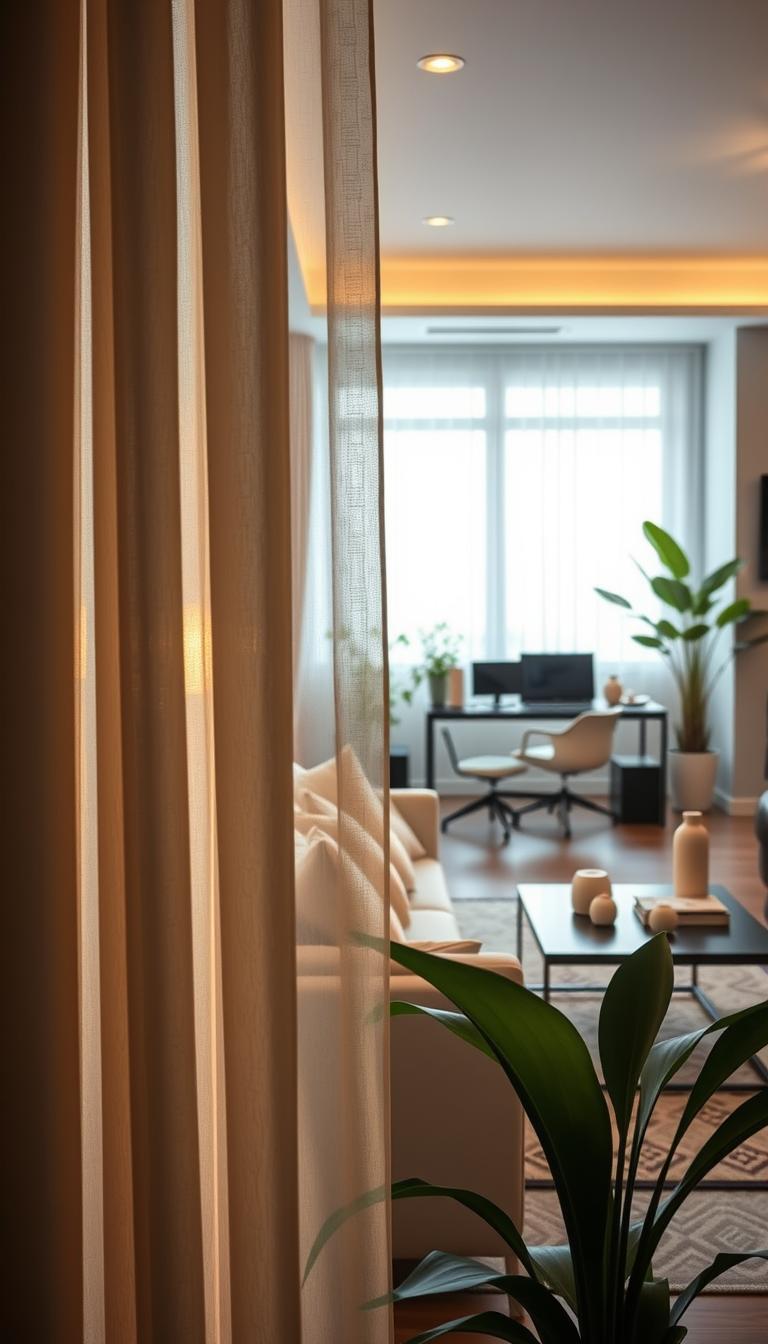
A stylish room featuring a curtain room divider, elegantly separating the space into a cozy living area and a focused workspace. In the foreground, the semi-transparent fabric of the divider gently sways, showcasing intricate textures and subtle patterns that catch the soft ambient light. The middle ground displays a comfortable sofa with plush cushions and a chic coffee table adorned with decorative items. To the background, a well-lit area highlights a desk with modern design elements, framed by indoor plants adding a touch of greenery. The image exudes a warm and inviting atmosphere, with natural light filtering through a nearby window, creating soft shadows. Capture this scene with a wide-angle lens to enhance depth and focus on the textures, delivering a photorealistic portrayal in high definition.

Practical hems and privacy

Decide the hem story early: just kissing the floor for clean lines, or a slight puddle for luxe softness. In high-traffic or storage areas, keep hems tidy to avoid snags.

Privacy needs? A blackout panel blocks roughly 90–100% of light, depending on fit and color. Pair it with a sheer over windows to switch modes from bright to dark fast.

Smart operation

Choose a track with quality gliders for smooth, quiet movement—one-handed operation should feel effortless. Track kits usually include brackets, screws, and end caps to finish neatly.

  • Use a discreet hook for tie-backs so fabric stacks cleanly at the end of the run.
  • Mark open positions so the fabric never blocks access to storage, heaters, or doors.
  • For work zones, pick a matte, slightly weighted fabric to reduce glare and visual noise.

“Little upgrades—end caps, matching hardware, a small hook—make the whole solution feel intentional.”

Care: hand wash cycle, low-heat or air dry, and iron while damp to keep drape and longevity.

For more styling ideas and practical layouts, see room divider ideas.

Conclusion

A soft hanging panel can change how you use every inch of a small studio.

I recommend two clear paths: a low-cost DIY wire setup using two command hooks, clear wire, glue, and sheer curtains for under $50, or a cut-to-fit track kit that includes gliders, brackets, screws, connectors, and end caps.

Mount the track to ceiling or wall and finish the end neatly with caps. Want full blackout? Pick a close-fit blackout curtain—expect 90–100% light block. Need it fast? Standard shipping is 10–12 days; express is 3–7.

If you’ve been waiting for a sign to reclaim your space, this is it. Measure, gather items, set a day, and by evening your home will feel newly organized and calm.

FAQ

What makes a curtain room divider a good solution for small studios and open-plan homes?

I find fabric panels transform space quickly. They create instant privacy, tame light, and let you reconfigure zones without walls. Lightweight tracks or wire systems mean minimal fuss — perfect for renters and anyone who values flexible layouts.

How do I measure for a track or wire system so the fit is right?

Measure ceiling height at several points and the total run width where the panel will hang. Add a few inches at each side for overlap and smooth gliding. I always double-check brackets and clearance above windows or trim before buying hardware.

Should I pick blackout or sheer fabric for my divider?

It depends on use. Choose blackout for bedroom zones or media areas to block light and sound. Sheer works beautifully for living areas when you want soft light and a sense of openness. I often layer both — sheer for daytime, blackout for night.

Can I install a privacy panel on a tight budget?

Absolutely. A DIY wire method with clear wire, hooks, and simple panels can run under . It’s quick to hang and ideal for lightweight fabrics. For heavier panels, budget for sturdier hooks or a ceiling-mounted track kit.

What are the pros and cons of ceiling-mounted tracks versus wall mounting?

Ceiling tracks give the most seamless coverage and feel built-in — great for defining sleeping or office nooks. Wall mounts are easier when ceilings won’t take hardware or you need a layered look with curtain rods. I recommend ceiling mounts for full privacy and wall mounts when you want a decorative rod.

How do I handle custom widths or awkward angles?

Many track kits allow cutting and connecting pieces for custom runs. For corners or L-shapes, use flexible tracks or join sections with corner adapters. I advise planning the path first and sketching measurements to avoid surprises during install.

What safety and weight considerations should I keep in mind?

Always secure anchors into studs or use heavy-duty ceiling anchors rated for the panel weight. Heavier fabrics need stronger gliders and brackets. I’ve seen setups fail when anchors were undersized — so choose hardware to match the load.

How do I keep fabric looking fresh and manage daily use?

Regular light vacuuming and spot cleaning help. Follow fabric care — some panels are machine washable, others need dry cleaning. For daily operation, use smooth glider systems or quality hooks to reduce wear. Tie-backs are great for keeping pathways clear.

What styling tips help a divider feel integrated with the rest of the room?

Match textures or colors to existing accents — a linen panel softens wood tones, while velvet adds warmth. Consider puddle length for drama or crisp hems for a modern look. I like layering a sheer panel behind a heavier one to tune light and texture throughout the day.

Can these systems protect my sleep or work privacy from noise?

Fabric won’t be as soundproof as a wall, but heavier, densely woven panels and multiple layers reduce noise and increase perceived privacy. For better acoustic control, add rugs, bookshelves, or soft furnishings to absorb sound around the divider.
Total
0
Shares
Share 0
Tweet 0
Pin it 0
Related Topics
  • Curtain Room Divider
  • Home Decor
  • Interior Design
  • Room Redesign
  • Space Division
Jade Hunt
Jade Hunt

Hi, I’m Jade Hunt — your friendly guide to creating a beautiful, comfortable, and functional home. At Homiscape.com, I share practical home organization tips, budget-friendly decor ideas, and minimalist lifestyle hacks to help you design a space you’ll truly love. With over 7 years of experience exploring home improvement trends and DIY projects, I believe every home has the potential to be warm, inviting, and uniquely yours. Whether you live in a small apartment or a spacious house, my goal is to inspire you to make the most of every corner. Let’s turn your living space into your dream home — one idea at a time!

Previous Article
Ikea Bed Frame Queen
  • General

Ikea Bed Frame Queen: My Honest Review and Assembly Guide

  • December 18, 2025
  • Jade Hunt
View Post
Next Article
Decorating Small Bedrooms
  • General

Decorating Small Bedrooms: My Proven Strategies for a Calming Space

  • December 19, 2025
  • Jade Hunt
View Post
You May Also Like
Hayden Christensen House
View Post
  • General

Inside Hayden Christensen House: A Design Inspiration

  • Jade Hunt
  • January 26, 2026
Living Room Bedroom Combo
View Post
  • General

Creating a Harmonious Living Room Bedroom Combo

  • Jade Hunt
  • January 26, 2026
Color of the Year
View Post
  • General

Color of the Year 2026: What’s Trending in Home Design

  • Jade Hunt
  • January 25, 2026
Japanese Bedroom Decor
View Post
  • General

Japanese Bedroom Decor: Bringing Calm into Your Space

  • Jade Hunt
  • January 25, 2026
Western Style Bedroom
View Post
  • General

Western Style Bedroom Ideas for a Serene Retreat

  • Jade Hunt
  • January 24, 2026
Grey and Green Bedroom
View Post
  • General

Discover the Perfect Grey and Green Bedroom Color Scheme

  • Jade Hunt
  • January 24, 2026
Man Cave Couch
View Post
  • General

My Man Cave Couch: How to Pick the Coziest Spot

  • Jade Hunt
  • January 23, 2026
Palm Leaves Decor
View Post
  • General

Palm Leaves Decor: Bring the Tropics into Your Home Decor

  • Jade Hunt
  • January 23, 2026
Homiscape.com Homiscape.com

Input your search keywords and press Enter.